
 (800) 949-0401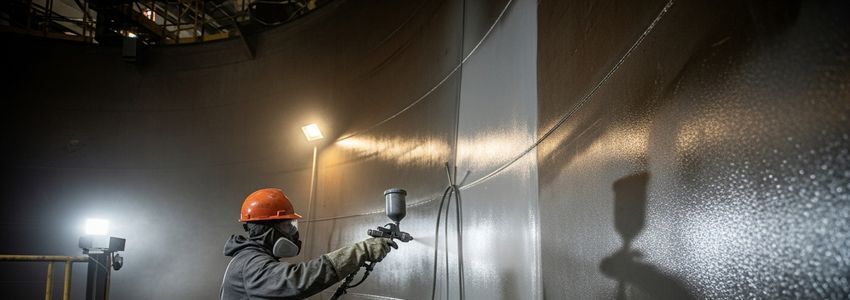
Tank Lining Business Loans: The Complete Financing Guide for Tank Lining Contractors
Tank lining business loans are the financial backbone that allows protective coating contractors to scale operations, invest in specialized equipment, and take on larger projects without being held back by cash flow constraints. If you operate a tank lining company - whether you service industrial storage tanks, water treatment facilities, oil and gas infrastructure, or chemical processing plants - you understand that this is a capital-intensive trade. Materials alone for a single industrial tank lining project can run into six figures, and specialized spray equipment, surface preparation tools, and skilled labor demands constant investment. Yet most traditional banks have little familiarity with the tank lining industry and often struggle to underwrite these businesses effectively. That is where purpose-built financing solutions from lenders who understand the specialty contractor space make all the difference. This guide covers everything tank lining contractors need to know about business loans: the types available, how to qualify, real-world scenarios, and how Crestmont Capital - rated the #1 business lender in the U.S. - can help you grow faster and more profitably.
In This Article
- What Are Tank Lining Business Loans?
- Key Benefits of Financing Your Tank Lining Business
- How Tank Lining Business Loans Work
- Types of Financing Available for Tank Lining Contractors
- Who Qualifies for a Tank Lining Business Loan?
- How Crestmont Capital Helps Tank Lining Contractors
- Real-World Financing Scenarios
- Frequently Asked Questions
- How to Get Started
What Are Tank Lining Business Loans?
Tank lining business loans are financing products designed - or adapted - to meet the specific capital needs of companies that apply protective coatings and linings to industrial tanks, vessels, pipelines, and containment structures. Unlike general small business loans that may be offered without any industry knowledge, the best tank lining financing packages account for the project-based revenue cycle, high upfront material costs, long payment terms from industrial clients, and significant equipment requirements unique to this trade.
The tank lining industry sits at the intersection of industrial coatings, structural maintenance, environmental compliance, and heavy construction. Contractors in this space apply epoxy coatings, fiberglass reinforced plastic (FRP) linings, polyurea spray coatings, rubber linings, and specialized chemical-resistant materials to storage tanks in industries including oil and gas, water and wastewater treatment, food and beverage processing, chemical manufacturing, and power generation.
According to the U.S. Small Business Administration, specialty trade contractors - a category that includes protective coating and lining companies - represent one of the fastest-growing segments of the small business economy. These businesses often face cash flow timing mismatches because they must purchase materials upfront and pay labor costs before receiving payment from large industrial clients who may have net-30 to net-90 payment terms.
Tank lining business loans bridge this gap. They provide working capital to fulfill large contracts, fund equipment purchases, cover payroll during slow periods, and allow businesses to bid on jobs they could not otherwise afford to execute. Whether you need $50,000 for a coating spray rig or $500,000 to take on a municipal water tank rehabilitation contract, there are financing options structured for your business.
Key Stat: The global industrial protective coatings market was valued at over $12 billion and is projected to grow at a compound annual rate of approximately 5% through 2030, driven by infrastructure investment, environmental compliance requirements, and aging industrial assets requiring rehabilitation. (Source: Reuters industry analysis)
Tank lining work is inherently specialized. The materials - epoxy, polyurethane, FRP, and rubber compounds - are expensive and must be ordered in advance. The equipment required - plural-component spray systems, abrasive blast equipment, scaffolding, ventilation units, and testing instruments - can cost hundreds of thousands of dollars to acquire and maintain. And the workforce must be trained and certified, with many projects requiring OSHA confined space entry certification, NACE/AMPP coating inspection credentials, and industry-specific safety programs. All of these factors make access to adequate business financing not a luxury but a necessity for any tank lining contractor who wants to grow.
The good news is that tank lining companies are attractive borrowers when evaluated properly. They typically work under signed contracts, have predictable revenue pipelines, and operate in industries with strong, long-term demand. Understanding how to position your business for financing - and which lenders actually understand your industry - is the key to unlocking the capital you need.
Key Benefits of Financing Your Tank Lining Business
Strategic financing is not simply a fallback for when cash runs short - it is a growth tool that savvy tank lining contractors use to compete at higher levels, win larger contracts, and build enterprise value in their businesses. Here are the most important benefits of using business loans and financing products as part of your operational strategy.
Win Larger Contracts Without Being Constrained by Cash Flow
The tank lining industry is full of lucrative contracts from municipalities, refineries, water utilities, and chemical plants. The problem is that these clients often require contractors to mobilize significant resources before the first invoice is paid. A $2 million tank rehabilitation project might require $400,000 in materials and mobilization costs before day one on site. Without a business line of credit or working capital loan, many smaller contractors cannot even bid on these jobs - which means the work goes to larger competitors.
Financing changes that equation. A business line of credit gives you a revolving pool of capital to draw from as project needs arise. A working capital loan provides a lump-sum advance that covers project startup costs. Both options allow you to bid confidently on jobs that would otherwise be out of reach.
Invest in Equipment That Multiplies Productivity
A single high-output plural-component spray system can cost $80,000 to $150,000. A modern abrasive blasting unit with dust containment costs $40,000 to $80,000. Investing in advanced equipment is not just about capacity - it directly impacts your competitive position, labor productivity, and profit margins. Contractors who invest in quality equipment can complete jobs faster, with less rework, and at higher margins than those relying on older or rented equipment.
Equipment financing allows you to acquire these tools now and pay for them over time - often structured so that monthly payments are offset by the revenue the equipment generates. This is a fundamental wealth-building strategy for any specialty contractor.
Stabilize Cash Flow During Seasonal and Project Gaps
Tank lining work often has seasonal components - many outdoor projects are weather-dependent, and industrial plant turnarounds follow scheduled maintenance cycles that can create feast-or-famine revenue patterns. A business line of credit or short-term working capital facility allows you to maintain payroll, keep key employees, and stay current on overhead costs even during project gaps.
Build Business Credit for Future Growth
Responsible use of business financing builds your company's credit profile, opening doors to larger and more favorable financing in the future. Every time you successfully manage a business loan, you demonstrate creditworthiness to future lenders and strengthen your company's financial foundation.
Ready to Finance Your Tank Lining Business?
Get fast, flexible financing from the #1 business lender in the U.S. No obligation - apply in minutes.
Apply Now ->How Tank Lining Business Loans Work
Understanding the mechanics of business financing helps you choose the right product and approach the application process with confidence. Here is how the main types of tank lining business loans work from application through funding.
The Application Process
Most business lenders - especially online and alternative lenders - have streamlined their application processes significantly compared to traditional bank lending. Where a bank might require months of back-and-forth and a full small business plan, many alternative lenders can review and approve applications in 24 to 72 hours based on a relatively simple package of business information.
Typical application requirements include:
- Completed business loan application
- Three to six months of business bank statements
- Business tax returns (most recent one to two years)
- Basic identification and business formation documents
- Description of business purpose and use of funds
Some lenders, including Crestmont Capital, also consider accounts receivable, signed contracts, and project backlog as part of their underwriting - which is particularly beneficial for tank lining contractors who have strong project pipelines even if recent bank statements reflect the lumpy nature of project-based revenue.
Underwriting and Approval
Underwriting for contractor businesses often differs from retail or service businesses. Lenders experienced with specialty contractors understand that bank statement cash flow may look inconsistent due to the project cycle. They look at the overall pattern, average monthly revenue, time in business, and creditworthiness of the business owner rather than applying rigid formulas designed for recurring-revenue businesses.
Fast business loans from alternative lenders typically offer approval decisions within one to three business days. Once approved, funds can often be disbursed within 24 to 48 hours - a major advantage over conventional bank loans that may take weeks or months.
Repayment Structures
Tank lining contractors should pay attention to repayment structures when comparing financing options:
- Fixed daily or weekly ACH payments: Common with merchant cash advances and some working capital loans. Payments are automatically debited from your business account on a set schedule. Predictable but can feel rigid during slow periods.
- Monthly installment payments: More common with term loans and equipment financing. Easier to budget around project payment cycles.
- Revolving draw-and-repay: Standard for lines of credit. You borrow what you need, repay it, and the credit is available again. Ideal for managing project-to-project cash flow.
- Interest-only during draws: Some construction-oriented credit facilities allow interest-only payments while a project is ongoing, with principal repayment tied to project milestones or completion.
Costs and Rates
Business loan costs vary significantly based on loan type, lender, loan amount, term length, and the borrower's creditworthiness. Small business loans from conventional banks typically carry the lowest interest rates but have the strictest qualification requirements and slowest processing. Alternative lenders offer faster funding and more flexible qualification standards, often at somewhat higher costs. SBA-backed loans offer competitive government-backed rates for businesses that qualify.
For tank lining contractors, the key is to evaluate the total cost of capital against the revenue opportunity the financing enables. If a $100,000 working capital loan allows you to secure a $500,000 contract, the financing cost is well justified by the margin generated on the project.
Types of Financing Available for Tank Lining Contractors
There is no one-size-fits-all financing solution for tank lining businesses. The right product depends on your specific need, timeline, credit profile, and financial situation. Here is a comprehensive overview of the financing tools available.
By the Numbers
Tank Lining and Protective Coatings Industry - Key Statistics
$12B+
Global industrial protective coatings market value
~5%
Projected annual market growth rate through 2030
70%+
Of U.S. water infrastructure over 40 years old, requiring lining and rehabilitation
$55B
Allocated for water infrastructure in the U.S. Infrastructure Investment and Jobs Act
Working Capital Loans
Working capital loans are lump-sum cash infusions designed to cover everyday operational costs - materials, labor, overhead, and project startup expenses. For tank lining contractors, working capital loans are often the go-to financing tool for bridging the gap between project mobilization costs and client payment. Loan amounts typically range from $10,000 to $500,000 or more, with terms of three months to three years. Repayment is structured as fixed daily, weekly, or monthly payments.
Business Lines of Credit
A business line of credit functions like a business credit card but with higher limits and lower costs. You are approved for a maximum credit limit - say $150,000 - and you can draw from that limit as needed, repaying what you use and making the credit available again. This revolving structure makes lines of credit ideal for tank lining contractors who need flexible, on-demand capital to manage project-to-project cash flow variation. A business line of credit is one of the most versatile tools in the contractor financing toolkit.
Equipment Financing
Equipment financing is a loan or lease specifically for the purchase of business equipment - in the case of tank lining contractors, this includes plural-component spray systems, abrasive blast equipment, scaffolding, industrial vacuums, ventilation equipment, safety gear, vehicles, and trailers. The equipment itself typically serves as collateral, which often makes equipment financing easier to obtain than unsecured loans. Terms generally range from two to seven years, aligned with the useful life of the equipment. This is often the most cost-effective way to acquire major capital equipment without depleting working capital.
Short-Term Business Loans
Short-term business loans provide fast access to capital with repayment terms typically ranging from three to eighteen months. They are well suited for time-sensitive opportunities - an unexpected large project, emergency equipment repair, or a supplier discount for bulk material purchase. These loans fund quickly, often within 24 to 48 hours of approval, and require less documentation than longer-term facilities.
SBA Loans
SBA loans are government-backed financing products that offer competitive interest rates and longer repayment terms than most alternative lending products. The SBA 7(a) loan program, which supports amounts up to $5 million, is particularly valuable for tank lining contractors seeking to make major capital investments - equipment purchases, facility acquisition, or business acquisition. The tradeoff is that SBA loans have more rigorous qualification requirements and longer processing timelines, typically four to eight weeks or more. They are best suited for well-established businesses with strong financials that can afford to wait for funding.
Merchant Cash Advances
A merchant cash advance (MCA) provides a lump sum of capital in exchange for a percentage of future daily credit card or bank account deposits. MCAs are among the fastest and most accessible forms of business financing - approval can happen within hours and funding within a day. For tank lining contractors in immediate need of capital, an MCA can bridge critical gaps. However, the effective cost is typically higher than other products, so MCAs are best used strategically for short-duration needs with clear repayment visibility.
Invoice Financing and Factoring
For tank lining contractors with outstanding receivables from creditworthy industrial clients, invoice financing and factoring provide a way to convert unpaid invoices into immediate cash. The lender advances 70% to 90% of the invoice value immediately, then collects from your client and remits the balance (minus fees) when the invoice is paid. This is a powerful tool for contractors working on net-60 or net-90 payment terms with large municipalities or industrial customers.
Bad Credit Business Loans
Not every business owner has a perfect credit score. If past financial challenges have affected your credit, bad credit business loans offer a pathway to financing based on current business performance rather than historical credit events. These products look more heavily at your recent revenue trends, contract backlog, and business trajectory than your credit score.
Who Qualifies for a Tank Lining Business Loan?
Qualification requirements vary significantly by lender and loan type, but understanding the general criteria helps you assess your position and identify the right financing products for your situation.
Time in Business
Most traditional lenders require a minimum of two years in business. Alternative and online lenders often work with businesses that have been operating for as little as six months, though one year or more of operating history generally opens more options and more favorable terms. New tank lining startups may need to rely on equipment financing, SBA startup programs, or personal credit-backed business credit lines in their earliest stages.
Annual Revenue
Revenue requirements vary widely. Some working capital lenders look for as little as $10,000 to $15,000 in average monthly revenue (approximately $120,000 to $180,000 annually). SBA loans and larger term loans typically want to see higher revenue levels with sufficient debt service coverage. For most tank lining contractors doing meaningful commercial or industrial work, annual revenues in the $500,000 to $5 million range put them solidly in the qualification range for most products.
Credit Score
Personal credit score is a key underwriting factor for most business loans, especially for smaller businesses where the owner's personal creditworthiness is closely tied to the business. General credit score benchmarks:
- 720 and above: Excellent - qualifies for the best rates from traditional banks and SBA lenders
- 680-719: Good - qualifies for most bank products and favorable alternative lender rates
- 620-679: Fair - may qualify for some bank products; strong alternative lender options available
- 580-619: Below average - alternative lenders and revenue-based products are the primary options
- Below 580: Challenging - specialized bad credit products, secured financing, or cosigner arrangements
Cash Flow and Bank Statements
Lenders want to see that your business generates sufficient cash flow to comfortably service the new debt. They typically analyze three to six months of bank statements, looking at average monthly deposits, consistency of revenue, and current debt obligations. Tank lining contractors should be prepared for lenders to ask about large, irregular deposits from project completions - being able to explain the project-based nature of your revenue is helpful during underwriting.
Existing Debt Load
Your existing debt service obligations - equipment loans, lines of credit, previous business loans - factor into lenders' assessment of your ability to handle additional financing. Lower existing debt relative to revenue generally means better terms and higher loan amounts.
Key Stat: According to the U.S. Small Business Administration, specialty trade contractors - including protective coating and lining companies - have a loan approval rate approximately 15% higher than average small businesses when evaluated by lenders familiar with the industry, due to their contract-backed revenue visibility. (Source: SBA.gov lending data)
Industry Experience and Certifications
While not always a formal underwriting criterion, demonstrated industry expertise - NACE/AMPP certification, SSPC credentials, safety program certifications, and an established client roster - can strengthen your loan application by demonstrating business credibility and the ability to win and execute contracts.
How Crestmont Capital Helps Tank Lining Contractors
Crestmont Capital has built a reputation as the #1 business lender in the United States by doing something most banks fail to do: actually understanding the businesses they lend to. For tank lining contractors, this means an underwriting approach that accounts for the realities of specialty contractor operations - project-based revenue cycles, large material costs, and the contract-driven nature of the business.
Flexible Underwriting That Fits the Contractor Business Model
Traditional bank underwriting was designed for steady-revenue retail and service businesses. It often penalizes project-based businesses whose bank statements show large, irregular deposits rather than consistent monthly revenue. Crestmont Capital's underwriting team understands that a $400,000 deposit followed by a slow month is not a red flag - it is the normal cadence of a thriving tank lining operation. Our underwriters look at your overall business trajectory, contract backlog, and industry position, not just a rigid algorithm.
Speed That Matches Your Business Needs
When a client calls with a new contract that needs to mobilize next week, you cannot wait three months for a bank's loan committee. Crestmont Capital's streamlined process delivers approval decisions within one to three business days, with funding often available within 24 to 48 hours of approval. This speed has helped hundreds of specialty contractors capture time-sensitive opportunities that would otherwise go to competitors.
A Full Suite of Financing Products
Rather than fitting every client into one product, Crestmont Capital matches your specific need to the right financing tool. Whether you need a revolving line of credit for ongoing project cash flow, a term loan for equipment acquisition, a working capital advance to staff up for a major contract, or an SBA loan for a long-term growth investment, our team has the product and expertise to structure the right solution.
Dedicated Advisors Who Know Your Industry
Our business financing advisors are not generalists reading from a script. They are knowledgeable professionals who have worked with contractors across the industrial, construction, and specialty trades - people who understand what tank lining is, why it matters, and what the financial challenges of the business actually look like in practice.
You might also find it useful to read our guide on industrial painting business loans, which covers financing for a closely related specialty contractor segment and provides additional context on how Crestmont Capital supports protective coating businesses.
Get the Capital Your Tank Lining Business Deserves
Crestmont Capital specializes in financing for specialty contractors. No obligation - apply in minutes and get a decision fast.
Apply Now ->
Real-World Financing Scenarios
To make the concepts above concrete, here are four realistic scenarios illustrating how tank lining contractors use business financing to grow and manage their operations.
Scenario 1: Winning a Municipal Water Tank Rehabilitation Contract
A tank lining contractor in the Midwest bids on and wins a $750,000 contract to reline three municipal water storage tanks. The project is a significant step up for the company - their largest single contract to date. The challenge: the city has net-60 payment terms, and the contractor needs $175,000 in materials and $85,000 in mobilization costs before the first invoice can be submitted.
Solution: The contractor applied for a $250,000 working capital loan from Crestmont Capital. Approved within two days and funded on day three, the capital allowed full project mobilization. The project was completed on schedule, the city paid net-60, and the loan was repaid from project proceeds with room to spare. The contractor's business credit profile was strengthened, and they subsequently qualified for a larger credit facility for future projects.
Scenario 2: Upgrading to Plural-Component Spray Equipment
A two-person tank lining operation was consistently losing competitive bids to a larger competitor with superior spray equipment. Their older single-component spray system limited the coatings they could apply and slowed production rates. They identified a high-output plural-component proportioner system for $95,000 that would allow them to apply fast-cure polyurea and plural-component epoxy coatings - premium services commanding significantly higher margins.
Solution: Equipment financing from Crestmont Capital covered the full purchase. A 48-month term kept monthly payments at a level the business could comfortably manage from existing revenue, while the new equipment immediately expanded the company's service capabilities. Within six months, they had added three new clients who specifically required plural-component coating services - generating revenue that more than covered the loan payments.
Scenario 3: Bridging a Revenue Gap Between Projects
A six-person tank lining company completed a major refinery turnaround project in September. Their next major contract was scheduled to start in January - a four-month gap during which they needed to retain their skilled crew, cover equipment payments, and maintain insurance and overhead. Losing key employees would mean rebuilding their team before the January project, at significant cost.
Solution: A $120,000 business line of credit from Crestmont Capital provided a flexible capital buffer. The company drew from the line as needed through the slow period, covering payroll and overhead while minimizing interest costs by only borrowing what was needed each month. When the January project commenced and payments began flowing, they repaid the line quickly and maintained it as a standing resource for future gaps.
Scenario 4: Expanding Into New Geographic Markets
An established tank lining company in Texas was approached by a national food processing company to handle tank lining maintenance at facilities in five states. It was a transformative opportunity - potentially $3 million in annual recurring revenue. But executing it required hiring additional NACE-certified technicians, purchasing two additional spray rigs and equipment trailers, and establishing a larger operational infrastructure.
Solution: The contractor worked with Crestmont Capital to structure a combination of an SBA 7(a) term loan for the major equipment purchases and a working capital line of credit for the operational expansion costs. The two-product approach provided the capital depth needed for the expansion while keeping debt service at a manageable level relative to the projected new revenue. The national contract was executed successfully and transformed the company from a regional operator to a multi-state service provider.
Key Stat: The U.S. Environmental Protection Agency estimates that the nation needs over $600 billion in drinking water and wastewater infrastructure investment over the next 20 years - a substantial portion of which involves storage tank rehabilitation, lining, and protective coating work. This represents a massive long-term demand driver for tank lining contractors nationwide. (Source: U.S. Census Bureau infrastructure data)
Frequently Asked Questions
How to Get Started
Getting financing for your tank lining business is straightforward when you work with the right lender. Here is the step-by-step process to secure your funding through Crestmont Capital.
Complete our quick application at offers.crestmontcapital.com/apply-now - takes just a few minutes and requires only basic business information to get started.
A Crestmont Capital advisor will review your needs and match you with the right financing option for your tank lining business - whether that is a working capital loan, equipment financing, a line of credit, or an SBA product.
Receive your funds and put them to work - often within days of approval. Use your capital to mobilize for new projects, invest in equipment, stabilize cash flow, or fuel the next phase of your business growth.
Start Your Application Today
Join thousands of specialty contractors who trust Crestmont Capital for fast, flexible business financing. No obligation - apply in minutes.
Apply Now ->Tank lining is a specialized, high-value trade with strong long-term demand drivers - aging infrastructure, environmental compliance requirements, and a massive national investment in water and industrial systems. The businesses that will capture the most value from this opportunity are those that combine technical excellence with smart financial management. That means having access to the capital you need, when you need it, to win contracts, invest in capabilities, and grow sustainably. Crestmont Capital is here to be your financial partner on that journey. Apply today and see what is possible for your tank lining business.
Disclaimer: The information provided in this article is for general educational purposes only and is not financial, legal, or tax advice. Funding terms, qualifications, and product availability may vary and are subject to change without notice. Crestmont Capital does not guarantee approval, rates, or specific outcomes. For personalized information about your business funding options, contact our team directly.








