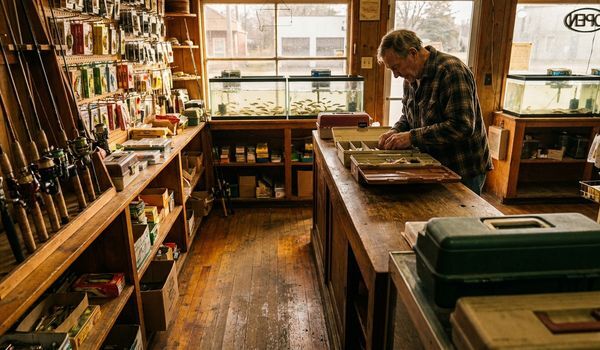
Running a bait and tackle shop takes more than a love of fishing. It takes live bait tanks humming at dawn, walls of rods and reels, freezers stocked with minnows, and shelves full of lures that have to be ready before the first customers pull into the lot. Tackle shop business loans give owners the capital to keep that inventory deep, that equipment running, and that growth on track, even when revenue swings hard with the seasons. Whether you run a lakeside bait shop, a full-line fishing tackle store, or a marina-adjacent retail operation, the right financing can be the difference between turning customers away and becoming the go-to shop in your region.
The challenge is that tackle retail is a seasonal, inventory-heavy business, and traditional banks do not always understand it. A shop can do 60 to 70 percent of its annual sales between April and September, then watch foot traffic slow to a trickle all winter. Lenders that only look at a few months of statements often miss the full picture. That is exactly why specialized small business financing matters for this industry, and why more bait and tackle store owners are turning to flexible funding partners who understand seasonal retail.
This guide covers everything you need to know about financing a tackle shop: what these loans are, how they work, the types of funding available, who qualifies, how they compare to other options, and how real shop owners are using capital to grow. By the end, you will know exactly which funding path fits your store and how to apply in minutes.
In This Article
- What Are Tackle Shop Business Loans?
- Key Benefits of Financing for Bait and Tackle Stores
- How Tackle Shop Business Loans Work
- Types of Financing for Tackle Shops
- What Can You Use Tackle Shop Financing For?
- Who Qualifies for Tackle Shop Business Loans?
- Tackle Shop Loans vs. Other Funding Options
- How Crestmont Capital Helps Tackle Shop Owners
- Real-World Scenarios: Tackle Shop Financing in Action
- Frequently Asked Questions
- How to Get Started
- Conclusion
What Are Tackle Shop Business Loans?
Tackle shop business loans are small business financing products designed for retail fishing supply stores, bait shops, and combination bait-and-tackle operations. They are not a single loan product but a category of funding that includes term loans, business lines of credit, equipment financing, inventory financing, and working capital loans, all structured around the way a tackle retail business actually earns money.
What makes this category distinct is the cash flow pattern it serves. A bait and tackle store is part retailer, part perishable-goods operation, and part seasonal service business. Live bait has to be ordered weekly or even daily. Tackle inventory turns fastest right before and during the fishing season. Licenses, tournament traffic, and lake or coastal conditions all influence weekly revenue. Financing built for this industry accounts for those realities rather than punishing owners for them.
Funds from these loans can be used for nearly any legitimate business purpose: stocking inventory ahead of the season, repairing or replacing bait tank systems, expanding the showroom, hiring seasonal staff, launching an online store, or simply keeping cash flow steady through the off-season. Repayment structures range from fixed monthly terms to flexible draws that rise and fall with your sales cycle.
Key Stat: According to the U.S. Small Business Administration, there are more than 33 million small businesses in the United States, and access to capital remains one of the most commonly cited barriers to their growth. Retail businesses with seasonal revenue patterns feel that gap the most.
Key Benefits of Financing for Bait and Tackle Stores
The right funding does more than plug a hole in your budget. Used strategically, tackle shop financing becomes a tool for increasing revenue, improving margins, and taking market share from competitors who are undercapitalized. Here are the benefits owners see most often:
- Deeper inventory when it matters most. Buy tackle, bait, and gear in bulk before peak season so you never miss a sale because a shelf is empty during a tournament weekend or a holiday rush.
- Better supplier pricing. Volume orders and early-pay discounts from distributors can meaningfully improve your margins, and financing gives you the cash position to capture them.
- Smoother off-season cash flow. Cover rent, utilities, payroll, and insurance through the slow months without draining reserves built up during the season.
- Equipment that protects your product. Aeration systems, bait tanks, freezers, and refrigeration keep live inventory alive and saleable. Equipment financing lets you upgrade without a large upfront hit.
- Room to grow. Open a second location, add a boat rental side business, build an e-commerce channel, or expand into hunting and outdoor gear when the opportunity appears.
- Faster access than bank loans. Alternative funding partners can approve and fund in days rather than the weeks or months a traditional bank often takes.
- Flexibility for seasonal revenue. Products like lines of credit let you draw only what you need and pay interest only on what you use, which fits a seasonal sales curve perfectly.
Each of these benefits compounds. A shop that stocks deeper inventory sells more, which strengthens its bank statements, which improves its next round of financing terms. Financing used well builds a stronger business, not just a bigger balance sheet.
Ready to Stock Up for the Season?
Get fast, flexible financing from the #1 business lender in the U.S. No obligation, and applying takes just minutes.
Apply Now →How Tackle Shop Business Loans Work
The mechanics are simpler than most owners expect, especially compared to the paperwork marathon of a bank loan. While every product has its own structure, the process generally follows the same five steps.
Step 1: Application
You complete a short application covering your business basics: time in business, monthly revenue, the amount you want, and how you plan to use it. Online lenders and funding marketplaces typically ask for recent business bank statements rather than years of tax returns and financial statements.
Step 2: Review and Underwriting
The funder reviews your revenue pattern, cash flow health, and credit profile. For seasonal businesses like tackle shops, stronger funders look at a full year of statements rather than judging you on your slowest quarter. This is where working with a lender that understands retail seasonality pays off.
Step 3: Offer and Terms
You receive an offer spelling out the amount, rate or factor, term length, and repayment schedule. Term loans carry fixed payments. Lines of credit give you a limit to draw against. Equipment financing ties the loan to the asset you are buying. Review the total cost of capital, not just the headline rate.
Step 4: Funding
Once you accept, funds are deposited into your business account. Depending on the product and funder, this can happen in as little as 24 to 72 hours. Equipment financing funds are often paid directly to the vendor selling you the tanks, freezers, or fixtures.
Step 5: Repayment
You repay on the agreed schedule, whether that is monthly on a term loan, interest-only draws on a credit line, or fixed payments on equipment. Many owners time larger repayments to land during their strong season, and some products allow exactly that kind of flexibility.
The whole cycle, from application to funded account, can take less than a week with the right partner. For a shop owner staring at an empty rod rack three weeks before opening day, that speed changes outcomes.
Types of Financing for Tackle Shops
Tackle shop owners have more funding options than ever. Each product solves a different problem, and many shops use two or three in combination. Here is how the main types break down.
Term Loans
A term loan delivers a lump sum upfront that you repay over a fixed period, typically one to five years. This is the workhorse for bigger moves: a showroom expansion, a large inventory buy, a second location, or a major renovation. Predictable monthly payments make budgeting straightforward, and rates are usually lower than shorter-term products.
Business Line of Credit
A business line of credit is the natural fit for a seasonal tackle shop. You get approved for a maximum amount, draw what you need when you need it, and pay interest only on the outstanding balance. Stock up on live bait supplies in March, pay the balance down with June revenue, and keep the line available for the fall hunting crossover season. It is the single most flexible tool for smoothing seasonal cash flow.
Equipment Financing
Bait tank systems, aeration equipment, freezers, refrigeration units, point-of-sale systems, display fixtures, and even delivery vehicles can all be financed through equipment financing. The equipment itself serves as collateral, which often means easier approval and competitive rates. Terms typically match the useful life of the asset, so the tank system effectively pays for itself out of the live bait sales it protects.
Inventory Financing
Inventory financing is built for exactly what tackle shops do: buying product ahead of demand. The advance funds your bulk tackle and gear purchases, and you repay as the inventory sells. For shops whose biggest expense is stocking walls of lures, rods, reels, and apparel before the season, this product keeps supplier orders on schedule without straining operating cash.
Working Capital Loans
Short-term working capital loans cover day-to-day operating needs: payroll for seasonal staff, rent during the winter lull, marketing pushes before tournaments, or an unexpected freezer replacement in July. They fund fast, often within days, and are designed to bridge gaps rather than finance long-term assets.
SBA Loans
For established shops with strong financials and time to spare, SBA-backed loans offer some of the lowest rates and longest terms available to small businesses. The tradeoff is speed and paperwork: applications can take weeks to months and require extensive documentation. Many tackle shop owners use faster alternative funding for seasonal needs and reserve SBA products for major long-term projects.
By the Numbers
The Fishing Retail Market - Key Statistics
57.7M
Americans who went fishing in 2023, per the Recreational Boating and Fishing Foundation
$148B
Annual economic output generated by recreational fishing in the U.S.
$10B+
Spent by anglers each year on fishing tackle, gear, and related retail purchases
33.2M
Small businesses operating in the U.S., per the SBA Office of Advocacy
What Can You Use Tackle Shop Financing For?
One of the biggest advantages of modern business financing is flexibility of use. Outside of equipment-specific loans, most products place few restrictions on how you deploy the capital. The most common uses among bait and tackle store owners include:
- Seasonal inventory buys. Rods, reels, lures, line, terminal tackle, apparel, and accessories ordered in bulk ahead of spring and summer demand.
- Live bait operations. Bait tank systems, aerators, water treatment, shiner and minnow inventory, nightcrawler bedding, and the refrigeration that keeps it all alive.
- Store improvements. Showroom build-outs, new display fixtures, signage, lighting, security systems, and parking or exterior upgrades.
- Technology. Modern point-of-sale systems, inventory management software, and an e-commerce website so you can sell tackle online year-round.
- Marketing. Local advertising, tournament sponsorships, social media campaigns, and loyalty programs that keep your shop top of mind.
- Staffing. Hiring and paying seasonal employees for the rush months without stressing cash flow.
- Expansion. A second location near a new lake or marina, a boat and kayak rental fleet, or an added hunting and archery department.
- Off-season operating expenses. Rent, utilities, insurance, and license renewals during the months when revenue is thin.
The common thread is timing. Tackle retail rewards owners who can act before the season, not after. Financing turns that timing from a cash reserve problem into a simple planning decision.
Who Qualifies for Tackle Shop Business Loans?
Qualification standards vary by product and funder, but alternative business financing is far more accessible than most owners assume. While a bank might demand two-plus years of tax returns, strong collateral, and near-perfect credit, online funders typically evaluate a broader picture of your business health.
General guidelines that put you in a strong position:
- Time in business: Six months to one year minimum for most alternative products; longer history unlocks better terms.
- Monthly revenue: Consistent deposits of $10,000 to $15,000 or more per month open most doors, with stronger revenue qualifying for larger amounts.
- Credit score: Scores of 600 and above qualify broadly; 680 and above unlock the best rates. Some working capital products approve lower scores when revenue is strong.
- Documentation: Three to six months of business bank statements, a government-issued ID, and basic business information. Equipment financing adds a vendor invoice or quote.
Seasonal shops should prepare a full twelve months of bank statements when possible. A lender reviewing only your January through March statements sees a fraction of your real business; the full year tells the true story of your season.
Pro Tip: If your shop is newer or your credit needs work, start with the funding you can qualify for today, such as equipment financing or a smaller working capital advance. Repay it on time and your next approval, at a larger amount and better rate, gets dramatically easier. Financing history is an asset you build.
Tackle Shop Loans vs. Other Funding Options
How do these products stack up against each other and against the alternatives owners sometimes consider? This comparison covers the options most relevant to a bait and tackle store:
| Funding Type | Best For | Funding Speed | Repayment | Collateral |
|---|---|---|---|---|
| Term Loan | Large one-time investments, expansion | 2-7 days (alternative lenders) | Fixed monthly, 1-5 years | Sometimes required |
| Line of Credit | Seasonal cash flow, recurring inventory | 1-3 days | Draw as needed, interest on balance | Often unsecured |
| Equipment Financing | Bait tanks, freezers, POS systems, vehicles | 2-5 days | Fixed monthly, matches asset life | The equipment itself |
| Working Capital Loan | Payroll, rent, marketing, emergencies | 24-72 hours | Short fixed term, daily or weekly | Usually unsecured |
| SBA Loan | Major long-term projects, real estate | Weeks to months | Monthly, up to 10-25 years | Usually required |
| Personal Savings / Credit Cards | Small gaps only | Immediate | Varies; cards carry high APRs | Personal assets at risk |
The pattern is clear: match the product to the purpose. Long-term assets deserve long-term money. Seasonal swings deserve flexible money. Emergency needs deserve fast money. Owners who blur those lines, such as funding a freezer system on a credit card or covering payroll with a five-year term loan, end up paying more than they should.
How Crestmont Capital Helps Tackle Shop Owners
Crestmont Capital is the #1 rated business lender in the U.S., and our entire model is built for businesses exactly like yours: seasonal, inventory-driven, and underserved by traditional banks. We fund bait shops, tackle stores, marinas, and outdoor retailers across the country with speed and flexibility that a bank simply cannot match.
Here is what working with Crestmont looks like in practice. Our application takes minutes, not weeks. We review your business with seasonality in mind, so your July revenue counts for as much as your January. Approvals can come within hours, and funding often lands in your account within one to three business days. Whether you need a working capital cushion for the off-season, equipment financing for a new bait tank system, or a line of credit to ride the seasonal curve, a dedicated funding specialist matches you to the right product.
We have deep experience across specialty retail and the outdoor industry. Our guides on financing for sporting goods stores and funding for outdoor gear and sports stores cover the same retail dynamics tackle shop owners face, and our team brings that sector knowledge to every application we review.
There is no obligation to apply and no hard credit pull to see your options. You get real numbers, real terms, and a straight answer fast, so you can get back to running your shop.
Your Season Starts Before the Fish Bite
Lock in your inventory and equipment funding now so your shop is ready when the crowds arrive. Apply in minutes.
Check Your Options →Real-World Scenarios: Tackle Shop Financing in Action
Numbers on a page only go so far. Here is how tackle shop financing plays out in the real world, based on the situations our funding specialists see every season.
Scenario 1: The Pre-Season Inventory Stock-Up
Mike runs a bait and tackle shop on a busy reservoir in the Southeast. Every March, his distributors offer their best pricing of the year on rods, reels, and soft plastics, but placing a $60,000 order in February means spending cash the shop will not earn back until May. Mike draws on his business line of credit, places the full order at early-buy pricing, and pays the balance down with strong spring sales. The volume discount alone covered most of his cost of capital, and he never told a single customer the shelf was empty.
Scenario 2: The Bait Tank Emergency
A coastal bait shop in the Gulf loses its main aeration system in June, right in the heart of the season. Without it, thousands of dollars of live shrimp and croaker die within hours, and the shop has nothing to sell the charter captains who line up at 5 a.m. The owner applies for equipment financing on a Monday, gets approved Tuesday, and the new tank system is installed before the weekend. Live bait sales, his highest-margin category, barely miss a beat.
Scenario 3: The Second Location Opportunity
Sarah built a loyal customer base at her tackle store near a state park lake. When a marina fifteen miles away suddenly has retail space open up, she knows another shop will grab it if she waits. A term loan covers the build-out, initial inventory, and three months of operating runway for the new location. Within a year, the marina store is doing 40 percent of the original shop's volume, and the combined business qualifies for better financing terms than either could alone.
Scenario 4: Bridging the Winter Gap
A northern tackle shop does nearly three-quarters of its business between ice-out and October. Every winter, the owner used to drain his savings covering rent, insurance, and utilities. A working capital loan now bridges the four slow months, and he repays it out of spring revenue. Instead of starting each season financially exhausted, he starts it with reserves intact and room to buy aggressively.
Frequently Asked Questions
What are tackle shop business loans? +
Tackle shop business loans are small business financing products used by bait shops, fishing tackle retailers, and outdoor supply stores to fund inventory, equipment, operating expenses, and growth. The category includes term loans, business lines of credit, equipment financing, inventory financing, and working capital loans, all structured to fit the seasonal cash flow pattern of fishing retail.
How much can a tackle shop borrow? +
Amounts depend on your revenue, time in business, and credit profile. Smaller working capital advances often start around $10,000 to $25,000, while established shops with strong revenue can qualify for $100,000 to $500,000 or more through term loans, equipment financing, or combined products. Most lenders size approvals in proportion to your average monthly deposits.
What credit score do I need to qualify? +
Many alternative funders approve scores of 600 and above, and scores of 680 or higher typically unlock the best rates and largest amounts. Some working capital and equipment products weigh revenue more heavily than credit, so a lower score does not automatically disqualify a shop with strong, consistent deposits. Equipment financing can be especially accessible because the asset itself secures the loan.
How fast can I get funding for my bait and tackle store? +
Alternative funders can approve applications within hours and deposit funds in as little as 24 to 72 hours. Lines of credit and working capital products tend to be the fastest. Equipment financing typically takes two to five business days depending on vendor invoicing. SBA loans are the slowest option, often taking several weeks to a few months from application to funding.
Can a new tackle shop get a business loan? +
Yes, though options narrow for very young businesses. Most alternative products require six months to a year of operating history. Newer shops often start with equipment financing for tanks, freezers, and fixtures, since the equipment secures the loan, or with smaller working capital amounts that grow as the business builds a funding track record. A solid business plan and healthy personal credit strengthen a young shop's application considerably.
What can tackle shop loan funds be used for? +
Nearly any legitimate business purpose. Common uses include bulk inventory purchases ahead of the season, live bait systems and supplies, store renovations, point-of-sale and inventory technology, marketing and tournament sponsorships, seasonal payroll, rent and utilities during slow months, e-commerce development, and expansion to additional locations. Equipment financing is the exception, since those funds are tied to a specific asset purchase.
Do I need collateral to get a tackle shop loan? +
Not always. Many working capital loans and lines of credit are unsecured, meaning no specific collateral is pledged. Equipment financing is secured by the equipment itself, which keeps other assets off the table. Larger term loans and SBA loans may require collateral or a personal guarantee. Your funding specialist can tell you exactly what each offer requires before you commit.
What documents do I need to apply? +
For most alternative products, you need three to six months of business bank statements, a government-issued ID, and basic information about your business such as your EIN, time in business, and average monthly revenue. Equipment financing also requires a vendor quote or invoice. SBA loans demand far more, including tax returns, financial statements, and a detailed business plan.
Are seasonal fishing businesses eligible for financing? +
Absolutely. Seasonality is normal in this industry, and experienced funders account for it. The key is presenting a full twelve months of bank statements so the lender sees your peak season, not just your slow quarter. Lines of credit are particularly popular with seasonal shops because you draw and repay in rhythm with your actual sales cycle rather than carrying fixed payments year-round.
What is the difference between a tackle shop loan and a line of credit? +
A term loan delivers one lump sum that you repay on a fixed schedule, which suits big one-time investments like a renovation or a second location. A line of credit gives you an approved limit you can draw from repeatedly, paying interest only on what you use, which suits recurring needs like inventory and seasonal cash flow gaps. Many tackle shops carry both: a term loan for growth and a credit line for operations.
Can I use financing to buy fishing inventory in bulk before the season? +
Yes, and it is one of the smartest uses of funding in this industry. Bulk pre-season orders typically come with the deepest distributor discounts of the year, often enough to offset most or all of the financing cost. Inventory financing and lines of credit are designed for exactly this purpose: buy at the best price in February and March, sell through the season, and repay from peak revenue.
Do tackle shop loans cover live bait inventory and tank systems? +
Yes. Live bait inventory, including minnows, shiners, shrimp, and worms, is a standard working capital use. Tank systems, aerators, filtration, and refrigeration are typically financed as equipment, often with the equipment itself as collateral. Because live bait is a high-margin, traffic-driving category, keeping it healthy and available is usually one of the best returns on financed dollars in the entire shop.
What interest rates should I expect? +
Rates vary by product, credit profile, and business strength. SBA loans sit at the low end, often in the single digits to low teens. Bank-style term loans from alternative lenders commonly fall in the mid-single digits to mid-teens. Short-term working capital products cost more but fund fastest. Always compare the total cost of capital over the life of the funding, not just the headline rate, and weigh it against the revenue the capital will generate.
Can I get a tackle shop loan with bad credit? +
Often, yes. Alternative funders look at the whole picture: revenue consistency, time in business, and cash flow health alongside credit. Strong monthly deposits can offset a score in the high 500s or low 600s for some products, and equipment financing is frequently the most accessible option because the asset secures the loan. Terms will be tighter than for top-tier credit, but on-time repayment builds the profile that earns better pricing next time.
How do I apply for a tackle shop business loan with Crestmont Capital? +
Start with our short online application, which takes just a few minutes and carries no obligation. Have your recent business bank statements ready to speed things along. A dedicated funding specialist reviews your file, often the same day, and presents your options with clear terms. Once you accept an offer, funds can reach your account within one to three business days.
How to Get Started
Complete our quick application at offers.crestmontcapital.com/apply-now. It takes just a few minutes, and reviewing your options will not affect your credit. If you are still shaping your expansion plans, the SBA's free business plan guide is a helpful companion resource.
A Crestmont Capital funding advisor reviews your business, seasonality included, and matches you with the financing option that fits your goals and your sales cycle.
Receive your funds, often within one to three business days, and put them to work: inventory on the shelves, tanks running, and your shop ready for the season.
Give Your Tackle Shop the Capital It Deserves
Join the thousands of small business owners who trust the #1 rated business lender in the U.S. Fast approvals, flexible terms, real people.
Get Started Today →Conclusion
Bait and tackle retail is a rewarding business built on timing, inventory, and deep knowledge of your local waters. What it should never be built on is financial guesswork. Tackle shop business loans give owners the capital to stock deep before the season, keep live bait systems running, ride out the slow months, and say yes when growth opportunities appear.
The key takeaways are simple. Match the financing product to the purpose: lines of credit for seasonal rhythm, term loans for expansion, equipment financing for tanks and freezers, working capital for the gaps. Prepare a full year of bank statements so funders see your real business. And act before the season, not during it, because the shops that win are the ones that are stocked and ready when the crowds arrive.
Crestmont Capital has helped thousands of small business owners across retail and the outdoor industry get funded fast, with terms built around how their businesses actually earn. If you are ready to see what tackle shop business loans could do for your store, the application takes minutes and the answer comes fast. Your next season starts now.
Disclaimer: The information provided in this article is for general educational purposes only and is not financial, legal, or tax advice. Funding terms, qualifications, and product availability may vary and are subject to change without notice. Crestmont Capital does not guarantee approval, rates, or specific outcomes. For personalized information about your business funding options, contact our team directly.

Allan Garfinkle
Allan Garfinkle is the Chief Revenue Officer at Crestmont Capital, where he has spent more than a decade leading revenue strategy, business development, and operational growth. With 28 years of experience building and advising startups and small businesses, Allan has helped more than 10,000 business owners navigate financing decisions, growth opportunities, and changing economic conditions. He earned a Bachelor of Science in Economics and an MBA with a concentration in Finance from Northeastern University, as well as a Juris Doctor from New England Law, where his studies focused on contracts and business law. His writing draws on extensive practical experience in small-business lending, equipment financing, business credit, and commercial finance.