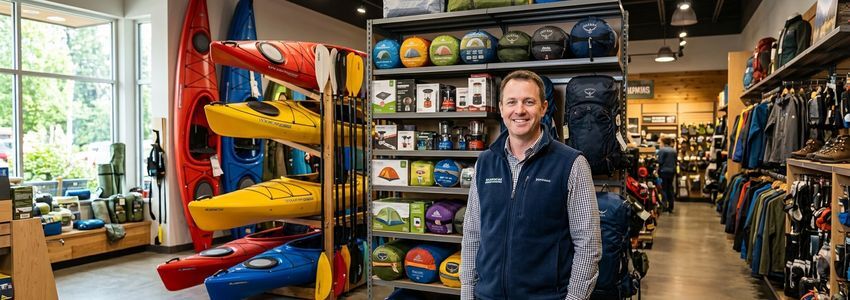
Running an outdoor gear or sporting goods store means managing a complex mix of high-cost inventory, seasonal demand swings, and rapidly evolving customer preferences. Whether you operate a standalone outdoor equipment shop, a multi-location sporting goods retailer, or a specialty outfitter serving climbers, hunters, cyclists, or paddlers, access to capital is what separates stores that scale from stores that stagnate. An outdoor equipment business loan gives you the financial runway to buy inventory in bulk, hire seasonal staff, expand your showroom, or invest in e-commerce capabilities - without draining the working capital you need to keep daily operations running smoothly.
According to the U.S. Census Bureau, sporting goods, hobby, and book stores generate tens of billions in annual retail sales, with the outdoor recreation equipment segment growing steadily as consumers invest more in active lifestyles. Yet many outdoor retailers struggle to access the business financing they need because traditional lenders do not always understand the seasonal nature of the industry or the capital requirements of stocking high-ticket equipment like kayaks, e-bikes, climbing gear, or premium firearms.
This guide covers everything outdoor gear and sports store owners need to know about business financing - loan types, qualification requirements, how to choose the right option, and how Crestmont Capital can help you move faster than the banks.
In This Article
- The Outdoor Retail Industry Landscape
- Why Outdoor Gear Stores Need Specialized Financing
- Types of Outdoor Equipment Business Loans
- How Outdoor Equipment Business Loans Work
- Who Qualifies
- How Crestmont Capital Helps Outdoor Retailers
- Real-World Scenarios
- Comparing Your Financing Options
- How to Strengthen Your Application
- Frequently Asked Questions
- How to Get Started
The Outdoor Retail Industry Landscape
The outdoor recreation economy is a powerful driver of U.S. retail activity. The U.S. Small Business Administration recognizes outdoor recreation as one of the fastest-growing segments of the American economy, generating significant consumer spending on gear, apparel, and experiences. From hiking boots and backpacking tents to kayaks, paddleboards, ski equipment, and high-end cycling gear, outdoor equipment stores serve a passionate and growing customer base.
However, the industry carries distinct financial pressures that set it apart from other retail segments. Outdoor gear stores typically deal with:
- High per-unit inventory costs - A single high-end mountain bike can retail for $3,000 to $10,000 or more, meaning floor inventory represents enormous tied-up capital
- Pronounced seasonal demand cycles - Summer camping and paddling gear, winter ski and snowboard equipment, and spring hiking product launches all require capital-intensive pre-season buying
- Brand exclusivity requirements - Premium outdoor brands often require minimum order quantities and advance payment terms that strain cash flow
- Competition from e-commerce giants - Independent outdoor retailers must invest in customer experience, staff training, and digital capabilities to compete effectively
- Equipment repair and rental operations - Many outdoor stores operate rental fleets and repair shops, both of which require capital investment in specialized tools and inventory
These realities make business financing not just a convenience for outdoor retailers - it is often a fundamental operating requirement. An outdoor equipment business loan bridges the gap between what your store needs to grow and what your current cash flow can support.
Industry Insight: According to Forbes, the outdoor recreation economy contributes over $780 billion annually to U.S. GDP, with specialty outdoor retail stores playing a central role in serving the 160+ million Americans who participate in outdoor activities each year.
Why Outdoor Gear and Sports Stores Need Specialized Financing
Standard small business loans were not designed with the operational realities of an outdoor equipment retailer in mind. Most bank underwriters evaluate businesses on consistent monthly revenue and low industry volatility - two metrics that often work against outdoor and sporting goods retailers, whose revenue can fluctuate dramatically between January and July.
Specialized outdoor equipment business financing accounts for the actual rhythms of your business. A lender that understands retail seasonality will evaluate your annual revenue trends rather than penalizing you for a slow February. More importantly, the right financing product matches your use case - whether that is inventory purchasing, equipment upgrades, store expansion, or cash flow bridging between buying seasons.
Outdoor retailers commonly seek financing for:
- Pre-season inventory purchases (buying fall/winter gear in spring, summer gear in winter)
- Expanding floor space or opening a second location
- Investing in e-commerce platforms and digital marketing
- Hiring and training seasonal sales staff
- Purchasing or upgrading rental fleet equipment
- Building out repair shop capabilities (tools, equipment, technician certifications)
- Financing supplier payment terms to capture early-order discounts
- Covering operating expenses during slow months without depleting reserves
Ready to Finance Your Outdoor Equipment Store?
Get fast, flexible financing from the #1 business lender in the U.S. - no obligation, apply in minutes.
Apply Now →Types of Outdoor Equipment Business Loans
Not every business loan works the same way, and outdoor retailers benefit from understanding the full spectrum of financing products available. Choosing the right structure can save significant money in interest while ensuring your capital is matched to the right purpose.
Equipment Financing
If you need to purchase specific gear, display systems, point-of-sale technology, rental fleet equipment, or shop tools, equipment financing is often the most cost-effective path. The equipment itself serves as collateral, which typically means lower interest rates and longer repayment terms. Equipment loans are ideal for purchases that generate direct revenue or support your operational capacity over multiple years.
Inventory Financing
For outdoor retailers buying large quantities of seasonal merchandise, inventory financing provides a line of credit or term loan specifically tied to the value of your inventory. You draw down funds to purchase stock, then repay as the merchandise sells. This structure is particularly well-suited to the advance-buying model that most outdoor brands require.
Small Business Loans (Term Loans)
A traditional small business loan provides a lump sum with fixed repayment terms and interest rates. Term loans are excellent for defined projects - store renovations, buying out a partner, launching an e-commerce platform, or relocating to a larger space. Repayment schedules can range from 12 months to 10 years depending on the loan size and lender.
Business Line of Credit
A business line of credit gives outdoor retailers a revolving pool of capital they can draw from and repay as needed. This is ideal for managing cash flow gaps between seasons, handling unexpected restocking needs, or capitalizing on supplier discounts without committing to a full term loan. You only pay interest on what you draw.
SBA Loans
For established outdoor retailers with strong financials, SBA loans offer some of the lowest interest rates and longest repayment terms available in the small business lending market. SBA 7(a) loans can fund up to $5 million for a variety of business purposes, while SBA 504 loans are structured specifically for commercial real estate and major equipment purchases. The tradeoff is a longer approval process and stricter documentation requirements.
Working Capital Loans
Designed to cover short-term operational expenses rather than long-term investments, working capital loans are the right choice when you need to bridge a cash flow gap, fund payroll during a slow stretch, or cover utilities and rent while waiting for your busy season to kick in. These loans typically have shorter terms and faster funding timelines.
Revenue-Based Financing
Revenue-based financing provides capital in exchange for a percentage of your future sales. Because repayments flex with your revenue, this option is particularly attractive for seasonal businesses - you pay less during slow months and more during your peak selling period. This can ease cash flow pressure significantly compared to fixed-payment term loans.
By the Numbers
Outdoor Equipment Business Loan - Key Statistics
$780B
Outdoor recreation's annual contribution to U.S. GDP
160M+
Americans who participate in outdoor recreation annually
$5M
Maximum SBA 7(a) loan available to eligible outdoor retailers
24 Hrs
Typical funding speed for approved Crestmont Capital loans
How Outdoor Equipment Business Loans Work
The mechanics of an outdoor equipment business loan depend on the product type, but the general process follows a consistent pattern. Understanding each step helps you apply confidently and position your business for approval.
Step 1 - Define Your Financing Need
Before you apply, clarify exactly what you need funding for and how much you require. Lenders respond better to specific, well-reasoned requests than vague asks for general capital. "I need $150,000 to purchase Q4 ski and snowboard inventory from two suppliers, with delivery scheduled for August" is far more compelling than "I need money to buy stuff for the holiday season." Specificity signals business maturity and reduces perceived lender risk.
Step 2 - Gather Your Documentation
Most outdoor equipment business loan applications require a standard set of financial documents. Prepare the following before starting your application:
- Last 3-6 months of business bank statements
- Most recent 1-2 years of business tax returns (if available)
- Profit and loss statement (year-to-date and prior year)
- Business license and proof of legal formation
- Driver's license or government-issued ID
- Details on any existing business debts or financing obligations
Step 3 - Submit Your Application
With Crestmont Capital, the application process is completed online in minutes. You will answer questions about your business, revenue, and financing goals. Unlike traditional bank applications that require in-person meetings and weeks of processing, Crestmont's streamlined process is designed for working business owners who need answers quickly.
Step 4 - Receive Your Offer
Once your application is reviewed, you receive a financing offer with clear terms - loan amount, interest rate or factor rate, repayment schedule, and any fees. Review the offer carefully and compare total cost of capital rather than just the headline rate.
Step 5 - Accept and Get Funded
After accepting your offer and completing any required verification steps, funds are typically deposited directly into your business bank account within 24 to 72 hours. For outdoor retailers with time-sensitive purchasing deadlines - think pre-season buying windows and supplier early-order discounts - this speed is often decisive.
Who Qualifies for an Outdoor Equipment Business Loan
Qualification requirements vary by lender and loan product, but most outdoor equipment retailers can find financing that fits their situation. Here is what lenders typically evaluate:
Time in Business
Most traditional lenders prefer businesses operating for at least 2 years, but alternative lenders like Crestmont Capital often work with businesses that have been open for 6 months or more. If you have been in business longer, you have access to a wider range of products and more favorable terms.
Annual Revenue
Revenue requirements vary significantly by loan type and amount. For smaller working capital loans, annual revenues of $100,000 or more are typically sufficient. For larger term loans or inventory financing, lenders may want to see $250,000 or more in annual sales. Seasonal revenue patterns are taken into account by lenders experienced with retail businesses.
Credit Score
Personal credit scores in the 600 to 650 range or above open access to most alternative lending products. Higher scores (700+) qualify for better rates and longer terms, including SBA loan eligibility. If your credit score is below 600, you may still qualify for revenue-based financing or merchant cash advance products, though at higher cost.
Cash Flow
Lenders want to see that your business generates enough cash flow to service new debt without strain. Bank statement analysis is the primary tool - lenders look at average monthly deposits, outstanding balances, and the presence of any negative or NSF activity. Seasonal businesses should expect lenders to annualize cash flow rather than extrapolate from any single slow month.
Good to Know: Crestmont Capital evaluates outdoor retailers on annual revenue trends, not just current month performance. If your store has strong summers but slower winters, your overall annual trajectory matters more than any single statement period.
How Crestmont Capital Helps Outdoor Retailers
Crestmont Capital has been helping small and mid-size businesses access capital since 2015. We understand that an outdoor gear store operates on different financial rhythms than a medical office or a law firm - and our underwriting approach reflects that reality. We look at your full business picture, not just a snapshot from your slowest month.
Our lending products for outdoor equipment retailers include:
- Equipment financing for rental fleet expansion, display fixtures, shop tools, and point-of-sale systems
- Inventory financing to support large pre-season purchases from outdoor brands and suppliers
- Business lines of credit for flexible, revolving capital you can draw on whenever the need arises
- Term loans for defined expansion projects including new location buildouts and e-commerce investment
- Working capital loans to bridge slow-season cash flow gaps without touching your operational reserves
- SBA loan facilitation for established retailers looking for the lowest cost of capital with long repayment terms
As the #1 rated business lender in the United States, Crestmont Capital delivers fast decisions, transparent terms, and personal attention from a financing specialist who understands retail. You will not spend weeks waiting for a bank committee to review your file - our decisions are made quickly so you can move at the speed your business demands.
Crestmont Capital - Your Outdoor Retail Financing Partner
Get matched with the right loan for your outdoor gear or sports store. Fast approvals, flexible terms, no runaround.
Get Your Financing Options →Real-World Scenarios: Outdoor Retailers Using Business Loans
Understanding how other outdoor equipment businesses have used financing can help you identify which loan structure fits your situation. Here are six realistic scenarios drawn from common outdoor retail challenges.
Scenario 1: The Pre-Season Inventory Crunch
A 12-year-old outdoor gear shop in Colorado specializes in backcountry skiing and snowshoeing. Every August, the owner must place orders with three major ski brands to secure inventory before the season - but the store's cash reserves are at their lowest point of the year after a slow summer. The owner uses a $200,000 inventory financing line to place those critical orders in August, drawing down against the line and repaying it from November through February as ski gear sells. Without this financing, they would miss their ordering window and lose both inventory and floor space to competitors.
Scenario 2: The Rental Fleet Expansion
A kayak and paddleboard shop on Florida's Gulf Coast runs a popular rental program that generates revenue from March through October. The owner wants to expand the rental fleet from 30 to 60 units to capture growing demand - but $120,000 in new kayaks and boards requires capital the business does not have in reserve. An equipment loan at a favorable rate allows the owner to purchase the fleet, with repayment structured over 36 months to match the extended revenue cycle of the rental operation. The new fleet generates enough additional rental income to cover the loan payment and deliver meaningful profit from day one.
Scenario 3: The Second Location Launch
A running and trail gear specialty retailer in the Pacific Northwest has built a loyal following over eight years at a single location. A commercial space in a neighboring suburb - high foot traffic, excellent demographics - becomes available at a favorable lease rate. Seizing this opportunity requires $350,000 in buildout, fixtures, inventory, and working capital to operate the new location until it becomes self-sustaining. A combination of a term loan and a business line of credit provides the capital structure needed to launch the second store without jeopardizing the flagship location's cash flow.
Scenario 4: The E-Commerce Buildout
A brick-and-mortar sporting goods store has been watching its competitors build profitable online channels while their own in-store sales plateau. The owner knows they need to invest in a proper e-commerce platform, product photography, digital marketing, and fulfillment capabilities - but the upfront cost is daunting. A $75,000 business loan funds the entire digital transformation project, covering website development, inventory management software, photography, and the first six months of paid digital advertising. Within 18 months, the online channel accounts for 35% of total store revenue.
Scenario 5: The Slow-Season Bridge
A bicycle shop in Minnesota generates most of its revenue between April and September. From October through March, revenue drops significantly while fixed costs - rent, utilities, staff salaries - remain constant. Rather than laying off skilled mechanics and risking losing them to competitors, the owner uses a working capital loan of $60,000 to cover payroll and operating expenses through the winter months. When the busy season returns in spring, the team is intact and ready to handle the surge in business.
Scenario 6: The Supplier Discount Opportunity
A multi-sport outdoor retailer receives an offer from a major camping gear supplier: pay 90 days early and receive a 12% discount on a $180,000 order. The savings would be $21,600 - but the store does not have the cash available right now. A short-term business loan of $180,000 funds the early payment, and the $21,600 saved on product cost easily covers the interest expense on the loan. Smart financing converts a cash flow constraint into a meaningful profit opportunity.

Comparing Your Outdoor Equipment Business Financing Options
| Loan Type | Best For | Typical Amount | Speed |
|---|---|---|---|
| Equipment Financing | Rental fleet, POS, fixtures, shop tools | $10K - $5M | 1-5 days |
| Inventory Financing | Pre-season buying, bulk orders | $25K - $1M | 2-7 days |
| Term Loan | Store expansion, remodel, e-commerce | $25K - $500K | 1-5 days |
| Business Line of Credit | Cash flow management, opportunistic buys | $10K - $250K | 1-3 days |
| Working Capital Loan | Payroll, rent, utilities in slow season | $10K - $250K | 24 hours |
| SBA Loan | Long-term growth, commercial real estate | $50K - $5M | 30-90 days |
How to Strengthen Your Outdoor Equipment Business Loan Application
Even strong outdoor retailers can improve their chances of approval and secure better terms by taking a few preparatory steps before applying. These are not complicated, but they signal financial maturity to lenders and can meaningfully improve your offer.
Clean Up Your Bank Statements
Lenders scrutinize your last 3-6 months of bank statements carefully. Recurring negative balances, frequent overdrafts, or large unexplained cash withdrawals raise red flags. If possible, apply during or after a strong revenue period rather than at the tail end of your slow season. Give your statements time to reflect your true annual financial health.
Separate Business and Personal Finances
If you are still mixing personal and business transactions in the same bank account, open a dedicated business checking account before applying. Commingled finances make it harder for lenders to accurately assess your business cash flow, and the ambiguity can work against you.
Know Your Numbers
Be ready to articulate your average monthly revenue, current inventory value, seasonal revenue breakdown, and any existing debt obligations. Lenders gain confidence when business owners can speak fluently about their financials - it reduces perceived risk and speeds up the underwriting process.
Have a Clear Use of Funds Statement
Prepare a concise explanation of exactly how you will use the loan proceeds, how that investment will generate returns for your business, and your plan for repayment. A retailer who says "I need $200,000 to purchase Q4 ski inventory from three specific suppliers, which historically generates $600,000 in revenue from October through January" is far more fundable than one who says "I need money for the holidays."
Check Your Credit Report
Before applying, pull your personal credit report and review it for errors. Disputing and correcting inaccuracies can improve your score meaningfully within 30 to 60 days. Also pay down any revolving credit card balances you can manage - reducing your utilization ratio improves your score quickly.
Pro Tip: According to CNBC, small business owners who apply with a clear use-of-funds statement and organized financial documentation receive funding decisions significantly faster than those who apply without preparation. Spending two hours organizing your paperwork before applying can save weeks in the approval process.
Frequently Asked Questions
What is an outdoor equipment business loan?
An outdoor equipment business loan is financing designed to help outdoor gear stores, sporting goods retailers, and related businesses access capital for inventory purchases, equipment upgrades, store expansions, and operational needs. These loans can take multiple forms including term loans, equipment financing, inventory financing, business lines of credit, and working capital loans. The right product depends on your specific funding purpose, revenue profile, and repayment preferences.
How much can an outdoor gear store borrow?
Loan amounts vary widely based on your business revenue, credit profile, and the type of financing you select. Small working capital loans may start at $10,000 to $25,000, while inventory financing lines and term loans for expansion projects can range from $100,000 to $1 million or more. SBA loans can provide up to $5 million for eligible businesses. Most alternative lenders use your annual revenue and monthly cash flow as the primary benchmarks for determining maximum loan size.
Do outdoor retailers qualify for SBA loans?
Yes, outdoor gear and sporting goods retailers are eligible for SBA loans as long as they meet the SBA's standard eligibility requirements. These include operating as a for-profit business in the United States, meeting the SBA's size standards for the retail industry, having invested equity in the business, and demonstrating a need for the financing. The SBA 7(a) program is the most commonly used for outdoor retailers seeking general-purpose financing, while the 504 program suits those purchasing commercial real estate or major equipment.
Can I get a business loan for seasonal outdoor retail businesses?
Absolutely. Seasonal businesses are not disqualified from business financing - but you need to work with lenders who understand seasonal revenue patterns. At Crestmont Capital, we evaluate outdoor retailers based on their annual revenue trajectory rather than applying a single month's performance to the whole year. Revenue-based financing and business lines of credit are particularly well-suited to seasonal outdoor stores because their repayment structures flex with your revenue cycle.
What credit score do I need for an outdoor equipment store loan?
Credit score requirements vary by lender and loan type. For alternative lenders like Crestmont Capital, a personal credit score of 600 or above is typically sufficient to access most financing products. Scores of 650 to 700 open access to better terms and higher loan amounts. For SBA loans, most lenders prefer a minimum score of 680 to 700. If your credit score is below 600, options like revenue-based financing may still be available, evaluated primarily on your cash flow rather than your credit history.
How fast can I get funding for my outdoor gear store?
Funding speed depends on the lender and loan type. With Crestmont Capital, many outdoor retailers receive a decision within hours of application submission, and approved loans are typically funded within 24 to 72 business hours. SBA loans have longer processing timelines - often 30 to 90 days - due to the additional documentation and government guarantee requirements. For time-sensitive opportunities like pre-season inventory windows or supplier discount deadlines, alternative lending is almost always the faster solution.
What documents are required to apply for a sporting goods store loan?
Most alternative lenders require: 3-6 months of business bank statements, a government-issued photo ID, proof of business ownership (business license or formation documents), and basic information about your business revenue and loan purpose. For larger loans, lenders may also request tax returns, a profit and loss statement, and a balance sheet. SBA loans require the most documentation, typically including a full business plan, personal financial statement, and detailed financial projections.
Can I use an outdoor equipment business loan for inventory?
Yes - inventory purchasing is one of the most common uses of outdoor equipment business loans. Inventory financing is specifically designed for this purpose, providing a revolving line of credit tied to your inventory value that you draw down to purchase stock and repay as merchandise sells. Term loans and business lines of credit can also be used for inventory. The key is to structure the loan so repayment aligns with your expected sell-through timeline for that inventory.
What is the difference between equipment financing and an equipment loan?
The terms are often used interchangeably, but there is a structural distinction. An equipment loan provides capital you use to purchase equipment outright - at the end of the loan, you own the asset free and clear. Equipment financing can also refer to equipment leasing arrangements, where you make payments to use the equipment without owning it, with an option to purchase at the end of the lease. For most outdoor equipment retailers purchasing rental fleet assets or display fixtures, equipment loans tend to be more cost-effective over the long term.
Is collateral required for outdoor equipment store financing?
It depends on the loan type. Equipment financing is typically secured by the equipment being purchased, so no additional collateral is required. Inventory financing is secured by the inventory itself. Many term loans and business lines of credit from alternative lenders are unsecured, meaning no collateral is required - though a personal guarantee from the business owner is commonly requested. SBA loans require collateral when available, but the SBA explicitly states that a lack of collateral alone is not a reason to deny an otherwise qualified application.
How do outdoor retailers manage loan repayment during slow seasons?
Strategic loan structuring is key. Revenue-based financing adjusts your payment amounts to reflect your actual monthly revenue - lower payments when sales are slow, higher payments during peak months. Lines of credit give you the flexibility to draw down and repay on your own timeline. For term loans with fixed monthly payments, the solution is to ensure your loan amount and term length result in payments that are manageable even at your minimum seasonal revenue level. Crestmont Capital's advisors help outdoor retailers structure financing to align with their specific seasonal cash flow pattern.
Can a new outdoor gear store get a business loan?
New outdoor gear stores under 12 months in business face more limited financing options than established retailers, but options exist. Startup equipment financing through specialized lenders can fund initial inventory and equipment. SBA microloans are available for very early-stage businesses. If the owner has strong personal credit and prior industry experience, some lenders will consider applications from businesses as young as 6 months old. The clearer your business plan and revenue projections, the stronger your startup financing application will be.
What interest rates should outdoor retailers expect on business loans?
Interest rates vary significantly based on loan type, lender, loan term, and the borrower's credit and revenue profile. SBA loans currently offer rates in the 6-10% range based on prime rate plus a spread. Traditional bank term loans range from 5-12%. Alternative lender term loans typically run from 9-25% APR, depending on risk factors. Revenue-based financing and merchant cash advances are expressed as factor rates rather than APR, and can be higher in effective cost. Always compare the total cost of capital rather than just the headline rate when evaluating financing offers.
Can I get an outdoor equipment business loan with bad credit?
Yes, financing options exist for outdoor retailers with less-than-perfect credit. Revenue-based financing and merchant cash advances evaluate your cash flow and sales history more than your credit score. Equipment financing often has more flexible credit requirements because the equipment itself secures the loan. If your business has strong monthly revenue - even with a credit score below 600 - you may qualify for alternative financing. Working to improve your credit over time while using accessible financing in the short term is a reasonable strategy for growing your outdoor retail business.
How do I choose the right outdoor equipment business loan for my store?
Start by defining your specific need - what will the capital fund, and over what timeline will it generate returns? Then match the loan structure to that purpose: equipment for depreciable physical assets, inventory financing for seasonal merchandise purchases, lines of credit for recurring operational flexibility, term loans for defined growth projects, and SBA loans for large low-cost capital needs. Finally, compare multiple lenders on total cost of capital, not just rate. Crestmont Capital's team can help you evaluate your options and find the structure that fits your outdoor retail business best.
Get Your Outdoor Equipment Store Loan Today
Fast approvals, competitive rates, and financing specialists who understand outdoor retail. Apply now and get a decision today.
Apply Now →How to Get Started
Complete our quick application at offers.crestmontcapital.com/apply-now - no lengthy paperwork, no branch visit required.
A Crestmont Capital advisor will review your application, discuss your specific needs, and match you with the right financing product for your outdoor gear or sporting goods store.
Once approved, funds are deposited directly into your business account - often within 24 hours. Put your capital to work immediately on inventory, equipment, or whatever your store needs most.
Conclusion
An outdoor equipment business loan is one of the most powerful tools available to outdoor gear and sporting goods retailers looking to grow, compete, and capture more of the market. Whether you need to finance a major pre-season inventory buy, expand your rental fleet, open a second location, or simply bridge a slow-season cash flow gap, the right financing product can transform a good business into a great one.
The outdoor recreation market is growing, consumer demand for quality gear is strong, and the retailers who invest strategically in their businesses are the ones who build lasting competitive advantages. Do not let a capital constraint keep your outdoor equipment store from reaching its full potential. Crestmont Capital has the expertise, the products, and the speed to help you move forward - so your store can serve the adventurers, athletes, and outdoor enthusiasts who count on you.
Ready to explore your outdoor equipment business loan options? Apply today and get a decision in hours, not weeks.
Disclaimer: The information provided in this article is for general educational purposes only and is not financial, legal, or tax advice. Funding terms, qualifications, and product availability may vary and are subject to change without notice. Crestmont Capital does not guarantee approval, rates, or specific outcomes. For personalized information about your business funding options, contact our team directly.