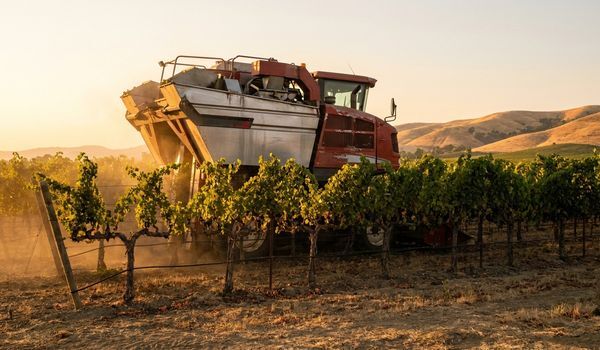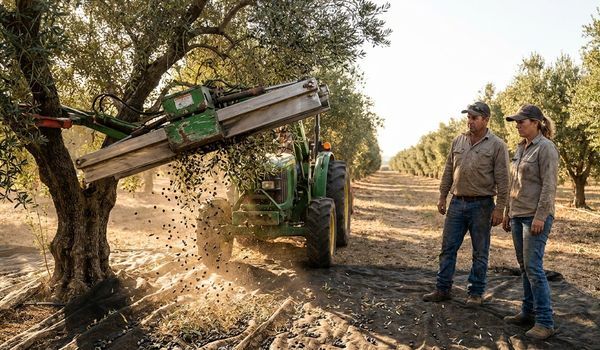
Olive harvesting has changed dramatically over the past two decades. Work that once required large crews of hand pickers laboring for weeks can now be finished by a single mechanical olive harvester in a matter of days. That efficiency comes at a price, though: modern harvesting machines range from roughly $15,000 for a tractor-mounted trunk shaker to more than $300,000 for a self-propelled over-the-row unit. That is exactly why olive harvester financing has become a standard tool for grove owners and harvesting contractors who want modern equipment without draining their working capital.
This guide covers everything you need to know about olive harvester financing: how it works, what different machines cost, who qualifies, how loans and leases compare, and how to get funded before your harvest window opens. Whether you farm 20 acres of table olives or run a contracting crew that harvests thousands of acres each fall, the financing principles are the same.
In This Article
- What Is Olive Harvester Financing?
- Key Benefits of Financing an Olive Harvester
- How Olive Harvester Financing Works
- Types of Olive Harvesters You Can Finance
- How Much Does an Olive Harvester Cost?
- Olive Harvester Loans vs Leasing
- Who Qualifies for Olive Harvester Financing?
- How to Apply for Olive Harvester Financing
- Real-World Financing Scenarios
- How Crestmont Capital Helps
- Frequently Asked Questions
- Next Steps
What Is Olive Harvester Financing?
Olive harvester financing is a form of equipment financing used to purchase or lease machinery that harvests olives, from trunk shakers and canopy contact heads to self-propelled over-the-row harvesters. Instead of paying the full purchase price upfront, a lender or financing company provides the capital, and you repay it in fixed monthly installments over a set term, typically three to seven years.
The harvester itself serves as collateral for the financing. That structure matters for two reasons. First, it makes approval easier than an unsecured loan, because the lender has a tangible asset backing the transaction. Second, it usually means lower rates and longer terms than general-purpose business financing, since the equipment holds resale value in the agricultural market.
Olive harvester financing covers both ownership-style arrangements (equipment loans, where you own the machine free and clear at the end of the term) and use-style arrangements (equipment leases, where you pay for the use of the machine and either return it, renew, or buy it out at the end). It can also be structured to include related harvesting equipment such as catching frames, nets, conveyors, and harvest trailers in a single transaction, which simplifies accounting and keeps one predictable payment.
For most grove owners, the practical meaning is simple: you get the machine in the field this season, and you pay for it out of the revenue it helps generate over the next several harvests.
Key Benefits of Financing an Olive Harvester
Buying a harvester outright is possible for some operations, but financing is the more common route for good reasons. Here is what financing actually does for an olive business:
- Preserves working capital. Harvest season collides with other major expenses: milling, labor, irrigation repairs, and packaging. Keeping $100,000 or more in cash reserves instead of sinking it into a single machine gives you room to operate.
- Matches cost to revenue. A harvester earns its keep during a compressed window each year. Fixed monthly payments spread that cost across the revenue cycles the machine makes possible.
- Replaces unpredictable labor. Hand-harvest crews are increasingly scarce and expensive. One trunk shaker can do the work of a 20 to 40 person picking crew, and financing makes that substitution possible immediately.
- Builds equity in a real asset. With a loan, every payment increases your ownership stake in a machine that retains resale value in the used farm equipment market.
- Faster than traditional bank credit. Agricultural banks and the SBA loan programs can take weeks or months to close. Specialized equipment financing often approves in 24 to 72 hours, which matters when a harvest window is measured in days.
- Potential payment structures that fit farming. Some lenders offer seasonal or deferred payment schedules that align with when olives actually generate cash.
The common thread is timing. Olives reach optimal ripeness in a narrow window, and oil quality drops quickly when harvest runs late. Financing removes the wait.
Ready to Put a Harvester in Your Grove?
Get a financing decision in as little as 24 hours. No obligation, no impact on your credit to check options.
Apply for Equipment FinancingHow Olive Harvester Financing Works
The mechanics of equipment financing are straightforward, but understanding each step helps you move faster and negotiate better terms. Here is the typical sequence from quote to keys:
Step 1: Identify the Equipment and Get a Quote
Start with the machine itself. Whether you are buying from a dealer, directly from a manufacturer, or purchasing a used unit from another grower, the lender will want a formal quote or bill of sale that lists the make, model, year, serial number (for used machines), and price. This document anchors the entire transaction because the equipment is the collateral.
Step 2: Submit an Application
The application itself is usually short: basic business information, ownership structure, time in business, and the equipment details. Most equipment financing companies, including Crestmont Capital, use a one-page application for transactions under roughly $250,000.
Step 3: Credit and Financial Review
The lender reviews personal and business credit, time in business, and cash flow. For smaller transactions, a soft credit pull and a few months of bank statements may be all that is required. Larger transactions for self-propelled harvesters may call for two years of financial statements or tax returns.
Step 4: Approval and Term Sheet
Approvals typically arrive within 24 to 72 hours. The term sheet spells out the amount financed, term length, monthly payment, rate or lease factor, any down payment, and end-of-term conditions.
Step 5: Documentation and Funding
You sign the financing documents, and the lender pays the equipment seller directly. In most cases the machine never touches your balance sheet as a cash outlay; the vendor gets funded, and you take delivery.
Step 6: Repayment
Monthly payments begin on the agreed schedule, usually 30 days after funding. With a loan, you own the machine outright when the last payment clears. With a lease, you choose your end-of-term path: purchase, renew, or return.
Types of Olive Harvesters You Can Finance
Olive harvesting equipment spans a wide range of sizes and price points, and virtually all of it is financeable. The main categories:
Tractor-Mounted Trunk Shakers
These units clamp onto the tree trunk or main scaffold limbs and shake the olives loose onto nets or catching frames. Brands like SICMA and several domestic fabricators dominate this category. They are the workhorse of small and mid-size groves, typically priced from $15,000 to $60,000 depending on the clamp design and hydraulic package. Because they mount to a standard tractor PTO or hydraulic system, they are often the first mechanical harvester a grove buys.
Tow-Behind and PTO-Driven Harvesters
Tow-behind units combine a shaking or combing head with onboard collection systems. They run from roughly $40,000 to $120,000 and suit mid-size operations that want integrated collection without the cost of a self-propelled machine.
Self-Propelled Over-the-Row Harvesters
These are the machines used in super-high-density olive oil groves, where trees are planted in hedge rows. Manufacturers such as OXBO, Flory Industries, and Orchard Machinery Corporation build machines that straddle the row and strip fruit with rotating rods or contact heads. New units commonly run $250,000 to $400,000 or more. They harvest an acre in a fraction of the time any other method requires, which is why nearly every large oil grove in California relies on them.
Canopy Contact and Comb Head Harvesters
Popularized in part by Pellenc and similar European manufacturers, these machines use vibrating comb heads that work through the canopy rather than shaking the trunk. They are gentler on the tree and well suited to table olive operations where fruit damage matters. Prices generally fall between $60,000 and $150,000 for mounted configurations.
Handheld Electric Rakes and Collection Equipment
Battery-powered rakes, pneumatic combs, catching frames, nets, conveyors, and harvest trailers round out the category. Individually these run from a few hundred dollars to $15,000, and lenders frequently bundle them into a single financing package with a larger machine.
Financing Tip: Bundling attachments and collection gear into the same transaction as your harvester usually costs nothing extra in fees and keeps everything on one payment. Ask the lender to wrap nets, frames, and conveyors into the equipment schedule.
How Much Does an Olive Harvester Cost?
Price is the starting point for every financing decision, and olive harvesters span one of the widest price ranges in agricultural equipment. Here is a realistic breakdown by category:
| Equipment Type | Typical New Price | Typical Used Price |
|---|---|---|
| Handheld electric rakes and combs | $300 to $3,000 | $150 to $1,500 |
| Tractor-mounted trunk shaker | $15,000 to $60,000 | $8,000 to $35,000 |
| Tow-behind harvester with collection | $40,000 to $120,000 | $25,000 to $70,000 |
| Canopy comb head harvester | $60,000 to $150,000 | $35,000 to $90,000 |
| Self-propelled over-the-row harvester | $250,000 to $400,000+ | $120,000 to $250,000 |
Used machines deserve special attention in this market. Olive harvesters log relatively low annual hours compared to row-crop equipment because they work a short season, so a well-maintained used unit often has years of service left. Used pricing typically runs 30 to 50 percent below new, and most lenders will finance used equipment up to 10 or 15 model years old, subject to an inspection or appraisal on larger transactions.
To put financing in concrete terms: a $48,000 trunk shaker financed over 60 months might carry a payment near $950 to $1,050 per month depending on credit and structure. A $300,000 over-the-row harvester on a five-year lease might run $5,500 to $6,500 per month. Against the cost of a 25-person hand crew for a full harvest, the math frequently favors the machine within the first season.
Used Equipment Note: Private-party purchases are financeable, but plan for a serial number check, photos, and sometimes a third-party inspection. Build an extra week into your timeline if you are buying used before harvest.
Olive Harvester Loans vs Leasing: Which Structure Fits?
Every olive harvester financing transaction falls into one of two families: an equipment loan or an equipment lease. Both put the machine in your grove, but they differ in ownership, payment size, and what happens at the end of the term.
| Factor | Equipment Loan | Equipment Lease |
|---|---|---|
| Ownership | You own the machine from day one; the lender holds a lien until payoff | The lessor owns the machine; you pay for use during the term |
| Monthly payment | Higher, because you are building full ownership | Lower, because the payment reflects use, not full purchase price |
| Down payment | Often 10 to 20 percent for used or specialty machines | Frequently little or none; first and last payment is common |
| End of term | Lien releases; you own the harvester free and clear | Buy it at a set residual, renew the lease, or return it |
| Best for | Machines you will run for 7+ years; building equity; used purchases | Technology that improves quickly; contractors who upgrade often; conserving cash |
For olive operations, the decision often comes down to machine type. Trunk shakers and tow-behind units change slowly and run for decades, so loans that build equity make sense. Over-the-row harvesters see meaningful technology updates every few years, and custom harvesting contractors often prefer leases that let them move into newer machines without a resale process.
A third path worth knowing is the government-backed route. SBA 504 loans can finance major equipment with long terms and competitive rates, but the timeline rarely fits a harvest deadline. Most grove owners use SBA programs for land and facilities, and specialized equipment financing for machinery that needs to arrive before the fruit does.
Compare Loan and Lease Quotes Side by Side
One application. Multiple structure options. See your real numbers before you commit.
Get My OptionsWho Qualifies for Olive Harvester Financing?
Equipment financing is one of the most accessible forms of business credit because the machine itself secures the transaction. That said, lenders still evaluate a handful of core factors:
Credit Profile
Most equipment lenders look for personal credit scores of 600 or better from at least one owner, with the strongest terms reserved for scores above 680. Because the harvester is collateral, credit challenges that would sink an unsecured loan (a past slow-pay stretch, a thin business file) are often workable here, sometimes with a larger down payment.
Time in Business
Two or more years in operation is the traditional benchmark for the best rates, but it is not a hard floor. Newer groves and first-generation farming operations get financed regularly, particularly when the owners bring agricultural experience, strong personal credit, or a meaningful down payment to the table.
Cash Flow and Revenue
The lender wants to see that the payment fits the operation. For an established grove, that means bank statements or financials showing enough annual revenue to cover the new obligation. For a harvesting contractor, existing client commitments or contracts strengthen the file considerably.
The Equipment Itself
Collateral quality matters. A late-model machine from a recognized manufacturer like OXBO, Flory, OMC, Pellenc, or SICMA supports higher advance rates and longer terms. An older or obscure machine may require more money down or a shorter term, because the lender's recovery value is lower.
Down Payment Capacity
Zero-down structures exist for strong files, but having 10 to 20 percent available expands your options and lowers your payment. On used equipment from a private seller, expect the down payment requirement to be on the higher end.
How to Apply for Olive Harvester Financing
The application process moves quickly when you arrive prepared. Here is the sequence that gets the fastest decisions:
1. Get your equipment quote first. A formal quote or bill of sale with make, model, year, price, and serial number (for used machines) is the single document that speeds everything else up. Dealers know the drill; for private-party used purchases, draft a simple bill of sale.
2. Gather three months of business bank statements. For most transactions under $250,000, this plus the application covers the financial review. Larger deals may add two years of tax returns or financial statements.
3. Know your ownership structure. Lenders need the legal entity name, EIN, and ownership percentages. If multiple family members or partners own the grove, decide upfront who will sign.
4. Submit the application. With Crestmont Capital, the initial application takes minutes and triggers a soft review that does not impact your credit. You will typically hear back within one business day.
5. Review the term sheet carefully. Look past the payment. Check the term length, end-of-term conditions, any prepayment provisions, and what happens if you want to pay the machine off early after a strong harvest.
6. Sign and take delivery. Once documents are signed, the lender funds the seller directly. Delivery scheduling with the dealer can happen in parallel, which is how growers go from application to shaking trees inside of two weeks.
Timing Note: Harvest windows do not wait for paperwork. Start the financing conversation 30 to 60 days before you need the machine, especially in late summer before the California harvest rush, when dealer inventories tighten and approval queues lengthen.
Real-World Olive Harvester Financing Scenarios
Abstract terms only go so far. These five scenarios show how different olive operations actually use financing, with realistic numbers:
Scenario 1: The Family Grove Replaces a Hand Crew
A 60-acre table olive grove in the Sacramento Valley had relied on seasonal picking crews for three decades. When crew costs hit $85,000 for a single harvest and availability became unreliable, the family financed a $48,000 tractor-mounted trunk shaker with catching frames over 60 months at roughly $980 per month. The machine paid for itself against avoided labor in the first season, and the loan builds equity in an asset with a 20-year working life.
Scenario 2: The Harvesting Contractor Adds a Second Machine
A custom harvesting contractor in the southern San Joaquin Valley was turning away work every October. He leased a $315,000 self-propelled over-the-row harvester on a five-year structure with payments near $6,100 per month. The second machine let him book 40 percent more acreage, and the lease keeps him on a three-machine replacement cycle instead of nursing aging equipment.
Scenario 3: The New Super-High-Density Planting
A first-generation olive oil producer planted 120 acres of super-high-density Arbequina and needed a harvester before year three, when the rows came into production. With limited operating history but strong personal credit and 20 percent down, she financed a used over-the-row unit for $140,000 over 66 months. The down payment offset her short time in business, and the used price kept the payment near $2,400 per month against projected oil revenue.
Scenario 4: The Mid-Season Breakdown
A grove in Glenn County lost its aging shaker to a hydraulic failure two weeks before harvest. The owner applied on a Monday, had approval Wednesday, and funded a $32,000 replacement tow-behind unit by the following week. Speed was the entire point: every day of delay risked fruit quality dropping below the mill's premium grade threshold.
Scenario 5: The Estate Producer Bundles a Full Package
A boutique estate oil producer financing a canopy comb head harvester at $88,000 wrapped handheld rakes, catching frames, and a small harvest trailer into the same schedule for a total of $104,000. One 60-month loan, one payment near $2,100 per month, and a complete mechanical harvest system delivered before the season.
Olive Harvester Financing: By the Numbers
$15K to $400K
Typical price range, trunk shaker to self-propelled harvester
24 to 72 hrs
Typical approval window for equipment financing
3 to 7 yrs
Common loan and lease term lengths
20 to 40
Hand pickers one mechanical harvester can replace
30 to 50%
Typical savings buying used vs new equipment
600+
Credit score where most approvals begin
How Crestmont Capital Helps Olive Growers and Contractors
Crestmont Capital has financed agricultural and specialty equipment for businesses across the country, and olive harvesting machinery fits squarely in that wheelhouse. The practical advantages for a grove owner or harvesting contractor:
Speed that respects harvest windows. Applications through Crestmont's equipment financing program are built for quick decisions, typically 24 to 72 hours, with funding to the seller directly after documents are signed. When a machine is available and the fruit is ripening, that timeline matters more than a fraction of a point on rate.
Structures for every operation size. A 20-acre estate buying a trunk shaker and a contractor buying a self-propelled over-the-row unit need different structures. Crestmont handles both through agricultural equipment financing and equipment leasing programs, with terms sized to the machine and the operation.
Used equipment expertise. Much of the olive harvester market trades used, often between growers. Crestmont regularly finances used machines and can walk buyers through the documentation a private-party purchase requires through its used equipment financing program.
A full toolbox beyond the harvester. Many grove owners pair equipment financing with working capital for milling and packaging costs, or with a line of credit for seasonal labor. If you are building out a broader olive operation, our guides on olive farm business loans and orchard equipment financing cover the wider financing landscape for tree-fruit operations.
According to the U.S. Census Bureau's Economic Census, American farms continue consolidating toward operations that invest heavily in mechanical efficiency. Financing is how most of them make that investment without stalling other parts of the business.
Talk to an Equipment Financing Specialist
Tell us about your grove and the machine you are considering. We will map out your options in one call.
Start Your ApplicationFrequently Asked Questions
What is olive harvester financing? +
Olive harvester financing is a type of equipment financing used to purchase or lease machinery that harvests olives, including trunk shakers, canopy comb heads, tow-behind units, and self-propelled over-the-row harvesters. A lender provides the capital, the machine serves as collateral, and you repay in fixed monthly installments over a term that typically runs three to seven years.
How much does an olive harvester cost? +
Costs vary widely by type. Tractor-mounted trunk shakers run $15,000 to $60,000 new, tow-behind harvesters with collection systems run $40,000 to $120,000, canopy comb head machines run $60,000 to $150,000, and self-propelled over-the-row harvesters run $250,000 to $400,000 or more. Used machines typically sell for 30 to 50 percent less than new.
Can I finance a used olive harvester? +
Yes. Most equipment lenders finance used olive harvesters, including private-party purchases between growers. Expect the lender to request the serial number, photos, and sometimes a third-party inspection on larger transactions. Machines up to 10 or 15 model years old are commonly financeable, with down payments often running higher than on new equipment.
What credit score do I need for olive harvester financing? +
Most approvals start around a 600 personal credit score, with the strongest rates and structures reserved for scores above 680. Because the harvester itself is collateral, lower scores can still qualify with a larger down payment, strong cash flow, or additional collateral.
Is it better to lease or buy an olive harvester? +
It depends on the machine and your plans. Loans suit durable machines like trunk shakers that you will run for many years, because each payment builds equity. Leases suit technology that improves quickly, like over-the-row harvesters, and operations that want lower payments or frequent upgrades. Many contractors lease their primary machines and own their backup equipment.
How long are typical olive harvester loan terms? +
Terms generally run three to seven years, matched to the machine's expected useful life and price. A $40,000 trunk shaker might finance over 48 to 60 months, while a $300,000 self-propelled harvester might stretch to 72 or 84 months to keep payments aligned with the revenue the machine generates.
Can new olive farms qualify for equipment financing? +
Yes, though the structure may differ from what an established grove receives. Newer operations typically strengthen their applications with strong personal credit, agricultural experience, a down payment of 10 to 20 percent, or existing contracts in the case of harvesting contractors. First-generation farmers get financed regularly.
What documents do I need to apply? +
For most transactions under $250,000 you need a one-page application, an equipment quote or bill of sale, and three months of business bank statements. Larger transactions may add two years of tax returns or financial statements. Used private-party purchases also need the serial number and photos of the machine.
How fast can I get funded for an olive harvester? +
Approval typically arrives within 24 to 72 hours of a complete application, and funding follows within days of signed documents. From application to money in the seller's hands, one to two weeks is common, which is why growers can often replace a broken machine mid-season.
Does financing cover attachments and collection equipment? +
Yes. Catching frames, nets, conveyors, harvest trailers, and handheld rakes can usually be bundled into the same financing schedule as the harvester itself. Bundling keeps everything on one payment and rarely changes fees, so most buyers wrap their full harvest package into a single transaction.
Can I finance multiple olive harvesters at once? +
Yes. Harvesting contractors frequently finance two or more machines in one transaction or as a master lease line that lets them add equipment over time. The lender evaluates the combined amount against your cash flow and contracts, so existing client commitments strengthen a multi-machine application.
What happens at the end of an olive harvester lease? +
At the end of a lease you typically have three options: purchase the machine at the agreed residual value, renew the lease and keep using it, or return it and upgrade to a newer unit. Many leases are written with a $1 or 10 percent purchase option if you know upfront that you want to own the machine.
Are there seasonal payment plans for olive farming? +
Some equipment lenders offer seasonal or skip-payment structures that concentrate payments in the months after harvest revenue arrives, or defer the first payment until after your first season with the machine. Availability depends on the lender and your file, so ask about seasonal structures during the quote stage.
Can I finance an over-the-row olive harvester? +
Yes. Self-propelled over-the-row harvesters from manufacturers like OXBO, Flory, and OMC are financed routinely, both new and used. Because these machines run $250,000 to $400,000 or more, lenders may request fuller financial documentation, and many buyers choose lease structures to keep payments manageable.
How do I apply for olive harvester financing with Crestmont Capital? +
Start with a short online application that takes minutes and does not impact your credit. Have your equipment quote and three months of business bank statements ready. A financing specialist reviews your file, presents loan and lease options, and funds the seller directly once you sign documents.
Next Steps
Price your machine. Get a written quote from a dealer or a bill of sale from a private seller, including make, model, year, and serial number for used equipment.
Gather your financials. Three months of business bank statements covers most applications. Larger deals may need two years of returns.
Compare loan and lease structures. Run both against your harvest revenue and upgrade plans before choosing.
Apply with Crestmont Capital. A short application, a decision in as little as 24 hours, and funding direct to your seller.
Conclusion
Olives do not wait, and neither should your equipment decision. Whether you are replacing an unreliable hand crew, adding capacity as a harvesting contractor, or bringing a new super-high-density planting into production, the right machine pays for itself in fruit picked on time and labor costs avoided. Olive harvester financing puts that machine in your grove now, on payments your harvest revenue can carry, without stripping the working capital your operation needs for everything else the season demands.
The process is faster and more accessible than most growers expect: a quote, a short application, a decision in days. If you are ready to run the numbers on a specific machine, the Crestmont Capital team can map out loan and lease options built around your grove, your credit, and your timeline.
Disclaimer: The information provided in this article is for general educational purposes only and is not financial, legal, or tax advice. Funding terms, qualifications, and product availability may vary and are subject to change without notice. Crestmont Capital does not guarantee approval, rates, or specific outcomes. For personalized information about your business funding options, contact our team directly.

Allan Garfinkle
Allan Garfinkle is the Chief Revenue Officer at Crestmont Capital, where he has spent more than a decade leading revenue strategy, business development, and operational growth. With 28 years of experience building and advising startups and small businesses, Allan has helped more than 10,000 business owners navigate financing decisions, growth opportunities, and changing economic conditions. He earned a Bachelor of Science in Economics and an MBA with a concentration in Finance from Northeastern University, as well as a Juris Doctor from New England Law, where his studies focused on contracts and business law. His writing draws on extensive practical experience in small-business lending, equipment financing, business credit, and commercial finance.