
 (800) 949-0401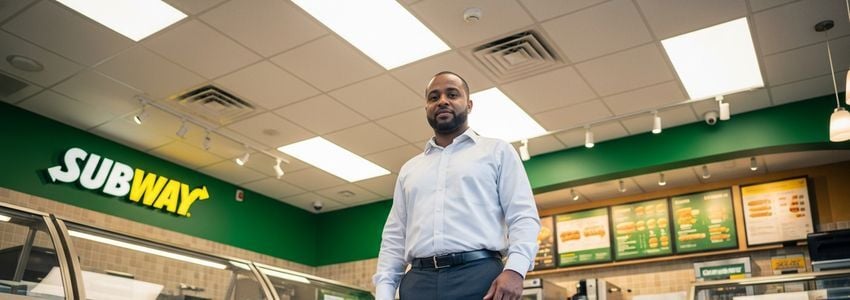
Subway Franchise Loan: The Complete Financing Guide for Subway Franchise Owners
If you are exploring the Subway franchise cost and wondering how to fund your investment, you are not alone - Subway is one of the most accessible and widely recognized franchise opportunities in the world, yet the upfront capital requirements can still be a significant hurdle for most prospective owners. A Subway franchise loan can bridge that gap, giving you the financial foundation to launch, grow, or expand your Subway restaurant with confidence. In this guide, you will find everything you need to know about financing a Subway franchise, from initial investment breakdowns to the best loan programs available today.
In This Article
What Is Subway?
Subway is the world's largest fast-food chain by location count, with more than 37,000 restaurants operating in over 100 countries. Founded in 1965 by Fred DeLuca and Peter Buck, Subway built its brand around customizable submarine sandwiches, fresh ingredients, and a made-to-order experience that set it apart from traditional burger-centric fast food. Today, Subway is owned by Roark Capital Group following a 2023 acquisition and continues to be one of the most recognizable names in quick-service restaurants (QSR).
From a franchise opportunity perspective, Subway stands out for its relatively low cost of entry compared to competitors like McDonald's or Burger King. The brand targets entrepreneurs who want to enter the QSR space without the multi-million-dollar price tag of larger concepts. Subway's real estate flexibility - the chain operates in strip malls, airports, hospitals, universities, and standalone locations - makes it accessible for investors with a variety of site options and budget levels.
According to data from SBA.gov, franchise businesses historically outperform independent startups in their first five years, making brands like Subway an attractive investment vehicle for entrepreneurs seeking structured business ownership with built-in brand recognition. The QSR industry broadly generates hundreds of billions in annual U.S. revenue, with sandwich-focused concepts holding a meaningful and growing share of that market.
Whether you are a first-time franchise buyer or an established operator looking to add a second or third location, understanding the complete Subway franchise cost structure - and how to finance it - is the critical first step toward ownership.
Subway Franchise Costs and Investment Requirements
One of the most frequently searched questions about Subway is: how much does a Subway franchise cost? The answer depends on a range of factors including location type, size, and whether you are opening a new restaurant or purchasing an existing franchise resale. Here is a detailed breakdown of what to expect.
Initial Franchise Fee
Subway charges an initial franchise fee of approximately $15,000 for a new restaurant. This fee grants you the rights to operate under the Subway brand, use its systems, and access its supply chain and training resources. Resale locations may carry a transfer fee rather than the full initial fee, which can reduce your upfront cost if you purchase an existing unit.
Total Initial Investment Range
According to Subway's Franchise Disclosure Document (FDD), the total estimated investment to open a new Subway restaurant ranges from approximately $229,050 to $522,300. This wide range reflects differences in:
- Real estate and leasehold improvements
- Equipment packages (new vs. remanufactured)
- Geographic location and local construction costs
- Whether the site is a traditional storefront, inline mall location, or non-traditional venue (airport, university, etc.)
- Initial inventory and working capital reserves
Ongoing Fees
Beyond the initial investment, Subway franchisees pay ongoing royalty fees of 8% of gross sales and a marketing/advertising fee of 4.5% of gross sales. These are important to factor into your cash flow projections when evaluating financing needs and repayment capacity.
Equipment and Build-Out Costs
A significant portion of the Subway franchise investment goes toward equipment (bread ovens, refrigeration, prep tables, POS systems) and build-out of the physical space. Equipment alone can range from $60,000 to $120,000 depending on the package selected. Leasehold improvements for the space typically add another $50,000 to $150,000 depending on the condition of the space and local contractor rates.
Working Capital
Subway recommends that new franchisees maintain working capital of at least $10,000 to $20,000 to cover the first few months of operations while the business ramps up. Many lenders and advisors recommend keeping three to six months of operating expenses on hand, which for a Subway could range from $30,000 to $75,000 depending on staffing and rent levels.
Ready to Finance Your Subway Franchise?
Get fast, flexible financing from the #1 business lender in the U.S. No obligation - apply in minutes.
Apply Now →Cost Summary Table
| Cost Category | Estimated Range |
|---|---|
| Initial Franchise Fee | ~$15,000 |
| Equipment Package | $60,000 - $120,000 |
| Leasehold Improvements | $50,000 - $150,000 |
| Initial Inventory & Supplies | $5,000 - $15,000 |
| Working Capital | $10,000 - $75,000 |
| Other Fees & Misc. | $5,000 - $20,000 |
| Total Estimated Investment | $229,050 - $522,300 |
Subway Franchise Financing Options
Most Subway franchise owners do not fund their entire investment out of pocket. In fact, the majority of successful franchise operators use some form of external financing to cover startup costs, equipment, and working capital. Here are the most common and effective financing options available for Subway franchisees.
SBA Loans (Small Business Administration)
SBA loans are widely considered the gold standard for franchise financing due to their low interest rates, long repayment terms, and government-backed guarantee that reduces lender risk. The two most relevant SBA programs for Subway franchise buyers are:
- SBA 7(a) Loans: The most popular SBA program, offering up to $5 million for startup costs, equipment, working capital, and real estate. Terms can extend to 10-25 years depending on the use of funds, and rates are typically prime plus 2.75%-4.75%. Subway is on the SBA's approved franchise list, which streamlines the approval process.
- SBA 504 Loans: Best suited for Subway owners purchasing or constructing a building. The 504 program provides long-term, fixed-rate financing for major assets at competitive rates.
You can learn more about SBA loan eligibility and requirements directly at SBA.gov/funding-programs/loans. Crestmont Capital is a preferred SBA loan provider that can guide you through the entire process.
Traditional Bank Loans
Conventional business term loans from banks can be used for Subway franchise financing, though they typically require strong credit, significant collateral, and two or more years of business history. For new franchisees without an existing business track record, bank loans alone may not be sufficient - but they can be a useful complement to SBA financing once you have an established location.
Equipment Financing
Since equipment represents $60,000 to $120,000 of the total Subway investment, equipment financing is a targeted and cost-effective option. Equipment loans allow you to finance ovens, refrigeration units, prep stations, POS systems, and signage using the equipment itself as collateral. This preserves your working capital and often comes with faster approval timelines than traditional term loans. Terms typically range from 2 to 7 years.
Business Lines of Credit
A business line of credit is one of the most flexible funding tools available to franchise owners. Rather than a lump sum, a line of credit gives you ongoing access to capital up to a set limit, which you draw from and repay as needed. For Subway owners, a line of credit is ideal for managing cash flow gaps, covering payroll during slow weeks, funding seasonal promotions, or handling unexpected repairs. Lines of credit are especially useful in the first year of operations.
Small Business Loans
Beyond SBA programs, a variety of small business loans are available from alternative lenders and fintech companies that offer faster approvals and more flexible qualification criteria than traditional banks. These loans can be structured as term loans with fixed monthly payments, making them easy to budget around your revenue projections.
Fast Business Loans
For Subway owners who need capital quickly - whether for a renovation, an equipment replacement, or seizing a new franchise opportunity - fast business loans from Crestmont Capital can provide funding in as little as 24 to 48 hours. These are particularly valuable when a time-sensitive deal is on the table.
Franchisor Financing Programs
Subway has periodically offered or facilitated financing programs for qualified franchisees, including reduced fees and financing assistance for veterans and multi-unit operators. It is worth contacting Subway's franchise development team directly to ask about any current incentive programs, particularly if you are a first-time buyer, a veteran, or a minority-owned business.
Loan Comparison Table
| Loan Type | Amount Range | Term | Best For |
|---|---|---|---|
| SBA 7(a) Loan | Up to $5M | 10-25 years | Full startup funding |
| Equipment Financing | $10K - $500K | 2-7 years | Ovens, POS, refrigeration |
| Business Line of Credit | $10K - $500K | Revolving | Cash flow, working capital |
| Small Business Term Loan | $25K - $500K | 1-5 years | General startup costs |
| Fast Business Loan | $5K - $250K | 3-24 months | Urgent capital needs |
| Bad Credit Business Loan | $5K - $200K | 3-18 months | Credit-challenged borrowers |
How Crestmont Capital Helps Subway Franchisees
Crestmont Capital is the #1 business lender in the United States, with a proven track record of funding franchise owners across every major QSR brand. We specialize in understanding the unique capital needs of franchise operators - from initial startup funding to multi-unit expansion - and we have built our product suite specifically to serve entrepreneurs like you.
Here is what sets Crestmont Capital apart for Subway franchise financing:
- Franchise expertise: Our team has funded hundreds of franchise locations including Subway, Domino's, Taco Bell, KFC, and many others. We understand the FDD, the fee structure, and what lenders need to see to approve your application.
- Multiple loan products: Whether you need SBA financing, equipment loans, a line of credit, or fast-turnaround capital, we have the right product. We match you to the best fit - not just the first available option.
- Fast approvals: Our streamlined process delivers decisions in as little as 24-48 hours for many loan types, so you are not waiting weeks to find out if you qualify.
- Bad credit options: If your credit score is not perfect, we offer bad credit business loans that look beyond your FICO score to evaluate your overall business potential.
- Dedicated advisor support: You get a real person - a franchise finance specialist - who walks you through every step of the process, from application to funding.
We have also helped many Subway owners who have read our similar guides on Taco Bell franchise loans and Denny's franchise loans - franchises with comparable investment structures and financing challenges.
Why Franchise Owners Choose Crestmont Capital
$2B+
Funded to U.S. businesses
24 hrs
Average approval time
50+
Franchise brands funded
#1
Business lender in the U.S.
Real-World Subway Franchise Financing Scenarios
To make this more concrete, here are three realistic scenarios showing how different Subway franchise buyers might approach financing their investment.
Scenario 1: First-Time Franchisee, Single Location
Maria is a former retail manager with a strong credit score (720+), $75,000 in personal savings, and no prior business ownership experience. She is looking to open a single Subway location in a strip mall for an estimated total cost of $320,000.
Financing approach:
- SBA 7(a) loan: $220,000 (covers franchise fee, leasehold improvements, and partial equipment costs)
- Equipment financing: $75,000 (covers the full equipment package)
- Personal equity injection: $25,000
Maria uses her savings as the required equity injection for the SBA loan, finances her equipment separately to preserve cash flow, and ends up with a manageable monthly payment structure across two loan products. Crestmont Capital handles both the SBA loan application and the equipment financing, streamlining her experience.
Scenario 2: Multi-Unit Expansion
James already owns two profitable Subway locations and wants to add a third. His existing business generates $1.2M in annual revenue across his two restaurants. He needs $280,000 to open his third location.
Financing approach:
- Business term loan: $200,000 secured against his existing business revenue
- Business line of credit: $80,000 for working capital and opening inventory
Because James has proven revenue and an established business track record, he qualifies for a traditional business term loan at favorable rates. His line of credit gives him flexibility during the ramp-up period of his new location. According to Forbes, multi-unit franchise operators consistently outperform single-unit owners in profitability and long-term wealth building, making James's expansion strategy a sound business decision.
Scenario 3: Credit-Challenged Owner Seeking Startup Capital
David has a credit score of 580 due to some past medical debt but has been working in the restaurant industry for 12 years and has $50,000 saved. He wants to open a Subway in a non-traditional location (a university food court) with an estimated investment of $250,000.
Financing approach:
- Bad credit business loan: $150,000 (based on his strong industry experience and cash reserves)
- Equipment financing: $65,000 (equipment serves as collateral, reducing credit risk)
- Personal equity injection: $35,000
David's situation demonstrates that a less-than-perfect credit score does not automatically disqualify you from franchise ownership. Alternative lenders like Crestmont Capital evaluate the complete picture - industry experience, savings, and the strength of the franchise brand - not just the FICO number.

Who Qualifies for a Subway Franchise Loan?
Qualification requirements vary by lender and loan type, but here is a general framework for what most lenders look for when evaluating a Subway franchise loan application.
SBA Loan Qualifications
- Credit score: 680+ (preferred 700+)
- Down payment / equity injection: 10%-30% of total project cost
- Business plan and financial projections
- Personal financial statements
- Clean federal tax status (no outstanding federal debt or delinquencies)
- U.S. citizenship or permanent residency
Equipment Financing Qualifications
- Credit score: 600+ (some lenders go lower)
- At least 1 year in business (for existing operators - startups may qualify with strong personal credit)
- Equipment quote from a Subway-approved vendor
- Equipment serves as collateral
Alternative/Fast Loan Qualifications
- Credit score: 550+ (some programs as low as 500)
- At least 6 months in business (for existing operators)
- Minimum monthly revenue: $10,000+
- Bank statements for the past 3-6 months
What Helps Your Application
Beyond the minimum requirements, the following factors can significantly strengthen your loan application:
- Restaurant or food service industry experience
- Strong personal financial statements and low personal debt-to-income ratio
- A well-prepared business plan with realistic financial projections
- Evidence of community ties (long-term local resident, established relationships)
- Completion of Subway's franchisee training program before loan closing
According to data from Census.gov, franchise-owned businesses represent a significant and growing segment of U.S. small business ownership, with strong survival rates compared to independent startups - a fact that works in your favor when lenders evaluate your application.
See If You Qualify for a Subway Franchise Loan
Pre-qualify in minutes with no impact to your credit score. Our specialists are ready to help.
Check My Options →How to Get Started
Complete our quick application at offers.crestmontcapital.com/apply-now - takes just a few minutes.
A Crestmont Capital advisor will review your needs and match you with the right financing option.
Receive your funds and put them to work - often within days of approval.
Frequently Asked Questions
Conclusion
The Subway franchise represents one of the most accessible entry points into the quick-service restaurant industry, with a total investment ranging from approximately $229,050 to $522,300 and a globally recognized brand behind you from day one. The Subway franchise cost, while meaningful, is well within reach for motivated entrepreneurs who understand how to leverage the right financing tools.
Whether you are considering an SBA loan for your full startup package, equipment financing for your kitchen build-out, a business line of credit for working capital flexibility, or a fast business loan to seize a time-sensitive opportunity, Crestmont Capital has the products, expertise, and speed to get you funded. We have helped franchise owners across dozens of major brands - from KFC to Burger King - structure and secure financing that actually works for their business model.
The QSR industry is resilient, and Subway's global footprint and brand evolution under new ownership position it well for the future. As Bloomberg has reported, franchise systems with strong brand recognition and supply chain support consistently outperform independent restaurant concepts during economic downturns - making now a strong time to invest in a proven franchise model.
Do not let financing uncertainty stand between you and franchise ownership. Apply today and let Crestmont Capital's franchise finance team put together the right funding solution for your Subway journey.
Start Your Subway Franchise Today
Apply now and get a funding decision in as little as 24 hours. No obligation, no hard credit pull to get started.
Apply Now →Disclaimer: The information provided in this article is for general educational purposes only and is not financial, legal, or tax advice. Funding terms, qualifications, and product availability may vary and are subject to change without notice. Crestmont Capital does not guarantee approval, rates, or specific outcomes. For personalized information about your business funding options, contact our team directly.








