
 (800) 949-0401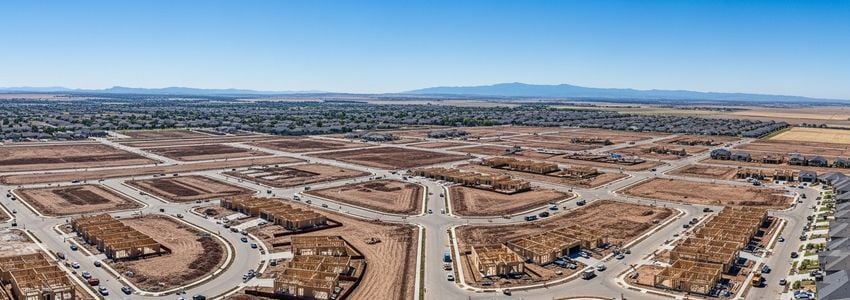
Subdivision Developer Loans: The Complete Financing Guide for Subdivision Developers
Subdivision development loans are specialized financing solutions designed for real estate developers who purchase raw land, divide it into individual lots, and build infrastructure for residential communities. Whether you are developing a 10-lot neighborhood or a 200-lot master-planned community, subdivision development loans provide the capital you need to cover land acquisition, entitlements, site work, utilities, roads, and construction. Understanding the financing landscape is critical to keeping your project moving and your margins intact.
In This Article
- What Is a Subdivision Development Loan?
- Types of Subdivision Financing
- How Subdivision Development Loans Work
- Loan Amounts, Rates, and Terms
- Qualification Requirements
- How Crestmont Capital Helps Subdivision Developers
- Real-World Scenarios
- Comparing Financing Options
- Frequently Asked Questions
- How to Get Started
What Is a Subdivision Development Loan?
A subdivision development loan is a form of real estate construction financing that provides developers with funds to transform raw or partially developed land into sale-ready residential lots. Unlike a standard residential mortgage or commercial real estate loan, subdivision loans are structured around the development timeline and the unique risk profile of land entitlement and infrastructure buildout.
Lenders evaluate subdivision loans based on the projected lot value once the project is complete, the developer's track record, the strength of the local housing market, and the feasibility of the development plan. Because subdivisions involve significant upfront costs before any lots are sold, lenders typically use a draw-schedule structure that releases funds in phases as specific milestones are reached.
Subdivision development loans are commonly used by residential land developers, homebuilders acquiring lots, real estate investment companies, and partnership entities undertaking planned residential communities. The financing can cover land purchase, grading and excavation, utility installation, road construction, permit and entitlement costs, and sometimes even model home construction.
Key Insight: According to the U.S. Census Bureau, single-family housing starts regularly exceed 800,000 annually, and the majority of those homes are built on subdivided lots. Subdivision developers are the backbone of America's new-home supply, and specialized financing makes that pipeline possible.
Types of Subdivision Financing
Subdivision development financing is not a single product. Developers typically use a combination of loan types depending on where they are in the project lifecycle. Understanding each type helps you structure your financing stack effectively and avoid costly gaps in capital.
Land Acquisition Loans
Before a single permit is pulled, most developers need to purchase the raw land. Land acquisition loans are short-term loans secured by the parcel itself. These loans typically have higher interest rates and lower loan-to-value ratios than improved property loans, reflecting the speculative nature of undeveloped land. LTV ratios generally range from 50% to 65% for raw land.
Land Development Loans
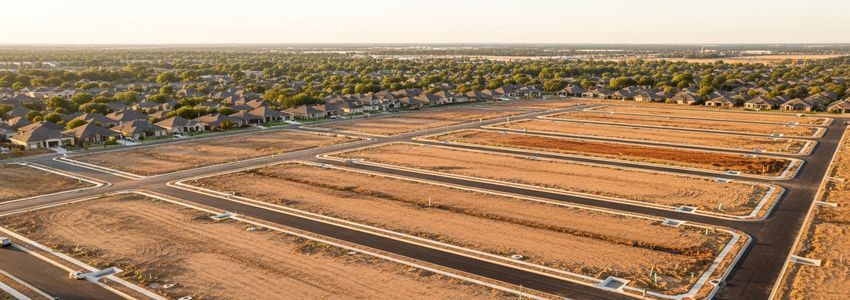
Once land is acquired and entitlements are in progress, a land development loan funds the horizontal construction: grading, storm drainage, sanitary sewer, water mains, curb-and-gutter work, and street paving. These loans are draw-based and tied to construction milestones. They typically carry LTV ratios of 60% to 75% of the as-completed appraised value of the finished lots.
Acquisition and Development (A&D) Loans
Many lenders combine land purchase and development costs into a single A&D loan. This is often the most efficient structure for smaller developers because it consolidates two closing processes into one and simplifies the draw schedule. A&D loans are particularly common in markets where land and development timelines are tightly linked.
Revolving Land Credit Lines
Larger developers with multiple active projects sometimes use revolving credit facilities that allow them to draw funds as needed, repay after lot sales, and redraw for new acquisitions. These facilities require strong developer track records and substantial project portfolios to qualify.
SBA 504 Loans for Developers
In certain cases, particularly when a development company owns its own business-use facilities, SBA 504 loans can be used to finance owner-occupied real estate or fixed assets associated with the development business. While not a direct subdivision loan, SBA 504 financing can free up developer capital for land projects.
Private and Bridge Financing
When conventional lenders are not available, developers turn to private lenders and bridge loans to close time-sensitive land deals or fund entitlement work while longer-term financing is arranged. Bridge loans carry higher interest rates but offer speed and flexibility that conventional lenders cannot match.
By the Numbers
Subdivision Development Lending - Key Statistics
800K+
Annual U.S. single-family housing starts
60-75%
Typical LTV ratio on development loans
12-24
Typical loan term in months
8-14%
Typical interest rate range in 2026
How Subdivision Development Loans Work
Understanding the mechanics of a subdivision development loan helps you plan your project more effectively and avoid surprises during the financing process. Here is how a typical subdivision development loan works from application to payoff.
Phase 1: Pre-Application and Feasibility
Before approaching a lender, developers need a well-developed project plan. This includes a site plan or plat, a pro forma showing projected lot counts, sale prices, development costs, and profit margins, as well as preliminary entitlement status. Lenders want to see that the developer has done their homework and that the market supports the planned development.
Phase 2: Application and Underwriting
The lender reviews the developer's financial statements, personal net worth, credit history, and prior development experience. They also commission an appraisal to establish the as-completed value of the finished lots, which drives the loan amount. Underwriting typically takes two to six weeks for conventional lenders and can be faster for private lenders.
Phase 3: Loan Closing and Initial Draw
At closing, the lender funds the land acquisition portion (if it is an A&D loan) or commits to the development credit facility. The developer receives an initial draw to begin site preparation. Future draws are tied to completed construction milestones verified by a lender-appointed inspector.
Phase 4: Development Draws
As the developer completes phases of horizontal construction - clearing, grading, underground utilities, paving - they submit draw requests. The lender's inspector verifies the work is complete and releases additional funds. This draw structure protects both the lender and the developer from cost overruns and ensures the project stays on track.
Phase 5: Lot Sales and Loan Repayment
As finished lots are sold to homebuilders or individual buyers, the proceeds are used to repay the development loan. Most subdivision loans include a "release price" per lot - a fixed amount that must be paid to the lender to release the lien on each sold lot. Developers use proceeds from early lot sales to fund later construction phases, creating a self-funding development cycle.
Ready to Finance Your Next Subdivision?
Crestmont Capital specializes in real estate development financing. Get the capital you need to move your project forward - fast, flexible, and tailored to your timeline.
Apply Now ->Loan Amounts, Rates, and Terms
Subdivision development loans vary widely in size and structure depending on the project scope, the developer's experience, and the lender type. Here is what developers can generally expect in today's lending environment.
Loan Amounts
Subdivision loans typically range from $500,000 for small infill projects to $50 million or more for large master-planned communities. Most community bank and credit union lenders cap their exposure at $5 million to $10 million per project. For larger developments, national lenders, debt funds, and syndicated credit facilities are required. The loan amount is usually calculated as a percentage of the as-completed appraised value of the finished lots.
Interest Rates
In 2026, subdivision development loan rates typically range from 8% to 14% depending on the lender type, borrower creditworthiness, and market conditions. Community banks and credit unions tend to offer the most competitive rates. Private and hard money lenders charge higher rates in exchange for faster processing and more flexible underwriting. Most loans are priced at a spread above the Prime Rate or SOFR.
Loan Terms
Development loans are short-term instruments, typically running 12 to 24 months with extension options. The timeline corresponds to the expected development and sellout period of the project. Interest is usually paid monthly on outstanding balances, with principal repaid as lots are sold. Some lenders offer interest reserves built into the loan structure to help developers manage cash flow during the pre-sale period.
Fees and Closing Costs
Developers should budget for origination fees of 1% to 3% of the loan amount, appraisal costs, environmental reports, legal fees, and inspection fees throughout the draw process. Some lenders also charge construction management fees or require the developer to maintain a deposit account at the lending institution.
| Lender Type | Rate Range | Max LTV | Speed |
|---|---|---|---|
| Community Bank | 8-10% | 70-75% | 30-60 days |
| Regional Lender | 9-11% | 65-75% | 30-45 days |
| Private/Alternative | 10-14% | 60-70% | 7-21 days |
| Debt Fund | 10-13% | 65-75% | 14-30 days |
Qualification Requirements
Qualifying for a subdivision development loan requires demonstrating both personal financial strength and professional development experience. Lenders take a holistic view of the developer's ability to execute the project and repay the loan. Here are the key factors lenders evaluate.
Developer Experience
Most conventional lenders require borrowers to have completed at least one or two comparable projects. First-time developers face significantly higher hurdles and may need to partner with an experienced developer, provide additional equity, or use private lending sources. Your project track record - including past projects' timelines, budgets, and profitability - is one of the most important qualification factors.
Personal Financial Strength
Lenders typically require developers to have a net worth equal to or greater than the loan amount and liquidity (cash and near-cash assets) equal to at least 10% to 20% of the loan. Strong personal credit scores (generally 650+) also help secure better rates and terms. Personal guarantees are standard on most development loans.
Project Feasibility
The development plan must be financially sound. Lenders review the pro forma carefully, stress-testing assumptions about lot sale prices, absorption rates, and development costs. A market study showing demand for the product type in the target location strengthens the application considerably.
Entitlement Status
The farther along the entitlement process, the more lender-friendly the loan. A project with approved zoning, final plat approval, and utility commitments is far easier to finance than a project still in pre-entitlement. Lenders factor entitlement risk into both the loan amount and the interest rate.
Equity Contribution
Developers are expected to contribute meaningful equity to the project - typically 25% to 40% of total project cost. Equity can come in the form of cash, land value (if already owned), or completion guarantees. Higher equity contributions generally unlock better loan terms.
Pro Tip: Developers with strong relationships with local homebuilders and pre-sales commitments can often negotiate better loan terms. Lenders view lot purchase agreements as risk mitigants, reducing the speculative nature of the development.
How Crestmont Capital Helps Subdivision Developers
Crestmont Capital has extensive experience working with real estate developers at every stage of the subdivision process. As a direct lender rated #1 in the country, we provide fast, flexible financing solutions that match the pace and complexity of residential land development projects.
Through our construction and land development financing programs, we offer acquisition and development loans, bridge financing for time-sensitive land purchases, and commercial financing solutions tailored to the unique needs of subdivision developers.
Our team understands that development timelines are rarely predictable. We work with you to structure loans that accommodate market conditions, entitlement delays, and construction variables - not just the idealized version of the project. Our small business loan programs complement our real estate financing, helping developer entities access the working capital they need to manage overhead, cover carrying costs, and fund project management during the development phase.
For developers exploring larger projects, our commercial real estate financing options provide access to institutional-grade capital with competitive terms. We also work alongside clients to help them understand how recent publications like our guide on land acquisition business loans and condo development business loans can inform your broader financing strategy.
Development-Ready Capital, On Your Timeline
From first lot to final sale, Crestmont Capital supports subdivision developers with flexible financing and expert guidance at every stage.
Get Your Funding ->Real-World Scenarios for Subdivision Development Loans
Understanding how subdivision development loans apply in real situations helps developers see how financing can be structured for different project types and scales.
Scenario 1: Small Infill Subdivision (15 Lots)
A developer acquires a 7-acre parcel in a growing suburb for $800,000. With an A&D loan covering 70% of project costs, the developer secures $2.1 million to cover land, infrastructure, and entitlement work. The finished lots are valued at $120,000 each, and the developer sells 12 lots to a regional homebuilder in bulk at a 20% discount, with the remaining 3 lots sold individually. Total repayment occurs within 14 months of closing.
Scenario 2: Mid-Sized Planned Community (75 Lots)
An experienced developer teams with a private equity partner to develop a 75-lot community targeting entry-level buyers. The project uses a layered capital stack: a senior land development loan at 65% LTV for horizontal construction, and a mezzanine equity contribution from the partner. The phased development plan allows the developer to begin selling Phase 1 lots before Phase 2 infrastructure is complete, recycling capital through the project.
Scenario 3: Acquisition Bridge to Conventional Development Loan
A developer identifies an underentitled parcel with excellent potential but needs to close in 10 days before a competing offer surfaces. A private bridge lender provides a 90-day loan to close the acquisition. During that period, the developer completes the entitlement application and secures a conventional development loan from a community bank, using the proceeds to retire the bridge and begin construction.
Scenario 4: Workforce Housing Subdivision
A municipality partners with a local developer to create a workforce housing subdivision using a combination of low-interest USDA Business and Industry loans, state grant funding, and a private development loan. The mixed-capital stack reduces the developer's equity requirement and lowers the blended cost of capital significantly, making the project financially feasible where conventional financing alone would not pencil out.
Scenario 5: Distressed Subdivision Completion
A developer acquires a partially completed subdivision from a bank that took the project back through foreclosure. With 40 of 80 lots already finished but the original developer gone, this developer uses a completion loan to fund the remaining infrastructure. The significant discount to land cost and strong local demand make this one of the most profitable deals the developer has done.
Scenario 6: Luxury Lot Development
A developer creates a 30-lot luxury community with minimum lot sizes of one acre. The higher per-lot price point justifies a more conservative development pace. The developer uses a land development loan with a 15-month term, selling 20 lots to custom home buyers who purchase directly. The high per-lot release price allows rapid loan paydown, and the developer achieves 35% margin on the project.
Comparing Subdivision Development Financing to Other Real Estate Loans
Subdivision development loans occupy a specific niche within the broader real estate financing ecosystem. Understanding how they compare to other loan types helps developers choose the right tool for each situation.
Unlike a residential construction loan, which finances the vertical construction of a specific home, a subdivision development loan funds the horizontal infrastructure that makes the lots buildable. A developer typically uses a development loan first, and then a homebuilder or individual buyer obtains a construction loan to build on the finished lots.
Compared to a commercial real estate mortgage, subdivision loans are shorter-term, carry higher interest rates, and have more complex draw structures because of the speculative nature of the underlying asset. A stabilized commercial property generates rent income, making it a lower-risk credit than speculative land development.
Relative to SBA loans, subdivision development loans are more directly tied to the real estate project itself rather than the operating business. SBA loans can be an excellent complement for the development company's working capital and fixed asset needs, but they do not directly finance land development in most cases.
Quick Guide
How Subdivision Development Financing Works - At a Glance
Secure the land under contract, complete initial feasibility, and develop your pro forma and site plan.
Submit your loan package including financial statements, project pro forma, market analysis, and entitlement status.
Lender conducts due diligence, orders an appraisal, and structures the loan terms and draw schedule.
Loan closes, construction begins, and funds are released in phases as milestones are verified by the lender's inspector.
As finished lots sell, proceeds are applied to the loan balance per the agreed release schedule until payoff.
Frequently Asked Questions
How to Get Started
Assemble your pro forma, site plan, entitlement documents, financial statements, and track record before applying. The more complete your package, the faster lenders can respond.
Complete our quick application at offers.crestmontcapital.com/apply-now - takes just a few minutes and starts the conversation with our development financing team.
A Crestmont Capital advisor will review your project needs and match you with the right financing structure - whether that is an A&D loan, bridge financing, or a commercial real estate credit facility.
Once approved, your loan closes and you have the capital to move forward. We work with you throughout the draw process to keep your project funded and on schedule.
Conclusion
Subdivision development loans are the engine that powers residential land development in America. Whether you are developing your first 10-lot subdivision or your twentieth 200-lot community, understanding how subdivision development loans work - their structures, rates, qualification requirements, and repayment mechanics - is essential to executing profitable projects and building a sustainable development business.
The right financing structure can mean the difference between a project that pencils out and one that does not. Subdivision development loans allow developers to leverage their equity, recycle capital through lot sales, and take on multiple projects simultaneously. With proper planning, a realistic pro forma, and the right lending partner, subdivision development remains one of the most rewarding niches in real estate.
Crestmont Capital is ready to help you take your subdivision development goals from concept to completed community. As the #1 business lender in the country, we bring deep expertise in real estate development financing, fast approvals, and the flexibility that project timelines demand. Apply today and let's talk about your next project.
Start Your Subdivision Development Loan Today
Join thousands of real estate developers who trust Crestmont Capital for fast, flexible financing solutions. Apply online in minutes - no obligation.
Apply Now ->Disclaimer: The information provided in this article is for general educational purposes only and is not financial, legal, or tax advice. Funding terms, qualifications, and product availability may vary and are subject to change without notice. Crestmont Capital does not guarantee approval, rates, or specific outcomes. For personalized information about your business funding options, contact our team directly.








