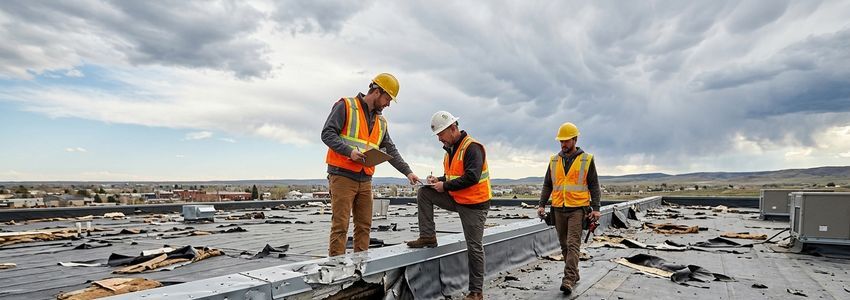
Storm damage roof repair financing helps business owners cover the gap between what a storm-damaged commercial roof actually costs to fix and what an insurance payout, deductible, or cash reserve can absorb. A single severe wind or hail event can knock thousands of dollars off a roof's remaining lifespan in an afternoon, and the repair bill rarely arrives on a convenient timeline. When a leaking or partially collapsed roof threatens inventory, equipment, or the ability to keep the doors open, business owners need a way to fund the fix now rather than waiting weeks for a claim to settle.
This guide breaks down how storm damage roof repair financing works, why insurance so often falls short after a major weather event, which loan products fit different repair scenarios, and how Crestmont Capital helps business owners move from storm damage to a fully repaired roof without draining working capital.
In This Article
- What Is Storm Damage Roof Repair Financing?
- Why Insurance Often Falls Short After a Storm
- How Storm Damage Roof Financing Works
- Types of Financing for Storm Roof Repairs
- Who This Financing Is Best For
- Comparing Your Repair Financing Options
- How Crestmont Capital Helps
- Real-World Scenarios
- How to Get Started
- Frequently Asked Questions
What Is Storm Damage Roof Repair Financing?
Storm damage roof repair financing is business capital, typically a working capital loan, business line of credit, or short-term term loan, used specifically to fund the repair or partial replacement of a commercial roof after wind, hail, hurricane, or heavy rain damage. Rather than being secured by the roof or the building itself, most of these loans are underwritten against the strength of the business's cash flow and revenue history, which means approval and funding can move far faster than a traditional real estate loan.
Roof damage from severe weather is one of the most common property claims commercial owners file, and it is also one of the most likely to produce a coverage gap. A policy might cap wind or hail payouts below the actual repair estimate, apply a separate and higher storm deductible, or simply take weeks to process while water continues leaking into the building. Storm damage roof repair financing exists to close that gap so contractors can start work immediately.
Key Stat: The United States recorded 23 separate billion-dollar weather and climate disasters in a recent year, totaling more than $100 billion in damage, according to federal disaster tracking data, underscoring how frequently commercial roofs across the country take direct storm hits.
Because roof damage can affect almost any type of commercial building, this financing is not limited to a single industry. Retail storefronts, warehouses, restaurants, medical offices, manufacturing plants, and multi-tenant office buildings all face the same basic problem after a storm: a compromised roof that needs to be fixed fast, and a repair bill that may not be fully covered.
Why Insurance Often Falls Short After a Storm
Business owners are frequently caught off guard by how much of a storm-related roof bill lands outside their coverage. A few structural reasons explain why this happens so consistently after wind and hail events.
- Separate wind/hail deductibles: Many commercial property policies carry a distinct, often percentage-based, deductible for windstorm or hail damage that is much higher than the standard property deductible.
- Actual cash value payouts: Some policies pay actual cash value on an aging roof rather than full replacement cost, factoring in depreciation and leaving a real dollar gap versus the contractor's quote.
- Cosmetic damage exclusions: Certain policies exclude "cosmetic" hail damage (dents in metal panels, for example) even when the underlying membrane or seal has been compromised.
- Claims backlogs after regional storms: When a storm hits a wide area, adjusters get backed up for weeks, and every day of delay is another day water can get into insulation, drywall, inventory, or electrical systems.
- Scope disputes: Insurers and roofing contractors frequently disagree on whether a full replacement or a partial repair is required, and the business is often left covering the difference to get the job done right.
Business owners who line up financing quickly after storm damage is discovered are able to authorize repairs within days rather than waiting on a claim to fully resolve. That speed frequently prevents a moderate repair from turning into a full roof replacement once water intrusion spreads to decking, insulation, and structural framing.
Need Fast Capital After Storm Damage?
Get flexible financing from the #1 business lender in the U.S. Apply in minutes, no obligation required.
Apply Now →Common Causes of Storm Roof Damage
Not every storm produces the same kind of roof damage, and understanding the specific failure mode often helps a business owner talk more effectively with both the insurance adjuster and the financing provider.
- Wind uplift: Sustained high winds can lift and peel back membrane roofing at the edges and seams, especially on flat or low-slope commercial roofs, sometimes tearing large sections away entirely.
- Hail impact: Hail bruises and punctures membrane roofing, dents metal panels, and cracks skylights or rooftop equipment housings, often leaving damage that is not visible from the ground.
- Wind-driven debris: Tree limbs, loose signage, and debris from neighboring properties can puncture or tear roofing material during a storm, creating point failures that let water in quickly.
- Ponding and drainage failure: Heavy, sustained rainfall can overwhelm roof drains and scuppers, causing water to pond and eventually find its way through seams, flashing, or aging membrane.
- Flashing and seam failure: Storms frequently expose weaknesses in flashing around HVAC units, vents, and parapet walls that were already marginal before the weather event made them fail outright.
Each of these failure types carries a different typical repair cost and timeline. A localized puncture repair might run a few thousand dollars and take a single day, while wind uplift across a significant section of roof can require a partial or full replacement running into six figures and taking several weeks. Financing scales to match either scenario, which is part of why so many contractors and property managers recommend lining up a funding source before the estimate even comes back.
How Storm Damage Roof Financing Works
The process for funding a storm-damaged roof repair typically follows the same basic path regardless of loan type, though timelines vary by product.
Step 1: Get a roofing contractor's damage assessment and repair estimate. Most lenders will ask for a written scope of work and cost estimate from a licensed roofing contractor before funding, both to confirm the amount needed and to verify the work is legitimate.
Step 2: File the insurance claim (if applicable) but do not wait on it. Filing the claim early preserves your right to any eventual payout, but lenders understand that claims can take weeks. Financing is designed to bridge that exact gap, not to replace the claim.
Step 3: Submit a funding application with recent bank statements and basic business financials. Because most storm repair financing is underwritten on cash flow rather than the property itself, the application process is lighter than a mortgage-style loan and documentation requirements are minimal.
Step 4: Receive a funding decision, often within 24 to 48 hours. Working capital and short-term loan products built for this kind of need are designed for speed, not a multi-week underwriting cycle.
Step 5: Authorize repairs and reconcile any insurance proceeds later. If and when an insurance payout arrives, many business owners use it to pay down the financing balance early, reducing total interest paid over the life of the loan.
By the Numbers
Storm Damage and Small Business Recovery
$100B+
Total U.S. billion-dollar weather disaster damage in a single recent year
40%
Of small businesses that never reopen after a major disaster, per federal disaster recovery data
1-2 Days
Typical funding turnaround for working capital and short-term loan storm repair financing
1 in 10
Small employer firms reporting natural disaster losses in a given 12-month period, per Federal Reserve small business survey data
Types of Financing for Storm Roof Repairs
Several financing products can fund a storm-damaged roof repair, and the right fit depends on the size of the repair, how quickly funds are needed, and how the business plans to repay.
Unsecured Working Capital Loans
These provide a lump sum based on business revenue and cash flow, with repayment structured over a fixed term. They are the most common choice for roof repairs because they fund quickly and do not require the roof or building as collateral.
Business Line of Credit
A revolving line lets a business draw only what is needed for the repair, and it stays available afterward for the next unexpected expense. This is a strong option for property owners managing multiple buildings or ongoing maintenance costs.
Short-Term Business Loans
Built for exactly this kind of urgent, well-defined expense, short-term loans offer fast approval and a compressed repayment schedule, often 6 to 18 months, which suits a repair that will likely be partially reimbursed by insurance.
Equipment Financing (for HVAC or Rooftop Unit Damage)
When a storm damages rooftop HVAC units, exhaust fans, or other roof-mounted equipment alongside the membrane itself, equipment financing can fund the replacement units separately from the structural roof repair.
Merchant Cash Advance (Situational Use)
For businesses with strong, steady card sales but limited time in operation or thinner credit files, a merchant cash advance can sometimes fund a roof repair faster than other products, though the cost of capital is typically higher. This tends to be a fallback option rather than a first choice, best suited to businesses that have already been declined for a working capital loan or line of credit.
SBA Disaster Loans (Federally Backed, Slower Timeline)
When storm damage occurs in a federally declared disaster area, SBA disaster loans can offer favorable long-term rates for the physical damage portion of a repair. The tradeoff is speed: SBA disaster loan decisions commonly take one to three weeks and require substantially more documentation than a private working capital loan. Many business owners pursue both tracks at once, using private financing to authorize repairs immediately while an SBA disaster loan application processes in parallel, then using SBA proceeds to pay down the private loan once approved.
Who This Financing Is Best For
Storm damage roof repair financing tends to make the most sense for business owners who fit one or more of these situations:
- The insurance payout is delayed, disputed, or capped below the actual repair cost
- The business cannot afford to leave a compromised roof exposed while a claim is processed
- Cash reserves exist but the owner would rather preserve them for payroll and inventory
- The building houses inventory, equipment, or records that would be damaged by continued water intrusion
- The roof damage is affecting customer-facing operations, such as a leak in a retail sales floor or restaurant dining room
Comparing Your Repair Financing Options
| Option | Speed | Collateral | Best For |
|---|---|---|---|
| Working Capital Loan | 24-48 hours | Unsecured | One-time, well-defined repair cost |
| Business Line of Credit | 1-3 days | Unsecured | Ongoing property maintenance needs |
| Short-Term Loan | 1-2 days | Unsecured | Repairs expecting partial insurance reimbursement |
| Equipment Financing | 2-5 days | Secured by equipment | Rooftop HVAC/unit replacement alongside roof repair |
How Crestmont Capital Helps
Crestmont Capital works with business owners across the country to get storm repair funding moving quickly, without the paperwork burden of a traditional bank loan. Through unsecured working capital loans, a business line of credit, and commercial financing options, business owners can secure the capital needed to authorize roof repairs the same week damage is discovered, rather than waiting on an insurance timeline they cannot control.
For businesses that also need to replace damaged rooftop HVAC units, exhaust systems, or other roof-mounted equipment, Crestmont's equipment financing programs can fund those replacements alongside the structural roof work. This guide builds on the approach covered in Crestmont's broader look at roof leak repair financing and pairs well with Crestmont's SBA disaster loan guide for owners who also want to explore federally backed disaster recovery options in parallel with private financing.
Crestmont's application process is built for speed: a short online form, recent bank statements, and a same-week funding decision in most cases. There is no requirement to put the building itself up as collateral, and funds can be used for materials, labor, permits, or any combination of repair costs the contractor's estimate covers.
Don't Let a Damaged Roof Shut Down Operations
See how much working capital your business qualifies for today. No obligation, no impact to explore your options.
Apply Now →
Real-World Scenarios
Retail Strip Mall After a Hailstorm
A regional hailstorm dents metal roof panels and cracks several skylights across a retail strip center. The insurer's initial estimate covers roughly 60% of the roofing contractor's quote, citing depreciation on the 14-year-old roof. The property owner uses a working capital loan to cover the remainder immediately, avoiding weeks of leaks into three occupied retail units, and applies any later insurance supplement toward the loan balance.
Warehouse After High Winds
A distribution warehouse loses a large section of membrane roofing during a high-wind event, exposing pallets of inventory to rain within hours. The owner secures a short-term loan same-day to authorize emergency tarping and permanent repair, protecting several hundred thousand dollars in stored goods before the insurance adjuster even arrives on site.
Restaurant After a Hurricane-Adjacent Storm System
A restaurant's dining room ceiling begins leaking after a tropical storm system passes through the region. The policy's named-storm deductible is significantly higher than the standard deductible, leaving a real gap. The owner uses a business line of credit to fund immediate repairs so the dining room can reopen within days rather than staying closed for weeks during peak season.
Manufacturing Facility With Rooftop Unit Damage
A manufacturer's roof and two rooftop HVAC units are damaged in the same storm. The roof membrane repair is funded through a working capital loan, while the HVAC unit replacement is funded separately through equipment financing, allowing both projects to move forward at once instead of sequentially.
Multi-Tenant Office Building Awaiting Claim Approval
A property manager's insurer requests additional documentation before approving a roof claim, pushing the timeline past 45 days. Tenants are threatening to withhold rent over ongoing leaks. The owner uses financing to authorize repairs immediately, protecting tenant relationships and rental income while the claim continues processing in parallel.
Multi-Location Businesses After a Regional Storm
A retail chain with several locations in the storm's path faces roof damage at three different sites simultaneously, each with a different insurance adjuster assigned and a different claim timeline. Rather than waiting for all three claims to resolve at different speeds, the owner secures a single business line of credit sized to cover all three repairs, draws against it location by location as contractors are scheduled, and repays the balance as each insurance settlement arrives. This keeps every location moving on its own timeline instead of the slowest claim holding up the other two.
How to Get Started
Have a licensed roofing contractor assess the damage and provide a detailed scope of work and cost.
Do this in parallel with financing, not instead of it, to preserve any eventual payout.
Submit a short application with recent bank statements. Most decisions come back within 24 to 48 hours.
Move forward with the contractor and apply any insurance proceeds to the loan balance once the claim settles.
Pro Tip: Document all storm damage with dated photos before any repair work begins. This protects both your insurance claim and provides a clean paper trail if a lender requests supporting documentation.
Frequently Asked Questions
What is storm damage roof repair financing?
It is business financing, typically an unsecured working capital loan, line of credit, or short-term loan, used to cover the cost of repairing a commercial roof damaged by wind, hail, or heavy storm activity when insurance does not fully cover the expense.
Why doesn't insurance always cover the full cost of a storm-damaged roof?
Many commercial policies apply a separate, higher deductible for wind or hail damage, pay actual cash value instead of full replacement cost on older roofs, or exclude certain types of cosmetic damage, leaving a gap between the payout and the contractor's actual bill.
How fast can I get funding after a storm damages my roof?
Working capital and short-term loan products designed for urgent repairs typically return a funding decision within 24 to 48 hours, with funds often available shortly after approval.
Do I need to wait for my insurance claim to settle before applying for financing?
No. Financing is designed to move in parallel with your insurance claim, not after it. You can authorize repairs immediately while the claim continues processing, then apply any eventual payout toward the loan balance.
Is the roof itself used as collateral for this type of loan?
Usually not. Most storm damage repair financing is unsecured and underwritten based on the business's cash flow and revenue history rather than the property itself, which speeds up approval significantly.
What documents do I need to apply?
Most lenders ask for recent business bank statements, basic business financials, and ideally a contractor's repair estimate. Documentation requirements are typically lighter than a traditional bank loan.
Can this financing also cover rooftop HVAC or equipment damaged in the same storm?
Yes, often through a separate equipment financing product that covers rooftop units, exhaust fans, or other equipment alongside the structural roof repair, allowing both to be funded at the same time.
What is the difference between a working capital loan and a business line of credit for roof repairs?
A working capital loan provides a lump sum for a specific, one-time repair cost. A business line of credit is revolving, letting you draw only what you need now and keep the remainder available for future maintenance or emergencies.
What credit profile is typically required for storm repair financing?
Lenders generally weigh consistent business revenue and cash flow more heavily than a single credit score. Businesses with steady deposits and reasonable time in operation typically qualify even with less-than-perfect personal credit.
How much can I borrow to repair a storm-damaged roof?
Loan amounts are typically sized to the contractor's repair estimate and the business's revenue profile, ranging from a few thousand dollars for minor repairs to well into six figures for full commercial roof replacements.
Should I get multiple contractor estimates before applying for financing?
It is generally a good idea. Multiple estimates help confirm a fair market price and give you documentation that supports both your insurance claim and your financing application.
Can I use this financing if I am a tenant, not the building owner?
Yes, if your lease makes you responsible for roof repairs or you need to fund interior damage caused by a landlord's slower repair timeline, business financing can cover those costs even without owning the building.
What happens if my insurance claim is later denied entirely?
The financing still stands on its own, structured as a standard business loan repaid according to its terms. This is one reason many owners treat financing as the primary repair funding source and any insurance proceeds as a bonus that shortens the payoff timeline.
Can financing also cover temporary measures like tarping or emergency water mitigation?
Yes. Funds from a working capital loan or line of credit can typically be used for any combination of emergency mitigation, temporary repairs, and the final permanent roofing work, since the financing is not restricted to a single line-item use.
How do I get started with Crestmont Capital for storm roof repair financing?
Start with a short online application and recent bank statements. Most applicants receive a funding decision within one to two business days, with no obligation to accept an offer.
Get Your Roof Repaired Without Draining Cash Reserves
Apply today and see your funding options in minutes, backed by the #1 business lender in the U.S.
Apply Now →Conclusion
A storm-damaged roof does not wait for an insurance claim to catch up, and the longer repairs are delayed, the more expensive the underlying damage tends to become. Storm damage roof repair financing gives business owners a fast, practical way to authorize repairs immediately, protect inventory and operations, and reconcile insurance proceeds later rather than putting the business's finances on hold. Whether the right fit is a working capital loan, a business line of credit, or equipment financing for damaged rooftop units, moving quickly after a storm is almost always the more cost-effective path.
Crestmont Capital, rated the #1 business lender in the U.S., helps business owners across every industry get funded fast when a storm damages their roof and insurance is not enough. Contact our team to talk through your specific repair situation, or start an application directly to see your options.
Disclaimer: The information provided in this article is for general educational purposes only and is not financial, legal, or tax advice. Funding terms, qualifications, and product availability may vary and are subject to change without notice. Crestmont Capital does not guarantee approval, rates, or specific outcomes. For personalized information about your business funding options, contact our team directly.