
 (800) 949-0401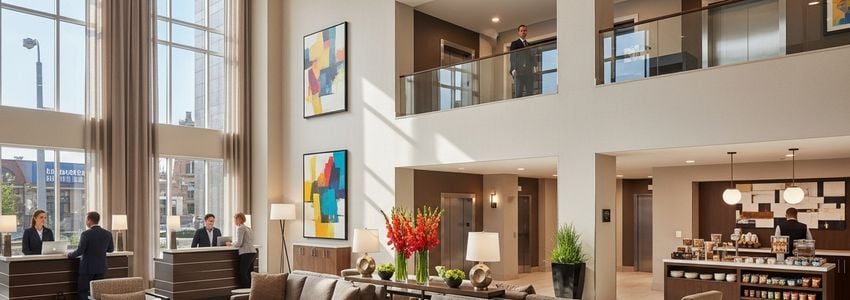
SpringHill Suites Franchise Loan: The Complete Financing Guide for SpringHill Suites Franchise Owners
Investing in a SpringHill Suites franchise cost can range from $15 million to over $45 million, making it one of the most significant capital commitments in extended-stay hotel franchising. Whether you are a first-time franchisee or an experienced hotel operator looking to expand your portfolio, understanding your SpringHill Suites franchise loan options is critical to bringing your project to life. This complete guide walks you through the costs, financing strategies, lender requirements, and how Crestmont Capital can help you secure the funding you need.
In This Article
What Is a SpringHill Suites Franchise?
SpringHill Suites by Marriott is an all-suite, extended-stay hotel brand that sits in the upper-midscale segment of the hospitality market. Launched in 1998, it has grown to over 500 locations across the United States and continues to expand globally. The brand is owned and franchised by Marriott International, the world's largest hotel company, which provides franchisees with unmatched brand recognition, distribution through the Marriott Bonvoy loyalty program, and a centralized reservation system that drives consistent occupancy.
What sets SpringHill Suites apart from competitors is its focus on spacious suite layouts that average 25 percent more room than traditional hotels. Guests enjoy separate sleeping and living areas, a work desk, full bathroom, and in-suite kitchen or kitchenette, making the property ideal for business travelers on extended assignments, families relocating, and guests seeking longer-term accommodation with hotel-grade amenities. The brand targets the extended-stay traveler who needs more space but still values the consistency and perks of a full-service hotel brand.
For franchisees, SpringHill Suites represents a proven investment thesis. The extended-stay segment has demonstrated strong RevPAR (Revenue Per Available Room) performance, even during economic downturns, because guests staying for five or more nights represent a more stable and predictable revenue stream than transient leisure travelers. According to industry data published by SBA.gov, hotel and lodging businesses have historically been among the most actively financed categories in small business and commercial lending, reflecting strong lender confidence in the sector.
Marriott's global footprint also means that a SpringHill Suites franchise benefits from the Marriott Bonvoy ecosystem, which boasts over 180 million members worldwide. These loyalty members consistently choose Marriott brands when booking travel, giving your property a significant built-in customer base from day one. Additionally, Marriott provides franchisees with comprehensive pre-opening support including site selection assistance, design and construction standards, revenue management training, and ongoing operational guidance throughout the life of the franchise agreement.
The typical SpringHill Suites franchise agreement runs for 25 years, offering long-term brand security and a stable operational framework. New and converting properties must meet Marriott's rigorous design and quality standards, which is a factor that contributes to above-average asset values across the portfolio. For experienced hotel investors, this is an opportunity to align with the world's most recognized hospitality brand while operating in a supply-constrained, demand-resilient segment of the market.
Ready to Finance Your SpringHill Suites Franchise?
Get fast, flexible financing from the #1 business lender in the U.S. No obligation - apply in minutes.
Apply NowSpringHill Suites Franchise Costs and Investment Requirements
Understanding the full cost of a SpringHill Suites franchise is the first step to building a viable financing plan. According to Marriott's Franchise Disclosure Document (FDD), the estimated total investment for a new SpringHill Suites hotel ranges from approximately $15 million to $45 million or more, depending on market, property size, land cost, and whether you are building new construction or converting an existing building.
Initial Franchise Fee: The initial franchise fee for a SpringHill Suites is typically $60,000 to $75,000 for a standard-sized property. This is a one-time payment due at the signing of the franchise agreement and is generally non-refundable.
Land and Construction Costs: By far the largest component of total investment, land acquisition and construction can range from $8 million to $35 million or more depending on geographic market, labor costs, and the size of the property. Urban markets and high-cost coastal cities will trend toward the higher end of this range.
Furniture, Fixtures, and Equipment (FF&E): SpringHill Suites requires Marriott-compliant suite furnishings, commercial kitchen equipment, fitness center equipment, outdoor amenities, and technology infrastructure. FF&E costs typically range from $1.5 million to $4 million depending on room count and configuration.
Pre-Opening Expenses: These include sales and marketing, staff hiring and training, pre-opening supplies, technology systems, and administrative setup costs. Budget $300,000 to $750,000 for this category.
Working Capital: Lenders and Marriott will expect you to have sufficient working capital to operate the property through the ramp-up phase, typically defined as 6 to 12 months of operating expenses. This can range from $500,000 to $1.5 million depending on property size and projected occupancy.
Ongoing Fees: Once operational, franchisees pay a royalty fee of 6 percent of gross rooms revenue. An additional marketing/program services contribution of approximately 3 to 3.5 percent is also charged. These fees cover your access to the Marriott Bonvoy program, global reservation systems, national marketing campaigns, and brand standards support.
Conversion vs. New Build: If you are converting an existing hotel to the SpringHill Suites flag, your upfront costs can be significantly lower because the building shell already exists. However, substantial renovation to meet Marriott's design standards will still be required. Conversions typically cost $5 million to $20 million depending on the condition and configuration of the existing asset.
Financing Options for Your SpringHill Suites Franchise
Given the significant capital requirements, most SpringHill Suites franchisees use a combination of financing products to fund their investment. Here is a detailed look at the most common options available to hotel franchise developers.
SBA 7(a) Loans: The SBA 7(a) loan program is one of the most popular financing tools for franchise hotel owners, particularly for smaller projects or when supplemental working capital or FF&E financing is needed alongside a larger construction loan. SBA 7(a) loans offer up to $5 million with repayment terms of up to 25 years for real estate and 10 years for equipment. Rates are competitive and tied to the prime rate plus a lender spread. Visit SBA.gov for the latest program guidelines. For more details on how SBA loans work for franchise businesses, read our complete SBA loan guide.
SBA 504 Loans: The SBA 504 program is specifically designed for the acquisition of fixed assets including commercial real estate and major equipment. For hotel franchisees, this program is ideal for financing the property itself. A typical 504 loan structure splits funding three ways: 50 percent from a conventional lender, 40 percent from a Certified Development Company (CDC) backed by the SBA, and 10 percent equity from the borrower. The 504 loan portion can be up to $5.5 million, with the conventional piece layered on top for larger projects. Learn more at SBA.gov 504 Loans.
Commercial Construction Loans: For new builds, a commercial construction loan provides a draw facility that advances funds as construction milestones are completed. These loans typically convert to a permanent mortgage upon completion, or require a takeout loan to be arranged in advance. Construction lenders will require detailed project plans, a general contractor with hotel experience, and strong borrower financials including a demonstrated equity injection of 20 to 30 percent.
Commercial Real Estate (CRE) Loans: Once construction is complete and the hotel is stabilized, a conventional commercial real estate loan is often used to provide long-term financing. CRE loans for hotel properties typically carry terms of 5 to 25 years with amortization schedules of 20 to 30 years. Interest rates vary based on market conditions, loan-to-value ratios, and borrower creditworthiness.
Equipment Financing: Hotel FF&E can be financed separately through dedicated equipment financing programs. This approach preserves working capital and allows you to spread the cost of furnishings, kitchen equipment, fitness equipment, and technology over a multi-year repayment schedule. Equipment loans for hotel projects typically carry terms of 5 to 7 years.
Business Lines of Credit: A business line of credit is an excellent tool for managing working capital needs during the operational phase of your franchise. Lines of credit give you flexible access to funds for seasonal cash flow gaps, unexpected repairs, marketing campaigns, or pre-opening expenses before revenue begins flowing.
Long-Term Business Loans: For experienced operators with strong financials, long-term business loans can provide the structured capital needed to bridge financing gaps or fund specific components of a hotel development project. These loans offer fixed monthly payments over multi-year terms, making cash flow planning more predictable.
By the Numbers
SpringHill Suites Franchise - Key Statistics
$15M+
Estimated total investment range
6%
Royalty fee of gross rooms revenue
500+
SpringHill Suites locations in the U.S.
25 Yrs
Standard initial franchise term
How Crestmont Capital Helps SpringHill Suites Franchisees
Crestmont Capital is the #1 business lender in the United States, with a proven track record of helping hotel franchisees secure the financing they need quickly and with competitive terms. Unlike traditional banks that often have lengthy approval processes and rigid underwriting criteria, Crestmont Capital offers a streamlined, relationship-driven approach that gets you funded faster so you can focus on opening your hotel and generating revenue.
Our team specializes in hotel and hospitality financing. We understand the Marriott franchise system, the FDD requirements, and the capital stack typical for a SpringHill Suites project. Whether you need funding for a brand-new construction project, a conversion from an existing hotel flag, an FF&E package, or working capital for your pre-opening phase, we have financing solutions designed specifically for your situation.
Fast Approvals: We know that time is money in hotel development. Our application process is designed to get you to a lending decision quickly, without the months-long delays common at traditional banks. Many of our clients receive term sheets within days of application.
Flexible Structures: No two SpringHill Suites projects are identical. We work with you to structure financing that fits your specific project, whether that means a construction-to-perm loan, an SBA-backed program, equipment financing for your FF&E package, or a combination approach that layers multiple products to cover all components of your investment.
Nationwide Reach: We work with franchisees in all 50 states. Whether your project is in a growing suburban market or an urban core, we have lender relationships and financing programs that can serve your needs.
Hotel Industry Expertise: Our lending specialists understand RevPAR, NOI, DSCR, and all the financial metrics that hotel lenders use to evaluate deals. We help you prepare your financial package and loan narrative in a way that resonates with hotel lenders and maximizes your approval odds.
If you are also exploring other Marriott flag options, you may find our guides on Courtyard by Marriott franchise loans and Embassy Suites franchise loans helpful for comparison. Each Marriott brand has distinct investment requirements and financing considerations.
Start Your Hotel Franchise Journey Today
Crestmont Capital offers flexible loan structures designed for franchise hotel owners. Get your rate in minutes.
Apply Now
Loan Requirements and Qualifications
Qualifying for a SpringHill Suites franchise loan requires meeting the financial standards of both Marriott (as the franchisor) and your chosen lender. Here is what you generally need to qualify for hotel franchise financing:
Credit Score: Most commercial lenders for hotel projects look for a personal credit score of 680 or higher, with 720+ preferred for the most competitive rates and terms. SBA loans generally require a minimum score of 650 for consideration, though scores above 680 significantly improve approval odds.
Liquid Assets and Net Worth: Marriott will require franchisees to demonstrate sufficient liquidity and net worth to support the investment. Typical minimum requirements include liquid assets of at least $3 million to $5 million and a net worth of $5 million to $10 million or more depending on the size of the project. These thresholds reflect the scale of capital involved in a hotel franchise investment.
Hotel Operating Experience: While not always mandatory, lenders and Marriott strongly prefer franchisees with prior hotel management or ownership experience. If you lack direct hotel experience, having an experienced management company under contract or partnering with a seasoned operator can satisfy this requirement.
Equity Injection: Expect to contribute a minimum of 20 to 30 percent of total project costs as equity. For a $20 million project, that means bringing $4 to $6 million in equity to the table. SBA 504 loans can reduce the required equity to as low as 10 percent in some cases, making this program particularly attractive for qualified borrowers.
Business Plan and Financial Projections: All lenders will require a comprehensive business plan that includes 3 to 5 year financial projections, market demand analysis, competitive set assessment, and a detailed construction and development timeline. These documents demonstrate to lenders that you have done your homework and have a realistic path to profitability.
Debt Service Coverage Ratio (DSCR): Lenders underwrite hotel loans based on projected DSCR, which measures the property's ability to cover its debt service from operating income. Most commercial hotel lenders require a minimum stabilized DSCR of 1.25x, meaning the property must generate $1.25 in net operating income for every $1.00 of annual debt service. SBA lenders may have slightly different thresholds but operate within a similar range.
Construction Timeline and General Contractor: For new construction projects, lenders will require a fully executed construction contract with a licensed and bonded general contractor that has demonstrated experience in hotel construction. The construction schedule should be realistic and account for local permitting timelines, material lead times, and labor availability.
Collateral: Hotel franchise loans are typically secured by the real property and improvements (the hotel building and land), the franchise agreement itself, personal guarantees from principal owners, and in some cases, additional business or personal assets. The hotel property is the primary collateral, so lenders will require a commercial appraisal and environmental assessment as part of due diligence.
Real-World Financing Scenarios
Understanding how other SpringHill Suites franchisees have structured their financing can help you model your own approach. Here are four realistic scenarios based on common deal structures.
Scenario 1: Experienced Hotel Operator, New Construction in Secondary Market
A hotel development company with a portfolio of three select-service hotels secures a Marriott franchise agreement to build a 120-room SpringHill Suites in a growing mid-size metro area. Total project cost: $18 million. The developer brings $4 million in equity (22 percent), secures a $10 million commercial construction loan from a regional bank at a floating rate, and layers in a $4 million SBA 7(a) loan to cover FF&E and pre-opening costs. Upon stabilization, the construction loan converts to a 25-year commercial mortgage. Projected RevPAR: $85 with a stabilized DSCR of 1.35x.
Scenario 2: First-Time Hotel Franchisee, SBA 504 Structure
A successful commercial real estate investor is entering hotel franchising for the first time and has secured a SpringHill Suites franchise agreement for a 100-room conversion project in a suburban market. Total project cost: $14 million. Using an SBA 504 structure: $7 million (50 percent) from a conventional bank, $5.6 million (40 percent) from a CDC-backed SBA debenture, and $1.4 million (10 percent) from the borrower as equity. The conversion reduces upfront costs compared to new construction, and the SBA 504 structure minimizes the required equity injection, allowing the investor to preserve capital for future projects.
Scenario 3: Portfolio Expansion, Multi-Property Financing
An experienced hotel management company that already operates five Marriott-flagged properties seeks to add two additional SpringHill Suites locations simultaneously. Total combined project cost: $38 million. The operator leverages existing portfolio equity to negotiate a portfolio-level commercial real estate loan with a national bank, securing $30 million in construction financing at preferential rates due to the strength of the existing collateral base. The remaining $8 million is funded through equity and mezzanine financing. This approach demonstrates how portfolio strength can open doors to larger credit facilities with better terms.
Scenario 4: Working Capital and FF&E Gap Financing
A franchisee who has secured primary construction financing has a $2 million gap related to FF&E costs and pre-opening working capital. Rather than renegotiating the primary loan, they turn to Crestmont Capital for an equipment financing package ($1.2 million over 60 months) and a business line of credit ($800,000) to cover pre-opening expenses. This modular approach closes the financing gap quickly without requiring a complete restructuring of the primary loan agreement, allowing the franchisee to stay on construction schedule and meet their Marriott opening deadline.
Key Insight: According to the SBA, commercial hotel and lodging businesses represent one of the most actively financed segments in small business lending, with billions deployed annually to support expansion and new franchise development.
SpringHill Suites vs. Other Marriott Brands: What Franchisees Should Know
Marriott International offers a broad portfolio of hotel brands across multiple segments and price points. If you are evaluating SpringHill Suites as a franchise investment, it is worth understanding how it compares to other Marriott franchising opportunities to determine which brand aligns best with your market, capital capacity, and operational goals.
SpringHill Suites vs. Courtyard by Marriott: Courtyard is Marriott's flagship select-service brand and competes in a slightly different segment than SpringHill Suites. While Courtyard attracts primarily transient business travelers, SpringHill Suites targets extended-stay guests with a focus on suite layouts. Investment costs are similar, but SpringHill Suites may carry a slight premium due to larger room layouts. Both brands benefit from the Marriott Bonvoy ecosystem and command strong RevPAR in their respective segments. Learn more about Courtyard financing at our dedicated Courtyard by Marriott franchise loan guide.
SpringHill Suites vs. Residence Inn: Residence Inn by Marriott is the premier extended-stay brand in the Marriott portfolio and commands higher average daily rates and longer average length of stay than SpringHill Suites. However, Residence Inn also carries a higher total investment threshold and is more demanding in terms of property size, amenity requirements, and guest experience standards. SpringHill Suites offers a compelling entry point into the extended-stay segment with strong brand recognition and somewhat lower capital requirements.
SpringHill Suites vs. Homewood Suites (Hilton): Homewood Suites by Hilton is the closest direct competitor to SpringHill Suites in the extended-stay upper-midscale segment. Both brands target similar guest profiles and price points. The choice between the two often comes down to local brand preference, available territory, Marriott vs. Hilton brand affiliation, and the terms of the specific franchise agreements available in a given market.
SpringHill Suites vs. Fairfield Inn: Fairfield Inn by Marriott occupies the economy select-service segment, with lower investment thresholds and lower average daily rates. If you are evaluating a lower capital entry point into the Marriott system, Fairfield Inn may be worth considering, though its revenue potential and RevPAR ceiling are lower than SpringHill Suites.
| Brand | Segment | Est. Investment | Royalty Fee |
|---|---|---|---|
| SpringHill Suites | Extended Stay / All-Suite | $15M-$45M+ | 6% |
| Courtyard by Marriott | Select Service | $15M-$40M+ | 6% |
| Residence Inn | Extended Stay | $15M-$50M+ | 6% |
| Fairfield Inn | Economy Select | $8M-$25M+ | 5.5% |
Pro Tip: SBA 7(a) loans can finance up to $5 million of your SpringHill Suites franchise startup costs, while SBA 504 loans are ideal for the real estate and construction portion of your investment.
Frequently Asked Questions
How to Get Started: A Step-by-Step Guide
Research the Market
Identify the market where you want to develop your SpringHill Suites. Analyze supply and demand data, competitive set performance, local economic drivers, and land or property availability. A strong feasibility study is the foundation of a compelling financing application.
Apply for the Franchise
Contact Marriott's franchise development team to begin the application process. You will need to provide personal financial statements, a business plan, information about your proposed site, and documentation of your hotel industry experience or your management team's credentials.
Build Your Financing Plan
Work with a hotel financing specialist to model your capital stack. Determine how much equity you can contribute, which loan programs fit your project, and how to structure repayment around your projected cash flow. Contact Crestmont Capital to discuss your options with a hotel lending specialist.
Prepare Your Loan Package
Gather all required financial documents, your business plan, construction cost estimates, site plans, and the executed franchise agreement. A complete and well-organized loan package significantly accelerates the approval process and demonstrates professional credibility to lenders.
Submit Your Application and Break Ground
Submit your loan application with all supporting documentation. Work closely with your lender through the underwriting process, responding promptly to any requests for additional information. Once approved and closed, you can begin construction and move forward toward your SpringHill Suites opening day.
Ready to Take the Next Step?
Crestmont Capital is here to help you secure the right financing for your SpringHill Suites investment. Apply today and speak with a specialist.
Apply NowConclusion
The SpringHill Suites franchise cost is significant, but so is the opportunity. As one of the most recognized extended-stay hotel brands in the Marriott portfolio, SpringHill Suites offers franchisees a proven business model, a powerful global reservation system, and access to over 180 million Marriott Bonvoy loyalty members. By understanding your SpringHill Suites franchise loan options, building a well-structured capital stack, and working with an experienced hotel financing partner like Crestmont Capital, you can bring your vision to reality and build lasting wealth through hospitality real estate. Whether you need SBA financing, commercial construction loans, equipment financing, or working capital solutions, our team is ready to help you get funded and move forward. Apply now to speak with a Crestmont Capital specialist and take the first step toward your SpringHill Suites franchise.
Disclaimer: The information provided in this article is for general educational purposes only and is not financial, legal, or tax advice. Funding terms, qualifications, and product availability may vary and are subject to change without notice. Crestmont Capital does not guarantee approval, rates, or specific outcomes. For personalized information about your business funding options, contact our team directly.








