Embarking on a franchise journey with Sola Salon Studios represents a significant investment in a proven and innovative business model. Unlike traditional salons, Sola offers a unique suite-rental concept that empowers beauty professionals and provides franchisees with a stable, scalable revenue stream. However, understanding the financial landscape is crucial for success. The primary question for most aspiring owners is not just about the potential returns, but about the initial investment-specifically, the sola salon franchise cost and how to secure the necessary funding. This comprehensive guide from Crestmont Capital, the #1-rated business lender in the US, will walk you through every aspect of financing your Sola Salon Studios franchise, from initial costs and revenue potential to qualifying for the right loan and navigating the application process.
In This Article
- Understanding the Sola Salon Studios Franchise Model
- The Comprehensive Sola Salon Franchise Cost Breakdown
- Revenue Potential and ROI: What Can You Expect?
- The Pros and Cons of Owning a Sola Salon Studios Franchise
- Financing Your Sola Salon Studios: A Guide to Your Options
- How to Qualify for a Sola Salon Studios Franchise Loan
- The Step-by-Step Process to Secure Funding with Crestmont Capital
- Frequently Asked Questions (FAQ) about Sola Salon Franchise Cost and Financing
Understanding the Sola Salon Studios Franchise Model
Before exploring the financial requirements, it is essential to grasp what makes Sola Salon Studios a distinct and attractive franchise opportunity. Founded in 2004, Sola has revolutionized the beauty industry by moving away from the traditional open-floor salon. Instead, it provides a platform for independent beauty professionals to run their own businesses within a larger, supportive framework.
What is Sola Salon Studios?
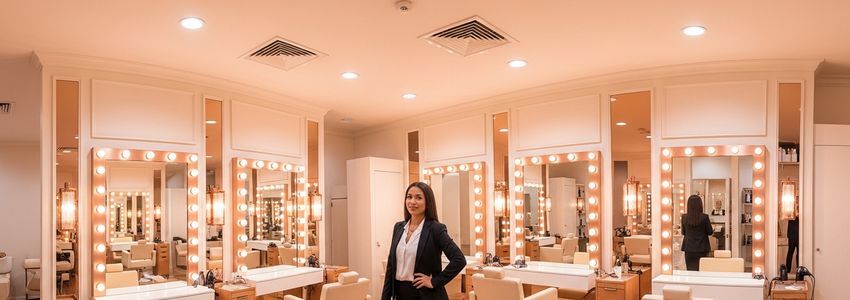
Sola Salon Studios is a premier salon suite franchise with over 650 locations across the United States, Canada, and Brazil. The core concept is simple yet powerful: Sola builds and manages high-end, move-in-ready salon suites that are leased to a variety of beauty professionals. This includes hairstylists, estheticians, nail technicians, massage therapists, and more. Each professional, or "Sola-preneur," operates their own business from their private, fully-equipped studio. They have the freedom to set their own hours, choose their clients, sell their preferred products, and create a personalized environment-all without the immense overhead and risk of opening a standalone salon.
For the franchisee, the role is not that of a traditional salon manager who hires and manages staff. Instead, you are a commercial landlord and business mentor. Your primary responsibilities include finding a suitable location, overseeing the construction and build-out of the salon suites, marketing the spaces to attract high-quality beauty professionals, and managing the property to ensure a premium experience for both the professionals and their clients. It is a business-to-business (B2B) model within a business-to-consumer (B2C) industry, offering a unique layer of stability.
The Unique Suite-Rental Concept
The suite-rental model is the cornerstone of Sola's success. Here’s how it fundamentally differs from a commission-based or chair-rental salon:
- Autonomy for Professionals: In a traditional salon, stylists are often employees who earn a commission (typically 40-60%) on their services and product sales. They have limited control over their schedule, pricing, and the products they use. Sola provides them with complete autonomy. They pay a weekly rent for their suite and keep 100% of their profits.
- Predictable Revenue for Franchisees: As a Sola franchisee, your income is derived from consistent weekly rental payments from your tenants. This is far more predictable than revenue based on the number of services performed in a given week. Your primary goal is to achieve and maintain high occupancy, creating a steady and reliable cash flow.
- Reduced Management Overhead: You are not managing a team of employees. You do not handle payroll, scheduling conflicts, or commission disputes. Your tenants are independent business owners responsible for their own success. Your role is to provide them with the best possible environment and support to thrive, which in turn ensures they remain long-term tenants.
- Comprehensive Support System: While the beauty professionals are independent, Sola provides them with a wealth of resources, including business and marketing education, a proprietary booking app (SolaGenius), and a national community of peers. This support system helps attract and retain top talent, which is a direct benefit to the franchisee.
Why This Model is a Game-Changer for Franchisees
The Sola model presents several compelling advantages for investors and entrepreneurs looking to enter the multi-billion-dollar beauty industry without being a beauty professional themselves.
- Semi-Absentee Ownership Potential: Once a location is established and reaches a high occupancy rate (typically 95% or higher), the day-to-day operational requirements can be minimal. Many franchisees hire a part-time manager to handle leasing inquiries and day-to-day facility needs, allowing them to manage the business on a semi-absentee basis. This makes it an attractive option for individuals with other business interests or full-time careers.
- Recession-Resistant Industry: The beauty and wellness industry has historically shown remarkable resilience during economic downturns. People continue to prioritize personal care services, making the demand for salon spaces consistent. The Sola model further insulates franchisees, as their revenue is based on rent, not discretionary consumer spending on high-end services.
- Scalability: The simplicity and predictability of the business model make it highly scalable. Many Sola franchisees go on to open multiple locations, building a substantial portfolio of properties with recurring revenue streams. The corporate team provides extensive support for multi-unit owners, including real estate selection and development.
- Strong Brand Recognition: Sola is the largest and most established salon suite franchise in the world. This brand recognition makes it easier to attract top-tier beauty professionals who are looking for a reputable and supportive environment to grow their careers.
The Comprehensive Sola Salon Franchise Cost Breakdown
Understanding the full financial commitment is the most critical step in your journey to becoming a Sola Salon Studios franchisee. The sola salon franchise cost is not a single number but a range of expenses that cover everything from the initial franchise fee to the construction of your facility and the working capital needed to sustain operations until you reach profitability. The figures provided here are based on Sola's Franchise Disclosure Document (FDD), but it is vital to conduct your own due diligence as costs can vary significantly based on location, market conditions, and specific site requirements.
The total estimated initial investment to open a Sola Salon Studios franchise typically ranges from $498,750 to $1,304,150. This is a broad range, and most franchisees find their costs fall somewhere in the middle. Let's break down the key components of this investment.
Initial Franchise Fee: $55,000
This is the upfront fee paid to Sola for the right to use their brand name, operating systems, and to receive initial training and support. For Sola, this fee is currently a flat $55,000. This fee grants you access to their proprietary knowledge, site selection assistance, construction guidance, and a comprehensive pre-opening marketing plan. It is a standard component of virtually all franchise agreements and is the first major capital outlay you will make.
Real Estate and Leasehold Improvements: $250,000 - $850,000
This is, by far, the largest and most variable component of the total investment. Sola locations are typically 5,000 to 7,000 square feet and are situated in high-visibility retail centers. This category includes:
- Real Estate Deposits: This covers the security deposit and first few months' rent required by the landlord. Costs are highly dependent on the commercial real estate market in your chosen territory.
- Leasehold Improvements / Construction: This is the cost to build out the "white box" retail space into a fully functional Sola Salon. It involves constructing the individual suites, common areas (restrooms, breakroom, hallways), and installing complex plumbing and electrical systems to accommodate salon equipment in every suite. Costs are influenced by labor rates, material costs, and the level of tenant improvement (TI) allowance negotiated with the landlord. A substantial TI allowance can significantly reduce your out-of-pocket expenses.
Furniture, Fixtures, and Equipment (FF&E): $100,000 - $200,000
Each suite must be equipped with high-quality salon furniture. This cost covers the essential equipment for every studio, which Sola has pre-negotiated pricing for. This typically includes:
- Styling chairs and stations
- Shampoo bowls and sinks
- Cabinetry and mirrors
- Specialty equipment for estheticians or nail technicians
- Furniture for common areas
- Washer and dryer units
Financing this portion of the investment is common, and we will discuss equipment financing options later in this guide.
Architectural and Engineering Fees: $20,000 - $40,000
Before construction can begin, you will need to hire architects and engineers to design the layout of your Sola location according to corporate specifications and local building codes. These professional plans are necessary for obtaining permits and for guiding your general contractor during the build-out phase.
Signage, IT, and Security: $15,000 - $35,000
This category covers critical operational elements. It includes exterior and interior branding signage, a comprehensive security system with keyless entry for each suite (a key feature for Sola), and the necessary IT infrastructure, including computers, software, and internet setup.
Pre-Opening Marketing and Grand Opening: $10,000 - $25,000
You cannot simply open your doors and expect tenants to arrive. Sola requires a robust pre-opening marketing campaign to generate buzz and build a list of interested beauty professionals. This budget covers digital advertising, social media campaigns, local PR, and the costs associated with a grand opening event to showcase the new facility to potential tenants and the community.
Additional Funds (Working Capital): $40,000 - $80,000
This is one of the most crucial-and often underestimated-components of the sola salon franchise cost. Working capital is the cash reserve you need to cover operating expenses during the initial ramp-up period before your business becomes cash-flow positive. This period can last for 3 to 6 months or more. These funds cover:
- Rent and utilities
- Insurance
- Salaries (if you hire a manager)
- Ongoing marketing
- Professional services (legal, accounting)
- Unforeseen expenses
Lenders like Crestmont Capital will look closely at your working capital reserves to ensure you have the financial cushion to navigate the first several months of operation successfully.
Ready to Finance Your Sola Salon Studios Franchise?
Get fast decisions and flexible terms from Crestmont Capital - the #1 rated business lender in the US.
Apply Now - Get Funded FastRevenue Potential and ROI: What Can You Expect?
After understanding the significant upfront investment, the next logical question is about the potential return. The Sola Salon Studios model is designed for steady, predictable revenue streams based on rental income. Your profitability is directly tied to your ability to lease your suites and maintain a high occupancy rate.
How Sola Franchisees Generate Revenue
The revenue model is straightforward. Your Sola location will have between 25 and 45 individual salon suites, depending on the size of your facility. Each suite is leased to a beauty professional for a weekly rental fee. This fee is your primary source of revenue.
- Rental Income: The weekly rent for a standard single suite can range from $250 to $500 or more, depending on your geographic market, the size of the suite, and its location within the building (e.g., a suite with a window may command higher rent).
- Ancillary Income: While minimal, there can be other small revenue streams, such as fees for laundry services or sales from vending machines in the breakroom. However, the vast majority of your income will come from rent.
For example, a 30-suite location with an average weekly rent of $350 per suite would generate $10,500 in weekly revenue at 100% occupancy. This translates to approximately $546,000 in gross annual revenue.
Analyzing the Franchise Disclosure Document (FDD) - Item 19
To get a clearer picture of financial performance, you must carefully analyze Item 19 of Sola's FDD. The Federal Trade Commission (FTC) requires franchisors that make financial performance representations to provide this section. You can learn more about franchise regulations on the FTC's official website. Sola's Item 19 provides historical financial data from its existing franchise locations.
While it cannot predict the future success of your specific location, it offers invaluable insight into average revenues, operating expenses, and potential profitability. Key metrics to look for include:
- Average Gross Revenue: The average total rental income for mature Sola locations.
- Occupancy Rates: Data on how quickly new locations reach stabilization (typically 90-95% occupancy) and the average occupancy rates across the system.
- Key Operating Expenses: Item 19 may also provide data on major costs as a percentage of revenue, such as rent paid to the landlord (your largest expense), utilities, insurance, and marketing.
Your business plan and financial projections, which are essential for securing a loan, should be heavily informed by the data in Item 19, adjusted for the specifics of your local market.
Factors Influencing Your Profitability and ROI
Several key factors will determine the financial success of your Sola Salon Studios franchise:
- Location Selection: This is paramount. A location with high visibility, easy access, ample parking, and proximity to your target demographic of beauty professionals and their clients is critical. Sola's corporate real estate team provides significant support in this area.
- Lease Negotiation: Your largest ongoing expense will be the rent you pay to your commercial landlord. Negotiating a favorable lease with a significant Tenant Improvement (TI) allowance can dramatically impact your initial investment and long-term profitability.
- Occupancy Rate: Your primary goal is to get to 95%+ occupancy as quickly as possible and stay there. This requires effective pre-opening marketing and creating a positive, supportive community that encourages tenants to stay long-term.
- Operational Efficiency: While the model is simple, efficient management matters. Keeping utility costs in check, managing maintenance effectively, and using Sola's technology tools can all help maximize your net operating income (NOI).
The return on investment (ROI) for a Sola franchise can be very attractive due to the recurring revenue model and potential for high profit margins once stabilized. Many franchisees are able to achieve significant cash flow and build substantial equity in their business over time.
The Pros and Cons of Owning a Sola Salon Studios Franchise
No business opportunity is without its challenges. A balanced assessment of the advantages and potential difficulties is essential before committing to the significant investment required for a Sola franchise. This model offers a unique set of benefits but also comes with specific considerations you must be prepared for.
Pros of the Sola Model
- Predictable, Recurring Revenue: The foundation of the Sola business model is consistent weekly rent payments from tenants. This creates a highly predictable revenue stream, unlike traditional businesses that are subject to daily or seasonal sales fluctuations. This stability is very attractive to lenders and investors.
- Semi-Absentee Ownership Potential: Once your location is fully leased and operating smoothly, the time commitment can be as little as 5-10 hours per week. This allows owners to maintain other careers or business ventures. It is not a passive investment, but it offers a level of flexibility that few other franchise models can match.
- High Demand from Beauty Professionals: The trend in the beauty industry is toward independence. Stylists and other professionals are increasingly seeking to escape the commission-based salon structure and control their own careers. Sola provides the perfect turnkey solution for them, ensuring a large and motivated pool of potential tenants.
- Recession-Resistant and Internet-Proof: Beauty services are hands-on and cannot be outsourced or automated. People consistently spend money on their appearance, even during economic downturns. This provides a durable and stable customer base for your tenants, which in turn secures your rental income.
- World-Class Brand Support: As a franchisee, you benefit from Sola's national brand recognition, sophisticated marketing programs, cutting-edge technology (like the SolaGenius app), and a comprehensive support system for everything from site selection to ongoing operations. This is a significant advantage over starting a salon suite business from scratch. For more insights on strong franchise models, see our analysis of the Culver's Franchise Loan process.
Cons and Potential Challenges
- High Initial Investment: The most significant barrier to entry is the substantial upfront capital required. The total sola salon franchise cost, often exceeding $750,000, means that securing financing is a critical and complex part of the process. Prospective owners need a strong financial background and a significant net worth.
- Dependence on Commercial Real Estate: Your success is intrinsically linked to your physical location and the terms of your commercial lease. Finding the right site in a competitive market can be challenging, and negotiating a favorable lease is a high-stakes process. A bad lease can cripple your profitability for years.
- The "Landlord" Role: While you are not managing employees, you are managing a property and a community of independent business owners. This involves dealing with maintenance issues, mediating occasional tenant disputes, and ensuring the facility is always in pristine condition. It requires a different skill set than traditional people management.
- The Ramp-Up Period: The time between opening your doors and reaching full occupancy is a critical and potentially stressful period. You will be covering all operating expenses, including your own loan payments, with little to no revenue coming in. This underscores the importance of having adequate working capital to weather the first 6-12 months.
- Competition: The salon suite concept has proven to be successful, which has led to increased competition from other suite franchises and independent operators. You will need to effectively market your Sola location's unique benefits-its brand, technology, and community-to stand out and attract the best professionals in your area.

Sola Salon Studios: Key Numbers
Financing Your Sola Salon Studios: A Guide to Your Options
With a total investment that can approach or exceed one million dollars, very few franchisees pay for their Sola Salon entirely with cash. The vast majority will require a significant business loan to cover the costs of construction, equipment, and initial operations. Fortunately, because Sola is a well-established and respected franchise system, lenders view it as a relatively low-risk investment compared to an independent startup. At Crestmont Capital, we offer a variety of small business loans tailored to the needs of franchisees. Here are the most common and effective financing options for your Sola Salon.
SBA Loans: The Gold Standard for Franchisees
Loans guaranteed by the U.S. Small Business Administration (SBA) are often the best choice for franchise financing. They offer long repayment terms, competitive interest rates, and lower down payment requirements than many conventional loans. The SBA doesn't lend the money directly; instead, it provides a guarantee to lenders like Crestmont Capital, which reduces the lender's risk and makes them more willing to approve the loan. Sola Salon Studios is listed on the SBA Franchise Directory, which streamlines the application process significantly. You can find extensive resources on the official SBA.gov website.
SBA 7(a) Loans
The SBA 7(a) loan is the most popular and versatile SBA loan program. It can be used for a wide range of business purposes, making it ideal for funding a new Sola franchise. You can use the proceeds to cover:
- The initial franchise fee
- Leasehold improvements and construction costs
- Furniture, fixtures, and equipment (FF&E)
- Working capital for the first several months
- Refinancing existing business debt
SBA 7(a) loans offer amounts up to $5 million, with repayment terms of up to 10 years for working capital and equipment, and up to 25 years if real estate is included. The down payment requirement is typically between 10% and 20%, which is significantly lower than many conventional loans. This is often the go-to financing solution for Sola franchisees. Learn more about our SBA loans and how we can help you navigate the process.
SBA 504 Loans
The SBA 504 loan program is specifically designed for financing major fixed assets, such as real estate and long-term equipment. While most Sola franchisees lease their retail space, a 504 loan is an excellent option if you plan to purchase and build out your own commercial property. The loan is structured with three parts: 50% from a conventional lender (like Crestmont Capital), 40% from a Certified Development Company (CDC) with an SBA guarantee, and 10% from you as the borrower. This structure results in favorable blended interest rates and long repayment terms (up to 25 years).
Conventional Long-Term Business Loans
For borrowers with a very strong financial profile-excellent credit, significant assets, and a substantial down payment (often 20-30%)-a conventional bank loan can be a good alternative. These loans are not backed by a government guarantee, so the underwriting criteria are typically stricter. However, the application process can sometimes be faster, and they may offer more flexibility in terms. Our long-term business loans provide predictable monthly payments and competitive rates for well-qualified Sola franchise candidates.
Equipment Financing
A significant portion of the sola salon franchise cost is dedicated to FF&E. Equipment financing is a specific type of loan designed to cover these costs. The equipment itself serves as the collateral for the loan, which can make it easier to qualify for and may not require an additional down payment. You can use an equipment loan to purchase all the styling chairs, shampoo stations, cabinetry, and other fixtures needed to outfit your 25-45+ suites. This can be a smart way to preserve your working capital for other operational needs.
Business Line of Credit
While not suitable for funding the initial investment, a business line of credit is an invaluable tool for managing ongoing cash flow, especially during the ramp-up period. It provides flexible access to capital on an as-needed basis. You can draw funds to cover unexpected expenses, bridge gaps between rent payments, or invest in a new marketing campaign to attract tenants. You only pay interest on the amount you use, making it a cost-effective way to manage your working capital and maintain a healthy financial cushion.
Explore Your Sola Salon Financing Options Today
Our team of franchise financing experts can help you find the perfect loan for your Sola Salon Studios. Start your application in minutes.
Apply NowHow to Qualify for a Sola Salon Studios Franchise Loan
Securing a loan for a Sola Salon franchise requires thorough preparation and a clear understanding of what lenders are looking for. Because the loan amounts are substantial, underwriters will conduct a rigorous review of your financial and professional background. At Crestmont Capital, we look for well-prepared candidates who demonstrate a high probability of success. Here are the key criteria you will need to meet.
Excellent Personal Credit Score
For a new franchise, your personal credit history is a primary indicator of your financial responsibility. Lenders will want to see a strong personal credit score, typically 700 or higher. A high score demonstrates a history of managing debt responsibly and meeting your financial obligations. While some programs exist for those with lower scores, a prime credit score will give you access to the best loan products, lowest interest rates, and most favorable terms. It is advisable to check your credit report well in advance and address any errors or issues before applying.
Sufficient Down Payment (Equity Injection)
No lender will finance 100% of your project cost. You will be required to contribute a portion of your own capital, known as a down payment or equity injection. This shows the lender that you have "skin in the game" and are personally invested in the success of the business.
- For SBA 7(a) Loans: Expect a down payment of at least 10% to 20% of the total project cost. For a $800,000 project, this means you will need $80,000 to $160,000 in liquid cash.
- For Conventional Loans: The requirement is often higher, typically 20% to 30% or more.
These funds must be your own and cannot be borrowed from another source. Lenders will verify the source of your down payment funds.
A Comprehensive Business Plan and Financial Projections
Your business plan is your roadmap to success and a critical component of your loan application. It should be professional, detailed, and tailored to your specific Sola Salon location. It must include:
- Executive Summary: A concise overview of your project.
- Company Description: Details about the Sola brand and your specific franchise.
- Market Analysis: Research on the local beauty industry, your target market of stylists, and your competition.
- Marketing and Sales Strategy: A detailed plan for how you will attract and retain tenants to achieve full occupancy.
- Management Team: Bios of yourself and any partners, highlighting relevant experience.
- Financial Projections: This is the most scrutinized section. You will need to provide detailed, month-by-month financial projections for at least the first three years of operation. This includes a projected profit and loss statement, cash flow statement, and balance sheet. These projections should be realistic and based on the data from Sola's FDD and your local market research.
Relevant Business or Management Experience
While you do not need to be a hairstylist, lenders want to see that you have relevant, transferable skills. Experience in areas such as management, marketing, sales, real estate, or previous business ownership is highly valued. Your resume and the "Management Team" section of your business plan should clearly articulate how your past experience has prepared you to successfully operate a Sola franchise. Sola's own approval process will also vet your background, and their approval adds significant weight to your loan application.
Sufficient Collateral
Collateral is an asset that you pledge to a lender to secure a loan. If you default on the loan, the lender can seize the collateral to recoup its losses. For a Sola franchise loan, the business assets-such as the equipment and leasehold improvements-will serve as the primary collateral. However, for large loans like those required for a Sola project, lenders, including the SBA, will often require additional collateral. This may include a lien on your personal residence or other real estate. Be prepared to discuss your available collateral with your lender.
The Step-by-Step Process to Secure Funding with Crestmont Capital
Navigating the loan application process can seem daunting, but by following a structured approach, you can move smoothly from initial inquiry to receiving your funds. At Crestmont Capital, we pride ourselves on a transparent and supportive process designed to help you succeed. Here is what you can expect when you partner with us to finance your Sola Salon Studios franchise.
Frequently Asked Questions (FAQ) about Sola Salon Franchise Cost and Financing
1. What is the absolute minimum amount of cash I need to open a Sola Salon?
While the total investment is high, your out-of-pocket cash requirement (equity injection) is typically 10-20% of the total project cost. For a $700,000 project, you would need between $70,000 and $140,000 in liquid, unborrowed funds. Sola also has minimum net worth requirements, typically around $500,000, to ensure you have the financial stability to support the business.
2. How long does it take to get a Sola Salon franchise loan approved?
The timeline can vary, but a typical SBA 7(a) loan process takes between 60 and 90 days from the submission of a complete application package to funding. The most time-consuming part for the applicant is often gathering all the necessary documentation. Working with an experienced lender like Crestmont Capital can help streamline this process.
3. Can I use my retirement funds (401k/IRA) for the down payment?
Yes, this is a popular option. Through a process called a Rollover for Business Start-ups (ROBS), you can use your retirement funds to invest in your franchise tax-free and without penalty. This can be a complex process, so it's essential to work with a financial advisor who specializes in ROBS transactions. It can be a powerful way to fund your equity injection without depleting your personal savings.
4. What is the most common reason a Sola Salon loan application is denied?
The most common reasons for denial include a low personal credit score, insufficient down payment or working capital, an unrealistic or poorly prepared business plan, or a lack of relevant management experience. Thorough preparation and ensuring you meet all the key qualifications before applying is the best way to ensure a successful outcome.
5. Does Sola Salon Studios offer direct financing?
No, Sola Salon Studios does not offer direct financing to its franchisees. However, they have a deep understanding of the financing process and maintain relationships with third-party lenders who are familiar with their model. They can provide guidance and connect you with recommended funding partners like Crestmont Capital.
6. How important is the landlord's Tenant Improvement (TI) allowance?
It is extremely important. The TI allowance is money provided by the landlord to help you build out the space. A substantial TI allowance (e.g., $50-$75 per square foot) can reduce your out-of-pocket construction costs by hundreds of thousands of dollars, thereby lowering the total loan amount you need to secure. Negotiating this is a critical part of the real estate process.
7. What royalty fees does Sola charge?
This is a key advantage of the Sola model. Unlike many franchises that charge a percentage of gross sales, Sola charges a flat weekly fee per occupied studio. This is a predictable expense that does not penalize you for having successful, high-earning stylists in your location. The exact fee is detailed in the FDD.
8. Can I get a loan if I have bad credit?
Securing a primary loan like an SBA 7(a) for a Sola franchise with bad credit is very difficult. These large, long-term loans require strong personal credit (ideally 700+). If your credit is below 650, you may need to focus on credit repair or bring on a business partner with a stronger financial profile before applying. We do offer bad credit business loans, but these are typically for smaller amounts and shorter terms, not suitable for a full franchise startup.
9. Is the Sola Salon franchise cost higher or lower than other similar franchises?
The investment for Sola is comparable to other major salon suite franchises. The high cost is inherent to the business model, which requires a large retail footprint and extensive interior construction. It is significantly higher than a small, quick-service restaurant franchise like the Tropical Smoothie Cafe, but the operational model is much simpler.
10. What is a "stabilized" Sola location?
A stabilized location is one that has reached its target occupancy rate, typically around 95%. At this point, revenue becomes very predictable, and the business should be generating consistent positive cash flow. Most Sola locations are able to reach stabilization within 12 to 18 months of opening, depending on the market and the owner's marketing efforts.
11. Do I need industry experience to be approved for a loan?
You do not need to be a licensed cosmetologist or have direct salon experience. However, lenders and Sola corporate will want to see strong, transferable business skills. Experience in areas like B2B sales, marketing, property management, or general business management is highly valued and will strengthen your application significantly.
12. Can I finance more than one Sola location at a time?
Typically, new franchisees will start with one location. Once that location is stabilized and successful, lenders will be much more open to financing additional units. The SBA and other lenders have programs specifically designed to help successful business owners expand to multiple locations. Your proven track record with the first unit will be the best evidence of your ability to manage more.
13. What are the ongoing fees besides the weekly royalty?
In addition to the flat weekly royalty per occupied suite, you will likely pay a small brand fund contribution, also on a per-suite basis. This fee goes toward national marketing and brand-building efforts that benefit all franchisees. You will also have technology fees for access to Sola's proprietary software. All fees are clearly outlined in the FDD.
14. How do I create realistic financial projections for my business plan?
Start with the financial performance data in Sola's Item 19. This gives you a baseline. Then, work with Sola's team to understand the specific rental rates and occupancy ramp-up timeline for your territory. Research local commercial real estate costs, utility rates, and property taxes. A well-researched projection that is conservative and grounded in data will be much more credible to a lender than an overly optimistic one.
15. Why should I choose Crestmont Capital for my Sola franchise loan?
Crestmont Capital is the #1-rated business lender in the US with extensive experience in franchise financing, including SBA loans. We understand the unique aspects of the Sola Salon Studios model. Our dedicated team provides personalized guidance, a streamlined application process, and access to a wide range of loan products to ensure you get the best possible financing for your new venture.
Your Sola Salon Studios Dream Starts Here
Don't let the financing process stand in your way. Partner with the experts at Crestmont Capital to secure the funding you need. Apply now for a no-obligation consultation.
Get Funded NowConclusion: Your Path to Sola Salon Ownership
Owning a Sola Salon Studios franchise is a remarkable opportunity to build a scalable business with recurring revenue in the resilient beauty industry. The model's simplicity, combined with strong brand support and high demand from beauty professionals, makes it an attractive venture for savvy entrepreneurs. However, the path to ownership begins with a solid financial strategy. Understanding the full sola salon franchise cost, preparing a meticulous business plan, and securing the right financing are the foundational pillars of your future success.
At Crestmont Capital, we specialize in turning entrepreneurial dreams into reality. We hope this comprehensive guide has provided you with the clarity and confidence to take the next steps. Our team is ready to partner with you, offering the expertise and capital needed to launch and grow your Sola Salon Studios portfolio. When you are ready to move forward, we are here to help you build your empire, one suite at a time.
Disclaimer: The information provided in this article is for general educational purposes only and is not financial, legal, or tax advice. Funding terms, qualifications, and product availability may vary and are subject to change without notice. Crestmont Capital does not guarantee approval, rates, or specific outcomes. For personalized information about your business funding options, contact our team directly.