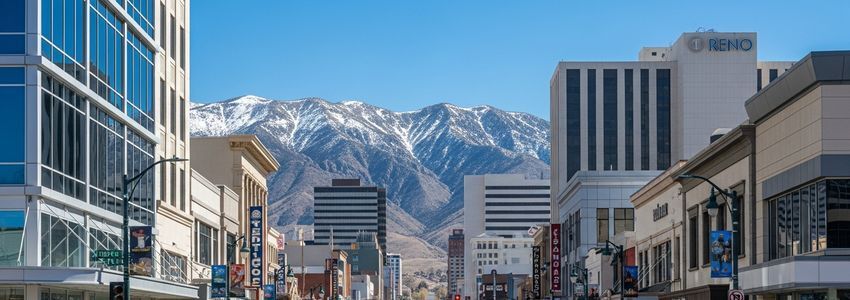
Reno, Nevada has transformed into one of the most business-friendly cities in the American West, offering entrepreneurs a rare combination of no state income tax, a booming tech corridor, and a diverse economy anchored by manufacturing, logistics, hospitality, and healthcare. Whether you are launching a startup in the Reno-Sparks metro or expanding an established business in Washoe County, accessing the right small business loan can be the catalyst that takes your company to the next level.
In This Article
- Reno's Business Environment in 2026
- Types of Business Loans Available in Reno
- How to Qualify for a Small Business Loan
- Best Loan Types for Reno's Key Industries
- SBA Loan Programs for Reno Entrepreneurs
- Local Resources for Reno Business Owners
- How Crestmont Capital Helps Reno Businesses
- Real-World Financing Scenarios
- Application Process Step by Step
- Frequently Asked Questions
- How to Get Started
- Conclusion
Reno's Business Environment in 2026
Reno has shed its old reputation as a secondary gaming town and emerged as a genuine business hub with national appeal. The city's economic transformation accelerated when Tesla selected the Gigafactory site in nearby Storey County - a facility that now employs thousands and anchored an entire ecosystem of manufacturing and supplier businesses across the greater Reno-Sparks metro. That decision triggered a wave of corporate relocations, technology investment, and small business formation that continues to define the region in 2026.
Nevada's tax structure is one of the most favorable in the country for business owners. The state levies no personal income tax, no corporate income tax, and no franchise tax - a combination that translates directly to higher take-home earnings for business owners and improved competitiveness for companies considering relocation. According to the U.S. Small Business Administration, Nevada consistently ranks among the top states for small business formation and survival rates, with the Reno-Sparks metropolitan statistical area posting particularly strong numbers in professional services, logistics, and technology sectors.
Washoe County, which encompasses Reno and Sparks, is home to more than 20,000 small businesses employing the majority of the private-sector workforce. The county's proximity to major California markets - just 30 minutes from Lake Tahoe and 3.5 hours from the San Francisco Bay Area - makes it an attractive distribution and operations hub for companies serving the western United States. Interstate 80 runs directly through Reno, connecting the city to both the Pacific Coast and the Chicago corridor, giving logistics and manufacturing businesses exceptional access to national supply chains.
The University of Nevada, Reno (UNR) contributes a steady pipeline of talent in engineering, business, healthcare, and technology, supporting industries that depend on educated workers. The Nevada Center for Entrepreneurship and Technology (NCET) and the Reno-Sparks Chamber of Commerce provide active support networks for business owners at every stage of growth. For entrepreneurs in this dynamic environment, small business loans are frequently the bridge between a compelling idea and a thriving operation.
By the Numbers
Reno and Nevada Small Business Fast Facts - 2026
0%
Nevada state personal and corporate income tax rate
20,000+
Small businesses in Washoe County
$5M
Maximum SBA 7(a) loan for Reno businesses
24 Hr
Fastest funding timeline for alternative lenders
Top 5
Nevada's ranking for best states for business formation
Types of Business Loans Available in Reno
Reno entrepreneurs have access to a wide range of financing products, from government-backed SBA loans to fast-approval alternative lending. Understanding each category helps you match your financing needs to the right product and avoid paying more than necessary for capital.
Term Loans
A business term loan provides a lump sum of capital that you repay over a fixed period with scheduled payments. Term loans are ideal for one-time investments like equipment purchases, hiring campaigns, leasehold improvements, or inventory builds. Conventional term loans from banks typically require strong credit and 2-plus years in business. Alternative lenders offer term loans with faster approvals - sometimes within 24 hours - though interest rates are generally higher. For Reno business owners who need capital quickly without the weeks-long wait of traditional bank underwriting, alternative term loans are often the right starting point.
Business Lines of Credit
A business line of credit works like a revolving credit account: you draw funds as needed and repay what you use, with interest only on the outstanding balance. Lines of credit are ideal for managing cash flow gaps, covering seasonal fluctuations (particularly relevant for Reno's hospitality businesses), purchasing inventory, or bridging the gap between invoicing and payment. Many Reno businesses use a line of credit as a permanent cash management tool rather than a one-time borrowing event.
SBA Loans
The U.S. Small Business Administration guarantees a portion of loans made by approved lenders, reducing the lender's risk and enabling more favorable terms for borrowers. SBA loans typically offer lower interest rates, longer repayment terms, and lower down payments than conventional business loans. The SBA 7(a) program is the most widely used, with loan amounts up to $5 million. The SBA 504 program is designed for major fixed-asset investments including real estate and large equipment.
Equipment Financing
For Reno businesses that need to purchase machinery, vehicles, technology, or specialized tools, equipment financing allows you to fund the purchase with the equipment itself serving as collateral. This structure results in faster approvals and often lower rates than unsecured loans. Equipment financing is especially popular among Reno's manufacturing, logistics, construction, and healthcare businesses, where specialized equipment represents a significant capital requirement.
Working Capital Loans
Working capital loans provide short-term funding for day-to-day operating expenses - payroll, rent, utilities, marketing, and inventory replenishment. These loans are particularly useful for businesses navigating seasonal revenue swings or unexpected expenses. Reno's hospitality sector frequently uses working capital loans to bridge slower winter or shoulder-season months.
Business Lines of Credit vs. Term Loans
The fundamental difference comes down to flexibility versus certainty. A line of credit offers maximum flexibility - draw and repay as business conditions dictate. A term loan provides a fixed amount at a fixed cost, making it easier to plan repayment and match the loan to a specific investment. Most Reno businesses benefit from having both: a term loan for major capital projects and a line of credit for ongoing cash flow management.
Merchant Cash Advances
A merchant cash advance (MCA) provides upfront capital in exchange for a percentage of future credit and debit card sales. MCAs are not technically loans - they are purchases of future receivables - and they carry higher effective costs than most other financing products. For Reno restaurants, retail stores, and service businesses with strong card sales volume but challenging credit profiles, MCAs offer very fast access to capital when other options are not available.
Invoice Financing
Reno B2B businesses that invoice other companies on net-30, net-60, or longer terms can use invoice financing to access the value of outstanding receivables before clients pay. This eliminates cash flow gaps caused by slow-paying customers and provides working capital without taking on traditional debt. Invoice financing is common among Reno's technology service providers, logistics companies, and healthcare businesses that frequently deal with insurance or government payers on extended payment cycles.
Ready to Explore Your Loan Options?
Crestmont Capital is the #1 rated business lender in the U.S. Apply in minutes and get same-day decisions on most loan products.
Apply Now - Free, No ObligationHow to Qualify for a Small Business Loan in Reno
Lenders evaluate small business loan applications using a combination of factors that together paint a picture of the borrower's ability and willingness to repay. Understanding these criteria helps you prepare a stronger application and identify the products most likely to approve your request.
Credit Score Requirements
Your personal credit score is one of the first things lenders check. For SBA loans and conventional bank loans, most lenders prefer a personal credit score of 680 or higher. Alternative lenders offering term loans and lines of credit typically accept scores as low as 600 to 620, though rates increase as scores decline. If your score is below 600, consider bad credit business loan options specifically designed for borrowers rebuilding their credit profile. Building your business credit score through platforms like Dun and Bradstreet, Experian Business, and Equifax Business can also supplement personal credit and improve your overall lending profile over time.
Time in Business
Most conventional lenders and SBA programs require at least 2 years of operating history. Alternative lenders will work with businesses as young as 6 months, though product options narrow and rates increase for newer businesses. Startups with less than 6 months of history typically need to explore SBA startup loan programs, SBDC financing assistance, or CDFI (Community Development Financial Institution) lending in Nevada.
Annual Revenue Requirements
Lenders want to confirm that your business generates enough revenue to service the proposed debt comfortably. As a general benchmark, most lenders want to see your annual revenue at least 1.25 times the total annual loan payments - a metric known as the Debt Service Coverage Ratio (DSCR). Alternative lenders typically require at least $100,000 to $150,000 in annual gross revenue for term loan products. SBA and bank lenders may require $250,000 or more depending on loan size.
Business Documentation
Standard loan applications require 2 to 3 years of business tax returns, 3 to 6 months of business bank statements, a year-to-date profit and loss statement, a current balance sheet, and a brief explanation of the loan purpose. For larger SBA loans, you may also need a business plan with financial projections, a schedule of existing business debt, and personal financial statements from all owners with 20% or greater ownership stake. Having these documents organized before you apply dramatically speeds up the underwriting process. For a detailed breakdown, see our guide to business loan requirements and what lenders look for.
Collateral
Many business loans - particularly larger SBA loans and commercial real estate products - require collateral to secure the loan. Collateral can include business assets (equipment, inventory, receivables), real estate (commercial or personal property), or a blanket lien on business assets. SBA loans also typically require a personal guarantee from all owners with 20% or greater ownership, making the owner personally liable if the business defaults.
Pro Tip for Reno Business Owners: Nevada's lack of state income tax means your business likely retains more after-tax earnings than competitors in California or Oregon. Lenders reviewing your financials will factor this in. Be sure your profit and loss statement clearly reflects your actual Reno-based operating costs rather than using national averages that may not represent your tax advantage.

Best Loan Types for Reno's Key Industries
Reno's economy is far more diverse than its entertainment and gaming heritage suggests. The city's modern business mix spans technology, logistics, manufacturing, healthcare, hospitality, and retail - each with distinct financing needs and ideal loan structures. Understanding which loan products best match your industry helps you focus your efforts and present the strongest possible application.
Technology and Software Companies
Reno's tech corridor, centered around the University of Nevada campus and the downtown Innovation Hub, hosts a growing cluster of software development, cybersecurity, data analytics, and clean energy technology companies. Tech businesses typically need capital for talent acquisition, software infrastructure, marketing, and scaling operations. Business lines of credit and working capital loans work well for tech companies with variable revenue or long sales cycles. For hardware-intensive tech businesses - those building physical products or maintaining server infrastructure - equipment financing provides efficient funding without diluting equity. Venture-backed startups with strong revenue growth may also qualify for revenue-based financing products that align repayment with actual business performance.
Hospitality and Gaming
Hospitality remains one of Reno's largest employment sectors. Independent hotels, motels, restaurants, entertainment venues, and casinos all have cyclical revenue patterns tied to tourism, conventions, and seasonal travel. Revolving business lines of credit are essential for hospitality businesses navigating off-season cash flow gaps. Equipment financing covers kitchen upgrades, HVAC systems, and hospitality technology. SBA loans support larger capital projects including property renovations, facility expansions, and new location openings. For hospitality businesses needing capital quickly ahead of peak season, fast business loans from alternative lenders provide funding in 24 to 48 hours without the extended timeline of bank underwriting.
Logistics and Transportation
Reno's position at the intersection of Interstate 80 and US Route 395, combined with its proximity to major western ports and markets, makes it one of the most important logistics and distribution hubs in the West. Fleet expansion, warehouse leasehold improvements, dock equipment, forklifts, and commercial vehicle purchases are common financing needs. Equipment financing is the most efficient product for fleet and equipment purchases, offering 100% financing in many cases with the assets serving as collateral. Working capital loans and lines of credit address seasonal demand fluctuations and bridge gaps between invoice issuance and client payment.
Retail and Consumer Services
Reno's retail sector spans the full spectrum from independent boutiques and specialty food shops to service businesses in health and wellness, beauty, auto services, and home improvement. Retail businesses use financing for inventory purchases, store renovations, point-of-sale technology, and marketing campaigns. Business lines of credit provide the flexibility retail businesses need to respond to trending product opportunities or seasonal inventory requirements. Term loans fund larger one-time investments like store renovations or new location openings. Many Reno retailers have successfully used our small business loan programs to fund expansion without depleting the cash reserves needed to operate day to day.
Healthcare and Medical Services
Healthcare is one of the fastest-growing sectors in the greater Reno area, driven by population growth, the expansion of the Renown Health system, and increasing demand for outpatient and specialty care services. Medical equipment purchases, practice buildouts, electronic health records systems, and working capital for patient receivable gaps are all common financing needs. Equipment financing is ideal for medical equipment due to its high asset value and long useful life. SBA 7(a) loans work well for practice acquisitions and larger facility projects. Healthcare businesses with strong insurance receivables can use invoice financing or revenue-based products to convert outstanding claims into immediate working capital.
Manufacturing and Industrial
Tesla's Gigafactory catalyzed a manufacturing renaissance in the greater Reno region, attracting dozens of supplier companies and stimulating investment in fabrication, precision machining, and industrial services. Manufacturing businesses have capital-intensive requirements: CNC machines, industrial equipment, raw materials, and facility buildouts can represent millions of dollars in investment. SBA 504 loans are specifically designed for major fixed-asset purchases and offer below-market rates with long repayment terms. Equipment financing efficiently funds specific machinery purchases. Working capital loans address the cash flow timing mismatch common in manufacturing, where raw material costs precede customer payment by weeks or months.
SBA Loan Programs for Reno Entrepreneurs
The Small Business Administration's loan guarantee programs provide access to capital that many Reno businesses could not obtain through conventional lending alone. By guaranteeing a portion of the loan, the SBA reduces lender risk and enables more favorable terms for borrowers. Here are the primary SBA programs available to Reno-area business owners.
SBA 7(a) Loans
The SBA 7(a) is the agency's flagship loan program and the most flexible tool for small business financing. Reno businesses can use 7(a) loans for nearly any legitimate business purpose: working capital, equipment purchases, leasehold improvements, business acquisitions, refinancing existing debt, or expanding operations. Loan amounts go up to $5 million, with terms up to 10 years for most uses and up to 25 years for real estate. Interest rates are capped at Prime plus a small spread, which translates to competitive rates even in a higher interest rate environment. The SBA Nevada District Office processes 7(a) applications and can connect you with SBA-preferred lenders who have delegated authority to approve loans faster than the standard process. For a comprehensive overview of the program, visit the SBA's official 7(a) loan page.
SBA 504 Loans
The 504 program is designed specifically for major fixed-asset investments including commercial real estate purchases, major renovation projects, and large equipment acquisitions. It uses a unique dual-lender structure: a conventional bank provides 50% of the project cost, an SBA-certified development company (CDC) provides 40% through an SBA-backed debenture, and the borrower contributes as little as 10% down. This structure allows Reno business owners to acquire commercial property or major equipment with a minimal down payment while securing fixed rates on the SBA portion. The Nevada SBDC and the SBA Nevada District Office can help connect you with approved CDCs serving the Reno area.
SBA Microloans
For Reno startups and smaller businesses that need less than $50,000, the SBA Microloan program provides funding through nonprofit intermediary lenders. Microloans are often accompanied by technical assistance and business counseling, making them particularly valuable for first-time business owners or entrepreneurs in underserved communities. Interest rates are typically higher than standard SBA loans but well below most alternative lending products. The Nevada SBDC and Nevada RISE program are key local intermediaries for SBA Microloan activity in the Reno area.
SBA Express Loans
For business owners who need a faster decision than the standard 7(a) timeline, SBA Express loans provide an accelerated approval process with a 36-hour turnaround commitment from the SBA. Loan amounts are capped at $500,000 for the Express program. The trade-off is a slightly lower guarantee percentage - 50% rather than the standard 75% to 85% - which lenders compensate for with somewhat tighter qualification criteria. For Reno businesses needing working capital or a line of credit in the $100,000 to $500,000 range with a faster timeline than the standard SBA process allows, Express loans are worth exploring.
Nevada SBA Lending Context: According to CNBC's small business lending analysis, Nevada ranks among the top 10 states for SBA loan approval rates relative to business population, reflecting a strong local lender network and active SBA district office. Reno-area businesses have historically achieved strong SBA approval rates in manufacturing, hospitality, and professional services.
Local Resources for Reno Business Owners
Reno entrepreneurs have access to an excellent network of local and statewide resources that provide free guidance, technical assistance, and connections to financing programs. Before you apply for a loan, connecting with these organizations can help you strengthen your application, identify grant opportunities, and avoid common mistakes that slow down approvals.
Nevada Small Business Development Center (SBDC)
The Nevada SBDC, headquartered in Reno and affiliated with the University of Nevada, provides free and confidential business advising to Nevada entrepreneurs. SBDC advisors help business owners develop financial projections, improve loan applications, navigate SBA programs, and connect with local lenders. The organization also offers specialized programs for minority-owned businesses, veteran entrepreneurs, and women-owned enterprises. Their services are particularly valuable for business owners preparing to apply for an SBA loan for the first time. Visit the Nevada SBDC website or call the Reno office directly to schedule an appointment with a certified business advisor.
SBA Nevada District Office
The SBA Nevada District Office, located in Las Vegas with resources serving the entire state including Reno and Washoe County, administers all federal SBA loan programs in Nevada. The district office can direct you to SBA-preferred lenders in the Reno area, provide information about current program requirements and fees, and offer free counseling through affiliated organizations. Their Lender Match tool at SBA.gov connects borrowers with SBA-approved lenders based on their specific financing needs.
SCORE Reno-Tahoe Chapter
SCORE is a national nonprofit organization that provides free mentorship from experienced business executives. The Reno-Tahoe chapter connects business owners with volunteer mentors who have direct experience in finance, operations, marketing, and industry-specific challenges. SCORE mentors can review your loan application materials, provide feedback on financial projections, and introduce you to lenders in their professional networks. SCORE workshops on business finance, credit improvement, and loan preparation are offered regularly in Reno and are available virtually as well.
City of Reno Economic Development
The City of Reno's Economic Development Department offers a variety of programs to support business growth and job creation, including facade improvement grants for downtown businesses, technical assistance for small manufacturers, and connection to state-level incentive programs administered by the Nevada Governor's Office of Economic Development (GOED). These programs can sometimes be combined with private financing to reduce overall capital requirements for Reno business expansion projects.
Nevada Women's Business Center
Nevada's Women's Business Center provides targeted financing assistance, business development training, and networking opportunities for women entrepreneurs across the state, with active programming in the Reno area. Women-owned businesses in Nevada access specialized SBA loan programs and grant opportunities through this network that may not be visible through standard lender searches.
How Crestmont Capital Helps Reno Businesses
Crestmont Capital is the #1 rated business lender in the United States, and we work with small business owners throughout Nevada and the Reno metro area to provide fast, flexible financing tailored to real business needs. Unlike traditional banks that apply rigid underwriting criteria developed for large corporations, Crestmont Capital takes a holistic view of each business - looking at revenue trends, market position, and growth trajectory rather than just a credit score number.
Our lending products cover the full range of financing needs for Reno businesses:
- Small Business Loans from $25,000 to $5 million with approvals as fast as 24 hours
- Business Lines of Credit for ongoing cash flow management and flexible capital access
- Equipment Financing for machinery, vehicles, technology, and specialized tools
- SBA Loan Programs including 7(a) and 504 for longer-term, lower-rate financing
- Bad Credit Business Loans for business owners rebuilding their credit profile
- Fast Business Loans with same-day or next-day decisions for time-sensitive needs
- Same-Day Business Loans when capital is needed immediately
Reno business owners can apply online in under 10 minutes. Our team of lending specialists understands Nevada's business environment and the specific opportunities and challenges that come with operating in the Reno-Sparks metro. We can help you identify the right loan product, structure a financing package that fits your business model, and close funding quickly enough to capitalize on time-sensitive opportunities.
If you are exploring your full range of options across Nevada, our comprehensive Nevada small business loans guide covers statewide programs, qualification requirements, and financing strategies for businesses throughout the Silver State.
Get Funded Fast - Reno Businesses Welcome
Apply in 10 minutes and get a decision today. We fund businesses across every industry in the greater Reno-Sparks metro area.
Start My ApplicationReal-World Financing Scenarios for Reno Business Owners
The following scenarios illustrate how small business loans help Reno-area entrepreneurs navigate real-world challenges and opportunities. Each example reflects financing patterns we see regularly among Nevada business owners.
Scenario 1 - Tech Startup Hiring a Sales Team
A software company in the Reno Innovation Hub has developed a B2B SaaS product for logistics companies and is ready to scale revenue. The founder has signed two enterprise pilot contracts but needs capital to hire three account executives before those contracts convert to paid subscriptions. The company has $220,000 in ARR but only 14 months of operating history. A 12-month working capital loan for $95,000 covers the first two quarters of payroll for the new sales hires. By the time the loan matures, the enterprise contracts have converted and new ARR more than covers repayment. The founder's 685 personal credit score and clean business bank statements supported fast approval through an alternative lender in 36 hours.
Scenario 2 - Restaurant Expanding to Second Location
A popular Midtown Reno restaurant has maintained strong sales through four consecutive years, with annual revenue of $1.4 million. The owner identifies an available space in South Reno's growing retail corridor and wants to open a second location. Total buildout cost is estimated at $285,000. Using a combination of an SBA 7(a) loan for $200,000 and a business line of credit for $85,000, the owner funds the project while retaining sufficient working capital to operate both locations during the ramp-up period. The 7(a) term of 10 years keeps monthly payments manageable, and the line of credit is drawn in phases as construction milestones are reached.
Scenario 3 - Logistics Company Expanding Its Fleet
A Reno-based regional freight carrier serving the I-80 corridor needs four new Class 8 semi-trucks to fulfill a new contract with a national retailer's distribution center. The total equipment cost is $560,000. Equipment financing at competitive rates covers 100% of the purchase cost, with the trucks serving as collateral. The 60-month repayment term is specifically structured to align with the 5-year contract term, ensuring that the monthly loan payment is comfortably covered by the contract revenue. The owner avoids using working capital reserves for the purchase and keeps cash available for fuel, maintenance, and driver payroll.
Scenario 4 - Medical Practice Adding a New Service Line
An orthopedic practice in the South Meadows medical corridor wants to add on-site physical therapy services to reduce patient referrals and capture additional revenue. The buildout cost for a dedicated therapy suite, including specialized equipment, is $178,000. Equipment financing covers $130,000 of therapy equipment at competitive rates, while a term loan covers the remaining $48,000 in leasehold improvement costs. The practice has a strong DSCR driven by consistent insurance and Medicare reimbursements, which supported bank-level rates despite the owner's 658 personal credit score due to past medical debt that was since resolved.
Scenario 5 - Retail Boutique Surviving a Slow Season
A women's clothing boutique in Midtown Reno experiences a predictable revenue dip between January and March, after the holiday rush and before spring tourism picks up. The owner's cash reserves typically cover only 60% of operating expenses during the slow quarter. A $40,000 revolving business line of credit provides the bridge capital needed to maintain inventory, cover payroll, and continue marketing during slow months. The owner draws approximately $25,000 in February and March, then repays in full by June as summer revenue normalizes. Interest cost for the draw period is modest, and the line remains available for subsequent seasons.
Scenario 6 - Construction Contractor Winning a Large Government Contract
A Reno general contractor specializing in commercial tenant improvements wins a $900,000 contract to renovate several offices in a county government building. The project requires upfront materials purchases and subcontractor deposits totaling $140,000 before the first progress payment arrives from the county. A $150,000 working capital loan bridges the gap, allowing the contractor to start the project immediately rather than declining the contract due to cash flow timing. The loan is repaid in full within 90 days from the first two progress billings, and the completed project adds a government reference that helps the contractor win two additional contracts the following year.
Application Process Step by Step
Applying for a small business loan in Reno is more straightforward than most business owners expect, particularly when you work with a lender that understands the local market and has streamlined its application process. Here is what to expect from inquiry to funding.
Step 1 - Define Your Financing Need
Before contacting a lender, be specific about how much you need, what you will use it for, and how long you need to repay it. Lenders fund specific business purposes far more reliably than vague requests for "growth capital." If you need equipment, get vendor quotes. If you need working capital, calculate your specific gap. If you need to renovate a space, collect contractor estimates. The more precisely you can define the loan purpose and expected business benefit, the stronger your application will be.
Step 2 - Check Your Credit Profile
Pull your personal credit report from all three bureaus (Equifax, Experian, and TransUnion) and review it for errors. Dispute any inaccurate negative items before applying. Also pull your business credit report if your company has been operating for more than 12 months. Knowing your scores in advance helps you target the right lenders and products and eliminates surprises during underwriting.
Step 3 - Gather Your Documents
Prepare the following before you apply: last 2 to 3 years of business tax returns, last 3 to 6 months of business bank statements, a year-to-date profit and loss statement, a current balance sheet, a brief description of the loan purpose, and any supporting documentation specific to the use of funds (equipment quotes, contractor estimates, etc.). For SBA loans, add your business plan and personal financial statements.
Step 4 - Submit Your Application
With Crestmont Capital, the online application takes under 10 minutes. For alternative term loans and working capital products, decisions are often available the same day. For SBA and commercial real estate loans, the underwriting process takes longer - typically 2 to 6 weeks depending on loan complexity and documentation completeness. Responding promptly to any lender requests for additional information keeps your application moving quickly through underwriting.
Step 5 - Review Your Offer
When your approval comes through, review the full loan agreement carefully. Key terms to evaluate include the total loan amount, interest rate (fixed or variable), repayment term, payment schedule, prepayment penalties, origination fees, and any collateral or personal guarantee requirements. If you are comparing multiple offers, calculate the total cost of capital (total interest plus fees) rather than just comparing interest rates, as fee structures vary significantly between lenders.
Step 6 - Accept Funding and Execute Your Plan
Once you accept the loan and complete closing requirements, funds are deposited directly to your business bank account. For most alternative lending products, this happens within 24 to 48 hours of final approval. For SBA loans, closing may involve additional paperwork and an attorney or SBA processing center review. Use the funds as described in your application - lenders track this, and using loan proceeds for undisclosed purposes can violate loan covenants.
Important for Reno First-Time Borrowers: According to Forbes Advisor's small business loan research, first-time borrowers who work with a SBDC advisor before applying achieve significantly higher approval rates than those who apply without preparation. The Nevada SBDC's free pre-application consulting service is well worth using before you submit your first loan application.
Frequently Asked Questions About Small Business Loans in Reno, Nevada
What credit score do I need to get a small business loan in Reno, Nevada?
Credit score requirements vary by loan type. SBA loans and conventional bank loans typically require a personal credit score of 680 or higher. Alternative lenders offering term loans and lines of credit commonly work with scores as low as 600 to 620, though rates increase for lower scores. Some merchant cash advance and revenue-based financing products accept scores below 600 if the business demonstrates strong revenue. For business owners with credit challenges, Crestmont Capital offers specialized bad credit business loan products designed for Reno entrepreneurs who are rebuilding their financial profile.
How long does it take to get a small business loan in Reno?
Funding timelines range from same-day to 90 days depending on the loan product. Alternative lenders providing term loans and working capital products can approve and fund in 24 to 72 hours. Equipment financing typically closes in 24 to 48 hours. Business lines of credit from alternative lenders take 1 to 3 business days. SBA 7(a) loans with preferred lenders take 2 to 4 weeks; standard processing takes 6 to 8 weeks. SBA 504 loans typically take 8 to 12 weeks. For Reno businesses with urgent financing needs, same-day business loan products from alternative lenders are available for qualified applicants.
What is the minimum time in business required for a Reno business loan?
Most conventional bank loans and standard SBA programs require at least 2 years of operating history. Alternative lenders typically require 6 months of operating history and at least $10,000 in monthly revenue. Businesses with less than 6 months of history can explore SBA Microloan programs through Nevada SBDC intermediaries, CDFI lending programs, or startup-focused financing through the Nevada Center for Entrepreneurship and Technology. Some equipment financing programs are available to businesses as young as 3 to 6 months if the equipment itself provides sufficient collateral.
Does Nevada's lack of state income tax help with business loan qualification?
Indirectly, yes. Nevada's tax-free structure means Reno businesses typically retain higher after-tax earnings than comparable businesses in California or Oregon. When lenders review your tax returns and profit and loss statements, stronger net income improves your Debt Service Coverage Ratio (DSCR) and overall creditworthiness. A higher DSCR can result in a larger approved loan amount and more favorable interest rates. Be sure your financial statements clearly reflect your actual Nevada operating costs and take full advantage of the state's favorable tax treatment in how you present profitability to lenders.
Can I get a small business loan in Reno with no collateral?
Yes. Many business loan products available in Reno do not require specific hard collateral. Alternative term loans and working capital loans up to $250,000 are commonly approved on an unsecured basis for businesses with strong revenue and credit profiles. Business lines of credit under $100,000 are frequently unsecured as well. Equipment financing is collateralized by the equipment itself, meaning you do not need additional assets. For larger SBA loans, collateral is typically required, though the SBA does not decline loans solely due to insufficient collateral - lenders evaluate the overall application. Personal guarantees are standard on most business loans regardless of collateral.
What are the best SBA lenders in the Reno area?
The SBA Nevada District Office maintains a current list of approved SBA lenders serving the Reno area. Historically, Nevada State Bank, Western Alliance Bank, Wells Fargo, Plumas Bank, and Zions Bank have been active SBA lenders in the Reno market. National online lenders with SBA-preferred status also serve Reno businesses and can sometimes offer faster processing than local institutions. Crestmont Capital works with SBA-preferred lending partners and can help Reno business owners navigate the SBA application process and connect with the right lender for their specific loan size and purpose.
How much can I borrow as a Reno small business owner?
The amount you can borrow depends on loan type, business revenue, credit profile, and the purpose of the loan. Alternative working capital loans typically range from $25,000 to $500,000. Equipment financing can cover 100% of equipment costs, with limits that vary by lender. SBA 7(a) loans go up to $5 million. SBA 504 loans can fund projects above $5 million for qualified borrowers. As a general rule, lenders will approve loan amounts up to the level where annual debt service payments represent no more than 80% to 85% of your available business cash flow after existing obligations. Start with a clear understanding of your annual net operating income and existing debt payments to estimate a realistic borrowing range.
Is the Reno business loan market competitive compared to other Nevada cities?
The Reno-Sparks market has a strong local banking presence including community banks and credit unions in addition to national lenders, creating genuine competition for quality small business borrowers. The SBA Nevada District Office is active in both Las Vegas and Reno, meaning Reno businesses have full access to federal programs. The presence of the University of Nevada, Nevada SBDC, SCORE, and the city's Economic Development office gives Reno business owners more free advisory resources per capita than most similarly-sized markets. This combination of competitive lender environment and robust support infrastructure makes Reno a strong market for business owners seeking financing.
What documents do I need to apply for a business loan in Reno?
For most loan applications, plan to provide: 2 to 3 years of business tax returns, 3 to 6 months of business bank statements, a year-to-date profit and loss statement, a current balance sheet, a Nevada business license, and a brief description of the loan purpose and amount requested. For SBA loans, add your business plan with financial projections, personal financial statements for all owners with 20% or more ownership, a schedule of all business debt obligations, and any legal agreements relevant to the business (leases, franchise agreements, major contracts). For equipment financing, a vendor invoice or equipment quote is typically sufficient in addition to basic financials.
Can Reno startups get business loans?
Yes, though options are more limited for businesses under 12 months old. SBA Microloan programs through Nevada SBDC-affiliated intermediaries serve Reno startups with loans up to $50,000 along with business development support. Equipment financing is often available to startups with strong personal credit and a valid equipment quote, as the equipment serves as collateral. Some alternative lenders offer startup loans to businesses with at least 6 months of history and $10,000 or more in monthly revenue. For startups under 6 months, the best paths to capital are typically personal business credit cards, equipment financing, or nonprofit lending programs through Nevada RISE or similar organizations. Personal credit history plays a larger role in startup loan decisions than for established businesses.
Are there grants available for small businesses in Reno, Nevada?
Business grants in Reno and Nevada are available but typically targeted at specific categories including minority-owned, women-owned, and veteran-owned businesses, as well as businesses in specific industries such as clean energy, advanced manufacturing, and rural economic development. The Nevada Governor's Office of Economic Development (GOED) administers several incentive programs that function similarly to grants for qualifying businesses. The City of Reno's Economic Development office offers targeted programs including facade improvement grants for downtown properties. Federal grants through SBIR (Small Business Innovation Research) are available to technology and research-oriented businesses. For most small businesses, loans rather than grants will be the primary source of growth capital, but consulting with the Nevada SBDC first ensures you are aware of all available non-repayable funding options.
What interest rates should I expect on a small business loan in Reno?
Interest rates vary significantly by loan type and borrower profile. SBA 7(a) loans carry rates capped at Prime plus 2.75% to 4.75%, which translates to approximately 10% to 14% in the current rate environment. SBA 504 loans offer fixed rates on the SBA debenture portion at below-market levels set by the program. Conventional bank term loans for strong borrowers range from 7% to 12%. Alternative lender term loans typically range from 10% to 30% depending on credit and business strength. Equipment financing rates commonly range from 6% to 18%. Business lines of credit range from 10% to 35%. Merchant cash advances have higher effective costs, often expressed as a factor rate of 1.10 to 1.50 on the advanced amount. The best way to know your rate is to apply - rates are determined by your specific profile, not just market averages.
How does Reno's economy affect business loan approval rates?
Lenders view Reno favorably as a business lending market due to the city's economic diversification, tax-friendly environment, and sustained population and business growth. According to analysis from Reuters and AP News on regional business lending trends, markets experiencing steady population influx and economic diversification - like Reno - generally see higher lender confidence and more competitive lending terms than stagnant markets. For Reno business owners, this translates to a lending environment where strong businesses can access competitive rates and terms. Being located in a growth market can be explicitly or implicitly positive in a lender's market risk assessment.
What is the difference between a small business loan and a business line of credit for Reno businesses?
A small business term loan provides a specific lump sum that you repay over a fixed schedule - ideal for one-time investments with a known cost and expected return. A business line of credit provides a revolving pool of capital you can draw and repay as needed, with interest only on outstanding balances - ideal for ongoing cash flow management, seasonal fluctuations, and unpredictable expenses. Many Reno business owners benefit from having both: a term loan for a specific capital project and a line of credit for day-to-day working capital needs. The two products complement each other and can often be approved and managed simultaneously with the same lender.
How do I choose between Crestmont Capital and a local Reno bank for my business loan?
The right choice depends on your timeline, loan size, credit profile, and the purpose of the funds. Local Reno banks and credit unions offer competitive rates for qualified borrowers and may provide relationship-banking benefits like dedicated business advisors and local decision-making authority. However, traditional banks have slower underwriting timelines (typically 2 to 6 weeks), stricter qualification criteria, and often higher minimum credit score requirements. Crestmont Capital offers faster decisions (as fast as 24 hours), more flexible qualification criteria, a broader range of products, and the ability to serve businesses across all credit profiles. For time-sensitive needs or businesses outside traditional bank criteria, Crestmont Capital is often the better fit. For long-term lower-rate financing with flexible terms, an SBA loan through a bank partner may offer the lowest total cost. Many Reno business owners use both - Crestmont Capital for fast working capital and a bank for longer-term SBA-backed financing.
How to Get Started: Your Next Steps
Pull your business bank statements, profit and loss statement, and personal credit report. Identify your annual revenue, current DSCR, and credit score. Knowing these numbers before you apply helps you target the right products and avoid wasted application time.
If this is your first business loan or you are considering an SBA program, schedule a free consultation with the Nevada SBDC before applying. Their advisors help business owners prepare stronger applications and identify programs suited to their specific situation at no cost.
Complete our simple 10-minute online application at offers.crestmontcapital.com/apply-now. Tell us what you need, how you will use it, and upload your basic financial documents. Our team will review your application and contact you with options - often the same business day.
Review the loan terms, interest rate, repayment schedule, and total cost of capital for each offer you receive. Do not just compare headline rates - evaluate total cost. If you are comparing multiple lenders, be sure you are comparing equivalent loan structures.
Once you accept your loan offer and complete closing requirements, funds are deposited to your account. Put the capital to work on the specific purpose you identified and track the business impact. Maintaining a strong repayment record positions you for larger loans at better rates in the future.
Apply for Your Reno Business Loan Today
Join thousands of Nevada business owners who have funded their growth with Crestmont Capital. Fast decisions, competitive rates, and a team that understands your market.
Apply Now - Takes 10 MinutesConclusion
Small business loans in Reno, Nevada are more accessible in 2026 than at any point in the city's economic history. The combination of Nevada's business-friendly tax environment, Reno's diversified and growing economy, an active SBA district presence, and a robust network of free advisory resources through the Nevada SBDC and SCORE creates genuinely favorable conditions for entrepreneurs seeking financing. Whether you are a tech startup in the Innovation Hub, a hospitality operator near the gaming corridor, a logistics company leveraging Reno's I-80 access, or a healthcare practice serving a rapidly growing patient population, the right loan product exists to support your next phase of growth.
The key to successfully accessing small business loans in Reno, Nevada is preparation: know your financials, understand your credit profile, define your loan purpose clearly, and work with lenders who understand the local market. Crestmont Capital has the products, expertise, and speed to serve Reno businesses from $25,000 working capital loans to $5 million SBA-backed financing packages. Apply online today and put Nevada's most entrepreneur-friendly market to work for your business.
Disclaimer: The information provided in this article is for general educational purposes only and is not financial, legal, or tax advice. Funding terms, qualifications, and product availability may vary and are subject to change without notice. Crestmont Capital does not guarantee approval, rates, or specific outcomes. For personalized information about your business funding options, contact our team directly.