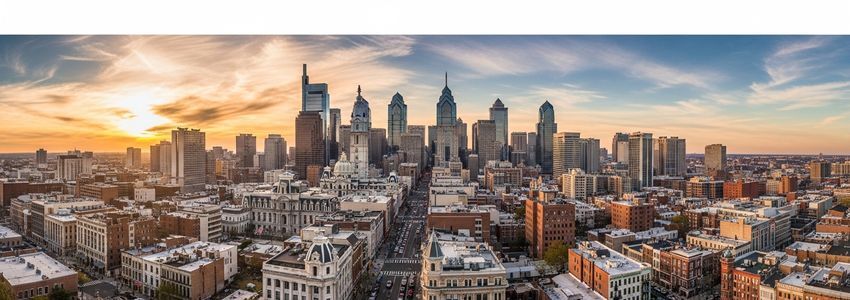
Philadelphia is one of America's most dynamic cities for small business. As the sixth-largest city in the United States, the City of Brotherly Love is home to more than 60,000 small businesses spanning healthcare, hospitality, manufacturing, technology, professional services, and logistics. Whether you operate a restaurant in Old City, a construction firm in South Philly, a medical practice in University City, or a retail boutique on Rittenhouse Square, access to capital is often the difference between stagnating and scaling.
The good news: Philadelphia entrepreneurs have more financing options in 2026 than at any point in recent history. From SBA loans backed by the federal government to fast private lending through lenders like Crestmont Capital, the funding landscape is rich with opportunity. The challenge is knowing which product fits your situation, what lenders require, and how to move through the process efficiently.
This guide covers everything you need to know about small business loans in Philadelphia, Pennsylvania - from loan types and qualification criteria to local resources and real-world funding scenarios. If you want the broader statewide picture, start with our Pennsylvania small business loans guide; then come back here for the Philadelphia-specific details.
In This Article
- Why Philadelphia Is a Strong Market for Small Business
- Types of Small Business Loans Available in Philadelphia
- How to Qualify for a Business Loan in Philadelphia
- Local Resources and Support Organizations
- Real-World Funding Scenarios
- Philadelphia Small Business Lending: Key Statistics
- How Crestmont Capital Helps Philadelphia Businesses
- How to Get Started
- Frequently Asked Questions
Why Philadelphia Is a Strong Market for Small Business
Philadelphia's economy is built on a foundation of legacy industries and a growing innovation sector. The city anchors a metro area of nearly 6.2 million people, giving local businesses immediate access to one of the densest consumer markets on the East Coast. According to U.S. Census Bureau data, the Philadelphia metro area generated more than $450 billion in economic output annually, placing it among the top ten metropolitan economies in the country.
Key industries driving demand for small business capital in Philadelphia include:
- Healthcare and Biotech: Penn Medicine, Jefferson Health, Children's Hospital of Philadelphia (CHOP), and Temple Health collectively employ hundreds of thousands of workers, creating enormous downstream demand for medical practices, specialty clinics, supplier businesses, and professional services firms.
- Logistics and Distribution: Philadelphia's location at the intersection of I-95 and I-76, combined with its deepwater port and rail infrastructure, makes it a logistics hub for the Mid-Atlantic region. Distribution companies, freight brokers, and last-mile delivery operators regularly need capital for vehicle fleets and warehouse buildouts.
- Hospitality and Restaurants: Philadelphia's food scene has gained national and international recognition. From fine dining in Center City to neighborhood eateries in Fishtown and Northern Liberties, restaurant operators consistently seek working capital, equipment financing, and expansion loans.
- Manufacturing: The Kensington and Port Richmond corridors maintain a base of small manufacturers producing everything from specialty chemicals to custom fabrication. Equipment financing and working capital loans are critical for these operators.
- Technology and Professional Services: University City's tech ecosystem, anchored by Penn and Drexel, has spun off dozens of growing companies. Legal, accounting, marketing, and consulting firms across Center City and the surrounding neighborhoods also represent a significant share of the small business loan market.
Key Stat: Philadelphia is home to more than 60,000 small businesses that employ roughly 280,000 workers - nearly half of the city's total private-sector workforce, according to SBA Office of Advocacy estimates.
Neighborhood-level activity also matters for lenders assessing local market risk. Center City and Rittenhouse Square attract retail and hospitality operators with high foot traffic. Old City draws creative agencies, boutique tourism businesses, and event venues. Fishtown and Northern Liberties are hotbeds of independent restaurant and bar concepts. South Philly remains a stronghold for construction contractors, auto services, and food-related businesses. University City is home to a concentration of medical and research-adjacent enterprises.
This diversity means Philadelphia lenders - and national lenders familiar with the market - are comfortable underwriting a wide variety of business types. If your business has a clear purpose for funds, realistic revenue projections, and a track record (or a solid plan for startups), Philadelphia is a favorable environment for finding financing.
Ready to Fund Your Philadelphia Business?
Get fast, flexible financing from the #1 business lender in the U.S. Apply in minutes - no obligation.
Apply Now ->Types of Small Business Loans Available in Philadelphia
Philadelphia entrepreneurs have access to a full spectrum of financing products. Understanding the differences between loan types is the first step toward choosing the right one for your business stage, credit profile, and capital need.
SBA Loans
The U.S. Small Business Administration (SBA) does not lend directly to businesses. Instead, it guarantees a portion of loans made by approved lenders, reducing lender risk and enabling more favorable terms for borrowers. For Philadelphia businesses, three SBA programs are most relevant:
- SBA 7(a) Loans: The SBA's flagship program. Loan amounts up to $5 million with terms up to 10 years for working capital and up to 25 years for real estate. Interest rates are tied to the Prime Rate and capped by the SBA. These loans are ideal for working capital, business acquisition, debt refinancing, and real estate purchase. See our detailed SBA loans explained guide for full program details.
- SBA 504 Loans: Designed specifically for major fixed-asset purchases like commercial real estate and heavy equipment. Structured as two loans - one from a bank (50%) and one from a Certified Development Company (40%) - with the borrower contributing 10% down. Fixed interest rates and long terms make this product extremely attractive for businesses ready to own their space.
- SBA Microloans: Loans of up to $50,000 delivered through nonprofit intermediary lenders. Ideal for startups and very small businesses that need modest capital and can benefit from the accompanying business training many microloan programs offer.
The SBA's Philadelphia District Office, located at 900 Market Street in Center City, provides guidance on approved lenders in the region. You can also find resources directly at SBA.gov.
Business Lines of Credit
A business line of credit gives you access to a revolving pool of funds that you draw from as needed and repay over time. This is ideal for managing cash flow gaps, covering seasonal slowdowns, or funding unpredictable expenses. Many Philadelphia restaurants, contractors, and retail businesses use lines of credit as their primary working capital tool.
Term Loans
Small business term loans provide a lump sum of capital that is repaid over a fixed schedule. Short-term loans (3-18 months) are useful for immediate needs like inventory purchases or bridge financing. Long-term business loans with multi-year repayment schedules are better suited for equipment acquisitions, renovations, and strategic expansion.
Equipment Financing
Equipment financing lets you purchase or lease business equipment using the equipment itself as collateral. This means lighter credit requirements compared to unsecured loans. Philadelphia manufacturers, medical practices, restaurants, and logistics companies frequently use equipment financing to acquire machinery, commercial kitchen equipment, medical devices, and vehicle fleets without depleting working capital.
Bad Credit Business Loans
Not every Philadelphia entrepreneur has a pristine credit profile - especially those who weathered the economic disruptions of recent years. Bad credit business loans are designed for business owners with scores as low as 500. These typically come with shorter terms and higher rates, but they provide access to capital when traditional financing is not an option.
Fast Business Loans
When time matters - an unexpected equipment failure, a time-sensitive opportunity, or a cash flow emergency - fast business loans can deliver funding in as little as 24 hours. Approval is based more on business revenue and bank statements than on extensive documentation, making these a practical option for established Philadelphia businesses that need to move quickly.
Merchant Cash Advances
A merchant cash advance (MCA) provides an upfront sum in exchange for a percentage of future credit card or daily revenue. While MCAs carry a higher effective cost than traditional loans, they offer extremely fast access and require no collateral or minimum credit score. Philadelphia businesses with high card-processing volume - restaurants, retailers, salons - sometimes use MCAs as a short-term bridge.
Key Stat: According to the Federal Reserve's Small Business Credit Survey, 43% of small businesses in the Mid-Atlantic region applied for financing in the past 12 months, with term loans and lines of credit being the most sought-after products.
How to Qualify for a Business Loan in Philadelphia
Lender requirements vary significantly depending on the loan type, loan size, and the lender's own underwriting standards. That said, most Philadelphia business loans are evaluated on a consistent set of factors:
Credit Score
Your personal credit score is typically the first filter. For SBA loans, most lenders prefer a score of 680 or higher. Traditional bank loans often require 700+. Private lenders like Crestmont Capital work with scores as low as 500-550 for certain products. Business credit scores (Dun and Bradstreet, Experian Business) are also relevant for established companies.
Time in Business
Most conventional lenders require at least two years of operating history. SBA loans generally require two or more years as well. Private lenders may approve businesses with as little as six months of operation, provided revenue is sufficient. Startups can access SBA microloans and some CDFI programs even earlier, though approval depends heavily on the business plan and owner qualifications.
Annual Revenue
Lenders want to see sufficient revenue to support loan repayment. A common benchmark is that your monthly loan payment should not exceed 10-15% of monthly gross revenue. Private lenders often set revenue minimums in the range of $10,000-$15,000 per month. SBA lenders will look at total cash flow including owner compensation.
Debt Service Coverage Ratio (DSCR)
The DSCR measures whether your business generates enough net operating income to cover its debt obligations. A DSCR of 1.25 or higher is generally required for SBA loans, meaning the business earns $1.25 for every $1.00 of debt service. Banks often require 1.3 or higher.
Collateral
SBA 7(a) loans over $25,000 typically require collateral if available - business equipment, real estate, or accounts receivable. SBA 504 loans are secured by the real estate or equipment being purchased. Private lenders and short-term lenders often waive collateral requirements in exchange for higher rates or a personal guarantee.
Industry and Use of Funds
Certain industries face additional scrutiny or are ineligible for SBA programs (adult entertainment, gambling, etc.). Most mainstream Philadelphia industries - healthcare, restaurants, retail, construction, professional services - are fully eligible. Clear documentation of how loan proceeds will be used strengthens every application.
Documentation Typically Required
- Business and personal tax returns (2-3 years)
- Business bank statements (3-6 months minimum, 12 months preferred)
- Profit and loss statement and balance sheet
- Business plan (for larger loans and SBA programs)
- Business license and formation documents
- Driver's license and personal financial statement
- Accounts receivable/payable aging reports (for larger loan amounts)
Private lenders and online lenders typically require less documentation. For a fast Crestmont Capital loan, you may need only bank statements, a driver's license, and a brief application.
Local Resources and Support Organizations in Philadelphia
Philadelphia has a well-developed ecosystem of business support organizations that help entrepreneurs access capital and build the financial readiness needed to qualify for larger loans.
Philadelphia Industrial Development Corporation (PIDC)
PIDC is the city's primary economic development agency, operating loan and financing programs specifically for Philadelphia businesses. PIDC offers commercial real estate financing, business acquisition loans, and targeted programs for manufacturing companies. They also connect businesses with federal programs and other public financing sources. Visit pidc-pa.org for current program details.
Philadelphia SBDC
The Philadelphia Small Business Development Center, part of the national SBDC network and hosted at Temple University, provides free business consulting, financial statement preparation, and loan application assistance. SBDC advisors can help you build the documentation package needed for an SBA loan or bank loan application. This is particularly valuable for first-time borrowers navigating the process for the first time.
Ben Franklin Technology Partners
Ben Franklin Technology Partners of Southeastern PA (BFTPs) provides investment capital and business support to technology companies and manufacturers in the Philadelphia region. If your business has a technology or advanced manufacturing component, BFTP is worth exploring - they invest in companies that often do not qualify for traditional debt financing.
Philly Neighborhoods Fund
The Philly Neighborhoods Fund provides loans to small businesses in underserved commercial corridors throughout Philadelphia. This program is specifically designed to support neighborhood-serving businesses - the kind of enterprises that anchor community commercial districts from Kensington to South Philly to Germantown.
SCORE Philadelphia
SCORE offers free mentoring from experienced business professionals. For loan readiness, SCORE mentors can help you assess your financial statements, refine your business plan, and prepare for lender conversations. SCORE Philadelphia hosts regular workshops on financing topics relevant to local entrepreneurs.
SBA Philadelphia District Office
The SBA's Philadelphia District Office covers the five-county Philadelphia area and can connect you with SBA-approved lenders, loan programs, and resources. Their lender match tool (available on SBA.gov) helps businesses find approved lenders in their area.
By the Numbers
Philadelphia Small Business Lending - Key Statistics
60,000+
Small businesses operating in Philadelphia
$1.2B+
SBA loan volume approved in PA annually (est.)
280,000
Philadelphia workers employed by small businesses
24 hrs
Typical funding time for fast private loans
Real-World Funding Scenarios for Philadelphia Businesses
Abstract loan descriptions only go so far. Here are four representative scenarios showing how different Philadelphia business types approach financing in 2026:
Scenario 1: Old City Restaurant Expansion
A well-established restaurant on Chestnut Street in Old City has been profitable for six years and wants to open a second location in Fishtown. The owner has a credit score of 695 and two years of strong tax returns showing consistent profitability. She applies for an SBA 7(a) loan of $350,000 to cover the new lease buildout, equipment, and three months of working capital reserve. With a solid history and full documentation package, she qualifies with a 10-year term at a competitive interest rate. Total monthly payment fits within her projected cash flow with room to spare.
Scenario 2: South Philly Construction Company
A residential and commercial contractor in South Philly wins a large remodeling contract but needs $120,000 upfront for materials and subcontractor deposits before the first client payment arrives. The business has $400,000 in annual revenue and has been operating for four years, but the owner's personal credit score is 580 following a medical debt issue. He qualifies for a short-term business loan through Crestmont Capital based on his business revenue and bank statements, funded within 48 hours. He repays the loan over 12 months as client payments come in.
Scenario 3: University City Medical Practice
A physician in University City is transitioning from a hospital employed role to private practice. She needs to finance the purchase of medical equipment - examination tables, diagnostic equipment, and EMR system setup - totaling $85,000. She has excellent personal credit (740) but limited business operating history. She qualifies for equipment financing with the equipment serving as collateral. The 48-month repayment schedule aligns with her revenue ramp-up projections.
Scenario 4: Rittenhouse Square Retail Boutique
A specialty retail boutique on Walnut Street near Rittenhouse Square wants to manage seasonal cash flow more effectively - the holiday quarter is extremely strong but January through March is lean. The owner applies for a business line of credit of $75,000. She draws on it during slow months to cover payroll and inventory orders, then repays during the holiday surge. The revolving nature of the line means she only pays interest on what she actually uses.
How Crestmont Capital Helps Philadelphia Business Owners
Crestmont Capital is rated the #1 business lender in the United States, and we work with Philadelphia entrepreneurs across every industry and financing need. Unlike traditional banks that often take weeks to process applications and impose rigid qualification criteria, Crestmont moves quickly and works with a broader range of credit profiles and business situations.
Here is what sets Crestmont apart for Philadelphia business owners:
- Fast approvals: Most applications receive a decision within hours, not days. Funding can occur in as little as 24 hours for qualified borrowers.
- Flexible qualification: We look at the full picture of your business - revenue, cash flow, and growth trajectory - not just your credit score.
- Multiple product options: Term loans, lines of credit, equipment financing, and bad credit products mean we can match the right product to your specific situation.
- No obligation to apply: Checking your options through Crestmont does not commit you to anything. You can review your offer and decide what works best for your business.
- Dedicated support: Our business financing advisors understand Philadelphia's market and can help you navigate the right funding path.
Whether you need $25,000 for working capital or $2 million for a major expansion, Crestmont has products designed to support Philadelphia businesses at every stage of growth. Explore our full range of small business loan options to find the right fit.
According to Forbes, access to fast, flexible capital is one of the top competitive advantages for small businesses in high-cost urban markets like Philadelphia - where lease costs, labor, and compliance expenses move faster than traditional lending timelines can accommodate.
Get Your Philadelphia Business Funded Today
Fast decisions, flexible terms, and financing for every business stage. Apply in minutes - no obligation.
Apply Now ->How to Get Started
Complete our quick application at offers.crestmontcapital.com/apply-now. It takes about 5 minutes and requires only basic business information to get started.
A Crestmont advisor will contact you quickly with your funding options. Review loan amount, rate, and term to find what works best for your Philadelphia business.
Once you accept your offer, funds are deposited directly into your business bank account - often within 24 hours. Put your capital to work and take your next step.
Pro Tip: According to CNBC, small business owners who apply for financing before they urgently need it consistently secure better rates and terms than those applying under financial pressure. Start your application early, even if funding is a few months away.
Frequently Asked Questions
What credit score do I need for a small business loan in Philadelphia? +
Requirements vary by lender and loan type. SBA 7(a) loans typically require a personal credit score of 680 or higher. Traditional bank loans often require 700+. Private lenders like Crestmont Capital work with scores as low as 500-550 for revenue-based products. Equipment financing can sometimes be approved with scores in the 580-620 range because the equipment serves as collateral.
How long does it take to get a business loan in Philadelphia? +
It depends on the loan type. Traditional bank loans and SBA loans can take 30-90 days from application to funding due to underwriting requirements. Private lenders and online lenders can typically approve and fund within 24-72 hours. Crestmont Capital often funds Philadelphia businesses within one business day of approval.
Can a Philadelphia startup get a business loan? +
Yes, though options are more limited for businesses under six months old. SBA microloans (up to $50,000) are available to startups through nonprofit intermediaries. Ben Franklin Technology Partners invests in early-stage tech companies. PIDC and the Philadelphia SBDC can connect startups with appropriate programs. For businesses with at least six months of revenue, private lenders may also offer term loans or revenue-based financing.
What are current small business loan interest rates in Philadelphia? +
Rates vary considerably by product and borrower profile. As of 2026, SBA 7(a) loan rates typically range from approximately 10-13% depending on the Prime Rate and loan term. Bank loans for well-qualified borrowers may range from 7-11%. Private lender rates for short-term loans are typically higher, often in the 15-40% annual range, reflecting faster approval and more flexible qualification. Equipment financing rates typically fall in the 6-15% range.
Does Crestmont Capital lend to Philadelphia businesses? +
Yes. Crestmont Capital works with small business owners across Philadelphia and the entire Pennsylvania market. We offer term loans, lines of credit, equipment financing, and bad credit products to businesses in all major Philadelphia industries including healthcare, hospitality, construction, manufacturing, retail, and professional services.
What is PIDC and how can it help my Philadelphia business? +
The Philadelphia Industrial Development Corporation (PIDC) is the city's primary economic development lender. PIDC provides commercial real estate financing, business acquisition loans, and targeted financing programs for manufacturers and industrial businesses in Philadelphia. PIDC also connects businesses with federal programs and helps coordinate complex multi-source financing deals. Visit pidc-pa.org for current programs.
Can I get a business loan in Philadelphia with bad credit? +
Yes. While SBA and bank loans require good-to-excellent credit, private lenders offer products specifically designed for business owners with lower credit scores. Crestmont Capital's bad credit business loan products consider business revenue, cash flow, and overall business health alongside credit history. These products come at higher rates but provide access to needed capital when traditional options are closed.
How much can I borrow for a small business loan in Philadelphia? +
Loan amounts vary widely. SBA microloans go up to $50,000. SBA 7(a) loans go up to $5 million. Private lenders typically offer loans ranging from $5,000 to $2 million depending on the product and the borrower's revenue. Lines of credit often range from $10,000 to $500,000. Equipment financing tracks the value of the equipment being financed. The right amount for your business depends on your revenue, creditworthiness, and the specific purpose of the funds.
What documents do I need to apply for a business loan in Philadelphia? +
For most lenders: business and personal tax returns (2-3 years), business bank statements (3-12 months), profit and loss statement, balance sheet, business formation documents, and a driver's license. For SBA loans, you will also need a detailed business plan, SBA-specific forms, and potentially a personal financial statement. For fast private loans through Crestmont, the requirements are much lighter - typically bank statements and basic application information.
Is Philadelphia a good city for small business owners to get financing? +
Yes. Philadelphia has a robust lending ecosystem that includes national banks, SBA-approved lenders, CDFIs, city economic development programs, and private lenders. The city's economic diversity and scale mean lenders have experience across a wide range of industries. Local organizations like the Philadelphia SBDC, PIDC, and SCORE also provide free support to help businesses prepare strong loan applications.
What is the Philadelphia SBDC and how can it help with loan applications? +
The Philadelphia Small Business Development Center is a free consulting resource hosted by Temple University. SBDC advisors help business owners prepare business plans, financial projections, and loan application packages. For first-time borrowers applying for SBA loans or bank financing, the SBDC can significantly strengthen your application. Services are free to Pennsylvania business owners.
Can I get a business line of credit for my Philadelphia restaurant? +
Absolutely. Business lines of credit are one of the most popular financing tools for Philadelphia restaurants. They provide flexible access to working capital to cover payroll during slow periods, purchase inventory ahead of busy seasons, fund marketing campaigns, and handle equipment repairs without disrupting cash flow. Crestmont Capital offers restaurant lines of credit with flexible qualification and quick turnaround.
How do SBA loans work for Philadelphia small businesses? +
SBA loans are made by approved private lenders (banks, credit unions, and some non-bank lenders) with a guarantee from the U.S. Small Business Administration covering 50-85% of the loan. This guarantee reduces lender risk, allowing them to offer lower rates and longer terms than conventional loans. Borrowers apply through SBA-approved lenders, not the SBA directly. Philadelphia has numerous SBA-approved lenders you can find through the SBA Lender Match tool at SBA.gov.
What neighborhoods in Philadelphia have the most small business activity? +
Center City is Philadelphia's primary commercial hub, with a dense concentration of professional services, retail, and hospitality businesses. Old City is home to creative agencies, tourism-related businesses, and restaurants. Fishtown and Northern Liberties have become hotbeds of independent food and beverage operators. Rittenhouse Square attracts upscale retail and professional services. South Philly remains strong for construction, food businesses, and auto services. University City is anchored by healthcare and research-adjacent enterprises.
What is the best loan for a Philadelphia business that needs money fast? +
For businesses that need capital in 24-48 hours, fast private loans from lenders like Crestmont Capital are the best option. These revenue-based loans require minimal documentation - typically bank statements and a brief application - and can fund within one business day. While rates are higher than SBA or bank loans, the speed and accessibility make them the right choice for urgent needs. Merchant cash advances are another fast option for businesses with high card processing volume.
Start Your Application Today
Philadelphia entrepreneurs trust Crestmont Capital for fast, flexible financing. Apply in minutes and get a decision quickly - no obligation.
Apply Now ->Conclusion: Philadelphia Is Open for Business - and So Is the Capital
Philadelphia is a city with deep entrepreneurial roots and a growing modern economy. From the biotech corridors of University City to the restaurant scene in Fishtown, from the manufacturing base in Kensington to the professional services firms in Center City, Philadelphia small businesses are the backbone of the local economy and the drivers of neighborhood vitality.
Access to capital is what separates the businesses that grow from those that stall. The good news is that in 2026, Philadelphia entrepreneurs have more financing options than ever - from government-backed SBA programs and city economic development resources to fast private lending through proven lenders like Crestmont Capital.
The right loan for your business depends on your credit profile, time in business, revenue level, and what you need the capital for. Whether you need $30,000 to cover a slow season or $1 million to open a second location, the resources exist to fund your next step. The most important action is simply to start: apply, explore your options, and put the capital to work.
For more on financing options across Pennsylvania, see our full Pennsylvania small business loans guide. And when you are ready to explore what you qualify for, Crestmont Capital is here - ready to move at the speed your Philadelphia business demands.
Disclaimer: The information provided in this article is for general educational purposes only and is not financial, legal, or tax advice. Funding terms, qualifications, and product availability may vary and are subject to change without notice. Crestmont Capital does not guarantee approval, rates, or specific outcomes. For personalized information about your business funding options, contact our team directly.

Allan Garfinkle
Allan Garfinkle is the Chief Revenue Officer at Crestmont Capital, where he has spent more than a decade leading revenue strategy, business development, and operational growth. With 28 years of experience building and advising startups and small businesses, Allan has helped more than 10,000 business owners navigate financing decisions, growth opportunities, and changing economic conditions. He earned a Bachelor of Science in Economics and an MBA with a concentration in Finance from Northeastern University, as well as a Juris Doctor from New England Law, where his studies focused on contracts and business law. His writing draws on extensive practical experience in small-business lending, equipment financing, business credit, and commercial finance.