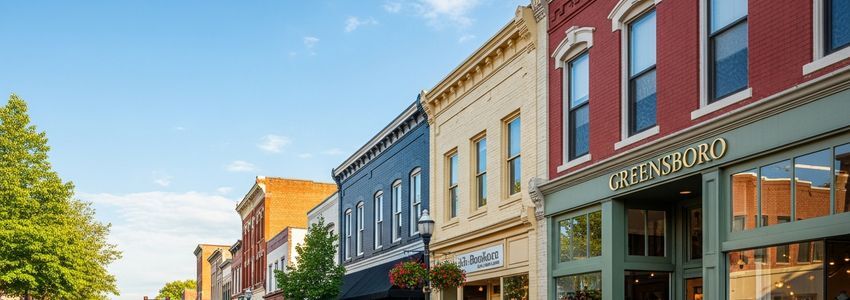
Greensboro is one of North Carolina's most dynamic business cities. Home to more than 300,000 residents and a growing entrepreneurial ecosystem, the Triad's anchor city has become fertile ground for small businesses across manufacturing, healthcare, logistics, retail, and professional services. Whether you're launching a startup in the Gateway University Research Park or expanding a family-owned restaurant on Elm Street, access to capital is often the single most important factor separating ambition from achievement.
This guide covers every major financing option available to Greensboro entrepreneurs in 2026, including SBA loans, traditional bank financing, alternative online lenders, and local resource programs. You'll learn exactly what lenders look for, how to apply, and how to pick the right loan for your specific situation.
At Crestmont Capital, we work with small business owners across North Carolina every day. We know what it takes to get funded quickly and on favorable terms. Let's get into it.
Ready to Fund Your Greensboro Business?
Get a free quote in minutes. No obligation, no hard credit pull. Crestmont Capital works with businesses of all sizes across North Carolina.
Apply Now →In This Article
- Greensboro's Small Business Landscape
- Types of Business Loans Available in Greensboro
- SBA Loans in Greensboro, NC
- Online and Alternative Lenders
- Local Grants and Resources for Greensboro Businesses
- What Lenders Look For
- Business Loans with Bad Credit in Greensboro
- Equipment Financing for Greensboro Businesses
- Greensboro Business Loans at a Glance
- How to Apply for a Business Loan
- Next Steps
- Frequently Asked Questions
Greensboro's Small Business Landscape
Greensboro's economy has undergone a significant transformation over the past two decades. Once anchored in textiles and tobacco, the city has diversified into sectors including advanced manufacturing, logistics, biotechnology, and higher education. The city sits at the crossroads of I-85 and I-40, making it a prime location for distribution and supply chain businesses.
Key economic facts about Greensboro in 2026:
- Population of approximately 305,000, making it North Carolina's third-largest city
- Home to eight colleges and universities, including the University of North Carolina at Greensboro, NC A&T State University, and Guilford College
- The Piedmont Triad region generates more than $80 billion in annual economic output
- FedEx, Volvo Financial Services, and Volvo Trucks North America all have major operations in the area
- Small businesses make up more than 97% of all businesses in Guilford County, according to the U.S. Small Business Administration
For entrepreneurs, this means a market with diverse demand, educated workforce talent, and strong institutional support systems. It also means robust competition, which is why having access to the right financing at the right time is critical.
If you're exploring small business funding across the state, our North Carolina small business financing overview is an excellent starting point before diving into Greensboro-specific options.
Types of Business Loans Available in Greensboro
There is no single "best" loan for all businesses. The right product depends on your revenue, credit profile, how long you've been in business, and what you need the capital for. Below is an overview of the most widely used financing options for Greensboro small businesses.
Term Loans
A term loan delivers a lump sum of capital upfront, which you repay in fixed installments over a set period. Terms typically range from 1 to 10 years, with interest rates varying depending on your creditworthiness and whether you're working with a bank, credit union, or online lender. Term loans are ideal for one-time large expenses like purchasing commercial real estate, funding a renovation, or buying another business.
Business Lines of Credit
A business line of credit gives you a revolving credit limit that you draw from as needed and repay over time. It's one of the most flexible financing tools available, perfect for managing cash flow gaps, covering payroll during slow seasons, or funding ongoing operating expenses. You only pay interest on what you actually draw.
SBA Loans
The U.S. Small Business Administration guarantees loans made by approved lenders, reducing risk and enabling better rates for small businesses that might not qualify for conventional financing. The SBA 7(a) and SBA 504 programs are the most popular. We cover these in detail below.
Merchant Cash Advances
A merchant cash advance (MCA) provides upfront capital in exchange for a percentage of your future credit card or debit card sales. MCAs fund quickly, often within 24 to 48 hours, and have minimal qualification requirements. The tradeoff is cost: factor rates can be significantly higher than traditional loan interest rates. MCAs work best for businesses with strong daily sales volume that need fast, short-term capital.
Invoice Financing
If your business regularly sends invoices with net-30 or net-60 payment terms, invoice financing lets you access a portion of those unpaid invoices immediately. This is especially valuable for B2B service companies, contractors, and manufacturers that frequently deal with slow-paying clients.
Microloans
Microloans are small loans, typically under $50,000, designed for startups and early-stage businesses that may not yet qualify for larger financing. The SBA microloan program and various nonprofit lenders offer microloan products, often paired with business coaching and technical assistance.
Lenders evaluate your loan purpose carefully. Having a clear, written explanation of exactly how you'll use the funds and how they'll generate returns makes your application significantly stronger. Vague answers like "working capital" without supporting detail are a common reason applications get delayed or denied.
SBA Loans in Greensboro, NC
SBA loans are widely regarded as the gold standard for small business financing. Because the SBA guarantees a portion of each loan (up to 85% for loans under $150,000 and 75% for loans above that), participating lenders take on less risk, which translates to lower interest rates and longer repayment terms for borrowers.
The most relevant SBA programs for Greensboro businesses include:
SBA 7(a) Loan Program
The SBA 7(a) is the most popular and versatile loan program. Amounts range up to $5 million, with repayment terms of up to 10 years for working capital and up to 25 years for real estate. Interest rates are pegged to the prime rate plus a lender spread, typically resulting in rates between 10% and 13% in the current environment. Eligible uses include working capital, equipment, real estate, refinancing existing debt, and business acquisitions.
SBA 504 Loan Program
The SBA 504 program is specifically designed for fixed assets, particularly commercial real estate and heavy equipment. Loans are structured in two parts: a bank provides 50% of the project cost, a Certified Development Company (CDC) funds 40%, and the borrower contributes 10% as a down payment. Amounts can reach $5.5 million per project. The 504 program offers some of the lowest fixed interest rates available for these asset classes.
SBA Microloan Program
For newer businesses or those needing smaller amounts, the SBA Microloan Program provides up to $50,000 through nonprofit intermediary lenders. In North Carolina, organizations like the Self-Help Credit Union and Business Development Finance work with the SBA to deploy microloans to underserved entrepreneurs.
Learn more about qualifying and applying on our dedicated SBA loans page.
For SBA lender options in Greensboro specifically, the Greensboro Small Business Center at Guilford Technical Community College can help connect you with SBA-approved lenders and guide you through the application process. You can also find SBA-approved lenders using the SBA's Lender Match tool.
What Does It Take to Qualify for an SBA Loan?
SBA loan eligibility requirements typically include:
- For-profit business status
- Operating within the United States
- Meeting the SBA's definition of a small business for your industry
- Personal credit score of 650 or higher (680+ preferred)
- At least 2 years in business (some programs accept 1 year)
- Demonstrated ability to repay based on business cash flow
- No recent bankruptcies or outstanding tax liens (without satisfactory explanation)
Not Sure Which Loan Is Right for You?
Crestmont Capital's advisors help Greensboro business owners identify the best financing option for their specific situation, fast.
Talk to an Advisor →Online and Alternative Lenders
Traditional bank loans and SBA loans are excellent options when you qualify, but they're not always the fastest or most accessible route for every Greensboro entrepreneur. Online lenders and alternative financing companies fill critical gaps in the market.
Advantages of Online Business Lenders
- Faster approvals, often within 24 to 72 hours
- Less paperwork and simpler applications
- More flexible credit requirements
- Funding options for newer businesses (some lend to businesses as young as 6 months)
- Accessible via any device, no branch visits required
What to Watch For
Online lenders can offer convenience, but they often come with higher rates than banks or SBA programs. Before accepting any offer, calculate the true annual percentage rate (APR) rather than just looking at the factor rate or weekly payment amount. Always compare at least three offers before making a decision.
Crestmont Capital works with Greensboro businesses to find the right balance between speed, cost, and terms. Explore all our small business loan options to see what fits your situation.
Local Grants and Resources for Greensboro Businesses
Greensboro has a strong ecosystem of business support organizations. Entrepreneurs should explore these resources alongside loan applications, as grants and technical assistance can significantly reduce your need for debt financing.
Greensboro Small Business Center (SBC)
Operated through Guilford Technical Community College, the SBC offers free one-on-one business advising, workshops on business planning and financial management, and connections to lenders and investors. It's one of the most valuable free resources available to Greensboro entrepreneurs.
City of Greensboro Economic Development Programs
The City of Greensboro's Office of Economic Development runs several programs designed to support small business growth, including the Minority/Women Business Enterprise (MWBE) certification program, facade improvement grants for downtown businesses, and loans through the Greensboro Revolving Loan Fund for qualifying businesses.
The Nussbaum Center for Entrepreneurship
One of the oldest business incubators in the southeastern United States, the Nussbaum Center provides affordable office space, mentoring, workshops, and networking events for early-stage businesses. It's a valuable resource for startups looking to build credibility while keeping overhead low.
SCORE Piedmont Triad
SCORE offers free mentoring from experienced business professionals. Their Piedmont Triad chapter covers Greensboro and the surrounding region. SCORE mentors can help with business plan development, financial projections, and loan application preparation.
NC IDEA Foundation
NC IDEA provides grant funding to early-stage, high-growth startups across North Carolina. Their SEED and MICRO grants offer up to $50,000 in non-dilutive funding to qualifying businesses. Applications are competitive, but the NC IDEA Foundation is an excellent resource for innovation-driven businesses in Greensboro.
According to the U.S. Census Bureau, Guilford County is home to over 25,000 small businesses employing more than 150,000 people. Small businesses are the backbone of Greensboro's economy.
What Lenders Look For
Whether you're approaching a community bank, an SBA lender, or an online platform, all lenders evaluate your application using similar criteria. Understanding what they're looking for allows you to strengthen your application before you submit it.
The Five C's of Credit
Lenders typically assess five dimensions, often called the "Five C's of Credit":
- Character: Your personal and business credit history, payment behavior, and any prior bankruptcies or legal judgments.
- Capacity: Your ability to repay the loan based on your current cash flow and income relative to existing debt obligations.
- Capital: The money you've personally invested in the business. Lenders see owner investment as a sign of commitment and skin in the game.
- Collateral: Assets you can pledge as security for the loan, such as real estate, equipment, inventory, or accounts receivable.
- Conditions: The overall economic environment, your industry trends, and the purpose of the loan.
Typical Minimum Requirements by Loan Type
| Loan Type | Min. Credit Score | Min. Time in Business | Min. Annual Revenue |
|---|---|---|---|
| SBA 7(a) | 650+ | 2 years | Varies |
| Bank Term Loan | 680+ | 2 years | $250,000+ |
| Online Term Loan | 600+ | 1 year | $100,000+ |
| Line of Credit | 620+ | 6 months | $75,000+ |
| Merchant Cash Advance | 500+ | 3 months | $50,000+ |
Business Loans with Bad Credit in Greensboro
A lower credit score does not automatically disqualify you from business financing. Many Greensboro entrepreneurs have successfully obtained funding with credit scores in the 500s. The key is knowing which lenders and products are designed for your situation.
Bad credit business loans typically include merchant cash advances, revenue-based financing, short-term online loans, and invoice financing. These products prioritize your business's cash flow and revenue history over your credit score.
That said, improving your credit score before applying will always result in better terms and lower costs. Steps to improve your business credit in the short term include:
- Paying down existing credit card balances to reduce your credit utilization ratio
- Disputing any inaccurate items on your personal and business credit reports
- Opening a business credit card and using it responsibly
- Registering your business with Dun & Bradstreet to establish a DUNS number and begin building a business credit profile
Even with bad credit, presenting a strong business plan, solid revenue history, and collateral can significantly improve your chances of approval.
North Carolina A&T State University's Small Business Technology Development Center (SBTDC) provides free consulting and assistance to minority-owned businesses in Greensboro, including help with loan applications, financial projections, and growth strategy. NC A&T has a long history of supporting Black entrepreneurship in the Triad region.
Equipment Financing for Greensboro Businesses

Greensboro's manufacturing, construction, transportation, and healthcare sectors frequently require significant equipment investments. Equipment financing allows you to acquire the machinery, vehicles, technology, and tools your business needs while preserving working capital for day-to-day operations.
Equipment loans are typically easier to qualify for than unsecured term loans because the equipment itself serves as collateral. This means lenders take on less risk, which translates to more competitive rates even for borrowers with imperfect credit.
Key advantages of equipment financing include:
- Up to 100% financing with no down payment required in some cases
- Fixed monthly payments that make budgeting predictable
- Section 179 tax deduction eligibility, allowing you to deduct the full equipment cost in the year of purchase
- Preserves existing credit lines for other business needs
- Approval decisions often based heavily on the equipment value, not just your credit score
Whether you need a new CNC machine for a manufacturing facility, commercial refrigeration units for a restaurant, or a fleet of delivery vehicles for a logistics company, equipment financing is one of the most efficient funding tools available to Greensboro businesses.
Greensboro Business Loans at a Glance
Greensboro, NC: Small Business Financing By the Numbers
The Business Loan Application Process
How to Apply for a Business Loan in Greensboro
Applying for a business loan is a process that rewards preparation. The more organized your documentation and the clearer your loan purpose, the faster lenders can make a decision. Here's a step-by-step framework for Greensboro entrepreneurs.
Step 1: Know Your Numbers
Before approaching any lender, you should know your personal credit score, your business credit profile, your monthly and annual revenue, and your current debt service coverage ratio (net operating income divided by total annual debt service). Lenders will find this information anyway; you want to find it first so there are no surprises.
Step 2: Define Your Loan Purpose
Write a clear, specific description of how you'll use the loan funds. "I need $150,000 to purchase two additional delivery vehicles, which will allow us to expand our same-day delivery zone and grow revenue by an estimated 25% over the next 12 months" is far more compelling than "working capital." Back up your projections with historical data when possible.
Step 3: Gather Your Documents
Common documents required by business lenders include:
- Last 2-3 years of personal and business tax returns
- Last 3-6 months of business bank statements
- Profit and loss statement (year-to-date)
- Balance sheet
- Business plan (required for SBA loans and startup loans)
- Business licenses and registrations
- Personal financial statement
- Articles of incorporation or organization
- Accounts receivable and accounts payable aging reports (for invoice financing)
Step 4: Compare Multiple Offers
Never accept the first offer you receive. Apply to at least two or three lenders simultaneously and compare the total cost of each loan, not just the interest rate. Look at the APR, total repayment amount, prepayment penalties, origination fees, and repayment flexibility.
Step 5: Review and Sign Carefully
Read the loan agreement in full before signing. Pay particular attention to the repayment schedule, default provisions, personal guarantee requirements, and any covenants that restrict your business activities while the loan is outstanding.
Greensboro entrepreneurs can also compare experiences with other North Carolina business owners by reviewing our guide to small business loans in Raleigh, NC, which covers many of the same lender categories and qualification criteria.
Greensboro vs. Other NC Cities: Financing Landscape
North Carolina's three largest metro areas, Charlotte, Raleigh, and Greensboro, each have distinct financing ecosystems. Greensboro's strength lies in its strong community banking tradition, with institutions like Truist Financial (headquartered in Charlotte but with significant Greensboro roots from its predecessor BB&T) and local credit unions playing major roles in small business lending.
Greensboro also benefits from its position in the Piedmont Triad region, which has been investing heavily in economic development infrastructure. The Piedmont Triad Regional Council coordinates economic development efforts across Guilford, Forsyth, and Alamance counties, creating a collaborative environment that makes it easier for businesses to access state and federal resources.
For a broader look at business financing programs across the state, visit our North Carolina small business loans guide.
According to Forbes Advisor, the average small business loan approval rate at large banks hovers around 13-15%, while community banks and credit unions approve roughly 40-50% of applications. This is why working with lenders who know your local market can make a significant difference in your success rate.
Next Steps
Your Greensboro Business Loan Action Plan
- Check your personal credit score at AnnualCreditReport.com (free, no impact on credit)
- Pull your last 3 months of business bank statements and calculate average monthly revenue
- Identify your loan purpose and the specific amount you need
- Contact the Greensboro Small Business Center for free pre-application advising
- Apply with Crestmont Capital for a no-obligation quote and see your options within 24 hours
Get Funded Fast with Crestmont Capital
Greensboro business owners trust Crestmont Capital for fast approvals, transparent terms, and competitive rates. Apply today and receive a decision within 24 hours.
Apply Now →Frequently Asked Questions
What credit score do I need to get a business loan in Greensboro, NC?
Most traditional banks and SBA lenders in Greensboro require a minimum personal credit score of 650 to 680. Online lenders and alternative financing options are more flexible, with some approving borrowers with scores as low as 500 to 550. A higher credit score generally results in better interest rates and loan terms.
How fast can I get a small business loan in Greensboro?
Funding speed depends on the loan type. Online lenders and merchant cash advance providers can fund in as little as 24 to 48 hours after approval. Community bank term loans typically take 1 to 3 weeks. SBA loans are the slowest, often taking 30 to 90 days from application to funding due to the additional underwriting and government guarantee process.
Can a startup get a business loan in Greensboro?
Yes, but your options are more limited than for established businesses. Startups can access SBA microloans (up to $50,000), equipment financing (which uses the equipment as collateral), and some online lenders that fund businesses as young as 3 to 6 months. A strong business plan and personal credit history are especially important for startups seeking financing.
What is the best SBA lender in Greensboro, NC?
Several banks and credit unions in Greensboro offer SBA lending, including Truist Bank, Wells Fargo, and various community banks. The SBA's Lender Match tool can connect you with approved lenders based on your business profile. Your local Small Business Development Center (SBDC) at NC A&T or GTCC can also help you identify lenders with the strongest track record for your industry.
Are there grants available for small businesses in Greensboro?
Yes. Grants available to Greensboro businesses include the City of Greensboro's facade improvement grants for downtown businesses, NC IDEA Foundation grants for innovative startups (up to $50,000), and various federal small business programs. Grants are competitive and often targeted to specific industries or demographics, such as women-owned or minority-owned businesses.
How much can I borrow for a small business loan in Greensboro?
Loan amounts vary widely by product. Microloans start as low as $500 and go up to $50,000. Online term loans typically range from $10,000 to $500,000. SBA 7(a) loans go up to $5 million, and SBA 504 loans can reach $5.5 million for real estate and major equipment projects. The amount you qualify for depends on your revenue, credit profile, and the specific lender's underwriting criteria.
Can I get a business loan with bad credit in Greensboro?
Yes. While a poor credit score limits your options and typically results in higher rates, bad credit business loans are available through online lenders, merchant cash advance providers, and invoice financing companies. Some nonprofit lenders and CDFIs (Community Development Financial Institutions) specifically serve businesses that traditional lenders have declined. Visit our bad credit business loans page to explore your options.
What documents do I need to apply for a business loan in Greensboro?
Most lenders require business and personal tax returns (2-3 years), recent bank statements (3-6 months), a profit and loss statement, a balance sheet, business licenses, and a personal financial statement. SBA loans also require a business plan. Online lenders often require fewer documents, sometimes just bank statements and basic business information.
Is Crestmont Capital available to businesses in Greensboro, NC?
Yes. Crestmont Capital works with small businesses across North Carolina, including the Greensboro and Piedmont Triad region. We offer a wide range of financing options, from business lines of credit and term loans to equipment financing and SBA loan assistance. Applications can be completed entirely online, and decisions are typically made within 24 hours.
What industries in Greensboro have the easiest time getting business loans?
Industries with predictable revenue and tangible assets, such as restaurants, retail, healthcare practices, contractors, and manufacturing companies, tend to have the easiest time qualifying for business loans. Lenders favor businesses with consistent cash flow history and collateral. Service businesses with strong receivables can also access invoice financing fairly easily. Higher-risk or highly cyclical industries may face stricter scrutiny.
How do I improve my chances of getting approved for a business loan in Greensboro?
Key steps include improving your personal credit score, building consistent revenue history, reducing existing debt before applying, preparing a detailed business plan, gathering all required documents in advance, and working with a local business advisor through the SBDC or SCORE Piedmont Triad. Applying with a lender who specializes in your industry or loan size also improves your odds significantly.
What is the difference between a business line of credit and a business term loan?
A business line of credit is revolving, meaning you can draw funds, repay, and draw again up to your credit limit. You only pay interest on what you draw. It's best for ongoing or unpredictable expenses. A term loan delivers a lump sum upfront with fixed payments over a set period. It's best for one-time large purchases or investments where the exact amount is known in advance.
Do I need collateral to get a business loan in Greensboro?
Not always. Many online lenders offer unsecured business loans that don't require specific collateral pledges, though they may still file a blanket UCC lien on business assets. SBA loans generally require collateral when available. Equipment loans use the equipment being purchased as collateral. Merchant cash advances require no collateral, as they're advances against future sales. Having collateral available generally improves your terms and loan amount eligibility.
How long does it take to get an SBA loan in Greensboro?
SBA loan processing times vary by lender and program. SBA Express loans (a faster 7(a) variant with a $500,000 cap) can be approved within 36 hours, though funding still takes time after approval. Standard SBA 7(a) loans typically take 30 to 60 days, and SBA 504 loans can take 60 to 90 days from application to closing. Working with an experienced SBA lender who knows the process well can significantly reduce wait times.
Are there special loan programs for minority-owned businesses in Greensboro?
Yes. Several programs specifically support minority-owned businesses in Greensboro. The SBA's 8(a) Business Development Program supports socially and economically disadvantaged entrepreneurs. The City of Greensboro's MWBE program offers resources and connections to certified minority and women-owned businesses. NC A&T's SBTDC provides free consulting to minority entrepreneurs, and various CDFIs in the region offer loans with flexible terms for underserved business owners.
Disclaimer: This article is intended for general educational purposes only and does not constitute financial, legal, or investment advice. Loan terms, rates, and eligibility requirements vary by lender and are subject to change. Crestmont Capital is not responsible for decisions made based on information in this article. Always consult with a qualified financial professional before making business financing decisions.