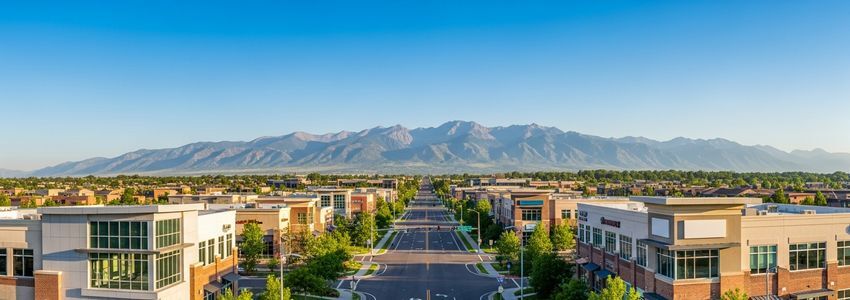
Centennial, Colorado is one of the Denver metro's most business-friendly communities. With a population exceeding 110,000 and a consistently high median household income, this Arapahoe County city offers fertile ground for entrepreneurs across retail, healthcare, professional services, and technology. Whether you are launching your first venture or scaling an established operation, small business loans in Centennial, Colorado can provide the capital you need to move confidently.
This guide covers every financing option available to Centennial business owners in 2026, from SBA-backed programs to fast alternative lenders, along with practical guidance on qualification, application strategy, and choosing the right product for your goals.
In This Article
- Centennial's Business Climate in 2026
- Types of Small Business Loans Available
- How Small Business Loans Work
- Centennial Small Business Financing: Key Numbers
- Qualification Requirements
- How Crestmont Capital Helps Centennial Businesses
- Top Industries in Centennial That Use Business Financing
- Real-World Financing Scenarios
- Loan Type Comparison
- Application Tips for Centennial Entrepreneurs
- Frequently Asked Questions
- How to Get Started
Centennial's Business Climate in 2026
Centennial was incorporated in 2001 and quickly established itself as a hub for commerce along the South Denver corridor. The city benefits from proximity to Denver International Airport, direct access to I-25 and E-470, and a highly educated workforce drawn from the surrounding Douglas and Arapahoe County communities. These geographic and demographic strengths make it an attractive location for companies in nearly every sector.
The Centennial business landscape is diverse. Healthcare and medical services are prominent along the Arapahoe Road corridor. Technology and aerospace companies cluster near the Dry Creek light rail stations. Retail and restaurant businesses thrive in the Streets at SouthGlenn and Centennial Center shopping districts. Professional services firms including law offices, accounting practices, and marketing agencies fill the city's extensive commercial office inventory.
Colorado as a state ranks among the top in the country for small business formation rates. According to the U.S. Small Business Administration, Colorado added more than 150,000 small businesses in the last five years. Centennial entrepreneurs benefit from Colorado's low corporate income tax rate, a well-developed banking infrastructure, and a thriving network of local chambers and business associations that connect owners with resources and referrals.
Local Advantage: Centennial businesses often cite access to the Denver metro's deep talent pool, combined with a suburban cost structure, as a key competitive advantage. For many entrepreneurs, access to capital through small business loans is the bridge that turns a solid concept into a growing operation.
Types of Small Business Loans Available to Centennial Entrepreneurs
Centennial business owners have access to a wide range of financing products. Understanding the differences helps you choose the right product at the right time.
SBA Loans
The U.S. Small Business Administration guarantees a portion of loans issued through approved lenders, reducing lender risk and improving access for small business borrowers. The SBA 7(a) program is the most common choice, offering up to $5 million in financing for working capital, equipment, real estate, and business acquisition. The SBA 504 program focuses on fixed assets like real estate and heavy equipment. SBA loans carry competitive interest rates but require more documentation and longer processing times than alternative products.
Term Loans
A traditional business term loan delivers a lump sum of capital that you repay over a defined period - typically one to five years - with fixed monthly payments. Term loans work well for one-time investments such as opening a new location, purchasing equipment, or funding a major renovation. Because repayment is predictable, term loans are easier to budget around than revolving products.
Business Lines of Credit
A business line of credit gives you access to a revolving pool of capital up to a set limit. You draw funds as needed, pay interest only on what you use, and replenish availability as you repay. Lines of credit are ideal for managing cash flow gaps, covering payroll during slow seasons, or seizing short-term inventory opportunities. They are flexible, reusable, and well-suited to businesses with variable revenue cycles.
Equipment Financing
Equipment financing allows Centennial businesses to acquire the tools, machinery, and technology they need without depleting working capital. The equipment itself serves as collateral, which typically makes approval more accessible even for businesses with limited credit history. Loan amounts track closely with the asset's value, and repayment terms often align with the equipment's useful life.
Working Capital Loans
Working capital loans provide short-term funding to cover operational expenses - payroll, rent, utilities, inventory replenishment, and vendor payments. These loans are designed for businesses that need a quick cash infusion rather than long-term project financing. Approval processes tend to be faster, and many lenders prioritize revenue trends over credit scores for working capital products.
Revenue-Based Financing
Revenue-based financing delivers capital in exchange for a fixed percentage of future monthly revenue until the total repayment amount is met. Because payments flex with your revenue, this product is popular with seasonal businesses and companies that experience income variability. There is no collateral requirement, and approval decisions rely primarily on revenue performance.
Ready to Fund Your Centennial Business?
Crestmont Capital offers fast, flexible financing for Colorado entrepreneurs. No obligation - apply in minutes and get a decision today.
Apply Now →How Small Business Loans Work: A Step-by-Step Overview
For Centennial entrepreneurs approaching lenders for the first time, understanding the process reduces friction and improves outcomes. Here is a straightforward breakdown of how business financing works from start to funding.
Step 1: Define Your Capital Need
The first step is articulating exactly how much you need and why. Lenders want specificity. "I need $75,000 to purchase a commercial espresso system, two point-of-sale kiosks, and three months of operating reserves for a new coffee bar location in the Streets at SouthGlenn" is far more compelling than "I need money to expand." Clarity in your capital request signals operational maturity and increases lender confidence.
Step 2: Gather Your Financial Documents
Most lenders require at minimum: business bank statements from the last three to six months, the most recent one or two years of business tax returns, a profit and loss statement, and a basic balance sheet. SBA lenders also require a detailed business plan. Alternative lenders typically require fewer documents and make faster decisions based primarily on bank statement cash flow.
Step 3: Understand Your Credit Profile
Lenders review both your business credit score and your personal credit score. Business credit is tracked by Dun and Bradstreet (PAYDEX score), Equifax, and Experian. Personal credit scores influence approval for SBA and conventional bank loans. Alternative lenders are more flexible on credit, prioritizing revenue trends and cash flow consistency.
Step 4: Shop Lenders and Compare Offers
Do not accept the first offer you receive. Compare annual percentage rates, repayment terms, origination fees, prepayment penalties, and collateral requirements across multiple lenders. A slightly lower interest rate can save thousands over the life of a loan, but a more flexible repayment structure may be worth more if your revenue is seasonal.
Step 5: Submit Your Application and Review the Term Sheet
Once you select a lender, submit your application with all supporting documentation. Review the term sheet carefully before signing. Pay close attention to factor rates (if applicable), prepayment clauses, and personal guarantee requirements. If you have questions, ask before signing - not after.
By the Numbers
Small Business Financing in Centennial, Colorado - Key Statistics
110K+
Centennial residents, creating strong local consumer demand for small businesses
$92K+
Median household income in Centennial, well above national average
33M+
Small businesses operating across the U.S., per SBA 2025 data
1-3 Days
Average funding timeline with alternative lenders vs. weeks with banks
Qualification Requirements for Centennial Business Owners
Qualification requirements vary by lender type and product. Here is what most Centennial business owners should expect.
Traditional Bank and SBA Requirements
Banks and SBA lenders typically require: two or more years in business, annual revenue of at least $150,000 to $250,000, a personal credit score of 680 or higher, strong business credit history, and detailed financial documentation. Collateral is often required for larger loan amounts. The approval process typically takes two to eight weeks for SBA products and one to three weeks for conventional bank loans.
Alternative and Online Lender Requirements
Alternative lenders have significantly more flexible requirements. Many approve businesses with as little as six months of operating history, minimum monthly revenues as low as $10,000 to $15,000, and personal credit scores starting at 550. Funding can occur in one to three business days after application approval. These lenders rely heavily on bank statement data rather than tax returns and credit history.
Factors That Strengthen Any Application
Regardless of the lender type you pursue, certain factors consistently improve approval odds and terms. These include: consistent monthly revenue with positive trends, a low balance of existing debt obligations, no recent defaults or bankruptcies on the business or personal credit file, a clear explanation of the capital's intended use, and adequate cash reserves to demonstrate repayment capacity.
Pro Tip: Before applying, pull your business credit report from Dun and Bradstreet and Experian Business. Dispute any errors you find. Even a single inaccurate derogatory mark can significantly affect your approval odds and the interest rate you are offered.
How Crestmont Capital Helps Centennial, Colorado Business Owners
Crestmont Capital is rated the number one business lender in the United States, and we serve entrepreneurs throughout the Centennial and greater Denver metro area with a full suite of financing solutions. Our approach is straightforward: we match each business owner with the right product based on their actual situation, not a rigid checklist.
Centennial businesses use our working capital loans to cover operating costs during seasonal slow periods or to take advantage of time-sensitive inventory purchases. Our equipment financing programs help restaurants, medical offices, fitness centers, and contractors acquire the tools they need without liquidating cash reserves. Business owners who need ongoing access to capital rely on our business line of credit to stay nimble throughout the year.
We also connect Centennial entrepreneurs with SBA loan programs when the borrower profile and timeline align. For businesses that need capital quickly or do not yet qualify for SBA financing, our revenue-based financing and alternative term loan products provide fast, accessible solutions with minimal paperwork.
For business owners looking to learn more about the full range of funding options available, our guide on managing growth with financing covers strategic capital deployment in depth. You can also explore our comprehensive equipment upgrade financing guide if capital equipment is your primary focus.
Centennial Business Owners: Let's Talk Financing
Our advisors understand the Colorado market. Get a tailored financing recommendation for your business - no cost, no obligation.
Start Your Application →Top Industries in Centennial That Use Business Financing
Centennial's economy is diverse, and business financing is utilized across a wide range of sectors. Here are the industries that most frequently leverage small business loans in Centennial, Colorado and why financing aligns with their operational needs.
Healthcare and Medical Services
Centennial has a strong concentration of medical offices, specialty clinics, physical therapy practices, and dental offices. Healthcare businesses typically use equipment financing for diagnostic machinery, patient furniture, and technology upgrades. They also use working capital loans to bridge gaps between service delivery and insurance reimbursement - a chronic cash flow challenge in the healthcare industry.
Retail and Restaurant
The Streets at SouthGlenn and surrounding retail districts are home to dozens of independent restaurants, boutiques, and specialty stores. Retail and restaurant owners frequently use business loans for seasonal inventory purchasing, kitchen equipment upgrades, interior renovations, and marketing campaigns. Revenue-based financing is particularly popular in this sector because payments flex with sales volume.
Professional Services
Law firms, marketing agencies, accounting practices, and consulting businesses in Centennial use business lines of credit to manage cash flow between project completion and client payment. Term loans fund office expansions, staff additions, and technology investments. Because professional services businesses typically have strong receivables but irregular cash timing, credit lines are their most frequently used financing tool.
Technology and Aerospace
Centennial's proximity to the Denver Tech Center means a significant number of technology startups and aerospace contractors operate in or near the city. These companies use equipment financing for servers, software licenses, and laboratory equipment. Working capital loans support hiring cycles and product development phases that precede major contract revenues.
Construction and Trades
General contractors, electricians, HVAC companies, and specialty tradespeople throughout Centennial and surrounding Arapahoe County use equipment loans for vehicles, tools, and heavy machinery. Construction factoring and lines of credit help bridge the gap between project completion and payment collection - a common challenge in the construction industry where net-30 to net-90 payment terms are standard.
Real-World Financing Scenarios for Centennial Business Owners
Understanding how other Centennial entrepreneurs have used business financing makes the options more concrete. Here are six scenarios that reflect common situations in this market.
Scenario 1: The Restaurant Renovation. A family-owned Italian restaurant on Arapahoe Road has operated profitably for seven years but needs to update its dining room and add a covered patio. The owners secure a $120,000 term loan at a competitive rate with a five-year repayment schedule. The renovation is completed in eight weeks and immediate seat count increases drive revenue growth that more than covers the monthly payment.
Scenario 2: The Medical Practice Upgrade. A physical therapy practice in the Centennial area uses equipment financing to acquire three new treatment tables, an electrical stimulation unit, and a digital billing software upgrade. The $45,000 equipment loan carries a rate that makes the monthly payment lower than the revenue increase generated by the added treatment capacity.
Scenario 3: The Seasonal Retailer. A specialty outdoor gear shop in the Streets at SouthGlenn relies on a $75,000 line of credit each fall to purchase winter inventory before the season begins. The line is drawn down in September, replenished through holiday and winter sales, and fully paid off by March. This cycle repeats reliably each year.
Scenario 4: The Expanding Contractor. An HVAC company based in Centennial wins a large commercial maintenance contract but needs two additional service vans and new diagnostic equipment to fulfill it. Equipment financing covers $85,000 in vehicles and tools. The contract revenue more than services the monthly payment.
Scenario 5: The Startup Professional Services Firm. A marketing agency launched 18 months ago lands its first anchor client but needs to hire two additional staff before revenues from the new contract begin flowing. A short-term working capital loan of $40,000 funds payroll for three months while the client relationship stabilizes.
Scenario 6: The Multi-Location Expansion. A fitness studio with an established Centennial location uses a term loan to fund build-out of a second location in Highlands Ranch. The $200,000 loan covers leasehold improvements, equipment, and operating reserves for the first six months of operation.
Loan Type Comparison for Centennial Business Owners
| Loan Type | Best For | Typical Amount | Speed |
|---|---|---|---|
| SBA 7(a) Loan | Major investments, acquisition | Up to $5 million | 2-8 weeks |
| Term Loan | One-time projects | $25K - $500K | 1-5 days |
| Line of Credit | Ongoing cash flow needs | $10K - $250K | 1-3 days |
| Equipment Financing | Machinery, vehicles, tech | $5K - $2 million | 1-3 days |
| Working Capital Loan | Payroll, inventory, operations | $10K - $500K | Same day to 2 days |
| Revenue-Based Financing | Variable revenue businesses | $10K - $500K | 1-2 days |
Application Tips for Centennial Entrepreneurs
Applying strategically improves your odds of approval and the quality of terms you receive. Here is practical advice specifically for Centennial business owners entering the lending process in 2026.
Organize your financials before you apply. Lenders want to see organized, consistent records. Download your last six months of business bank statements, reconcile any discrepancies, and ensure your most recent profit and loss statement is accurate. Disorganized financials signal operational risk even when the underlying business is healthy.
Know your numbers. Be able to state your monthly revenue, average monthly expenses, existing debt obligations, and projected revenue for the next 12 months without referring to notes. Lenders who speak with applicants directly are more confident in owners who demonstrate financial fluency.
Apply when your cash flow is strongest. Lenders evaluate average monthly deposits across your most recent three to six bank statements. If you have a strong month ahead - a contract payment, a seasonal uptick - it can be advantageous to time your application to capture that data in the review window.
Do not apply to too many lenders simultaneously. Multiple hard credit inquiries within a short window can suppress your credit score. Research lenders thoroughly before applying, and use pre-qualification tools that use soft pulls wherever possible.
Have a clear use-of-proceeds statement ready. A one-page summary of what you plan to do with the capital and how it will improve your revenue or reduce costs is highly persuasive. Lenders fund outcomes, not just needs. Show them the business logic behind your request.
Get a Financing Decision in Minutes
Crestmont Capital makes it fast and simple. Apply online now and speak with a Colorado business financing specialist about your options.
Apply Now - It's Free →Frequently Asked Questions
What types of small business loans are available in Centennial, Colorado?
Centennial business owners have access to SBA loans, conventional term loans, business lines of credit, equipment financing, working capital loans, revenue-based financing, and invoice factoring. The right product depends on your business stage, credit profile, intended use of funds, and timeline for funding.
How much can I borrow for my Centennial small business?
Loan amounts vary widely by product and lender. SBA loans go up to $5 million. Equipment financing typically tracks 80 to 100 percent of the asset's value with no hard upper limit. Alternative term loans and working capital products commonly range from $10,000 to $500,000. The amount you qualify for depends primarily on your monthly revenue, existing debt load, and business credit profile.
What credit score do I need to get a business loan in Centennial?
Credit score requirements vary by lender and product. Traditional banks and SBA lenders typically require a personal credit score of 680 or higher. Alternative lenders may work with scores as low as 550 to 600. Some revenue-based financing and equipment financing products have no minimum credit score requirement, focusing instead on revenue consistency and asset value.
How long does it take to get a business loan in Centennial?
Funding timelines range from same-day to eight weeks depending on the lender and product. Alternative and online lenders often fund working capital loans and lines of credit within one to three business days. SBA loans typically take two to eight weeks. Equipment financing can close in one to five days depending on the asset and loan amount.
Can I get a business loan as a startup in Centennial?
Startups face higher bars at traditional banks, but financing options do exist. Equipment financing secured by the equipment itself is often accessible to newer businesses. Revenue-based financing becomes available once you have at least six months of operating history and consistent monthly revenue. SBA microloans are designed specifically for startups and early-stage businesses with limited operating history.
What documents do I need to apply for a business loan in Colorado?
For most lenders you will need: three to six months of business bank statements, one to two years of business tax returns, a current profit and loss statement, a balance sheet, and a completed loan application. SBA loans additionally require a detailed business plan, personal financial statements, and sometimes a business valuation. Alternative lenders typically require only bank statements and a one-page application for quick approvals.
Does Crestmont Capital work with Centennial, Colorado businesses?
Yes. Crestmont Capital serves businesses throughout Centennial and the greater Denver metro area. We offer a full range of small business financing products and work with businesses across all industries. Our advisors are available to discuss your situation and match you with the most appropriate funding solution for your goals.
What is the difference between a business line of credit and a working capital loan?
A business line of credit is a revolving facility - you draw funds as needed, repay them, and draw again. It works like a business credit card but with larger limits and lower rates. A working capital loan is a lump-sum term loan designed for short-term operational needs. The line of credit is more flexible; the working capital loan is simpler and often faster to obtain.
Can I get a business loan with bad credit in Centennial?
Yes, options exist for business owners with less-than-perfect credit. Revenue-based financing and working capital loans from alternative lenders often prioritize revenue consistency over credit score. Equipment financing may be available because the equipment serves as its own collateral. Interest rates will be higher for lower credit scores, but access to capital is generally still possible for businesses with strong revenue.
How do SBA loans benefit small businesses in Colorado?
SBA loans offer competitive interest rates that are often lower than conventional bank loans and significantly lower than alternative lender products. Because the SBA guarantees a portion of the loan, lenders can extend more favorable terms to qualifying small businesses. Colorado is one of the most active SBA lending states in the country, with a strong network of approved lenders throughout the Denver metro.
What is revenue-based financing and is it right for my Centennial business?
Revenue-based financing provides a lump sum of capital that you repay through a fixed percentage of your monthly gross revenue until the total repayment amount is met. Because payments fluctuate with revenue, this product is particularly well-suited to seasonal businesses or those with variable income cycles. It is best for businesses with at least six months of operating history and consistent revenue of $10,000 or more per month.
Are there local resources for Centennial small business owners beyond loans?
Yes. The Centennial Chamber of Commerce connects local business owners with networking opportunities, advocacy resources, and referrals. The Colorado Small Business Development Center network offers free consulting for business planning, financial analysis, and loan readiness preparation. The Denver Metro Small Business Administration office administers SBA programs throughout the region and can provide referrals to approved lenders.
How can I improve my chances of getting approved for a business loan?
The most impactful steps are: maintaining consistent and growing monthly revenue, keeping existing debt obligations manageable, building business credit by opening trade lines and paying vendors on time, organizing your financial records thoroughly before applying, and having a clear use-of-proceeds plan. Applying for the right product - one you genuinely qualify for - also improves outcomes significantly.
What interest rates should I expect on a small business loan in Colorado?
Interest rates vary substantially by product and borrower profile. SBA 7(a) loans carry rates that are currently in the 10 to 14 percent annual range depending on loan size and term. Conventional bank term loans range from 7 to 15 percent. Alternative lender term loans range from 15 to 45 percent APR depending on credit and risk profile. Revenue-based financing is priced using a factor rate rather than an interest rate, typically between 1.10 and 1.50.
How do I choose between multiple loan offers for my Centennial business?
Compare offers on total cost of capital (not just rate), repayment flexibility, prepayment penalty provisions, collateral requirements, and the quality of the lender relationship. A slightly higher-rate loan with no prepayment penalty may be cheaper if you plan to pay off early. Evaluate offers holistically rather than selecting on rate alone. A Crestmont Capital advisor can help you compare offers and identify the most cost-effective option for your situation.
How to Get Started with Small Business Financing in Centennial
Complete our quick application at offers.crestmontcapital.com/apply-now - it takes just a few minutes and requires no commitment.
A Crestmont Capital advisor will review your business profile and match you with the most appropriate financing options. We explain the trade-offs clearly so you can make an informed decision.
Once approved, receive your funds - often within one to three business days - and put your capital to work. Centennial's thriving market awaits.
Conclusion
Centennial, Colorado offers an outstanding environment for small business growth. The city's educated population, high household incomes, diverse commercial districts, and proximity to Denver's regional economy create real opportunity for entrepreneurs across every sector. Small business loans in Centennial, Colorado provide the capital bridge between where your business is today and where you want it to go.
Whether you need equipment to scale production, working capital to navigate a seasonal gap, or a long-term loan to open a new location, the right financing product exists for your situation. The key is understanding your options, preparing your financial documentation thoroughly, and working with a lender who understands your market and your goals.
Crestmont Capital is ready to help. We serve Centennial and Colorado businesses every day with fast, flexible financing backed by expert guidance. Apply now or contact our team to learn more about what is available for your business.
Disclaimer: The information provided in this article is for general educational purposes only and is not financial, legal, or tax advice. Funding terms, qualifications, and product availability may vary and are subject to change without notice. Crestmont Capital does not guarantee approval, rates, or specific outcomes. For personalized information about your business funding options, contact our team directly.