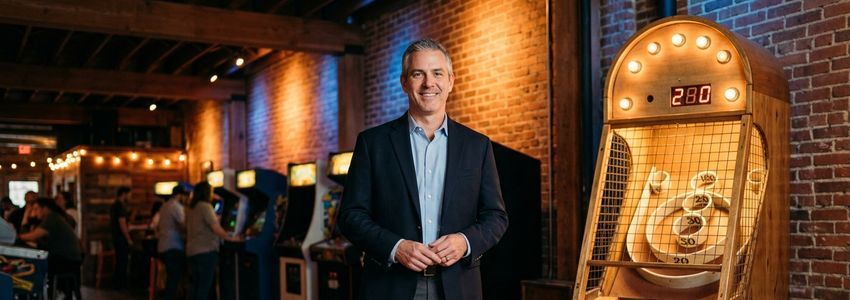
Skee ball machine financing gives arcade operators, family entertainment centers, bowling alleys, and bar/restaurant owners a way to add or expand skee ball lanes without draining cash reserves. Whether you're outfitting a brand-new arcade or replacing aging lanes at an established venue, financing spreads the cost of skee ball equipment into predictable monthly payments instead of one large upfront expense.
Skee ball remains one of the most reliable revenue generators in the amusement and redemption game category. A single bank of skee ball lanes can produce steady coin-drop or card-swipe revenue for years with minimal maintenance, which is exactly why operators continue to invest in new units, refurbished lanes, and modern ticket-redemption versions of the classic game. The challenge is that quality skee ball machines are not cheap, and buying several lanes outright can tie up capital that's better used for staffing, marketing, or other equipment.
In This Article
What Is Skee Ball Machine Financing?
Skee ball machine financing is a type of equipment financing specifically used to purchase, lease, or upgrade skee ball lanes and related redemption-game hardware. Instead of paying the full purchase price upfront, a business owner works with a lender to spread the cost over a fixed term, typically two to seven years, with structured monthly payments.
This type of financing falls under the broader category of equipment financing, which covers everything from kitchen equipment to industrial machinery. Skee ball lanes, prize redemption systems, ticket dispensers, and the electronic scoring and card-reader hardware that powers modern units all qualify as financeable business equipment because they have resale value and a defined useful life.
Lenders view skee ball machines favorably as collateral because the equipment itself secures the loan. That collateral backing is one reason approval can move faster than unsecured financing products, and why terms tend to be more competitive than a merchant cash advance or general working capital loan used for the same purchase.
It's worth understanding exactly what gets financed under a typical skee ball equipment agreement. Most financing covers the full cost of the playing lanes, the ball return mechanism, the scoring hardware, and increasingly the electronic components that make modern skee ball units function as cashless, card-based attractions rather than coin-only machines. Many operators also roll in the cost of a connected prize redemption kiosk or ticket counter system, since these are frequently purchased alongside new lanes and installed as a single project. Shipping, delivery, and installation labor can often be included in the financed amount as well, which means your full project cost, not just the sticker price of the machines, gets spread across the loan or lease term.
Because skee ball units are widely manufactured and have an established secondary market, they tend to hold resale value better than some specialty arcade equipment. That resale value matters to lenders because it reduces their exposure if a loan were ever to default, and it is part of why rates on skee ball financing are often comparable to rates on other well-established commercial equipment categories like restaurant or salon equipment.
Ready to Add Skee Ball Lanes to Your Venue?
Get fast, flexible equipment financing from the #1 rated business lender in the U.S. No obligation, apply in minutes.
Apply Now →What Determines the Cost of Skee Ball Equipment
Before applying for financing, it helps to understand what drives pricing on skee ball machines, since this directly affects how much you'll need to finance and what your monthly payment will look like.
- Lane length and size. Standard arcade-length lanes cost more than compact or home-style units, and most commercial venues need the full-length version to match player expectations.
- Electronic scoring and connectivity. Machines with digital scoreboards, networked leaderboards, or card-reader payment systems cost more than simple coin-drop units but typically generate higher average revenue per play.
- Ticket or card-based redemption integration. Units built to connect directly into a venue-wide redemption or loyalty card system carry a premium over standalone machines.
- New vs. refurbished condition. A refurbished lane from a reputable remanufacturer can cost 30 to 50 percent less than a brand-new unit while still offering several years of reliable service.
- Quantity purchased. Ordering multiple lanes at once often qualifies for volume pricing from the manufacturer, which can improve your overall project economics even before financing terms are factored in.
Once you know your total project cost, including any redemption or payment-system add-ons, you're in a much stronger position to shop for financing terms that match your expected revenue timeline.
Key Benefits of Financing Skee Ball Equipment
Financing skee ball machines rather than paying cash offers several advantages for arcade operators and entertainment venue owners:
- Preserve working capital. Keep cash on hand for payroll, rent, inventory, and marketing instead of tying it up in a single equipment purchase.
- Predictable monthly payments. Fixed payment schedules make budgeting easier than variable-cost alternatives like revenue-based advances.
- Faster revenue generation. New or expanded skee ball lanes start generating coin-drop or card revenue almost immediately, often covering the monthly payment well before the term ends.
- Potential tax advantages. Financed equipment may be depreciated or expensed depending on your business structure and current tax year; consult your accountant for specifics.
- Build business credit. On-time payments on an equipment financing account can help establish or strengthen your business credit profile for future financing needs.
- Upgrade without disruption. Replace aging or malfunctioning lanes without a cash-flow shock, keeping your floor fully operational for guests.
Key Stat: The U.S. amusement arcade industry generates well over $2 billion in annual revenue according to Census Bureau Service Annual Survey data, with redemption games like skee ball among the most consistent per-unit earners in the category.
How Skee Ball Machine Financing Works
The process of financing skee ball equipment is straightforward and typically follows these steps:
- Get a quote. Contact a skee ball manufacturer or distributor and get a written quote or invoice for the number of lanes, electronic scoring systems, and any redemption-ticket hardware you need.
- Apply with a lender. Submit a simple application along with the equipment quote. Most equipment lenders require basic business information, time in business, and recent bank statements rather than extensive paperwork.
- Receive an approval decision. Equipment-secured financing often moves faster than unsecured products because the collateral reduces lender risk. Many applicants receive a decision within one to two business days.
- Review and sign terms. Review the payment schedule, term length, and any fees before signing. A reputable lender will walk through the full cost of financing with you.
- Equipment is ordered and delivered. Once funded, the lender typically pays the vendor directly, and your skee ball lanes are shipped and installed.
- Begin making payments. You start making fixed monthly payments while the equipment is already generating revenue on your arcade floor.
By The Numbers
Amusement Equipment Financing - Key Statistics
$2B+
Annual U.S. amusement arcade industry revenue (Census Bureau)
1-2 Days
Typical approval turnaround for equipment-secured financing
2-7 Yrs
Common repayment term lengths for arcade equipment
38%
YoY increase in SBA 7(a) loan approvals, FY2025 Q1 (Forbes)
Types of Skee Ball and Amusement Equipment Financing
Not every financing product fits every arcade or entertainment center. Here are the most common structures used to fund skee ball and related redemption equipment:
- Equipment loans. A term loan secured by the skee ball machines themselves. You own the equipment from day one while repaying a fixed monthly amount. This is the most common path for operators who plan to keep the equipment long-term.
- Equipment leasing. Rather than owning the equipment outright, you make lease payments and may have the option to purchase, renew, or return the equipment at the end of the term. Leasing can mean lower monthly payments and easier upgrades down the road. See our equipment leasing options for details.
- SBA 7(a) or 504 loans. For larger projects, such as outfitting an entire new family entertainment center with multiple game categories, SBA-backed loans offer longer terms and lower rates, though the application process is more involved. Learn more about SBA loan options.
- Used equipment financing. Refurbished or secondhand skee ball lanes cost significantly less than new units and can still be financed, which is helpful for operators working with a tighter budget. Explore used equipment financing if you're considering pre-owned lanes.
- Bad credit equipment financing. Operators with less-than-perfect personal or business credit still have options, since the equipment itself provides collateral that offsets some lender risk. See bad credit equipment financing for more information.
Who Skee Ball Financing Is Best For
Skee ball machine financing makes the most sense for a specific set of business owners and situations:
- New arcade and family entertainment center operators who need to outfit a game floor from scratch without spending their entire startup budget on one game category.
- Existing arcades expanding capacity by adding more skee ball lanes to meet demand during peak hours or seasons.
- Bowling alleys and bar/restaurant owners adding an entertainment component to increase dwell time and secondary revenue.
- Operators replacing aging equipment where older lanes have become unreliable, require frequent repairs, or no longer support modern card-based payment systems.
- Seasonal or boardwalk venues that need to refresh or expand their game inventory ahead of a busy season without disrupting cash flow.
If your business generates consistent revenue, has at least a few months of operating history, and you have a specific equipment quote in hand, you are likely a strong candidate for equipment-secured skee ball financing.
Common Mistakes to Avoid When Financing Arcade Equipment
A few avoidable missteps can cost operators money or slow down their financing. Keep these in mind before you sign:
- Not getting a detailed equipment quote first. Lenders move faster and can offer more accurate terms when they see an itemized quote rather than a rough estimate.
- Overlooking installation and delivery costs. Make sure your financing covers the full project cost, not just the machine price, so you're not caught paying out of pocket for setup.
- Choosing the shortest available term just to minimize interest. A shorter term means a higher monthly payment, which can strain cash flow during slower months. Match the term to your expected revenue ramp.
- Skipping the fine print on end-of-lease options. If you choose a lease, understand upfront whether you'll own the equipment, need to return it, or have a buyout option at the end of the term.
- Financing more capacity than current foot traffic supports. It's tempting to buy a full bank of lanes at once, but phasing expansion based on actual demand often produces a better return on financed equipment.
Skee Ball Financing vs. Other Funding Options
Business owners often compare equipment financing against other common funding products before deciding how to pay for arcade equipment. Here's how the main options stack up:
| Option | Best For | Typical Term | Collateral |
|---|---|---|---|
| Equipment Loan | Owning equipment outright | 2-7 years | Equipment itself |
| Equipment Lease | Lower payments, easier upgrades | 2-5 years | Equipment itself |
| SBA Loan | Large, multi-game buildouts | 5-25 years | Varies; often equipment and/or real estate |
| Business Line of Credit | Flexible, ongoing needs | Revolving | Often unsecured or blanket lien |
| Cash Purchase | Well-capitalized operators | N/A | None |
For most arcade and entertainment venue owners, equipment-secured financing offers the best balance of speed, predictable costs, and preserved working capital compared to paying cash or relying on a general line of credit for a single equipment purchase.
How Crestmont Capital Helps
Crestmont Capital works with arcade operators, family entertainment centers, and hospitality venues across the country to structure financing for skee ball lanes and other redemption game equipment. As a nationally rated business lender, we focus on fast decisions and straightforward terms rather than drowning applicants in paperwork.
Our equipment financing programs are built around the realities of running an entertainment venue: seasonal revenue swings, the need to move quickly when a vendor has lanes in stock, and the importance of keeping cash available for staffing and marketing during a buildout or expansion. If you're financing a broader arcade upgrade alongside your skee ball lanes, our team can also walk you through commercial financing options for the rest of your project.
If you're also exploring other redemption and amusement equipment, our guide on financing arcade machines and ticket redemption equipment covers the broader category in more depth, and our claw machine financing guide addresses another popular redemption game category many of our skee ball clients also finance.
Ready to Expand Your Game Floor?
Crestmont Capital offers fast equipment financing decisions so you can get your skee ball lanes installed and generating revenue sooner. No obligation to apply.
Apply Now →Real-World Scenarios
Scenario 1: New Family Entertainment Center Opening
A couple opening a 15,000-square-foot family entertainment center needed to outfit their game floor with a mix of redemption games, including six skee ball lanes, before opening day. Rather than draining their startup budget on one game category, they financed the skee ball lanes separately from their build-out loan, preserving cash for staffing, signage, and opening marketing.
Scenario 2: Boardwalk Arcade Expanding Capacity
A seasonal boardwalk arcade noticed that its two existing skee ball lanes had lines out the door every weekend during peak summer months. The owner financed four additional lanes ahead of the next season, and the added capacity paid for the monthly payment within the first six weeks of the summer.
Scenario 3: Bowling Alley Adding an Entertainment Zone
A traditional bowling alley wanted to add a small arcade section to increase revenue per visit and keep families occupied during wait times. Financing let the owner add skee ball lanes, a claw machine, and a redemption counter without touching the cash reserved for lane maintenance and resurfacing.
Scenario 4: Replacing Outdated Equipment
An established arcade had three skee ball lanes from the 1990s that no longer accepted modern payment cards and required constant mechanical repairs. The owner financed new electronic units with card readers, which not only reduced maintenance calls but also increased per-lane revenue thanks to higher average spend per visit with cashless payment.
Scenario 5: Shopping Mall Pop-Up Entertainment Zone
A mall operator wanted to convert an empty retail unit into a temporary entertainment zone to drive foot traffic during a slow leasing period. Financing four skee ball lanes and a handful of other redemption games let the operator launch quickly while a longer-term tenant was found, and the games generated enough revenue during the interim to more than cover the financing payments.
Scenario 6: Restaurant Adding a Game Room
A sports bar and restaurant owner noticed competitors in the area were pulling in families with dedicated game rooms. By financing two skee ball lanes and a small redemption counter, the owner was able to add a kid-friendly attraction that increased average party size and extended how long families stayed for food and drink orders.
Frequently Asked Questions
What is skee ball machine financing?
Skee ball machine financing is a form of equipment financing that lets arcade and entertainment venue owners purchase or lease skee ball lanes and spread the cost over fixed monthly payments instead of paying the full price upfront.
How much does a new skee ball machine cost?
Costs vary widely based on size, electronic features, and whether the unit includes a ticket redemption or card-based scoring system. Get a written quote from a manufacturer or distributor before applying for financing so your lender can structure terms around the exact amount.
Can I finance used or refurbished skee ball lanes?
Yes. Used equipment financing is available for refurbished or secondhand skee ball machines, which often cost significantly less than new units while still providing years of reliable revenue.
What credit score do I need to finance arcade equipment?
Requirements vary by lender, but because skee ball equipment serves as its own collateral, approval is often more accessible than unsecured financing, and options exist even for operators with less-than-perfect credit.
How long does approval take?
Equipment-secured financing often moves faster than other business loan products. Many applicants receive a decision within one to two business days once they submit an equipment quote and basic business information.
Is leasing or a loan better for skee ball machines?
It depends on your goals. A loan builds equity in equipment you plan to keep long-term, while a lease often means lower monthly payments and flexibility to upgrade equipment sooner. Many operators mix both approaches across different equipment categories.
Can I finance multiple skee ball lanes at once?
Yes. Most equipment financing programs can bundle multiple units, including a full bank of skee ball lanes, electronic scoring systems, and a redemption counter, into a single financing agreement.
Do I need a down payment?
Down payment requirements vary by lender and loan structure. Some equipment financing programs require little to no down payment, especially for established businesses with a solid operating history.
What documentation do I need to apply?
Typically you'll need a written equipment quote, basic business information, time in business, and recent bank statements. Requirements are generally lighter than for an unsecured loan because the equipment itself backs the financing.
Can a brand-new arcade qualify for financing?
Newer businesses can qualify, though options may be more limited than for established operators. Having a solid business plan, an equipment quote, and strong personal credit can help new arcade owners secure favorable terms.
What happens if I fall behind on payments?
As with any financing agreement, missed payments can affect your business credit and may allow the lender to repossess the financed equipment, since it serves as collateral. Contact your lender immediately if you anticipate a payment issue.
Can I bundle skee ball financing with other arcade equipment?
Yes. Many operators finance skee ball lanes alongside claw machines, arcade cabinets, and ticket redemption systems in a single agreement, which simplifies payments and can sometimes improve overall terms.
Does skee ball financing affect my personal credit?
Many lenders require a personal guarantee for business equipment financing, which means your personal credit could be affected by how the account is managed. Ask your lender directly whether a personal guarantee is required for your specific agreement.
Is it better to buy new or refurbished skee ball lanes?
New lanes come with full warranties and the latest electronic features, while refurbished lanes cost significantly less and can still provide years of reliable play. Many operators mix both, using new units for high-traffic areas and refurbished units to fill out additional lanes affordably.
How do I get started with skee ball machine financing?
Get a written equipment quote from your preferred manufacturer or distributor, then apply with a business lender that offers equipment financing. Approval decisions are often available within one to two business days.
Get Your Game Floor Funded
See what skee ball and arcade equipment financing options you qualify for today. Fast approvals, no obligation.
Apply Now →Next Steps
Contact a skee ball manufacturer or distributor for pricing on the lanes and features you need.
Have recent bank statements and time-in-business details ready to speed up your application.
Submit your application and equipment quote to receive a financing decision, often within one to two business days.
Once funded, your skee ball lanes are delivered and installed, ready to start generating revenue on your floor.
Conclusion
Skee ball machine financing gives arcade operators, family entertainment centers, and hospitality venues a practical way to add, expand, or upgrade skee ball lanes without disrupting cash flow. With fixed monthly payments, fast approval timelines, and options ranging from equipment loans to leasing, financing makes it possible to get new lanes on your floor and generating revenue in a matter of weeks rather than months.
Whether you're opening a new entertainment venue, expanding capacity at an existing arcade, or replacing outdated equipment that no longer supports modern payment systems, skee ball machine financing can help you move forward without tying up capital you need for other parts of your business.
The amusement and family entertainment industry continues to show resilience even as consumer spending patterns shift, and operators who invest in reliable, well-maintained equipment like skee ball lanes tend to see consistent returns year after year. Pairing the right financing structure with a clear equipment quote and a realistic revenue projection puts you in a strong position to expand confidently rather than reactively.
Disclaimer: The information provided in this article is for general educational purposes only and is not financial, legal, or tax advice. Funding terms, qualifications, and product availability may vary and are subject to change without notice. Crestmont Capital does not guarantee approval, rates, or specific outcomes. For personalized information about your business funding options, contact our team directly.