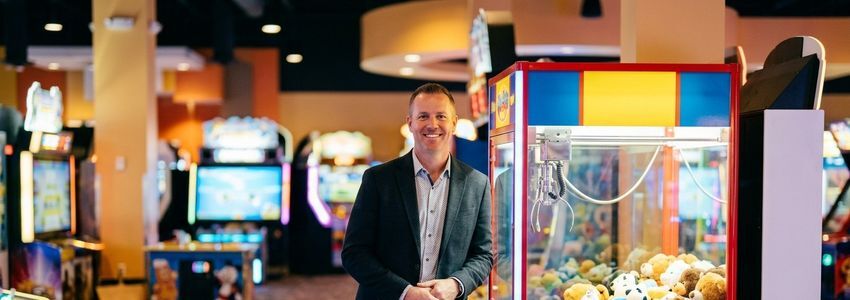
Claw machine financing helps arcade and route operators buy or lease crane machines with flexible, fast terms.
Claw machine financing gives entertainment business owners, arcade operators, and amusement route operators a way to purchase or lease crane game machines without paying the full cost out of pocket. Rather than draining cash reserves on hardware, financing spreads the cost of each claw machine over monthly payments while the machine itself starts generating revenue almost immediately.
Claw machines remain one of the most consistent earners in the coin-operated amusement world. A single, well-placed unit can bring in several hundred dollars a month with minimal labor once it is stocked and running. For operators looking to add a handful of machines to an existing location, or build out a full claw machine route across multiple venues, financing is often the fastest path from idea to installed, earning equipment.
In This Article
What Is Claw Machine Financing?
Claw machine financing is a type of equipment financing used specifically to purchase, lease, or expand a fleet of crane game machines, sometimes called claw machines, crane games, or skill claw machines. Instead of paying the full retail price of each unit upfront, which commonly ranges from roughly $1,500 for a compact mini claw machine to $5,000 or more for a large, feature-rich cabinet, an operator finances the purchase and repays it over a set term with regular payments.
This type of financing is most often used by amusement route operators, arcade and family entertainment center owners, laundromat and car wash owners looking to add a secondary revenue stream, restaurant and bar owners adding an entertainment corner, and retail or convenience store owners who want to monetize unused floor space. Because claw machines are a defined, serialized physical asset with resale value, they qualify for standard equipment financing and equipment leasing structures offered by commercial lenders.
The financed equipment itself typically serves as collateral, which is one reason claw machine financing tends to be more accessible than unsecured working capital loans, especially for newer operators who may not yet have years of business tax returns to show a traditional bank.
Key Benefits of Claw Machine Financing
- Preserve working capital. Keep cash on hand for rent, payroll, prize inventory, and marketing instead of tying it up in hardware purchases.
- Start earning sooner. Financing lets operators install machines now and pay for them out of the revenue those machines generate, rather than waiting to save enough cash.
- Scale a route quickly. Operators who want to place machines in multiple locations can finance several units at once instead of growing one machine at a time.
- Predictable monthly payments. Fixed-rate equipment loans and leases make budgeting simple, since the payment amount does not change over the term.
- Potential tax advantages. Depending on the structure, financed or leased equipment may be eligible for depreciation or deduction treatment; a tax professional can confirm specifics for your business.
- Options for newer operators. Because the machine itself secures the financing, approval criteria are often more flexible than unsecured loan products.
- Upgrade flexibility. Leasing structures in particular make it easier to upgrade to newer claw machine models, including smart machines with cashless payment readers, as technology and player preferences evolve.
Ready to Add Claw Machines to Your Business?
See how much financing you qualify for in minutes. No obligation, no impact to explore your options.
Apply Now →Key Stat: A single, well-placed claw machine can generate between $200 and $500 per week in a high-traffic location, according to industry operators, which often covers a monthly financing payment within the first few weeks of operation.
How Claw Machine Financing Works
The process for financing a claw machine follows the same general structure as other types of equipment financing, with a few industry-specific details worth understanding before you apply.
Step 1: Determine What You Need
Decide how many machines you want to finance, what type (mini, standard, or large-format), and whether you are buying new or used equipment. Suppliers and refurbishers vary widely in price, so having a clear quote or invoice ready speeds up the application process.
Step 2: Apply and Share Basic Business Information
Lenders will typically ask for basic business details, time in business, monthly revenue, and sometimes recent bank statements. Because the machine secures the financing, documentation requirements are often lighter than for unsecured products.
Step 3: Receive Approval and Terms
Approved applicants receive a specific loan or lease amount, term length, and payment schedule. Terms for claw machines commonly range from 24 to 60 months, depending on the equipment cost and the lender.
Step 4: Equipment Is Purchased and Installed
Once terms are signed, funds are typically sent directly to the equipment vendor, or reimbursed to the operator if equipment was already purchased, depending on the lender's process. The claw machine is delivered, installed, and stocked with prizes.
Step 5: Make Regular Payments as the Machine Earns
The operator collects revenue from the machine (cash, card, or app-based payments) and makes the agreed monthly payment to the lender. Many operators structure their pricing and collection schedule so that a portion of weekly earnings is set aside specifically to cover the financing payment.
Types of Claw Machine Financing
Not every financing structure works the same way. Here are the main options available to claw machine operators:
Equipment Loans
An equipment loan provides funds to purchase the claw machine outright. The operator owns the machine once the loan is repaid, and the machine serves as collateral throughout the term. This option tends to make sense for operators planning to keep machines long-term or build equity in their equipment fleet.
Equipment Leasing
Under an equipment lease, the operator pays a monthly fee to use the machine, often with an option to purchase it for a residual amount at the end of the term, or upgrade to a newer model. Leasing can require a lower upfront commitment and may appeal to operators who like to refresh their machines every few years to keep up with trends and technology.
Used and Refurbished Equipment Financing
Many operators, especially those just starting a route, finance used or refurbished claw machines to lower the entry cost per unit. Lenders that offer used equipment financing will typically ask for the machine's age, condition, and a bill of sale or invoice from the seller.
Financing for Bad Credit or Newer Businesses
Operators with limited credit history or a newer business may still qualify for claw machine financing, since the equipment itself reduces the lender's risk. Rates and terms may be less favorable than for established operators, but approval is often still possible.
Multi-Unit Route Financing
Operators building a route of 5, 10, or more machines across different venues can often finance several units together under a single agreement, which simplifies paperwork compared to financing each machine separately.
Build Out Your Claw Machine Route Faster
Crestmont Capital works with amusement and entertainment operators every day. Let's talk about your next installation.
Get Started →Who Claw Machine Financing Is Best For
- Amusement route operators placing machines across bars, restaurants, laundromats, and retail stores on a revenue-share basis.
- Arcade and family entertainment center owners adding claw machines alongside other redemption and video game equipment.
- Restaurant and bar owners who want to add a low-maintenance entertainment element to increase dwell time and secondary revenue.
- Laundromat, car wash, and convenience store owners looking to monetize existing customer foot traffic with minimal added staffing.
- Movie theaters and bowling centers rounding out their lobby or waiting area with additional earning equipment.
- Existing claw machine operators expanding an already-proven route into new territory or venue types.
Comparing Claw Machine Financing to Other Funding Options
Claw machine financing is not the only way to fund new equipment, but it is usually the most efficient for this specific purpose. Here is how it stacks up against other common options:
| Funding Option | Best For | Typical Term | Collateral |
|---|---|---|---|
| Equipment Financing | Purchasing new claw machines to own | 24-60 months | The machine itself |
| Equipment Leasing | Lower upfront cost, frequent upgrades | 24-48 months | The machine itself |
| Business Line of Credit | Ongoing flexible access to capital | Revolving | Often unsecured or blanket lien |
| Working Capital Loan | General business expenses, not tied to one asset | 3-24 months | Usually unsecured |
| Paying Cash | Operators with ample reserve capital | N/A | None, but ties up cash |
For most operators, equipment financing or leasing strikes the best balance: the payment is tied directly to an earning asset, approval tends to be faster than a general-purpose loan, and cash stays available for prizes, maintenance, and day-to-day operations.
How Crestmont Capital Helps
Crestmont Capital works with amusement and entertainment business owners to structure equipment financing that fits the realities of a claw machine business, whether that means a single unit for a local bar or a multi-machine route spanning several venues. We also offer equipment leasing for operators who prefer lower upfront payments or want the flexibility to upgrade machines as technology changes.
If you are purchasing machines secondhand from a retiring operator or a refurbisher, our used equipment financing options can help you acquire proven, already-tested units at a lower entry cost. And if your credit profile is still developing, or you are newer to the amusement business, our bad credit equipment financing programs are designed to evaluate the whole picture of your business rather than relying on credit score alone.
For operators who want ongoing flexibility to restock prizes, cover maintenance, or jump on a new location opportunity as it comes up, a business line of credit can complement your equipment financing with access to working capital whenever you need it.
Many of our amusement and entertainment clients have also financed other equipment categories through Crestmont. If your claw machine purchase is part of a broader arcade buildout, our guide to arcade equipment financing covers financing for the full mix of cabinets, redemption games, and claw machines together. And if you are managing or expanding a multi-location route business, our amusement machine route business loans guide walks through financing considerations specific to route operators.
Our team understands that amusement equipment earns differently than a restaurant oven or a construction excavator, and we structure terms accordingly, aiming to keep your payment comfortably below what a well-placed machine is expected to generate.
By the Numbers
Claw Machine Financing and the Amusement Industry
$200-$500
Typical weekly revenue for a well-placed claw machine
$2.46B
Annual revenue of the U.S. amusement arcade industry (Census.gov, NAICS 713120)
73%
Share of equipment loan applicants who received full approval, per small business lending surveys
24-60 Mo.
Typical financing term length for amusement equipment
Pro Tip: Lenders financing claw machines typically look at the machine's useful life (often 5 to 10 years) to set loan or lease terms. Matching your payment schedule to the machine's earning life helps keep monthly payments manageable relative to revenue.
Real-World Scenarios
Scenario 1: The Bar Owner Adding a Claw Machine
A sports bar owner notices customers lingering near the entrance after games end. They finance a single large-format claw machine for roughly $4,000 over 36 months. Within the first two months, weekly cash collections from the machine comfortably cover the monthly payment, and the remaining revenue becomes pure profit on top of the bar's core business.
Scenario 2: The Route Operator Expanding to Five New Venues
An established amusement route operator with ten machines already placed wants to add five more units across new laundromats and convenience stores. Rather than saving up cash over a year, they finance all five machines together under one agreement, allowing them to lock in new venue agreements immediately before a competitor does.
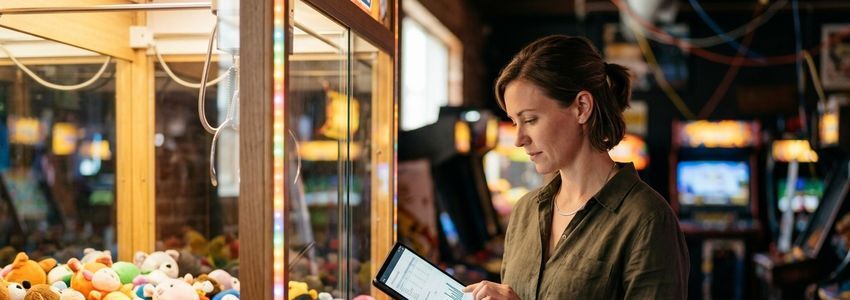
Scenario 3: The Family Entertainment Center Refresh
A family entertainment center with three aging claw machines wants to replace them with modern, cashless-payment-enabled units to boost conversion from app-based payments. They use an equipment lease to upgrade, keeping monthly payments close to what they were already budgeting for the older machines.
Scenario 4: The First-Time Operator With Limited Credit History
A first-time entrepreneur wants to start a small claw machine route but has only six months of business history and a limited credit profile. Because the machines themselves serve as collateral, they qualify for financing on two starter units, proving out the concept before scaling further.
Scenario 5: The Convenience Store Diversifying Revenue
A convenience store owner with unused corner space near the entrance finances a mini claw machine to add a secondary revenue stream without hiring additional staff. The machine requires only occasional restocking, and the modest monthly payment is easily absorbed by existing foot traffic.
Scenario 6: The Movie Theater Lobby Upgrade
A regional movie theater chain finances four claw machines for its lobby areas ahead of the summer blockbuster season, timing the installation to capture the seasonal spike in foot traffic and family attendance.
Turn Floor Space Into Monthly Revenue
Apply in minutes and find out what claw machine financing could look like for your business.
Apply Now →Frequently Asked Questions
What is claw machine financing?
Claw machine financing is a form of equipment financing or leasing used to purchase or lease crane game machines without paying the full cost upfront. Payments are made over a set term while the machine generates revenue.
How much does it cost to finance a claw machine?
Claw machine prices typically range from about $1,500 for a compact mini unit to $5,000 or more for a large-format machine. Financed monthly payments vary based on the purchase price, term length, and approved rate, but often range from roughly $60 to $200 per machine per month on standard terms.
How much revenue can a claw machine generate?
A well-placed claw machine in a high-traffic location can generate between $200 and $500 per week, though results vary significantly based on location, prize selection, pricing, and foot traffic.
Do I need good credit to finance a claw machine?
Not necessarily. Because the machine itself typically serves as collateral, lenders often have more flexible approval criteria than for unsecured loans. Operators with limited or developing credit may still qualify, sometimes at different rates or terms.
What is the difference between financing and leasing a claw machine?
Financing (an equipment loan) means you are working toward ownership of the machine as you make payments. Leasing means you pay a monthly fee to use the machine, often with an option to buy it at the end of the term or upgrade to a newer model.
Can I finance used or refurbished claw machines?
Yes. Many lenders, including Crestmont Capital, offer used equipment financing for refurbished or secondhand claw machines, which can lower the entry cost compared to buying new.
How long does it take to get approved for claw machine financing?
Approval timelines vary by lender and the completeness of the application, but equipment financing decisions can often be made within one to a few business days once required documentation is submitted.
What documents are typically required to apply?
Lenders commonly ask for basic business information, time in business, an equipment quote or invoice, and sometimes recent bank statements. Requirements are generally lighter than for unsecured loan products since the equipment secures the financing.
Can I finance multiple claw machines at once?
Yes. Operators building out a route or installing several machines across different venues can often finance multiple units together under a single agreement rather than applying separately for each one.
What are typical financing terms for claw machines?
Terms commonly range from 24 to 60 months, depending on the total equipment cost, the lender, and the applicant's qualifications. Shorter terms mean higher monthly payments but less total interest paid over time.
Is claw machine financing available for new businesses?
Yes, though newer businesses may face different terms or rates than established operators. Because the equipment itself reduces lender risk, approval is often still possible even with a shorter operating history.
Do I need a special license to operate a claw machine?
Requirements vary widely by state and municipality. Many jurisdictions require a general business license and sometimes a specific amusement device or coin-operated machine permit. Check with your local business licensing office before installing machines.
How is a claw machine location agreement typically structured?
Many route operators place machines under a revenue-share agreement with the venue owner, where earnings are split by an agreed percentage. Terms, responsibilities for maintenance, and insurance requirements should be clearly defined in a written agreement.
What happens if a financed claw machine breaks down?
Most financing and lease agreements place responsibility for maintenance and repairs on the operator, similar to owning the equipment outright. Keeping a maintenance reserve or warranty coverage can help manage this risk.
How do I get started with claw machine financing through Crestmont Capital?
You can start by submitting an application through Crestmont Capital's online form. Our team will review your business details and the equipment you intend to finance, then present financing options tailored to your situation.
Next Steps
Choose how many claw machines you need, new or used, and get a quote or invoice from your supplier.
Submit a quick application with basic business details through Crestmont Capital.
Compare payment amount and term length against your expected revenue per machine.
Get your machine delivered, stocked, and generating revenue, with payments structured to match its earning potential.
Conclusion
Claw machine financing gives business owners a practical way to add proven, revenue-generating equipment without tying up working capital. Whether you are placing a single machine in an existing venue or building out a multi-location amusement route, financing or leasing structures let the equipment pay for itself over time while you keep cash available for the rest of your business. With flexible terms, options for newer operators, and support for both new and used equipment, claw machine financing can be the difference between waiting to save up and getting a new revenue stream installed this month.
If you are ready to explore claw machine financing for your business, Crestmont Capital can help you find terms that make sense for your specific equipment and venue plans.
Disclaimer: The information provided in this article is for general educational purposes only and is not financial, legal, or tax advice. Funding terms, qualifications, and product availability may vary and are subject to change without notice. Crestmont Capital does not guarantee approval, rates, or specific outcomes. For personalized information about your business funding options, contact our team directly.