
 (800) 949-0401
Airport Company Business Loans: The Complete Financing Guide for 2026
Airport companies operate at the intersection of aviation, logistics, transportation, and hospitality - making them one of the most capital-intensive businesses in any economy. Whether you manage a regional airfield, a fixed-base operator (FBO), an airport ground services company, or a full-scale international aviation support firm, your financing needs are unique, large, and ongoing. From runway improvements and ground support equipment to terminal upgrades and cybersecurity infrastructure, airport-related businesses require consistent access to capital just to remain operational - let alone competitive.
Airport company business loans give aviation-sector operators the funding they need to grow facilities, modernize equipment, hire staff, and meet the strict safety and regulatory standards required by the Federal Aviation Administration (FAA) and other governing bodies. This guide breaks down every major loan option available to airport companies, outlines how to qualify, and shows you exactly how Crestmont Capital can help you secure the financing your operation depends on.
In This Article
- What Is Airport Company Business Financing?
- Key Financing Challenges for Airport Companies
- Types of Business Loans for Airport Companies
- How Airport Companies Use Business Loans
- How Crestmont Capital Helps Airport Businesses
- How to Qualify for Airport Business Financing
- Loan Comparison: Which Option Fits Your Business?
- Real-World Scenarios
- Frequently Asked Questions
- How to Get Started
What Is Airport Company Business Financing?
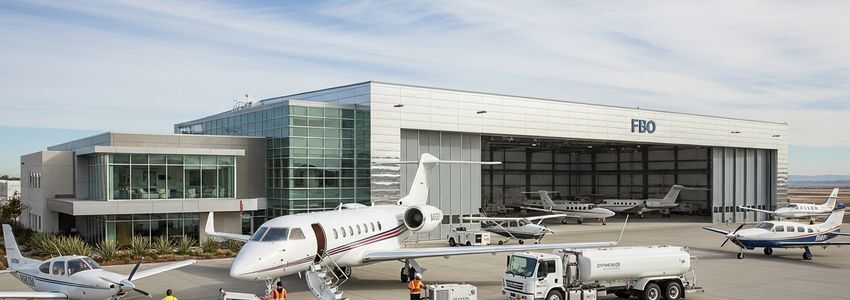
Airport company business financing refers to any loan, line of credit, or capital facility used to fund the operations, equipment, infrastructure, or expansion of an airport-related business. This includes companies that own or manage airports, fixed-base operators (FBOs) that provide fuel, hangars, and ground handling, charter aviation services, airport ground transportation businesses, cargo handling companies, and airport retail or hospitality operators.
Unlike traditional retail or service businesses, airport companies often operate under long-term concession agreements, government contracts, or FAA-regulated frameworks - making their revenue streams relatively predictable, but their capital requirements substantially higher. Equipment alone - from ground support vehicles and fuel trucks to baggage handling systems and aircraft tugs - can cost millions of dollars. Infrastructure maintenance, terminal renovations, and compliance upgrades add further to the financial burden.
Business loans for airport companies can be structured as term loans, equipment financing, working capital lines of credit, SBA-backed loans, or commercial real estate loans, depending on the specific need. The key is matching the right loan product to the right business need - and working with a lender that understands the aviation sector's unique financial profile.
Industry Insight: According to the FAA, the United States has over 5,000 public-use airports, and the aviation industry contributes more than $1.8 trillion annually to the U.S. economy. Airport-related businesses at every level of this ecosystem rely on financing to sustain and expand their operations.
Key Financing Challenges for Airport Companies
Airport companies face a distinct set of financing challenges that set them apart from most other small and mid-size businesses. Understanding these challenges is the first step toward securing the right funding.
High Capital Requirements with Long Payback Cycles
Ground support equipment, hangar construction, fuel storage systems, and terminal improvements all require large upfront capital outlays - yet the revenue generated often comes in over multi-year concession contracts or seasonal cycles. This creates a mismatch that traditional bank loans often struggle to accommodate, especially when underwriting conservative debt-service coverage ratios.
Regulatory and Compliance Costs
FAA regulations, TSA security mandates, EPA environmental requirements, and local zoning ordinances require ongoing capital investment just to remain in compliance. Many airport businesses find themselves needing emergency financing to address a new regulatory requirement or pass an inspection - situations where speed and flexibility in lending become critical.
Seasonal Revenue Variation
Passenger traffic - and by extension, revenue for airport-related businesses - is highly seasonal. Summer and holiday peaks can generate the majority of annual revenue, while shoulder seasons create cash flow gaps. Working capital solutions need to account for these cyclical patterns, rather than requiring flat monthly repayments that don't reflect the business's actual cash flow.
Limited Traditional Bank Appetite
Many traditional banks are unfamiliar with the aviation sector, classify it as high-risk, or simply lack the underwriting expertise to evaluate an FBO or airport services business properly. This creates a gap that alternative and specialized commercial lenders - like Crestmont Capital - are well positioned to fill.
Ready to Fund Your Airport Business?
Crestmont Capital specializes in commercial and equipment financing for aviation-sector businesses. Apply in minutes and get a decision fast.
Apply Now →Types of Business Loans for Airport Companies
There is no single loan product that fits every airport company's needs. The right financing depends on whether you're buying equipment, funding operations, expanding facilities, or managing a cash flow gap. Here is a comprehensive breakdown of the most relevant loan options available.
1. Equipment Financing and Leasing
Equipment financing is one of the most common and practical financing tools for airport companies. Ground support vehicles, fuel trucks, baggage carts, aircraft tugs, de-icing equipment, runway maintenance machinery, and hangar equipment can all be financed through dedicated equipment loans or lease structures. The equipment itself typically serves as collateral, which means credit requirements are often less stringent than for unsecured financing. Equipment financing through Crestmont Capital offers flexible terms, competitive rates, and fast approvals tailored to the aviation equipment market.
2. SBA Loans
Small Business Administration (SBA) loans offer government-backed financing at competitive interest rates and longer repayment terms than conventional loans. The SBA 7(a) program - the most flexible SBA loan - can be used for working capital, equipment, real estate, or debt refinancing. For airport companies meeting SBA size standards, this can be an excellent long-term capital solution. SBA loans carry lower rates and higher loan amounts, making them ideal for larger capital projects.
3. Working Capital Loans
Seasonal revenue swings and delayed contract payments make working capital loans essential for airport businesses. These short-to-medium-term loans provide a cash infusion to cover payroll, utilities, vendor invoices, and operational costs during slow periods. Unsecured working capital loans from Crestmont Capital can be approved in as little as 24 hours, making them ideal for bridging temporary gaps without tying up assets.
4. Commercial Real Estate Financing
Airport companies that own or are acquiring terminal buildings, hangars, maintenance facilities, or office space can access commercial real estate loans to fund these purchases or improvements. These are long-term loans - typically 10 to 25 years - secured by the property itself. Commercial real estate financing is well-suited for capital investment in owned aviation facilities.
5. Business Line of Credit
A revolving business line of credit gives airport companies flexible access to capital they can draw from and repay repeatedly as needs arise. Unlike a lump-sum loan, a line of credit lets you borrow only what you need, when you need it - making it an ideal tool for managing inventory purchases, emergency repairs, or unexpected regulatory expenditures. A business line of credit provides the financial flexibility airport operators need to respond quickly.
6. Revenue-Based Financing
For airport companies with predictable but seasonal revenues, revenue-based financing offers repayment structures that flex with your cash flow. Rather than a fixed monthly payment, you repay a percentage of monthly revenues - paying more during peak season and less during slow periods. This aligns debt service with actual business performance.
7. Commercial Equipment Leasing
For airport companies that prefer not to own their equipment outright, commercial equipment leasing offers access to high-cost machinery with lower monthly payments and the option to upgrade equipment at end of term. This is particularly useful for technology-intensive equipment like baggage screening systems or passenger boarding bridges that may need frequent updating.
By the Numbers
Airport Business Financing - Key Statistics
5,000+
Public-use airports in the U.S. (FAA)
$1.8T
U.S. aviation's annual economic contribution
11M
Jobs supported by the aviation industry in the U.S.
24-48h
Typical Crestmont Capital approval timeline
How Airport Companies Use Business Loans
Understanding how other airport businesses deploy financing can help you identify your own highest-priority capital needs. Here are the most common uses of airport company business loans.
Ground Support Equipment (GSE) Purchases
Ground support equipment is the backbone of airport operations. Baggage tugs, pushback tractors, belt loaders, ground power units, air start units, and lavatory service vehicles are all essential for daily operations - and all carry significant purchase prices. Equipment financing makes these purchases accessible without depleting working capital, spreading costs across 24 to 72 months while the equipment generates revenue from day one.
Hangar Construction and Renovation
Building or significantly renovating a hangar requires commercial construction financing or real estate loans. Whether you're adding square footage to accommodate larger aircraft or upgrading an existing facility with modern insulation, electrical systems, or maintenance pits, construction financing allows you to complete the project and repay the loan from the revenue the improved facility generates over time.
Fuel System Infrastructure
FBOs and airport fuel operators face some of the largest capital investments in the industry. Underground fuel storage tanks, fueling equipment, spill containment systems, and environmental compliance infrastructure all require significant upfront investment. EPA regulations also require periodic upgrades to fuel storage systems - often on compressed timelines that demand quick access to capital.
Terminal and Passenger Area Improvements
Passenger satisfaction, airline contract renewals, and regulatory compliance all depend on a well-maintained and modernized terminal environment. Seating replacements, security screening infrastructure, signage upgrades, Wi-Fi systems, concession areas, and accessibility improvements all require capital that is often better financed than paid from operating cash flow.
Workforce Expansion and Payroll Bridge
During periods of rapid growth - such as adding a new airline contract or expanding cargo operations - airport companies often need to hire and train additional staff before the associated revenue materializes. Working capital loans or lines of credit bridge this gap, allowing businesses to scale their workforce without creating a cash flow crisis in the short term.
Technology and Safety Systems
Modern airports and FBOs rely increasingly on sophisticated technology - from FOD (foreign object debris) detection systems and runway lighting controls to biometric passenger processing and advanced baggage reconciliation software. Financing these technology investments preserves working capital while keeping operations compliant and competitive.
How Crestmont Capital Helps Airport Companies
Crestmont Capital is a leading commercial lender rated #1 in the U.S. for small business financing. We work with airport companies, FBOs, ground handlers, charter operators, and aviation support businesses of all sizes to structure financing solutions that fit the unique demands of the aviation sector.
Our team understands that airport businesses don't fit neatly into traditional bank underwriting boxes. We look beyond credit scores to evaluate your revenue history, contract pipeline, asset base, and operational cash flow - giving many aviation businesses access to capital that conventional banks routinely decline. With small business financing options ranging from $10,000 to $10 million or more, and approvals possible within 24 to 48 hours, Crestmont Capital is built for businesses that need to move quickly.
Our commercial financing team also has deep expertise in structuring larger deals - from aircraft ground support equipment leases to multi-million-dollar terminal improvement loans - through our commercial financing division. We work with airport businesses throughout the United States, with specialized knowledge of the FAA regulatory environment and the financial patterns unique to this industry.
Why Crestmont Capital? We offer competitive rates, flexible repayment structures, no prepayment penalties on many products, and a dedicated relationship manager who understands your business - not just your credit score. Over 90% of our clients rate us 5 stars for speed, transparency, and customer service.
Get Airport Business Financing Today
Speak with a Crestmont Capital aviation finance specialist. We'll match you with the right loan product for your operation's specific needs.
Start Your Application →How to Qualify for Airport Company Business Loans
Qualification requirements vary by loan type and lender, but understanding the general criteria will help you position your application for the best possible outcome.
Time in Business
Most lenders require at least 6 to 12 months in business. SBA loans and traditional term loans typically prefer 2+ years of operating history with documented financials. If you're a newer operation with strong contracts already in place, some lenders - including Crestmont Capital - may work with businesses as young as 6 months old, especially when there is a strong contract or concession agreement providing predictable future revenue.
Revenue Requirements
Working capital loans and lines of credit typically require a minimum of $10,000 to $15,000 in monthly revenue. Equipment financing may have lower revenue thresholds since the equipment itself secures the loan. For larger commercial loans - above $1 million - lenders will want to review 2-3 years of business tax returns, financial statements, and often a business plan or project summary.
Credit Profile
Personal credit scores above 650 open up the widest range of loan options. Business credit scores (Dun & Bradstreet, Equifax, Experian Business) are also evaluated. However, Crestmont Capital works with business owners across the credit spectrum - including those with blemished credit histories - by evaluating the broader financial picture of the business rather than relying solely on a single score.
Collateral
Equipment loans are self-collateralizing (the financed equipment serves as collateral). Commercial real estate loans use property as collateral. Unsecured working capital loans from Crestmont Capital may require a personal guarantee but generally do not require specific assets to be pledged. Having strong collateral positions - particularly owned equipment or real property - significantly improves loan terms and interest rates.
Documentation Needed
For most loan applications, you'll need: 3 months of business bank statements, government-issued ID, business formation documents (LLC, articles of incorporation, etc.), and recent financial statements. For larger loans, you may also need business tax returns, a business plan, equipment quotes or construction estimates, and copies of any government contracts or concession agreements.
Loan Comparison: Which Option Fits Your Business?
Use this comparison table to quickly identify the financing type that best matches your airport company's current needs.
| Loan Type | Best For | Typical Amount | Repayment Term | Speed |
|---|---|---|---|---|
| Equipment Financing | GSE, hangars, fuel systems | $25K - $5M+ | 24 - 84 months | 1-3 days |
| Working Capital Loan | Payroll, operations, cash gaps | $10K - $500K | 3 - 24 months | 24-48 hours |
| SBA 7(a) Loan | Expansion, equipment, real estate | $50K - $5M | Up to 25 years | 2-8 weeks |
| Business Line of Credit | Ongoing needs, emergencies | $25K - $500K | Revolving | 1-5 days |
| Commercial Real Estate | Hangar/facility purchase or build | $500K - $20M+ | 10 - 25 years | 3-8 weeks |
| Revenue-Based Financing | Seasonal operations, growth phase | $20K - $2M | 6 - 24 months | 24-72 hours |
Real-World Financing Scenarios
The following scenarios illustrate how airport companies have used business financing to overcome challenges and capitalize on opportunities.
Scenario 1: FBO Expanding Ground Support Fleet
A fixed-base operator in the Southeast was awarded a new airline ground handling contract - but needed four additional aircraft tugs and two belt loaders to fulfill the contract's requirements. The business had limited cash reserves and needed the equipment within three weeks. Crestmont Capital structured an equipment financing facility for $340,000, with a 48-month repayment term. The equipment was delivered on time, the contract began generating revenue, and the monthly loan payment was covered entirely by the new contract income from day one.
Scenario 2: Regional Airport Terminal HVAC Upgrade
A regional airport authority operating a publicly accessible terminal faced a failed HVAC system ahead of peak summer travel season. Emergency replacement of the entire system required $185,000 - capital that was not budgeted. A quick-approval working capital loan from a commercial lender covered the full cost, with repayment structured over 18 months from operating revenues. The airport remained open and compliant throughout the peak season.
Scenario 3: Airport Fuel Company Environmental Compliance
An airport fueling company received a notice from the EPA requiring underground storage tank (UST) upgrades to meet new environmental standards within 90 days. The cost of the upgrade was $620,000. The company secured commercial equipment financing using the new tank systems as collateral, spread over 60 months. The financing allowed the business to remain operational and compliant without exhausting working capital or taking on unfavorable short-term debt.
Scenario 4: Charter Operator Adding Passenger Lounge
A charter aviation company operating out of a mid-size airport wanted to add a private passenger lounge to differentiate its service offering and attract high-net-worth clients. The $95,000 buildout was financed through a combination of a working capital loan ($75,000) and the business's existing line of credit ($20,000). The lounge opened within 60 days, generating measurable increases in both charter bookings and per-booking revenue within the first six months.
Scenario 5: Airport Logistics Company Bridging Delayed Government Payment
A cargo logistics company operating at a major airport held a government contract that paid on net-60 terms, creating a persistent two-month cash flow gap on payroll and vendor payments. A revolving business line of credit provided the working capital buffer to meet obligations on time, allowing the company to maintain its government contractor status and bid on additional contracts with confidence.
Secure Financing for Your Airport Business
From equipment to working capital to commercial real estate - Crestmont Capital has the financing solution your aviation business needs. No obligation, fast decisions.
Apply Now - It Takes Minutes →Frequently Asked Questions
How to Get Started
Complete our quick application at offers.crestmontcapital.com/apply-now - takes just a few minutes.
A Crestmont Capital advisor will review your operation's needs and match you with the right financing option - whether that's equipment financing, working capital, an SBA loan, or a commercial facility.
Receive your funds - often within days of approval - and put them to work upgrading equipment, expanding your operation, or simply keeping cash flow healthy through a slow season.
Conclusion
Airport company business loans are an essential tool for any aviation-sector operator looking to grow, maintain compliance, upgrade infrastructure, or simply manage the cash flow challenges that come with running a capital-intensive, seasonal business. From ground support equipment financing to SBA loans and commercial real estate facilities, there are more options available to airport businesses than many operators realize - and the right lender can make all the difference in access, speed, and terms.
Crestmont Capital has built its reputation as the #1 business lender in the United States by working with businesses like yours - businesses that traditional banks overlook or undervalue. Whether you operate a single FBO, manage multiple airport service contracts, or are building the next great regional aviation business, airport company business loans from Crestmont Capital can give you the capital foundation you need to compete and grow in 2026 and beyond.
Disclaimer: The information provided in this article is for general educational purposes only and is not financial, legal, or tax advice. Funding terms, qualifications, and product availability may vary and are subject to change without notice. Crestmont Capital does not guarantee approval, rates, or specific outcomes. For personalized information about your business funding options, contact our team directly.








