
The health and fitness industry is a dynamic and rewarding sector, but it's also highly capital-intensive. From state-of-the-art cardio machines and strength training equipment to prime real estate and robust marketing campaigns, launching, expanding, or upgrading a health club requires significant financial investment. For ambitious gym owners, securing the right funding is the critical first step toward building a thriving fitness community, and SBA loans for health clubs offer one of the most powerful and accessible financing solutions available today.
In This Article
- What Are SBA Loans for Health Clubs?
- Key Benefits of SBA Loans for Gym Owners
- How the SBA Loan Process Works for Health Clubs
- Types of SBA Loans Available for Health Clubs
- Who Qualifies for a Health Club SBA Loan?
- How Crestmont Capital Streamlines the SBA Loan Process
- Real-World Scenarios: Putting SBA Loans to Work
- Comparing SBA Loans to Other Health Club Financing Options
- How to Get Started with Your Health Club Loan Application
- Frequently Asked Questions
What Are SBA Loans for Health Clubs?
An SBA loan for a health club is not a direct loan from the U.S. Small Business Administration (SBA). Instead, it is a business loan issued by a private lender, like a bank or a dedicated lending institution such as Crestmont Capital, that is partially guaranteed by the SBA. This government guarantee significantly reduces the risk for the lender, making them more willing to provide financing to small businesses under terms that are often more favorable than conventional loans.
For gym, fitness center, and health club owners, this structure is a game-changer. The fitness industry requires substantial upfront and ongoing investment. Whether you're purchasing a commercial property for a new yoga studio, financing a complete set of high-end weightlifting equipment, or needing working capital to cover payroll and marketing during a slow season, the costs add up quickly. The SBA guarantee encourages lenders to approve larger loan amounts with longer repayment periods and more competitive interest rates, which are perfectly suited to the financial landscape of the health and wellness sector.
These loans are designed to support the growth and stability of small businesses that form the backbone of the American economy. By partnering with an experienced lender, health club owners can leverage the power of SBA-backed financing to build, equip, and expand their facilities, ultimately helping more people in their communities achieve their fitness goals.
Key Benefits of SBA Loans for Gym Owners
Choosing an SBA loan to finance your health club offers a distinct set of advantages that can provide a powerful competitive edge. The terms are structured to support long-term growth and stability, aligning perfectly with the business model of a fitness facility. Here are the primary benefits for gym owners:
- High Loan Amounts: SBA loan programs, particularly the 7(a) and 504 programs, offer financing up to $5 million. This substantial capital can cover major investments such as purchasing commercial real estate, funding ground-up construction of a new facility, or acquiring an existing competitor's gym.
- Long Repayment Terms: One of the most significant benefits is the extended repayment period. Terms can be as long as 10 years for working capital and equipment, and up to 25 years for real estate. This spreads the cost over a longer duration, resulting in lower, more manageable monthly payments and improved business cash flow.
- Competitive Interest Rates: The SBA sets a maximum interest rate that lenders can charge, which is tied to the prime rate. This cap ensures that rates remain competitive and affordable, protecting business owners from excessively high borrowing costs.
- Flexible Use of Funds: SBA loan proceeds can be used for nearly any legitimate business purpose. For a health club, this could mean purchasing new treadmills and ellipticals, renovating locker rooms, launching a major marketing initiative, refinancing high-interest business debt, or simply boosting working capital to manage day-to-day operations.
- Lower Down Payment Requirements: Compared to conventional commercial loans that might require 20-30% down, SBA loans often require a lower borrower contribution, typically in the 10-15% range. This allows gym owners to preserve more of their liquid capital for other operational needs.
- Accessible for Various Business Stages: Whether you're an aspiring entrepreneur with a solid business plan to launch your first boutique studio or an established operator looking to open a third location, SBA loans can be structured to meet your needs. They are available for startups, business acquisitions, and expansions alike.
How the SBA Loan Process Works for Health Clubs
Navigating the SBA loan application process can seem complex, but understanding the key stages can demystify the journey. Working with an experienced lender like Crestmont Capital is crucial to streamlining these steps and ensuring a smooth path from application to funding. Here is a breakdown of how the process typically works for a health club owner.
Step 1: Pre-Qualification and Strategic Assessment
The first step is an initial consultation with a loan specialist. This is more than just a credit check; it's a strategic discussion about your business goals. You will discuss how much funding you need and what you plan to use it for—whether it's for purchasing new CrossFit equipment, renovating your facility, or acquiring another gym. The lender will review your basic financial profile, including personal credit score, business revenue, and time in business, to provide a preliminary assessment of your eligibility for various SBA loans. This pre-qualification step saves time by identifying the most suitable loan program for your specific needs right from the start.
Step 2: Gathering and Organizing Documentation
SBA loans are document-intensive because they are backed by a federal agency. Your lender will provide a comprehensive checklist of required paperwork. Being prepared with these documents is the single most effective way to expedite your application. For a health club, this typically includes:
- Business Plan: A detailed plan outlining your business model, market analysis, management team, and financial projections.
- Financial Statements: Personal and business tax returns (typically for the last 3 years), profit and loss statements, and balance sheets.
- Legal Documents: Articles of incorporation, business licenses, franchise agreements (if applicable), and commercial lease agreements.
- Loan-Specific Information: A detailed list of equipment to be purchased with quotes from vendors, construction plans and cost estimates, or a purchase agreement for a business or property acquisition.
Step 3: Application Submission and Lender Underwriting
Once your document package is complete, you will formally submit your application. At this stage, the lender's underwriting team conducts a thorough analysis of your application. They will verify your financial information, evaluate the strength of your business plan, assess the value of any collateral, and confirm that you meet both the lender's internal criteria and the SBA's eligibility requirements. For a gym, underwriters will pay close attention to membership trends, revenue per square foot, and your plan for staying competitive in the local market.
Step 4: SBA Review, Final Approval, and Closing
After the lender has approved your loan package, it is submitted to the SBA for their final review and guarantee approval. If you are working with an SBA Preferred Lender, this process can be much faster, as the lender has the authority to make final credit decisions on behalf of the SBA. Once the SBA provides its authorization, the lender issues a final commitment letter. You will review and sign the closing documents, and the funds will be disbursed according to the terms of the loan agreement, allowing you to begin executing your growth plans.
SBA Loans for Gyms: By the Numbers
Up to $5M
Maximum loan amount for SBA 7(a) and 504 programs, ideal for real estate and major expansions.
Up to 25 Yrs
Maximum repayment term for real estate loans, leading to lower monthly payments.
10% Down
Typical minimum down payment, preserving your business's working capital.
Types of SBA Loans Available for Health Clubs
The SBA offers several loan programs, each designed to meet different business needs. For health club owners, three programs are particularly relevant. Understanding the differences will help you and your lender select the perfect financing tool for your specific goals.
SBA 7(a) Loans
The SBA 7(a) loan is the most popular and versatile SBA program. It can be used for a wide variety of purposes, making it an excellent all-in-one solution for many gym owners. The maximum loan amount is $5 million.
Best for:
- Business Acquisition: Buying an existing gym or fitness franchise.
- Equipment Purchase: Financing a full suite of cardio machines, weight racks, and specialty fitness equipment.
- Working Capital: Covering day-to-day operational expenses like payroll, marketing, rent, and utilities.
- Real Estate: Purchasing or refinancing the building where your health club is located.
- Debt Refinancing: Consolidating existing high-interest business debts into a single loan with a lower monthly payment.
With its broad applications, the 7(a) loan is the go-to choice for comprehensive financing needs, such as opening a new location which requires funding for leasehold improvements, equipment, and initial operating capital.
SBA 504 Loans
The SBA 504 loan program is specifically designed to provide long-term, fixed-rate financing for major fixed assets that promote business growth and job creation. This program has a unique structure involving three parties: a bank or lender like Crestmont Capital finances 50% of the project cost, a Certified Development Company (CDC) finances 40%, and the borrower contributes at least 10%.
Best for:
- Purchasing Land and Buildings: Acquiring the property for your gym.
- Ground-Up Construction: Building a new health club facility from scratch.
- Major Renovations or Expansions: Significantly improving or adding on to your existing property.
- Long-Term Equipment: Financing machinery and equipment with a long useful life (typically 10+ years).
The 504 loan is the ideal choice for gym owners undertaking large-scale real estate projects, as it offers long terms (up to 25 years) and very competitive fixed interest rates.
Fuel Your Fitness Empire's Growth
Secure the capital you need for new equipment, expansion, or real estate. See what you qualify for in minutes.
Apply Now →SBA Express Loans
For health club owners who need capital more quickly and in smaller amounts, the SBA Express Loan is an excellent option. As a streamlined version of the 7(a) loan, it offers an accelerated approval process. The SBA commits to a response time of within 36 hours of receiving the application from the lender, though the lender's own underwriting time will add to the total timeline. The maximum loan amount is currently $500,000.
Best for:
- Smaller Equipment Purchases: Buying a few new treadmills or a specific piece of strength equipment.
- Minor Renovations: Updating locker rooms, flooring, or reception areas.
- Marketing Campaigns: Funding a significant digital or local advertising push to attract new members.
- Bridging Cash Flow Gaps: Quickly accessing working capital to manage seasonal slowdowns.
The trade-off for speed is a slightly higher interest rate cap compared to the standard 7(a) loan, but for urgent funding needs, the Express loan is often the perfect fit.
Who Qualifies for a Health Club SBA Loan?
The SBA and its lending partners evaluate several key factors to determine a business's eligibility for a loan. While specific requirements can vary by lender and loan program, the core criteria are consistent. Health club owners should be prepared to demonstrate strength in the following areas.
- Credit Score: Lenders typically look for a personal credit score of 680 or higher from the business owner(s). A strong credit history demonstrates financial responsibility and a lower risk of default.
- Time in Business: Most lenders prefer to see at least two years of operational history. This provides a track record of revenue and cash flow. However, startups are not automatically disqualified. A new gym can secure an SBA loan with a very strong business plan, significant industry experience from the owner, and a solid financial projection.
- Sufficient Cash Flow: Your business must generate enough revenue to comfortably cover its existing operating expenses plus the new loan payment. Lenders will analyze your historical and projected financials to calculate your debt service coverage ratio (DSCR), which should typically be 1.25x or higher.
- Collateral: While the SBA guarantee reduces risk, these are not unsecured loans. Lenders will require collateral to secure the loan. This can include business assets like fitness equipment, accounts receivable, and real estate. If business assets are insufficient, a lien on personal real estate may be required.
- Solid Business Plan: A comprehensive business plan is essential, especially for startups or major expansions. It should include a market analysis of your local fitness landscape, a clear description of your services (e.g., personal training, group classes, specialty programs), detailed financial projections for at least three years, and biographies of the management team highlighting their experience in the fitness industry.
- Owner's Equity Injection: You must have some of your own capital invested in the business. The required down payment, or equity injection, is typically 10-20% of the total project cost. This demonstrates your commitment to the venture.
Industry Insight: The U.S. health and fitness club market is a significant economic force. According to a report highlighted by Forbes, the industry has shown remarkable resilience and is projected for continued growth, making it an attractive sector for lenders when backed by a strong business plan.
How Crestmont Capital Streamlines the SBA Loan Process
Securing an SBA loan can be a transformative step for your health club, but the application process is known for its rigor and complexity. This is where partnering with an expert lender like Crestmont Capital makes all the difference. As the #1 rated business lender in the U.S., we specialize in simplifying this process, allowing you to focus on running your fitness business.
Our team of dedicated funding specialists possesses deep expertise in the nuances of SBA lending and a keen understanding of the unique financial needs of the fitness industry. We don't just process paperwork; we provide strategic guidance from start to finish. We begin by taking the time to understand your specific goals—whether it's acquiring state-of-the-art equipment, expanding your facility, or opening a new location. This allows us to match you with the ideal small business financing solution, ensuring the terms and structure align perfectly with your business plan.
We streamline the application by providing a clear, concise checklist and helping you prepare a loan package that highlights the strengths of your business. Our experience allows us to anticipate underwriter questions and address potential hurdles before they become roadblocks. This proactive approach significantly improves the likelihood of approval and shortens the funding timeline.
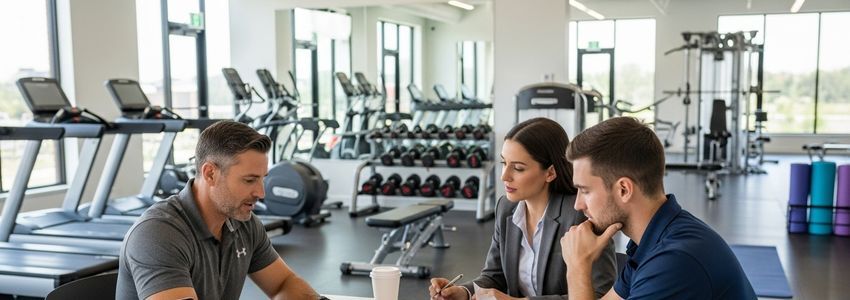
Our commitment to our clients is reflected in their success stories. We invite you to read our client testimonials to see how we've helped business owners just like you achieve their growth ambitions. At Crestmont Capital, we are more than just a lender; we are your strategic financing partner, dedicated to helping your health club thrive. If you're ready to explore your options, we encourage you to contact us for a no-obligation consultation today.
Real-World Scenarios: Putting SBA Loans to Work
To better understand the practical applications of SBA loans for health clubs, let's explore a few concrete scenarios that gym owners commonly face.
Scenario 1: The Boutique Studio Expansion
The Business: "Core Strength Pilates," a successful single-location studio with a loyal client base and a long waitlist for classes.
The Goal: The owner wants to open a second, larger location in an affluent neighboring suburb to meet demand and grow the brand.
The Solution: An SBA 7(a) loan of $450,000. The funds are allocated to cover a commercial lease deposit, extensive leasehold improvements to build out the new studio space, the purchase of 15 new Pilates reformers, initial marketing costs for the launch, and six months of working capital to cover payroll and rent while the new location builds its membership base.
Scenario 2: The Generational Gym Modernization
The Business: "Iron Will Gym," a family-owned gym that has been a community staple for 30 years but is now struggling to compete with newer, modern fitness centers.
The Goal: The owner needs to undertake a complete modernization to attract a younger demographic. This includes replacing all outdated cardio and strength equipment, renovating the locker rooms, and adding a new functional fitness area.
The Solution: An SBA Express loan of $350,000. The owner needs to act quickly to capitalize on the new year's resolution season. The Express loan provides the necessary capital for the new equipment and renovations with a faster turnaround time than a standard 7(a) loan, allowing the gym to relaunch with a fresh look and feel in time for the January rush.
Don't Let Financing Hold You Back
Get the competitive edge with an SBA loan. Our experts make the process simple and fast.
Get Started →Scenario 3: The Dream Facility Construction
The Business: A highly respected personal trainer with over a decade of experience and a large book of high-paying clients wants to stop renting space and build her own premier training facility.
The Goal: Purchase a 1.5-acre parcel of land and construct a 15,000-square-foot, state-of-the-art health club complete with a swimming pool, group fitness rooms, and top-of-the-line equipment.
The Solution: An SBA 504 loan with a total project cost of $3.5 million. The loan is structured with a $1.75 million loan from a conventional lender (50%), a $1.4 million loan from a CDC (40%), and a $350,000 cash injection from the owner (10%). This structure provides affordable, long-term, fixed-rate financing for the entire real estate and construction project, making a dream facility an achievable reality.
Comparing SBA Loans to Other Health Club Financing Options
SBA loans are a fantastic option, but it's wise to understand the full landscape of business financing. Depending on your specific needs, timeline, and qualifications, other products might also be a consideration. Here’s a comparison of common financing options for health clubs.
| Feature | SBA Loans | Traditional Term Loans | Equipment Financing | Merchant Cash Advance |
|---|---|---|---|---|
| Loan Amount | High (Up to $5M) | Varies (Typically up to $500k) | Up to 100% of equipment cost | Lower (Based on revenue) |
| Repayment Term | Very Long (10-25 years) | Medium (3-7 years) | Matches equipment life (2-7 years) | Very Short (3-18 months) |
| Interest Rates | Very Competitive (SBA-capped) | Competitive | Moderate | High (Factor Rates) |
| Speed of Funding | Slower (Weeks to months) | Moderate (Weeks) | Fast (Days) | Very Fast (24-48 hours) |
| Credit Requirements | High (680+) | High (700+) | Moderate (620+) | Low (500+) |
| Best Use Case | Real estate, acquisition, major expansion, debt consolidation. | Planned growth projects, working capital for established businesses. | Purchasing new or used fitness equipment. | Covering immediate, short-term cash flow emergencies. |
While options like capital equipment financing are excellent for isolated machinery purchases and MCAs can help in an emergency, SBA loans provide the most comprehensive and affordable solution for significant, long-term growth initiatives.
Key Takeaway: The primary advantage of an SBA loan is its unmatched combination of high funding amounts and long repayment terms, which results in the lowest possible monthly payment for a major business investment.
How to Get Started with Your Health Club Loan Application
Ready to take the next step toward funding your health club's future? Following a structured approach can make the process efficient and successful. Here’s how you can get started with Crestmont Capital today.
Define Your Funding Needs
Start by creating a detailed list of how you plan to use the loan funds. Whether it's a new set of squat racks, a down payment on a building, or a marketing budget for a grand opening, having a precise plan and cost estimate is the foundation of a strong application.
Gather Key Documents
Get a head start by organizing your essential paperwork. This includes your business plan, the last 3 years of business and personal tax returns, recent profit & loss statements, a balance sheet, and a business debt schedule. Having these ready will significantly speed up the process.
Request a Quick Quote
Find out what you could qualify for without any obligation or impact on your credit score. Fill out our simple Quick Quote form online to receive a preliminary assessment from our team.
Complete Your Application with an Expert
A Crestmont Capital funding specialist will connect with you to review your goals, discuss your options, and guide you through the final application. We are here to ensure your submission is complete, accurate, and positioned for success. Start your formal application now to get the process rolling.
Frequently Asked Questions
What is the minimum credit score for an SBA loan for a health club?
Most lenders, including Crestmont Capital, look for a personal credit score of at least 680 for the strongest SBA loan applications. However, some flexibility may be possible if other aspects of the application, such as cash flow and collateral, are exceptionally strong.
Can I get an SBA loan to start a new gym?
Yes, it is possible to get an SBA loan for a startup gym. Lenders will require a very detailed and well-researched business plan, strong financial projections, significant relevant industry experience from the owner(s), and a sufficient cash injection (down payment).
How much can I borrow with an SBA loan for my fitness center?
The maximum loan amount depends on the program. For the SBA 7(a) and 504 loan programs, the maximum is $5 million. For SBA Express loans, the maximum is $500,000. The actual amount you qualify for will depend on your business's financials, project costs, and ability to repay the loan.
How long does it take to get an SBA loan approved?
The timeline can vary significantly. A well-prepared application for an SBA Express loan can sometimes be funded in as little as 3-4 weeks. Standard SBA 7(a) and 504 loans are more complex and typically take 45 to 90 days from application to funding. Working with an experienced lender can help expedite this process.
What can I use the SBA loan funds for?
SBA loan funds are very flexible and can be used for most legitimate business purposes, including purchasing commercial real estate, construction or renovation, buying fitness equipment, business acquisition, refinancing existing debt, and for working capital to cover operational expenses.
What are the down payment requirements for a gym SBA loan?
The required down payment, or equity injection, is typically at least 10% of the total project cost. For startups or business acquisitions, the requirement may be higher, potentially in the 15-20% range, depending on the specifics of the deal and the lender's risk assessment.
Do I need collateral for an SBA loan?
Yes, SBA loans generally require collateral. Lenders will take a security interest in the assets being financed, such as the property or equipment. If business assets are not sufficient to fully secure the loan, the SBA requires lenders to take available personal assets, such as a lien on your primary residence.
What's the difference between an SBA 7(a) and a 504 loan for a gym?
The main difference is their purpose. The 7(a) loan is a versatile, all-purpose loan that can be used for working capital, equipment, and real estate. The 504 loan is specifically for financing major fixed assets like commercial real estate and long-term equipment and cannot be used for working capital or inventory.
Can I use an SBA loan to refinance existing gym debt?
Yes, the SBA 7(a) program allows for debt refinancing. To qualify, you must be able to demonstrate that the refinancing will provide a significant benefit to your business, such as a substantial improvement in cash flow due to a lower monthly payment. The existing debt must be on unreasonable terms.
Are franchise gyms eligible for SBA loans?
Absolutely. Many franchise gyms (like Planet Fitness, Anytime Fitness, or F45 Training) are eligible for SBA financing. The SBA maintains a directory of approved franchises, which can streamline the application process. An SBA loan is a very common method for financing the purchase of a fitness franchise.
What kind of documents do I need to apply?
You will need a comprehensive package, including: a business plan, 3 years of business and personal tax returns, year-to-date financial statements (P&L and balance sheet), a personal financial statement for all owners, and specific documents related to your funding request (e.g., equipment quotes, real estate purchase agreement).
What are typical interest rates for SBA loans?
Interest rates for SBA loans are variable and tied to the national Prime Rate. The lender adds a margin, or "spread," which is capped by the SBA. As of 2024, rates are competitive, often ranging from Prime + 2.75% to Prime + 4.75%, depending on the loan size and term. You can find the current Prime Rate on sources like the Wall Street Journal.
How does Crestmont Capital help with the SBA loan process?
Crestmont Capital acts as your expert guide. We help you determine the best SBA loan program for your health club, assist in preparing a strong and complete application package, and manage the process with the SBA on your behalf. Our expertise helps you avoid common pitfalls and increases your chances of a fast and successful approval.
Are there any alternatives if I don't qualify for an SBA loan?
Yes. If an SBA loan isn't the right fit due to credit, time in business, or funding speed, Crestmont Capital offers a range of other solutions. These include traditional term loans, equipment financing, and business lines of credit. We work to find a solution for nearly every business situation.
How do I start my application with Crestmont Capital?
The easiest way to begin is by completing our no-obligation Apply Now form on our website. It only takes a few minutes, and a dedicated funding specialist will contact you shortly after to discuss your health club's financing needs and outline the next steps.
Ready to Grow Your Business?
Get fast, flexible financing from the #1 business lender in the U.S. No obligation — apply in minutes.
Apply Now →Conclusion
For owners of gyms, fitness studios, and health clubs, securing the right capital is fundamental to growth and success in a competitive market. With their combination of high loan amounts, long repayment terms, and competitive interest rates, SBA loans for health clubs stand out as one of the most effective and affordable financing tools available. Whether you are building a facility from the ground up, acquiring a competitor, or simply upgrading your equipment to better serve your members, an SBA-backed loan provides the financial strength to turn your vision into reality.
The application process may be detailed, but the long-term benefits for your business's cash flow and stability are undeniable. By partnering with a seasoned expert like Crestmont Capital, you can navigate the process with confidence and secure the funding you need to build a stronger, healthier business. If you're ready to take your health club to the next level, exploring your SBA loan options is the most powerful first step you can take.
Disclaimer: The information provided in this article is for general educational purposes only and is not financial, legal, or tax advice. Funding terms, qualifications, and product availability may vary and are subject to change without notice. Crestmont Capital does not guarantee approval, rates, or specific outcomes. For personalized information about your business funding options, contact our team directly.