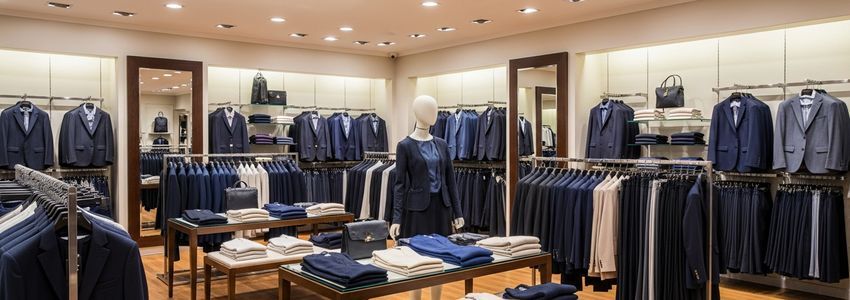
Running a clothing store means staying ahead of trends, managing seasonal inventory swings, and investing in the retail experience that keeps customers coming back. Whether you operate a boutique on Main Street or a multi-location fashion chain, having access to capital at the right moment can mean the difference between a breakout season and a missed opportunity. Clothing store business loans give retail owners the financial flexibility to buy inventory in bulk, renovate a storefront, hire seasonal staff, or open a new location - without waiting for sales to catch up with demand.
In This Article
What Are Clothing Store Business Loans?
Clothing store business loans are financing products specifically used by fashion retailers - including boutiques, consignment shops, apparel chains, sportswear stores, children's clothing outlets, and specialty fashion retailers - to fund operational and growth expenses. These are standard commercial financing tools used for retail-specific needs like inventory procurement, storefront renovation, point-of-sale technology, marketing, and payroll.
Unlike personal loans, business financing is structured around your store's revenue, time in business, and credit profile. Lenders evaluate your business's ability to repay rather than just your personal financial history. This gives established clothing retailers access to larger amounts, lower rates, and more favorable terms than they would find through personal credit.
Clothing retail is a capital-intensive business. The National Retail Federation reports that U.S. clothing and apparel retail generates over $350 billion in annual sales, yet margins are notoriously tight and timing is everything. Most clothing retailers must pay for inventory weeks or months before it sells, creating a perpetual cash flow gap that financing is uniquely positioned to bridge.
Key Stat: According to the U.S. Small Business Administration, retail trade businesses represent one of the most common categories of small business borrowers, with apparel and accessories retailers among the top sub-segments seeking working capital and inventory financing each year.
Why Clothing Retailers Need Financing
Clothing retail is one of the most cash-flow-sensitive industries in the small business world. Inventory must be purchased well in advance of selling seasons - fall collections arrive in summer, spring lines ship in January. That timing mismatch means money goes out months before it comes back in. Financing smooths that gap and lets owners operate confidently without watching their bank account month to month.
Beyond inventory timing, clothing stores face a long list of capital demands that can hit simultaneously. A lease renewal might require a build-out contribution. A competitor's closure creates a prime real estate opportunity. A social media campaign goes viral and demand spikes. Each of these scenarios rewards retailers who have access to fast capital and penalizes those who don't.
Here are the most common reasons clothing retailers seek business loans:
- Seasonal inventory purchases - Buying spring, summer, fall, and holiday collections in bulk, often at discounted rates
- Storefront renovations - Updating fitting rooms, display areas, signage, and flooring to attract modern shoppers
- Expansion to new locations - Opening a second or third store in a growing market
- E-commerce integration - Building or upgrading an online store and fulfillment operation
- Point-of-sale technology - Upgrading POS systems, inventory management software, and payment processing
- Hiring and payroll - Staffing up for holiday seasons or peak periods
- Marketing and advertising - Running seasonal campaigns, influencer partnerships, and local events
- Working capital cushion - Maintaining cash on hand during slow months
Ready to Fund Your Clothing Store?
Crestmont Capital offers fast, flexible financing for fashion retailers. No long waits - apply in minutes and get funds in days.
Apply Now →Types of Loans Available for Clothing Stores
Clothing retailers have access to a wide range of financing products, each suited to different needs and timelines. Understanding the options helps you match the right product to the right purpose - and avoid overpaying for capital you don't need.
Working Capital Loans
Working capital loans provide a lump sum of cash to cover day-to-day operational expenses - including payroll, rent, utilities, and supplier invoices - when sales revenue dips below your fixed cost obligations. These are typically short-term loans with terms of 6 to 24 months. They are ideal for clothing retailers managing seasonal cash flow gaps between inventory purchases and the selling season.
Business Lines of Credit
A business line of credit gives clothing retailers flexible, revolving access to capital up to an approved limit. You draw only what you need, pay it back, and draw again - similar to a credit card but with much higher limits and lower interest rates. This is one of the most popular options for fashion retailers because it matches the unpredictable nature of retail demand. If a collection sells faster than expected and you need to reorder immediately, you can draw from your credit line the same day.
Inventory Financing
Inventory financing uses your existing or incoming inventory as collateral to secure a loan. The lender advances a percentage of the inventory's value - often 50 to 80 percent - so you can stock your shelves before the selling season begins. This is particularly well-suited to boutique owners who purchase seasonal collections from wholesale vendors and need to pre-fund those orders. Unlike general working capital loans, inventory financing ties repayment directly to inventory turnover, which aligns well with the retail business cycle.
SBA Loans
SBA loans are government-backed loans offered through approved lenders, typically featuring the lowest interest rates and longest repayment terms available to small businesses. The SBA 7(a) program, which can lend up to $5 million, is frequently used by clothing retailers for expansion, real estate, equipment purchases, and working capital. The tradeoff is a longer application process - typically 30 to 90 days - and stricter documentation requirements. For clothing retailers planning a major expansion with a longer lead time, SBA loans are often the most cost-effective option.
Term Loans
Traditional term loans from banks or alternative lenders provide a fixed amount upfront with a set repayment schedule over one to five years. They are well-suited for larger, planned expenses like a full storefront renovation, a new location build-out, or a major equipment purchase. Interest rates are fixed or variable, and monthly payments are predictable - making it easier to budget. Many clothing retailers use term loans for capital investments that will generate returns over multiple years.
Merchant Cash Advances
A merchant cash advance provides upfront capital in exchange for a percentage of your future daily credit card sales. Because repayments flex with your revenue, MCAs can be useful during high-volume seasons when cash flow is strong. However, the effective cost of capital (measured as an annual percentage rate) is significantly higher than traditional loans. MCAs should be used as a short-term bridge option rather than a primary financing strategy.
Equipment Financing
Clothing stores that need to invest in display fixtures, commercial sewing equipment, point-of-sale systems, security cameras, or tailoring equipment can use equipment financing to fund those purchases. The equipment itself serves as collateral, which makes approval easier even for retailers with limited credit history. Terms typically match the useful life of the equipment - generally 2 to 7 years.
By the Numbers
Clothing & Apparel Retail - Key Statistics
$350B+
Annual U.S. apparel retail sales
150K+
Independent clothing stores in the U.S.
2-5 Days
Typical funding time with alternative lenders
$5M
Max SBA 7(a) loan for eligible retailers
How Clothing Store Financing Works
The process of obtaining a business loan for a clothing store follows a predictable sequence, though timelines and documentation requirements vary by lender and loan type. Here is what you can expect from application to funding.
Step 1: Assess Your Capital Needs
Before applying, determine exactly what you need the funds for and how much you realistically require. Overestimating leads to unnecessary debt; underestimating means you may be back for more before the first loan is repaid. For inventory purchases, calculate your wholesale cost for the upcoming season plus a 10 to 15 percent buffer. For renovations, get contractor bids. For working capital, calculate your average monthly shortfall during your slowest quarter.
Step 2: Check Your Business and Personal Credit
Most lenders look at both your business credit score (PAYDEX, Experian Business, or Equifax Business) and your personal credit score. For alternative lenders, a personal credit score of 600 or above is typically sufficient. For SBA and bank loans, scores of 680 or higher are preferred. Pull both reports before applying to identify any errors or issues that could hurt your approval odds. For a detailed breakdown, see our guide on minimum credit scores for business loans.
Step 3: Gather Your Documentation
Alternative lenders typically require 3 to 6 months of bank statements and a one-page application. Traditional banks and SBA lenders require full financial statements, tax returns for two to three years, a business plan, and possibly a lease agreement and personal financial statement. Having these documents organized and ready speeds up the approval process significantly.
Step 4: Compare Lenders and Loan Products
Not all lenders offer the same products, rates, or approval criteria. Alternative lenders are faster but cost more; traditional banks offer lower rates but are slower and more selective. Evaluate at least 2 to 3 options before committing. Look at the total cost of the loan (not just the interest rate), the repayment structure, and any prepayment penalties or fees.
Step 5: Submit Your Application
Most alternative lenders and online platforms allow you to apply in under 15 minutes. Once submitted, underwriters review your financials and make an offer. For alternative lenders, you can often receive an approval decision within 24 to 48 hours. For SBA and traditional bank loans, underwriting typically takes 2 to 8 weeks.
Step 6: Receive Funds and Execute Your Plan
Once approved, funds are typically deposited directly into your business checking account. Alternative lenders often fund within 24 to 72 hours of approval. Use the funds exactly as planned - disciplined capital deployment leads to measurable ROI and a stronger case for future financing.
Define exactly what you need the funds for and calculate the right amount.
Pull your business and personal credit reports; compile bank statements and financials.
Submit your application; compare rates, terms, and total loan cost across lenders.
Receive funds, deploy them as planned, and track ROI to build a stronger borrowing profile.
How to Qualify for a Clothing Store Business Loan
Qualification requirements vary significantly between lenders. Alternative lenders have streamlined approval criteria designed to help small retailers access capital quickly. Traditional banks and the SBA require more documentation and have stricter financial benchmarks. Here is a general overview of what each type of lender typically requires.
Alternative Lender Requirements
- Minimum 6 months in business
- Monthly revenue of $10,000 or more
- Personal credit score of 550 to 600 or higher
- 3 to 6 months of business bank statements
- No active bankruptcy
Traditional Bank Requirements
- Minimum 2 years in business
- Annual revenue of $250,000 or more
- Personal credit score of 680 or higher
- Two years of business and personal tax returns
- Profit and loss statement and balance sheet
- Business plan (for SBA loans)
Tips to Strengthen Your Application
If your credit score is below 650, focus on paying down outstanding balances and disputing any errors on your credit report before applying. Lenders also place significant weight on revenue consistency - three to six months of steady bank deposits demonstrate that your store generates reliable income. If your business is seasonal, be prepared to explain your revenue pattern and show strong performance during peak months.
Building business credit separately from personal credit is one of the highest-impact things a clothing store owner can do to improve long-term access to capital. Open a business credit card, pay vendors on Net-30 terms, and ensure your business is registered with Dun & Bradstreet to build a PAYDEX score. For a detailed strategy, see our guide on how to build your business credit score.
Pro Tip: Applying during your strongest revenue period (such as right after the holiday season) gives lenders the most favorable view of your financial health and often results in better terms and higher approval amounts.
How Crestmont Capital Helps Clothing Retailers
Crestmont Capital is the #1-rated U.S. business lender, providing fast, flexible financing to clothing retailers across every segment - from single-location boutiques to multi-store fashion chains. Our underwriting process is designed to evaluate the full picture of your business, not just a credit score, which means more retailers get approved and funded quickly.

We offer a full suite of financing products for clothing stores, including unsecured working capital loans, business lines of credit, equipment financing, SBA loans, and revenue-based financing. Our specialists understand the seasonal nature of fashion retail and can structure repayment around your business's cash flow cycle - so you're not straining to make payments during January when the holiday rush is over.
Applying with Crestmont takes just minutes. Our team reviews your application and typically delivers an approval decision within 24 hours. Once approved, funds hit your account within 1 to 3 business days - fast enough to act on a buying opportunity before your competitors do. Our financing options include:
- Working capital loans: $10,000 to $5,000,000 with terms from 6 to 36 months
- Business lines of credit: Revolving access up to $500,000 at competitive rates
- Equipment financing: Finance fixtures, POS systems, and display equipment
- SBA 7(a) loans: Low-rate, long-term financing for expansion and real estate
- Revenue-based financing: Flexible repayment tied to your daily sales volume
Whether you are buying inventory for the fall season, remodeling your flagship location, or expanding to a second store, Crestmont has the financing product and the expertise to get you funded. You can also learn more about how successful clothing stores use financing in our guide on inventory financing for retail businesses.
Talk to a Crestmont Capital Specialist
Our fashion retail financing experts will match you with the right product for your store's needs. No obligation - just answers.
Get Pre-Qualified →Real-World Use Cases for Clothing Store Financing
Understanding how other clothing retailers have used business loans can help you identify the best application for your own store.
Scenario 1: Pre-Season Inventory Purchase
A boutique owner in Nashville sources a premium women's collection from a European wholesale vendor. The minimum order is $75,000, due before the spring selling season begins in February. The owner's holiday cash is already allocated to rent and payroll. With a working capital loan funded in three business days, she places the order on time, receives the full collection, and generates $140,000 in spring revenue - more than double her loan amount.
Scenario 2: Storefront Renovation
A menswear retailer in Austin has occupied the same location for eight years. The space is dated, and foot traffic has declined as a newer competitor opened nearby with a modern interior. A $120,000 term loan funds a full renovation: new hardwood floors, updated lighting, redesigned displays, and a custom fitting room suite. Within six months of reopening, average transaction values increase by 22 percent and monthly revenue is up 35 percent compared to the prior year.
Scenario 3: Opening a Second Location
A children's clothing store owner in Denver has built a loyal customer base over five years. A second location in a neighboring suburb becomes available with a favorable lease. An SBA 7(a) loan provides $450,000 to cover the lease deposit, build-out costs, and 12 months of initial inventory. The second location reaches profitability within 14 months of opening.
Scenario 4: Holiday Staffing and Marketing
A mid-size clothing retailer in Chicago draws 40 percent of its annual revenue in November and December. The owner uses a $50,000 business line of credit each fall to fund extra part-time staff, paid social media advertising, and in-store event programming. The line is fully repaid by mid-January from holiday proceeds - making it an essentially cost-neutral use of capital once the revenue impact is factored in.
Scenario 5: E-Commerce Expansion
A brick-and-mortar boutique decides to launch an online storefront after customers repeatedly ask about shipping options during the pandemic. A $35,000 working capital loan pays for a Shopify build-out, product photography, fulfillment setup, and initial paid digital advertising. Within eight months, online sales represent 28 percent of total store revenue - a new, year-round income stream that continues to grow.
Scenario 6: Distressed Inventory Opportunity
A well-established clothing store owner hears that a regional competitor is closing and liquidating inventory at 30 cents on the dollar. The window to act is 48 hours. A quick draw on a pre-approved business line of credit provides $60,000 to purchase $200,000 worth of wholesale merchandise. The acquired inventory is resold at standard margin, generating a significant windfall on capital that was deployed for less than 90 days.
| Loan Type | Best For | Typical Loan Size | Funding Speed |
|---|---|---|---|
| Working Capital Loan | Inventory, payroll, operational gaps | $10K - $500K | 1-3 days |
| Business Line of Credit | Recurring needs, seasonal flexibility | $25K - $500K | 1-5 days |
| SBA 7(a) Loan | Expansion, real estate, major investments | $50K - $5M | 30-90 days |
| Inventory Financing | Pre-season bulk inventory orders | $20K - $500K | 3-7 days |
| Equipment Financing | POS, fixtures, display systems | $5K - $500K | 1-3 days |
| Merchant Cash Advance | Emergency capital, short-term gaps | $5K - $250K | Same day |
Comparing Your Clothing Store Financing Options
Choosing the right financing product for your clothing store requires comparing more than just the interest rate. The total cost of capital, repayment flexibility, funding speed, and qualification criteria all affect which product best fits your specific situation. Here are some principles to guide your decision.
Choose a working capital loan or line of credit if your need is recurring, seasonal, or unpredictable. The line of credit is particularly powerful because it sits ready to use at any time without requiring a new application. For clothing retailers, a pre-approved line that refreshes as you repay is often worth more than a single lump-sum loan.
Choose an SBA loan if you are making a large, planned investment - opening a new location, purchasing real estate, or undertaking a major renovation. The lower rates and longer terms of SBA loans can save tens of thousands of dollars in interest over the life of the loan. The tradeoff is time: SBA loans require patience in the application process.
Choose inventory financing if the specific challenge is funding a pre-season wholesale order. This product is purpose-built for exactly that scenario and typically offers better terms for inventory than a general working capital loan would.
Consider an MCA as a last resort if speed is critical and traditional or alternative lenders have declined. MCAs provide the fastest funding available but carry the highest effective cost. Use them briefly and refinance into a lower-cost product as soon as possible. For a deeper comparison, see our guide on merchant cash advances vs. business loans.
Smart Strategy: Many experienced clothing retailers maintain a combination of a working capital line of credit for operational flexibility and a term loan or SBA facility for capital investments. Having multiple tools available means you never have to use the wrong product for a given need.
How to Get Started
Complete our quick application at offers.crestmontcapital.com/apply-now - takes just a few minutes with no obligation.
A Crestmont Capital advisor will review your store's needs and identify the best financing option for your situation.
Receive your funds and put them to work - often within 1 to 3 business days of approval. Stock your shelves, renovate your space, or open that second location.
Your Clothing Store Deserves Better Funding
Stop waiting on banks that don't understand retail. Crestmont Capital moves at the speed of your business.
Apply Now →Frequently Asked Questions
What types of loans are available for clothing stores?
Clothing stores have access to working capital loans, business lines of credit, inventory financing, SBA 7(a) loans, equipment financing, term loans, merchant cash advances, and revenue-based financing. The right product depends on your specific need, timeline, and financial profile. For recurring or seasonal needs, a business line of credit is often the most flexible option.
How much can a clothing store borrow?
Loan amounts for clothing stores typically range from $10,000 for small working capital needs to $5 million or more for SBA-backed expansion projects. The amount you qualify for depends on your annual revenue, time in business, credit score, and the specific lender's guidelines. Most alternative lenders offer up to 100 to 150 percent of your average monthly revenue.
What credit score do I need to get a clothing store business loan?
Requirements vary by lender and product. Alternative lenders often approve clothing store owners with personal credit scores as low as 550 to 600. Traditional banks typically require 680 or higher. SBA loans generally require a personal score of 650 or above. If your score is below requirements, focus on improving it before applying or explore products specifically designed for lower-credit borrowers.
How quickly can I get funded?
With alternative lenders like Crestmont Capital, many clothing store owners receive funding within 1 to 3 business days of approval. Merchant cash advances can fund the same day in some cases. Traditional bank loans and SBA loans take longer - typically 2 to 8 weeks. If speed is critical, alternative lenders are the better option; if you have time and want the lowest rates, SBA or bank products are worth pursuing.
Can I get a loan for a new clothing store (startup)?
Yes, though options are more limited for startups. Businesses under 6 months old typically cannot access revenue-based alternative loans. However, SBA Microloan programs, equipment financing (using equipment as collateral), business credit cards, and some community lenders serve newer clothing stores. Having a detailed business plan, strong personal credit, and some personal investment in the business improves your startup loan prospects significantly.
Do I need collateral to get a clothing store business loan?
Not necessarily. Many alternative lenders offer unsecured working capital loans and lines of credit that do not require collateral. SBA loans and traditional bank loans typically require collateral for larger amounts - often business assets, inventory, or in some cases a personal guarantee. If you prefer an unsecured option, alternative lenders are the most accessible source.
What documents are needed to apply?
For alternative lenders, the minimum is typically 3 to 6 months of business bank statements, a completed application, and a government-issued ID. For SBA and bank loans, you will also need 2 years of business and personal tax returns, a profit and loss statement, a balance sheet, and sometimes a business plan. Having these documents ready before you apply speeds up the process considerably.
Can I use a clothing store loan to purchase inventory?
Absolutely - inventory purchasing is one of the primary uses of business financing for clothing retailers. Working capital loans, business lines of credit, and dedicated inventory financing products can all be used to fund seasonal collection purchases, bulk wholesale orders, or opportunistic inventory acquisitions. Many fashion retailers specifically use pre-approved lines of credit so they can act on inventory opportunities without any delay.
What interest rates do clothing store loans carry?
Rates vary significantly based on the loan type and your creditworthiness. SBA 7(a) loans typically carry rates of 10 to 14 percent. Traditional bank term loans range from 7 to 12 percent. Alternative lender working capital loans range from 15 to 40 percent APR. Merchant cash advances have effective APRs that can range from 40 to 150 percent or more. The stronger your credit and revenue profile, the lower the rates you will qualify for.
Can a boutique or small independent clothing store qualify?
Yes. Many alternative lenders specifically serve small independent boutiques and single-location fashion retailers. The key qualification criteria for most alternative products are monthly revenue (typically $10,000 or more), time in business (6 months or more), and a reasonable personal credit score. You do not need to be a large chain or have perfect credit to access business financing.
How do seasonal fluctuations affect my loan application?
Seasonal revenue patterns are normal for clothing retailers, and experienced lenders understand this. When applying, your lender will typically look at your average monthly revenue across the trailing 6 to 12 months rather than just the most recent month. Applying during or just after your peak season tends to produce better terms. If you apply during a slow month, be ready to explain your seasonal pattern with documentation of prior-year strong months.
Can I get financing to open a second clothing store location?
Yes. Opening a second location is one of the most common reasons clothing retailers seek financing. SBA 7(a) loans are well-suited for this because they can fund lease deposits, leasehold improvements, initial inventory, equipment, and working capital in a single facility. Alternative term loans and business lines of credit can also fund expansion, particularly when the timeline is tighter than an SBA application allows.
What is the difference between inventory financing and a working capital loan?
Inventory financing specifically uses the inventory being purchased as collateral, and the loan is structured around the inventory's value and expected turnover. Working capital loans are more general-purpose: they can be used for inventory, payroll, rent, or any other operational expense, and they typically are unsecured or backed by a general lien on business assets rather than specific inventory. Inventory financing may offer better rates for large, specific inventory purchases; working capital loans offer more flexibility.
Will applying for a business loan hurt my credit score?
Many lenders perform a soft credit pull during the pre-qualification stage, which does not affect your credit score. A hard credit inquiry - which does cause a small, temporary dip in your score - typically occurs only when you formally accept a loan offer. Applying with multiple lenders within a short window (typically 14 to 45 days) is often treated as a single inquiry by the credit bureaus, so rate shopping does not penalize you as much as multiple separate applications spread over months.
What happens if my clothing store has a slow month and I struggle to make payments?
The best approach is to contact your lender proactively before missing a payment. Many lenders offer hardship accommodations, payment deferrals, or restructured payment plans for borrowers in good standing who communicate early. Revenue-based financing products automatically adjust payments when revenue dips, which makes them particularly well-suited for seasonal retailers. Ignoring the problem leads to default, which damages your credit and future borrowing ability - so early communication is always the right move.
Conclusion
Clothing store business loans are a powerful tool for fashion retailers who want to grow strategically rather than waiting for cash to accumulate slowly. Whether you need to fund a seasonal inventory purchase, renovate your store, hire staff for the holidays, or open a second location, the right financing product - deployed at the right moment - can generate returns that far exceed the cost of the loan.
The key is matching the product to the purpose, understanding your qualification profile, and working with a lender who understands the unique cash flow patterns of retail. Crestmont Capital specializes in exactly this - fast, flexible clothing store business loans with transparent terms and an approval process that works at the speed of fashion retail.
Ready to take the next step? Apply online in minutes and connect with a Crestmont retail financing specialist who can help you structure the right deal for your store's needs. For more on how smart financing strategies can drive retail growth, explore our resources on retail business loans and small business financing options from Crestmont Capital.
Disclaimer: The information provided in this article is for general educational purposes only and is not financial, legal, or tax advice. Funding terms, qualifications, and product availability may vary and are subject to change without notice. Crestmont Capital does not guarantee approval, rates, or specific outcomes. For personalized information about your business funding options, contact our team directly.