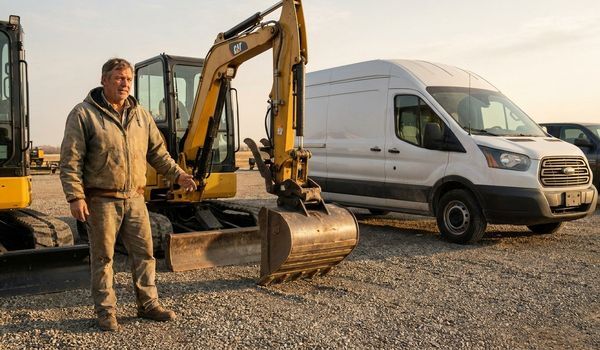
Running a sandblasting business demands serious capital investment - from industrial blasting equipment and compressors to protective gear, abrasive media, and vehicles to haul it all. Whether you are launching a new operation or scaling an established contractor business, access to the right financing can make the difference between landing large contracts and watching competitors take them. This guide covers every financing option available to sandblasting contractors, how to qualify, and how Crestmont Capital can help you move fast when opportunity knocks.
- What Are Sandblasting Business Loans?
- Types of Financing for Sandblasting Contractors
- How to Qualify for a Sandblasting Business Loan
- How to Use Business Loan Funds in Your Sandblasting Company
- How Crestmont Capital Helps Sandblasting Contractors
- Real-World Financing Scenarios
- Financing Options Comparison
- Next Steps
- Frequently Asked Questions
What Are Sandblasting Business Loans?
Sandblasting business loans are commercial financing products designed to provide working capital and asset funding to abrasive blasting contractors. These loans cover the costs that come with running a high-equipment, labor-intensive trade business - from purchasing pressure pots and blast machines to financing fleet vehicles, expanding into new markets, or bridging cash flow gaps between contract payments.
Unlike consumer loans, business financing for sandblasting companies is underwritten based on your business revenue, time in operation, credit profile, and the purpose of the funds. Lenders evaluate your business as an entity, which means strong business performance can often outweigh personal credit limitations. These products exist because equipment-heavy service businesses like sandblasting regularly face capital demands that outpace what everyday cash flow can handle.
The sandblasting and abrasive blasting industry serves a wide range of end markets including construction, oil and gas, marine, automotive restoration, bridge maintenance, and industrial manufacturing. According to data tracked through Census.gov, specialty trade contractors represent one of the largest segments of U.S. small business employment, and financing access is one of the primary growth levers these companies can pull. Whether you need $20,000 for a new blast cabinet or $500,000 to fund a multi-site industrial project, sandblasting business loans give you the runway to compete.
Decisions in as little as 24 hours. No obligation to accept.
Types of Financing for Sandblasting Contractors
No single loan product fits every situation. Understanding your options allows you to match the right financing structure to each business need. Below is an overview of the most relevant products for sandblasting contractors.
Small Business Loans (Term Loans)
A traditional term loan delivers a lump sum of capital upfront, which you repay over a fixed period with interest. Term loans work well for large one-time investments such as buying a new blast rig, adding a service vehicle, or funding a major contract buildout. Repayment terms typically range from 6 months to 10 years depending on the lender and loan size. Crestmont Capital offers small business loans with flexible terms designed for contractors who need predictable monthly payments.
Equipment Financing
For sandblasting contractors, equipment financing is one of the most powerful tools available. This structure allows you to purchase or lease blast machines, air compressors, dust collectors, pressure pots, protective gear, and transport vehicles - using the equipment itself as collateral. Because the equipment secures the loan, lenders often extend more favorable rates than unsecured options. Crestmont Capital's equipment financing program covers new and used industrial equipment up to 100% of the asset value, preserving your working capital for operational costs.
Business Line of Credit
A revolving business line of credit functions like a commercial credit card with higher limits and lower rates. You draw from your available credit as needed and only pay interest on what you use. For sandblasting contractors, a line of credit is ideal for purchasing abrasive media in bulk, covering payroll during slow seasons, or managing supply chain expenses between contracts. Once you repay drawn funds, they become available again without reapplying.
SBA Loans
The U.S. Small Business Administration guarantees a portion of certain loans issued through approved lenders, which allows lenders to offer lower rates and longer repayment terms. SBA loans such as the 7(a) program can finance up to $5 million and are suitable for contractors looking to purchase real estate, fund large equipment purchases, or make business acquisitions. The tradeoff is that SBA loans require more documentation and a longer approval timeline than alternative financing options. The SBA's official loan programs page provides detailed eligibility requirements for each loan type.
Short-Term Business Loans
When you need fast capital to seize an opportunity, short-term business loans deliver funding quickly - often within 24 to 48 hours of approval. These loans are structured with shorter repayment windows (typically 3 to 18 months) and may carry higher costs in exchange for speed and accessibility. They work well for urgent equipment repairs, last-minute supply purchases, or bridging gaps between contract payments.
Bad Credit Business Loans
Credit challenges should not automatically disqualify a capable contractor. Lenders who specialize in bad credit business loans evaluate the overall health of your business, including monthly revenue, time in operation, and industry experience. If your personal credit score has taken hits from previous business cycles or economic downturns, alternative financing options still exist to support your growth.
Merchant Cash Advance
A merchant cash advance (MCA) provides an upfront sum in exchange for a percentage of your future daily or weekly business revenue. MCAs are not technically loans - they are purchases of future receivables. They are fast and flexible but carry higher effective costs. Sandblasting contractors with strong, consistent revenue streams should evaluate MCAs carefully before committing, as the daily repayment structure can constrain cash flow during slow periods.
Invoice Financing
If your sandblasting business operates on invoiced payment terms with commercial or government clients, invoice financing allows you to unlock the value of outstanding invoices before they are paid. The lender advances a percentage (typically 70 to 90 percent) of the invoice value immediately, and releases the remainder minus fees once the client pays. This is particularly useful for contractors working on large municipal or industrial projects with extended payment cycles.
How to Qualify for a Sandblasting Business Loan
Qualification requirements vary by lender and loan type, but most commercial lenders evaluate a common set of factors when assessing sandblasting business loan applications. Understanding these factors helps you position your application for the best possible outcome.

Time in Business
Most traditional lenders prefer businesses with at least two years of operating history. Alternative lenders often work with contractors who have been operating for as little as six months. If your sandblasting company is new, consider SBA microloan programs or equipment financing structures that rely on asset value rather than business history.
Annual Revenue
Lenders use your annual revenue as a primary indicator of your ability to service debt. Most alternative lenders require a minimum of $100,000 to $150,000 in annual revenue for standard term loans. Larger loans typically require higher revenue thresholds. Make sure your business bank statements clearly reflect your actual revenue, including contract deposits and progress payments.
Credit Profile
Both your personal credit score and your business credit profile matter. A score above 650 opens access to more competitive rates and terms. Scores between 500 and 649 may still qualify through alternative lenders with adjusted terms. Building your business credit through a dedicated business bank account, business credit cards, and timely vendor payments strengthens your profile over time.
Business Bank Statements
Lenders typically request three to six months of business bank statements to verify revenue, cash flow patterns, and financial health. Consistent monthly deposits, low overdraft frequency, and predictable cash flow all signal a healthy borrower. Contractors who regularly invoice large commercial clients should ensure those deposits appear clearly in their statements.
Collateral
While unsecured loans exist, offering collateral - equipment, vehicles, accounts receivable, or real property - gives lenders additional security and often results in better rates. For equipment loans specifically, the purchased asset itself serves as collateral, simplifying the process significantly.
How to Use Business Loan Funds in Your Sandblasting Company
Once approved, sandblasting business loan funds can be deployed across a wide range of operational and growth needs. Strategic allocation of borrowed capital is what separates contractors who grow consistently from those who stay stuck at the same revenue level year after year.
Equipment Purchases and Upgrades
The right equipment drives efficiency, safety, and capacity. Investing loan funds in modern blast machines, high-output air compressors, automated media recovery systems, or vacuum blasting equipment allows you to bid on larger contracts, reduce labor time per project, and differentiate your services in competitive markets. New equipment also carries manufacturer warranties that reduce maintenance risk.
Fleet Expansion
A sandblasting operation is only as mobile as its vehicles. Funding a new service truck, trailer, or enclosed van allows you to serve more clients simultaneously, reduce hauling delays, and expand your geographic reach. Vehicle purchases are also strong candidates for equipment financing structures, since the vehicle itself serves as collateral.
Working Capital and Payroll
Large commercial or industrial jobs often require you to staff up before the first invoice is paid. Using a business loan or line of credit to fund payroll, materials, and overhead during project execution keeps operations running smoothly without putting personal funds at risk. Working capital financing is one of the most common uses of small business loans across all contractor trades.
Abrasive Media and Consumables
Garnet, steel grit, aluminum oxide, glass beads, and other abrasive media represent a significant ongoing expense for sandblasting contractors. Bulk purchasing reduces per-unit costs and protects against supply chain price fluctuations. A business line of credit is ideal for this type of recurring, variable expense.
Safety and Compliance
OSHA compliance in the sandblasting industry requires investment in respiratory protection, blast suits, eye protection, hearing protection, and proper ventilation systems. Penalties for non-compliance can be severe. Using business loan funds to upgrade safety infrastructure protects your team and your operating licenses.
Marketing and Business Development
Growing your client base requires investment. Funded marketing budgets for digital advertising, website development, trade show participation, and commercial bidding software help sandblasting contractors win more contracts and reduce dependence on referrals alone.
Business Acquisition
Purchasing a competing sandblasting company or acquiring a retiring contractor's client list and equipment is one of the fastest ways to scale. SBA loans and larger term loans can finance business acquisitions, providing immediate revenue, equipment, and market presence.
How a Sandblasting Business Loan Works: Step-by-Step
(5-10 minutes)
Most Crestmont Capital applicants receive funding within 1-3 business days of approval.
How Crestmont Capital Helps Sandblasting Contractors
Crestmont Capital is a national small business lender that has built its reputation on fast approvals, flexible terms, and genuine commitment to contractor success. Unlike banks that apply one-size-fits-all underwriting models, Crestmont Capital works with sandblasting contractors across the full spectrum of business maturity and credit profiles to find the right financing solution.
Contractors who come to Crestmont Capital benefit from a streamlined application process that does not require in-person visits or weeks of back-and-forth documentation requests. The online application takes less than 10 minutes, decisions often come within 24 hours, and funds can be in your account within days. For a contractor who just landed a major industrial contract or found a time-sensitive equipment deal, that speed is critical.
Crestmont Capital offers a full suite of products for contractors at every stage of growth:
- Small business loans from $5,000 to $2 million
- Equipment financing for blast rigs, compressors, and vehicles
- Revolving business lines of credit for ongoing working capital
- SBA loans for larger, longer-term growth projects
- Short-term business loans for urgent capital needs
- Specialized programs for contractors with credit challenges
Crestmont Capital's funding advisors understand the cash flow dynamics of contractor businesses. They know that sandblasting contractors often invoice net-30 or net-60, that equipment costs are front-loaded, and that seasonal fluctuations affect revenue. That industry knowledge translates into loan structures that fit your actual business cycle, not generic repayment schedules built for retail businesses.
As noted by leading business media including Forbes and CNBC, fast-approval alternative lenders have become a critical resource for small contractors who cannot afford to wait weeks for traditional bank decisions. Crestmont Capital consistently ranks among the most accessible and contractor-friendly lenders in this space.
Applying does not affect your credit score.
Real-World Financing Scenarios for Sandblasting Contractors
Abstract loan descriptions only go so far. The following scenarios illustrate how sandblasting contractors in different situations can use business financing to solve real problems and capture real opportunities.
Scenario 1: The Growing Contractor Landing a First Commercial Contract
A two-year-old sandblasting company in Texas lands its first large commercial contract - a $180,000 steel bridge maintenance project. The contract requires them to mobilize within 30 days with an additional blast crew and a second pressure pot system. With $22,000 in their business account, the owner applies to Crestmont Capital for a $75,000 term loan. After a 24-hour approval and two-day funding timeline, they purchase the equipment, hire two additional blasters, and execute the contract on schedule. The loan repays itself from the contract proceeds within five months.
Scenario 2: The Established Contractor Upgrading to Vacuum Blasting
A marine sandblasting contractor in Louisiana has operated for seven years but still uses open-blast methods for all shipyard work. A major port client begins requiring vacuum blasting (closed-loop blasting) for new environmental compliance reasons. Upgrading to vacuum blasting systems costs $140,000. The contractor uses equipment financing from Crestmont Capital to fund the upgrade with a 60-month repayment term. The new capability wins them a long-term port maintenance contract worth over $600,000 annually.
Scenario 3: The Contractor Managing Seasonal Cash Flow
A Midwest sandblasting contractor sees business volume drop 40 percent during winter months when outdoor projects pause. Rather than laying off skilled crew members and rehiring in spring, the owner opens a $50,000 business line of credit through Crestmont Capital in September. During the slow season, the line funds payroll and overhead. As spring contracts resume in March, the contractor repays the drawn balance and retains the full line for the following year's cycle. Total interest cost: far less than the expense of recruiting and retraining crew members each spring.
Scenario 4: The New Contractor Building from the Ground Up
A former industrial painter decides to launch a sandblasting business with one employee and a rented blast machine. After six months of consistent revenue averaging $18,000 per month, they qualify for a $40,000 short-term business loan to purchase their own blast rig and compressor. With owned equipment, their per-job costs drop by 30 percent, and they can now take weekend jobs that their rented equipment prohibited. Within 12 months, revenue has doubled.
These scenarios reflect the real paths that contractors like those profiled in Bloomberg's small business coverage travel when they pair strategic financing with operational execution. If you are in a similar industry, you may also benefit from reviewing how contractors in adjacent trades use financing - see our guides on pressure washing business loans and concrete contractor business loans for additional context.
Financing Options Comparison for Sandblasting Contractors
The table below summarizes the key characteristics of each financing product to help you identify the right fit for your current needs.
| Loan Type | Loan Amount | Term | Speed | Best For |
|---|---|---|---|---|
| Term Loan | $5K - $2M | 6 mo - 10 yr | 1-5 days | Large purchases, contract mobilization |
| Equipment Financing | $10K - $5M | 12 - 84 mo | 2-5 days | Blast rigs, compressors, vehicles |
| Line of Credit | $5K - $500K | Revolving | 1-3 days | Working capital, media, payroll |
| SBA Loan | Up to $5M | Up to 25 yr | 30-90 days | Real estate, acquisitions, major expansion |
| Short-Term Loan | $5K - $500K | 3 - 18 mo | 24-48 hrs | Urgent needs, fast opportunities |
| Invoice Financing | 70-90% of invoice | Until invoice paid | 1-3 days | Government/commercial net-60 contracts |
| Merchant Cash Advance | $5K - $500K | Variable | 24 hrs | High-revenue businesses needing fast capital |
Next Steps: How to Move Forward
Join thousands of contractors who have funded growth through Crestmont Capital.
Frequently Asked Questions
What credit score do I need to get a sandblasting business loan?
Most traditional lenders prefer a personal credit score of 650 or above. However, alternative lenders including Crestmont Capital work with contractors who have scores as low as 500, provided they demonstrate sufficient revenue and time in business. Your business's cash flow and monthly revenue often carry more weight than your personal credit score with alternative lenders.
How quickly can I get funding for my sandblasting business?
With Crestmont Capital, most applicants receive a decision within 24 hours of submitting a complete application. Funds are typically deposited within 1 to 3 business days of approval and document verification. SBA loans take longer -- typically 30 to 90 days -- due to the additional government processing requirements.
Can I get a sandblasting business loan if my business is less than a year old?
Yes. Some lenders including Crestmont Capital work with businesses that have been operating for as little as six months. At the six-month mark, if you can demonstrate consistent monthly revenue of $10,000 or more, you may qualify for short-term loans or equipment financing. Startups under six months typically need to explore microloans or SBA startup programs.
What documents do I need to apply for a sandblasting business loan?
Standard documentation includes your last three to six months of business bank statements, most recent business or personal tax return, a valid government-issued photo ID, business license or contractor registration, and any relevant equipment quotes or purchase agreements. Some loan products require additional financial statements or proof of contracts.
What can I use a sandblasting business loan for?
Sandblasting business loan funds can be used for equipment purchases (blast machines, compressors, vehicles), abrasive media and consumable supplies, payroll and staffing, safety equipment and OSHA compliance upgrades, marketing and business development, contract mobilization costs, working capital, and business acquisitions. Most lenders allow broad use of funds as long as they serve a legitimate business purpose.
Is equipment financing or a term loan better for buying sandblasting equipment?
Equipment financing is often the better choice for purchasing blast machines, compressors, and vehicles because the equipment itself serves as collateral, reducing lender risk and often resulting in better rates. Equipment financing also preserves your working capital for operational expenses. A term loan may be more appropriate when purchasing equipment alongside other business needs or when the equipment is used or specialized.
Do sandblasting business loans require collateral?
Not always. Many alternative lenders including Crestmont Capital offer unsecured business loans that do not require specific collateral. Equipment loans use the purchased asset as collateral. Larger SBA loans and term loans may require a general lien on business assets or a personal guarantee. Ask your lending advisor which products are unsecured before applying.
Can I get a sandblasting business loan with bad credit?
Yes. Alternative lenders evaluate your overall business health, not just your credit score. If your sandblasting business has strong monthly revenue, consistent cash flow, and sufficient time in operation, you may qualify even with a credit score below 600. Crestmont Capital specializes in helping contractors with credit challenges access the capital they need to grow.
How much can I borrow for my sandblasting business?
Loan amounts range from $5,000 to $5 million or more depending on the product type and your business's financial profile. Most sandblasting contractors qualify for between $25,000 and $500,000 through alternative lenders. SBA loans can go up to $5 million for established businesses with strong credit and financials. Your maximum loan amount is primarily determined by your annual revenue and debt service capacity.
What interest rates should I expect on a sandblasting business loan?
Interest rates vary widely based on the product type, your credit profile, and the lender. SBA loans typically carry rates between 7 and 12 percent. Alternative term loans range from 10 to 35 percent APR. Equipment financing rates often fall between 6 and 20 percent. Short-term loans and merchant cash advances carry higher effective rates due to their speed and accessibility. Always calculate the total cost of the loan, not just the interest rate.
How does a business line of credit work for sandblasting contractors?
A business line of credit gives you access to a revolving pool of funds up to a set credit limit. You draw from the line as needed and repay what you use. Once repaid, those funds become available again. For sandblasting contractors, a line of credit is ideal for managing the cyclical nature of the business, covering material purchases, or bridging the gap between invoicing a client and receiving payment.
Can I use a business loan to cover payroll for my sandblasting crew?
Yes. Using business financing to fund payroll is one of the most common uses of working capital loans for contractor businesses. Many sandblasting contractors use a line of credit or short-term loan to maintain staffing continuity between contracts or during seasonal slow periods, preventing the costly cycle of laying off and rehiring skilled labor.
Are there SBA loan programs specifically for sandblasting contractors?
The SBA does not have programs specific to sandblasting, but the SBA 7(a) loan program and SBA 504 loan program are broadly available to small businesses in the specialty trades sector. These programs can fund equipment, real estate, working capital, and business acquisitions for qualifying sandblasting contractors. Review the SBA's eligibility requirements at SBA.gov or speak with a Crestmont Capital advisor about SBA loan options.
How does invoice financing work for sandblasting businesses?
Invoice financing allows you to convert unpaid invoices into immediate working capital. The lender advances you 70 to 90 percent of the invoice value upfront and releases the remainder (minus fees) when your client pays. For sandblasting contractors working on government or large commercial projects with net-30 to net-60 payment terms, invoice financing eliminates cash flow gaps without requiring new debt in the traditional sense.
How do I build my sandblasting business credit to qualify for better loans?
Building business credit starts with separating your personal and business finances through a dedicated business bank account and business credit card. Register your business with Dun and Bradstreet to establish a DUNS number, pay all vendor invoices on time, keep credit utilization low on business cards, and open trade credit accounts with suppliers. Consistent on-time payments over 12 to 24 months can significantly improve your business credit profile and unlock better financing terms.
Disclaimer: The information provided in this article is for general educational purposes only and is not financial, legal, or tax advice. Funding terms, qualifications, and product availability may vary and are subject to change without notice. Crestmont Capital does not guarantee approval, rates, or specific outcomes. For personalized information about your business funding options, contact our team directly.