
 (800) 949-0401
Salt Spreader Financing: The Complete Guide for Business Owners
For snow removal contractors, landscaping companies, and property managers, the winter season represents a significant revenue opportunity. To capitalize on it, you need reliable, high-performance equipment, and the salt spreader is a cornerstone of any serious snow and ice management fleet. Securing the right equipment without draining your working capital is crucial, which is where salt spreader financing for business owners becomes an essential tool for growth and operational readiness.
In This Article
- What Is Salt Spreader Financing?
- Types of Salt Spreaders You Can Finance
- Salt Spreader Financing Options for Business Owners
- How to Qualify for Salt Spreader Financing
- How Crestmont Capital Helps Snow Removal Businesses
- Financing vs. Leasing a Salt Spreader: Which Is Right for You?
- Real-World Scenarios: Salt Spreader Financing in Action
- Frequently Asked Questions
- Conclusion
What Is Salt Spreader Financing?
Salt spreader financing is a category of business funding specifically designed to help companies acquire salt and sand spreaders without paying the full purchase price upfront. Instead of a large, single cash outlay, financing allows you to break down the cost into predictable monthly payments over a set term. This financial tool is a form of equipment financing, a common practice used by businesses across industries to manage cash flow while obtaining essential assets that generate revenue.
This type of funding can be structured as a loan, where you borrow money to purchase the equipment and own it outright once the loan is repaid, or as a lease, where you pay to use the equipment for a specific period. Many lenders, including specialized firms like Crestmont Capital, offer programs tailored to the unique needs of seasonal businesses like snow removal and landscaping. These programs often provide flexibility and speed, ensuring you can get the equipment you need before the first snowfall hits.
Who uses salt spreader equipment financing? A wide range of businesses rely on this funding to stay competitive and prepared. This includes dedicated snow and ice management companies, landscaping businesses that add winter services to create year-round revenue, large-scale property management firms responsible for commercial lots, and municipalities that need to keep public roads safe. For any business where a salt spreader is a critical operational asset, financing is a strategic way to acquire top-tier equipment, expand fleet capacity, and take on more profitable contracts.
Ready to Equip Your Fleet for Winter?
Don't let cash flow hold you back. Get the salt spreaders you need with fast, flexible equipment financing from Crestmont Capital. Apply today and get a decision in hours.
Apply for Equipment FinancingTypes of Salt Spreaders You Can Finance
The type of salt spreader you need depends heavily on the scale of your operations, the vehicles in your fleet, and the types of properties you service. Lenders can finance a wide variety of new and used models, from small walk-behind units to large truck-mounted hopper spreaders. Understanding the different types and their associated costs is the first step in determining your financing needs.
Tailgate Salt Spreaders: These are among the most common types for light to medium-duty commercial use. They mount to the tailgate of a pickup truck (typically a half-ton to one-ton truck) and are ideal for clearing residential driveways, small commercial lots, and sidewalks. Their capacity is smaller, but they are cost-effective and easy to operate. Prices for commercial-grade tailgate spreaders typically range from $2,000 to $8,000.
Hopper (V-Box) Salt Spreaders: For serious commercial operations, hopper spreaders are the standard. These units sit in the bed of a work truck (usually three-quarter-ton or larger) and hold a much larger volume of salt or sand, allowing for longer operation without refilling. They are essential for servicing large parking lots, long private roads, and commercial campuses. The cost for these heavy-duty spreaders can range from $5,000 to over $20,000, depending on capacity, material (poly or stainless steel), and features like pre-wet systems.
Walk-Behind and Tow-Behind Spreaders: Walk-behind (or "push") spreaders are perfect for precision work on sidewalks, walkways, and tight areas where a truck cannot go. Tow-behind models can be pulled by an ATV, UTV, or small tractor, offering more capacity than a walk-behind for larger pedestrian areas or small lots. These are more affordable, but still essential pieces of equipment that can be bundled into a larger financing package.
| Spreader Type | Typical Capacity | Price Range (New) | Best For |
|---|---|---|---|
| Walk-Behind Spreader | 50 - 150 lbs | $500 - $2,500 | Sidewalks, walkways, tight spaces, residential use |
| Tailgate Spreader | 300 - 1,000 lbs | $2,000 - $8,000 | Light-duty trucks, small commercial lots, residential driveways |
| Hopper (V-Box) Spreader | 1,500 - 8,000+ lbs | $5,000 - $20,000+ | Heavy-duty trucks, large parking lots, municipalities, contractors |
| Tow-Behind Spreader | 200 - 2,000 lbs | $1,000 - $6,000 | ATVs/UTVs, large estates, campuses, parking garages |
Industry Insight: The snow and ice management industry in the United States is a significant economic force, generating over $20 billion in annual revenue and employing hundreds of thousands of people. Investing in proper equipment is key to capturing a share of this robust market.
Salt Spreader Financing Options for Business Owners
When seeking commercial salt spreader financing, business owners have several avenues to explore. Each option has distinct features, benefits, and ideal use cases. Choosing the right one depends on your business's financial health, long-term goals, and how you plan to use the equipment.
Equipment Loans
An equipment loan is a straightforward financing product where a lender provides the funds to purchase a salt spreader. You make regular payments (usually monthly) that consist of principal and interest over a predetermined term, typically ranging from 2 to 7 years. At the end of the term, you own the equipment free and clear. The salt spreader itself serves as collateral for the loan, which can make these loans easier to secure than other types of unsecured business financing.
Pros: The primary advantage is ownership. Owning the asset allows you to build equity on your balance sheet. You have no restrictions on usage, and you can sell the equipment later to recoup some of its value. Furthermore, the interest paid on the loan and the depreciation of the equipment are often tax-deductible (consult a tax professional for advice specific to your business).
When to use it: An equipment loan is ideal for businesses that plan to use the salt spreader for many years, well beyond the loan term. If the equipment has a long useful life and you have stable, predictable revenue to cover the monthly payments, an equipment loan is a solid, wealth-building strategy. It is the preferred choice for established companies looking to expand their permanent fleet.
Equipment Leasing
Equipment leasing is similar to renting an apartment or a car. You pay a monthly fee to use the salt spreader for a set period (the lease term), but you do not own it. At the end of the lease, you typically have several options: you can return the equipment, renew the lease, upgrade to a newer model, or purchase the equipment for its fair market value or a predetermined price (this is known as a $1 buyout lease, which functions more like a loan).
Pros: Leases often require a lower down payment and have smaller monthly payments compared to loans for the same piece of equipment. This preserves cash flow, which is critical for seasonal businesses. Leasing also makes it easy to keep your fleet modern, as you can upgrade to the latest technology every few years. For tax purposes, lease payments are often treated as an operating expense and can be fully deducted.
When to use it: Leasing is an excellent choice for businesses that want to avoid the responsibilities of ownership, such as maintenance and eventual disposal. It's also perfect for companies that need to conserve capital or want to regularly upgrade their equipment to have the most efficient and reliable models. Startups or businesses testing the profitability of winter services may also prefer the lower commitment of a lease.
Business Line of Credit
A business line of credit is a flexible form of financing that gives you access to a set amount of capital that you can draw from as needed. Unlike a loan, you only pay interest on the funds you actually use. Once you repay the drawn amount, your credit line is replenished, and you can draw from it again. You could use a line of credit to purchase a salt spreader, buy rock salt in bulk, or cover other seasonal startup costs.
Pros: The key benefit is flexibility. A line of credit provides a ready source of cash for planned and unplanned expenses. It's a revolving facility, making it a valuable tool for managing the fluctuating cash flow typical of a seasonal business. You can use it to buy a spreader, then use it again to cover a large payroll after a big storm.
When to use it: A business line of credit is best for experienced business owners who need flexible access to capital for more than just a single equipment purchase. It's ideal for managing ongoing operational expenses, seizing opportunities (like buying bulk salt at a discount), or bridging cash flow gaps between invoicing and receiving payment from clients. While it can be used for an equipment purchase, a dedicated equipment loan or lease may offer better rates for that specific purpose.
SBA Loans
The U.S. Small Business Administration (SBA) partners with lenders to offer government-backed loans to small businesses. While the SBA does not lend money directly, its guarantee reduces the risk for lenders, often resulting in more favorable terms, lower interest rates, and longer repayment periods. SBA loans, such as the popular 7(a) and 504 loan programs, can be used for a variety of purposes, including purchasing equipment like salt spreaders.
Pros: The primary advantages of SBA loan programs are the excellent terms. They often feature the lowest interest rates and longest repayment terms available, which can result in very manageable monthly payments. This can significantly improve a business's long-term financial health.
When to use it: SBA loans are best for well-established businesses with strong credit and a solid financial history. The application process is notoriously thorough and can take several weeks or even months to complete. Therefore, they are not suitable for businesses that need equipment immediately. If you can plan your purchase well in advance of the winter season and meet the stringent qualification criteria, an SBA loan is often the most cost-effective financing option available.
Explore Your Financing Options
Not sure if a loan, lease, or line of credit is right for you? Our financing experts can help you find the perfect solution for your business goals and budget.
Speak with a SpecialistHow to Qualify for Salt Spreader Financing
Qualifying for snow removal equipment financing is generally more straightforward than qualifying for other types of business loans, primarily because the equipment itself acts as collateral. However, lenders still have specific criteria to assess risk and determine your eligibility, rates, and terms. Understanding these requirements will help you prepare a strong application and increase your chances of approval.
Credit Score: Your personal and business credit scores are a primary factor. While requirements vary by lender, most alternative lenders like Crestmont Capital look for a minimum personal credit score of around 600. A higher score (700+) will typically unlock better interest rates and more favorable terms. Lenders will review your credit history for major issues like bankruptcies, liens, or consistent late payments.
Time in Business: Lenders prefer to work with established businesses that have a proven track record. The typical minimum requirement is at least 6 months to one year in business. Startups may face more challenges, but some lenders offer specific programs for new businesses, though they may require a larger down payment or have higher interest rates.
Annual Revenue: Your business's revenue demonstrates its ability to make monthly payments. Lenders will want to see consistent cash flow. Minimum annual revenue requirements can range from $100,000 to $250,000, depending on the lender and the size of the loan. You will need to provide documentation to verify your revenue.
Documentation Needed: To streamline the process, have your documents ready. A simple application for smaller amounts (under $150,000) may only require a one-page application form. For larger financing requests, you should be prepared to provide:
- A completed application form
- Recent business bank statements (typically 3-6 months)
- An invoice or quote for the salt spreader you intend to purchase
- Business tax returns (for larger loans)
- A copy of your driver's license
Pro Tip: Get pre-qualified for financing before you start shopping for a salt spreader. Knowing your budget and having financing in place gives you greater negotiating power with equipment dealers and allows you to act quickly when you find the right machine.
By the Numbers
Salt Spreader Financing for Business - Key Statistics
$20B+
U.S. snow and ice removal industry annual revenue
$2K-$20K
Typical commercial salt spreader cost range
24 hrs
Typical approval timeline for equipment financing
100%
Equipment value financeable with the right lender
How Crestmont Capital Helps Snow Removal and Landscaping Businesses
At Crestmont Capital, we understand the unique challenges and opportunities faced by seasonal businesses. The need to invest in expensive equipment for a revenue stream that is concentrated in a few months of the year requires a flexible and understanding financial partner. We specialize in providing fast, accessible, and customized financing solutions to help snow removal and landscaping companies acquire the assets they need to thrive. Our process is designed for speed and simplicity, so you can focus on lining up contracts, not filling out paperwork.
Our core offerings are built to support your growth. Our Equipment Financing programs allow you to purchase new or used salt spreaders with up to 100% financing, preserving your cash for other critical business needs like salt inventory and labor. For businesses that prefer lower monthly payments and the ability to upgrade technology, our flexible Equipment Leasing options are a perfect fit. We finance a wide range of assets beyond just spreaders, including plows, skid steers, and loaders, under our comprehensive Construction Equipment Financing programs. And for broader financial needs, our Small Business Loans can provide the working capital to fuel your expansion.
We are more than just a lender; we are a resource for your business. We have developed extensive guides to help you navigate the financial landscape of the snow removal industry. You can learn more about general funding strategies in our post on Snow Removal Business Loans or get specific insights into another critical piece of equipment with our complete guide to Snow Plow Financing. Our team of dedicated financing specialists is ready to work with you to structure a funding package that aligns with your seasonal cash flow and long-term business objectives.
Financing vs. Leasing a Salt Spreader: Which Is Right for You?
The decision between financing (an equipment loan) and leasing is one of the most important choices you will make when acquiring a salt spreader. There is no single "best" answer; the right path depends on your company's financial situation, tax strategy, and equipment philosophy. A loan is a strategy for ownership and building equity, while a lease is a strategy for managing cash flow and maintaining a modern fleet. Below is a direct comparison to help you weigh the options.
| Feature | Equipment Loan (Financing) | Equipment Lease |
|---|---|---|
| Ownership | You own the equipment at the end of the loan term. | The leasing company owns the equipment. You have the option to buy it, return it, or upgrade at the end of the term. |
| Monthly Cost | Generally higher monthly payments, as you are paying for the entire value of the asset. | Generally lower monthly payments, as you are only paying for the depreciation of the asset during the lease term. |
| Upfront Cost | Often requires a down payment (10-20%). | Often requires only the first and last month's payment, resulting in a lower initial cash outlay. |
| Tax Treatment | You can typically deduct the interest paid on the loan and claim depreciation on the asset (Section 179). | Lease payments are typically treated as an operating expense and can be fully deducted from your taxable income. |
| Flexibility | Less flexible. You own the asset and are responsible for its maintenance and eventual sale or disposal. | More flexible. Easy to upgrade to new equipment every few years to take advantage of the latest technology. |
| End of Term | You own the equipment outright with no further payments. | You must decide whether to purchase the equipment, return it, or start a new lease on a newer model. |
| Best For | Businesses that want to build equity and plan to use the equipment for its entire useful life. | Businesses that want to conserve cash, have lower monthly payments, and prefer to operate the latest equipment. |
Real-World Scenarios: Salt Spreader Financing in Action
To better understand how salt spreader financing works in practice, let's explore five common scenarios faced by business owners in the snow and ice management industry.
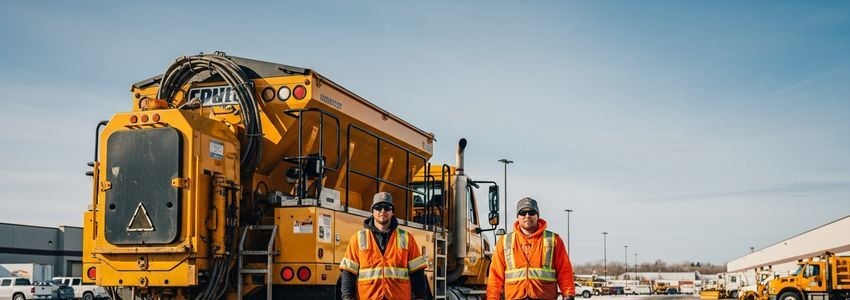
1. The Startup Snow Removal Company
Scenario: Mike just launched "First Flake Removal" after working for another company for years. He has a reliable one-ton truck but needs a professional-grade V-box hopper spreader to service the three small commercial lots he has already landed contracts for. He has limited startup capital and needs to conserve cash for insurance, salt, and fuel.
Solution: Mike opts for an equipment lease on a new $8,000 poly hopper spreader. The lease requires minimal money down, and the monthly payments are significantly lower than a loan would be. This allows him to get the essential equipment he needs to generate revenue immediately without depleting his operating funds. After his 3-year lease, he can re-evaluate and decide if he wants to buy the unit or upgrade to a larger one as his business grows.
2. The Landscaping Company Adding Winter Services
Scenario: "GreenScapes Landscaping" has a successful business from spring to fall but experiences a significant revenue drop in the winter. The owner, Sarah, decides to leverage her existing fleet of three pickup trucks and her client list to offer snow removal. She needs three reliable tailgate spreaders to equip her trucks.
Solution: Sarah applies for an equipment financing loan to purchase three tailgate spreaders totaling $15,000. Because her business has been operating for over five years with strong financials, she is quickly approved for a 4-year loan with a competitive interest rate. She now has a year-round revenue stream, keeps her employees working, and the loan payments are easily covered by the new winter service contracts.
3. The Municipality Contractor
Scenario: A regional contractor wins a multi-year bid to manage ice control for a small town's secondary roads and public facilities. The contract requires two heavy-duty, truck-mounted stainless steel hopper spreaders with pre-wet systems, a total investment of over $40,000. The contractor needs to acquire the equipment but wants to align costs with the contract's payment schedule.
Solution: The contractor works with a lender like Crestmont Capital to secure a specialized financing agreement. They structure a 5-year equipment loan with seasonal payments. This means the contractor makes higher payments during the profitable winter months and significantly smaller "skip" payments during the off-season (summer months). This structure perfectly matches their cash flow from the municipal contract.
4. The Property Management Company
Scenario: A large property management firm oversees a portfolio of 15 commercial properties, including office parks and retail centers. They decide to bring their snow and ice management in-house to better control quality and costs. They need a diverse fleet: two large hopper spreaders for parking lots and three walk-behind spreaders for the extensive sidewalk networks.
Solution: The company bundles the entire equipment package, valued at $35,000, into a single Master Lease Agreement. This allows them to finance different types of equipment under one simple contract with a single monthly payment. The lease structure allows them to treat the expense as an operational cost, simplifying their accounting and preserving capital for property improvements.
5. The Growing Fleet Operator
Scenario: An established snow removal business is experiencing rapid growth and needs to add two more trucks and spreader setups to their fleet to handle a new, large corporate campus client. The owner has good credit but has recently invested heavily in a new facility, so cash flow is tight.
Solution: The owner uses an equipment financing line of credit. They get approved for a $100,000 line dedicated to equipment purchases. They immediately draw $25,000 to purchase the two new salt spreaders. A few months later, they use another $15,000 from the same line to buy two new snow plows. This gives them the flexibility to acquire assets exactly when needed without having to re-apply for a new loan each time.
Seasonal Strategy: Don't wait until the first forecast of snow. Apply for financing in the late summer or early fall. This gives you ample time to secure funding, purchase your equipment, and have it installed and tested before the busy season begins. Equipment dealers are also less busy, and you may find better deals.
Frequently Asked Questions
What exactly is salt spreader financing?
Salt spreader financing is a type of business loan or lease used specifically for the purpose of acquiring new or used salt and sand spreaders for commercial use. It allows you to get the equipment you need now and pay for it over time in manageable monthly installments, rather than paying the full cost upfront.
How much does a commercial salt spreader cost to finance?
The cost varies widely based on the type of spreader. A light-duty tailgate spreader might cost $2,000 - $8,000, while a heavy-duty V-box hopper spreader can cost $5,000 - $20,000 or more. Financing allows you to acquire any of these, with monthly payments depending on the total cost, the loan term, and your credit profile.
Can I get salt spreader financing with bad credit?
Yes, it is possible. While a strong credit score (680+) will secure the best rates, many lenders, including Crestmont Capital, work with business owners with less-than-perfect credit. Lenders may consider applicants with scores as low as 600. Because the equipment serves as collateral, it reduces the lender's risk, making approval easier than for unsecured loans.
How long does it take to get approved for equipment financing?
The process is typically very fast. With a streamlined online application, many businesses can get a credit decision within a few hours and receive funding in as little as 24-48 hours. This speed is crucial for businesses that need to acquire equipment quickly before the winter season starts.
What is the minimum credit score needed?
Most lenders look for a minimum credit score of around 600 for their equipment financing programs. However, some may consider lower scores if the business has strong revenue and has been operating for a significant amount of time. A higher score will result in better terms and lower interest rates.
Should I choose a loan or a lease for my salt spreader?
Choose a loan if you want to own the asset long-term and build equity. Choose a lease if you prefer lower monthly payments, want to conserve cash, and like to upgrade your equipment every few years to have the latest technology. Consult the comparison table in this guide for a detailed breakdown.
What documents are required to apply?
For most applications under $150,000, you will typically only need to complete a simple one-page application and provide a quote or invoice for the equipment. For larger amounts, you may also be asked to provide the last 3-6 months of business bank statements and possibly tax returns.
Can I finance a used salt spreader?
Yes, most equipment financing companies will fund the purchase of used salt spreaders. This can be a cost-effective way to build your fleet. The lender may have some restrictions on the age or condition of the equipment, but financing used assets is a very common practice.
What are the typical interest rates for salt spreader financing?
Interest rates can vary significantly based on your credit score, time in business, and the lender. They can range from as low as 6% for highly qualified borrowers with traditional lenders to over 20% for businesses with higher risk profiles. It is important to compare offers to find the most competitive rate.
Is a down payment required?
It depends on the financing structure and your creditworthiness. Many equipment loans require a down payment of 10-20%. However, many lease options and some loan programs for well-qualified buyers offer 100% financing with no money down, often requiring just the first and last month's payment upfront.
How much can I borrow for snow removal equipment?
Financing amounts can range from as little as $5,000 to over $1,000,000. The amount you can borrow depends on the value of the equipment you are purchasing and your business's ability to support the monthly payments. Most businesses can easily secure financing for one or multiple salt spreaders.
Are there SBA loan options for buying a salt spreader?
Yes, SBA loans (like the 7(a) or 504 programs) can be used to purchase equipment. They offer excellent rates and terms but have a much longer and more rigorous application process. They are best for businesses that can plan their purchases several months in advance.
My snow removal business is seasonal. Can I still get financing?
Absolutely. Lenders who specialize in this industry understand the nature of seasonal businesses. Some even offer flexible payment structures, like seasonal or "skip" payments, where your payments are lower or deferred during your off-season. According to a CNBC report on small business funding, demonstrating strong revenue during your peak season is key to securing financing.
Can I finance multiple salt spreaders at once?
Yes. You can bundle multiple pieces of equipment, even from different manufacturers or dealers, into a single financing agreement. This simplifies the process and leaves you with one manageable monthly payment for your entire fleet expansion.
What is the application process like?
The process is typically very simple: 1) Fill out a short online application. 2) Submit any required documents, like an equipment invoice. 3) Receive a credit decision, often within hours. 4) Review and sign the financing documents electronically. 5) The lender pays the equipment dealer directly, and you receive your salt spreader.
Your Next Steps to Getting Funded
- Determine Your Needs: Decide on the type and number of salt spreaders your business requires for the upcoming season. Get a formal quote or invoice from an equipment dealer.
- Complete a Simple Application: Fill out our secure, one-page online application. It takes just a few minutes and provides us with the basic information we need to get started.
- Review Your Options: A dedicated financing specialist will contact you to discuss your approval and present the best loan or lease options tailored to your business goals and budget.
- Get Your Equipment: Once you sign the financing documents, we will pay the dealer directly. You can then arrange for pickup or delivery of your new salt spreader and get ready for winter.
Don't Wait for the First Snowfall. Get Funded Now.
The best time to secure your equipment is before you need it. Our fast and simple application process can get you approved today, so your fleet is ready to roll when winter arrives.
Apply in 60 SecondsConclusion
For any business involved in snow and ice management, a reliable salt spreader is not a luxury-it is a fundamental component of an effective and profitable operation. However, the high upfront cost of quality commercial equipment can be a significant barrier to entry or expansion. This is where a strategic approach to equipment acquisition becomes paramount. By leveraging the right financial tools, you can build a powerful fleet without compromising your financial stability.
Understanding the nuances of loans, leases, and lines of credit empowers you to make an informed decision that aligns with your business's cash flow, tax strategy, and long-term vision. Whether you are a startup purchasing your first unit or an established enterprise expanding your fleet, there is a financing solution designed to meet your needs. Proactive planning and securing funding before the season begins will give you a decisive competitive advantage.
Ultimately, a well-planned salt spreader financing for business strategy is an investment in your company's growth, efficiency, and readiness. It transforms a major capital expenditure into a manageable operating expense, freeing up your resources to focus on what you do best: keeping properties safe and accessible all winter long. By partnering with a financing expert like Crestmont Capital, you can ensure you have the equipment and the capital to make this winter your most successful season yet.
Disclaimer: The information provided in this article is for general educational purposes only and is not financial, legal, or tax advice. Funding terms, qualifications, and product availability may vary and are subject to change without notice. Crestmont Capital does not guarantee approval, rates, or specific outcomes. For personalized information about your business funding options, contact our team directly.








