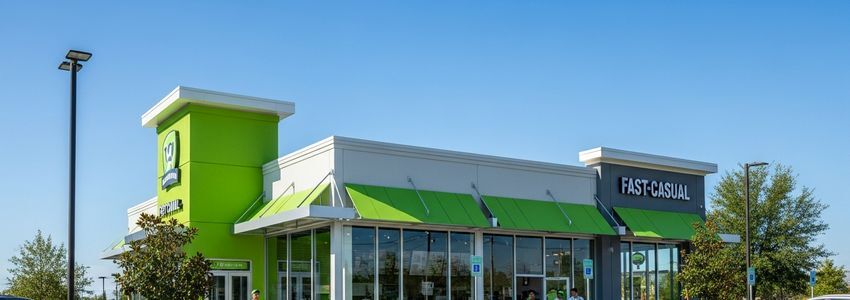
Salad and Go is one of the fastest-growing fast-casual restaurant franchises in America, offering fresh, affordable salads, wraps, breakfast burritos, and soups at drive-thru speed. If you are eyeing a Salad and Go franchise investment, understanding your financing options is a critical first step. This guide covers everything from Salad and Go franchise costs to the best loan products available, so you can open your location fully funded and positioned for success.
What Is Salad and Go?
Salad and Go is a Phoenix-based quick-service restaurant chain founded in 2013 with a simple but powerful mission: make fresh, healthy food accessible and affordable for everyone. The brand operates a drive-thru only model, keeping overhead low while delivering high-quality meals at prices well below typical fast-casual competitors. Salads start at around four dollars, making Salad and Go genuinely competitive with fast food while delivering far superior nutrition.
The chain has experienced remarkable growth since partnering with private equity firm Trive Capital in 2019. From a handful of Arizona locations, Salad and Go has rapidly expanded into Texas, Oklahoma, Nevada, and other sunbelt markets. As of 2026, the chain operates more than 100 locations and continues to grow aggressively. According to CNBC, the healthy fast-food segment is one of the most resilient in the restaurant industry, attracting health-conscious consumers across all income levels.
What makes Salad and Go particularly attractive as a franchise opportunity is its streamlined operations model. The drive-thru only concept means lower square footage requirements, smaller labor forces, and faster table turns compared to full-service or even traditional fast-casual competitors. These efficiencies translate directly into lower startup costs and better margins for franchisees.
The franchise system is currently in an expansion phase, and qualified franchisees with access to capital are well-positioned to secure prime territories before the market matures. Understanding how to structure your financing is essential to getting your application approved and your doors open quickly.
Ready to Finance Your Salad and Go Franchise?
Crestmont Capital specializes in franchise financing. Get matched with the right loan product for your investment in minutes.
Apply Now →Franchise Investment Costs
Before applying for a loan, you need to understand exactly what you are financing. Salad and Go franchise investment costs are competitive for the fast-casual sector, particularly given the drive-thru only model that eliminates dining room construction costs. Here is a detailed breakdown of typical investment requirements.
Initial Franchise Fee
The Salad and Go initial franchise fee is typically in the range of $30,000 to $45,000 per location. This fee grants you the right to operate under the Salad and Go brand, access their proprietary recipes, training programs, and ongoing operational support. Multi-unit development agreements may offer reduced per-unit fees for franchisees committing to develop multiple locations.
Real Estate and Construction
Because Salad and Go operates drive-thru only locations, real estate requirements differ from typical restaurant franchises. You will need a standalone pad site or converted building with drive-thru capability. Land costs vary significantly by market, but Salad and Go's smaller footprint keeps build-out costs lower than full-service concepts.
Construction and build-out costs typically range from $400,000 to $900,000 depending on whether you are building from ground up, converting an existing structure, or inheriting a prepared site. Markets like Phoenix and Dallas tend to offer more affordable real estate than coastal cities, making them particularly attractive for franchisees watching capital efficiency.
Equipment and Technology
Restaurant equipment for a Salad and Go location includes commercial refrigeration, prep tables, point-of-sale systems, drive-thru technology, and digital menu boards. Equipment costs typically run between $80,000 and $150,000. The drive-thru technology component is especially important for throughput and customer satisfaction, and Salad and Go has invested heavily in digital ordering integration.
Working Capital
Most franchise financing advisors recommend maintaining at least three to six months of operating expenses as working capital reserves when opening a new restaurant. For a Salad and Go location with monthly operating costs around $40,000 to $65,000, this means holding $120,000 to $390,000 in reserve. Many lenders will want to see evidence of this liquidity before approving your loan.
Total Investment Range
Taking all categories into account, the total investment for a new Salad and Go franchise location typically falls between $500,000 and $1,500,000. This wide range reflects variability in real estate costs, market dynamics, and whether you are building ground-up or converting an existing structure. You should plan to contribute at least 20 to 30 percent as a down payment, with the remainder financed through business loans or SBA programs.
Salad and Go does not publicly disclose franchise investment figures in the same manner as brands registered under the FTC's franchise disclosure requirements. Always request the Franchise Disclosure Document (FDD) directly from the franchisor and review it with a qualified franchise attorney before signing any agreement or committing capital.
Financing Options for Salad and Go Franchise Owners
Franchise owners have access to multiple financing pathways, each with distinct advantages depending on your credit profile, time in business, and how much capital you need. Understanding these options allows you to choose the most cost-effective structure for your Salad and Go investment.
SBA Loans for Franchise Financing
The Small Business Administration's 7(a) loan program is one of the most popular financing vehicles for franchise investments. SBA 7(a) loans can provide up to five million dollars, offer repayment terms of up to 25 years for real estate and 10 years for equipment and working capital, and carry interest rates that are regulated by the SBA to be competitive with market rates.
The SBA also maintains a Franchise Registry, which lists brands whose franchise agreements have been pre-reviewed for SBA eligibility. If Salad and Go is on the registry at the time of your application, the SBA loan process can move faster because the lender does not need to independently review the franchise agreement. You can learn more about SBA loan programs at SBA.gov.
Crestmont Capital works with SBA loan programs and can help you navigate the application process, prepare documentation, and connect with lenders experienced in franchise financing.
Conventional Business Term Loans
Traditional business term loans provide a lump sum of capital at a fixed or variable interest rate, repaid over a set term. For franchise financing, term loans are typically used for equipment, leasehold improvements, and working capital rather than real estate. Terms range from one to seven years for unsecured loans, and rates depend on your credit score, time in business, and revenue.
Conventional small business loans are generally faster to close than SBA loans, which can take 60 to 90 days in some cases. If you need faster access to capital or are bridging a gap while your SBA loan closes, a conventional term loan can be a practical solution.
Equipment Financing
Restaurant equipment can be financed separately from your overall franchise investment, which can reduce the amount you need to borrow on your primary business loan. Equipment financing uses the equipment itself as collateral, which often means better rates and easier approval than unsecured financing. Terms typically match the useful life of the equipment, ranging from three to seven years.
Financing your commercial kitchen equipment, refrigeration, and drive-thru technology separately can preserve your working capital and keep your primary loan amount lower, which generally improves your approval odds.
Business Line of Credit
A business line of credit gives you access to revolving capital that you can draw on as needed and repay over time. Lines of credit are ideal for managing cash flow during the pre-opening and ramp-up phases, handling unexpected costs, and bridging seasonal revenue fluctuations once you are open.
Many franchise owners use a combination of term loans for their primary investment and a line of credit for working capital management. This two-product approach keeps borrowing costs lower by ensuring you only pay interest on capital you have actually drawn.
ROBS (Rollover for Business Startups)
If you have significant retirement savings in a 401(k) or IRA, you may be eligible for a ROBS arrangement, which allows you to use those funds to invest in a franchise without triggering early withdrawal penalties or taxes. ROBS structures are complex and require specialized legal and tax counsel, but they can be a powerful way to self-finance a portion of your franchise investment while preserving your loan capacity for other needs.
Franchisor and Third-Party Programs
Some franchisors have lending programs or relationships with preferred lenders who offer favorable terms to franchisees. It is worth asking your Salad and Go franchise development contact whether such programs exist and what terms are available. Even if the franchisor does not have a direct lending program, they often have relationships with franchise-focused lenders who understand the business model and can move faster through underwriting.
Compare Franchise Loan Options Today
Our franchise financing specialists work with dozens of lenders to find you the best terms for your Salad and Go investment.
Get Your Quote →
How Crestmont Capital Helps
Crestmont Capital has helped hundreds of franchise owners access the capital they need to open, expand, and grow their restaurant businesses. As one of America's top-rated business lenders, we bring deep experience in franchise financing and a network of lender relationships that gives us access to competitive rates and flexible terms.
What Sets Us Apart
Unlike traditional banks that may take weeks or months to review your franchise application, Crestmont Capital operates with speed and efficiency. Our digital application process captures the information we need quickly, and our experienced underwriters can often deliver decisions in 24 to 72 hours for pre-qualification. Full SBA loan closings take longer due to program requirements, but we work to minimize delays at every stage.
We work with borrowers across a wide range of credit profiles. Whether you have excellent credit and are looking for the most competitive rates, or you have had some credit challenges and need a lender who understands the full picture, our team can help. We offer business loans for owners with challenging credit histories and structure solutions that match your situation.
Products Available Through Crestmont Capital
- SBA 7(a) Loans: Up to $5 million with long repayment terms and competitive government-backed rates
- Conventional Term Loans: $25,000 to $2 million for equipment, build-out, and working capital
- Equipment Financing: 100% financing on restaurant equipment with the equipment as collateral
- Business Lines of Credit: Revolving credit from $25,000 to $500,000 for flexible cash flow management
- Fast Business Loans: Expedited funding for time-sensitive needs through our fast business loan program
Our Franchise Financing Process
Working with Crestmont Capital on a franchise loan is straightforward. You submit your application online with basic business and financial information. Our team reviews your file and matches you with the loan product best suited to your needs. We request any additional documentation required for underwriting. Once approved, we work with you to close your loan as quickly as possible so you can focus on opening your Salad and Go location.
Before applying for franchise financing, gather your personal and business tax returns for the past two to three years, a current credit report, your franchise disclosure document, and a detailed business plan with financial projections. Having these documents ready speeds up underwriting and improves your approval odds significantly.
Real-World Scenarios
Understanding how franchise financing works in practice helps you plan your investment strategy. Here are three scenarios that illustrate different financing approaches for a Salad and Go franchise.
Scenario 1: First-Time Franchisee with Strong Credit
Maria is a former restaurant manager with 12 years of industry experience and a credit score of 720. She has $200,000 in savings and wants to open a single Salad and Go location in a suburban Texas market where construction costs are moderate. Her total project cost is estimated at $750,000.
Maria puts $150,000 down (20 percent of the project cost) and finances the remaining $600,000 through an SBA 7(a) loan. Her strong industry experience, solid credit, and meaningful down payment help her qualify for a 10-year loan at a competitive rate. She keeps $50,000 in reserve as working capital, drawn from her savings. Monthly loan payments are manageable given projected revenues from a well-trafficked suburban location.
Scenario 2: Experienced Multi-Unit Operator
David already operates three quick-service restaurant locations and has been approached by Salad and Go to develop five locations in a new market. His annual revenue across existing locations exceeds $3 million, and he has strong banking relationships. He is targeting a total investment of $4 million across five locations developed over three years.
David uses a combination of a multi-unit SBA loan for the first two locations and a conventional business line of credit to fund working capital and pre-opening costs as each location opens. He structures the deal with the franchise's development agreement to get a reduced franchise fee across units. His existing cash flow from established locations helps support debt service during the ramp-up of each new location.
Scenario 3: Franchise Owner with Limited Credit History
James is an immigrant entrepreneur with significant business experience in his home country but limited U.S. credit history. He has $300,000 to invest but has struggled to get financing from traditional banks due to his thin domestic credit file. He is targeting a Salad and Go location in a high-traffic urban corridor where initial revenues are expected to ramp quickly.
James works with Crestmont Capital, which has experience helping immigrant entrepreneurs and those with non-traditional credit profiles. By documenting his business experience through international financial records, demonstrating substantial equity contribution, and providing a detailed business plan, James qualifies for an alternative business loan that bridges him to the capital he needs. Once his U.S. credit profile strengthens over his first 18 months of operations, he refinances into a more conventional loan at improved rates.
How to Apply for a Salad and Go Franchise Loan
Applying for franchise financing is a multi-step process that requires preparation and attention to detail. Here is what to expect when you apply through Crestmont Capital.
Step 1: Gather Your Documentation
Lenders will want to see several categories of documentation to evaluate your application. Personal financial documents include your last two to three years of personal tax returns, personal bank statements for the past three to six months, and a personal financial statement. Business financial documents include your business tax returns if you have an existing business, a current profit and loss statement, and balance sheets. Franchise-specific documents include your signed or drafted franchise agreement, the Franchise Disclosure Document, and a site selection letter or signed lease.
Step 2: Prepare Your Business Plan
A strong business plan is essential for franchise financing, especially for SBA loans. Your business plan should include an executive summary, a description of the franchise concept and your specific location, a market analysis demonstrating demand in your trade area, your qualifications and management team experience, and detailed financial projections including revenue forecasts, cost of goods, labor costs, and projected net income for at least three years.
Census.gov and local Chamber of Commerce data can help you build a compelling market analysis that demonstrates your location's demand potential.
Step 3: Submit Your Application
Visit Crestmont Capital's website or call our franchise financing team to start your application. Our digital application captures the core information quickly, and a dedicated loan specialist is assigned to guide you through every subsequent step.
Step 4: Underwriting and Approval
Underwriting for franchise loans evaluates your personal creditworthiness, the viability of your business plan, the strength of the franchise brand, your industry experience, and the proposed location's market characteristics. Being responsive during underwriting, providing requested documents quickly, and maintaining open communication with your loan officer will speed the process significantly.
Step 5: Closing and Funding
Once approved, you will receive a commitment letter outlining the loan terms. After you accept the terms, your attorney and the lender's closing team work together to finalize loan documents. SBA loans require SBA authorization before closing, which adds time but is part of the process. Conventional loans typically close faster. Once all documents are executed, funds are disbursed and you are ready to begin your franchise journey.
Salad and Go Franchise Financing: By the Numbers
Frequently Asked Questions
How much does a Salad and Go franchise cost?
The total investment for a Salad and Go franchise typically ranges from $500,000 to $1,500,000 depending on real estate costs, market, and construction requirements. The franchise fee alone is approximately $30,000 to $45,000. You should plan to contribute at least 20 to 30 percent as a down payment and finance the remainder through business loans.
What credit score do I need for a franchise loan?
Most SBA lenders prefer a credit score of 680 or higher for franchise loans. Conventional lenders may be more flexible, particularly if you have strong business experience, significant equity contribution, or existing business revenues. Crestmont Capital works with borrowers across a range of credit profiles and can help identify the best product for your situation.
Can I use an SBA loan to finance a Salad and Go franchise?
Yes, SBA loans are commonly used for franchise financing. The SBA 7(a) program offers up to $5 million with terms up to 25 years for real estate. Whether Salad and Go is on the SBA Franchise Registry at the time of your application may affect how quickly the lender can process your loan, so it is worth checking with your loan officer early in the process.
How long does it take to get a franchise loan approved?
Approval timelines vary by loan type. Conventional business loans through alternative lenders can deliver approvals in 24 to 72 hours for qualified borrowers. SBA loans take longer, typically 30 to 90 days from application to closing due to the government-guaranteed program requirements. Having complete documentation ready at the time of application is the single most effective way to reduce your wait time.
Do I need industry experience to qualify for a franchise loan?
Industry experience strengthens your application but is not always required. Lenders want to see evidence that you can run the business successfully. If you lack direct restaurant experience, having strong general business management experience, partnering with someone who has restaurant expertise, or demonstrating that you have completed the franchisor's training program can compensate for limited direct industry background.
What documents do I need to apply for a Salad and Go franchise loan?
Core documents include personal and business tax returns for the past two to three years, personal and business bank statements, a personal financial statement, your signed franchise agreement or FDD, a site lease or letter of intent, and a detailed business plan with financial projections. Having these ready before you apply will speed the process significantly.
Can I finance Salad and Go equipment separately?
Yes. Equipment financing is a popular way to handle restaurant equipment separately from your primary franchise loan. Since the equipment serves as collateral, rates are often competitive and qualification can be easier than unsecured business loans. Financing equipment separately may allow you to qualify for a larger primary loan for real estate and working capital.
What is the debt service coverage ratio (DSCR) lenders look for?
Most lenders require a DSCR of at least 1.25, meaning your business generates $1.25 in net operating income for every $1.00 in loan payments. For franchise projections, lenders typically compare your projected revenues and expenses against industry benchmarks and comparable franchise units to assess whether the DSCR target is achievable. A higher DSCR generally results in better loan terms.
Can I get a franchise loan with bad credit?
It is more challenging but not impossible. Lenders offering financing to borrowers with credit challenges typically require larger down payments, offer shorter loan terms, and charge higher interest rates to compensate for elevated risk. Crestmont Capital offers options for borrowers with imperfect credit and can help you identify the best path forward given your credit profile and financial resources.
What is the minimum down payment for a franchise loan?
Most franchise lenders require a minimum of 10 to 20 percent down for SBA-backed loans and 20 to 30 percent for conventional loans. A larger down payment reduces your loan amount, lowers your monthly payments, and typically results in better interest rates. It also signals financial strength and commitment to lenders, which improves approval odds.
How does Crestmont Capital help franchise owners?
Crestmont Capital is one of America's top-rated business lenders with deep experience in franchise financing. We offer SBA loans, conventional term loans, equipment financing, and lines of credit. Our team works with borrowers across a range of credit profiles and provides dedicated support throughout the application, underwriting, and closing process. We can often deliver pre-qualification decisions within 24 to 72 hours.
Is Salad and Go a good investment?
Salad and Go is one of the fastest-growing restaurant brands in America, operating in a healthy food category that continues to attract strong consumer demand. The drive-thru only model offers operational efficiencies and lower overhead compared to full-service concepts. As with any business investment, success depends on factors including location selection, management quality, local market conditions, and access to adequate capital. Thorough due diligence and a sound financing strategy are essential before committing to any franchise investment.
Can I use a business line of credit for franchise working capital?
Yes. A business line of credit is one of the most flexible tools for managing franchise working capital. It gives you access to funds when needed and you only pay interest on what you draw. Lines of credit are ideal for covering pre-opening expenses, managing cash flow during your ramp-up phase, handling unexpected costs, and smoothing out seasonal revenue variations once you are operating.
What royalties and fees does Salad and Go charge franchisees?
Royalty rates and marketing fund contributions are typically disclosed in the Franchise Disclosure Document (FDD) and vary by brand. For Salad and Go specifically, you should request their current FDD for the precise fee schedule. Most fast-casual brands charge royalties in the range of 4 to 6 percent of gross sales, plus contributions to a system-wide marketing fund. These ongoing fees need to be factored into your financial projections when modeling loan serviceability.
How can I improve my chances of getting approved for a franchise loan?
The most impactful steps you can take include maintaining or improving your personal credit score, maximizing your down payment contribution, preparing a thorough and realistic business plan, documenting your industry experience clearly, choosing a strong location with clear demand drivers, and working with an experienced franchise financing specialist like Crestmont Capital who can match you with the right lender and product for your situation.
Start Your Salad and Go Franchise Financing Journey
Apply online in minutes. Get matched with SBA loans, term loans, and equipment financing from our network of franchise-focused lenders.
Apply Now →Next Steps
Your Action Plan
- Request the FDD: Contact Salad and Go's franchise development team to request their current Franchise Disclosure Document and review it with a qualified franchise attorney.
- Assess Your Finances: Calculate your available down payment, review your credit report, and identify how much financing you will need.
- Prepare Your Documents: Gather tax returns, bank statements, and financial statements so you are ready to apply quickly when you find the right opportunity.
- Build Your Business Plan: Research your target market using local data, franchise performance benchmarks from the FDD, and industry reports. Develop realistic financial projections.
- Consult Crestmont Capital: Connect with our franchise financing team to discuss your situation, explore loan options, and understand what pre-qualification looks like for your profile.
- Select Your Site: Work with Salad and Go's real estate team and your own commercial real estate broker to identify and secure the right location.
- Close Your Financing: Submit your loan application, complete underwriting, and close your loan so you can fund your build-out and open your doors.
Conclusion
Salad and Go represents a compelling franchise opportunity in one of the most resilient and growing segments of the restaurant industry. The brand's drive-thru only model, affordable price points, and rapid market expansion create genuine potential for qualified franchisees who enter the system now. But like any significant business investment, success starts with sound financial planning.
Understanding the full cost of your franchise investment, choosing the right financing structure, and working with experienced lenders who know the franchise space are all critical steps. Whether you pursue an SBA loan for maximum repayment flexibility, conventional financing for faster closings, equipment financing to handle your kitchen infrastructure, or a combination of products, having the right capital stack from day one sets you up for sustainable growth.
Crestmont Capital is here to help you navigate every step of the franchise financing process. According to Forbes, franchise businesses have historically shown higher success rates than independent startups, in part because franchisees benefit from proven systems, brand recognition, and franchisor support. Maximizing that advantage means showing up on day one with the capital you need to execute your plan. Let our team help you get there.
Ready to move forward? Apply for your Salad and Go franchise loan today and take the first step toward opening your location.
Disclaimer: The information provided in this article is for general educational purposes only and is not financial, legal, or tax advice. Funding terms, qualifications, and product availability may vary and are subject to change without notice. Crestmont Capital does not guarantee approval, rates, or specific outcomes. For personalized information about your business funding options, contact our team directly.