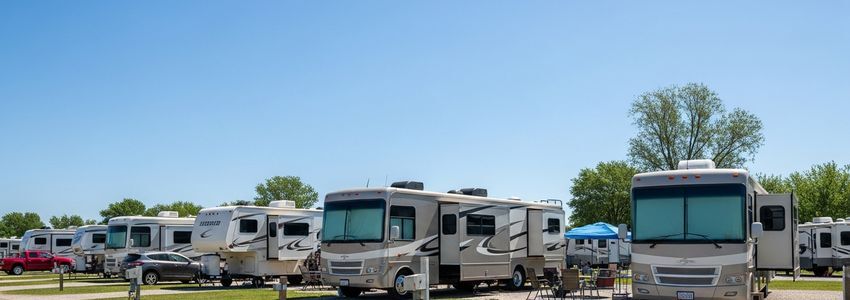
The RV park and campground industry has experienced a remarkable surge in demand over the past decade, driven by a growing appetite for outdoor recreation, road travel, and affordable vacation alternatives. Whether you own an established RV resort or are planning to acquire your first campground, access to the right financing can be the difference between stagnation and sustainable growth. RV park business loans give campground operators the capital they need to purchase land, develop amenities, upgrade infrastructure, and weather seasonal cash flow gaps.
Understanding your financing options is essential before approaching any lender. RV parks are classified as hospitality businesses with unique income patterns, land-intensive operations, and seasonal revenue cycles - all of which factor into how lenders evaluate your loan application. This guide walks through every aspect of rv park business loans: the types available, qualification requirements, how to apply, and how Crestmont Capital can help you secure the funding your campground needs to thrive.
According to the U.S. Small Business Administration, campground and RV park businesses represent one of the most resilient segments in the outdoor hospitality sector, with consistent demand even during economic uncertainty. Understanding how to leverage small business loans tailored for this industry is your first step toward expanding your operation.
In This Article
What Are RV Park Business Loans?
RV park business loans are commercial financing products designed to help campground owners, RV resort operators, and outdoor hospitality entrepreneurs fund the unique capital needs of their businesses. These loans can be used for a wide range of purposes - from purchasing land and developing site infrastructure to installing amenity facilities, purchasing maintenance equipment, managing payroll during slow seasons, and covering marketing costs to drive occupancy.
Unlike residential mortgages or personal loans, RV park business loans are structured around the commercial nature of your operation. Lenders evaluate your business's revenue history, occupancy rates, property value, local market demand, and overall financial health to determine loan eligibility and terms. The result is financing that can scale with your operation - from small, independent campgrounds to large-scale RV resorts with hundreds of sites.
RV parks typically generate revenue through nightly, weekly, and monthly site rentals, often supplemented by cabin or glamping accommodations, dump stations, camp stores, laundry facilities, and recreational programming. Each of these revenue streams can factor into how lenders assess your debt service coverage and repayment capacity.
Industry Insight: According to CNBC, RV ownership surged during the pandemic and has remained elevated, driving sustained demand for quality campground accommodations across the country. This demand has made RV parks increasingly attractive investments for entrepreneurs and existing operators looking to expand.
Why RV Park Businesses Need Financing
Operating an RV park is capital-intensive in ways that many entrepreneurs underestimate before entering the industry. Land acquisition costs alone can run into the millions for well-positioned properties near national parks, coastal areas, or popular tourist destinations. Even purchasing an existing campground in a secondary market typically requires hundreds of thousands of dollars in upfront investment, plus working capital to maintain operations during the first year.
Beyond acquisition, ongoing capital needs are significant. Electrical hookup infrastructure, water and sewer systems, road maintenance, Wi-Fi networks, restroom and shower facilities, laundry rooms, swimming pools, playgrounds, and landscaping all require regular investment. A single infrastructure upgrade - such as adding full hookups to pull-through sites or installing a new septic system - can easily cost $50,000 to $250,000 depending on the scope and location.
Seasonal revenue patterns create additional financing challenges. Many RV parks experience peak occupancy during spring through early fall, with sharp revenue declines in winter months. Maintaining staff, servicing debt, and keeping facilities operational through off-season periods requires disciplined cash flow management - and often access to a business line of credit that can bridge the gap between slow and busy seasons.
By the Numbers
The U.S. RV Park Industry - Key Statistics
$9.6B
U.S. campground and RV park industry revenue in 2024
45M+
Americans who took an RV trip in 2023, per industry data
16,000+
RV parks and campgrounds operating across the U.S.
4.8%
Annual industry growth rate projected through 2028
Common reasons RV park owners seek financing include:
- Property acquisition: Purchasing land for a new campground or buying an existing RV park
- Site development: Grading, road construction, utility hookup installation, and landscaping
- Amenity upgrades: Adding pools, clubhouses, playgrounds, dog parks, or laundry facilities
- Technology improvements: Online reservation systems, Wi-Fi infrastructure, security cameras
- Equipment purchases: Tractors, mowers, utility vehicles, maintenance equipment
- Working capital: Covering payroll, utilities, and operating expenses during slow seasons
- Expansion: Adding new sites, building cabin or glamping accommodations
- Acquisition of competitor parks: Growing through strategic business purchases
Types of RV Park Business Loans
Multiple financing options exist for RV park operators, each suited to different business needs, financial profiles, and timelines. Understanding which loan type aligns with your goals is critical to choosing the right product.
SBA Loans for RV Parks
The SBA loans - particularly the SBA 7(a) and SBA 504 programs - are among the most competitive financing options available to RV park owners. SBA 7(a) loans can be used for working capital, equipment, business acquisitions, and real estate, with loan amounts up to $5 million and repayment terms up to 25 years for real estate. Interest rates are capped and typically run below conventional commercial rates.
The SBA 504 loan is specifically designed for fixed-asset purchases, including real property. This program is ideal for RV park owners purchasing land or existing campground facilities, as it typically requires only 10% down from the borrower and offers long-term fixed-rate financing. According to the SBA's official 504 program page, eligible projects include the purchase of land and buildings as well as improvements to existing facilities.
The primary drawback of SBA loans is the approval timeline, which can range from 60 to 120 days or more, and the documentation requirements are extensive. However, for major acquisitions and long-term capital needs, SBA programs offer unmatched terms.
Commercial Term Loans
Conventional term loans from banks, credit unions, and alternative lenders provide a lump sum of capital repaid over a fixed period with scheduled payments. For RV park financing, term loans are commonly used for property improvements, infrastructure upgrades, and equipment purchases. Loan amounts can range from $50,000 to several million dollars, with repayment terms of 3 to 10 years depending on the use of funds and lender criteria.
Alternative lenders typically offer faster approval - sometimes within days - compared to traditional banks, though interest rates may be higher. For operators who need capital quickly to capitalize on a time-sensitive opportunity, alternative term loans from lenders like Crestmont Capital can deliver funds in as little as 24 to 72 hours after approval.
Equipment Financing for RV Parks
RV parks require specialized equipment to maintain grounds, manage operations, and deliver a quality guest experience. Equipment financing allows campground owners to acquire maintenance vehicles, tractors, riding mowers, pressure washers, utility carts, generators, and other essential tools without large upfront payments.
With equipment financing, the equipment itself serves as collateral, which simplifies qualification compared to unsecured loans. Repayment terms typically match the useful life of the equipment, and interest paid may be deductible as a business expense. Equipment financing is ideal when you need specific assets without tapping your working capital reserves.
Business Line of Credit
A business line of credit is one of the most valuable tools for managing the seasonal nature of an RV park's cash flow. Unlike a term loan, a line of credit gives you access to a revolving pool of funds you can draw from as needed and repay as revenue comes in.
During the off-season, you might draw on your line of credit to cover payroll and utility costs. When peak season arrives and occupancy revenue surges, you pay down the balance. This flexible structure prevents the cash flow gaps that cause many campground operators to cut staff, defer maintenance, or miss growth opportunities during slow periods.
Lines of credit for RV park businesses typically range from $25,000 to $500,000, depending on business revenue and creditworthiness. Interest is only charged on the outstanding balance, making it cost-effective for businesses with irregular cash flow patterns.
Bridge Loans for RV Parks
A bridge loan provides short-term capital to span the gap between an immediate financing need and a longer-term solution. For RV park operators, bridge loans are commonly used when:
- You're in the process of obtaining SBA approval but need to secure a property before competing buyers
- You need funds immediately for an urgent repair that could shut down operations
- You're between seasons and awaiting a major revenue surge before refinancing with a conventional lender
- You've identified an acquisition opportunity with a tight closing deadline
Bridge loans are typically short-term (6 to 36 months) with higher interest rates than conventional term loans, but their speed and flexibility make them invaluable when timing is critical.
Ready to Finance Your RV Park?
Get fast, flexible funding from Crestmont Capital - the #1 rated business lender in the U.S. Apply in minutes, get funded in days.
Apply Now →How Much Can You Borrow?
Loan amounts for RV park businesses vary significantly based on the purpose of the loan, the financial health of the business, property value, and the lender's risk tolerance. Here is a general range of what campground operators can expect across different loan types:
- SBA 7(a) loans: Up to $5 million, with 10-25 year terms depending on use
- SBA 504 loans: Typically $500,000 to $10+ million for real estate and fixed assets
- Commercial term loans: $50,000 to $5 million, 3-10 year terms
- Equipment financing: $10,000 to $2 million, typically 2-7 year terms
- Business lines of credit: $25,000 to $500,000 revolving
- Bridge loans: $100,000 to $5 million, 6-36 months
Lenders typically use a metric called the Debt Service Coverage Ratio (DSCR) to assess how much your business can responsibly borrow. A DSCR above 1.25 indicates the business generates 25% more cash than needed to cover debt payments - a common threshold for commercial real estate and hospitality lenders. Your park's net operating income (NOI), occupancy rates, and local market comparables all factor into this calculation.
Borrowing Tip: Before applying, calculate your park's average annual net operating income. Divide this by your expected annual debt payment. If the result is 1.25 or higher, you're in a strong position to qualify for the loan amount you need. Most lenders require this ratio for commercial hospitality properties.
RV Park Business Loan Requirements
Qualifying for rv park business loans requires meeting both standard business lending criteria and hospitality-specific underwriting requirements. Here's what lenders typically evaluate:
Credit Score
Most traditional lenders require a minimum personal credit score of 680, while SBA lenders typically want 650 or higher. Alternative lenders like Crestmont Capital may work with scores starting at 550-600, though higher scores unlock better rates and terms. Business credit scores (if established) are also reviewed.
Time in Business
Lenders generally prefer businesses with at least 2 years of operating history and documented revenues. Startups or first-time campground buyers may need to demonstrate industry experience or a strong business plan to offset limited operating history. SBA lenders often require 2+ years for most loan types.
Annual Revenue
Most commercial lenders want to see a minimum of $250,000 to $500,000 in annual revenue for significant loan amounts. However, revenue requirements vary - equipment financing can often be obtained with lower revenue thresholds, while SBA and commercial real estate loans require stronger demonstrated income streams.
Collateral
For RV park loans secured by property, the land and improvements serve as primary collateral. Equipment loans use the equipment itself. Unsecured working capital loans rely primarily on business revenue and creditworthiness. Lenders will typically require an independent appraisal of the property and review comparable campground sales in the area.
Business Plan and Financial Projections
Especially for acquisitions and new development, lenders want to see a clear business plan that includes projected occupancy rates, revenue assumptions, expense budgets, and a realistic debt repayment schedule. Market analysis demonstrating demand in your area strengthens your application significantly.
Property Documentation
For real estate-secured loans, lenders require title reports, property surveys, environmental assessments, zoning verification confirming campground use is permitted, any existing lease agreements, and utility easements. Government permits and licenses related to campground operations are also typically required.
How to Apply for RV Park Business Financing
Applying for rv park business loans follows a clear process. Being well-prepared before you approach a lender dramatically improves your chances of approval and speeds up the decision timeline.
Step 1: Define your financing need. Determine exactly how much you need and what it will be used for. A clear, specific purpose (e.g., "adding 40 full-hookup sites at $3,500 per site = $140,000") is more compelling than a vague funding request.
Step 2: Gather your financial documents. Prepare your last 2-3 years of business tax returns, bank statements, profit and loss statements, balance sheets, and a current list of business debts. For property purchases, include the purchase agreement and seller's disclosure.
Step 3: Pull your credit reports. Review both personal and business credit reports before applying. Dispute any errors, pay down high-utilization accounts, and address any collections or derogatory marks if possible.
Step 4: Compare lenders. Get quotes from at least 2-3 lenders, including traditional banks, SBA lenders, and alternative lenders. Compare APR, origination fees, prepayment penalties, and repayment terms - not just the monthly payment.
Step 5: Submit your application. Complete the lender's application with accurate, consistent information. Inconsistencies between your tax returns, bank statements, and application create red flags that slow approval or result in denial.
Step 6: Respond to underwriting requests promptly. After submission, the underwriter may request additional documentation. Responding quickly keeps your application moving and signals professionalism.
Step 7: Review loan terms before signing. Before accepting any offer, carefully review the interest rate, total cost of the loan, prepayment penalties, covenants, and collateral requirements. Make sure the repayment schedule aligns with your cash flow patterns.
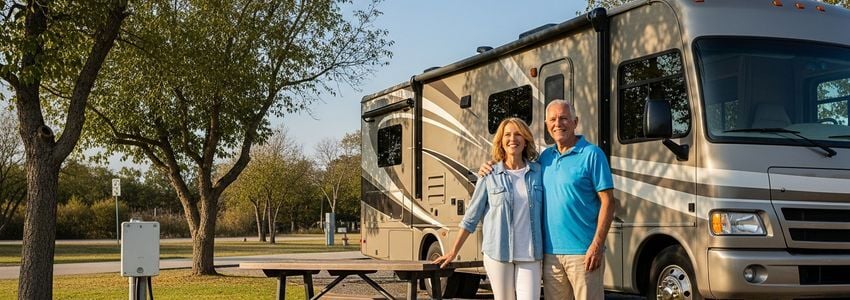
How Crestmont Capital Helps RV Park Owners
Crestmont Capital is a nationally recognized direct lender specializing in small and mid-size business financing across a wide range of industries, including outdoor hospitality and campground operations. Unlike traditional banks that follow rigid underwriting criteria, Crestmont takes a holistic view of your business - evaluating your revenue trends, property assets, and future growth potential, not just your credit score alone.
For RV park owners, Crestmont Capital offers:
- Term loans from $50,000 to $5 million for acquisitions, improvements, and development
- Equipment financing for maintenance vehicles, heavy machinery, and operational equipment
- Business lines of credit to manage seasonal cash flow and fund ongoing operations
- Fast approvals - decisions in as little as 24-48 hours, with funding in 3-5 business days
- Flexible qualification - we work with operators who have credit challenges or limited collateral
- No prepayment penalties on many loan products, allowing you to pay down faster when cash flow allows
Our team understands the campground industry. We've helped operators across the country fund everything from modest equipment purchases to multi-million dollar property acquisitions. Whether you're looking at similar opportunities to what you'd find through hotel business loans or need specialized campground capital, our specialists can match you with the right product for your specific situation.
Get Your RV Park Funded Fast
Speak with a Crestmont Capital specialist who understands outdoor hospitality. No obligation - just answers to your questions and a clear path forward.
Apply Now →Real-World Financing Scenarios
To illustrate how rv park business loans work in practice, here are four realistic scenarios representing common financing needs among campground operators.
Scenario 1: Acquiring an Existing RV Park
Mike owns a landscaping company in Texas and has identified an existing 85-site RV park in the Texas Hill Country listed for $1.8 million. The park has operated profitably for 12 years with an average annual NOI of $320,000. Mike has $200,000 in savings but needs to finance the remainder. He works with Crestmont Capital to secure an SBA 7(a) loan at 90% LTV ($1.62 million), using the property as collateral. With a 25-year term, his annual debt service comes to approximately $185,000 - well within the park's cash flow capacity. He closes the deal within 90 days and takes ownership of a profitable, turnkey operation.
Scenario 2: Upgrading Site Infrastructure
Sandra owns a 60-site campground in the Smoky Mountains that has been operating without full electrical hookups. After surveying her guests, she determines that adding 30 full-hookup sites would allow her to raise average nightly rates from $35 to $65 and significantly improve off-season bookings. The project will cost $210,000 for electrical work, pad upgrades, and water connections. She applies for a commercial term loan through Crestmont Capital, receives approval in 48 hours, and funds the project over a single winter season before the spring rush begins. The improved sites generate $95,000 in additional revenue in their first full year.
Scenario 3: Managing Seasonal Cash Flow
James operates a 120-site RV resort in Michigan that generates 80% of its annual revenue between May and September. During winter months, he still faces $28,000 per month in fixed costs - staff salaries, utilities, insurance, and loan payments. In October, he opens a $150,000 business line of credit with Crestmont Capital. Over the winter, he draws $85,000 across four months to cover operations. When May arrives and occupancy surges, he pays down the entire balance within three months - paying interest only on what he used. The line of credit costs him approximately $4,200 in interest for the season, versus the $25,000 he would have lost by laying off his maintenance staff and risking the start of the next season short-handed.
Scenario 4: Adding Glamping Accommodations
Patricia runs a well-established 200-site RV park in Colorado that has been fully booked every summer for three years. She wants to capitalize on the glamping trend by adding 12 luxury glamping tents at $18,000 each - a $216,000 investment. She applies for an equipment and property improvement loan through Crestmont, using her strong three-year revenue history ($680,000 annually) and the park's land value as supporting assets. She receives $230,000 in financing (including soft costs) at a competitive rate, and the glamping units generate an additional $145,000 in their first full year, offering a payback period under two years.
RV Park vs. Other Hospitality Financing Options
Understanding how RV park loans compare to other hospitality financing products can help you make an informed decision about the right lender and loan type for your operation.
| Feature | RV Park Loans | Hotel Loans | Residential Campground Loans | Conventional Real Estate |
|---|---|---|---|---|
| Typical Loan Range | $50K - $10M+ | $500K - $50M+ | $100K - $5M | $100K - $5M+ |
| Collateral | Land, improvements, equipment | Hotel property | Land, structures | Property only |
| Seasonal Adjustments | Yes - lenders understand seasonal income | Partial | Yes | No |
| Min. Credit Score | 550-680+ | 680+ | 600+ | 700+ |
| SBA Eligible | Yes (7a and 504) | Yes (504 primarily) | Yes | Sometimes |
| Approval Speed | 24 hrs to 90 days | 30 to 120 days | 2 to 90 days | 30 to 60 days |
As the table illustrates, RV park loans offer flexibility that makes them accessible to a wider range of operators than traditional commercial real estate or hotel financing. The combination of SBA eligibility, seasonal income accommodation, and multiple product types (term loans, lines of credit, equipment financing) makes the outdoor hospitality category well-served by specialized lenders.
Market Insight: According to U.S. Census Bureau data, the accommodation sector - which includes RV parks and campgrounds - has seen consistent revenue recovery and growth post-2020, with outdoor hospitality outperforming many traditional lodging categories. This trend has made campground financing increasingly accessible from a wide range of commercial lenders.
Compare Your RV Park Financing Options
Talk to a Crestmont Capital advisor to explore which loan product fits your campground's goals, revenue profile, and timeline.
Apply Now →Frequently Asked Questions
Can I get an RV park business loan with bad credit?
Yes, it is possible to obtain RV park financing with less-than-perfect credit, though your options will be more limited and interest rates higher. Alternative lenders like Crestmont Capital evaluate your overall business health - including revenue, property value, and operating history - alongside your credit score. Scores as low as 550 can qualify for some products, particularly equipment financing and short-term working capital solutions. Building a strong case around your park's revenue and cash flow can offset credit weaknesses.
How long does it take to get approved for an RV park loan?
Approval timelines vary by lender and loan type. Alternative lenders like Crestmont Capital can approve and fund within 24 to 72 hours for working capital and equipment loans. SBA loans typically take 60 to 120 days due to government processing requirements. Traditional bank commercial real estate loans fall in the 30 to 90 day range. If you're acquiring a property with a closing deadline, factor lender timelines into your planning and consider a bridge loan to move quickly while longer-term financing is processed.
Do RV park business loans require a down payment?
Down payment requirements depend on the loan type. SBA 504 loans require as little as 10% from the borrower. SBA 7(a) loans for real estate typically require 10 to 20% down. Conventional commercial mortgages often require 20 to 30%. Equipment financing and working capital loans generally do not require a traditional down payment, though equipment loans may require the borrower to cover a portion of the asset's value. The stronger your financials and collateral, the better the down payment terms you can negotiate.
What can RV park business loans be used for?
RV park business loans can be used for a wide range of operational and growth purposes including: purchasing land or an existing campground, developing new sites and infrastructure, upgrading electrical, water, and sewer systems, adding amenities like pools, clubhouses, or laundry facilities, purchasing maintenance equipment and vehicles, covering seasonal payroll and operating expenses, funding marketing and reservation system upgrades, adding glamping or cabin accommodations, and refinancing existing business debt.
Are RV parks eligible for SBA loans?
Yes, RV parks and campgrounds are eligible for SBA financing under both the 7(a) and 504 loan programs. The SBA classifies campgrounds under NAICS code 721211 (RV Parks and Campgrounds) and this industry sector qualifies for SBA lending. The 504 program is particularly well-suited for property acquisitions and major facility development projects, while the 7(a) program offers more flexibility for working capital, equipment, and mixed-use financing needs.
What credit score do I need for an RV park loan?
Credit score requirements vary by lender and loan type. For SBA loans, most lenders want a minimum 650 personal FICO score. For traditional commercial mortgages, 680 to 720 is typical. Alternative lenders like Crestmont Capital can work with scores starting around 550-580, particularly for equipment financing and working capital products. The stronger your business revenue and property collateral, the more flexibility lenders have on credit score requirements.
Can I finance an RV park with no money down?
Obtaining 100% financing for an RV park real estate acquisition is extremely rare and generally not available through mainstream lenders. However, there are ways to minimize your out-of-pocket contribution. Seller financing, where the seller carries back a portion of the purchase price as a note, can reduce what you need from institutional lenders. SBA 504 loans require only 10% from the borrower. Business lines of credit and equipment financing can be obtained without traditional down payments. Combining multiple financing sources is a common strategy for acquiring campgrounds with minimal upfront cash.
How does seasonal revenue affect RV park loan approval?
Lenders familiar with the outdoor hospitality industry understand and account for seasonal revenue patterns. Rather than evaluating a single month's income, they review annual revenue totals, average monthly occupancy across peak and off-peak seasons, and your demonstrated ability to manage cash flow during slow periods. Some lenders offer loan structures with seasonal payment adjustments that reduce required payments during your off-season months. Showing consistent year-over-year revenue growth strengthens your application significantly.
What documents do I need to apply for an RV park loan?
Standard documentation for RV park business loans includes: 2-3 years of business tax returns, 3-6 months of business bank statements, a current profit and loss statement, balance sheet, existing debt schedule, business and personal credit authorization forms, business licenses and operating permits, and for property-secured loans, the purchase agreement, property appraisal, title report, and environmental assessment. Having these organized before applying accelerates the approval process.
How do lenders value an RV park for loan purposes?
Lenders and appraisers use multiple approaches to value an RV park: the income capitalization approach (applying a market cap rate to net operating income), the sales comparison approach (comparing recent sales of similar campgrounds), and the cost approach (land value plus depreciated improvement cost). For existing parks, the income approach typically carries the most weight. Cap rates for RV parks generally range from 6% to 10% depending on location, condition, occupancy, and market demand. Higher-quality parks in tourist destinations command lower cap rates (higher valuations).
What interest rates can I expect on RV park business loans?
Interest rates vary significantly by loan type, lender, and borrower qualifications. SBA loans typically run from prime rate plus 2.75% to 4.75%, which in 2025-2026 translates to approximately 10% to 14% depending on current prime rates. Traditional commercial real estate loans for campgrounds range from 7% to 12%. Alternative lender term loans can run from 12% to 30%+, with rates reflecting faster approval and more flexible qualification. Equipment financing rates typically fall between 8% and 20%. Your credit score, time in business, and loan-to-value ratio all significantly affect your rate.
Is a personal guarantee required for RV park loans?
Most lenders require a personal guarantee for RV park business loans, particularly for new operators or borrowers with limited business credit history. A personal guarantee makes you personally liable for the loan if the business cannot repay. SBA loans require a personal guarantee from any owner with 20% or more equity in the business. For established operations with strong financials, some lenders may reduce or waive the personal guarantee requirement, though this is not common for real estate-secured loans.
Can I get financing to build a new RV park from scratch?
Yes, though construction financing for ground-up campground development is more complex than purchasing an existing property. Construction loans are typically short-term (12-24 months) and convert to permanent financing upon project completion. Lenders require detailed construction plans, contractor bids, a clear development timeline, permits, and a thorough market analysis demonstrating demand. SBA loans can be used for construction projects, as can conventional construction-to-permanent loan products. The key is presenting a well-documented feasibility study alongside your loan application.
How does an RV park line of credit work?
An RV park business line of credit provides revolving access to capital up to an approved credit limit. You draw funds as needed and repay them as cash flow allows, with interest charged only on the outstanding balance. For campground operators, a line of credit is most commonly used to cover operating expenses during winter months when revenue is low, bridge cash flow gaps between major expenses and peak season income, and fund small capital improvements without depleting operating reserves. Lines of credit renew annually and are reviewed for limit adjustments based on your updated financial performance.
What is the difference between a campground loan and an RV park loan?
From a lending perspective, campground loans and RV park loans are essentially the same category. Both fall under NAICS 721211 and are evaluated using similar underwriting criteria based on hospitality industry standards. The practical differences between campgrounds and RV parks - such as amenity levels, site hookup availability, and target guest demographics - may influence how lenders assess revenue quality and seasonal patterns, but the loan products themselves are largely identical. Whether you call your property a campground, RV park, RV resort, or RV community, lenders categorize it the same way.
How to Get Started
Complete our quick application at offers.crestmontcapital.com/apply-now - it takes just a few minutes and does not affect your credit score.
A Crestmont Capital advisor will review your RV park's financials, understand your goals, and identify the best loan product for your specific situation - whether that's a term loan, line of credit, equipment financing, or SBA referral.
Receive your financing and put it to work - whether you're upgrading infrastructure, buying equipment, managing seasonal cash flow, or acquiring your next campground property. Crestmont Capital funds in as little as 24 to 72 hours after approval.
Conclusion
The RV park and campground industry is thriving, and well-positioned operators have a genuine opportunity to build substantial, cash-flowing businesses. But growth requires capital - for land acquisition, infrastructure development, equipment, amenity upgrades, and working capital management. RV park business loans provide the financial foundation that allows campground owners to invest in their properties, compete effectively, and capitalize on the sustained demand for quality outdoor hospitality experiences.
Whether you need a short-term line of credit to bridge the winter season, equipment financing to expand your maintenance capabilities, or long-term capital to acquire a new property, the right lender and loan product can make all the difference. Crestmont Capital specializes in helping outdoor hospitality businesses secure the financing they need - fast, flexible, and without the bureaucratic delays of traditional bank lending.
Take the first step toward funding your RV park's next chapter. Apply today and connect with a specialist who understands the campground industry and can match your business with the capital it deserves.
Disclaimer: The information provided in this article is for general educational purposes only and is not financial, legal, or tax advice. Funding terms, qualifications, and product availability may vary and are subject to change without notice. Crestmont Capital does not guarantee approval, rates, or specific outcomes. For personalized information about your business funding options, contact our team directly.