
 (800) 949-0401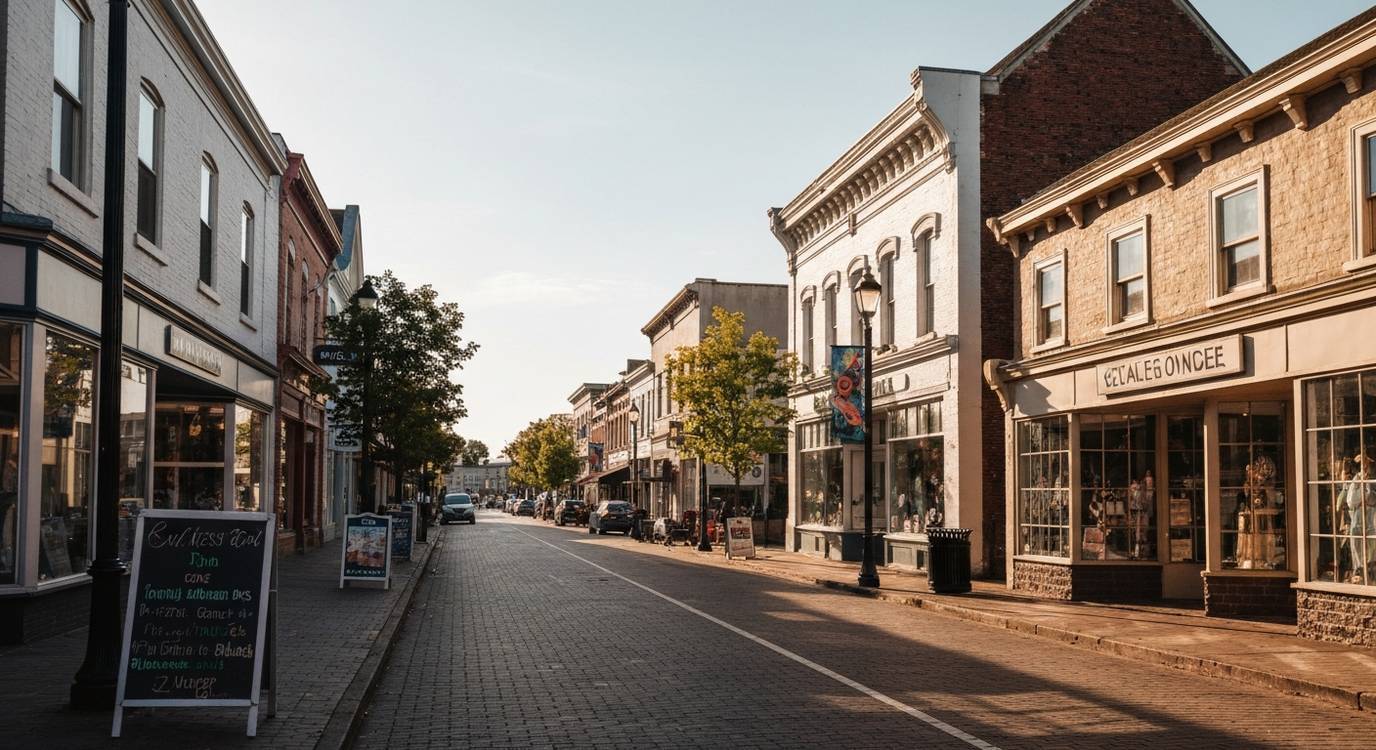
Rural Business Loans: The Complete Guide for Rural Small Business Owners
Running a small business in a rural community presents unique challenges and unique opportunities. Rural entrepreneurs often lack the proximity to major financial centers, commercial banks, and the dense population of customers and talent that urban business owners take for granted. At the same time, rural businesses often face less competition, benefit from tight-knit community support, and may qualify for specialized financing programs specifically designed to support economic development in underserved rural areas.
Rural business loans give small business owners in rural communities access to the working capital, equipment financing, real estate funding, and growth capital needed to build and sustain thriving enterprises outside major metropolitan areas. This complete guide covers every financing option available to rural small businesses in 2026 - including USDA programs, SBA options, and private commercial lenders - and how Crestmont Capital helps rural entrepreneurs access the capital they need.
In This Article
- What Are Rural Business Loans?
- Types of Rural Business Financing
- USDA Business Loan Programs
- Common Uses for Rural Business Capital
- How Crestmont Capital Helps Rural Businesses
- How to Qualify for Rural Business Loans
- Comparing Rural Financing Options
- Real-World Rural Financing Scenarios
- The Application Process
- How to Get Started
- Frequently Asked Questions
What Are Rural Business Loans?
Rural business loans are commercial financing products available to businesses located in or serving rural communities - generally defined by the USDA as areas with populations under 50,000 that are not adjacent to urban centers. They include standard commercial financing products (working capital loans, equipment financing, SBA loans) as well as specialized programs administered by the USDA and other agencies specifically designed to promote rural economic development.
Rural businesses face specific financing challenges that urban businesses typically do not. Local banks in rural areas may be smaller and more conservative. Commercial real estate values may be lower, affecting collateral-based lending. Distance from financial centers can limit awareness of and access to national lenders and programs. And some industries prevalent in rural areas - agriculture, natural resources, tourism - have seasonal or volatile cash flow patterns that traditional underwriting struggles to accommodate.
According to the U.S. Small Business Administration, rural small businesses employ more than 50 million Americans and contribute significantly to regional economies. Federal programs from the USDA, SBA, and Treasury specifically target rural business development because access to capital in these communities has historically lagged behind urban and suburban markets.
Rural Business by the Numbers: Rural areas make up 97% of U.S. land area and are home to approximately 46 million Americans. Rural small businesses generate over $1 trillion in annual revenue but receive a disproportionately small share of total small business lending relative to their economic contribution. Multiple federal and state programs have been created specifically to close this capital access gap.
Types of Rural Business Financing
Rural businesses have access to both standard commercial financing and rural-specific government programs. Here are the most relevant options.
USDA Business Programs
The USDA offers several programs specifically designed for rural businesses. The USDA Business and Industry (B&I) Guaranteed Loan Program provides government-guaranteed loans through commercial lenders for rural businesses. The USDA Rural Energy for America Program (REAP) funds renewable energy and energy efficiency investments. The USDA Community Facilities Program funds essential community services in rural areas. These programs are described in more detail in the USDA section below.
SBA Loans
SBA 7(a) loans are available to rural businesses on the same terms as urban businesses. The SBA does not restrict its programs geographically, meaning rural small businesses can access the same competitive rates and long repayment terms as any other qualifying small business. SBA loans are often the best conventional financing option for rural businesses making major investments.
Working Capital Loans
Working capital loans provide fast, flexible capital for rural business operations - covering inventory, payroll, seasonal gaps, marketing, and operational needs. Alternative lenders like Crestmont Capital provide these loans online regardless of geographic location, making them accessible to rural businesses that may lack a nearby commercial bank willing to serve their needs.
Equipment Financing
Equipment financing is particularly important for rural businesses, where heavy equipment, agricultural machinery, manufacturing tools, and commercial vehicles represent significant capital investments. Equipment serves as collateral, making this product accessible even to rural businesses with limited conventional credit history.
Business Lines of Credit
A business line of credit provides rural businesses with revolving access to capital for ongoing operational needs. This is particularly valuable for seasonal rural businesses - agricultural suppliers, tourism operators, recreational businesses - that need capital during slow periods and have strong cash flow during peak seasons.
Commercial Real Estate Loans
For rural businesses purchasing or improving commercial real estate - a farm supply store, a motel, a grain elevator, a rural manufacturing facility - commercial real estate loans and SBA 504 loans provide longer-term financing matched to the productive life of the real property asset.
Ready to Fund Your Rural Business?
Working capital, equipment financing, and SBA loans for rural small businesses. Apply in minutes with no obligation.
Apply Now →USDA Business Loan Programs
The USDA administers several business financing programs specifically targeted at rural economic development. Understanding these programs can significantly reduce the cost and improve the terms of financing for qualifying rural businesses.
USDA Business and Industry (B&I) Guaranteed Loan Program
The B&I program provides government guarantees to commercial lenders making loans to rural businesses. The guarantee reduces lender risk, enabling loans that might not otherwise be available and at more favorable terms than conventional commercial financing. Loan amounts can reach $25 million (higher for exceptional cases), with repayment terms up to 30 years for real estate, 15 years for machinery and equipment, and 7 years for working capital. Eligible uses include business acquisitions, working capital, equipment, real estate, and debt refinancing.
USDA Rural Energy for America Program (REAP)
REAP provides grants and loan guarantees for rural small businesses and agricultural producers making renewable energy or energy efficiency investments. Grants can cover up to 50% of eligible project costs. Loan guarantees go up to $25 million. For rural businesses considering solar, wind, energy efficiency upgrades, or EV charging infrastructure, applying for REAP before pursuing private financing can dramatically reduce the borrowing requirement.
USDA Community Facilities Direct Loan and Grant Program
This program funds essential community facilities in rural areas - health clinics, fire stations, community centers, libraries, and other public services. Small businesses providing essential services in rural communities may find this program relevant for facility investments.
USDA Intermediary Relending Program
This program provides low-interest loans to intermediary organizations (community development financial institutions, revolving loan funds) which then re-lend the funds to rural businesses. Rural businesses in communities with active CDFIs may access capital through this program at below-market rates.
Common Uses for Rural Business Capital
Here are the most common ways rural small businesses put financing to work.
Equipment and Machinery
Rural businesses across many sectors - agriculture, construction, manufacturing, transportation, forestry - depend on expensive equipment. Equipment financing allows rural businesses to acquire the machinery needed for their operations without depleting operating cash. As Forbes notes, equipment is the most common collateral-backed financing need across all rural business categories.
Building or Purchasing Commercial Real Estate
Rural commercial real estate - whether a feed store, a gas station with repair shop, a rural hotel, or a manufacturing facility - may have lower values than urban properties but still represents significant capital investment. SBA 504 loans and USDA B&I guaranteed loans provide favorable long-term financing for rural real estate purchases and improvements.
Managing Seasonal Cash Flow Gaps
Many rural businesses are highly seasonal - ski resorts, summer recreation businesses, agricultural supply stores, seasonal food processing operations. A business line of credit or working capital loan provides the capital to maintain operations and staff through off-season months while revenue is concentrated in peak seasons.
Expanding to Meet Growing Demand
Rural businesses that successfully serve local demand often find they cannot expand quickly enough to capture all available market opportunity without financing. A working capital loan or term loan funds the expansion investment - additional staff, more inventory, expanded facilities - that allows the business to grow with the local economy.
Technology and Digital Presence
Rural businesses increasingly need digital infrastructure to compete - e-commerce capabilities, digital marketing, modern POS systems, booking platforms for hospitality businesses, and reliable internet connectivity. Working capital financing funds these technology investments that connect rural businesses to broader markets beyond their immediate geography.
Acquiring an Established Rural Business
In rural communities, when an established business owner retires or wants to exit, there may be no local buyer with the capital to acquire the business. SBA acquisition loans allow buyers with limited capital to purchase established rural businesses with existing customers, staff, and community relationships - preserving economic activity in the community and creating a pathway to business ownership for local entrepreneurs. Our guide on business acquisition loans covers rural business acquisition strategies.
How Crestmont Capital Helps Rural Businesses
Crestmont Capital is the #1 rated business lender in the United States, offering commercial financing to businesses in every state and community - including rural areas that may be underserved by traditional local banking institutions.
As an online lender, Crestmont Capital serves rural businesses without requiring physical branch proximity. Our application process is entirely online, our advisors work by phone and video, and our funding process deposits capital directly into your business bank account regardless of your location. For rural businesses that struggle to access adequate financing from local community banks, Crestmont Capital provides a national-scale alternative with competitive products and fast service.
Financing products for rural businesses through Crestmont Capital include:
- Working Capital Loans - Up to $5 million, funded in as little as 24 hours
- Business Lines of Credit - Revolving capital for seasonal and operational needs
- Equipment Financing - For all types of commercial and agricultural equipment
- SBA Loans - Competitive long-term rates for growth and real estate
- Commercial Real Estate Loans - For rural commercial property purchases
- Revenue-Based Financing - Flexible repayment aligned with seasonal revenue patterns
Why Crestmont Capital: Same-day decisions on many applications. Transparent pricing. Online process accessible from anywhere. Apply at crestmontcapital.com in minutes - no branch visit required.
Get Your Rural Business Funded Today
Working capital, equipment financing, SBA loans for rural businesses. No branch visit required. Apply online today.
Apply Now →
How to Qualify for Rural Business Loans
Qualification requirements vary by program and lender. Here is what most rural business lenders evaluate.
Location Eligibility for Government Programs
USDA programs require the business to be located in a rural area as defined by the USDA - generally communities with populations under 50,000 that are not adjacent to an urbanized area. The USDA provides an online eligibility checker where businesses can verify their eligibility for specific programs based on their address.
Annual Revenue
Most working capital and equipment financing products require at least $100,000 in annual revenue. USDA B&I loans have higher minimum requirements and are often suited for larger established rural businesses. SBA loans vary by program. Alternative lenders like Crestmont Capital can work with smaller revenue profiles, particularly when strong collateral exists.
Credit Score
A personal credit score of 650 or above opens access to most rural business financing products. USDA B&I and SBA loans typically require 680 or higher. Equipment financing can be more credit-flexible. According to CNBC, rural businesses with strong real estate or equipment collateral often qualify for better loan terms than their credit score alone would suggest.
Time in Business
Most conventional lenders prefer two or more years of operating history. Alternative lenders can work with businesses as young as six months. USDA programs may have specific requirements - the B&I program generally requires the business to be established and financially viable, with startup financing typically accessed through other channels.
Business Plan and Financial Projections
For larger loans - particularly USDA B&I loans and SBA loans above $350,000 - lenders typically require a business plan with financial projections, tax returns, and detailed use of funds documentation. Rural businesses should work with a local SBDC (Small Business Development Center) if they need assistance preparing these documents.
Comparing Rural Business Financing Options
| Product | Best For | Typical Amount | Funding Speed |
|---|---|---|---|
| Working Capital Loan | Operations, inventory, seasonal gaps | $25K - $5M | 1-3 days |
| Equipment Financing | Machinery, vehicles, commercial equipment | $10K - $2M+ | 2-5 days |
| SBA 7(a) Loan | Growth, acquisitions, real estate | $50K - $5M | 30-90 days |
| USDA B&I Loan | Larger rural business investments | Up to $25M | 60-180 days |
| USDA REAP Grant/Loan | Renewable energy, energy efficiency | Grant up to 50% + loan guarantee | 60-120 days |
| Line of Credit | Seasonal operations, ongoing needs | $10K - $500K | 2-5 days |
Real-World Rural Business Financing Scenarios
These six scenarios reflect situations rural business owners commonly face when seeking financing.
Scenario 1: The Rural Hardware Store Upgrading Inventory
A family-owned hardware store in a small Midwestern town wants to expand its inventory to include more home improvement products as housing construction picks up in the area. A $85,000 working capital loan funds the inventory expansion. The additional product lines generate $230,000 in new annual revenue, and the store becomes the primary hardware destination for a larger geographic area. Without financing, the inventory investment would have taken three years to fund organically from profits.
Scenario 2: The Rural Motel Upgrading Rooms
A 24-room motel in a rural tourism corridor wants to renovate its dated rooms to capture travelers who currently drive past to chain properties 40 miles away. A $195,000 SBA 7(a) loan funds the renovation over 7 years. Post-renovation occupancy increases from 52% to 76%, and the average daily rate improves from $68 to $89. Annual revenue increases by $210,000, easily servicing the SBA loan and generating the best financial performance in the property's history.
Scenario 3: The Small-Town Grocery Using USDA B&I
The only grocery store in a rural county of 8,200 people wants to expand its store and add a deli counter to better serve the community. The $1.4M expansion is financed through a USDA B&I guaranteed loan, which provides a government guarantee that enables the local community bank to offer a favorable rate and 15-year term. The expanded store reduces the need for community members to drive 35 miles to a larger city for grocery shopping, keeping economic activity in the local community.
Scenario 4: The Rural Manufacturer Adding a Production Line
A specialty food manufacturer in a rural area has a contract to supply a regional grocery chain but needs to add a second production line to meet the volume requirements. Equipment financing covers the $320,000 production line over 60 months. The manufacturing expansion creates 8 new jobs in the community and generates $850,000 in new annual revenue, making the business one of the largest private employers in the county.
Scenario 5: The Rural Tourism Business Using REAP for Solar
A rural outdoor recreation resort wants to install a 120kW solar array to reduce electricity costs and market itself as a sustainable destination. USDA REAP provides a grant covering 25% of the $380,000 project cost ($95,000). Equipment financing covers the remaining $285,000. The 30% federal ITC ($114,000) further reduces the net investment. Annual electricity savings of $68,000 produce a 4-year payback on the remaining net investment, after which the solar system generates pure savings for the remainder of its 25-year life. Our guide on solar business financing covers this type of combined public-private green investment in detail.
Scenario 6: The Rural Entrepreneur Buying a Retiring Owner's Business
A longtime employee of a rural auto repair shop wants to buy the business from the retiring owner, who has operated it for 28 years. The business has $680,000 in annual revenue, three employees, and established community relationships. The purchase price is $420,000. An SBA 7(a) acquisition loan structures the purchase over 10 years. The new owner continues serving the community with the same trusted mechanics while building equity in a business with a proven track record.
The Application Process for Rural Business Loans
Applying for conventional rural business financing through Crestmont Capital is identical to the process for any small business - our online platform is accessible from anywhere in the country.
For Private Commercial Financing (Crestmont Capital)
Have these ready: three to six months of business bank statements, a government-issued ID, and basic business information. For equipment financing, have a vendor quote. For larger loans, two years of business tax returns and a P&L. Complete the online application at offers.crestmontcapital.com/apply-now. No branch visit required.
For USDA Programs
USDA B&I loans and REAP applications are submitted through USDA Rural Development state offices and approved commercial lenders. Start by contacting your state's USDA Rural Development office to understand current program availability, eligibility, and the application process. USDA programs typically require more documentation than conventional commercial loans, including business plans, environmental reviews, and community impact assessments.
For SBA Programs
SBA loans are available through SBA-approved lenders including community banks, credit unions, and online lenders. Rural businesses should contact their local SBA District Office or work with an SBA-approved lender to identify the right program and navigate the application process. SBDCs (Small Business Development Centers) provide free assistance to rural businesses preparing SBA loan applications.
How to Get Started
Complete our quick application at offers.crestmontcapital.com/apply-now - takes just a few minutes with no credit impact. No branch visit required.
Contact your local USDA Rural Development office and SBA District Office to identify programs you may qualify for. Your local SBDC can help at no cost.
Receive your capital and invest in your rural business - often within 24-48 hours for conventional working capital products.
Ready to Finance Your Rural Business?
Working capital, equipment loans, SBA financing - Crestmont Capital serves rural businesses nationwide. No branch visit needed. Apply today.
Apply Now →Frequently Asked Questions
Conclusion
Rural business loans give small business owners in rural communities the capital to compete, grow, and build sustainable enterprises outside major metropolitan areas. Between conventional commercial financing products, SBA loans, and specialized USDA programs, rural entrepreneurs have more capital access options than many realize - particularly for energy investments, larger growth projects, and community-serving businesses.
Crestmont Capital serves rural businesses nationwide through our online lending platform, providing working capital, equipment financing, and SBA loan access without requiring proximity to a bank branch. Whether you need fast working capital for operations or a longer-term loan to expand your rural business, apply today and invest in the community you serve.
Disclaimer: The information provided in this article is for general educational purposes only and is not financial, legal, or tax advice. Funding terms, qualifications, and product availability may vary and are subject to change without notice. Crestmont Capital does not guarantee approval, rates, or specific outcomes. For personalized information about your business funding options, contact our team directly.








