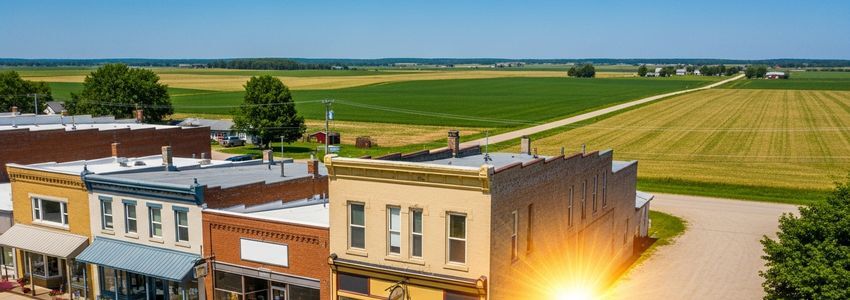
For entrepreneurs in the heartland of America, the dream of starting or expanding a business comes with a unique set of challenges and opportunities. Rural economies, while rich in potential, often have limited access to the traditional capital that fuels urban enterprises. This is where specialized rural business loans become a critical lifeline. From sprawling agricultural operations to main street boutiques, securing the right financing is the key to unlocking growth, creating jobs, and revitalizing communities.
This comprehensive guide is designed for the driven rural entrepreneur. We will explore the full spectrum of financing options available, with a deep dive into government-backed programs like USDA business loans and SBA loans, as well as flexible alternatives from private lenders. Whether you're looking to purchase new equipment, acquire commercial real estate, or simply boost your working capital, understanding this landscape is your first step toward success. At Crestmont Capital, we specialize in connecting businesses like yours with the funding they need to thrive, no matter their zip code.
Table of Contents
- Understanding the Landscape of Rural Business Financing
- The Cornerstone of Rural Funding: USDA Business Loans
- SBA Loans: A Powerful Alternative for Rural Businesses
- Alternative and Private Lending Solutions for Rural Entrepreneurs
- Key Industries Thriving with Rural Business Loans
- Preparing Your Loan Application: A Checklist for Success
- Frequently Asked Questions About Rural Business Loans
- Conclusion: Partnering for Success in Rural America
Understanding the Landscape of Rural Business Financing
Financing a business in a rural area isn't the same as in a bustling metropolis. The economic dynamics are different, and so are the financing solutions. Rural entrepreneurs often face a "capital gap" where local banks may be more conservative or have fewer resources, and large national banks may not understand the local market. This is why specialized financing programs exist - to bridge this gap and foster economic prosperity outside of major urban centers.
Common challenges for rural businesses include:
- Lower Population Density: A smaller customer base can make it harder to demonstrate high revenue potential to traditional lenders.
- Geographic Isolation: Distance from major supply chains and markets can increase operational costs.
- Seasonal Economies: Businesses in tourism or agriculture often experience significant fluctuations in cash flow, which can be a red flag for some lenders.
- Limited Access to Traditional Banks: The ongoing consolidation in the banking industry has led to fewer community bank branches in rural areas, reducing personal relationships and access to capital.
However, these challenges are matched by incredible opportunities. Rural America is the backbone of key industries like agriculture, energy, and manufacturing. There's a growing movement towards local sourcing, eco-tourism, and remote work, all of which create new avenues for rural entrepreneurship. Government-backed programs and innovative private lenders like Crestmont Capital recognize this potential and have developed products specifically designed to support it. These programs often offer more flexible terms, lower down payments, and longer repayment periods than conventional loans, making them an ideal fit for the unique rhythm of the rural economy.
The Cornerstone of Rural Funding: USDA Business Loans
When discussing rural financing, the United States Department of Agriculture (USDA) is the most important name to know. While often associated with farming, the USDA's Rural Development mission extends far beyond agriculture. It aims to improve the economy and quality of life in all of rural America. The primary way it achieves this for businesses is through its various loan guarantee programs, which form the bedrock of rural commercial lending.
What Are USDA Business Loans? An Overview
A common misconception is that the USDA lends money directly to businesses. In most cases, this is not true. Instead, the USDA provides a government guarantee on loans made by approved private lenders (like the partners Crestmont Capital works with). This guarantee acts as a form of insurance for the lender, reducing their risk. If the borrower defaults, the USDA covers a significant portion of the lender's loss (typically 60-80%).
This reduction in risk incentivizes lenders to approve loans they might otherwise deny. It allows them to offer more favorable terms, such as:
- Higher loan amounts
- Longer repayment periods
- Lower down payment requirements
- More flexible collateral options
The goal is to stimulate private investment and credit availability in rural communities, creating a ripple effect of job creation and economic growth.
Deep Dive into the Business & Industry (B&I) Guaranteed Loan Program
The flagship program for rural businesses is the Business & Industry (B&I) Guaranteed Loan Program. This is the workhorse of USDA business lending, designed to support a wide array of commercial ventures in rural areas.
Purpose: The B&I program's mission is to "improve, develop, or finance business, industry, and employment and improve the economic and environmental climate in rural communities." This broad mandate allows for a wide range of uses.
Eligible Borrowers: Eligibility is quite broad and includes for-profit businesses, non-profits, cooperatives, federally-recognized tribes, and public bodies.
Eligible Areas: The definition of "rural" is key. For the B&I program, this generally includes all areas other than cities or towns with a population of 50,000 or more and the urbanized areas contiguous and adjacent to such cities or towns. You can check a specific address for eligibility using the USDA's official property eligibility map.
Use of Funds: B&I loan proceeds can be used for almost any legitimate business purpose, including:
- Business conversion, enlargement, repair, or modernization.
- Purchase and development of land, easements, buildings, and facilities.
- Purchase of equipment, machinery, supplies, or inventory.
- Startup costs and working capital.
- Processing and marketing facilities.
- Debt refinancing (under certain conditions).
Loan Amounts, Terms, and Rates:
- Amounts: Typically up to $25 million, with larger amounts possible for specific projects that support rural development priorities.
- Terms: Repayment terms are generous and based on the use of funds. Up to 30 years for real estate, 15 years for machinery and equipment, and 7 years for working capital.
- Interest Rates: Rates are negotiated between the borrower and the lender and can be fixed or variable. The USDA guarantee helps keep these rates competitive.
Guarantee Percentage: The USDA guarantee amount varies by loan size:
- 80% for loans up to $5 million
- 70% for loans between $5 million and $10 million
- 60% for loans over $10 million
Exploring Other Key USDA Loan Programs for Rural Entrepreneurs
While the B&I program is the most common, the USDA offers several other specialized programs that can be a perfect fit for certain rural businesses:
- Rural Energy for America Program (REAP): This program provides guaranteed loan financing and grant funding to agricultural producers and rural small businesses for renewable energy systems or to make energy efficiency improvements. This is ideal for businesses looking to install solar panels, wind turbines, or upgrade their HVAC and lighting to reduce costs.
- Rural Economic Development Loan & Grant (REDLG): The REDLG program provides funding to rural projects through local utility organizations. A utility can receive a zero-interest loan from the USDA, which it then passes on to a local business for projects that will create and retain employment in rural areas.
- Rural Microentrepreneur Assistance Program (RMAP): Designed for the smallest of businesses, RMAP provides loans and grants to Microenterprise Development Organizations (MDOs). These MDOs then provide microloans (under $50,000) and technical assistance to rural microentrepreneurs and microenterprises with 10 or fewer employees.
- Intermediary Relending Program (IRP): Similar to RMAP, the IRP provides low-interest loans to non-profit intermediaries. These intermediaries then use the funds to establish a revolving loan fund, making loans to businesses in their local rural communities.
How to Apply for a USDA Business Loan: A Step-by-Step Guide
Navigating the application process for a USDA business loan can seem daunting, but it's manageable when broken down into clear steps. Since the USDA guarantees the loan, you will be working directly with an approved lender throughout the process.
- Determine Eligibility: First, confirm that your business and its location meet the USDA's criteria. Use the official USDA eligibility maps to verify your address is in a qualified rural area. Then, review the specific requirements for the program you're interested in, such as the B&I program.
- Find an Approved Lender: Not all banks or lenders are experienced in processing USDA loans. It's crucial to work with a lender who understands the program's specific requirements and paperwork. Crestmont Capital partners with a network of experienced lenders and can help guide you to the right financing partner.
- Prepare Your Business Plan and Financial Projections: This is the heart of your application. Your business plan must be comprehensive, detailing your operations, market analysis, management team, and how the loan will help you succeed. You'll also need detailed financial projections showing how you'll be able to repay the loan.
- Gather Required Documentation: You will need to assemble a significant amount of paperwork. This typically includes several years of business and personal tax returns, current financial statements (profit and loss, balance sheet), a business debt schedule, and personal financial statements for all owners.
- Submit Your Application Through the Lender: You will submit your complete loan package to your chosen lender. They will perform their own underwriting first, just as they would for a conventional loan.
- Lender's Review and USDA Approval: If the lender approves your application, they will then submit it to the USDA for the guarantee. The USDA will conduct its own review to ensure the project meets its rural development goals and that all program requirements are met. This two-step approval process means the timeline can be longer than for a conventional loan, so it's important to plan ahead.
Ready to Explore Your USDA Loan Options?
Don't navigate the complexities of USDA financing alone. The experts at Crestmont Capital can help you determine your eligibility and connect you with the right lending partner. Get started today.
Apply NowSBA Loans: A Powerful Alternative for Rural Businesses
While the USDA focuses exclusively on rural areas, the U.S. Small Business Administration (SBA) offers loan guarantee programs to small businesses nationwide, including those in rural communities. For many rural entrepreneurs, an SBA loan can be an excellent alternative or a complementary financing tool. Like the USDA, the SBA guarantees a portion of the loan, encouraging lenders to provide financing with better terms than they might offer on their own.
The Versatile SBA 7(a) Loan Program
The SBA 7(a) is the agency's most popular and flexible loan program. Its versatility makes it suitable for a wide range of business needs, which is particularly beneficial for the diverse economies found in rural areas.
Use of Funds: The 7(a) program is a true workhorse. Proceeds can be used for:
- Long- and short-term working capital
- Purchasing equipment, machinery, furniture, fixtures, and supplies
- Acquiring real estate, including land and buildings - Construction of new buildings or renovation of existing ones
- Establishing a new business or assisting in the acquisition, operation, or expansion of an existing business
- Refinancing existing business debt
Loan Amounts: The maximum loan amount for a 7(a) loan is $5 million. The SBA's guarantee percentage can be up to 85% for loans of $150,000 or less and 75% for loans greater than $150,000.
Benefits for Rural Businesses: The flexible use of funds and long repayment terms (up to 25 years for real estate, 10 years for equipment and working capital) make the 7(a) loan an attractive option. For a rural business needing a combination of working capital and an equipment upgrade, the 7(a) can cover both in a single loan.
SBA 504 Loans for Major Fixed Assets
The SBA 504 Loan Program is specifically designed for businesses looking to finance major fixed assets, such as land, buildings, and long-term equipment. This program is an economic development tool that fosters growth and job creation, making it a perfect fit for rural communities looking to attract or expand significant business operations.
Structure: The 504 loan has a unique structure, splitting the project cost among three parties:
- A conventional lender (like a bank) finances about 50% of the project cost.
- A Certified Development Company (CDC), which is a non-profit partner of the SBA, finances up to 40% of the cost. This portion is backed by a 100% SBA-guaranteed debenture.
- The borrower contributes a down payment of as little as 10%.
Benefits: This structure provides two major advantages: a low down payment and long-term, fixed-rate financing for the CDC portion of the loan. With repayment terms of 10, 20, or 25 years, businesses can secure predictable, affordable payments for their largest assets, freeing up cash flow for other operational needs. This is ideal for a rural manufacturer building a new plant or a hospitality business constructing a new hotel.
SBA Microloans: Fueling the Smallest Rural Ventures
For startups and very small businesses, the SBA Microloan program can provide the seed capital needed to get off the ground. These loans are smaller in size but can have a huge impact.
Loan Amounts: The program provides loans up to $50,000, with the average loan being around $13,000.
How it Works: The SBA provides funds to specially designated intermediary lenders, which are nonprofit community-based organizations with experience in lending and technical assistance. These intermediaries administer the program and make loans directly to small businesses. This local, community-based approach is often very effective in reaching entrepreneurs in underserved rural areas.
Use of Funds: Microloan proceeds can be used for working capital, inventory or supplies, furniture or fixtures, and machinery or equipment.
USDA vs. SBA Loans: Which is Right for Your Rural Business?
Choosing between a USDA and an SBA loan depends entirely on your specific situation. Neither is definitively "better" - they are simply different tools for different jobs. Here's a comparison to help you decide:
| Feature | USDA B&I Loans | SBA 7(a) Loans |
|---|---|---|
| Geographic Focus | Strictly for businesses in designated rural areas (pop. <50,000). | Nationwide, for any U.S. small business, including rural. |
| Maximum Loan Amount | Typically $25 million, can be higher. | $5 million. |
| Eligible Borrowers | For-profits, non-profits, co-ops, tribes, public bodies. Broader eligibility. | Strictly for-profit small businesses that meet SBA size standards. |
| Typical Use Case | Large-scale projects, business acquisitions, and real estate development that directly impacts the rural economy. | Highly flexible, all-purpose business financing for working capital, equipment, and real estate. |
| Key Advantage | Higher loan limits and a specific focus on rural community development. | Broad flexibility in use of funds and nationwide availability. |
Ultimately, the best approach is to work with a knowledgeable lending advisor who can assess your project and guide you to the program that offers the best fit and the highest chance of approval. Often, your business may qualify for both, giving you and your lender the flexibility to choose the path of least resistance.
Rural America by the Numbers
Understanding the scale and impact of rural economies highlights the importance of dedicated financing. Here are some key statistics:
- Rural counties account for 76% of the nation's land area but only 14% of the population. (Source: USDA ERS)
- In Fiscal Year 2023, the USDA's Business & Industry Loan Guarantee Program supported over $2.1 billion in loans, helping to create or save nearly 18,000 jobs.
- Small businesses make up over 99% of all businesses in the United States and are the lifeblood of local rural economies. (Source: SBA Office of Advocacy)
- Agriculture, forestry, fishing, and hunting account for a larger share of earnings in rural counties, underscoring the need for industry-specific financing.
Alternative and Private Lending Solutions for Rural Entrepreneurs
While government-backed loans are powerful, they aren't always the right solution for every business or every situation. The application processes can be lengthy and documentation-heavy. Sometimes, a business needs funding quickly to seize an opportunity, or perhaps its profile doesn't perfectly align with USDA or SBA requirements. In these cases, alternative and private lending solutions from companies like Crestmont Capital can be a game-changer.
Traditional Term Loans from Private Lenders
A traditional term loan is one of the most straightforward forms of business financing. You receive a lump sum of capital upfront and repay it, plus interest, over a fixed period with regular, predictable payments. Private lenders often have a more streamlined application and underwriting process than government-backed programs.
- Pros: The speed and simplicity of a term loan are its biggest advantages. Funding can often be secured in days or weeks, not months. The predictable payment schedule also makes budgeting easier.
- Best For: Businesses with a specific, one-time investment need, such as a major equipment purchase, a facility expansion, or a business acquisition, who need to move faster than the government-guaranteed loan process allows.
Equipment Financing for Rural Industries
For many rural industries - agriculture, manufacturing, construction, transportation - the right equipment is everything. Equipment financing is a specialized type of loan where the equipment being purchased serves as its own collateral. This makes it one of the most accessible forms of financing.
- How it Works: The lender provides the funds to purchase the equipment, and they hold a lien on that asset until the loan is paid off. Because the loan is secured by a hard asset, credit requirements can be more flexible.
- Benefits: This financing method allows you to preserve your working capital for other needs instead of tying it up in a large cash purchase. It's an effective way to acquire revenue-generating assets without draining your bank account. Furthermore, you may be able to deduct the full purchase price of the equipment in the year it's put into service under the Section 179 tax deduction, providing a significant tax benefit.
Business Lines of Credit: Flexible Funding for Ongoing Needs
Rural businesses, especially those with seasonal revenue streams, often need flexible access to capital rather than a large, one-time lump sum. A business line of credit is the perfect tool for managing cash flow and handling unexpected expenses or opportunities.
- How it Works: A lender approves you for a specific credit limit. You can draw funds from this line as needed, up to your limit. You only pay interest on the amount you've drawn, not the total limit. As you repay the principal, your available credit is replenished.
- Use Cases for Rural Businesses: A tourism-based business could use a line of credit to purchase inventory and hire staff before the busy season begins. A farm could use it to cover equipment repairs during harvest. It provides a crucial financial safety net for the unpredictable nature of many rural enterprises.
Working Capital Loans for Day-to-Day Operations
Sometimes, you just need a short-term cash injection to cover the day-to-day costs of doing business. Working capital loans are designed for exactly this purpose. They provide funds to cover payroll, rent, inventory, marketing, and other operational expenses.
- Key Feature: Speed is the defining characteristic. The application and funding process for a working capital loan is typically very fast, as lenders focus more on your business's recent cash flow and revenue than on long-term financials or hard collateral.
- Best For: Bridging a temporary cash flow gap, capitalizing on a bulk-purchase discount from a supplier, or funding a new marketing campaign to drive growth. They are a tactical tool for managing the immediate financial health of your business.
Need Funding Fast?
If the timeline for a government-backed loan doesn't fit your needs, Crestmont Capital's alternative lending solutions can provide the capital you need in a fraction of the time. See how much you qualify for.
Get a Quick QuoteKey Industries Thriving with Rural Business Loans
Rural business loans are not a one-size-fits-all product. They are the financial engine behind a diverse range of industries that form the backbone of rural America. Understanding how these loans are applied in practice can illuminate the possibilities for your own business.
Agriculture and Agribusiness
While the USDA's Farm Service Agency (FSA) handles traditional farm operating loans, the Rural Development programs like B&I are crucial for value-added agriculture. This means financing projects that go beyond simply growing crops or raising livestock. Examples include funding for a dairy farm to build a cheese-making facility, a vineyard to open a tasting room and event center, or a grain cooperative to construct a new processing plant.
Manufacturing and Light Industry
Rural areas often offer advantages for manufacturing, including lower land costs and a dedicated workforce. Rural business loans are essential for these enterprises to thrive. A company might use an SBA 504 loan to build a new factory, equipment financing to purchase state-of-the-art CNC machines, or a B&I loan to expand an existing facility and add a new production line, creating dozens of local jobs.
Hospitality, Tourism, and Recreation
Many rural economies are powered by their natural beauty and recreational opportunities. Financing is key to developing the infrastructure that supports this tourism. This could involve a term loan to purchase a fleet of rafts for a river guide company, a B&I loan to construct a new lodge near a national park, or a line of credit for a bed & breakfast to renovate its rooms during the off-season.
Renewable Energy and Sustainable Projects
With abundant land and natural resources, rural America is at the forefront of the renewable energy revolution. The USDA's REAP program is specifically designed to fund these projects. A rural business could use a REAP loan and grant combination to install a large solar array on its roof, cutting utility costs and selling excess power back to the grid. A group of farmers might secure financing to develop a community-owned wind farm.
Main Street Businesses and Local Services
The health of any rural community depends on its core "Main Street" businesses. These are the grocery stores, auto repair shops, healthcare clinics, pharmacies, and restaurants that provide essential goods and services. A USDA or SBA loan can be used to help a young doctor open a new practice in an underserved town, finance the acquisition of a retiring owner's hardware store, or provide the working capital for a local grocer to expand their selection of fresh produce.
Preparing Your Loan Application: A Checklist for Success
Securing a business loan, especially a government-backed one, requires thorough preparation. A well-prepared application not only increases your chances of approval but also signals to lenders that you are a serious, organized, and reliable borrower. A strong application package is your opportunity to tell the story of your business and its potential.
Crafting a Compelling Business Plan
Your business plan is the narrative of your company. It should be clear, concise, and realistic. For a rural business loan, it's particularly important to address the unique context of your market. Your plan should include:
- Executive Summary: A brief, powerful overview of your entire plan.
- Company Description: What your business does, its mission, and its legal structure.
- Market Analysis: A deep understanding of your industry, target market (including the specific dynamics of your rural community), and competitors.
- Organization and Management: Details about your team and their expertise.
- Service or Product Line: A clear description of what you sell.
- Marketing and Sales Strategy: How you will reach your customers.
- Funding Request: Exactly how much money you need, how you will use it, and how it will help your business grow. This should be specific and well-justified.
- Financial Projections: Detailed, month-by-month projections for at least the next 12 months, and annual projections for the following 3-5 years. These should include forecasted income statements, balance sheets, and cash flow statements.
Gathering Essential Financial Documents
Lenders will conduct a thorough review of your financial history to assess your ability to repay the loan. Being prepared with these documents will streamline the process. You will typically need:
- Business and Personal Tax Returns: Usually for the past 3 years.
- Business Financial Statements: Year-to-date and historical (past 3 years) Profit & Loss (P&L) statements and Balance Sheets.
- Business Bank Statements: At least 6 to 12 months of recent statements to show cash flow. Crestmont Capital offers a secure portal to upload your bank statements easily.
- Business Debt Schedule: A list of all current business debts, including lender, balance, and monthly payment.
- Personal Financial Statement: A signed statement for each owner with more than 20% equity in the business.
- Business Licenses and Legal Documents: Articles of incorporation, franchise agreements, etc.
Understanding Credit Scores and Their Impact
Your credit history is a critical factor in any lending decision. Lenders will look at both your personal credit score (FICO) and your business credit profile. A strong credit score demonstrates a history of responsible debt management. While government-backed loans can sometimes be more flexible than conventional loans, a higher credit score will always improve your chances and help you secure better interest rates. If your credit is less than perfect, it's wise to take steps to improve it before applying, such as paying down balances and correcting any errors on your report. That said, many alternative lenders can work with a wider range of credit profiles, so a low score doesn't necessarily mean you can't get funding.
The Importance of Collateral in Rural Lending
Collateral is an asset that you pledge to a lender to secure a loan. If you are unable to repay the loan, the lender has the right to seize the collateral to recoup their losses. Common forms of collateral include commercial real estate, equipment, inventory, and accounts receivable. For rural businesses, land and agricultural assets are also common forms of collateral. While government guarantees reduce the lender's risk, they do not eliminate the need for collateral. Lenders will still want to see that the loan is adequately secured. Be prepared to provide a detailed list of available collateral and its estimated value.
Let Us Guide You Through the Application Process
Feeling overwhelmed by the paperwork? The experienced team at Crestmont Capital can help you prepare a strong, complete loan application that showcases your business's potential. Partner with an expert today.
Contact UsFrequently Asked Questions About Rural Business Loans
What is considered a "rural area" by the USDA?
For most USDA Rural Development programs, including the B&I loan guarantee, a "rural area" is defined as any area other than a city or town with a population of 50,000 or more, and the urbanized areas adjacent to it. The USDA provides an official online eligibility map where you can enter a specific address to determine if it qualifies.
Can I get a USDA business loan for a startup?
Yes, startup businesses are eligible for USDA business loans, but the requirements are often more stringent. You will need an exceptionally detailed business plan, strong financial projections, and the owners will typically be expected to have relevant industry experience and contribute a significant amount of equity (cash injection) into the project.
What are the interest rates for USDA business loans?
The USDA does not set the interest rates. Rates are negotiated directly between the borrower and the private lender. They can be fixed or variable. Because the loan is backed by a government guarantee, the rates are typically very competitive and are often comparable to or slightly better than conventional loan rates.
How long does it take to get a rural business loan?
The timeline varies significantly. For government-backed loans like USDA and SBA loans, the process can take anywhere from 60 to 120 days or more, due to the two-step approval process (lender and then government agency). Alternative financing options like term loans or working capital loans from private lenders like Crestmont Capital can be much faster, with funding possible in as little as a few days to a few weeks.
Do I need perfect credit to qualify?
No, you do not need perfect credit, but a strong credit history is very important. Most lenders will look for a personal credit score of 680 or higher for USDA or SBA loans. However, the entire application is considered, including cash flow, collateral, and experience. Alternative lenders can often work with lower credit scores, but the rates may be higher.
Can I use a USDA loan to buy an existing business?
Yes, purchasing an existing business is an eligible use of funds for the USDA B&I program. This is a common way to ensure the continuity of essential businesses in rural communities when the original owner is ready to retire.
What's the difference between a loan guarantee and a direct loan?
A loan guarantee means a government agency (like the USDA or SBA) promises to repay a portion of the loan to the lender if the borrower defaults. The loan itself comes from a private bank or lender. A direct loan means the government agency lends the money directly to the borrower. Most major USDA and SBA business programs are loan guarantees, not direct loans.
Are there specific grants for rural businesses?
Yes, but they are less common than loans and are highly competitive. Programs like the USDA's Value-Added Producer Grants or the Rural Energy for America Program (REAP) offer grant components. However, most government support for for-profit businesses comes in the form of loan guarantees. It's best to check official government websites like grants.gov for current opportunities.
Can I refinance existing debt with a USDA or SBA loan?
Yes, debt refinancing is an eligible use of funds for both USDA B&I and SBA 7(a) loans, but there are specific conditions. Generally, you must demonstrate that the refinancing will improve the business's cash flow and that the new loan terms are better for the business. Refinancing is not allowed for debts that are already on reasonable terms.
What is the minimum down payment for a rural business loan?
The down payment, or equity injection, varies by program and project. For SBA 7(a) and USDA B&I loans, a down payment of 10-25% is common. For an SBA 504 loan, the down payment can be as low as 10%. For startups or businesses with less collateral, the lender may require a higher equity injection.
Are there loan programs for veteran-owned rural businesses?
Absolutely. Both the USDA and SBA have initiatives to support veteran entrepreneurs. While there may not be separate loan programs, veterans often receive priority processing and may have certain fees waived, for example, on SBA Express loans. Be sure to mention your veteran status to your lender.
Can I use a loan to purchase commercial real estate in a rural town?
Yes, purchasing owner-occupied commercial real estate is a primary use for many rural business loans. The USDA B&I, SBA 7(a), and especially the SBA 504 loan programs are all excellent options for financing the acquisition of buildings and land for your business operations.
What if my business is located in a small town but isn't a farm?
This is a common question. USDA Rural Development business loans are specifically for non-agricultural businesses. They are designed to support a diverse range of enterprises like manufacturing, retail, healthcare, hospitality, and services that create jobs and strengthen the local economy. Agricultural producers typically seek financing through the USDA's Farm Service Agency (FSA).
How does Crestmont Capital help with USDA or SBA loans?
Crestmont Capital acts as an expert financing advisor and facilitator. We leverage our extensive network of preferred USDA and SBA lenders to match your business with the right financial institution. We help you prepare your application, navigate the complex documentation requirements, and advocate on your behalf, significantly increasing your chances of a successful funding outcome. We also provide faster, alternative financing when a government-backed loan isn't the right fit.
What are the typical repayment terms for these loans?
Repayment terms are designed to match the economic life of the asset being financed. For real estate, terms can be up to 30 years for USDA loans and 25 years for SBA loans. For machinery and equipment, terms are typically 10-15 years. For working capital, terms are usually 7-10 years. These long repayment periods result in lower monthly payments, which helps improve business cash flow.
Can non-profits apply for USDA business loans?
Yes, non-profit organizations are eligible to apply for the USDA Business & Industry (B&I) Guaranteed Loan Program. This allows essential community organizations like rural hospitals, community centers, and other non-profits to access the capital they need for expansion and development projects that serve the rural population.
Conclusion: Partnering for Success in Rural America
The path of a rural entrepreneur is one of resilience, innovation, and community focus. While the challenges of accessing capital can be real, the array of available financing solutions - from robust USDA business loans and versatile SBA programs to fast and flexible alternative lending - is broader and more accessible than ever before. The key to unlocking this potential lies in understanding your options, preparing a thorough application, and, most importantly, working with a financial partner who understands the unique landscape of rural business.
At Crestmont Capital, we are more than just a lender; we are a partner dedicated to the success of American businesses, from the biggest cities to the smallest towns. We believe in the power and potential of rural entrepreneurs to build thriving enterprises that create jobs and enrich their communities. If you're ready to take the next step in your business journey, we're here to provide the expertise and the capital to help you succeed. Contact our team of financing specialists today to discuss your project and discover the best funding solution for your rural business.
Disclaimer: The information provided in this article is for general educational purposes only and does not constitute financial, legal, or professional advice. Loan programs, terms, and eligibility requirements are subject to change. Consult with a qualified financial advisor from Crestmont Capital to discuss your specific business needs and to obtain the most current information.

Allan Garfinkle
Allan Garfinkle is the Chief Revenue Officer at Crestmont Capital, where he has spent more than a decade leading revenue strategy, business development, and operational growth. With 28 years of experience building and advising startups and small businesses, Allan has helped more than 10,000 business owners navigate financing decisions, growth opportunities, and changing economic conditions. He earned a Bachelor of Science in Economics and an MBA with a concentration in Finance from Northeastern University, as well as a Juris Doctor from New England Law, where his studies focused on contracts and business law. His writing draws on extensive practical experience in small-business lending, equipment financing, business credit, and commercial finance.