
 (800) 949-0401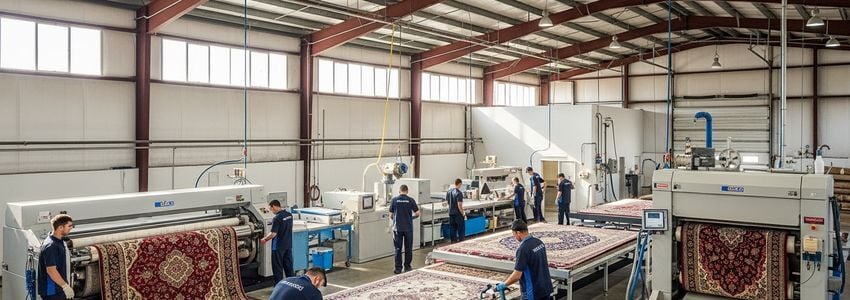
Rug Cleaning Business Loans: The Complete Financing Guide for Rug Cleaning Business Owners
The professional rug cleaning industry is a thriving and specialized sector, offering lucrative opportunities for diligent entrepreneurs. From handling delicate antique heirlooms to servicing large commercial clients, the demand for expert care is consistently high. However, scaling a rug cleaning business requires significant capital for specialized equipment, vehicles, marketing, and skilled technicians, which is where rug cleaning business loans provide the essential fuel for growth.In This Article
- The Rug Cleaning Industry at a Glance
- Why Rug Cleaning Businesses Need Financing
- Types of Business Loans for Rug Cleaning Businesses
- Equipment Financing for Rug Cleaning Businesses
- How to Qualify for a Rug Cleaning Business Loan
- The Loan Application Process
- How to Use Business Loan Funds
- Tips for Securing the Best Financing
- Frequently Asked Questions
The Rug Cleaning Industry at a Glance
The broader cleaning services industry in the United States is a massive economic force. According to market research from Grand View Research, the U.S. commercial cleaning services market alone was valued at over USD 88 billion in 2023 and is projected to grow steadily. Within this large market, specialty services like rug and carpet cleaning represent a significant and profitable niche. Homeowners and businesses are increasingly willing to invest in professional services to maintain and extend the life of expensive floor coverings, from high-traffic commercial carpets to priceless Oriental and Persian rugs. This demand creates a stable environment for business growth. Modern consumers understand that DIY methods can damage delicate fibers and fail to remove deep-set dirt and allergens. They seek out professionals with the right equipment, training, and solutions. This trend is further supported by the real estate market; regular professional cleaning is often a key part of property maintenance and staging for sale. For rug cleaning business owners, this translates into consistent revenue streams and the opportunity to build a loyal client base through high-quality service. As the industry evolves, so do the opportunities. Niche specializations such as eco-friendly cleaning, pet stain and odor removal, and antique rug restoration command premium prices. To capitalize on these trends, business owners need access to capital. Investing in the latest technology, expanding service areas, and marketing these specialized services are crucial steps for staying competitive. This is where strategic financing, such as flexible small business loans, becomes a powerful tool for capturing market share and building a dominant local or regional brand.Why Rug Cleaning Businesses Need Financing
Running a successful rug cleaning business involves much more than just cleaning solutions and a vacuum cleaner. It is a capital-intensive operation requiring specialized, often expensive, equipment and infrastructure to deliver professional results. For both new and established businesses, external financing is often the key to acquiring the necessary assets without depleting cash reserves. The initial and ongoing costs can be substantial, covering everything from powerful machinery to the vehicles needed to reach customers or transport rugs to a dedicated facility. The list of essential expenses is long. A high-quality, truck-mounted cleaning system, which provides superior heat and suction, can cost anywhere from $20,000 to $60,000. A dedicated cleaning facility requires investment in wash pits, centrifugal rug wringers, and climate-controlled drying rooms. Add to this the cost of a reliable work van, which can easily exceed $40,000. Beyond the heavy machinery, there are ongoing operational costs: premium cleaning chemicals, insurance, IICRC certification for technicians, payroll for skilled staff, and a robust marketing budget to attract a steady flow of clients. Without adequate funding, business owners are forced to make compromises that can hinder growth and service quality. They might rely on older, less efficient equipment, which can lead to longer job times and inferior results. They might be unable to hire enough technicians to meet demand, forcing them to turn down profitable jobs. A lack of marketing funds can make it impossible to compete with larger, more established players in the market. Rug cleaning business loans bridge this gap, providing the necessary capital to invest in the tools, team, and technology needed to operate efficiently, scale effectively, and build a reputation for excellence.Did You Know?
The professional cleaning industry generates over $61 billion annually in the United States, according to industry reports. Rug and specialty cleaning represents one of its fastest-growing segments.
Ready to Grow Your Rug Cleaning Business?
Get the funding you need to expand your fleet, upgrade equipment, and take on more clients.
Apply Now - Get Funded in 24 HoursTypes of Business Loans for Rug Cleaning Businesses
Navigating the world of business financing can seem complex, but understanding the primary loan types helps you choose the right product for your specific needs. Each financing option offers unique benefits, whether you need a large lump sum for a major expansion or flexible cash flow for daily operations. Here are the most common and effective rug cleaning business loans.Term Loans
A term loan is what most people picture when they think of a business loan. You receive a lump sum of capital upfront and repay it, plus interest, over a predetermined period with regular fixed payments. Term loans are ideal for large, planned investments with a clear return.- Short-Term Loans: With repayment terms typically under 18-24 months, short-term business loans are great for immediate needs like repairing a critical piece of equipment or seizing a bulk inventory discount on cleaning solutions. They often have faster approval times than long-term loans.
- Long-Term Loans: Ranging from 2 to 10 years or more, long-term business loans are suited for significant investments like purchasing a commercial property for your cleaning facility, a major fleet expansion, or acquiring a competitor.
Business Line of Credit
A business line of credit operates like a business credit card but with a higher limit and often better rates. You are approved for a maximum credit amount and can draw funds as needed, up to that limit. You only pay interest on the amount you use. Once you repay the drawn funds, your credit limit is replenished. Pros: Highly flexible, perfect for managing cash flow, only pay for what you use, readily available for emergencies. Cons: Interest rates can be variable, potential for inactivity fees if unused. Best Use Case: Covering payroll during a slow season, paying for unexpected vehicle repairs, or having a cash cushion for marketing opportunities.SBA Loans
SBA loans are partially guaranteed by the U.S. Small Business Administration, which reduces the risk for lenders. This often results in very favorable terms, including low interest rates and long repayment periods. The most common program is the SBA 7(a) loan, which can be used for a wide range of business purposes. Pros: Excellent interest rates and long terms, versatile use of funds. Cons: The application process is notoriously long and document-intensive, with strict qualification requirements. Best Use Case: Major business expansion, purchasing real estate, or refinancing existing high-interest debt.Equipment Financing
This type of financing is specifically designed for purchasing business machinery and equipment. The loan is secured by the equipment itself, which acts as collateral. This often makes it easier to qualify for than other types of loans, even for businesses with less-than-perfect credit. Pros: Easier to obtain, preserves working capital, the equipment serves as its own collateral, often offers 100% financing. Cons: Funds can only be used to purchase equipment, you don't own the equipment outright until the loan is paid off. Best Use Case: Purchasing a new centrifugal rug wringer, an automated dusting machine, or a complete truck-mounted cleaning system.Merchant Cash Advance (MCA)
An MCA is not a traditional loan but rather an advance on your future credit and debit card sales. A funder provides you with a lump sum of cash in exchange for a percentage of your daily sales until the advance is paid back, plus a fee. Pros: Very fast funding, accessible for businesses with poor credit or a limited operating history. Cons: Can be very expensive with high factor rates, daily payments can strain cash flow if sales fluctuate. Best Use Case: Emergency situations where fast cash is critical and other financing options are not available, such as a sudden equipment failure that halts operations.Rug Cleaning Business Loan Comparison
$5K-$250K
Typical Loan Range
24 hrs
Approval Time
600+
Min. Credit Score
6 mos
Min. Time in Business
$8K+
Monthly Revenue
2-10 yrs
Repayment Terms
See How Much You Qualify For
No hard credit pull. Get a funding estimate in minutes.
Check My OptionsEquipment Financing for Rug Cleaning Businesses
For a rug cleaning business, the quality of your equipment directly impacts the quality of your work, your efficiency, and your profitability. High-end, specialized equipment is the cornerstone of a professional operation, but it comes with a significant price tag. This is why equipment financing is one of the most popular and practical funding solutions in the industry. It allows you to acquire the best tools for the job without tying up your working capital, enabling you to grow your business's capabilities and revenue potential immediately. The range of equipment that can be financed is extensive. For businesses focusing on in-home services, a powerful truck-mounted hot water extraction system is essential. For those with a dedicated cleaning facility, the needs are even greater. This includes automated rug dusters that safely remove pounds of dry soil, large immersion wash pits for deep cleaning, and centrifugal rug wringers that remove up to 95% of water in minutes, drastically reducing drying time. Furthermore, climate-controlled drying rooms with industrial air movers and dehumidifiers are critical for preventing mold and ensuring rugs are returned to clients quickly. Even smaller tools like UV lights for pet urine detection, air scrubbers, and specialized upholstery cleaning tools can be bundled into an equipment financing package. The primary advantage of equipment financing is that the equipment you are purchasing serves as the collateral for the loan. This structure significantly reduces the risk for the lender, which in turn makes it easier for you to get approved, often with more favorable terms than an unsecured loan. This is particularly beneficial for newer businesses or owners with a limited credit history. By financing your equipment, you can put your new assets to work generating revenue right away, with the income from new jobs helping to cover the monthly loan payments. It is a smart, self-sustaining way to scale your operations and stay ahead of the competition.Pro Tip: Equipment as Collateral
Many equipment financing agreements use the equipment itself as collateral, which means lower interest rates and easier approval even if your credit history is limited.
How to Qualify for a Rug Cleaning Business Loan
Securing a rug cleaning business loan requires lenders to have confidence in your ability to repay the funds. They assess this risk by looking at a handful of key factors related to you and your business's financial health. While requirements vary between lenders and loan products, understanding the core criteria will help you prepare a strong application and increase your chances of approval. Traditional banks typically have the strictest standards, while online lenders like Crestmont Capital offer more flexibility, particularly for small businesses. Here are the primary factors lenders evaluate:- Credit Score: Lenders will review both your personal and business credit scores. A strong personal FICO score (generally 650 or higher) shows a history of responsible borrowing. While a high score is always beneficial, many online lenders work with business owners with scores in the low 600s. If you have challenged credit, options like bad credit business loans or MCAs may still be available.
- Time in Business: Lenders want to see a track record of stability. Most traditional banks require at least two years of operation. However, many alternative lenders are more flexible, often requiring only six months to one year in business, making it easier for newer but established rug cleaning companies to get funded.
- Annual Revenue: Your business's revenue is a direct indicator of your ability to make loan payments. Lenders will look at your monthly and annual sales to ensure you have sufficient cash flow. Minimum revenue requirements can range from $8,000-$10,000 per month ($100,000+ annually) for many online loan products. Consistent deposits shown in your business bank statements are crucial.
- Business Documentation: A well-organized application inspires confidence. Be prepared to provide key documents, which may include:
- 3-6 months of recent business bank statements
- Business and personal tax returns
- Profit and Loss (P&L) statement and Balance Sheet
- Government-issued ID
- Business license and articles of incorporation
- A detailed list of equipment to be purchased (for equipment financing)

Rug cleaning business owners have multiple financing options to grow their operations.
The Loan Application Process
In the past, applying for a business loan was a lengthy, paper-heavy process that could take weeks or even months. Today, thanks to online lenders and streamlined financial technology, the process is significantly faster and more straightforward. For rug cleaning business owners who need capital quickly to seize an opportunity, this speed is a major advantage. Understanding the steps involved can help you prepare and ensure a smooth experience from application to funding. Here is a typical step-by-step guide to the modern loan application process: Step 1: Pre-Qualification and Initial Application The process almost always begins with a simple online application. This form typically asks for basic information about you and your business, such as your name, business name, time in business, estimated annual revenue, and desired loan amount. At Crestmont Capital, this initial step takes only a few minutes and does not involve a hard credit pull, so it will not affect your credit score. Step 2: Document Submission After the initial application, a funding advisor will contact you to discuss your needs and request the necessary documentation. The most commonly required documents are your last 3 to 6 months of business bank statements. For larger loan amounts or different loan types, you may also be asked for tax returns or financial statements. Most lenders now offer a secure online portal to upload these documents quickly and safely. Step 3: Underwriting and Review Once your documents are submitted, your application moves to the underwriting department. Underwriters will review your business's financial health, focusing on cash flow, revenue consistency, and credit history. They analyze your bank statements to verify your revenue and assess your ability to handle repayment. This is the stage where the final loan amount, rate, and term are determined. With fast business loans from online lenders, this review process can often be completed in just a few hours. Step 4: Receive and Accept Your Offer If your application is approved, you will receive a formal loan offer outlining the terms: the loan amount, interest rate or factor rate, repayment schedule, and any associated fees. It is crucial to review this document carefully and ask your funding advisor any questions you may have. Once you are comfortable with the terms, you will sign the loan agreement electronically. Step 5: Funding After you have signed the agreement, the final step is the transfer of funds. In most cases with online lenders, the capital is deposited directly into your business bank account via wire transfer or ACH, often within 24 hours of approval. This rapid access to cash allows you to put the money to work for your rug cleaning business almost immediately.How to Use Business Loan Funds
Securing a rug cleaning business loan is the first step; the next is deploying that capital strategically to generate a positive return on your investment. Smart use of funds can transform your business, increasing efficiency, expanding your customer base, and boosting your bottom line. Rushing into purchases without a clear plan can waste the opportunity. Instead, focus on investments that directly address your business's biggest challenges and opportunities for growth. One of the most common and effective uses of loan funds is for equipment upgrades and additions. Investing in a new, more powerful truck-mounted system can reduce cleaning times, allowing your crews to complete more jobs per day. Purchasing an automated rug duster or a centrifugal wringer for your facility can dramatically improve your workflow, increase your capacity, and deliver a better end product to your clients. This not only improves efficiency but also serves as a powerful marketing tool, as you can advertise your state-of-the-art cleaning process. Beyond equipment, funds can be used to fuel your marketing and expansion efforts. You could launch a targeted digital marketing campaign on Google and social media to attract high-value clients searching for "oriental rug cleaning" or "pet stain removal" in your area. The capital could also fund the hiring and training of a new IICRC-certified technician, allowing you to run an additional crew and double your service capacity. For more established businesses, a loan can facilitate a major expansion, such as leasing a larger industrial space to build a dedicated cleaning plant or even acquiring a smaller competitor to instantly grow your market share. As noted in a Forbes Advisor article on using business loans, investing in areas that directly drive revenue is key to successful financing.Seasonal Cash Flow Tip
Rug cleaning businesses often see demand spikes around spring and fall. A business line of credit can help bridge slow months and prepare for busy seasons without taking on long-term debt.
Tips for Securing the Best Financing for Your Rug Cleaning Business
Getting approved for a loan is one thing; getting approved for the *right* loan with the best possible terms is another. By taking a proactive approach to your business's financial health and application strategy, you can significantly improve your chances of securing favorable financing that aligns with your goals. A little preparation goes a long way in demonstrating to lenders that your rug cleaning business is a sound and responsible investment. First, get your financial house in order. This starts with maintaining clean and accurate bookkeeping. Use accounting software to track all your income and expenses, and be prepared to generate a clear Profit and Loss statement and Balance Sheet. Lenders want to see organized financials, as it reflects a well-managed business. Alongside this, work on improving your credit. Check both your personal and business credit scores regularly. Pay down existing debts, make all payments on time, and dispute any errors on your credit reports. A higher credit score almost always translates to lower interest rates and better loan offers. Second, develop a clear and concise business plan. Even if the lender does not formally require one, creating a simple plan is a valuable exercise. It should outline how you intend to use the loan funds and, most importantly, how that investment will generate the revenue needed to repay the loan. For example, "I will use $40,000 to purchase a new work van and truck-mount, which will allow me to add a second crew and service 5-7 additional homes per day, generating an estimated $4,000 in new weekly revenue." This level of detail shows lenders you have a strategic vision. The SBA.gov website offers excellent free resources for creating a business plan. Finally, do not be afraid to shop around, but do so wisely. Different lenders specialize in different types of financing and have varying risk appetites. A traditional bank might be a good fit for a highly established business with perfect credit seeking a large real estate loan, while an online lender like Crestmont Capital is often better suited for a business needing fast equipment financing or a flexible line of credit. When comparing offers, look beyond the interest rate. Consider the total cost of borrowing, including any origination fees, the repayment term, and the payment frequency. Choose a financing partner who understands your industry and is committed to finding a solution that fits your business's unique cash flow and growth trajectory.Frequently Asked Questions About Rug Cleaning Business Loans
Get Your Rug Cleaning Business Funded Today
Join thousands of small business owners who've secured funding through Crestmont Capital. Fast approvals, flexible terms, and dedicated support.
Start Your ApplicationNext Steps for Your Rug Cleaning Business
- Assess your funding needs and determine how much capital you require
- Check your business credit score and personal credit score
- Gather key documents: bank statements, tax returns, business license
- Compare loan options and lender requirements
- Submit your application at Crestmont Capital
Disclaimer: The information provided in this article is for general educational purposes only and is not financial, legal, or tax advice. Funding terms, qualifications, and product availability may vary and are subject to change without notice. Crestmont Capital does not guarantee approval, rates, or specific outcomes. For personalized information about your business funding options, contact our team directly.








