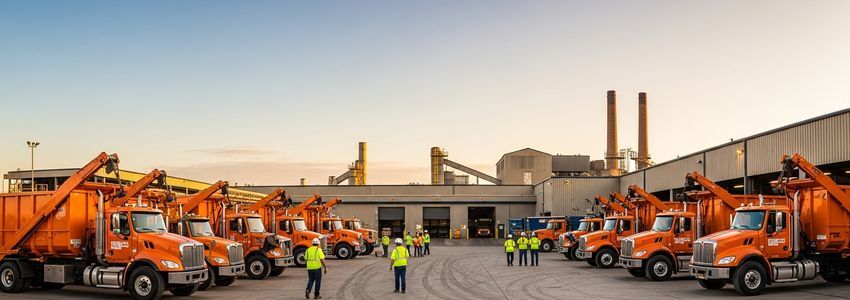
Roll-off truck financing gives waste haulers, junk removal companies, construction contractors, and demolition businesses the capital they need to acquire one of the most essential — and expensive — pieces of equipment in their fleets. Whether you're buying your first hook-lift truck or expanding a growing operation, understanding how financing works is the key to keeping cash flow healthy while adding capacity to your business.
In This Article
What Is Roll-Off Truck Financing?
Roll-off truck financing is a form of equipment financing specifically designed to help businesses purchase hook-lift trucks, cable hoist trucks, and open-top dumpster container vehicles used in waste management, construction, demolition, recycling, and junk removal industries. Rather than paying the full purchase price upfront — which can range from $80,000 to $300,000 or more depending on the truck's configuration and condition — businesses spread payments over time through a loan or lease structure.
The equipment itself serves as collateral in most cases, making this a more accessible form of financing than an unsecured business loan. Lenders specializing in commercial vehicle and equipment finance understand the income-generating nature of these trucks, which helps businesses qualify even without perfect credit or a long operating history.
Roll-off trucks are the backbone of the waste hauling and debris removal industries. They're used to deliver empty containers to job sites and pick up full containers loaded with construction debris, household waste, recyclables, or hazardous materials. Without reliable equipment, these businesses simply cannot operate — making financing a practical necessity for growth.
Types of Roll-Off Trucks and Their Costs
Before selecting a financing product, it helps to understand the types of roll-off trucks on the market and their typical costs. This directly affects how much you'll need to finance and what lenders will consider when structuring your loan.
Cable Hoist Roll-Off Trucks
The most common configuration, cable hoist trucks use a hydraulic cable system to pull containers onto the flatbed frame. They're versatile, reliable, and widely used across waste hauling, recycling, and debris removal operations. New units typically range from $100,000 to $180,000, while quality used units can be found in the $40,000 to $90,000 range.
Hook-Lift Trucks
Hook-lift trucks use an arm mechanism rather than a cable, allowing faster container swapping. They're popular with multi-container operations because drivers can swap containers without leaving the cab. New hook-lift trucks run $120,000 to $250,000, with used units ranging from $60,000 to $130,000.
Specialty and Heavy-Duty Roll-Offs
Heavy-duty models rated for larger payloads - often used in industrial demolition, concrete recycling, or municipal waste contracts - can exceed $300,000 new. These specialized units often require larger financing packages and may involve different underwriting criteria.
Used vs. New Roll-Off Trucks
Many operators start with used equipment and finance up to newer units as their businesses grow. Lenders can typically finance both new and used roll-off trucks, though used vehicles may carry slightly higher interest rates or shorter loan terms, particularly if they're more than 10 years old. A thorough inspection and documented maintenance history strengthen any used truck financing application.
Industry Insight: According to industry data, the waste management sector has grown significantly in recent years, driven by construction activity, increased recycling mandates, and the booming junk removal market. Roll-off container rental businesses represent one of the most capital-intensive segments of the waste industry.
Financing Options Available for Roll-Off Trucks
There are several paths to financing a roll-off truck, each with different structures, costs, and qualifying criteria. Choosing the right option depends on your business's financial profile, how long you've been operating, and whether you prefer ownership or flexibility.
Equipment Loans
An equipment loan is the most straightforward option. You borrow the full purchase price (or a portion of it), take ownership of the truck immediately, and repay the loan with interest over a set term - typically 24 to 72 months. At the end of the loan term, the truck is yours outright. Equipment loans are ideal for operators who plan to keep the vehicle long-term and build equity in their fleet assets.
Equipment Leasing
Equipment leasing provides access to a roll-off truck without full ownership. You make monthly lease payments for a set period, and at the end of the lease you may have the option to purchase the truck, return it, or upgrade to a newer model. Leasing typically requires lower upfront costs and can preserve working capital. It's a strong option for businesses that want to avoid equipment obsolescence or maintain more financial flexibility.
Working Capital Loans
If you already own roll-off trucks but need capital for operating expenses, maintenance, container purchases, or business expansion, a working capital loan can fill the gap. These are typically unsecured and can be funded quickly - often within 24 to 48 hours.
Business Lines of Credit
A business line of credit provides revolving access to funds you can draw on as needed. For roll-off operators, a line of credit is useful for managing seasonal fluctuations, covering fuel costs during growth phases, or handling unexpected repairs without disrupting cash flow. Draw what you need, repay, and borrow again.
SBA Loans
The Small Business Administration offers SBA loans that can be used for equipment purchases including commercial trucks. SBA 7(a) loans offer terms up to 10 years for equipment and competitive interest rates. However, approval takes longer than alternative financing - often 30 to 90 days - and requirements are more stringent. SBA loans work best for established businesses with strong credit profiles seeking the lowest possible rates.
Ready to Finance Your Roll-Off Truck?
Crestmont Capital offers fast, flexible equipment financing for waste haulers and fleet operators. Get a decision in as little as 24 hours.
Apply Now ->How Roll-Off Truck Financing Works
Understanding the mechanics of equipment financing helps you make a smarter decision and prepare a stronger application. Here's a step-by-step overview of the typical process.
Step 1 - Identify the Truck and Get a Quote
Before applying, identify the specific roll-off truck you want to purchase - whether from a dealer, private seller, or auction. Get a formal quote or invoice with the vehicle's VIN, year, make, model, and purchase price. Lenders will need this information to underwrite the financing.
Step 2 - Apply for Financing
Submit your application to a lender. Most equipment financing applications are simple - you'll provide basic business information, the number of years in business, estimated annual revenue, and details about the truck. Reputable alternative lenders like Crestmont Capital can pre-qualify you within a few hours.
Step 3 - Document Review
Lenders typically request 3 to 6 months of business bank statements, a copy of your driver's license or business license, and sometimes tax returns for larger loans. For newer businesses or higher loan amounts, additional documentation may be required.
Step 4 - Approval and Terms
Once approved, you'll receive a term sheet outlining the loan amount, interest rate, monthly payment, and loan term. Review it carefully, negotiate if needed, and sign the agreement when satisfied.
Step 5 - Funding and Truck Acquisition
Funds are disbursed directly to the seller or dealer, and you take possession of your new roll-off truck. Payments typically begin within 30 days of funding.
By the Numbers
Roll-Off Truck Financing - Key Statistics
$80K-$300K
Typical roll-off truck price range
24-72
Months - typical loan term options
24 Hours
Pre-approval timeline with alternative lenders
$88B+
U.S. waste management market size
Who Qualifies for Roll-Off Truck Financing?
One of the advantages of equipment financing for roll-off trucks is that qualification criteria tend to be more flexible than traditional business loans, because the truck itself secures the loan. That said, lenders still evaluate several key factors.
Time in Business
Most equipment lenders prefer at least 6 to 12 months of operating history. Startups can sometimes qualify with a strong personal credit profile and a solid business plan, but terms may be less favorable. Established operators with 2 or more years in business typically access the best rates and longest terms.
Credit Score
For small business loans and equipment financing, lenders typically review your personal credit score (especially for smaller businesses or sole proprietors). A score of 600 or above opens doors with alternative lenders, while scores above 680 often qualify for more competitive rates. If your credit is lower, bad credit business loan options exist that focus more on cash flow than credit history.
Annual Revenue
Lenders want to know your business generates enough revenue to support the loan payments. Most equipment finance companies look for monthly revenues of at least $10,000 to $20,000, though this varies by lender. Higher revenues relative to the loan amount lead to better terms.
Industry and Equipment Type
Roll-off truck financing is well understood by equipment lenders. The income-producing nature of commercial waste equipment - trucks that generate direct revenue through container rentals and haul fees - makes them attractive collateral. This industry-specific understanding can actually work in your favor compared to financing generic or specialty equipment.
Down Payment
Some lenders require 10 to 20% down, while others offer 100% financing for qualified borrowers. Equipment financing with no down payment is possible for businesses with strong credit and cash flow, preserving your working capital for operational expenses.
Quick Tip: Even if your personal credit isn't perfect, demonstrating strong, consistent monthly revenue from your waste hauling or junk removal business significantly improves your chances of approval. Bank statements showing regular deposits are often more important than credit scores for equipment-focused lenders.
How Crestmont Capital Helps Roll-Off Truck Operators
Crestmont Capital is a leading direct business lender specializing in flexible financing solutions for business owners across every industry - including waste management, junk removal, construction, and demolition. We understand the unique cash flow dynamics of fleet-dependent businesses, which is why we've designed our financing programs to serve operators at every stage of growth.
Here's what makes Crestmont Capital the right choice for roll-off truck financing:
Fast Approvals - Often Within 24 Hours
We know that roll-off operators move quickly. Whether you've found a great deal at auction or need to expand your fleet ahead of a busy season, our streamlined application process delivers decisions fast. Many applicants receive pre-approval within hours of submitting their application.
Flexible Loan Structures
We offer a range of financing options including equipment loans, equipment leasing, business lines of credit, and working capital loans. Each is tailored to your specific situation - not a one-size-fits-all approach.
Financing for New and Used Trucks
Whether you're buying from a dealer, private seller, or commercial auction, Crestmont Capital can finance both new and used roll-off trucks. Our team understands the commercial vehicle market and can work with a wide range of vehicle ages and configurations.
All Credit Profiles Welcome
We work with business owners across the credit spectrum. If you have strong revenue and a solid operating track record, we can often find a solution even when traditional banks have said no. Our bad credit business loan programs and fast business loan options are designed for real-world business owners, not just those with perfect credit profiles.
Grow Your Fleet with Crestmont Capital
Flexible equipment financing for waste haulers, junk removal companies, and construction operators. Apply in minutes.
Apply Now ->Real-World Scenarios: How Roll-Off Operators Use Financing
Understanding how financing works in practice helps business owners envision how it could benefit their own operations. Here are several realistic scenarios from the waste hauling and debris removal industries.
Scenario 1 - The Solo Operator Expanding to a Two-Truck Fleet
Marcus has been running a one-truck junk removal business for two years. He's been turning down overflow jobs because his single roll-off truck can only handle so many container pickups per day. He applies for equipment financing and acquires a second used hook-lift truck for $75,000 over 60 months. With the additional truck, he can take on a commercial roofing contractor as a steady client - generating enough new revenue to cover the monthly payment and then some within 90 days.
Scenario 2 - Construction Contractor Adding Roll-Off Service
A general contractor in the Midwest wants to stop paying a third-party hauler for debris removal on her projects and capture that revenue herself. She finances a new cable hoist roll-off truck for $140,000 on a 72-month term, keeping monthly payments manageable while her new service division ramps up. Within 18 months, the in-house debris removal pays for itself and generates additional revenue from external clients.
Scenario 3 - Established Operator Refinancing for Better Terms
A waste management company with six roll-off trucks is carrying high-interest equipment debt from a financing deal made when they were newer and had lower credit scores. They've built strong financials and now qualify for significantly better rates. By refinancing existing equipment debt with a new lender, they reduce their monthly payments by $3,200 across their fleet - freeing up capital for further growth.
Scenario 4 - Seasonal Cash Flow Bridge with a Line of Credit
A roll-off container rental company generates 70% of its annual revenue during spring and summer construction season. In winter, revenue drops but fixed costs - including insurance, yard lease, and driver wages - remain. A $50,000 business line of credit provides a buffer during slow months, allowing the owner to draw what's needed and repay as revenue picks up in spring.
Scenario 5 - New Business with Strong Backing
An entrepreneur with 10 years of experience working for a waste management company wants to start his own roll-off rental business. He has strong personal credit (720 score) and has secured a contract with a local demolition company before opening. Using a combination of a startup equipment loan for the truck and a small working capital loan for containers and initial operating costs, he launches with proper capitalization and lands his first clients within the first month.
Key Takeaway: Roll-off truck financing isn't just for established companies. From solo operators to growing fleets, financing solutions exist for every stage of the business lifecycle - and the right lender can match you with the right product.
Roll-Off Truck Financing vs. Paying Cash
Some operators wonder whether financing makes sense if they have cash on hand to purchase a truck outright. While cash purchases avoid interest costs, there are compelling reasons why even cash-rich businesses choose to finance equipment.
| Factor | Financing | Cash Purchase |
|---|---|---|
| Upfront Capital Required | Low (0-20% down) | Full purchase price |
| Working Capital Preserved | Yes | No |
| Total Cost | Higher (interest added) | Lower (no interest) |
| Business Credit Building | Yes | No |
| Speed to Acquire Equipment | Fast (24-72 hours) | Immediate (if funds available) |
| Fleet Scalability | High - add multiple trucks | Limited by available cash |
For most growing businesses, financing preserves working capital - which is the lifeblood of day-to-day operations. Rather than depleting your cash reserves on a single truck purchase, financing lets you keep capital available for fuel, insurance, payroll, container purchases, and unexpected expenses. This is especially important for seasonal businesses where cash flow can vary significantly month to month.
Tips for Getting the Best Roll-Off Truck Financing Terms
Not all financing offers are created equal. Here are practical steps to improve your chances of approval and secure the most favorable terms for your roll-off truck purchase.
Know Your Numbers
Before applying, gather 3 to 6 months of business bank statements, your most recent business and personal tax returns, and a clear picture of your monthly revenue. Lenders make decisions based on data, and being organized demonstrates seriousness.
Be Specific About the Equipment
Have a specific truck in mind with documentation (VIN, year, mileage, asking price). Applications with a specific asset are processed faster than vague equipment financing requests. Dealers and private sellers can typically provide an invoice or formal quote quickly.
Consider a Down Payment
Even if 100% financing is available, putting 10-20% down reduces your monthly payment and demonstrates commitment to the lender. This can help borderline applicants get approved or secure better interest rates.
Build Your Business Credit
If you're not in a rush, spending 3 to 6 months building your business credit profile before applying can result in meaningfully better terms. Pay all existing obligations on time, open a business bank account if you haven't already, and consider establishing a few business trade lines.
Apply with Multiple Lenders
Rates and terms vary significantly across lenders. Getting multiple quotes allows you to compare offers and negotiate for better terms. Alternative lenders like Crestmont Capital often move faster and are more flexible than traditional banks - without necessarily charging more.
Frequently Asked Questions
How much can I borrow for a roll-off truck?
Loan amounts for roll-off truck financing typically range from $20,000 for a used older model to $350,000 or more for a new heavy-duty hook-lift truck. Most lenders will finance the full purchase price or a substantial portion of it, depending on your creditworthiness and business financials.
Can I finance a roll-off truck with bad credit?
Yes, in many cases. Equipment financing is generally more accessible for borrowers with imperfect credit than unsecured business loans, because the truck itself serves as collateral. Alternative lenders like Crestmont Capital evaluate your revenue, time in business, and overall business health - not just your credit score. Scores as low as 550-580 may qualify depending on other factors.
How long does it take to get approved?
Alternative equipment lenders can often pre-approve applications within 24 hours of receiving a complete application. Funding typically occurs within 2 to 5 business days. Traditional banks and SBA loans take significantly longer - often 30 to 90 days from application to funding.
Is it better to lease or buy a roll-off truck?
It depends on your goals. Buying (via an equipment loan) is better if you want to build equity, plan to use the truck for many years, and prefer eventual outright ownership. Leasing is better if you want lower monthly payments, the flexibility to upgrade equipment at lease end, or if you're uncertain about long-term equipment needs. Many growing businesses start with leasing and transition to purchasing as they scale.
Can a new business get roll-off truck financing?
Yes, though startup financing comes with additional requirements. Strong personal credit (680+), industry experience, a solid business plan, and sometimes a larger down payment or cosigner can help new businesses qualify. Some lenders specialize in startup equipment financing and evaluate the business plan and industry experience rather than operating history alone.
What interest rates should I expect?
Interest rates for roll-off truck financing vary based on credit score, time in business, revenue, down payment, and the specific lender. Well-qualified borrowers with strong credit may see rates in the 6-12% range, while borrowers with weaker credit profiles may see rates of 15-30% or higher from alternative lenders. Always compare multiple offers to find the best rate available for your situation.
What documents are needed to apply?
Typical documentation includes 3-6 months of business bank statements, a valid driver's license or government-issued ID, business license or registration, a quote or invoice for the truck you want to purchase, and sometimes business and personal tax returns. Alternative lenders generally require less documentation than traditional banks.
Can I finance multiple roll-off trucks at once?
Yes. Fleet financing programs allow businesses to finance multiple vehicles under a single loan agreement or through separate loans structured to work together. This is common for established waste management companies expanding their fleet. Lenders evaluate the overall business strength and the combined monthly obligations when considering multi-truck financing.
What is the typical loan term for roll-off truck financing?
Loan terms typically range from 24 to 72 months. Shorter terms mean higher monthly payments but less total interest paid. Longer terms reduce monthly payments but increase the total cost of financing. Most operators choose 48 to 60-month terms as a balance between manageable payments and reasonable total cost. Used trucks sometimes have shorter maximum terms (36-48 months) based on vehicle age.
Do I need a commercial driver's license (CDL) for a roll-off truck?
In most states, roll-off trucks with a Gross Vehicle Weight Rating (GVWR) over 26,000 pounds require a CDL Class B or Class A license. Many common roll-off configurations exceed this threshold. Always check your state's specific licensing requirements before purchasing a truck, and ensure your drivers are properly licensed. Financing itself is not contingent on CDL status, but operating the vehicle legally is your responsibility.
Can I finance dumpster containers along with the truck?
Yes. Many lenders can structure financing that covers both the truck and a set of roll-off containers. Since containers are essential to operating a roll-off rental business, packaging them with the truck in a single financing arrangement simplifies the process. Containers typically range from $3,000 to $8,000 each, and a starting fleet might include 10 to 30 containers alongside the truck.
What happens if I can't make a payment?
Missing payments on secured equipment loans can result in late fees, damage to your credit score, and ultimately repossession of the truck if the account becomes severely delinquent. If you anticipate payment difficulties, contact your lender proactively. Many lenders can work out payment deferrals or modified terms before a default situation occurs. Communication early is always better than waiting for missed payments to accumulate.
Is insurance required when financing a roll-off truck?
Yes. Lenders require adequate commercial vehicle insurance as a condition of the financing agreement. At minimum, you'll need liability coverage and typically comprehensive/collision coverage to protect the collateral (the truck). Commercial vehicle insurance for roll-off trucks can range from $5,000 to $15,000 per year or more depending on driving history, location, and cargo. Secure insurance quotes during your financing process so you can account for this cost in your business plan.
Can I refinance an existing roll-off truck loan?
Yes. Equipment refinancing allows you to replace an existing loan with new terms - potentially a lower interest rate, extended term to reduce monthly payments, or both. This is particularly valuable if your credit profile has improved since the original loan or if interest rates have dropped. Crestmont Capital offers equipment refinancing solutions for roll-off trucks and other commercial vehicles.
How do I choose the right lender for roll-off truck financing?
Look for lenders with experience in commercial vehicle and equipment financing, transparent rate structures without hidden fees, fast approval processes, and flexibility for your specific situation. Get multiple quotes, compare the total cost of financing (not just the monthly payment), and choose a lender who understands your industry. Direct lenders like Crestmont Capital often provide better terms and faster service than brokers who add their own fees to the process.
How to Get Started
Complete our quick application at offers.crestmontcapital.com/apply-now - it takes just a few minutes. Have basic business information and your target truck details ready.
A Crestmont Capital advisor will review your application, discuss your fleet goals, and match you with the right equipment financing product for your situation.
Receive your approval, sign the agreement, and get funded - often within 48 to 72 hours. Take delivery of your roll-off truck and put it to work immediately.
The Bottom Line on Roll-Off Truck Financing
Roll-off truck financing is one of the most practical tools available to waste haulers, junk removal operators, demolition contractors, and construction companies looking to grow their fleets without depleting working capital. Whether you're buying your first truck or adding a fifth to an established operation, the right financing solution can turn a major capital expense into a manageable monthly payment that's covered by the revenue the truck itself generates.
The key is working with a lender who understands commercial equipment, moves quickly, and tailors financing to your specific situation. Crestmont Capital specializes in exactly this type of commercial vehicle financing, with fast approvals, flexible structures, and access to programs for operators across the credit and revenue spectrum.
If you're ready to expand your fleet with roll-off truck financing, the process starts with a simple application. Take the first step today and put a new truck to work for your business.
Finance Your Roll-Off Truck Today
Fast approvals. Flexible terms. All credit profiles. Get the equipment financing your business needs from the #1 business lender in the U.S.
Apply Now ->Disclaimer: The information provided in this article is for general educational purposes only and is not financial, legal, or tax advice. Funding terms, qualifications, and product availability may vary and are subject to change without notice. Crestmont Capital does not guarantee approval, rates, or specific outcomes. For personalized information about your business funding options, contact our team directly.