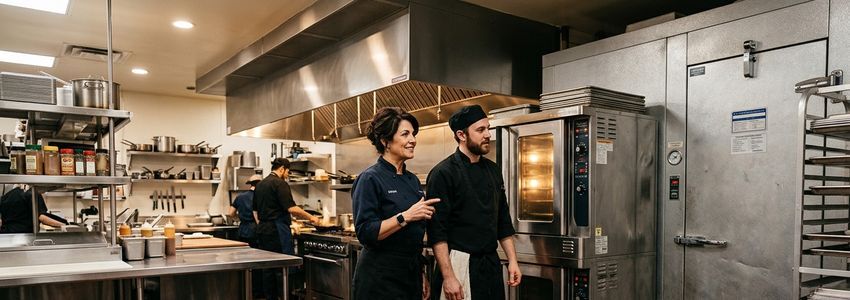

A restaurant remodel can transform your business — refreshed dining rooms attract new customers, modernized kitchens improve efficiency and food quality, updated bars drive higher beverage sales, and ADA-compliant layouts keep you legally protected. But restaurant renovations are expensive. Even a modest refresh runs tens of thousands of dollars; a full kitchen and dining room overhaul can easily reach six figures. Restaurant remodel financing gives you the capital to invest in your space now, while repaying the cost over time from the revenue the improved restaurant generates. This guide covers renovation costs, the best loan products for restaurant remodels, and practical strategies for getting approved.
In This Article
Restaurant Renovation Costs in 2026
Before you can finance a restaurant remodel, you need a realistic budget. Restaurant renovation costs in 2026 typically range from $150 to $600+ per square foot, depending on scope, location, and the existing condition of your space.
Cosmetic Refresh (Front-of-House Only)
Typical cost: $150–$250 per square foot
A cosmetic refresh updates the guest experience without touching infrastructure: new paint, flooring, lighting fixtures, furniture, signage, and décor. For a 1,500 square-foot dining room, expect $22,500 to $37,500. This level of renovation rarely requires permits and typically takes 2-4 weeks to complete.
Partial Renovation (Front + Limited Back-of-House)
Typical cost: $250–$400 per square foot
A partial renovation combines the cosmetic front-of-house refresh with targeted back-of-house upgrades: a new hood system, updated prep areas, grease trap replacement, or partial kitchen equipment replacement. A 2,000 square-foot restaurant at this level runs $500,000–$800,000 at the high end of the range, or $250,000–$400,000 for mid-range execution.
Full Renovation (Front + Back-of-House + Systems)
Typical cost: $400–$600+ per square foot
A full gut renovation replaces or rebuilds the entire space: new kitchen layout and equipment, plumbing and electrical upgrades, HVAC, bar build-out, new flooring throughout, ADA compliance work, and a completely refreshed dining room. For a 2,500 square-foot restaurant, this is a $1,000,000–$1,500,000+ project in major metro markets. Permitting alone can run $5,000–$20,000.
Key Cost Line Items to Budget
| Category | Typical Range |
|---|---|
| Labor (construction, installation) | Largest single cost; 40-50% of total |
| Commercial kitchen equipment | $50,000–$500,000+ |
| Interior design, furniture, décor | $5,000–$100,000+ |
| Permits and inspections | $3,000–$20,000+ |
| HVAC, plumbing, electrical upgrades | $20,000–$150,000+ |
| Contingency reserve (recommended) | 15–20% of total project budget |
Pro Tip: Restaurant renovations routinely exceed initial estimates by 15-25% due to hidden infrastructure issues discovered during demolition, permitting delays, and change orders. Always build a contingency buffer into your loan request — underfunding a renovation is one of the most expensive mistakes a restaurant owner can make.
Best Loan Options for Restaurant Remodels
Choosing the right financing product depends on the scope of your renovation, your timeline, and your business's financial profile. Here is how the main options compare for restaurant renovation financing:
Term Loan — Best for Defined Project Budgets
A term loan provides a lump sum with fixed payments over a set term — typically 1 to 10 years for alternative products, up to 25 years for SBA loans. Term loans are well-suited to restaurant renovations because you have a defined project scope and cost. You borrow what the project requires, repay it over a fixed schedule, and budget your monthly payment alongside other operating costs. Alternative lenders can fund in 24-72 hours; SBA term loans take 30-90 days but offer significantly lower rates for larger projects.
Equipment Financing — Best for Kitchen Upgrades
If a significant portion of your renovation involves commercial kitchen equipment — ovens, fryers, refrigeration, prep tables, dishwashers, hood systems, POS hardware — equipment financing is typically your most cost-effective option. The equipment secures the loan, which usually means lower rates, easier qualification, and 100% financing with no down payment. Keep kitchen equipment separate from general renovation costs in your financing plan to take advantage of this.
Business Line of Credit — Best for Phased Renovations
If you are renovating in phases — updating the dining room this quarter, then tackling the kitchen next year — a revolving line of credit provides the flexibility to draw capital as each phase begins and repay it before the next draw. You only pay interest on what you use, making it cost-efficient for renovations spread over time. Lines of credit also serve as a cash buffer during the renovation period when revenue may dip.
SBA 7(a) Loan — Best Rates for Large Renovations
For major renovations over $100,000 where you have 30-90 days to fund, the SBA 7(a) offers the lowest interest rates and longest repayment terms available. Rates are tied to Prime Rate plus a lender spread (currently approximately 10-13% APR). Repayment terms for renovations can run 10 years, with real estate-related portions going up to 25 years. The trade-off is documentation and time — the SBA application process is thorough. For the right project with the right timeline, the economics are compelling.
SBA 504 Loan — Best for Real Estate + Renovation Combinations
If your renovation includes purchasing your restaurant building or making permanent improvements to owner-occupied real estate, the SBA 504 combines real estate and construction financing into one product. The 504's structure — 10% from the borrower, 50% from a bank, 40% from the SBA at a fixed rate — minimizes your upfront capital requirement while maximizing loan term and keeping payments manageable.
Ready to Fund Your Restaurant Renovation?
Crestmont Capital is the #1 rated business lender in the United States. Equipment financing, working capital, SBA loans — fast decisions, competitive rates.
Apply Now ->SBA Loans for Restaurant Renovations
SBA loans are among the most commonly used financing tools for restaurant renovations — and for good reason. The government guarantee reduces lender risk, which translates to lower rates, longer terms, and higher loan amounts than most conventional products.
SBA 7(a) for Renovations
The SBA 7(a) can fund up to $5 million for renovation costs, including construction labor, materials, fixtures, and related soft costs (permits, architect fees, engineering). Unlike equipment financing, which only covers physical assets, the 7(a) can fund the full renovation budget as a working capital or leasehold improvement loan. Repayment terms for renovation projects typically run 7-10 years.
Most SBA lenders for restaurant renovations require:
- Personal credit score of 650+ (680+ preferred)
- At least 2 years of restaurant operating history
- DSCR of 1.25 or higher on your current cash flow
- Contractor bids and project scope documentation
- Personal guarantee from all owners with 20%+ equity
SBA Express for Smaller Renovations
The SBA Express offers up to $500,000 with a faster approval timeline — responses within 36 hours in many cases. For a targeted renovation in the $50,000–$300,000 range where speed matters, SBA Express is often the best balance of rate and timeline.
Learn more: SBA loans at Crestmont Capital
Equipment Financing for Kitchen Upgrades
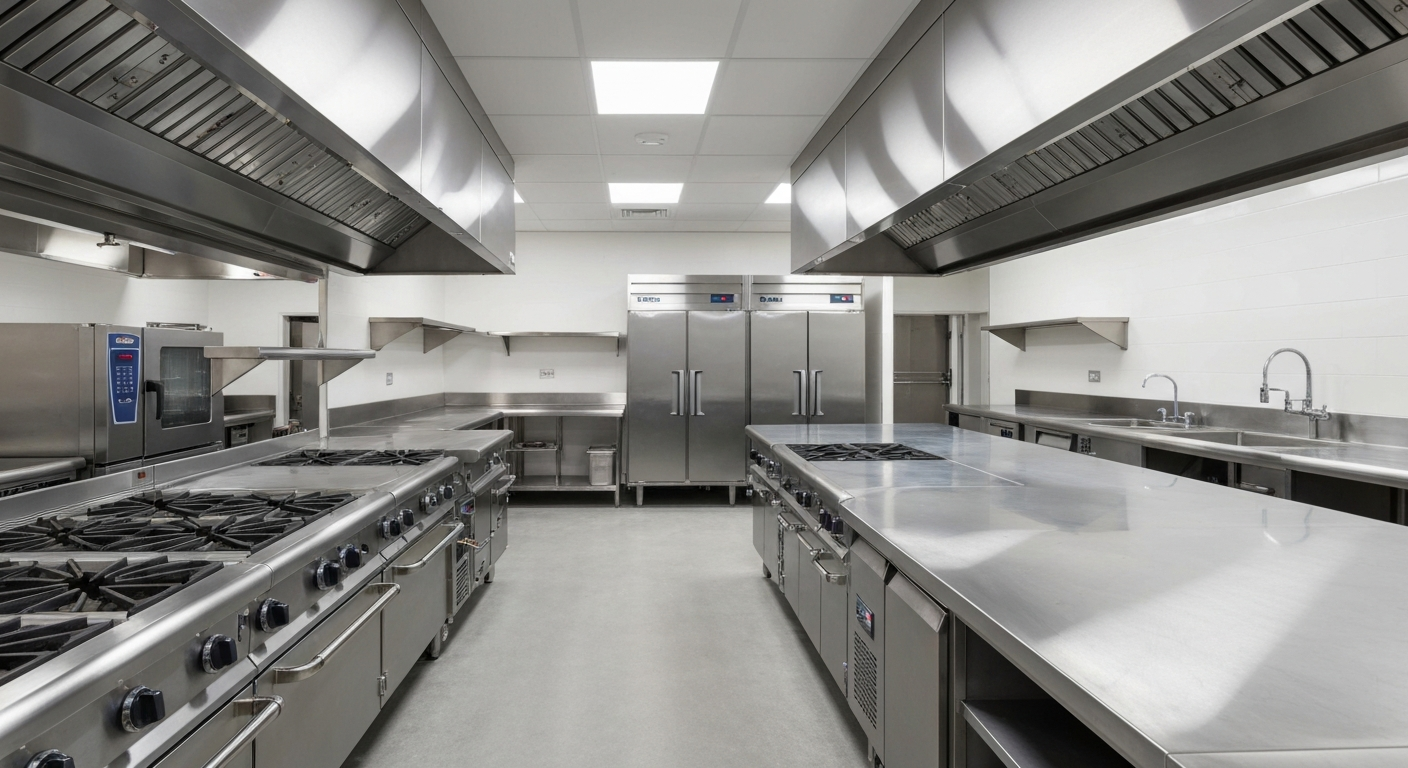
Kitchen equipment is typically the single most expensive line item in a restaurant renovation — and it is also one of the easiest to finance. Equipment loans and leases use the purchased equipment as collateral, enabling:
- 100% financing with no down payment on most equipment
- Faster approval than working capital loans (equipment lenders often fund in 1-3 days)
- More accessible credit requirements
- Fixed payments matched to the equipment's useful life (2-7 years)
- Potential Section 179 tax deductions on equipment purchases
Commonly financed restaurant equipment:
- Commercial ovens, ranges, fryers, and grills ($10,000–$80,000+)
- Refrigeration units, walk-in coolers and freezers ($15,000–$50,000+)
- Commercial dishwashers ($5,000–$20,000)
- Hood ventilation systems ($5,000–$30,000+)
- POS systems, kiosks, and payment technology ($5,000–$30,000)
- Bar equipment, draft systems, espresso machines
Strategy tip: Finance your equipment separately from your general construction loan. Bundling equipment into a general term loan means paying the same rate on assets that could qualify for lower-rate equipment financing.
Learn more: Equipment financing at Crestmont Capital
Managing Working Capital During Renovation
Restaurant renovations create a specific financial challenge: revenue typically drops during construction, but fixed costs — rent, insurance, debt service, some labor — continue. Planning for this cash flow gap is as important as financing the renovation itself.
Strategies to bridge the renovation cash flow gap:
Include a Working Capital Component in Your Loan
When building your loan request, add 2-3 months of operating expenses to your renovation budget as a working capital reserve. This gives you a buffer to cover fixed costs during construction and initial reopening while revenue rebuilds. Lenders generally accept this as a legitimate use of funds within a broader renovation loan.
Stagger the Renovation
If possible, renovate sections of your restaurant while keeping others operational. Many restaurants renovate the dining room during slower seasons while keeping the kitchen running, or vice versa. This approach extends the renovation timeline but significantly reduces the revenue disruption.
Use a Line of Credit as a Safety Net
Securing a business line of credit before your renovation begins gives you a flexible safety net for unexpected costs and cash flow shortfalls during construction. Lines of credit are revolving — you only pay interest when you draw — so the cost of having the facility available is minimal.
Learn more: Working capital loans | Business line of credit guide
Calculating Renovation ROI Before You Borrow
Every dollar you borrow for a restaurant renovation should generate a measurable return. A simple ROI framework prevents you from over-investing in renovations with low return potential:
Revenue Impact
Will the renovation increase average check size, table turns, seat capacity, or customer acquisition? Estimate conservatively. A dining room expansion that adds 20 seats could generate $80,000–$150,000 in additional annual revenue for a busy full-service restaurant. A kitchen upgrade that reduces ticket times by 20% could increase turns during peak hours.
Cost Savings
Energy-efficient kitchen equipment can reduce utility bills by 15-30%. A new POS and inventory system can reduce food waste and over-ordering. Quantify these savings as part of your ROI analysis.
Payback Period
Divide your total renovation cost (including loan interest) by your annual projected revenue increase plus cost savings. A payback period under 3 years is generally strong for a restaurant renovation. A payback period over 5 years warrants careful scrutiny — especially in an industry with 3-5 year average lease cycles.
Example
A full-service restaurant spends $300,000 on a complete dining room renovation, financed over 7 years at 11% APR (total cost ~$380,000). The renovation adds 25 seats and drives a $120,000 annual revenue increase (based on 60% utilization at $18 average check × 350 operating days). Payback period: ~3.2 years. Positive ROI well within the loan term.
Tips to Maximize Your Approval Odds
Get Detailed Contractor Bids First
Lenders want to see documented project costs, not estimates from your head. Get 2-3 contractor bids before applying. A detailed scope of work and cost breakdown gives lenders confidence that you have planned the project professionally and that the loan amount is appropriate to the actual cost.
Apply Before You Need the Money
Start the financing process 60-90 days before your planned renovation start date for SBA loans, 2-4 weeks before for alternative products. Rushing a loan application creates pressure that can lead to accepting less favorable terms than you would get with time to shop.
Show Your Revenue History
Restaurant renovation loans are evaluated largely on the restaurant's existing revenue and cash flow. Three years of strong revenue and consistent profitability is the ideal profile. If your revenue has declined recently due to temporary factors (construction on your street, a competitor opening nearby), document that context explicitly in your application narrative.
Separate Equipment From Construction
As noted above, financing equipment separately at lower equipment rates and using a working capital or SBA term loan for construction costs optimizes your overall cost of capital. Ask your lender to help you structure this split.
Demonstrate Post-Renovation Revenue Upside
Lenders want to see that the renovation will improve your ability to service the debt. Include a brief narrative or simple projection showing how the renovation increases revenue, reduces costs, or both. Even a one-page analysis showing your revenue assumption and projected DSCR post-renovation meaningfully strengthens your application.
Frequently Asked Questions
How much can I borrow for a restaurant renovation?
Loan amounts depend on your revenue, creditworthiness, and the specific product. Alternative lenders typically offer $10,000 to $2 million for renovation financing. SBA 7(a) loans go up to $5 million. Equipment financing can cover any amount tied to the equipment being purchased. Your maximum loan amount is ultimately constrained by your debt service capacity — the loan payment your cash flow can comfortably support.
Can I get a restaurant renovation loan with bad credit?
It is possible but more challenging. Alternative lenders sometimes work with personal credit scores as low as 550, though at higher rates. SBA and conventional lenders typically require 650+. If your credit needs work, equipment financing (secured by the equipment itself) often has the most accessible credit requirements and is a good starting point for building your business credit profile. See our guide to building business credit.
How long does restaurant renovation financing take to fund?
Alternative term loans and equipment financing typically fund in 1-5 business days. SBA Express loans can respond within 36 hours but take 2-4 weeks to fund. Standard SBA 7(a) loans take 30-90 days from application to funding. If your renovation starts in 3 months, start SBA applications now. If it starts in 2 weeks, use an alternative lender.
Can I include soft costs (permits, architect fees) in a renovation loan?
Yes — SBA loans and working capital term loans can include soft costs as part of the renovation budget. Equipment financing typically cannot cover soft costs. When building your loan request, be explicit about all project costs including permits, design fees, and contingency reserves so the lender funds a realistic total.
Should I use my restaurant's cash or borrow for a renovation?
For most operators, borrowing for renovations makes more financial sense than depleting cash reserves. Restaurant businesses need operating cash buffers — unexpected equipment failures, slow periods, and seasonal fluctuations are facts of life. Depleting reserves for a renovation creates vulnerability at exactly the moment (during and immediately after) when cash flow may be reduced. A loan separates the investment from your operating liquidity and keeps you protected.
Get Started: Fund Your Restaurant Renovation
- Define your project scope and get contractor bids. Specific, documented costs produce better loan applications and appropriate loan amounts.
- Separate equipment from construction. Identify kitchen equipment to finance separately at equipment rates.
- Build in contingency. Add 15-20% to your contractor bids for your loan request.
- Include working capital. Add 2-3 months of operating expenses as a cash buffer during construction.
- Match product to timeline. Need funds in 2 weeks? Alternative lender. Have 60+ days? SBA for lower rates.
- Apply. Crestmont Capital offers restaurant renovation financing with fast approvals and competitive rates. Apply now.
Finance Your Restaurant Remodel Today
Crestmont Capital is the #1 rated business lender in the United States. Fast approvals, competitive rates, and products built for restaurant owners.
Apply Now ->Conclusion
A well-executed restaurant renovation is one of the highest-ROI investments an operator can make — but only if it is funded correctly. Understanding your renovation costs, matching the right loan product to your project, and planning for the working capital impact of construction are the keys to a renovation that pays for itself and then some.
Crestmont Capital works with restaurant owners at every stage of the renovation process — from small dining room refreshes to full facility overhauls. Whether you need equipment financing for a new kitchen, an SBA loan for a major expansion, or fast working capital to bridge the renovation period, we have the products and expertise to help. Apply now or explore our full range of small business financing options.
Disclaimer: This article is for general educational purposes only and does not constitute financial, legal, or tax advice. Loan terms, rates, and availability are subject to change. Consult qualified advisors for guidance specific to your situation.