For contractors in the concrete and construction industry, having reliable, high-performance equipment is not just an advantage- it is a necessity. As projects become more demanding and timelines shrink, securing the right assets is crucial for growth, which is where redi-mix construction equipment financing becomes an essential business tool. This guide provides a comprehensive overview of how to acquire redi-mix trucks, batch plants, and other critical machinery in 2026 without depleting your working capital.
In This Article
- What Is Redi-Mix Equipment Financing?
- Why Finance Instead of Buy?
- Types of Redi-Mix Equipment You Can Finance
- How Redi-Mix Equipment Financing Works
- Redi-Mix Financing by the Numbers
- Financing vs. Leasing: Which Is Right for You?
- Who Qualifies for Redi-Mix Financing?
- How Crestmont Capital Helps
- Real-World Scenarios
- Comparison: Financing Options Side by Side
- How to Get Started
- Frequently Asked Questions
What Is Redi-Mix Equipment Financing?
Redi-mix construction equipment financing is a specialized financial product that allows construction companies and contractors to acquire essential concrete-related machinery through a loan or lease agreement. Instead of paying the full purchase price upfront- which can range from tens of thousands to over a million dollars- businesses make structured, predictable monthly payments over a set term. This arrangement enables contractors to obtain the equipment they need to operate and grow while preserving their cash for other critical business expenses like payroll, materials, and marketing.
At its core, this type of financing is a form of asset-based lending. The redi-mix truck, batch plant, or concrete mixer being financed serves as the collateral for the loan. This key feature often makes it easier for businesses to qualify compared to traditional unsecured business loans, as the lender has a tangible asset securing their investment. If the borrower defaults, the lender can repossess the equipment to recoup their losses. This secured nature benefits both parties: the lender faces reduced risk, and the borrower gains access to capital specifically for revenue-generating equipment.
Financing can be used for a wide range of equipment, both new and used. This flexibility is vital in the construction industry, where the right tool for the job might be a brand-new, high-capacity transit mixer or a reliable, pre-owned pump truck. The terms of the financing agreement- including the interest rate, monthly payment, and loan duration- are determined by several factors. These include the borrower's credit history, time in business, annual revenue, and the age and condition of the equipment being financed. A strong business profile will typically secure more favorable terms, but lenders like Crestmont Capital specialize in working with a diverse range of businesses, including startups and those with less-than-perfect credit.
Ultimately, redi-mix equipment financing is a strategic tool that transforms a massive capital expenditure into a manageable operating expense. It bridges the gap between the need for modern, efficient equipment and the financial reality of running a construction business, empowering contractors to bid on larger projects, improve operational efficiency, and scale their operations effectively.
Need Redi-Mix Equipment Financing?
Crestmont Capital offers fast, flexible financing for construction equipment - including redi-mix trucks and concrete mixers. Apply in minutes.
Apply Now →Why Finance Instead of Buy Outright?
The decision to finance redi-mix equipment rather than purchase it with cash is one of the most critical financial choices a construction contractor can make. While paying cash might seem like the simplest path, avoiding debt and interest payments, it often comes at a significant strategic cost. In a capital-intensive industry like construction, where cash flow is king, financing offers numerous advantages that support long-term stability and growth. Here are the primary reasons why savvy contractors in 2026 are choosing to finance their essential redi-mix equipment.
Preservation of Working Capital
The most immediate and compelling benefit of financing is the preservation of cash. A new redi-mix truck can cost upwards of $150,000, and a mobile batch plant can easily exceed half a million dollars. Paying for such assets with cash depletes a company's liquid reserves, leaving it vulnerable to unexpected expenses, project delays, or economic downturns. By financing, you convert a large, one-time cash outlay into a series of smaller, predictable monthly payments. This keeps your cash on hand for day-to-day operations, such as meeting payroll, purchasing raw materials like cement and aggregate, covering fuel costs, and investing in marketing to win new contracts. This financial flexibility is invaluable for navigating the cyclical nature of the construction industry.
Improved Cash Flow Management
Financing allows you to align the cost of the equipment with the revenue it generates. A new redi-mix truck starts producing income from its very first delivery. By spreading the cost of that truck over its useful life, you create a more balanced and manageable cash flow. The monthly payment becomes a regular operating expense that can be easily budgeted for, much like fuel or insurance. This predictability, as emphasized by resources from the Small Business Administration (SBA) on managing business costs, is essential for accurate financial forecasting and strategic planning, allowing you to make informed decisions about future investments and expansion.
Key Takeaway: The Strategic Advantage
Financing is not just about affording equipment; it is about strategic capital allocation. By financing, you leverage a lender's capital to acquire assets that generate revenue, allowing you to deploy your own cash toward high-return activities like hiring skilled labor, marketing, and technology adoption that drive growth and profitability.
Significant Tax Advantages
Financing and leasing equipment offer powerful tax benefits that can significantly reduce your overall tax liability. Under Section 179 of the IRS tax code, businesses can often deduct the full purchase price of qualifying new or used equipment in the year it is placed into service. For 2026, this deduction can be substantial, potentially covering the entire cost of a new concrete mixer or pump truck. Additionally, businesses may be able to take advantage of bonus depreciation, further accelerating the tax write-off. When you lease equipment, the monthly lease payments are typically treated as a fully deductible operating expense. These tax incentives can make the effective cost of financing much lower than the sticker price.
Access to Better, More Modern Equipment
Financing breaks down the barrier of high upfront costs, giving you access to the latest and most efficient redi-mix technology. Newer equipment is more fuel-efficient, requires less maintenance, and often comes with advanced features that improve productivity and safety on the job site. This technological edge can be a major competitive differentiator, enabling you to complete jobs faster, with higher quality, and at a lower operating cost. It allows you to bid more competitively on large-scale projects that require specific equipment capabilities, which might be out of reach if you were limited to what you could afford with cash.
Scalability and Business Growth
As your construction business grows, your equipment needs will evolve. Financing provides the agility to scale your fleet as you win more contracts. You can add trucks, upgrade your batch plant, or acquire specialized machinery without waiting to accumulate the necessary cash reserves. This ability to respond quickly to market opportunities is crucial for sustainable growth. When a major project comes along, you can secure the necessary financing to acquire the required assets and get to work, rather than letting the opportunity pass by due to capital constraints.
Types of Redi-Mix Equipment You Can Finance
A successful ready-mix concrete operation relies on a fleet of specialized, heavy-duty equipment working in concert. From production at the plant to delivery and placement at the job site, each piece of machinery plays a critical role. Fortunately, comprehensive redi-mix construction equipment financing covers the entire spectrum of these essential assets, both new and used. Understanding the types of equipment you can finance helps you build a robust and efficient fleet tailored to your specific operational needs.
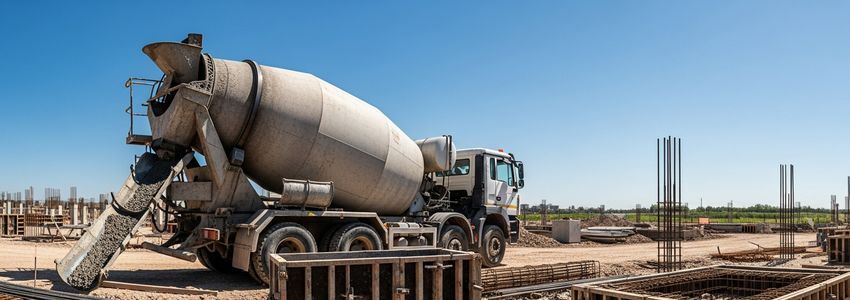
- Redi-Mix Trucks (Transit Mixers): These are the backbone of any ready-mix operation. A redi-mix truck, also known as a transit mixer, is a heavy-duty chassis fitted with a rotating drum. The drum continuously agitates the concrete during transport to prevent it from setting, ensuring it arrives at the construction site in a workable state. Financing is available for various sizes and configurations, including standard rear-discharge and front-discharge models, which offer improved visibility and control for the operator.
- Concrete Mixers: This is a broad category that includes more than just the truck-mounted drums. It can refer to stationary mixers used within a batch plant or smaller, portable mixers for specific on-site jobs. Financing can cover everything from large-scale central mixers that produce high volumes of concrete to smaller volumetric mixers that mix ingredients on-site for fresh, custom batches.
- Concrete Pump Trucks: For projects where direct pouring from a redi-mix truck is impossible, a concrete pump truck is essential. These vehicles are equipped with a powerful pump and a long, articulated robotic arm (boom) that can place concrete with precision at significant heights or distances. Financing a pump truck allows contractors to take on complex projects like high-rise buildings, bridges, and large foundations.
- Concrete Batch Plants: The heart of the production process, a batch plant is where cement, aggregate, sand, water, and admixtures are measured and combined to create concrete. Financing is available for both stationary (central-mix) plants, designed for high-volume, continuous production, and mobile (portable) batch plants, which can be transported and set up at large, remote job sites for dedicated production.
- Agitator Trucks: Similar in appearance to transit mixers, agitator trucks are used to transport concrete that has already been mixed at a central batch plant. Their primary function is to keep the concrete agitated to maintain its consistency during transit, rather than mixing the raw ingredients. They are a cost-effective option for operations with a high-capacity central plant.
- Silo and Storage Systems: A batch plant requires extensive storage for raw materials. Financing can cover the acquisition of large silos for storing cement and fly ash, as well as hoppers and conveyor systems for managing different types of sand and aggregate. Efficient storage is key to maintaining a consistent and uninterrupted production flow.
- Loaders and Conveyors: Moving raw materials around the plant yard and into the batching equipment requires heavy machinery. Wheel loaders are commonly used to load aggregates into the hoppers, while extensive conveyor belt systems transport materials throughout the plant. These support assets are fully financeable as part of a complete plant package or as standalone purchases.
- Quality Control and Testing Equipment: Ensuring the quality and consistency of your concrete mix is paramount. Financing can extend to the laboratory equipment needed for quality control, including slump cones, air meters, compression testing machines, and moisture sensors.
How Redi-Mix Equipment Financing Works
Navigating the financing process for redi-mix equipment can seem complex, but reputable lenders have streamlined it to be fast, transparent, and straightforward. The goal is to get you the equipment you need with minimal disruption to your business operations. While specific steps may vary slightly between lenders, the journey from application to funding generally follows a clear, four-stage path.
Step 1: Application and Initial Consultation
The process begins with a simple application. Most modern lenders, like Crestmont Capital, offer a secure online application that can be completed in just a few minutes. You will provide basic information about your business, including its legal name, address, tax ID number, time in business, and annual revenue. You will also need to provide details about the equipment you wish to finance, such as the make, model, year, price, and the name of the vendor or private seller.
Shortly after submitting your application, a financing specialist will contact you. This is a crucial consultation where they will seek to understand your specific needs, project timelines, and financial situation. They will discuss your goals- whether you are expanding your fleet, replacing an old truck, or acquiring your first piece of equipment- to help identify the best possible financing structure for your business.
Step 2: Documentation and Underwriting
Based on the initial consultation and the size of the financing request, the lender will ask for a few supporting documents. For smaller financing amounts (typically under $250,000), the process is often simplified, requiring only the application itself and perhaps the last few months of business bank statements. For larger requests, you may be asked to provide additional financial documentation, such as business tax returns, profit and loss statements, and a balance sheet.
Once all necessary documents are received, your application moves to the underwriting stage. This is where the lender's credit team performs its due diligence. They will review your business's financial health, credit history, and cash flow. They will also assess the value and condition of the equipment being financed, as it serves as the collateral. The underwriter's goal is to evaluate the risk associated with the loan and determine the terms- interest rate, loan amount, and repayment period- that they can offer.
Step 3: Approval and Offer Review
With a streamlined lender, the underwriting process is typically very fast, often completed within 24 to 48 hours. Once a decision is made, your financing specialist will present you with a formal offer. This document will clearly outline all the key details of the financing agreement: the total amount financed, the interest rate (or factor rate), the exact monthly payment, the term length (e.g., 60 months), and any down payment requirements or fees.
This is your opportunity to review the terms carefully and ask any questions you may have. A good financing partner will walk you through the agreement, ensuring you fully understand your obligations and the structure of the deal. If the terms are agreeable, you will sign the financing documents electronically to accept the offer.
Step 4: Funding and Equipment Acquisition
The final step is the funding. Once the signed documents are received, the lender coordinates directly with the equipment vendor. They will verify the final invoice and wire the funds directly to the seller. This process is seamless for you- you do not have to handle the large payment yourself. As soon as the vendor confirms receipt of the funds, the equipment is released to you.
You can then arrange for pickup or delivery of your new redi-mix truck, batch plant, or mixer and put it to work immediately. Your first monthly payment will typically be due about 30 days after the funding is complete, allowing you time to start generating revenue with your new asset before the first bill arrives.
By the Numbers
Redi-Mix Construction Equipment Financing - Key Statistics
$180B+
U.S. Ready-Mix Concrete Industry Annual Revenue
$80K+
Average Cost of a New Redi-Mix Truck
24-84
Typical Financing Term (Months)
2-5 Days
Typical Funding Timeline with Alt. Lenders
Financing vs. Leasing: Which Is Right for You?
When acquiring redi-mix equipment, contractors face a critical choice between two primary funding methods: financing (an equipment loan) and leasing. While both achieve the goal of getting equipment into your hands without a large cash purchase, they function very differently and have distinct implications for your balance sheet, taxes, and long-term strategy. Choosing the right option depends on your business goals, financial situation, and how you plan to use the equipment.
Understanding Equipment Financing (Loans)
An equipment loan is straightforward: a lender provides you with the capital to purchase a piece of equipment, and you pay it back, with interest, over a predetermined term. The equipment is listed as an asset on your balance sheet, and the loan is a liability. You are the legal owner of the equipment from day one, and once the loan is fully paid off, you own it free and clear.
Pros of Financing:
- Ownership and Equity: The most significant advantage is ownership. Every payment builds equity in the asset. Once the loan is paid, the equipment is yours to keep, sell, or use as a trade-in, providing a return on your investment.
- Tax Benefits: As the owner, you can take advantage of significant tax deductions like Section 179 and bonus depreciation, potentially allowing you to write off the full cost of the equipment in the first year.
- No Restrictions: Since you own the equipment, there are no restrictions on usage, hours, or customization. You can modify it to suit your specific needs without needing approval from a leasing company.
Cons of Financing:
- Higher Monthly Payments: Because you are paying for the entire value of the equipment, monthly loan payments are typically higher than lease payments.
- Down Payment: Many loans require a down payment, typically 10-20% of the purchase price, which requires some upfront cash.
- Obsolescence Risk: You bear the full risk of the equipment becoming outdated. If technology advances rapidly, you may be left with an asset that is less efficient than newer models.
Understanding Equipment Leasing
An equipment lease is essentially a long-term rental agreement. You pay a leasing company a fixed monthly fee to use their equipment for a specific period. You are not the owner; the leasing company retains the title. At the end of the lease term, you typically have several options: return the equipment, renew the lease, or purchase the equipment at its fair market value or a predetermined price (this depends on the type of lease).
Pros of Leasing:
- Lower Monthly Payments: Lease payments are generally lower than loan payments because you are only paying for the depreciation of the equipment during the lease term, not its full value.
- Less Upfront Cost: Leases often require little to no down payment, sometimes just the first and last month's payment, making it easier to acquire equipment with minimal cash outlay.
- Access to Newer Technology: Leasing allows you to regularly upgrade to the latest models every few years. This is ideal for technology-driven equipment where efficiency and features are constantly improving.
- Tax Deductible Payments: In an operating lease, the entire monthly payment can often be deducted as a business expense, simplifying accounting.
Cons of Leasing:
- No Ownership or Equity: You build no equity in the asset. At the end of the term, you have nothing to show for your payments unless you exercise a purchase option.
- Usage Restrictions: Leases often come with restrictions on annual usage hours or mileage. Exceeding these limits can result in costly penalties.
- Higher Long-Term Cost: If you plan to keep the equipment for a long time, the total cost of leasing and then purchasing it can be higher than financing it from the start.
| Feature | Equipment Financing (Loan) | Equipment Leasing |
|---|---|---|
| Ownership | You own the equipment from the start. | The leasing company owns the equipment. |
| Upfront Cost | Typically requires a 10-20% down payment. | Often requires only the first and last month's payment. |
| Monthly Payments | Higher (covers principal and interest on the full value). | Lower (covers depreciation during the lease term). |
| Tax Treatment | Can depreciate the asset and deduct interest (Section 179). | Monthly payments are typically 100% tax-deductible. |
| End of Term | You own the equipment free and clear. | Return, renew, or purchase the equipment. |
| Best For | Contractors who want long-term ownership and to build equity. | Contractors who want lower payments and to use the latest tech. |
Who Qualifies for Redi-Mix Equipment Financing?
Qualifying for redi-mix construction equipment financing is often more accessible than qualifying for other types of business loans, primarily because the equipment itself serves as collateral. This reduces the lender's risk and allows them to be more flexible with their approval criteria. However, lenders still perform a thorough evaluation of your business to determine your eligibility and the specific terms they can offer. Understanding these key qualification factors can help you prepare a stronger application and increase your chances of approval.
1. Credit Score: While your personal and business credit scores are important, they are not always the deciding factor in equipment financing. Lenders look at your credit history to gauge your track record of repaying debt. A higher score (typically 620+) will likely secure better interest rates and terms. However, many alternative lenders, including Crestmont Capital, work with business owners who have less-than-perfect credit, sometimes accepting scores in the mid-500s. In these cases, they may place more weight on other factors like cash flow and industry experience.
2. Time in Business: Lenders prefer to work with established businesses that have a proven history of operations. The standard requirement is often two years in business. This demonstrates stability and a track record of generating revenue. However, this is not a rigid rule. Many lenders have specific programs designed for startups and newer businesses (6-12 months old), especially if the owner has significant prior experience in the construction or concrete industry. A strong business plan and revenue projections can also help new businesses secure funding.
3. Annual Revenue and Cash Flow: Your company's financial health is a critical component of the evaluation. Lenders will review your business bank statements to verify your annual revenue and assess your monthly cash flow. They want to see consistent deposits and ensure that your business generates enough income to comfortably cover the new monthly equipment payment in addition to your existing expenses. A healthy cash flow is one of the strongest indicators of your ability to repay the loan.
4. Industry Experience: In the specialized field of construction and ready-mix concrete, direct industry experience is highly valued. If you are a new business owner but have worked as a contractor or plant manager for many years, this experience significantly strengthens your application. It shows the lender that you understand the market, know how to operate the equipment, and have the expertise to run a profitable business.
5. Equipment Value and Condition: The equipment itself is a major part of the qualification process. Lenders will assess the value, age, and condition of the redi-mix truck or batch plant you intend to purchase. Financing new equipment is generally straightforward. For used equipment, the lender will want to ensure it has a reasonable useful life remaining and holds its value well. They may require an inspection or appraisal for older or higher-priced used assets.
Typical Qualification Checklist
- Credit Score: 550+ (620+ preferred for best rates)
- Time in Business: 6+ months (2+ years preferred)
- Annual Revenue: $150,000+
- Business Bank Account: Required, with consistent deposits
- Collateral: The equipment being financed
How Crestmont Capital Helps
Navigating the world of equipment financing can be challenging, but partnering with the right lender makes all the difference. At Crestmont Capital, we specialize in providing fast, flexible, and reliable funding solutions for the construction industry. We understand the unique challenges and opportunities that redi-mix contractors face, and our entire process is designed to get you the equipment you need to grow your business with minimal hassle.
Our expertise in Construction Equipment Financing means we recognize the value of your assets and the importance of speed. When you need a redi-mix truck for an upcoming project, you cannot afford to wait weeks for a traditional bank to process your application. Our streamlined online application takes just minutes to complete, and we often provide approvals within hours. This speed allows you to secure equipment from a dealer or private seller before another buyer does.
We offer a wide range of Equipment Financing products tailored to your specific situation. Whether you are a brand new startup or an established enterprise, have excellent credit or are working to rebuild it, we have a solution. Our financing options cover both new and used equipment, with flexible terms from 24 to 84 months. This flexibility ensures we can structure a payment plan that fits comfortably within your budget and aligns with your cash flow. If you are looking to fund a variety of business needs beyond a single truck, we can explore broader Small Business Financing options to support your growth.
Crestmont Capital is more than just a lender; we are a financing partner. Our team of dedicated advisors has deep knowledge of the construction sector and can guide you through every step of the process. We help you understand the differences between loans and leases, explore the potential tax benefits, and choose the best Commercial Equipment Financing structure for your long-term goals. We believe in transparency, so you will always receive a clear, easy-to-understand offer with no hidden fees. As you can read in our guide to getting a construction business loan, preparation and partnership are key. We are committed to building long-term relationships with our clients, helping them secure the funding they need to thrive in a competitive market. Ready to get started? Apply Now and experience the Crestmont Capital difference.
Get Your Equipment on the Job Site Faster
Crestmont Capital's streamlined process means faster approvals and funding. Let us help you secure the redi-mix equipment you need to win more bids.
Get Approved Today →Real-World Scenarios
To better understand how redi-mix construction equipment financing works in practice, let's explore four detailed scenarios that contractors commonly face. These examples illustrate the versatility and strategic value of financing for businesses at different stages of growth.
Scenario 1: The Startup Securing Its First Truck
The Business: "Solid Start Concrete," a new company founded by Maria, a contractor with 10 years of experience managing concrete projects for a large firm. She has landed her first few residential foundation contracts but needs her own redi-mix truck to be profitable and control her supply chain.
The Challenge: As a startup with less than six months in business, traditional banks rejected her loan applications. She found a reliable, five-year-old used Kenworth redi-mix truck for $95,000 from a private seller but did not have the cash to purchase it outright.
The Financing Solution: Maria applied for equipment financing with Crestmont Capital. Despite her limited time in business, her strong personal credit and extensive industry experience were significant strengths. Crestmont approved her for a $95,000 loan with a 60-month term. Because she was a startup, the terms included a 10% down payment. Crestmont's team coordinated the funding directly with the private seller, handling the title transfer and ensuring a secure transaction. This allowed Maria to preserve her working capital for fuel, insurance, and materials, getting her business operational and revenue-generating immediately.
Scenario 2: The Established Company Upgrading Its Fleet
The Business: "Metro Pours Inc.," a well-established company with 15 years of operation and a fleet of 12 aging redi-mix trucks. Their maintenance costs are rising, and fuel inefficiency is cutting into their profit margins. They want to replace three of their oldest trucks with new, more efficient models.
The Challenge: The three new Peterbilt front-discharge mixers cost a total of $540,000. Paying cash would severely restrict their ability to bid on a large municipal contract they were targeting. They needed a financing solution that offered predictable payments and preserved their liquidity.
The Financing Solution: With a long history, strong financials, and excellent business credit, Metro Pours qualified for premium financing terms. They secured a $540,000 equipment loan with a 72-month term and 0% down payment. The new trucks immediately lowered their monthly fuel and repair costs, and the increased reliability allowed them to service more clients per day. The monthly loan payment was structured to be less than what they were previously spending on maintenance for the three old trucks, resulting in a net positive cash flow from the upgrade.
Scenario 3: The Contractor Acquiring a Mobile Batch Plant for a Major Project
The Business: "Apex Construction," a mid-sized general contractor that just won a two-year contract to build a large distribution center in a remote location. Hauling concrete from their nearest supplier over 60 miles away would be logistically complex and extremely expensive.
The Challenge: Purchasing a mobile batch plant was the most cost-effective solution, but the $750,000 price tag was prohibitive. They needed a way to acquire the plant specifically for the duration of the project without tying up a massive amount of capital.
The Financing Solution: Apex opted for an equipment lease instead of a loan. They secured a 24-month operating lease for the mobile batch plant. This provided a much lower monthly payment compared to a loan, as they were only paying for the plant's use during the project. The lease payments were fully tax-deductible as an operating expense. At the end of the 24-month lease, with the project complete, Apex had the option to return the plant, having avoided the long-term cost and responsibility of ownership for an asset they no longer needed.
Scenario 4: The Small Operator Facing an Emergency Replacement
The Business: "Dave's Concrete Service," a small, two-truck operation run by a sole proprietor. One of his two trucks, a critical source of his income, suffered a catastrophic engine failure and was deemed too expensive to repair.
The Challenge: Dave needed a replacement truck immediately to fulfill his existing contracts and avoid losing clients. He had a challenging credit history due to a slow season two years prior and only had about $10,000 in cash reserves.
The Financing Solution: Speed was essential. Dave applied online for financing on a certified used Mack redi-mix truck costing $80,000. Crestmont Capital's "bad credit" financing program looked beyond his credit score and focused on his business's recent cash flow, which was strong. They approved him for the full $80,000 within 24 hours. The entire funding process was completed in three days, allowing Dave to purchase the replacement truck and get back on the road with minimal downtime. The financing saved his business from a potentially devastating loss of income.
Redi-Mix Financing Options Compared
| Feature | Equipment Loan | Equipment Lease | Line of Credit |
|---|---|---|---|
| Ownership | Yes, after payoff | No (or buyout option) | Yes |
| Down Payment | 0-20% | First/last month | None required |
| Monthly Payment | Fixed | Fixed (lower) | Variable |
| Credit Requirement | 600+ preferred | 550+ accepted | 650+ preferred |
| Term Length | 24-84 months | 12-60 months | Revolving |
| Best For | Long-term use | Short-term projects | Flexible purchases |
How to Get Started
Complete our quick application at offers.crestmontcapital.com/apply-now - takes just a few minutes.
A Crestmont Capital advisor will review your equipment needs and match you with the right financing option.
Receive your funds and get your redi-mix equipment on the job site - often within days of approval.
Ready to Finance Your Redi-Mix Equipment?
Don't let equipment costs hold your construction business back. Crestmont Capital offers fast approvals, competitive rates, and flexible terms.
Start Your Application →In the dynamic and demanding construction landscape of 2026, strategic financial management is as important as operational skill. For redi-mix contractors, the ability to acquire and upgrade essential equipment without compromising financial stability is paramount to success. By leveraging redi-mix construction equipment financing, you can preserve vital cash flow, gain a competitive edge with modern technology, and scale your operations to meet growing demand. Partnering with a knowledgeable and responsive lender like Crestmont Capital ensures you have the financial tools and support needed to build a stronger, more profitable future for your business.
Frequently Asked Questions
What is redi-mix equipment financing?
Redi-mix equipment financing is a type of business loan or lease specifically designed for the purchase of concrete-related machinery. It allows contractors to acquire assets like redi-mix trucks, batch plants, and concrete pumps by making regular monthly payments over a set term, rather than paying the full price upfront. The equipment itself typically serves as the collateral for the financing agreement.
How much does a redi-mix truck cost?
The cost of a redi-mix truck varies widely based on whether it is new or used, its capacity, features, and manufacturer. A used redi-mix truck can cost anywhere from $40,000 to $120,000. A brand-new, standard model typically starts around $150,000 and can exceed $250,000 for models with advanced features like front-discharge systems, larger drums, and specialized chassis.
Can I finance used redi-mix equipment?
Absolutely. Financing is available for both new and used redi-mix equipment. Lenders understand that used equipment can offer excellent value and is often a practical choice for many businesses. When financing used equipment, the lender will consider its age, condition, and fair market value as part of the underwriting process. Crestmont Capital has extensive experience financing used assets from both dealerships and private sellers.
What credit score do I need?
While a higher credit score (620+) generally leads to more favorable terms and lower interest rates, it is not the only factor. Many lenders, including Crestmont Capital, offer financing programs for business owners with a wide range of credit profiles, including those with scores as low as 550. In such cases, lenders place greater emphasis on other factors like business cash flow, time in business, and industry experience.
How long does approval take?
The approval process with alternative lenders like Crestmont Capital is significantly faster than with traditional banks. After submitting a simple online application, you can often receive an approval and a formal offer within 24 to 48 hours. The entire process from application to funding can be completed in as little as 2-5 business days, allowing you to acquire your equipment quickly.
What documents do I need to apply?
For most equipment financing requests under $250,000, the documentation requirements are minimal. You will typically only need to provide a completed application and the last 3-6 months of your business bank statements. For larger financing amounts, you may also be asked for business tax returns and other financial statements. You will also need an invoice or bill of sale for the equipment you are purchasing.
Can I get financing with bad credit?
Yes, it is possible to get redi-mix equipment financing even with bad credit. Because the equipment itself secures the loan, lenders are often more flexible. They will focus more on the health and consistency of your business's cash flow rather than solely on your credit score. While the interest rates may be higher, financing remains a viable option for many business owners looking to acquire essential, revenue-generating equipment.
What is the difference between financing and leasing redi-mix equipment?
The main difference is ownership. With financing (a loan), you are the owner of the equipment and build equity with each payment. With a lease, you are essentially renting the equipment for a set term and the leasing company retains ownership. Financing is best for long-term use and building assets, while leasing is ideal for short-term needs, lower monthly payments, and regularly upgrading to newer technology.
Are there any down payment requirements?
It depends on your business's financial profile and the lender. Well-established businesses with strong credit can often qualify for 100% financing with no down payment. Startups or businesses with challenged credit may be required to make a down payment, typically ranging from 10% to 20% of the equipment's purchase price. Leases often have the lowest upfront cost, usually requiring only the first and last month's payment.
How long are typical financing terms?
Financing terms for redi-mix equipment are flexible and are designed to match the useful life of the asset. Typical loan terms range from 24 to 84 months (2 to 7 years). Shorter terms result in higher monthly payments but lower overall interest costs, while longer terms provide a more affordable monthly payment. The right term for your business will depend on your budget and cash flow.
Can I finance a batch plant or other concrete equipment?
Yes. Equipment financing is not limited to just redi-mix trucks. You can finance a full range of concrete and construction equipment, including stationary and mobile batch plants, concrete pumps, silos, conveyors, wheel loaders, and quality control lab equipment. Lenders can bundle multiple assets into a single financing agreement for convenience.
What happens if my equipment breaks down during the financing term?
If you financed the equipment with a loan, you are the owner and are responsible for all maintenance and repairs. Your loan payments to the lender must continue regardless of whether the equipment is operational. This is why it is important to have a maintenance budget and consider warranties or service contracts, especially for used equipment. If you are leasing, the lease agreement will specify who is responsible for repairs.
Can a startup construction company qualify?
Yes, many lenders have specific programs designed for startup companies (typically those with 6-24 months in business). While it may be more challenging than for an established company, qualification is possible. Lenders will look closely at the owner's personal credit score, prior industry experience, and a solid business plan. A down payment may be required to offset the higher perceived risk of a new venture.
Does financing redi-mix equipment affect my business credit?
Yes, it can have a positive impact. When you take out an equipment loan and make consistent, on-time payments, the lender reports this positive payment history to business credit bureaus like Dun & Bradstreet. This helps build a strong business credit profile, making it easier to qualify for other types of financing in the future.
Why should I choose Crestmont Capital for redi-mix equipment financing?
Crestmont Capital specializes in financing for the construction industry. We offer a fast and easy application process, quick approvals (often within hours), and flexible terms that fit your budget. We work with a wide range of credit profiles, from excellent to challenged, and finance both new and used equipment. Our dedicated advisors provide personalized service to help you find the best possible financing solution for your business needs.
Disclaimer: The information provided in this article is for general educational purposes only and is not financial, legal, or tax advice. Funding terms, qualifications, and product availability may vary and are subject to change without notice. Crestmont Capital does not guarantee approval, rates, or specific outcomes. For personalized information about your business funding options, contact our team directly.