
 (800) 949-0401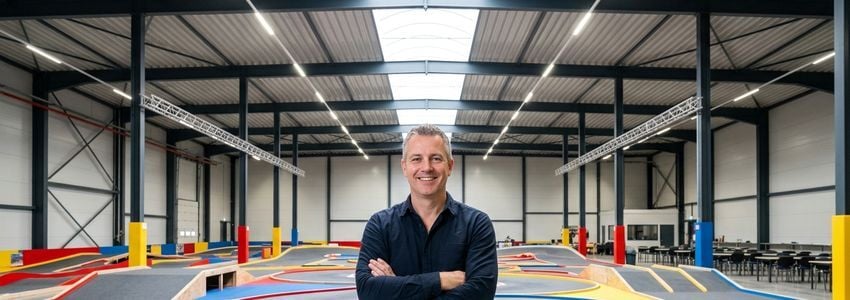
RC Vehicle Track Facility Financing: The Complete Guide for Business Owners
RC track financing gives entrepreneurs a practical path to build, buy, or expand an indoor or outdoor RC racing venue without draining cash reserves on track surfacing, timing systems, and safety infrastructure. Whether you are converting a warehouse into a members-only RC car track or upgrading an outdoor dirt course with lighting and grandstands, the right financing structure determines how fast you can open your doors and how much of your own capital stays in the bank. This guide breaks down every financing option available to RC track and RC racing facility owners, how lenders evaluate these deals, and how to choose the structure that fits your growth plan.
In This Article
What Is RC Track Facility Financing?
RC track facility financing refers to any funding solution used to open, equip, or expand a business built around radio-controlled vehicle racing. This includes indoor RC car tracks, outdoor dirt and asphalt courses, RC drag strips, hybrid hobby-shop-and-track locations, and dedicated racing league venues. Because these businesses combine real estate improvements, specialized equipment, and ongoing operating costs, most owners use more than one type of financing to get a facility fully operational.
Lenders typically bucket these deals under commercial and recreational facility financing, with the equipment portion (timing systems, track surfacing, barriers, lighting rigs, and charging stations) financed separately from any real estate build-out. Understanding which costs fall into which category is the first step to structuring a deal that does not overpay for short-term capital.
The RC hobby category has grown well beyond a niche pastime. Millions of RC vehicles are sold in the United States every year, and organized racing clubs and sanctioned events have multiplied alongside that demand. That growth has created a real opening for entrepreneurs willing to build professional-grade facilities rather than relying on informal parking-lot tracks or borrowed space. A financed, purpose-built facility signals legitimacy to serious racers and gives you the infrastructure to host sanctioned events, weekly leagues, and birthday party bookings that a makeshift setup simply cannot support.
Because RC track facilities sit at the intersection of retail, recreation, and light commercial construction, many first-time applicants are surprised at how many financing paths are actually available to them. A track is not fundamentally different, from a lender's perspective, than a batting cage facility, an indoor golf simulator lounge, or a trampoline park. Lenders who specialize in recreation and entertainment financing already have underwriting frameworks for exactly this kind of business, which means you do not need to reinvent the wheel when you apply.
Key Benefits of Financing Your RC Track Facility
- Preserve working capital. Spreading the cost of track surfacing, transponder timing systems, and safety barriers over monthly payments keeps cash available for marketing, staffing, and inventory.
- Match payments to revenue. Term loans and equipment financing can be structured around your membership or race-night revenue cycle instead of forcing a lump-sum outlay before you open.
- Access equipment you could not otherwise afford. Professional-grade timing and scoring systems, LED trackside lighting, and asphalt or clay surfacing installation are expensive upfront but financeable over 3-7 years.
- Build business credit. Consistent on-time payments on a track facility loan help establish a credit profile that supports future expansion, whether that is a second location or a larger indoor facility.
- Move faster than competitors. RC racing is a growing hobby segment. Being first to open a quality facility in your market matters more than saving a few points of interest by waiting to self-fund.
Ready to Build Your RC Track Facility?
Get fast, flexible financing from the #1 business lender in the U.S. No obligation, apply in minutes.
Apply Now →How RC Track Facility Financing Works
Most RC track financing follows a similar underwriting path regardless of lender, though the specific requirements vary by loan type.
- Determine your total project cost. Break the project into real estate (lease build-out, land, or purchase), equipment (track surface, timing systems, lighting, barriers, charging stations), and working capital (initial inventory, insurance, staffing before opening).
- Match each cost category to the right financing type. Equipment financing typically covers track surfacing and timing hardware, an SBA loan or commercial real estate loan covers a purchase or major renovation, and a business line of credit covers pre-opening working capital.
- Submit financial documentation. Lenders will want a business plan, personal and business tax returns, bank statements, and, if you are an existing operator, revenue history from race nights, memberships, or hobby shop sales.
- Underwriting and approval. Equipment financing and working capital products can close in as little as 24 to 48 hours. SBA and commercial real estate loans generally take several weeks due to appraisal and additional documentation requirements.
- Funding and disbursement. Equipment loans often fund directly to the vendor or manufacturer supplying your track surface or timing system. Real estate loans fund at closing. Working capital lines are drawn as needed.
By the Numbers
RC Track Facility Financing — Key Statistics
21M+
RC vehicles sold in the U.S. in 2024, signaling strong hobbyist demand
250+
Organized RC racing clubs across the U.S. driving facility demand
24-48 Hrs
Typical approval window for equipment financing on track hardware
10-20%
Typical down payment range for equipment and track surfacing financing
Types of RC Track Facility Financing
There is no single "RC track loan" product. Instead, owners combine several financing types based on what they are funding.
Equipment Financing and Leasing
This covers the track surface itself (asphalt, clay, or carpet for indoor courses), transponder timing systems, trackside LED lighting, safety barriers, and battery charging stations. Equipment financing typically requires a modest down payment and spreads the remaining cost over 2 to 7 years, with the equipment itself serving as collateral.
SBA Loans
SBA loans, particularly the 7(a) and 504 programs, are well suited to RC track facilities that need to purchase real estate, build out a leased warehouse space, or combine real estate and equipment costs into a single loan with a longer amortization schedule and lower down payment than a conventional commercial loan.
Commercial Real Estate Financing
If you are purchasing land or a building for an outdoor RC track, or acquiring a warehouse for an indoor facility, commercial real estate financing provides longer terms and lower monthly payments than short-term working capital products.
Business Lines of Credit
A business line of credit gives track owners a revolving cushion for seasonal fluctuations, initial inventory (batteries, replacement parts, retail hobby products), and staffing costs before membership revenue ramps up.
Unsecured Working Capital Loans
For owners who need a lump sum of flexible cash without pledging specific collateral, an unsecured working capital loan can bridge the gap between signing a lease and generating your first race-night revenue. This structure works well for covering signage, insurance premiums, point-of-sale systems, and the first few payroll cycles before membership sign-ups and event bookings ramp up.
Traditional Term Loans
Established operators with a track record of consistent revenue may qualify for a traditional term loan, which offers a fixed repayment schedule and predictable monthly payment for larger expansion projects, such as adding a second track layout or building out a pro shop and lounge area.
Pro Tip: Separate your equipment quote from your construction quote before applying. Lenders move faster and offer better terms when they can clearly see which costs are collateralized equipment versus general build-out expenses.
Who RC Track Financing Is Best For
RC track facility financing fits a range of business owners, including:
- Hobby shop owners looking to add a members-only or pay-to-race indoor track to an existing retail location
- Entrepreneurs opening a standalone indoor RC racing venue in a converted warehouse or industrial space
- Existing outdoor RC track operators expanding with lighting, grandstands, or a second track layout
- RC racing league organizers who need trackside timing, scoring, and broadcast equipment for larger events
- Entertainment center or family fun center operators adding an RC track as a new revenue stream alongside existing attractions
Comparing Your Financing Options
Choosing between equipment financing, an SBA loan, and a line of credit comes down to what you are funding and how quickly you need capital.
| Financing Type | Best For | Typical Term | Speed to Fund |
|---|---|---|---|
| Equipment Financing | Track surfacing, timing systems, lighting | 2-7 years | 24-48 hours |
| SBA 7(a) / 504 | Real estate purchase or full build-out | 10-25 years | 30-90 days |
| Commercial Real Estate Loan | Buying or renovating a facility | 10-25 years | 2-6 weeks |
| Business Line of Credit | Pre-opening working capital, seasonal cash flow | Revolving | 1-5 days |
Turn Your RC Track Vision Into Reality
Compare financing options built around your race-night revenue cycle. Apply in minutes, no obligation.
Apply Now →How Crestmont Capital Helps RC Track Facility Owners
Crestmont Capital works with recreation and entertainment facility owners to structure financing that fits how their revenue actually arrives, whether that is nightly race fees, monthly memberships, or seasonal spikes around holidays and school breaks. Our equipment financing programs cover track surfacing, timing and scoring systems, and safety infrastructure with approval decisions in as little as 24 to 48 hours. For owners building out or purchasing a facility, our team helps evaluate whether an SBA loan or a conventional commercial real estate loan makes more sense given your timeline and down payment capacity.
We also work with operators in adjacent recreation and motorsports categories. Our go kart track financing guide and our overview of financing for racing companies cover many of the same underwriting considerations that apply to RC track facilities, since lenders often evaluate these venue types similarly. If your plans include a rotating cash flow need for parts inventory, staffing, or marketing before your grand opening, a business line of credit can round out your financing package.
Key Stat: According to the SBA, over 33 million small businesses operate in the U.S., and access to capital is consistently cited as their number one growth barrier, particularly for niche recreation concepts like RC racing venues that fall outside standard commercial lending categories.
Common Mistakes RC Track Owners Make When Financing a Facility
Even experienced hobbyists can stumble when it comes time to finance a commercial-grade facility. Avoiding these missteps can save thousands of dollars in unnecessary interest and months of delay.
- Treating the entire project as one lump loan. Bundling real estate build-out, equipment, and working capital into a single high-rate product often costs more over time than splitting the project across the right financing types for each category.
- Underestimating pre-opening working capital. Many new track owners budget for construction and equipment but forget about the weeks or months of payroll, insurance, and marketing spend before meaningful revenue arrives.
- Skipping vendor comparisons on timing systems. Timing and scoring systems vary significantly in price and reliability. Getting multiple quotes before financing ensures you are not overpaying for equipment that will be collateralized for years.
- Waiting too long to establish business credit. Track owners who wait until they need a large expansion loan to start building business credit often face higher rates or personal guarantee requirements that could have been avoided with earlier planning.
- Not accounting for insurance and liability costs. Recreation facilities, especially those with motorized components, carry specific insurance requirements that lenders will want to see accounted for in your financial projections.
Step-by-Step Application Walkthrough
Here is what the financing process looks like from first inquiry to funded equipment, using a typical indoor RC track project as an example.
Step 1: Define Your Project Scope
Before contacting any lender, get firm quotes for your track surfacing, timing system, lighting, and any construction work. Separate these into distinct line items so you can match each to the right financing type rather than requesting one large, undifferentiated loan amount.
Step 2: Assemble Your Financial Package
Gather two to three years of personal tax returns, your most recent business tax returns if you have an existing entity, three to six months of business bank statements, and a written business plan that outlines your revenue model (memberships, race-night fees, retail sales, party bookings, or a combination).
Step 3: Get Pre-Qualified
Many lenders, including Crestmont Capital, offer a pre-qualification process that does not impact your personal credit score. This step gives you a realistic picture of what you can borrow and at what terms before you commit to a specific property or equipment vendor.
Step 4: Submit Formal Applications
Once you have chosen your financing structure, whether that is equipment financing alone or a combination with an SBA loan, submit your complete documentation package. Responding quickly to underwriter requests for additional information keeps your timeline on track.
Step 5: Close and Fund
Equipment financing often funds directly to your equipment vendor, while real estate and construction loans typically fund at closing through escrow. Your line of credit, if you open one, becomes available to draw against as soon as the account is established.
Step 6: Open and Build Revenue History
Once your doors are open, keep clean financial records from day one. Strong revenue history from your first year of operation makes any future expansion financing, such as adding a second location or a larger track layout, significantly easier to secure.
Real-World Scenarios
Scenario 1: Converting a Warehouse Into an Indoor RC Track
A hobbyist-turned-entrepreneur leases a 12,000-square-foot warehouse to build a members-only indoor RC car track. He uses equipment financing to cover the carpet track surface, transponder timing system, and LED lighting rig, while a short-term business line of credit covers pre-opening staffing and initial retail inventory of batteries, tires, and replacement parts.
Scenario 2: Expanding an Outdoor RC Track With Grandstands
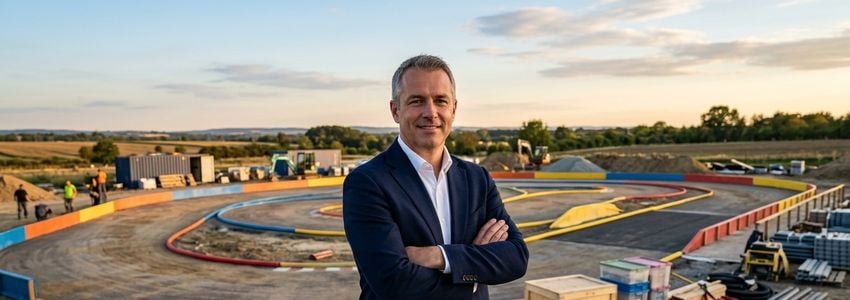
An existing outdoor RC track operator with three years of race-night revenue history wants to add lighted grandstands and a second track layout to host larger sanctioned events. He uses an SBA 504 loan for the site improvements and grandstand construction, keeping his existing cash reserves available for marketing the expanded event schedule.
Scenario 3: Hobby Shop Adding a Pay-to-Race Track
A retail hobby shop owner wants to add a small pay-to-race asphalt track behind her existing store to increase foot traffic and average customer visit length. She finances the track surfacing and barrier system through equipment financing, keeping the loan collateralized by the equipment itself rather than tying up her retail lease.
Scenario 4: RC Racing League Upgrading Event Equipment
An RC racing league that hosts monthly sanctioned events across multiple rented venues needs professional-grade timing, scoring, and live-stream broadcast equipment to attract bigger sponsorships. He uses equipment leasing to acquire the gear without a large upfront cash outlay, preserving working capital for event marketing and prize purses.
Get Pre-Qualified in Minutes
See what financing options fit your RC track project today, with no impact to your credit to check.
Apply Now →Frequently Asked Questions
Your RC Track Facility Starts Here
Talk to a financing specialist who understands recreation and entertainment venues. No obligation.
Apply Now →Next Steps
Separate equipment, real estate, and working capital needs before requesting quotes.
Pull together tax returns, bank statements, and equipment or construction quotes.
Match equipment financing, SBA, real estate, or a line of credit to each cost category.
Once funded, focus on your grand opening, membership drives, and event calendar.
Industry Trends Shaping RC Track Facility Demand
The broader hobby and recreation equipment market has shown steady growth, and RC racing specifically benefits from a passionate, repeat-visit customer base. Organized RC racing clubs have expanded across the country, and hobby shops increasingly report regular weekly racing events as a way to drive recurring foot traffic rather than relying solely on one-time retail purchases.
This shift toward experiential retail, where customers pay for access and participation rather than just merchandise, mirrors trends seen across the broader recreation and entertainment sector, from indoor golf simulators to axe-throwing venues. Facility owners who finance a professional-grade track rather than operating out of informal space are better positioned to capture membership revenue, host sanctioned competitive events, and build a defensible local brand in a growing hobby category.
For lenders, this translates into a more comfortable underwriting picture than it might have a decade ago. A well-documented business plan showing membership pricing, event revenue, and retail add-on sales gives underwriters real comparables to evaluate, which is part of why equipment financing and SBA products have become increasingly accessible to this niche.
Conclusion
RC track facility financing does not need to come from a single loan product. The most successful venues combine equipment financing for track surfacing and timing systems, an SBA loan or commercial real estate loan for the building itself, and a business line of credit to smooth out cash flow before membership and race-night revenue ramp up. Understanding how each financing type fits your project lets you open faster, keep more of your own capital in reserve, and build a credit profile that supports your next expansion. Whether you are launching your first indoor RC car track or adding grandstands to an established outdoor course, the right financing partner will structure a package around your specific costs and timeline rather than forcing your project into a one-size-fits-all loan.
Disclaimer: The information provided in this article is for general educational purposes only and is not financial, legal, or tax advice. Funding terms, qualifications, and product availability may vary and are subject to change without notice. Crestmont Capital does not guarantee approval, rates, or specific outcomes. For personalized information about your business funding options, contact our team directly.








