
 (800) 949-0401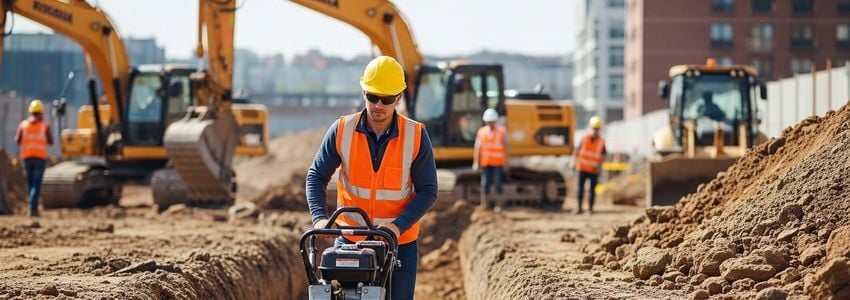
Rammer Compactor Financing: The Complete Guide for Business Owners
For construction, landscaping, and utility contractors, having the right equipment is not just an advantage- it is a necessity. A high-quality rammer compactor is essential for achieving proper soil density in tight spaces, ensuring the structural integrity of foundations, trenches, and backfills. Securing effective rammer compactor financing allows your business to acquire this critical asset without depleting capital, empowering you to take on more projects and grow your operations efficiently. This guide provides a comprehensive overview of the financing process, helping you make informed decisions for your company's equipment needs.
In This Article
- What Is a Rammer Compactor?
- Benefits of Financing a Rammer Compactor
- How Rammer Compactor Financing Works
- Types of Financing Available
- Who Qualifies for Rammer Compactor Financing
- How to Apply for Financing
- How Crestmont Capital Helps
- Real-World Scenarios
- Comparison: Financing vs. Purchasing Outright
- Frequently Asked Questions
- How to Get Started
What Is a Rammer Compactor?
A rammer compactor, often called a tamping rammer or a "jumping jack," is a powerful, impact-type soil compaction machine. Unlike plate compactors that use vibration, a rammer delivers high-impact, consecutive blows to the ground to densify soil with a high clay or silt content (cohesive soils). Its design features a smaller foot or shoe, concentrating the compaction force into a small area, making it incredibly effective for specific applications.
The machine consists of several key components: a power source (typically a small 2-stroke or 4-stroke gasoline engine, but diesel and electric models exist), a gearbox that converts the engine's rotation into vertical motion, a spring system that stores and releases energy, and the tamping shoe that strikes the ground. The operator guides the machine, which rhythmically jumps up and down, hence the nickname "jumping jack."
These machines are indispensable in construction and landscaping projects where larger compaction equipment, like rollers, cannot access or operate effectively. Their primary function is to eliminate air pockets and increase the load-bearing capacity of the soil, preventing future settling that could damage structures, pipes, or pavement.
Common Uses and Applications
The unique design of a rammer compactor makes it the ideal choice for a variety of tasks:
- Trench Compaction: After laying utility lines, pipes, or conduits, the backfilled soil in the trench must be thoroughly compacted in layers (lifts) to prevent the ground from sinking over time. A rammer's narrow profile is perfect for this task.
- Foundation and Footing Preparation: They are used to compact the soil for building foundations, retaining walls, and concrete slabs, ensuring a stable base that can support the structure's weight.
- Backfilling Around Structures: When backfilling soil against a foundation wall or other structure, a rammer can get close to the wall to ensure proper compaction without damaging the structure itself.
- Asphalt Patching and Repair: For small-scale asphalt repairs, a rammer can effectively compact the patch material, creating a durable and long-lasting repair.
- Confined Space Compaction: Any area that is too narrow or enclosed for larger equipment is a prime candidate for a rammer compactor, such as inside buildings or in tight corners of a job site.
Typical Costs of Rammer Compactors
The price of a rammer compactor varies based on brand, power source, impact force, and shoe size. Understanding these costs is the first step in planning your financing strategy.
- Light-Duty Models: These are suitable for smaller projects, landscaping, and occasional use. They typically feature smaller engines and lower impact force. Prices generally range from $1,500 to $3,500.
- Standard-Duty Models: This is the most common category, used by general contractors, utility companies, and rental fleets. They offer a balance of power, durability, and performance for daily use. Expect to pay between $3,500 and $8,000 for a new, reputable brand like Wacker Neuson, Multiquip, or Bomag.
- Heavy-Duty Models: Designed for the most demanding applications, these rammers feature larger engines (often diesel), higher impact forces, and more robust construction. They are used for deep compaction and continuous-duty cycles. Prices can range from $8,000 to $15,000 or more.
Financing allows your business to acquire the exact model needed for your specific jobs, rather than settling for a less-capable, cheaper machine that could compromise the quality of your work.
Benefits of Financing a Rammer Compactor
Choosing to finance a rammer compactor instead of purchasing it with cash offers significant strategic advantages for businesses of all sizes. It is not merely a way to acquire equipment when cash is low; it is a powerful financial tool for managing resources, improving efficiency, and accelerating growth. Here are the key benefits of opting for rammer compactor financing.
1. Preserve Working Capital and Improve Cash Flow
Cash is the lifeblood of any business, especially in the construction and contracting industries where cash flow can be unpredictable. Paying thousands of dollars upfront for a new rammer compactor can strain your liquid assets, leaving less money available for other critical business needs like payroll, marketing, materials, or unexpected expenses. Financing converts a large, one-time capital expenditure into a series of small, predictable monthly payments. This frees up your cash, allowing you to maintain a healthy cash reserve and invest in other revenue-generating activities.
2. Acquire Better, More Efficient Equipment
Financing gives you access to the best equipment on the market, not just the equipment you can afford to buy with cash today. You can select a top-tier, reliable rammer from a leading manufacturer known for durability and performance. Better equipment often translates to increased productivity, fewer breakdowns, lower maintenance costs, and superior job quality. This can enhance your company's reputation and enable you to bid on more demanding and profitable projects.
3. Potential Tax Advantages
Equipment financing structures often come with significant tax benefits. Under Section 179 of the IRS tax code, businesses may be able to deduct the full purchase price of qualifying new or used equipment in the year it is placed into service. This can substantially lower your taxable income for the year. Additionally, for certain lease structures, the monthly payments may be treated as an operating expense and can be fully deducted. It is crucial to consult with a tax professional to understand how these benefits apply to your specific financial situation and chosen financing agreement.
4. Flexible and Predictable Budgeting
Financing provides a fixed monthly payment over a set term (e.g., 24, 36, 48, or 60 months). This predictability makes budgeting and financial forecasting much simpler. You know exactly what your equipment costs will be each month, eliminating the volatility associated with large, unplanned capital outlays. This stability helps you manage your finances more effectively and plan for future growth with greater confidence.
5. Build Business Credit
Successfully managing an equipment financing agreement and making consistent, on-time payments can help build and strengthen your business's credit profile. A strong credit history makes it easier and more affordable to secure financing for future needs, whether it is for more equipment, a line of credit, or a commercial real estate loan. It is an investment in your company's long-term financial health.
6. Scalability and Fleet Modernization
As your business grows, so will your equipment needs. Financing makes it easy to scale your operations by adding more rammer compactors or other machinery to your fleet as you win more contracts. It also facilitates a regular equipment replacement cycle. Instead of running old equipment into the ground, you can use financing to upgrade to newer, more technologically advanced models every few years, keeping your fleet modern, efficient, and competitive.
7. 100% Financing Options
Many equipment financing programs offer 100% financing, which means you can roll the full cost of the asset- including taxes, shipping, and setup fees- into the loan. This eliminates the need for a large down payment, further preserving your cash reserves. This "no money down" approach allows you to acquire and start using the revenue-generating equipment immediately with minimal initial cash outlay.
How Rammer Compactor Financing Works
Understanding the mechanics of the financing process demystifies it and empowers you to navigate it effectively. While specific steps can vary slightly between lenders, the core process for acquiring a rammer compactor through financing generally follows a clear, logical progression. It is a collaborative effort between your business (the borrower), the equipment vendor (the seller), and the financing company (the lender).
Step 1: The Application
The journey begins when you decide you need a rammer compactor and choose to finance it. You will complete a credit application with a lender like Crestmont Capital. Modern lenders have streamlined this process significantly. Often, it is a simple one-page online form that asks for basic information about your business, such as:
- Business name, address, and contact information
- Years in business
- Federal Tax ID (EIN)
- Information about the business owners (name, title, ownership percentage)
- The total amount of financing requested
- Information about the equipment you wish to purchase (vendor, cost, new/used)
For smaller financing amounts (typically under $250,000), this application is often all that is needed for an initial credit decision. For larger amounts or more complex situations, the lender may request additional documentation like bank statements, financial statements, or tax returns.
Step 2: Credit Review and Underwriting
Once you submit your application, it goes to the lender's underwriting team. This team is responsible for assessing the risk associated with lending to your business. They will review your application and perform a credit check on both the business and its principals. The underwriters analyze several key factors:
- Credit History: They look at your personal and business credit scores and reports to see your history of managing debt.
- Time in Business: Lenders prefer established businesses, as they have a proven track record. However, many lenders, including Crestmont Capital, have programs for startups.
- Cash Flow and Revenue: Bank statements help underwriters verify that your business has sufficient and consistent cash flow to support the new monthly payment.
- Industry Strength: The construction and contracting industries are generally viewed favorably by equipment lenders due to the essential nature of the work.
This process is often very fast, with many lenders providing a credit decision within a few hours to a business day.
Step 3: Approval and Offer Presentation
If your application is approved, the lender will extend a financing offer. This offer will outline the specific terms of the agreement, including:
- Financing Amount: The total amount of money you are approved for.
- Term Length: The duration of the loan, typically from 24 to 72 months.
- Monthly Payment: The fixed amount you will pay each month.
- Interest Rate or Factor Rate: The cost of borrowing the money.
- Financing Structure: The type of agreement, such as an Equipment Finance Agreement (EFA) or a specific type of lease.
A good financing partner will take the time to walk you through the offer, explain all the terms clearly, and answer any questions you have. This is your opportunity to ensure the terms align with your business's budget and financial goals.
Step 4: Documentation and Funding
Once you accept the offer, the lender will generate the final financing documents for you to sign. Thanks to technology, this is usually done electronically via e-signature, making the process quick and convenient. After the signed documents are returned and verified, the final step is funding.
The lender coordinates directly with the equipment vendor you have chosen. They will issue a purchase order and pay the vendor the full invoice amount for the rammer compactor. This means you do not have to handle the payment yourself. Once the vendor is paid, they will release the equipment for delivery to your business.
Step 5: Repayment
After you receive your new rammer compactor and put it to work, you begin making your regular monthly payments to the lender as outlined in your agreement. These payments continue for the duration of the agreed-upon term. At the end of the term, depending on your financing structure, you will either own the equipment outright or have the option to purchase it, return it, or upgrade it.
Ready to Acquire Your Next Rammer Compactor?
Don't let cash flow hold you back. Get the equipment you need now with our fast, flexible financing solutions.
Apply NowTypes of Financing Available
When seeking rammer compactor financing, it is important to understand that not all financing products are the same. Different structures offer unique benefits related to ownership, tax treatment, and end-of-term options. Choosing the right one depends on your business's long-term strategy, accounting practices, and goals for the equipment. Here are the most common types of financing available for construction equipment.
1. Equipment Finance Agreement (EFA)
An Equipment Finance Agreement is one of the most straightforward financing options. It functions very much like a traditional loan. You borrow a set amount of money to purchase the rammer compactor, and you make regular principal and interest payments over a fixed term. The equipment serves as the collateral for the loan.
- Ownership: You are the owner of the equipment from day one. Your business name is on the title or bill of sale.
- End of Term: Once you make the final payment, you own the rammer compactor free and clear, with no further obligations.
- Tax Implications: Because you own the equipment, you can typically take advantage of depreciation deductions, including potential Section 179 expensing, which allows you to deduct a significant portion (or all) of the equipment's cost in the first year. The interest portion of your payments is also usually tax-deductible.
- Best For: Businesses that plan to keep and use the rammer compactor for its entire useful life and want to build equity in their assets.
2. Capital Lease (or $1 Buyout Lease)
A Capital Lease is very similar to an EFA and is often treated as a purchase for accounting and tax purposes. It is structured as a lease, but the terms are set up in a way that transfers ownership to you at the end of the lease term. The most common type is the $1 Buyout Lease.
- Ownership: While technically a lease during the term, it is considered a "purchase-type" lease.
- End of Term: At the end of the lease term, you have the option to purchase the equipment for a nominal amount, typically just $1. This effectively guarantees your ownership.
- Tax Implications: Like an EFA, a capital lease generally allows you to claim depreciation and Section 179 deductions because it is treated as a purchase by the IRS.
- Best For: Companies that want the benefits of ownership and the tax advantages of depreciation, but prefer the "lease" terminology or structure.
3. Operating Lease (or Fair Market Value Lease)
An Operating Lease is a true rental agreement. You are paying to use the rammer compactor for a portion of its useful life, not to own it. This results in lower monthly payments compared to a capital lease or EFA for the same piece of equipment.
- Ownership: The lender (the lessor) retains ownership of the equipment throughout the lease term.
- End of Term: At the end of the term, you have several flexible options:
- Purchase: You can buy the equipment for its Fair Market Value (FMV) at that time.
- Return: You can simply return the equipment to the lender and walk away.
- Renew: You can renew the lease, often at a reduced monthly payment.
- Tax Implications: The monthly lease payments are typically treated as a direct operating expense and can be fully deducted from your taxable income. This can be simpler than tracking depreciation.
- Best For: Businesses that want the lowest possible monthly payment, need to keep their equipment fleet modern by upgrading every few years, or are unsure about their long-term need for the specific asset. It keeps the asset and corresponding liability off the balance sheet.
4. Small Business Loans
While equipment-specific financing is often the most direct route, a general small business loans can also be used to purchase a rammer compactor. This could be a term loan or a line of credit. A term loan provides a lump sum of cash that you repay over a set period, while a line of credit gives you a revolving credit limit to draw from as needed.
- Flexibility: The funds from a small business loan are not tied to a specific piece of equipment. You could use the loan to buy a rammer compactor as well as other tools or materials.
- Process: The application process for a general business loan may be more intensive, potentially requiring more detailed financial documentation than an application-only equipment financing program.
- Collateral: A small business loan may be unsecured or may require a general lien on all business assets, whereas equipment financing is secured only by the equipment itself.
- Best For: Businesses that have multiple purchasing needs beyond a single piece of equipment or those who can qualify for very favorable terms on a general loan.
By the Numbers
Rammer Compactor Financing - Key Industry Stats
$1.4 Trillion
The value of new construction put in place in the U.S. annually, highlighting the massive demand for essential equipment like compactors. (Source: U.S. Census Bureau)
8 in 10
The number of U.S. companies that use some form of financing to acquire equipment, including leases, loans, and lines of credit. (Source: Equipment Leasing and Finance Association)
9.2% Growth
The projected compound annual growth rate (CAGR) for the global compact construction equipment market through 2030, signaling sustained investment. (Source: Allied Market Research / Forbes)
$250,000
A common threshold for "application-only" equipment financing programs, allowing businesses to get funded quickly without extensive financial paperwork.
Who Qualifies for Rammer Compactor Financing
A common misconception is that equipment financing is only available to large, long-established corporations with perfect credit. In reality, a wide spectrum of businesses can qualify for rammer compactor financing. Lenders evaluate a combination of factors to determine eligibility and to structure an appropriate financing offer. Understanding these criteria can help you prepare your application and set realistic expectations.
1. Credit Score
The personal credit score of the business owner(s) is a primary factor, especially for smaller businesses and sole proprietorships. Lenders generally categorize applicants into tiers:
- Excellent Credit (750+): Applicants in this range can expect the most favorable terms, including the lowest interest rates, longest repayment periods, and highest approval amounts. They are considered very low risk.
- Good Credit (680-749): This is a strong credit range, and businesses here will have access to a wide variety of competitive financing options from many lenders.
- Fair Credit (620-679): Businesses in this tier are still highly financeable. While rates may be slightly higher than for top-tier credit, there are numerous programs available. Lenders may look more closely at other factors like cash flow and time in business.
- Challenged Credit (Below 620): Even with a lower credit score, financing is still possible. Lenders specializing in bad credit equipment financing will place a greater emphasis on the business's recent performance, cash flow, and the value of the equipment being financed. Terms will be adjusted to reflect the higher risk.
2. Time in Business
How long your company has been operating is a key indicator of stability. Lenders typically have different programs based on business maturity:
- Established Businesses (2+ years): Companies with at least two years of operational history are in the strongest position. They have a track record of revenue and credit management, making them ideal candidates for the best financing terms.
- Startups and New Businesses (0-2 years): Acquiring equipment is crucial for new businesses to get off the ground. While traditional banks may hesitate to lend to startups, many alternative lenders, including Crestmont Capital, have specialized programs designed for them. These programs often rely more heavily on the owner's personal credit score and may require a slightly larger down payment or have shorter terms.
3. Annual and Monthly Revenue
Lenders need to be confident that your business generates enough revenue to comfortably afford the new monthly payment. They will typically look at your gross annual revenue and, more importantly, your recent monthly cash flow.
- Revenue Thresholds: Many financing programs have minimum annual revenue requirements, which can range from $100,000 to $250,000 or more, depending on the lender and the loan size.
- Bank Statements: For many applications, lenders will ask for the last 3-6 months of business bank statements. They analyze these to verify revenue, check for consistent deposits, and ensure you maintain a healthy average daily balance. They want to see that your cash flow can support your existing obligations plus the new payment without strain.
4. Industry
Your industry plays a role in the lender's risk assessment. The good news is that industries that use rammer compactors- such as general construction, landscaping, utility contracting, and road work- are considered strong and stable. The equipment is essential and revenue-generating, which lenders view favorably. The asset itself also has good resale value, which reduces the lender's risk if a default were to occur.
How to Apply for Financing
Applying for rammer compactor financing is a more streamlined and accessible process than ever before. By following a structured approach, you can increase your chances of a quick approval and secure the best possible terms for your business. Here is a step-by-step guide to navigating the application process successfully.
Step 1: Assess Your Business Needs and Budget
Before you even look for a lender, start with an internal assessment. Determine exactly what you need. Research different rammer compactor models and brands to find the one that best suits the types of jobs you perform. Get a firm quote from one or more equipment vendors, including the price, taxes, and any delivery fees. Once you have a total cost, review your business budget to determine a monthly payment amount that you can comfortably afford without straining your cash flow.
Step 2: Gather Necessary Documentation
Being prepared with the right documents will expedite the entire process. While many lenders offer "application-only" programs for amounts under $250,000, it is wise to have the following information ready:
- Basic Business Information: Legal business name, DBA (if any), address, phone number, and Federal Tax ID (EIN).
- Ownership Information: Names, titles, and ownership percentages for all principals.
- Equipment Quote: A formal invoice or quote from your chosen vendor detailing the rammer compactor's make, model, condition (new or used), and total cost.
- Recent Bank Statements: Be prepared to provide the last 3 to 6 months of your business bank statements. This is one of the most common requests from underwriters.
- (If Required) Financial Statements: For larger financing requests, you may be asked for a profit and loss statement, balance sheet, and business tax returns.
Step 3: Choose the Right Financing Partner
Not all lenders are created equal. It is important to work with a financing company that understands your industry and has experience with construction equipment. Consider the following when selecting a partner:
- Expertise: Do they specialize in equipment financing and understand the value of assets like rammer compactors?
- Speed: How quickly can they process your application and provide funding? In business, speed is often critical.
- Flexibility: Do they offer a range of financing products (EFAs, leases, etc.) and work with businesses across the credit spectrum?
- Reputation: Look for positive online reviews and testimonials from other business owners.
Working with a direct lender and advisor like Crestmont Capital can provide access to a wider array of programs tailored to your specific situation.
Step 4: Complete and Submit the Application
With your information gathered, you can now formally apply. Most modern lenders offer a secure online application that can be completed in just a few minutes. Fill out the form accurately and completely. Any missing or incorrect information can cause delays. Double-check details like your EIN and business address before submitting.
Step 5: Review and Compare Financing Offers
After your application is reviewed, you will receive a financing offer (or multiple offers). Do not just look at the monthly payment. Carefully review all the key terms:
- Total Amount Financed: Does it cover the full cost of the equipment?
- Term Length: How many months will you be paying? A longer term means a lower payment but more total interest paid. A shorter term means a higher payment but less total interest.
- Interest Rate / Factor Rate: Understand the cost of the financing.
- End-of-Term Options: Is it a $1 buyout, an FMV purchase option, or do you simply own it at the end?
- Fees: Are there any documentation fees or other one-time charges?
If you have any questions, ask your financing representative to clarify them before you proceed.
Step 6: Sign the Agreement and Receive Your Equipment
Once you have chosen the offer that best fits your needs, you will receive the final financing documents to sign. This is typically handled via a secure e-signature platform. After you have signed and the lender has verified the documents, they will coordinate payment directly with your equipment vendor. The vendor will then be cleared to release the rammer compactor for pickup or delivery. You can put your new equipment to work immediately, generating revenue for your business.
How Crestmont Capital Helps
Navigating the world of equipment financing can be complex, but you do not have to do it alone. Partnering with an experienced and dedicated lender like Crestmont Capital can make a significant difference in the speed, efficiency, and outcome of your financing journey. We specialize in providing tailored funding solutions for businesses in the construction and contracting sectors, understanding the unique challenges and opportunities you face.
Our approach is built on a foundation of expertise and customer-centric service. We recognize that acquiring a rammer compactor is not just a purchase; it is an investment in your company's productivity and growth. Here is how Crestmont Capital stands apart and helps businesses like yours succeed.
1. Speed and Simplicity
We know that time is money in your industry. Waiting weeks for a loan decision from a traditional bank can mean losing out on a project or a great deal on a piece of equipment. Our process is designed for speed. Our simple online application takes only minutes to complete, and we often provide credit decisions within hours. Funding can occur in as little as 24 hours after approval, meaning you can get your rammer compactor on the job site and generating revenue almost immediately.
2. A Broad Range of Financing Solutions
One size does not fit all when it comes to business financing. Crestmont Capital offers a comprehensive suite of products to match your specific needs. Whether you are looking for a straightforward heavy machinery financing agreement to build equity, a flexible operating lease to keep payments low, or a working capital loan for broader needs, we have a solution. Our expertise extends across all types of construction equipment financing, ensuring we can structure the perfect deal for everything from a single tamping rammer to a full fleet of machinery.
3. Financing for All Business Profiles
We believe every viable business deserves access to the capital it needs to grow. Crestmont Capital works with a diverse range of clients, from established multi-million dollar contractors to brand new startups. We also have robust programs for business owners with less-than-perfect credit. Our specialized compactor financing guide highlights options even if you have been turned down by other lenders. We look beyond just a credit score, taking a holistic view of your business's health and potential.
4. Expert Guidance and Partnership
When you work with Crestmont Capital, you get more than just a loan; you get a dedicated financing partner. Our experienced account executives take the time to understand your business goals. They will walk you through your options, explain the benefits of each financing structure, and help you choose the one that aligns with your financial strategy. This level of personalized service is essential for making confident financial decisions. As noted by the Small Business Administration (SBA), having access to knowledgeable funding advisors is a key component of business success. The sustained growth in the construction sector, as reported by outlets like CNBC, underscores the constant need for reliable equipment, and we are here to facilitate that acquisition.
5. Vendor Independence
We give you the freedom to purchase your rammer compactor from any dealer, manufacturer, or private seller in the country. Unlike captive financing companies that are tied to a single brand, we are vendor-agnostic. This allows you to shop for the best equipment at the best price, knowing your financing is already secured. Once you find the right machine, we handle the payment to the seller directly, simplifying the transaction for you. This flexibility is crucial in a market where, according to a recent analysis by The Wall Street Journal, supply chain dynamics can affect equipment availability and pricing.
Experience the Crestmont Capital Difference
Partner with a lender that understands your industry. Get fast, flexible financing with expert support.
Get Your Free QuoteReal-World Scenarios
To better illustrate how rammer compactor financing works in practice, let's explore a few hypothetical but realistic scenarios. These examples showcase how different types of businesses can leverage financing to meet their specific operational and financial goals.
Scenario 1: The Landscaping Startup
- Business: "GreenScape Solutions," a landscaping and hardscaping company in business for 18 months.
- Need: They are winning more jobs that require retaining wall and paver patio installations, which necessitates proper base compaction. They need a reliable, standard-duty rammer compactor to ensure quality and avoid costly rework. The chosen model costs $4,500.
- Challenge: As a newer business, they have limited cash reserves and want to preserve capital for marketing and hiring another crew member. The owner's personal credit is good (710), but the business credit profile is still thin.
- Financing Solution: GreenScape applies for an Equipment Finance Agreement (EFA). Due to their startup status, they are approved for a 36-month term. The financing covers 100% of the equipment cost. Their monthly payment is approximately $155.
- Outcome: They acquire the essential rammer without any upfront cost, protecting their cash flow. The low monthly payment is easily covered by the revenue from a single small project. They can now complete jobs faster and to a higher standard, improving their reputation and profitability. They also begin building a positive business credit history.
Scenario 2: The Established Plumbing Contractor
- Business: "Pipeline Professionals Inc.," a plumbing and utility contractor in business for 12 years with strong annual revenues.
- Need: Their two old rammer compactors are becoming unreliable and causing downtime. They need to replace them with two new, heavy-duty models to keep up with their busy schedule of water and sewer line repairs. The total cost for both units is $17,000.
- Goal: They want to own the equipment long-term and take advantage of tax benefits to lower their taxable income for the year.
- Financing Solution: With excellent business credit and a long operational history, Pipeline Professionals easily qualifies for a $1 Buyout Capital Lease on a 48-month term. Their monthly payment is around $420.
- Outcome: They immediately upgrade their fleet, improving crew efficiency and reducing repair costs. At tax time, their accountant uses the Section 179 deduction to write off the full $17,000 equipment cost, providing a significant tax saving. At the end of the 48 months, they pay $1 and own both rammers outright.
Scenario 3: The Large General Contractor
- Business: "Summit Construction," a large general contractor managing multiple commercial building projects simultaneously.
- Need: They require four new rammer compactors to equip different job sites. They also want to maintain a modern fleet and prefer to upgrade their equipment every three years to minimize maintenance and maximize performance. The total equipment cost is $24,000.
- Goal: The lowest possible monthly payment and the flexibility to upgrade technology in the future. They want to treat the equipment as an operating expense.
- Financing Solution: Summit Construction opts for a 36-month Fair Market Value (FMV) Operating Lease. Because they are only paying for the use of the equipment during the term, not the full purchase price, their monthly payment is significantly lower- approximately $650 for all four units.
- Outcome: They equip all their sites with brand new, reliable rammers for a low, budget-friendly monthly cost. The lease payments are a simple, tax-deductible operating expense. After 36 months, they return the used rammers and enter a new lease for the latest models, ensuring their crews always have the best tools without the hassle of selling old equipment.
Scenario 4: The Sole Proprietor with Challenged Credit
- Business: "Dave's Concrete & Repair," a sole proprietorship run by an experienced concrete specialist.
- Need: Dave needs to replace his broken rammer to continue taking on foundation repair and sidewalk jobs. He finds a quality used model from a local dealer for $2,800.
- Challenge: Due to a past personal financial issue, Dave's credit score is 590. A traditional bank loan is not an option, and he does not have the cash to buy it outright. However, his last six months of bank statements show consistent deposits and healthy cash flow.
- Financing Solution: Dave works with a lender that has programs for challenged credit. The lender focuses on his strong recent cash flow and the value of the asset. He is approved for a 24-month financing agreement. The rate is higher to reflect the credit risk, resulting in a monthly payment of about $150.
- Outcome: Despite his credit history, Dave is able to secure the financing he needs to get back to work. The affordable payment allows him to keep his business running and generating income. By making his payments on time, he begins the process of rebuilding his credit profile, which will open up better financing options in the future.
Comparison: Financing vs. Purchasing Outright
Deciding whether to finance a rammer compactor or buy it with cash is a major financial decision. Both methods have distinct advantages and disadvantages. The right choice depends on your company's cash position, growth strategy, and financial philosophy. This table provides a clear comparison of the key factors to consider.
| Factor | Financing | Purchasing Outright (Cash) |
|---|---|---|
| Initial Cash Outlay | Low to none. Preserves working capital for other business needs. | High. Requires 100% of the equipment cost upfront, depleting cash reserves. |
| Impact on Cash Flow | Creates a predictable, manageable monthly payment that is easy to budget for. | A large, immediate negative impact on cash flow. No ongoing payments. |
| Equipment Quality | Allows you to acquire the best, most efficient model, not just the cheapest. | You are limited to what your current cash balance can afford, potentially leading to compromises on quality or features. |
| Ownership & Equity | Ownership is achieved at the end of the term (for EFAs/Capital Leases). You build equity with each payment. | Immediate ownership and equity in the asset from day one. |
| Tax Implications | Potential for Section 179 deduction and depreciation (EFA/Capital Lease) or deducting payments as an operating expense (Operating Lease). | Can take advantage of Section 179 and depreciation, but the cash is already spent. |
| Total Cost | Higher total cost over the life of the loan due to interest charges. | Lower total cost as there are no interest payments. |
| Business Credit | Making on-time payments helps build and strengthen your business's credit profile. | Does not impact or build business credit. |
| Scalability | Easy to acquire additional units as the business grows without needing large cash reserves for each one. | Scaling up requires significant available cash for each new piece of equipment. |
Frequently Asked Questions
1. What exactly is a rammer compactor and what is it used for? +
A rammer compactor, also known as a tamping rammer or "jumping jack," is a piece of construction equipment designed for compacting soil, especially cohesive soils like clay. It works by delivering high-impact force through a small "foot" or shoe, which makes it extremely effective in confined areas. Common uses include compacting soil in trenches after laying pipes, preparing foundations for buildings and retaining walls, backfilling around structures, and small asphalt patching jobs. It is essential for ensuring a stable ground base and preventing future settling.
2. What are the main types of financing available for a rammer compactor? +
There are several primary options. An Equipment Finance Agreement (EFA) is like a traditional loan where you own the equipment from the start and make payments. A Capital Lease ($1 Buyout) is similar, structured as a lease but with a guaranteed ownership transfer at the end for a nominal fee. An Operating Lease (FMV) is a true rental with lower payments and options to buy, return, or upgrade at the end. Finally, a general Small Business Loan can also be used, though it is less specific to the asset.
3. What kind of interest rates and terms can I expect? +
Rates and terms are highly dependent on your business's financial profile, including your credit score, time in business, and revenue. Businesses with excellent credit and a long history can expect the lowest rates and longest terms, typically 24 to 72 months. Newer businesses or those with fair credit will see slightly higher rates and potentially shorter terms, such as 24 to 48 months. The best way to know for sure is to submit an application, as a specific offer is tailored to your unique situation.
4. What is the minimum credit score required for financing? +
While there is no universal minimum, most prime lenders look for a score of 680 or higher for the best rates. However, many flexible lenders like Crestmont Capital have programs that accommodate a wider range of credit profiles. We have options for business owners with scores in the fair (620-679) and even challenged (below 620) ranges. For lower credit scores, underwriters will place more weight on factors like recent cash flow, time in business, and industry experience.
5. Do I need a down payment to finance a rammer compactor? +
For many well-qualified borrowers, 100% financing is available, meaning no down payment is required. This allows you to acquire the equipment with zero cash out of pocket. In some cases, such as for startups or businesses with challenged credit, a lender may ask for a small down payment (e.g., 10-20%) or the first and last monthly payments upfront to reduce their risk. This is determined during the underwriting process.
6. Can I finance a used rammer compactor? +
Absolutely. Crestmont Capital and many other lenders will finance both new and used equipment. Financing a used rammer compactor can be a great way to save money, as the purchase price is lower. The lender will want to ensure the equipment is in good working condition and fairly priced. You can purchase from a reputable dealer or even a private party, and the financing process remains largely the same.
7. What documents are needed to apply? +
For financing amounts under $250,000, the process is often "application-only." This means all you typically need is a completed one-page application with basic business and owner information. For a smoother process, it is also helpful to have an invoice or quote for the rammer compactor you want to buy. In some cases, particularly for newer businesses or larger amounts, the lender may also request your last 3-6 months of business bank statements to verify revenue.
8. How long does the financing process take from application to funding? +
The process with a modern, efficient lender is very fast. After submitting an online application, you can often receive a credit decision within a few hours. Once you approve the terms, documents can be signed electronically. The final step, funding the equipment vendor, can often happen the same day or the next business day. The entire process, from start to finish, can be completed in as little as 24-48 hours.
9. Can I finance more than one piece of equipment at a time? +
Yes. You can bundle multiple pieces of equipment into a single financing agreement. If you need to purchase two rammer compactors, or a rammer along with a plate compactor and a cut-off saw, you can combine the total cost into one application. This simplifies the process and gives you one convenient monthly payment for all your new assets.
10. What is the difference between leasing and buying a rammer compactor? +
The main difference lies in ownership and monthly payment. "Buying" through an EFA or Capital Lease means your goal is ownership; payments are higher, but you own the asset at the end. "Leasing" via an Operating Lease means your goal is usage; payments are lower because you are only paying for the equipment's depreciation over the term. At the end of a lease, you can return it, renew, or buy it for its fair market value. Buying is better for long-term asset-building, while leasing is better for low payments and frequent upgrades.
11. What if my business is a startup? Can I still get financing? +
Yes, financing for startups is available. While traditional banks are often hesitant to lend to businesses with less than two years of history, many alternative lenders have specific programs for new companies. For startup financing, lenders will rely more heavily on the owner's personal credit score, a solid business plan, and sometimes industry experience. Terms may be slightly more conservative (e.g., shorter term length or a small down payment), but it is a very common and effective way for new businesses to get the equipment they need to start generating revenue.
12. How is financing better than paying cash? +
While paying cash avoids interest, financing offers significant strategic benefits. It preserves your working capital for other critical needs like payroll, marketing, or unexpected opportunities. It allows you to acquire better, more expensive equipment than you might afford with cash, leading to higher productivity. It also provides predictable monthly payments for easy budgeting and offers potential tax advantages through deductions. For most businesses, the return on investment from deploying their cash elsewhere far outweighs the cost of interest on an equipment loan.
13. What is Section 179 and how does it relate to my financing? +
Section 179 of the IRS tax code is a powerful tax incentive for businesses. It allows you to deduct the full purchase price of qualifying new or used equipment in the year it is put into service, rather than depreciating it over several years. Financing agreements like EFAs and Capital Leases are typically structured to allow you to take advantage of this deduction. This can significantly reduce your taxable income for the year. Always consult with your tax advisor to confirm how Section 179 applies to your specific purchase and business structure.
14. Can I choose my own equipment vendor? +
Yes. With a third-party lender like Crestmont Capital, you have complete freedom to choose your vendor. You can buy your rammer compactor from any equipment dealer, manufacturer, or even a private seller anywhere in the country. This allows you to shop around for the best price and the exact model you want. Once you are approved for financing and have an invoice from the seller, the lender will pay them directly, simplifying the transaction for you.
15. How does the Crestmont Capital process work? +
Our process is designed for speed and convenience. It starts with our simple online application, which takes just a few minutes. Our underwriting team then reviews your application, often providing an approval within a few hours. A dedicated account executive will contact you to discuss the approved terms and answer your questions. Once you accept an offer, we send electronic documents for your signature. After they are signed, we pay your chosen equipment vendor, and you are free to take delivery of your rammer compactor. It is a fast, transparent, and seamless experience.
How to Get Started
Apply Online in Minutes
Complete our secure, one-page application. It is fast, easy, and has no impact on your credit score to see your options.
Speak with a Specialist
A dedicated account executive will review your approval with you, explain your options, and help you choose the best structure for your business.
Get Funded & Grow
Sign your documents electronically and we will pay your vendor directly. Get your new rammer compactor on the job site in as little as 24 hours.
Don't Wait to Upgrade Your Equipment
The path to better productivity and higher profits starts here. Get your no-obligation financing quote today.
Apply in 60 SecondsInvesting in the right equipment is fundamental to the success of any construction or landscaping business. A rammer compactor is a vital tool that directly impacts the quality and durability of your work. By leveraging smart financing options, you can acquire this essential asset without compromising your company's financial stability. Financing preserves your cash, provides tax advantages, and allows you to use the best equipment available, ultimately driving efficiency and profitability. Crestmont Capital is ready to partner with you to make your next equipment acquisition simple and affordable.
Disclaimer: The information provided in this article is for general educational purposes only and is not financial, legal, or tax advice. Funding terms, qualifications, and product availability may vary and are subject to change without notice. Crestmont Capital does not guarantee approval, rates, or specific outcomes. For personalized information about your business funding options, contact our team directly.








