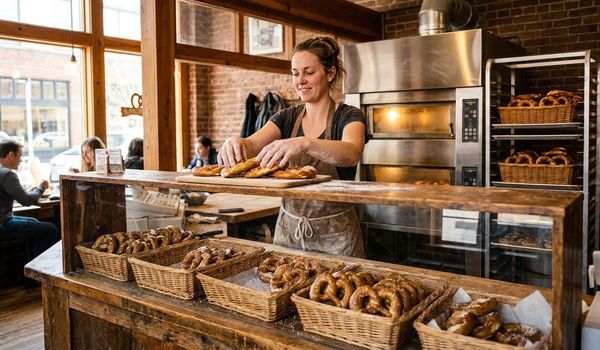
Pretzel shop financing gives current and aspiring soft pretzel shop owners access to the capital they need to open, equip, staff, and grow a profitable specialty snack business. Whether you are planning a mall kiosk, a downtown storefront, a stadium concession stand, or a mobile pretzel concept, the right funding structure can be the difference between a slow, cash-strapped launch and a confident opening day. This guide walks through every major financing option available to pretzel shop owners, what each one costs, who qualifies, and how to choose the funding mix that fits your business plan.
The soft pretzel has quietly become one of the most reliable performers in the specialty snack segment. Pretzels are cheap to produce, fast to serve, easy to customize, and loved by nearly every demographic. That combination of low food cost and broad appeal makes pretzel shops attractive to lenders, because the underlying unit economics tend to be strong. If you understand how pretzel shop financing works before you apply, you can secure better terms, protect your cash flow, and put your shop on a path to profitability from day one.
In This Article
- What Is Pretzel Shop Financing?
- Key Benefits of Financing Your Pretzel Shop
- How Pretzel Shop Financing Works
- Types of Financing for Pretzel Shops
- What Does It Cost to Open a Pretzel Shop?
- Who Qualifies for Pretzel Shop Financing?
- Pretzel Shop Financing vs. Other Funding Options
- How Crestmont Capital Helps Pretzel Shop Owners
- Real-World Scenarios
- FAQ
- How to Get Started
What Is Pretzel Shop Financing?
Pretzel shop financing is an umbrella term for the business loans, equipment financing agreements, lines of credit, and other funding products that soft pretzel shop owners use to launch and operate their businesses. It is not a single loan product. Instead, it describes how a pretzel shop owner matches the right funding tool to each business need, from the pretzel oven and dough mixer behind the counter to the working capital that covers payroll during the first few months of operation.
A typical pretzel shop uses financing for four broad purposes. The first is startup capital: lease deposits, buildout, signage, permits, initial inventory, and pre-opening marketing. The second is equipment: pretzel ovens, dough sheeters, mixers, warming displays, refrigerators, freezers, and point-of-sale systems. The third is working capital: payroll, rent, utilities, flour and ingredient purchases, and packaging. The fourth is growth capital: a second location, a food truck, catering equipment, or an expanded menu.
Because pretzel shops sit at the intersection of bakery, quick-service restaurant, and specialty snack retail, owners can usually draw on the same financing products that serve all three categories. That includes term loans, equipment financing, SBA-backed loans, business lines of credit, and revenue-based funding. Each product behaves differently, and the sections below explain how to choose between them.
One important point: lenders evaluate a pretzel shop the same way they evaluate any small food business. They look at your credit history, your time in business, your monthly revenue, your cash flow, and the strength of your plan. A well-prepared application with clear numbers almost always beats a vague one, no matter how good your pretzels taste.
Key Benefits of Financing Your Pretzel Shop
Some owners dream of opening debt-free, but in practice, smart financing is what allows most successful pretzel shops to open faster, operate better, and grow sooner. Here are the core benefits of using pretzel shop financing strategically.
- Preserve your cash reserves. Opening a food business always costs more than the spreadsheet says. Financing equipment and buildout lets you keep a cash cushion for the surprises that every new shop encounters.
- Open sooner. Saving six figures before you launch can take years. Financing compresses that timeline so you can capture a lease opportunity, a mall kiosk slot, or a seasonal window while it is still available.
- Match payments to revenue. Many financing products offer monthly payments that align with the cash your shop actually generates, rather than demanding a large lump sum up front.
- Build business credit. Successfully repaying financing establishes your shop's credit profile, which unlocks better terms on future funding for expansion.
- Access better equipment. Financing lets you buy reliable commercial-grade equipment instead of limping along with underpowered or used machines that slow production and hurt product quality.
- Fund growth without giving up equity. Unlike bringing on investors, debt financing keeps full ownership of your pretzel shop in your hands.
Key Stat: According to the U.S. Census Bureau, small businesses make up the overwhelming majority of food service establishments in the United States, and access to capital remains one of the top factors separating shops that scale from shops that stall.
How Pretzel Shop Financing Works
The financing process is more straightforward than most owners expect. While every lender has its own workflow, the path from application to funding generally follows the same five steps.
Step 1: Define your funding need. Before you apply, know exactly how much you need and what it will pay for. A lender will ask, and a specific answer ("$85,000 for a convection oven, dough mixer, warming display, and three months of working capital") is far more compelling than a round guess.
Step 2: Choose the right product. Equipment purchases usually belong in equipment financing. Ongoing expenses like payroll and ingredients fit a line of credit or working capital loan. Large startup costs may call for a term loan or an SBA-backed product. The next section breaks down each option.
Step 3: Submit your application. Modern online lenders have made this dramatically faster than the traditional bank process. With Crestmont Capital, the application takes minutes, and you will typically provide basic business information, recent bank statements, and details about how you plan to use the funds.
Step 4: Review and approval. The lender evaluates your credit profile, revenue, time in business, and cash flow. Many applicants receive a decision within 24 to 48 hours, compared with the weeks or months a traditional bank can take.
Step 5: Funding and repayment. Once approved, funds are deposited directly into your business account, often within a few days. You repay on a fixed schedule, and in the case of equipment financing, the equipment itself typically serves as collateral.
By the Numbers
Pretzel Shop Financing - Key Statistics
33.3M
Small businesses operating in the U.S., per the SBA, most needing outside capital to launch or grow
$50K-$250K
Typical startup cost range for a soft pretzel shop, from kiosk to full storefront
24-48 Hrs
Typical approval window with an online lender, versus weeks at a traditional bank
1-5 Days
Typical time from approval to funds landing in your business account
Types of Financing for Pretzel Shops
No single product covers every need a pretzel shop has. Most successful owners combine two or more of the following options, matching each product to a specific purpose.
Equipment Financing
Equipment financing is purpose-built for the machines that make your pretzels: ovens, dough mixers, sheeters, warming cabinets, display cases, refrigeration, and POS hardware. The equipment itself serves as collateral, which makes approvals easier and rates lower than unsecured products. Terms usually run two to seven years with fixed monthly payments. For a deeper look at this option, read our guide on pretzel machine financing or visit the equipment financing page.
Working Capital Loans
Working capital loans provide flexible cash for day-to-day expenses: payroll, rent, utilities, flour and ingredients, packaging, and marketing. They are especially valuable during the first year, when revenue is still ramping up, and during seasonal dips. Unsecured working capital loans require no collateral and fund quickly, which makes them a favorite of food service owners who cannot afford to wait.
Business Line of Credit
A business line of credit works like a credit card for your shop: you draw what you need, when you need it, and pay interest only on the outstanding balance. It is the ideal tool for smoothing cash flow, covering surprise repairs (a failed oven the week before a festival, for example), and stocking up ahead of busy seasons without draining your operating account.
SBA Loans
SBA-backed loans, partially guaranteed by the U.S. Small Business Administration, offer some of the lowest rates and longest terms available to small businesses. They work well for larger projects like a full storefront buildout or a second location. The tradeoff is speed and paperwork: SBA loans can take weeks to months and require extensive documentation, so they suit owners with strong credit and time to plan.
Term Loans
A traditional term loan delivers a lump sum that you repay over a fixed period, usually one to five years. Term loans are a good fit for defined projects with a clear cost, such as a kiosk buildout or a major renovation, and they offer predictable monthly payments that simplify budgeting.
Startup Equipment Financing
If your pretzel shop is brand new and lacks business history, startup-focused equipment programs can still fund the machines you need based on your personal credit, your plan, and the value of the equipment itself. This is often the first financing product a new pretzel shop owner uses.
Ready to Open Your Pretzel Shop?
Get fast, flexible financing from the #1 business lender in the U.S. No obligation - apply in minutes.
Apply Now →What Does It Cost to Open a Pretzel Shop?
Understanding your full cost picture is the foundation of a smart financing plan. While every concept is different, most soft pretzel shops fall into one of three formats, each with its own cost profile.
Kiosk or mall location. The leanest format, with a small footprint, limited seating, and a focused menu. Expect the lowest buildout costs, but budget for mall fees, percentage rent, and strict design requirements.
Storefront or inline retail space. A full shop with production space, display cases, and possibly seating. Buildout, signage, health department compliance, and a three to six month cash buffer drive this format into the mid to upper cost range.
Mobile or concession format. A pretzel food truck, trailer, or stadium concession stand. Equipment is compact and specialized, and commissary kitchen fees may apply, but you avoid long-term lease commitments.
| Cost Category | Typical Range | Financing Fit |
|---|---|---|
| Pretzel oven, mixer, sheeter | $15,000 - $60,000 | Equipment financing |
| Display cases, refrigeration, POS | $8,000 - $25,000 | Equipment financing |
| Lease deposit and buildout | $20,000 - $100,000+ | Term loan or SBA loan |
| Licenses, permits, insurance | $2,000 - $8,000 | Working capital |
| Initial inventory and packaging | $3,000 - $10,000 | Working capital or line of credit |
| Grand opening marketing | $2,000 - $10,000 | Working capital |
| Operating reserve (3-6 months) | $15,000 - $60,000 | Working capital or line of credit |
Add these categories together and most owners land between $50,000 for a lean kiosk and $250,000 or more for a full storefront. That range is exactly why financing matters: very few owners should put that entire sum in cash on the table when structured funding can spread the cost across the months and years the shop is actually earning.
Pro Tip: Finance the equipment, not the flour. Long-life assets like ovens and mixers belong in equipment financing with terms that match their useful life, while short-cycle expenses like ingredients and payroll belong in working capital or a line of credit. Mixing the two is the most common budgeting mistake new shop owners make.
Who Qualifies for Pretzel Shop Financing?
Qualification standards vary by product and lender, but online lenders like Crestmont Capital evaluate a pretzel shop on a handful of core factors. Understanding them before you apply helps you target the right product and present the strongest possible application.
Credit score. Many programs work with personal credit scores in the 600s, and some equipment and revenue-based products are more flexible because the equipment or your sales history secures the funding. Stronger credit still earns better rates and higher amounts, so it pays to know your score and clean up errors before applying.
Time in business. Established shops with six months or more of operating history have the widest menu of options. Brand-new concepts are not shut out, though: startup equipment financing, SBA microloans, and products underwritten on the strength of your plan and personal credit exist precisely for first-time owners.
Revenue and cash flow. Lenders want to see that your shop generates (or will generate) enough cash to cover the payment. Existing shops typically show three to six months of business bank statements. Startups substitute projections, a budget, and proof of industry experience.
A clear use of funds. The single most underrated qualification factor. An application that says "a $48,000 convection oven and mixer package, quoted by this vendor, which will let us produce 400 pretzels per hour for a signed stadium contract" moves to the front of the line.
If your profile is weaker in one area, strength in another can compensate. A lower credit score paired with strong monthly revenue, or a short operating history paired with a signed lease in a high-traffic location, can still result in an approval.
Pretzel Shop Financing vs. Other Funding Options
Owners sometimes ask whether they should use personal savings, credit cards, or an investor instead of business financing. Here is how the main options stack up.
| Funding Option | Best For | Key Tradeoff |
|---|---|---|
| Equipment financing | Ovens, mixers, displays, POS | Funds tied to the equipment purchase |
| Working capital loan | Payroll, rent, ingredients, marketing | Shorter terms than equipment debt |
| Business line of credit | Cash flow smoothing, emergencies | Requires discipline to avoid overuse |
| SBA loan | Large buildouts, second locations | Slow process, heavy documentation |
| Personal savings | Deposits, small startup costs | Drains your safety net when you need it most |
| Credit cards | Small, short-term purchases only | High interest punishes carrying balances |
| Investors or partners | Rapid multi-unit expansion | You give up ownership and control |
For most pretzel shop owners, the winning formula is a combination: equipment financing for the machines, a working capital loan or line of credit for operations, and personal savings reserved as the final backstop rather than the primary funding source.
How Crestmont Capital Helps Pretzel Shop Owners
Crestmont Capital is rated the #1 business lender in the United States, and food service businesses like pretzel shops are among the most common clients we fund. Our approach is built around speed, flexibility, and real human guidance.
Fast decisions. Our online application takes minutes, and most applicants receive a decision within 24 to 48 hours. When a mall calls with a kiosk opening or a stadium extends a concession offer, that speed matters.
One application, multiple products. Instead of shopping separately for equipment financing, working capital, and a line of credit, you apply once and our team matches you with the right mix from our full product suite. That means fewer credit pulls, less paperwork, and a funding plan designed around your shop rather than a single loan.
Industry fluency. Our funding specialists work with bakery, snack, and quick-service concepts every day. We understand seasonality, food costs, health department timelines, and the real cash flow rhythm of a specialty food shop, so we structure payments that make sense for your business.
Support beyond the first check. Many of our pretzel and bakery clients come back when they are ready for a second location, a food truck, or new equipment. Similar to the owners we have helped through our macaron shop financing program, we aim to be a long-term funding partner, not a one-time transaction.
Ready to Grow Your Pretzel Business?
One quick application. Multiple funding options. Decisions in as little as 24 hours.
Apply Now →Real-World Scenarios: How Pretzel Shop Owners Use Financing
Financing becomes much easier to understand when you see it in action. Here are five common situations pretzel shop owners face and the funding structures that solve them.
Scenario 1: The Mall Kiosk Launch
Maria signs a lease for a high-traffic mall kiosk. She needs a compact convection oven, a dough mixer, a warming display, signage, and two months of operating cash before the holiday rush. Total need: about $72,000. She finances the $38,000 equipment package with equipment financing, keeping her payments fixed for five years, and pairs it with a $34,000 working capital loan for the deposit, signage, and opening inventory. She opens in October with cash still in the bank.
Scenario 2: The Downtown Storefront Buildout
Marcus, a former bakery manager, leases a 1,200-square-foot storefront for a soft pretzel bakery with counter seating. Buildout, health department compliance, equipment, and a six-month reserve total $210,000. With strong personal credit and a detailed plan, he combines an SBA-backed loan for the buildout with equipment financing for the oven line. The longer SBA term keeps his monthly payment manageable while the shop ramps up.
Scenario 3: The Stadium Concession Expansion
Dana already runs a successful pretzel stand at one arena and wins a contract for three additional concession points at a second venue. She needs three warming display stations, two additional ovens, and extra staff before opening day. Because her existing stand shows strong bank statements, she qualifies quickly for equipment financing on the machines plus a line of credit to cover staffing ramp-up, and she draws on the line only as each station opens.
Scenario 4: The Pretzel Food Truck
Chris wants to take his pretzel concept to breweries, festivals, and office parks without committing to a lease. He finances a used food truck and a compact oven package through food truck financing, keeping the vehicle and equipment on one predictable payment, and adds a small working capital cushion for commissary fees and event deposits.
Scenario 5: The Second Location
After three profitable years, Priya is ready to open a second pretzel shop across town. Her first shop's financials qualify her for a term loan covering the buildout and opening costs, and she moves her proven equipment list into a new equipment financing agreement. Because her business credit is established, her rates are better and her approval arrives within two days.
Key Stat: Market research matters as much as equipment. The SBA's market research guide recommends validating foot traffic, local competition, and customer demand before committing to a location, and lenders look more favorably on applications backed by that homework.
Frequently Asked Questions
What is pretzel shop financing? +
Pretzel shop financing refers to the business funding products that soft pretzel shop owners use to open, equip, operate, and expand their shops. It includes equipment financing for ovens and mixers, working capital loans for daily expenses, business lines of credit for cash flow, and SBA-backed loans for larger projects like buildouts and second locations.
How much does it cost to open a pretzel shop? +
Most soft pretzel shops cost between $50,000 and $250,000 or more to open, depending on format. A lean mall kiosk sits at the low end, while a full storefront with buildout, equipment, inventory, and an operating reserve sits at the high end. The cost table in this guide breaks down each category and the financing product that fits it.
Can I get pretzel shop financing with bad credit? +
Yes, in many cases. Equipment financing is secured by the machines themselves, which makes approvals more flexible, and revenue-based products weigh your sales history more heavily than your credit score. Owners with credit challenges still qualify regularly, though stronger credit earns lower rates and higher amounts.
What credit score do I need for pretzel shop financing? +
Many online lending programs work with personal credit scores in the 600s, and some equipment-secured products are more flexible. Traditional bank and SBA loans typically expect higher scores. Because every product is different, the fastest way to know where you stand is to apply and review your actual options.
How long does it take to get funded? +
With an online lender like Crestmont Capital, most applicants receive a decision within 24 to 48 hours and funding within one to five days of approval. Traditional banks and SBA loans can take several weeks to several months from application to funding, which is why many owners use online financing for time-sensitive opportunities.
What can pretzel shop financing be used for? +
Almost any legitimate business expense: ovens, mixers, sheeters, warming displays, refrigeration, POS systems, lease deposits, buildout, signage, permits, initial inventory, payroll, marketing, and expansion costs. The key is matching each expense to the right product, such as equipment financing for machines and working capital for operations.
Do I need collateral for a pretzel shop loan? +
Not always. Equipment financing uses the equipment itself as collateral, so no additional assets are required. Unsecured working capital loans require no collateral at all. Larger bank and SBA loans may require collateral or a personal guarantee, depending on the amount and your credit profile.
Can a brand new pretzel shop with no revenue qualify? +
Yes. Startup-focused equipment financing, SBA microloans, and products underwritten on personal credit and the strength of your business plan exist specifically for new concepts. A detailed plan, industry experience, a signed lease, or a vendor equipment quote all strengthen a startup application significantly.
What documents do I need to apply? +
Existing shops typically provide three to six months of business bank statements, basic business information, and a government-issued ID. Startups usually add a business plan, cost projections, and an equipment quote or lease agreement. Online applications are designed to be completed in minutes with minimal paperwork.
Can I finance pretzel machines and ovens specifically? +
Absolutely. Equipment financing is designed exactly for that purpose, covering pretzel ovens, dough mixers, sheeters, warming cabinets, display cases, and refrigeration. The equipment serves as collateral, terms run two to seven years, and fixed monthly payments make budgeting simple. Our pretzel machine financing guide covers this in detail.
Can I get financing for a pretzel kiosk or food truck? +
Yes. Kiosks and mobile concepts are financed regularly. Food trucks and trailers often qualify under dedicated food truck financing programs that cover the vehicle and installed equipment together, while kiosk equipment and buildout costs fit standard equipment financing and working capital products.
What repayment terms are typical? +
Equipment financing usually runs two to seven years with fixed monthly payments. Working capital loans typically run six to eighteen months. Lines of credit revolve with interest charged only on what you draw. SBA loans can extend ten years or longer for major projects. Your term depends on the product, amount, and your qualifications.
Will applying for financing hurt my credit score? +
Many online lenders, including Crestmont Capital, can review your options with a soft credit inquiry that does not affect your score. A hard inquiry may occur later in the process if you proceed with a specific offer. Applying with one lender that offers multiple products minimizes total credit pulls.
Can I use a business line of credit for seasonal slowdowns? +
Yes, and it is one of the smartest uses of a line of credit. Pretzel shops with seasonal traffic patterns draw on their line during slow months to cover rent and payroll, then repay when busy season returns. You pay interest only on the outstanding balance, making it a flexible and cost-effective safety net.
How do I apply for pretzel shop financing with Crestmont Capital? +
Complete the quick online application at offers.crestmontcapital.com/apply-now. It takes just a few minutes. A funding specialist reviews your information, matches you with the right financing options for your shop, and most applicants receive a decision within 24 to 48 hours, with funding available in as little as one to five days.
Ready to Fund Your Pretzel Shop?
Join the food business owners who trust the #1 rated business lender in the U.S. Apply in minutes.
Apply Now →How to Get Started
Complete our quick application at offers.crestmontcapital.com/apply-now - takes just a few minutes.
A Crestmont Capital advisor will review your pretzel shop plans and match you with the right financing options.
Receive your funds and put them to work in your shop - often within days of approval.
Conclusion
A soft pretzel shop is one of the most approachable specialty food businesses you can launch: simple menu, low food costs, broad customer appeal, and multiple viable formats from kiosks to storefronts to trucks. The owners who succeed are the ones who fund the business correctly from the start, matching equipment financing to their machines, working capital to their operations, and growth capital to their expansion plans.
Pretzel shop financing does not have to be complicated or slow. With the right lending partner, you can move from application to funding in days, keep your cash reserves intact, and build the kind of credit profile that makes your second and third location even easier to finance than your first. If you are ready to open or grow your pretzel shop, Crestmont Capital is ready to help you make it happen.
Disclaimer: The information provided in this article is for general educational purposes only and is not financial, legal, or tax advice. Funding terms, qualifications, and product availability may vary and are subject to change without notice. Crestmont Capital does not guarantee approval, rates, or specific outcomes. For personalized information about your business funding options, contact our team directly.

Allan Garfinkle
Allan Garfinkle is the Chief Revenue Officer at Crestmont Capital, where he has spent more than a decade leading revenue strategy, business development, and operational growth. With 28 years of experience building and advising startups and small businesses, Allan has helped more than 10,000 business owners navigate financing decisions, growth opportunities, and changing economic conditions. He earned a Bachelor of Science in Economics and an MBA with a concentration in Finance from Northeastern University, as well as a Juris Doctor from New England Law, where his studies focused on contracts and business law. His writing draws on extensive practical experience in small-business lending, equipment financing, business credit, and commercial finance.