Parkour has exploded from an underground movement discipline into one of the most in-demand segments of youth fitness. Fueled by ninja warrior competitions, social media, and a generation of kids who would rather vault and climb than run on a treadmill, parkour gyms are opening in warehouses and retail bays across the country. If you own a parkour gym, or you are ready to open one, you already know the biggest obstacle is not demand. It is the upfront cost of building a facility that is safe, professional, and worth paying for. That is exactly where parkour gym financing comes in.
Between the custom obstacles, foam pits, padded flooring, structural build-out, and the sheer square footage a parkour facility requires, opening or expanding a gym takes serious capital. Most owners do not have $75,000 to $250,000 sitting in a business account, and even those who do usually prefer to keep their cash reserves intact for rent, insurance, and payroll. Financing lets you spread those costs over time, match payments to your membership revenue, and open your doors months or even years earlier than saving would allow.
This guide covers everything parkour gym owners need to know about financing: what it is, how it works, which loan types fit which needs, what lenders look for, and how to choose the right structure for your facility. Whether you are building your first foam pit or opening your third location, you will leave with a clear picture of your options and a practical path forward.
In This Article
What Is Parkour Gym Financing?
Parkour gym financing is business funding designed for facilities that teach parkour, freerunning, ninja warrior training, and related obstacle-based movement disciplines. It is not a single loan product. It is a category of funding solutions, including equipment financing, term loans, business lines of credit, and SBA-backed loans, that gym owners use to cover the unique costs of an obstacle-based training facility.
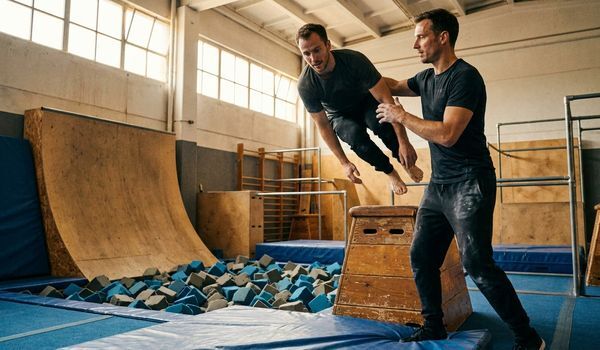
What makes a parkour gym different from a standard fitness center is the facility itself. Parkour training requires purpose-built structures: vault boxes, precision trainers, rail systems, warped walls, climbing walls, trampolines, and foam pits, all installed over specialized padded or sprung flooring. Most spaces need significant build-out before a single class runs, including ceiling clearance work, mezzanine construction, party rooms, and viewing areas for parents. Add the lobby, cubbies, retail fixtures, sound system, and security cameras any family-focused gym needs, and the startup budget climbs fast.
Financing products for parkour gyms are structured to match these costs. Equipment financing spreads the cost of obstacles, mats, foam, and fixtures over their useful life. Term loans deliver a lump sum for larger projects such as a full build-out or a new location. A business line of credit provides flexible, revolving access to cash for ongoing expenses such as coach payroll, insurance premiums, and marketing. The right mix depends on where your gym is in its life cycle and what you are trying to accomplish.
Most lenders who specialize in small business funding treat parkour gyms as part of the broader fitness and recreation industry. That works in your favor, because fitness is a well-understood category with established underwriting models. Your application will be evaluated on standard business fundamentals: time in business, revenue, cash flow, credit history, and how the funds will be used.
Why Parkour Gyms Use Financing
Every gym owner faces the same core tension: the business needs a built-out facility to generate revenue, but it needs revenue to afford the build-out. Financing breaks that cycle. Here is why parkour gym owners choose to fund their growth with business financing rather than waiting, subleasing corner space in someone else's gym, or cutting corners on safety.
- Open sooner. Saving $150,000 for a build-out could take years. Financing can put you in your own facility within weeks of approval, which means you start enrolling students and building membership revenue immediately.
- Preserve working capital. Even well-capitalized owners keep cash in reserve for rent, payroll, insurance, and slow months. Financing the equipment and build-out keeps your operating cushion intact.
- Match payments to revenue. Fixed monthly payments are predictable and easy to budget against membership and class income. As your enrollment grows, the payment stays the same.
- Invest in safety without compromise. Foam pits, landing mats, and professionally fabricated obstacles are not the place to save money. Financing lets you buy quality equipment and hire experienced builders from day one.
- Build business credit. Successfully repaying financing establishes your gym's credit profile, which makes future borrowing for expansion easier and less expensive.
- Capture demand while it is hot. Parkour and ninja training are growing, but local markets reward the first professional facility to open. Financing lets you move while the opportunity is there instead of watching a competitor take your market.
For established gyms, the calculus is similar. Adding a second training floor, upgrading obstacles, launching a competitive team program, or opening a new location all require capital at moments when timing matters. Financing turns a large one-time cost into a manageable monthly line item.
How Parkour Gym Financing Works
The process is more straightforward than most owners expect, especially with a lender that specializes in small business funding. Here is the typical sequence from application to funding.
Step 1: Define the project and the number. Before you apply, get quotes. Know what your obstacle fabrication will cost, what foam pit blocks run per cubic foot, what padded flooring costs per square foot installed, and what your build-out contractor will charge. Lenders want to see that you have a concrete plan and a realistic budget. A clear use of funds also speeds up underwriting.
Step 2: Choose the financing type that fits. Equipment financing for obstacles, mats, and fixtures. A term loan for build-out and larger projects. A line of credit for flexible, ongoing needs. Many gyms use more than one. The next section breaks down each option in detail.
Step 3: Apply. With a business lender like Crestmont Capital, the application takes minutes: basic business information, your requested amount, and a few months of bank statements. There is no requirement for a 40-page business plan at this stage.
Step 4: Underwriting and approval. The lender reviews your revenue, cash flow, time in business, and credit profile. Approvals for qualified applicants often come back within 24 to 72 hours. You will receive one or more offers with the amount, term length, payment schedule, and total cost of capital spelled out.
Step 5: Funding. Once you accept an offer and sign, funds are disbursed. For term loans and lines of credit, money lands in your business account, often within days. For equipment financing, the lender typically pays your vendor directly once you confirm the order.
Step 6: Repayment. You make fixed payments over the agreed term. Equipment financing usually runs 24 to 72 months. Term loans can run from one to ten years depending on the product and amount. A line of credit revolves: you draw, repay, and draw again as needed.
Ready to Open or Expand Your Parkour Gym?
Get fast, flexible financing from the #1 business lender in the U.S. No obligation - apply in minutes.
Apply Now →Types of Financing for Parkour Gyms
There is no single "parkour gym loan." There are several financing structures, each built for a different kind of expense. Understanding the differences helps you match the right product to the right need and avoid paying for flexibility you do not use.
Equipment Financing
Equipment financing is purpose-built for the physical assets of your gym: obstacle structures, warped walls, vault boxes, foam pit blocks, landing mats, spring floor systems, trampolines, climbing walls, and even lobby furniture and point-of-sale hardware. The equipment itself serves as collateral, which keeps rates competitive and approvals accessible. Terms typically run 24 to 72 months with fixed payments, and at the end of the term you own the equipment outright. For a parkour gym, this is often the single most useful product because so much of the startup budget is physical assets.
Term Loans
A term loan delivers a lump sum of capital that you repay over a fixed period, usually one to ten years. Term loans are the right tool for large, one-time projects: a full facility build-out, a major expansion, or a second location. Because the funds are unrestricted, you can use them for construction labor, permits, architectural work, and other soft costs that equipment financing will not cover. Traditional term loans offer the lowest total cost of capital for qualified borrowers, while faster-funding options trade a modestly higher cost for speed.
Business Line of Credit
A business line of credit works like a credit card for your gym: you are approved for a limit, you draw what you need when you need it, and you only pay interest on the outstanding balance. Lines of credit are ideal for the ongoing, variable expenses of running a parkour facility: insurance premiums, coach payroll between billing cycles, marketing pushes before camp season, replacement foam and mat repairs, and the dozens of small purchases that come up every month. Most parkour gym owners keep a line of credit open permanently as their financial shock absorber.
SBA Loans
SBA loans, partially guaranteed by the U.S. Small Business Administration, offer the longest terms and lowest rates in the small business lending market. An SBA 7(a) loan can fund a build-out, equipment purchases, and working capital in a single package with repayment terms up to ten years for business purposes and up to 25 years for real estate. The trade-off is time and documentation: SBA loans take weeks to months to close and require detailed financials. For owners planning far ahead, or buying their building, the wait is worth it.
Working Capital Loans
Unsecured working capital loans provide fast, short-term funding based primarily on your revenue. They are designed for operating expenses rather than assets: covering rent during a slow quarter, funding a summer camp marketing campaign, or bridging the gap while membership ramps up after opening. Approval is fast and documentation is light, which makes working capital loans a common first financing experience for new gym owners.
Quick Guide
How Parkour Gym Financing Works - At a Glance
A short application with basic business info and recent bank statements. Takes minutes, not days.
Qualified applicants typically receive offers within 24 to 72 hours, with amount, term, and total cost spelled out.
Choose the offer that fits your project and your budget. No obligation until you sign.
Funds land in your account, or go straight to your equipment vendor, often within days of approval.
Parkour Gym Startup Costs: What to Budget
How much does it cost to open a parkour gym? The honest answer is that it depends on your market, your square footage, and how much of the work you do yourself, but the range is consistent enough to plan around. A modest facility in a leased warehouse bay typically runs $75,000 to $150,000 to open. A larger, premium facility with extensive custom fabrication can exceed $250,000. Here is where the money goes.
- Lease deposit and initial rent: $10,000 to $30,000. Landlords typically want first month, last month, and a security deposit on a commercial space of 5,000 to 15,000 square feet.
- Build-out and construction: $25,000 to $100,000+. This covers framing party rooms and viewing areas, bathroom and lobby finishes, lighting, HVAC adjustments, mezzanine work, and any structural modifications your obstacles require.
- Obstacles and structures: $20,000 to $75,000. Vault boxes, precision trainers, rail systems, warped walls, climbing structures, and custom-fabricated features. Quality matters here: well-built obstacles last for years and hold up under daily youth traffic.
- Foam pit systems: $10,000 to $30,000. The pit itself (excavation or above-ground framing), the foam blocks, and the vinyl or trampoline surface. Foam is a consumable: budget for replacement blocks over time.
- Flooring and mats: $10,000 to $25,000. Padded flooring, landing mats, spring floor sections, and safety padding for columns and walls.
- Lobby, retail, and office: $5,000 to $15,000. Front desk, cubbies, seating, retail fixtures, computers, and point-of-sale systems.
- Insurance, licensing, and professional fees: $5,000 to $15,000 for the first year. Liability insurance for a movement facility is a significant line item, and you will want a lawyer to review your lease and waivers.
- Opening marketing and working capital: $10,000 to $25,000. Grand opening campaigns, signage, website, and a cash buffer for the first months of operations.
Pro Tip: Bundle your equipment financing and a working capital loan at the same time. Lenders can often structure both in a single approval, so your obstacles, mats, and foam are covered and you still have operating cash for the first few months of payroll and rent.
According to the U.S. Small Business Administration, one of the most common reasons new businesses fail is undercapitalization: running out of cash before revenue catches up with expenses. The SBA's startup cost calculator guide is a useful framework for building your budget, and it reinforces the same point experienced gym owners make: plan for more than the build-out. The facilities that succeed open with enough working capital to market aggressively and operate comfortably while enrollment ramps.
Who Qualifies for Parkour Gym Financing?
Qualification depends on the product and the lender, but the fundamentals are consistent across the industry. Here is what lenders look at when a parkour gym applies for funding.
Time in business. Established gyms with six months or more of operating history have the widest range of options. Newer businesses and pre-revenue projects can still qualify, particularly for equipment financing, where the assets themselves secure the funding, but expect more emphasis on your personal credit, your industry experience, and the strength of your plan.
Revenue and cash flow. For operating gyms, lenders review your monthly deposits and the consistency of your cash flow. Membership-based businesses score well here because recurring revenue is predictable. Many working capital products and lines of credit base the approval amount directly on average monthly revenue.
Credit profile. Personal credit still matters for most small business funding. A score in the mid-600s or higher opens most doors, and stronger credit earns better rates and longer terms. That said, a lower score does not end the conversation. Revenue-based products and equipment financing are more forgiving, and some lenders work with owners rebuilding their credit.
Use of funds. A clear, specific use of funds helps underwriters say yes. "Opening a 10,000 square foot parkour facility, with $48,000 for obstacles and mats, $60,000 for build-out, and $25,000 for working capital" is a fundable plan. A vague request for "business money" is not.
Industry experience. For first-time owners, a background in parkour instruction, gymnastics coaching, or fitness management strengthens the application. Lenders know that operator experience is one of the best predictors of success in specialty fitness.
Comparing Your Parkour Gym Financing Options
Each financing type solves a different problem. This table summarizes how the main options compare on the factors that matter most to gym owners.
| Feature | Equipment Financing | Term Loan | Line of Credit | SBA Loan |
|---|---|---|---|---|
| Best for | Obstacles, mats, foam, fixtures | Build-out, expansion, large projects | Ongoing expenses, cash flow gaps | Large projects, buying real estate |
| Typical amount | Up to 100% of equipment cost | $25,000 to $500,000+ | $10,000 to $250,000 | $50,000 to $5 million |
| Term length | 24 to 72 months | 1 to 10 years | Revolving | Up to 10 to 25 years |
| Funding speed | Days | Days to weeks | Days | Weeks to months |
| Collateral | The equipment itself | Often unsecured or blanket lien | Often unsecured | Business assets, sometimes personal |
| Cost of capital | Low to moderate | Low to moderate | Pay only on what you draw | Lowest available |
Most parkour gyms end up using a combination. A common structure for a new facility is equipment financing for the obstacles, mats, and foam, a term loan for the build-out, and a line of credit that stays open for operating expenses. The SBA's loan programs overview is a good reference for how government-backed options compare, and the Census Bureau's Statistics of U.S. Businesses program offers useful context on how small fitness businesses are financed and how they perform.
How Crestmont Capital Helps Parkour Gym Owners
Crestmont Capital is the #1 rated business lender in the United States, and fitness facilities are one of the categories we know best. We have funded gyms, studios, and recreation businesses across the country, and we understand the specific economics of a membership-based movement facility: the build-out costs, the seasonality of camps and birthday parties, the insurance overhead, and the way enrollment ramps after opening day.
What that means for you is a lender that does not need parkour explained. When you tell us you need $40,000 for a foam pit system and obstacle fabrication, we know what those things are, why they cost what they cost, and how they generate revenue. That familiarity shows up in faster approvals and structures that actually fit how your gym operates.
Our equipment financing program covers up to 100% of the cost of obstacles, mats, foam, and fixtures with terms up to 72 months. Our fitness company business loans are built for facilities exactly like yours, whether you need working capital for payroll and marketing or a term loan for a full build-out. And because every facility is different, a dedicated funding specialist works with you to match the right product to your project instead of forcing you into a one-size-fits-all box.
Owners who want to understand the broader landscape before applying can also review our guides to ninja warrior gym equipment financing and gymnastics gym business loans, which cover overlapping ground for adjacent facility types.
The application itself takes minutes, and approvals for qualified applicants typically come back within 24 to 72 hours. There is no obligation to accept an offer, and applying will not affect your credit to review options.
Get Your Parkour Gym Funded
Join thousands of business owners who chose the #1 rated lender. Fast approvals, flexible terms, real people.
Apply Now →Real-World Scenarios: How Parkour Gym Owners Use Financing
Numbers on a page only go so far. Here is how financing plays out in the real world for owners at different stages of the journey.
Scenario 1: The Coach Opening a First Facility
Marcus has coached parkour and ninja classes at other gyms for eight years. He finds a 9,000 square foot warehouse bay with 18-foot ceilings at a fair lease rate, but between the build-out, obstacles, foam pit, and mats he needs $130,000 he does not have. He applies for equipment financing covering $55,000 of apparatus and a term loan for $75,000 of build-out and soft costs, keeping his $20,000 in savings as working capital. He opens four months later with 140 founding members from a pre-sale campaign and covers his payments from month one.
Scenario 2: The Established Gym Adding a Second Training Floor
Parkour Revolution has been open for three years with a waitlist for kids' classes every weekday afternoon. The unit next door becomes available, and doubling their floor space would let them clear the waitlist and add a dedicated ninja course. The expansion costs $85,000. They finance the new obstacles and mats with equipment financing, fund the construction with a term loan, and keep a $25,000 line of credit open for the transition period. Enrollment grows 60% within two quarters.
Scenario 3: The Seasonal Cash Flow Bridge
A Midwest parkour gym does 40% of its annual revenue between September and May, but rent, insurance, and core payroll run year-round. Every summer, the owners draw on their business line of credit to cover the gap, then pay it down when fall enrollment surges. The line costs them little because they only pay interest on what they draw, and it has turned a stressful seasonal swing into a routine part of the budget.
Scenario 4: The Birthday Party Revenue Play
Birthday parties are the highest-margin offering at most parkour gyms, but one owner realizes her single party room caps her at two parties per weekend. She finances a $30,000 build-out that adds two themed party rooms and a dedicated check-in area. Within six months she is booking eight parties per weekend at $350 to $500 each, and the new revenue covers the loan payment several times over.
Scenario 5: The Competitive Team Upgrade
A gym with a growing competitive parkour and ninja team needs professional-grade obstacles to train athletes for sanctioned events: a regulation warped wall, salmon ladder, and precision course. The $28,000 equipment package is financed over 48 months. The team program attracts dedicated families willing to pay premium tuition, and hosting two sanctioned competitions per year adds a new revenue stream from entry fees and spectators.
Scenario 6: The Second Location
After five profitable years, an owner is ready to open location two in a neighboring suburb. This time she plans the capital stack deliberately: equipment financing for all apparatus, an SBA loan for the larger build-out with a ten-year term that keeps payments low, and her original gym's line of credit untouched as backup. The second location reaches break-even in nine months, faster than the first, because the playbook and the financing structure were already proven.
Key Stat: According to the SBA, there are more than 33 million small businesses in the United States, and access to capital is consistently cited as their number one growth barrier. Membership-based fitness businesses are among the best positioned to qualify because recurring revenue is exactly what lenders want to see.
Frequently Asked Questions About Parkour Gym Financing
What is parkour gym financing? +
Parkour gym financing is business funding used to open, expand, or operate a parkour or ninja training facility. It covers products like equipment financing for obstacles and mats, term loans for build-outs, business lines of credit for ongoing expenses, and SBA loans for large projects. Owners use it to spread major costs over time instead of paying everything out of pocket up front.
How much does it cost to open a parkour gym? +
Most parkour gyms cost between $75,000 and $250,000 to open, depending on market, size, and finish level. The biggest line items are build-out and construction ($25,000 to $100,000+), obstacles and structures ($20,000 to $75,000), foam pit systems ($10,000 to $30,000), and flooring and mats ($10,000 to $25,000). You should also budget for lease deposits, insurance, opening marketing, and working capital for the first months of operation.
Can I finance parkour gym equipment like foam pits and obstacles? +
Yes. Equipment financing is designed exactly for this: obstacle structures, warped walls, vault boxes, foam pit blocks, landing mats, spring floors, trampolines, climbing walls, and even lobby furniture and point-of-sale hardware. The equipment serves as collateral, terms typically run 24 to 72 months, and you own everything outright at the end.
What credit score do I need to qualify? +
A personal credit score in the mid-600s or higher opens most financing options with competitive rates. Stronger credit earns better terms. Lower scores do not automatically disqualify you: revenue-based products and equipment financing are more flexible because cash flow and the assets themselves provide the security. A funding specialist can tell you which products fit your profile.
Do I need a down payment? +
It depends on the product. Many equipment financing programs cover up to 100% of the equipment cost with no down payment for qualified buyers, though some structures call for the first and last payment up front. Term loans and lines of credit do not have down payments in the traditional sense. SBA loans typically require an owner equity injection of around 10% of the project cost.
Can a brand-new parkour gym get financing? +
Yes, though the options differ from those for established gyms. New facilities most often qualify through equipment financing, where the assets secure the funding, and through products that weigh the owner's personal credit and industry experience heavily. A detailed budget, a signed or pending lease, and a credible plan for enrollment all strengthen a new gym's application.
How fast can I get funded? +
With a business lender like Crestmont Capital, qualified applicants typically receive approval decisions within 24 to 72 hours, and funds can land within days of acceptance. Equipment financing moves quickly once you confirm your vendor order. SBA loans are the exception: expect weeks to months because of the documentation and guarantee process.
What is the difference between equipment financing and a term loan? +
Equipment financing funds specific physical assets, uses those assets as collateral, and is usually limited to the purchase price of the equipment. A term loan delivers a lump sum of unrestricted cash you can use for anything the business needs, including construction, permits, and soft costs that equipment financing will not cover. Many parkour gyms use both at once.
Can I use financing for build-out and renovation costs? +
Yes. Term loans and working capital loans are the right tools for construction, permits, flooring installation, mezzanine work, and other build-out expenses, because the funds are unrestricted. Equipment financing generally cannot pay for labor or construction, which is why build-outs are usually funded with a loan rather than an equipment product.
Can financing cover insurance and payroll? +
Yes. A business line of credit or a working capital loan is designed for operating expenses like liability insurance premiums, coach payroll, rent, marketing, and utilities. These products are based primarily on your revenue and cash flow, and they are the most common way parkour gyms smooth out seasonal swings between peak enrollment months and slower periods.
Do I need collateral for parkour gym financing? +
Not always. Equipment financing is secured by the equipment itself, so no additional collateral is needed. Many term loans, working capital loans, and lines of credit are unsecured or use a blanket lien on business assets rather than specific property. SBA loans may require available business and sometimes personal assets depending on the size of the loan.
Can I get financing to open a second location? +
Yes, and a successful first location makes you a strong applicant. Lenders look at your existing gym's revenue and track record, which typically qualifies you for larger amounts and better terms than a first-time project. A common structure for a second location is equipment financing for apparatus, a term loan or SBA loan for the build-out, and a line of credit for the ramp-up period.
What documents do I need to apply? +
For most business lending products, you need basic business information (legal name, EIN, time in business), three to six months of business bank statements, and a government-issued ID. Equipment financing also requires a quote or invoice from your vendor. SBA loans require substantially more: tax returns, financial statements, a business plan, and projections.
Are there prepayment penalties? +
It varies by product and lender. Many equipment financing agreements and term loans allow early payoff, and some reduce your total cost if you pay ahead. Others include prepayment fees to protect the lender's return. Always review the payoff terms in your agreement before signing, and ask your funding specialist directly if early payoff is important to your plan.
How do I choose the right financing option for my gym? +
Start with what you are buying. Physical assets with a long useful life belong on equipment financing. Large one-time projects like a build-out or a new location fit a term loan or SBA loan. Ongoing, variable expenses belong on a line of credit you draw as needed. Then compare offers on total cost of capital, monthly payment, and term length, and choose the structure your cash flow can comfortably support even in a slow month.
Take the First Step Toward Your Parkour Gym
One quick application. Real funding options in as little as 24 hours. No obligation to accept.
Apply Now →How to Get Started
Complete our quick application at offers.crestmontcapital.com/apply-now. It takes just a few minutes.
A Crestmont Capital advisor will review your project and match you with the right financing option for your gym.
Receive your funds and put them to work, often within days of approval.
Conclusion: Build the Gym Your Community Is Waiting For
Parkour is not a fad. It is a proven, membership-driven fitness category with a loyal youth base, high-margin offerings such as birthday parties and camps, and room to grow in most markets. The owners who win are the ones who open professional, well-equipped facilities while the demand is still ahead of the supply, and parkour gym financing is the tool that makes that timing possible.
Whether you need $40,000 for obstacles and mats, $150,000 for a full build-out, or a flexible line of credit to smooth out the seasons, the right financing structure turns a large capital hurdle into a predictable monthly payment your membership revenue can carry. You bring the coaching, the community, and the vision. Capital should not be the thing that stops you.
Crestmont Capital has helped thousands of business owners fund their growth, and we are ready to help you build yours. Apply today, review your options with a specialist, and take the first real step toward opening the doors.
Disclaimer: The information provided in this article is for general educational purposes only and is not financial, legal, or tax advice. Funding terms, qualifications, and product availability may vary and are subject to change without notice. Crestmont Capital does not guarantee approval, rates, or specific outcomes. For personalized information about your business funding options, contact our team directly.

Allan Garfinkle
Allan Garfinkle is the Chief Revenue Officer at Crestmont Capital, where he has spent more than a decade leading revenue strategy, business development, and operational growth. With 28 years of experience building and advising startups and small businesses, Allan has helped more than 10,000 business owners navigate financing decisions, growth opportunities, and changing economic conditions. He earned a Bachelor of Science in Economics and an MBA with a concentration in Finance from Northeastern University, as well as a Juris Doctor from New England Law, where his studies focused on contracts and business law. His writing draws on extensive practical experience in small-business lending, equipment financing, business credit, and commercial finance.