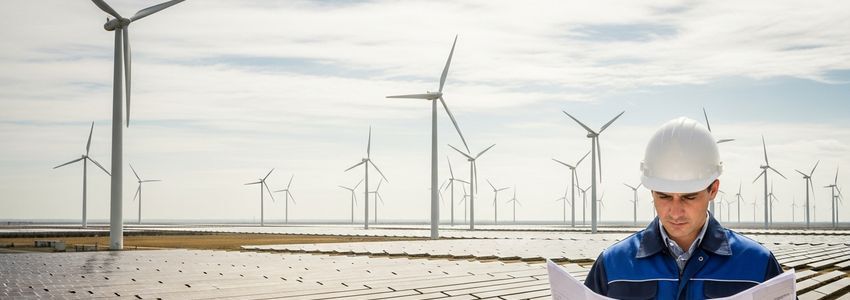
Energy business loans give power generation, distribution, and renewable energy companies the capital they need to buy equipment, expand operations, and stay competitive in one of the most capital-intensive industries in the U.S. Whether you run a utility company, an independent power producer, or a solar installation firm, access to reliable business financing can make the difference between seizing a growth opportunity and watching it pass you by.
In This Article
What Are Energy Business Loans?
Energy business loans are commercial financing products specifically suited to the needs of companies operating in the power generation, energy distribution, oil and gas, and renewable energy sectors. These loans can take many forms, from term loans and equipment financing to lines of credit and SBA-backed programs, but they share a common purpose: providing the working capital and long-term funding that energy companies need to operate and grow.
The energy sector is uniquely capital-intensive. Unlike a retail business or a service company, an energy firm often needs to purchase or lease large-scale infrastructure such as turbines, transformers, generators, drilling equipment, solar arrays, or grid components before it can generate a single dollar of revenue. Energy business loans help bridge that gap, allowing companies to acquire the assets, hire the personnel, and fund the projects that drive long-term profitability.
According to the U.S. Small Business Administration, access to capital is consistently ranked among the top challenges for small and mid-sized energy businesses. A well-structured business loan addresses that challenge directly, giving energy operators the financial runway to pursue contracts, complete projects, and manage the cyclical cash flow patterns inherent to the industry.
Energy loans are available to a broad range of businesses, including:
- Independent power producers (IPPs)
- Electricity generation and distribution companies
- Renewable energy installers and developers (solar, wind, geothermal, hydropower)
- Oil and gas exploration and production firms
- Energy services contractors and maintenance providers
- Natural gas distributors and pipeline operators
- Energy storage and battery technology companies
- Utility subcontractors and infrastructure builders
Why Energy Companies Need Business Financing
The energy industry operates on long project timelines, large upfront capital requirements, and payment cycles that can lag months behind the work performed. These structural realities make business financing not just convenient but essential for most energy companies. Below are the primary reasons energy businesses seek financing:
- Capital equipment purchases: Turbines, generators, transformers, drilling rigs, solar inverters, and grid hardware carry price tags that range from tens of thousands to several million dollars per unit. Most energy companies cannot self-fund these purchases without depleting operating reserves.
- Project development costs: Energy projects often require significant pre-revenue spending on permitting, environmental assessments, engineering, site preparation, and interconnection studies before construction can begin.
- Working capital management: Energy contracts often involve payment milestones that do not align with ongoing operational costs such as payroll, fuel, maintenance, and insurance. Financing fills those gaps.
- Fleet and vehicle acquisition: Field service fleets, heavy-haul trucks, and specialized utility vehicles are expensive to acquire and maintain. Many energy companies rely on financing to build and refresh their vehicle assets.
- Technology upgrades: Grid modernization, smart metering, SCADA systems, and digital monitoring tools require ongoing capital investment to remain competitive and compliant.
- Regulatory compliance and safety: New environmental and safety regulations frequently require energy companies to retrofit existing infrastructure, adding unplanned capital costs.
- Business expansion: Growing into new markets, acquiring smaller competitors, or scaling capacity to meet contract demands often requires capital that exceeds what cash flow alone can support.
- Emergency repairs and unplanned downtime: Equipment failures in the energy sector can halt operations entirely. Fast access to capital for emergency repairs protects revenue and contract relationships.
- Seasonal cash flow volatility: Energy demand is cyclical, and revenues can swing dramatically with weather and market conditions. A business line of credit provides a financial buffer during low-demand periods.
A Reuters analysis of U.S. energy investment trends found that private capital investment in the U.S. energy sector has grown substantially in recent years, driven by both the clean energy transition and rising demand for grid reliability. Companies that can access flexible financing are better positioned to capture that investment activity.
Ready to Power Your Business Growth?
Get fast, flexible financing from the #1 business lender in the U.S. No obligation, apply in minutes.
Apply Now →Types of Financing Available for Energy Companies
Energy companies have access to a wide range of financing products, each suited to different needs, project sizes, and repayment timelines. Understanding your options is the first step toward selecting the right capital structure for your business.
1. Term Loans for Energy Companies
A standard business term loan provides a lump sum of capital that is repaid over a fixed schedule, typically one to ten years, with either a fixed or variable interest rate. Term loans are well-suited for specific capital expenditures such as buying a generator set, funding a project milestone, or financing a business acquisition. Small business loans of this type are available to energy operators with as little as six months in business and $10,000 in monthly revenue.
2. Equipment Financing
Equipment financing is one of the most common forms of capital for energy businesses. Under this structure, the equipment itself serves as collateral, which typically results in lower rates and higher approval odds compared to unsecured lending. Energy companies can finance turbines, solar panels, generators, diagnostic tools, and other capital assets without depleting their cash reserves. Terms typically range from 24 to 84 months, and ownership of the equipment passes to the business at the end of the financing term.
3. Business Line of Credit
A business line of credit gives energy companies flexible access to revolving capital that can be drawn, repaid, and redrawn as needed. This is ideal for managing the unpredictable cash flow demands of an energy business, including bridging payroll during slow billing cycles, covering material costs before a contract payment arrives, or responding quickly to opportunities that require immediate funding. Lines of credit are particularly valuable for energy services contractors and project-based businesses.
4. Long-Term Business Loans
For major capital investments such as building a new generation facility, acquiring a competing business, or funding a multi-year infrastructure project, long-term business loans offer extended repayment periods that keep monthly payments manageable. These loans typically carry terms of five to twenty-five years, depending on the lender and collateral structure.
5. SBA Loans for Energy Companies
SBA loans backed by the U.S. Small Business Administration offer competitive interest rates and long repayment terms, making them attractive for energy companies that qualify. The SBA 7(a) program can be used for working capital, equipment, and real estate, while the SBA 504 program is specifically designed for large fixed-asset purchases like land and major equipment. SBA loans typically require stronger credit profiles and more documentation than conventional business loans.
6. Fast Business Loans
Energy emergencies do not wait for bank approval timelines. Fast business loans are designed for situations where access to capital within 24 to 72 hours is critical, such as emergency equipment repair, unexpected project cost overruns, or time-sensitive contract requirements. These products typically come with higher rates in exchange for speed and simplified underwriting.
7. Revenue-Based Financing
Some energy companies, particularly those with strong but irregular revenue streams, use revenue-based financing to access working capital. Repayments are tied to a percentage of daily or weekly revenue, making this option more flexible during periods of lower cash flow. This type of financing is best used for short-term operational needs rather than capital expenditures.
How Energy Business Financing Works
The process for obtaining an energy business loan is more straightforward than many business owners expect. Here is a step-by-step overview of what to expect when working with a lender like Crestmont Capital:
Step 1: Assess Your Financing Needs
Before applying, determine the exact purpose of the financing, the amount required, and your preferred repayment timeline. For equipment purchases, get vendor quotes so you can provide an accurate loan amount. For working capital needs, review your cash flow statements to size the loan appropriately.
Step 2: Gather Your Documentation
Most lenders will request basic business documentation including bank statements from the past three to six months, a government-issued ID, and basic business information such as your EIN and time in business. Larger loan amounts may require financial statements, tax returns, and a business plan.
Step 3: Submit Your Application
Online applications at Crestmont Capital take just a few minutes to complete. You will enter information about your business, the loan amount you need, and your intended use of funds. There is no obligation and no impact to your credit score at this stage.
Step 4: Review Loan Offers
After submitting your application, an advisor will review your information and present you with financing options that match your needs and qualifications. You will see the loan amount, term, rate, and estimated payment before making any commitment.
Step 5: Accept Your Terms and Receive Funds
Once you select a loan and sign your agreement, funds are typically deposited directly into your business bank account within one to three business days. For fast loan products, funding can occur as quickly as same-day or the next business day.
Step 6: Put Your Capital to Work
With financing in place, your energy business can move forward with equipment purchases, project execution, hiring, or operational needs. Repayments are made on a fixed schedule, allowing you to plan your cash flow with confidence.

By the Numbers
Energy Business Financing — Key Statistics
$150B+
Annual U.S. energy sector investment
100K+
Energy companies in the U.S.
$500K+
Average equipment financing for energy firms
24 Hrs
Fastest approval time for qualified borrowers
Ready to Power Your Business Growth?
Get fast, flexible financing from the #1 business lender in the U.S. No obligation, apply in minutes.
Apply Now →Who Qualifies for Energy Business Loans?
Qualification requirements for energy business loans vary by product type and lender, but Crestmont Capital has designed its programs to be accessible to a wide range of energy businesses, from startups in their first year of operations to established utility contractors with decades of history.
General Qualification Guidelines
For most standard business loans and working capital products, Crestmont Capital looks for:
- Time in business: A minimum of 6 to 12 months of operating history. Newer businesses may qualify with strong revenue and a solid business plan.
- Monthly revenue: Most products require at least $10,000 to $15,000 in average monthly revenue, though larger loan amounts require proportionally higher revenue.
- Credit profile: Personal and business credit scores are reviewed, but Crestmont Capital works with borrowers across a wide credit spectrum. A minimum score of 550 to 600 is typical for most products.
- Business bank statements: Three to six months of bank statements are typically required to verify revenue and cash flow patterns.
Factors That Strengthen Your Application
While the above represents the baseline, certain factors can significantly improve your approval odds and help you qualify for larger amounts or better terms:
- Strong revenue growth over the past 12 to 24 months
- Existing contracts or purchase orders with creditworthy counterparties
- Low debt-to-income ratio and clean bank statements
- Owned real property or equipment that can serve as collateral
- Multiple years of business tax returns demonstrating consistent profitability
- Industry-specific licenses, certifications, or long-term service agreements
Types of Energy Businesses That Commonly Qualify
Crestmont Capital has funded energy companies across virtually every segment of the industry. Common applicants include:
- Solar installation and development companies
- Wind energy project developers
- Electric utility contractors and subcontractors
- Natural gas and petroleum distributors
- Electrical infrastructure and grid maintenance firms
- Generator sales, service, and rental businesses
- Energy storage and battery system installers
- HVAC and energy efficiency contractors
- Independent power producers and co-generation operators
According to Bloomberg Energy, the U.S. energy sector added significant capacity across renewable and conventional sources in recent years, creating strong demand for capital among independent operators and contractors. Lenders like Crestmont Capital have developed specialized programs to serve this growing market.
How Crestmont Capital Helps Energy Companies
Crestmont Capital is the #1 business lender in the United States, with a track record of helping energy companies across the country access fast, flexible, and appropriately structured financing. Here is what sets Crestmont Capital apart for energy businesses:
Speed and Simplicity
Traditional bank lending can take weeks or even months to process. Crestmont Capital offers approvals in as little as 24 hours and funding within one to three business days after approval. For energy companies dealing with time-sensitive project timelines or equipment failures, that speed is invaluable.
Broad Product Selection
Rather than offering a single loan product, Crestmont Capital provides access to a full suite of financing options including small business loans, equipment financing, business lines of credit, and long-term business loans. This allows us to match each energy company with the financing structure that fits its unique situation.
Flexible Qualification Standards
Crestmont Capital understands that energy businesses operate differently from retail or restaurant businesses. We evaluate applications with an understanding of industry-specific cash flow patterns, project-based revenue cycles, and the long-term asset value of energy infrastructure. This means more energy companies qualify with us than with traditional banks.
Dedicated Advisor Support
Every applicant is paired with a dedicated financing advisor who understands the energy sector. Your advisor will help you identify the right loan product, prepare your documentation, and structure your financing to minimize costs and maximize flexibility.
No Hidden Fees or Prepayment Penalties
Crestmont Capital is committed to transparent lending. All fees and costs are disclosed upfront, and many of our loan products allow early repayment without penalty, giving energy businesses maximum financial flexibility.
As reported by CNBC's Small Business Center, access to non-bank lending has become increasingly important for small and mid-sized energy businesses that may not qualify for traditional commercial bank loans due to their project-based revenue model or relatively short operating history.
Real-World Scenarios
To illustrate how energy business loans work in practice, consider the following scenarios based on common situations faced by Crestmont Capital clients:
Scenario 1: Solar Installer Scales Up for a Commercial Contract
A solar installation company based in Arizona won a contract to install 500 kilowatts of solar capacity across five commercial properties over 18 months. The contract was worth over $2 million in revenue, but the company needed approximately $350,000 in upfront equipment purchases to begin work. Using Crestmont Capital's equipment financing program, the company secured funding within 48 hours, acquired the solar panels and inverters needed for the first phase, and was on-site within two weeks of signing the financing agreement. The monthly payment was structured to align with the contract milestone payments, keeping cash flow positive throughout the project.
Scenario 2: Electrical Contractor Bridges a Payment Gap
An electrical contracting firm in Texas completed $180,000 worth of subcontract work on a utility infrastructure project but faced a 90-day payment delay due to administrative processing by the general contractor. With payroll, insurance, and vehicle lease payments due within 30 days, the company applied for a business line of credit through Crestmont Capital. Within 24 hours, the company received a $120,000 line of credit that covered all immediate obligations. Once the GC payment arrived, the company repaid the line and maintained access to the facility for future cash flow needs.
Scenario 3: Generator Rental Company Expands Fleet
A generator rental and service business in the Southeast had been turning away contracts due to insufficient fleet capacity. With two rental contracts totaling $400,000 per year on the table, the owner needed to purchase four industrial generators at approximately $85,000 each. Crestmont Capital approved a $340,000 equipment loan within two business days. The rental income from the new contracts was more than triple the monthly loan payment, creating immediate positive ROI. The owner has since refinanced and expanded the fleet a second time using the same lender relationship.
Scenario 4: Natural Gas Distributor Funds Regulatory Compliance
A mid-sized natural gas distribution company in the Midwest received notice from state regulators that it needed to replace aging pipeline sections and upgrade its metering infrastructure to meet new safety standards within 18 months. The estimated project cost was $1.2 million. The company did not want to tap its operating reserves and worked with Crestmont Capital to structure a long-term business loan with a 7-year repayment period. The monthly payment was significantly below what drawing on reserves would have cost in lost investment returns, and the company completed the compliance project ahead of schedule.
Frequently Asked Questions
Ready to Power Your Business Growth?
Get fast, flexible financing from the #1 business lender in the U.S. No obligation, apply in minutes.
Apply Now →How to Get Started
Complete our quick application at offers.crestmontcapital.com/apply-now in just a few minutes.
A Crestmont Capital advisor will review your energy business needs and match you with the right financing option.
Receive your funds and put them to work, often within days of approval.
Energy companies that move quickly on financing opportunities are better positioned to win contracts, upgrade infrastructure, and expand into new markets. Whether you need to buy a single piece of equipment or fund a multi-million-dollar project, Crestmont Capital has the experience, the product selection, and the speed to help your energy business thrive. Apply today and discover why thousands of energy companies across the U.S. trust Crestmont Capital for their financing needs.
Disclaimer: The information provided in this article is for general educational purposes only and is not financial, legal, or tax advice. Funding terms, qualifications, and product availability may vary and are subject to change without notice. Crestmont Capital does not guarantee approval, rates, or specific outcomes. For personalized information about your business funding options, contact our team directly.