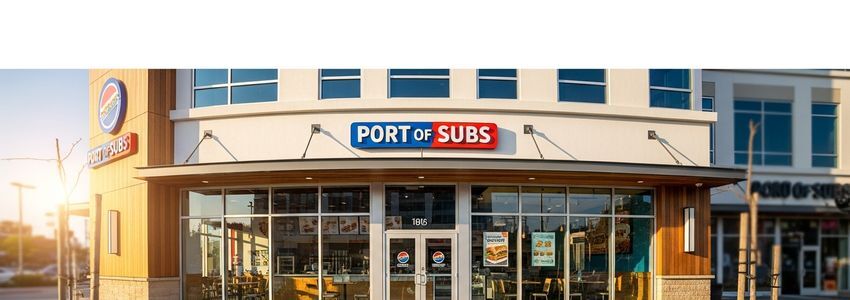
Port of Subs has been serving fresh-sliced sandwiches since 1972, growing into a beloved regional franchise with hundreds of locations primarily across the western United States. If you are exploring a Port of Subs franchise opportunity, one of your first questions is almost certainly: how do I finance it? The total investment for a Port of Subs franchise can range from roughly $180,000 to $400,000 or more, making business financing an essential part of your ownership journey. This guide covers everything you need to know about Port of Subs franchise loans, from startup costs to SBA programs to alternative lenders - so you can open your doors with confidence.
In This Article
- Port of Subs Franchise Costs and Fees
- Financing Options for Port of Subs Franchisees
- SBA Loans for Sandwich Franchises
- Equipment and Buildout Financing
- Working Capital and Operational Funding
- How to Qualify for a Franchise Loan
- Franchise Loan Comparison Table
- How to Apply for Port of Subs Financing
- Frequently Asked Questions
- Next Steps
Port of Subs Franchise Costs and Fees
Before you seek financing, you need a clear picture of what a Port of Subs franchise actually costs. According to the Port of Subs Franchise Disclosure Document (FDD) and publicly available data, here is a breakdown of the major costs you can expect:
- Franchise Fee: Approximately $15,000 - $20,000
- Total Estimated Investment: $180,000 - $400,000+
- Royalty Fee: Approximately 5.5% of gross sales
- Marketing Fund: Approximately 2% of gross sales
- Minimum Net Worth Requirement: Typically $250,000+
- Liquid Capital Requirement: Typically $80,000 - $100,000+
These numbers reflect a typical fresh-slice sandwich franchise in the fast-casual segment. Your specific costs will depend on whether you are opening in an existing space or building out a new location, local real estate rates in your target market, and the size of your chosen store footprint.
What Does the Total Investment Cover?
A Port of Subs franchise investment generally covers several major categories:
- Franchise fee - This one-time fee grants you the right to operate under the Port of Subs brand, use their systems, and receive their training and support.
- Leasehold improvements - Buildout costs to transform a raw or existing commercial space into a functioning Port of Subs location, including counters, signage, flooring, and kitchen infrastructure.
- Equipment and fixtures - Commercial slicers, refrigeration, prep tables, POS systems, and all the tools needed to run a sandwich operation efficiently.
- Initial inventory - Your opening stock of meats, cheeses, breads, vegetables, condiments, and packaging materials.
- Working capital - Cash reserves to cover payroll, rent, utilities, and other ongoing expenses until the business reaches positive cash flow.
- Pre-opening expenses - Training travel, marketing launch costs, permits, licenses, insurance, and professional fees.
Understanding each cost category matters because different lenders and loan types are often best suited to different parts of your investment. For example, equipment financing specifically targets machinery and fixtures, while SBA loans can cover broader startup costs.
Ready to Fund Your Port of Subs Franchise?
Crestmont Capital specializes in franchise financing for sandwich shop owners. Get a decision in as little as 24 hours.
Apply for Franchise Financing NowFinancing Options for Port of Subs Franchisees
There is no single "best" way to finance a Port of Subs franchise. Most franchisees use a combination of funding sources to cover the full investment. Here are the primary options available to you:
1. SBA 7(a) Loans
The Small Business Administration's 7(a) loan program is one of the most popular financing tools for franchise buyers. These government-backed loans offer competitive interest rates, longer repayment terms (up to 10 years for working capital, up to 25 years for real estate), and lower down payment requirements than conventional bank loans. Because SBA loans are guaranteed up to 85% by the federal government, lenders are more willing to work with borrowers who lack extensive business history.
2. SBA 504 Loans
If you plan to purchase the commercial real estate for your Port of Subs location, the SBA 504 loan program can be an excellent fit. These loans are specifically designed for the purchase of major fixed assets and typically feature fixed interest rates and terms up to 25 years.
3. Conventional Business Term Loans
Banks and credit unions offer traditional term loans for franchise startups. While these often have stricter requirements - higher credit scores, more collateral, and larger down payments - they can also offer competitive rates for well-qualified borrowers. Many established regional banks have dedicated franchise lending departments familiar with the Port of Subs brand.
4. Franchisor Financing
Port of Subs, like many franchise systems, may have relationships with preferred lenders or offer financing assistance directly. Always ask your franchise development contact about any available financing programs, referral networks, or in-house assistance during the discovery process.
5. Equipment Financing
Rather than paying cash or tying up a large term loan for equipment, you can finance specific pieces of equipment separately. Equipment loans and leases use the equipment itself as collateral, often resulting in better rates and more flexible qualification criteria. This is especially useful for commercial-grade slicers, refrigeration units, and sandwich prep stations.
6. Business Lines of Credit
A business line of credit is a revolving credit facility that lets you draw funds as needed and repay them on a flexible schedule. This is ideal for managing cash flow fluctuations during slower periods, covering unexpected expenses, or bridging gaps between payroll cycles and vendor payment deadlines.
7. ROBS (Rollover for Business Startups)
If you have retirement savings in a 401(k) or IRA, a ROBS arrangement lets you use those funds to invest in your franchise without triggering early withdrawal penalties or taxes. ROBS is a complex strategy that requires a specialized administrator, but it can provide significant startup capital without taking on debt.
8. Alternative and Online Lenders
Fintech and online lending platforms have made franchise financing more accessible for borrowers who may not qualify for traditional bank loans. These lenders typically have faster approval timelines, more flexible qualification standards, and streamlined digital applications - though often at higher interest rates. Small business financing from alternative lenders can complement traditional sources.
Port of Subs Franchise Financing: Key Numbers
SBA Loans for Sandwich Franchise Financing
For most Port of Subs franchise buyers, an SBA-backed loan is the cornerstone of their financing strategy. The SBA does not lend money directly - instead, it partners with approved banks and credit unions to guarantee a portion of the loan, reducing the lender's risk and making it easier for borrowers to qualify.
According to the U.S. Small Business Administration, franchises are some of the most commonly financed businesses through SBA programs. Many franchise brands - including sandwich chains - appear on the SBA's Franchise Registry, which can speed up the loan approval process significantly.
SBA 7(a) Loan Details for Franchise Buyers
- Maximum loan amount: $5 million
- Typical down payment: 10% to 30% of total project cost
- Interest rates: Prime + 2.25% to 4.75% (variable) or fixed options
- Repayment terms: Up to 10 years for working capital and equipment; up to 25 years for real estate
- Use of funds: Franchise fee, buildout, equipment, inventory, working capital
SBA Eligibility Requirements
To qualify for an SBA 7(a) loan for your Port of Subs franchise, you typically need:
- Personal credit score of 680 or higher (some lenders require 700+)
- Proven management experience in food service or business operations
- Sufficient equity injection (down payment) from personal funds or other sources
- Clean financial history with no recent bankruptcies or major derogatory items
- A complete, well-organized loan application package
Working with a lender experienced in franchise financing - like Crestmont Capital - can make a significant difference in navigating SBA loan requirements and finding the right program for your situation.
Equipment and Buildout Financing for Port of Subs
A fresh-slice sandwich shop like Port of Subs requires specialized equipment that can represent a significant portion of your total investment. The good news is that equipment financing is one of the most accessible forms of business credit available to franchise owners.
Key Equipment Categories
- Commercial meat slicers - A Port of Subs signature is freshly sliced meats and cheeses, making industrial slicers a core investment
- Refrigeration systems - Walk-in coolers, reach-in units, and under-counter refrigerators for meats, vegetables, and dairy
- Bread ovens and warmers - For fresh-baked rolls and toasted sub options
- Point-of-sale systems - Modern POS technology integrated with the Port of Subs corporate systems
- Prep tables and countertops - Stainless steel sandwich assembly stations designed for efficiency and food safety compliance
- Dishwashing and sanitizing equipment - Health code compliance requires commercial-grade warewashing
Equipment financing lets you preserve working capital while still acquiring everything you need to open. Because the equipment itself serves as collateral, lenders can often approve these loans faster and with less documentation than general business loans. Learn more about equipment financing options from Crestmont Capital.
Leasehold Improvements Financing
Beyond equipment, your Port of Subs buildout will likely require substantial tenant improvement work. SBA loans typically cover leasehold improvements as part of the broader project cost. Some landlords also offer tenant improvement allowances (TI allowances) as part of lease negotiations - these are essentially cash contributions from the landlord toward your buildout in exchange for a longer lease commitment.
Working Capital and Operational Funding
Even after your Port of Subs location opens, you will need sufficient cash reserves to operate the business until it reaches consistent profitability. Industry data suggests most new franchise locations take 6 to 18 months to achieve stable cash flow, though your results will depend heavily on your location, local competition, and operational execution.
Working Capital Needs for a New Sandwich Franchise
- Payroll: Staffing a sandwich shop typically requires 5 to 15 employees across shifts, with labor costs often representing 25% to 35% of revenue
- Food costs: The cost of goods sold for a sandwich franchise typically runs 28% to 35% of sales
- Rent and occupancy: Monthly rent, utilities, and occupancy costs typically represent 8% to 12% of revenue
- Royalties and marketing: Port of Subs collects approximately 7.5% combined in royalties and marketing fees
- Insurance and administrative: Business insurance, bookkeeping, and other overhead items
Most financial experts recommend having at least 3 to 6 months of operating expenses in reserve when you open. For a Port of Subs location with monthly operating expenses of $20,000 to $40,000, that means maintaining $60,000 to $240,000 in accessible working capital during your startup phase.

Options for Working Capital
Working capital loans and business lines of credit are purpose-built for exactly this situation. Rather than locking up capital in a fixed term loan, revolving credit facilities let you draw funds as needed and repay as cash flow allows. Revenue-based financing is another option that ties repayment to your actual sales volume - helpful during seasonal fluctuations or slower months.
Need Working Capital for Your Port of Subs?
Crestmont Capital offers fast, flexible working capital solutions with approvals in as little as 24 hours. No collateral required for qualified borrowers.
Get Working Capital NowHow to Qualify for a Port of Subs Franchise Loan
Lenders evaluate franchise loan applications differently than general business loans because they can reference the franchisor's track record, Item 19 financial performance representations (FPR), and industry benchmarks. Here is what underwriters typically look for:
Personal Credit Score
Most SBA-approved franchise lenders require a minimum personal FICO score of 680 to 700+. Higher scores (720+) unlock the best rates and terms. If your credit needs improvement, start working on it 6 to 12 months before applying by paying down existing balances, disputing any errors on your credit report, and avoiding new credit applications.
Business Plan and Financial Projections
A well-prepared business plan is essential. Your lender needs to see realistic financial projections for the first 3 to 5 years of operation, including revenue assumptions tied to comparable Port of Subs locations (from the FDD), expense breakdowns, and a clear path to loan repayment. According to the U.S. Census Bureau, restaurant and food service businesses with detailed financial projections have significantly higher loan approval rates.
Equity Injection
Most SBA lenders require borrowers to inject 10% to 30% of the total project cost from their own funds. For a $300,000 Port of Subs project, that means you need $30,000 to $90,000 in verifiable personal assets available to contribute. These funds cannot be borrowed - they must come from savings, investments, retirement accounts, or gifts from family members.
Industry Experience
Lenders prefer borrowers with relevant management experience, particularly in food service or franchise operations. If you lack direct restaurant experience, partnering with an experienced operator or hiring a strong general manager can strengthen your application considerably.
Collateral
SBA loans are partially collateralized. Lenders will typically take a lien on all business assets and may require personal real estate as additional collateral if the business assets do not fully secure the loan. Understand what collateral you can offer before applying.
Franchise Loan Comparison Table
Different financing products serve different needs. Here is a comparison of common options for Port of Subs franchisees:
| Loan Type | Amount | Rates | Terms | Best For |
|---|---|---|---|---|
| SBA 7(a) | Up to $5M | Prime + 2.25-4.75% | Up to 10-25 yrs | Full startup financing |
| SBA 504 | Up to $5M+ | Fixed below-market | 10-25 yrs | Real estate purchase |
| Equipment Financing | Up to $500K+ | 5-20% | 1-7 yrs | Slicers, refrigeration, POS |
| Business Line of Credit | $10K - $500K | 7-25% | Revolving | Working capital, cash flow |
| Working Capital Loan | $5K - $500K | 8-30% | 3 mos - 3 yrs | Payroll, inventory, operations |
| Conventional Term Loan | $50K - $5M | 5-15% | 1-10 yrs | Well-qualified borrowers |
How to Apply for Port of Subs Franchise Financing
Getting approved for franchise financing requires preparation. Here is a step-by-step overview of the application process:
Step 1: Finalize Your Franchise Agreement
Before approaching lenders, you should have received and reviewed the Port of Subs FDD. Most lenders will not process a franchise loan until you have at least received the FDD and ideally signed your franchise agreement or are in the final stages of doing so.
Step 2: Prepare Your Financial Documents
Gather the following before applying:
- Personal tax returns (3 years)
- Personal financial statement
- Bank and investment account statements (3-6 months)
- Resume and professional history
- Business plan with financial projections
- Copy of franchise agreement or FDD
- Construction and equipment cost estimates
- Site lease or letter of intent
Step 3: Check Your Credit
Pull your credit reports from all three bureaus (Equifax, Experian, TransUnion) and dispute any errors before applying. A few weeks of preparation can sometimes add 20 to 50 points to your score - potentially saving you thousands of dollars in interest over the life of your loan.
Step 4: Apply with Multiple Lenders
Do not limit yourself to one lender. Apply with 3 to 5 lenders to compare offers. Multiple inquiries within a short window (typically 14 to 45 days) are usually treated as a single inquiry by credit bureaus for rate-shopping purposes.
Step 5: Review and Accept the Best Offer
Compare loan offers not just on interest rate, but also on total cost (APR), loan fees, repayment terms, prepayment penalties, and collateral requirements. The lowest rate is not always the best deal overall.
Other Port of Subs franchisees have used similar financing strategies to those used by buyers of sandwich-focused concepts. You may find it helpful to review guides like our Habit Burger Franchise Loan Guide or our Nekter Juice Bar Franchise Loan Guide for additional perspective on fast-casual franchise financing.
Maximizing Your Port of Subs Investment
Securing the right financing is just the beginning. Once funded, there are several strategies to maximize the return on your Port of Subs investment:
Location, Location, Location
Sandwich shops thrive near high-traffic lunch corridors, office parks, schools, military bases, and healthcare campuses. Port of Subs has historically performed well in suburban and military community markets. Negotiate aggressively for your lease and seek locations with strong daytime foot traffic.
Manage Food and Labor Costs Tightly
The two biggest variable expenses in any sandwich franchise are food cost and labor cost. Port of Subs' fresh-slice model means you have limited ability to cut corners on ingredient quality, but you can minimize waste through proper inventory management, portion control training, and efficient scheduling.
Leverage the Port of Subs Support System
Port of Subs offers training programs, operational support, and marketing assistance to franchisees. New owners who fully utilize the corporate support network typically outperform those who try to go it alone. Take advantage of every resource available to you.
Plan for Expansion
If your first location succeeds, consider whether you want to add a second or third unit. Multi-unit operators often benefit from economies of scale in purchasing, staffing, and management. Commercial financing options for multi-unit expansion are often more favorable than startup financing because you have operating history to show lenders.
Frequently Asked Questions About Port of Subs Franchise Financing
How much does it cost to open a Port of Subs franchise?
The total estimated investment for a Port of Subs franchise typically ranges from approximately $180,000 to $400,000 or more, depending on the location, lease terms, and extent of buildout required. This figure includes the franchise fee, leasehold improvements, equipment, initial inventory, and working capital reserves. Always review the current Franchise Disclosure Document for the most up-to-date cost estimates.
Can I get an SBA loan for a Port of Subs franchise?
Yes, Port of Subs franchises are eligible for SBA 7(a) and SBA 504 loans. SBA loans are one of the most popular financing options for franchise buyers because they offer lower down payments, longer repayment terms, and competitive interest rates compared to conventional business loans. You will need a credit score of 680 or higher, relevant business or management experience, and the ability to inject 10% to 30% of the total project cost from your own funds.
What credit score do I need to finance a Port of Subs franchise?
Most SBA-approved lenders require a minimum personal credit score of 680 to qualify for franchise financing. Scores of 700 or higher significantly improve your chances of approval and help you secure lower interest rates. Some alternative and non-bank lenders may work with scores as low as 600 to 620, though at higher rates. It is worth taking 3 to 6 months to improve your credit before applying if your score falls below 680.
How much do I need to put down for a franchise loan?
For SBA 7(a) loans, most lenders require an equity injection (down payment) of 10% to 30% of the total project cost. For a $300,000 Port of Subs startup, that means you typically need $30,000 to $90,000 in personal funds to contribute. These funds must be verifiable and cannot be borrowed. Higher equity injections generally result in better loan terms and faster approvals.
Does Port of Subs offer franchise financing?
Port of Subs may maintain relationships with preferred SBA lenders or financing partners familiar with their franchise system. Contact your Port of Subs franchise development representative to ask about any available in-house financing assistance or preferred lender networks. Working with a lender already familiar with the Port of Subs FDD can accelerate your loan approval timeline.
How long does it take to get approved for a franchise loan?
SBA loan approval timelines typically range from 30 to 90 days from initial application to funding, depending on the complexity of your application and the lender's workload. Conventional bank loans can take a similar amount of time. Alternative and online lenders can often approve franchise loans in as little as 1 to 5 business days, though the loan amounts and terms may differ from SBA programs. Starting your financing process 90 to 120 days before your target opening date is recommended.
What documents do I need to apply for a Port of Subs franchise loan?
Typically, franchise lenders require: personal tax returns (3 years), personal financial statement, bank and investment account statements (3-6 months), a business plan with financial projections, a copy of the franchise disclosure document and agreement, construction and equipment cost estimates, and any signed lease or letter of intent for your location. The more complete and organized your package is, the faster your loan process will move.
Can I finance both the franchise fee and equipment with a single loan?
Yes. An SBA 7(a) loan can cover the franchise fee, leasehold improvements, equipment, initial inventory, and working capital as a single, comprehensive facility. This simplifies your financing structure and often reduces your overall borrowing cost compared to stacking multiple separate loans. However, some borrowers prefer to separate equipment financing from general business financing to take advantage of lower equipment-specific rates.
What if I have bad credit - can I still finance a franchise?
Having a credit score below 680 makes franchise financing more challenging but not impossible. Options for borrowers with lower scores include alternative lenders (who accept scores as low as 550-600), partnering with a co-borrower who has stronger credit, offering additional collateral, or taking 6 to 12 months to actively improve your credit score before applying. Crestmont Capital works with a range of credit profiles and can help identify the best available options for your situation.
Are there any grants available for franchise buyers?
Traditional small business grants are extremely competitive and rarely fund for-profit franchise operations. However, some programs targeting specific demographics - veterans, women entrepreneurs, or minority business owners - may offer grants or grant-loan hybrids. Check with your local Small Business Development Center (SBDC), the SBA's website, and local economic development organizations for any available programs. For most franchise buyers, grants will supplement but not replace conventional financing.
What is the typical repayment period for a franchise loan?
SBA 7(a) loans for franchise working capital and equipment have maximum repayment terms of 10 years. SBA 504 loans for real estate can extend up to 25 years. Conventional bank loans typically run 3 to 10 years. Equipment financing terms generally range from 24 to 84 months. Working capital loans and lines of credit may have shorter terms of 3 to 36 months. Choosing a longer repayment term lowers your monthly payment but increases the total interest you pay over the life of the loan.
Can I use my 401(k) or IRA to fund a franchise without penalties?
Yes, through a strategy called ROBS (Rollover for Business Startups), you can use qualified retirement account funds to invest in a franchise without triggering early withdrawal penalties or immediate income taxes. ROBS involves setting up a C-corporation, creating a qualified retirement plan within that corporation, and rolling your existing retirement funds into the new plan, which then purchases shares in your corporation. This is a complex transaction that requires a specialized ROBS administrator. It is not right for everyone - consult a financial advisor and a franchise attorney before pursuing this approach.
How do lenders evaluate a franchise loan application differently from a regular business loan?
Franchise loan underwriters have an advantage over general business lenders: they can review the franchise system's financial performance representations (FPR) in Item 19 of the FDD, see historical performance data from similar units, and assess the franchise brand's overall track record. This gives lenders more confidence in projecting your revenue and cash flow than they would have for an independent startup. Lenders also review whether the franchise brand appears on the SBA's Franchise Directory, which can significantly streamline the approval process.
What is the Port of Subs royalty fee and how does it affect my financing needs?
Port of Subs charges a royalty fee of approximately 5.5% of gross sales, plus a marketing contribution of approximately 2%, for a combined ongoing fee of about 7.5% of revenue. These ongoing fees directly affect your profit margins and cash flow projections. When lenders build out your debt service coverage ratio (DSCR), they will factor in all ongoing franchise fees as fixed costs. Make sure your financial projections fully account for royalties and marketing fees when estimating how much financing you need and can service.
How many Port of Subs locations are there and what does that mean for financing?
Port of Subs operates primarily in the western United States, with a concentration in Nevada, Idaho, and surrounding states. As a regional brand rather than a national giant, Port of Subs may be less recognizable to some lenders outside its core market. This is why working with a lender familiar with the brand - or willing to review the FDD carefully - is particularly important. A smaller franchise system can still be an excellent investment; lenders just need to understand it before they can confidently approve your application.
What happens if my Port of Subs franchise underperforms - can I restructure my loan?
If your franchise faces financial difficulty, it is important to contact your lender proactively before missing payments. Most SBA lenders have loan modification and deferment options available for borrowers in genuine distress. Options may include extending your repayment term, temporarily reducing payments, or entering a formal loan workout process. The worst thing you can do is ignore the problem - early communication with your lender almost always leads to better outcomes than waiting until you are in default.
Next Steps: Fund Your Port of Subs Franchise Today
Your Port of Subs Financing Roadmap
Start Your Port of Subs Financing Application
Crestmont Capital is a trusted financing partner for franchise owners across the country. Apply online in minutes and get a decision fast.
Apply Now - Takes Less Than 5 MinutesDisclaimer: The information provided in this article is for general educational purposes only and is not financial, legal, or tax advice. Funding terms, qualifications, and product availability may vary and are subject to change without notice. Crestmont Capital does not guarantee approval, rates, or specific outcomes. For personalized information about your business funding options, contact our team directly.