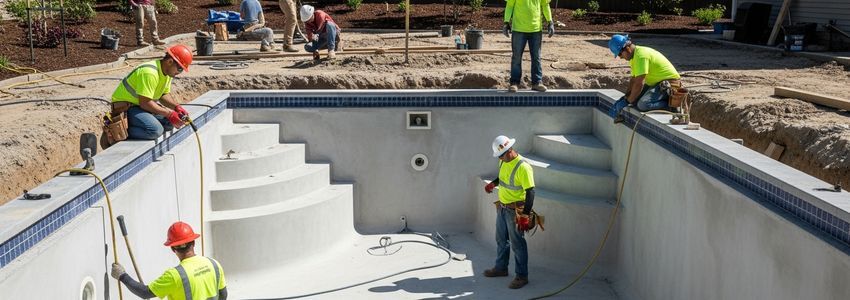
The demand for backyard oases is at an all-time high, making the swimming pool construction industry a lucrative field for skilled contractors. However, turning dream backyards into reality requires significant capital for equipment, materials, and skilled labor. That's where pool contractor business loans come in, providing the essential funding to start, manage, and scale a successful pool building company. This comprehensive guide will walk you through every aspect of pool contractor financing, from understanding your options to securing the capital you need to make a splash in this booming market.
In This Article
- The Booming Pool Construction Industry: A Look at the Numbers
- Why Pool Contractors Need Business Loans: Fueling Growth and Stability
- Top 7 Types of Pool Contractor Business Loans Explained
- Comparing Your Pool Contractor Financing Options
- Essential Equipment for Pool Contractors: What to Finance
- How to Qualify for Pool Builder Loans: A Contractor's Checklist
- The Crestmont Capital Advantage: Financing Built for Pool Contractors
- Your Step-by-Step Guide to Applying for a Pool Construction Business Loan
- Navigating Seasonality: Smart Financing Strategies for Year-Round Success
- Frequently Asked Questions About Pool Contractor Business Loans
- Your Next Steps to Pool Contractor Financing
Ready to Make a Splash? Finance Your Pool Business Growth
Don't let a lack of capital keep your business from diving into new opportunities. Crestmont Capital offers fast, flexible pool contractor business loans to help you succeed. See your options in minutes.
Apply NowThe Booming Pool Construction Industry: A Look at the Numbers
The pool construction and service industry isn't just surviving- it's thriving. A post-pandemic focus on home improvement and "staycations" has led to unprecedented demand. Homeowners are investing heavily in their outdoor living spaces, with a custom swimming pool often being the centerpiece. Understanding the scale of this market helps illustrate why strategic financing is so critical for contractors looking to capitalize on the opportunity.
This isn't just a fleeting trend. The data points to sustained growth and a robust market for years to come. For pool contractors, this means a steady stream of potential projects, but it also means increased competition. To stand out and take on more profitable jobs, you need the financial agility to invest in your business.
Let's look at some key statistics that paint a picture of the industry landscape:
- Market Size: The U.S. swimming pool construction market is a multi-billion dollar industry. According to industry reports, it was valued at over $10 billion and is projected to continue growing at a healthy compound annual growth rate (CAGR).
- Demand Drivers: Key drivers include rising disposable incomes, an increase in new home construction with outdoor amenities, and a growing trend of renovating existing homes to include luxury features like pools and spas.
- Project Costs: The average cost of an in-ground swimming pool installation can range from $40,000 to well over $100,000, depending on size, materials, and features. This high ticket price means that even a few projects can represent significant revenue- and significant upfront costs for the contractor.
- Regional Hotspots: States with warmer climates like Florida, California, Texas, and Arizona represent the largest markets. However, the demand is growing nationwide as homeowners everywhere seek to enhance their properties.
This growth presents a golden opportunity, but it also creates challenges. Supply chain disruptions can delay material delivery, and a shortage of skilled labor can make it difficult to scale your crews. Having access to flexible swimming pool contractor financing allows you to navigate these hurdles, pre-purchase materials when available, and offer competitive wages to attract top talent.
The U.S. Pool Construction Industry at a Glance
$11.7 Billion
Estimated U.S. Swimming Pool Construction Market Size in 2023. (Source: IBISWorld)
10.7 Million
Number of residential swimming pools in the United States. (Source: PHTA)
$55,000+
Average cost for a new in-ground pool installation, with many projects exceeding $100,000. (Source: Forbes)
2.1%
Projected annual growth for the industry over the next five years, indicating stable and consistent demand.
Why Pool Contractors Need Business Loans: Fueling Growth and Stability
The path from a signed contract to a filled pool is paved with expenses. Unlike many other businesses, pool contractors face substantial upfront costs long before receiving final payment from a client. A single project requires a complex interplay of heavy machinery, expensive materials, and a team of specialized laborers. Without adequate working capital, even the most skilled pool builder can struggle to manage cash flow and seize growth opportunities.
Business loans for pool contractors are not just a safety net; they are a strategic tool for growth. Here are the most common reasons why pool contractors seek financing:
Purchasing and Upgrading Heavy Equipment
The foundation of any pool construction business is its equipment. From excavation to concrete work, having the right machinery is non-negotiable.
- Excavators and Skid Steers: Essential for digging and site preparation. A new mini-excavator can cost anywhere from $30,000 to $90,000.
- Shotcrete and Gunite Pumps: Specialized equipment for applying concrete to form the pool shell. These can cost $50,000 to $150,000 or more.
- Work Trucks and Trailers: Necessary for hauling equipment, materials, and crew to job sites. A reliable fleet is a significant investment.
Equipment financing allows you to acquire these critical assets without draining your cash reserves, using the equipment itself as collateral.
Managing Material and Inventory Costs
Before you can break ground, you need to procure a wide range of materials. These costs add up quickly and are often required upfront from suppliers.
- Rebar and Steel: For reinforcing the pool structure.
- Plumbing and Electrical Components: Pipes, drains, pumps, filters, heaters, and lighting systems.
- Finishing Materials: Plaster, pebble finishes, tiles, and coping.
- Decking Materials: Concrete, pavers, stone, or wood for the surrounding patio.
A pool construction business loan or a business line of credit can provide the capital to purchase materials in bulk- potentially at a discount- and avoid project delays due to supply shortages.
Covering Payroll and Labor Costs
Building a pool requires a team of skilled professionals, including excavators, steel-tiers, plumbers, electricians, and plasterers. Consistent, on-time payroll is crucial for retaining top talent. During the busy season, you may need to hire additional crew members or subcontractors to keep up with demand. Working capital loans ensure you can always meet your payroll obligations, even when waiting on client payments.
Bridging Cash Flow Gaps
The pool construction business model often involves long payment cycles. You might receive a down payment to start, but subsequent payments are typically tied to project milestones (e.g., excavation complete, shell shot, decking poured). This can create significant cash flow gaps between when you have to pay for materials and labor and when you get paid. A business line of credit is a perfect tool to smooth out this uneven cash flow, allowing you to draw funds as needed and repay them as you receive client payments.
Investing in Marketing and Advertising
In a competitive market, you can't rely solely on word-of-mouth. A strategic marketing budget is essential for attracting high-quality leads. Financing can be used to:
- Build a professional website with a stunning portfolio of your work.
- Run targeted digital advertising campaigns on Google and social media.
- Invest in local SEO to appear in searches for "pool builders near me."
- Create high-quality marketing materials like brochures and yard signs.
- Attend home and garden shows to connect with potential clients.
Expanding Your Business Operations
When you're ready to grow, capital is the fuel. Pool builder loans can help you take your business to the next level by:
- Opening a new office or showroom in a different territory.
- Hiring a sales team or project manager.
- Adding complementary services like landscaping, outdoor kitchens, or pool maintenance.
- Investing in project management software to improve efficiency.
Top 7 Types of Pool Contractor Business Loans Explained
Not all financing is created equal. The best type of pool contractor business loan for you depends on your specific needs, financial situation, and how you plan to use the funds. Understanding the different options available is the first step toward making a smart financial decision for your company.
1. Equipment Financing
This is one of the most popular forms of swimming pool contractor financing. It's a loan specifically designed for purchasing new or used machinery and vehicles.
- How it works: You receive funds to cover up to 100% of the cost of the equipment. The equipment itself serves as collateral for the loan.
- Best for: Buying mini-excavators, skid steers, shotcrete pumps, work trucks, trailers, or any other physical asset your business needs to operate.
- Pros: Easier to qualify for than other loans since it's secured. Often comes with competitive rates and can preserve your cash for other expenses. Crestmont Capital offers specialized construction equipment financing tailored for contractors.
- Cons: The funds can only be used for the specified equipment purchase.
2. Business Line of Credit
A business line of credit provides ultimate flexibility, acting like a credit card for your business but with lower interest rates and higher limits.
- How it works: You're approved for a maximum credit limit and can draw funds as needed, up to that limit. You only pay interest on the amount you've drawn. As you repay the funds, your available credit is replenished.
- Best for: Managing seasonal cash flow, covering unexpected repairs, buying materials for a new project, or having a financial safety net.
- Pros: Extreme flexibility. You only use what you need, making it cost-effective for managing fluctuating expenses.
- Cons: Interest rates can be variable, and qualification may require a stronger credit profile.
3. SBA Loans
Backed by the U.S. Small Business Administration (SBA), these loans are offered through lenders like Crestmont Capital. They are highly sought after due to their favorable terms.
- How it works: The SBA guarantees a portion of the loan, reducing the risk for the lender. This allows for longer repayment terms and lower interest rates. The most common types are the SBA 7(a) and 504 loans.
- Best for: Major business expansion, purchasing real estate (like a new yard or office), refinancing existing debt, or securing long-term working capital.
- Pros: Excellent terms, low rates, and long repayment periods (up to 25 years for real estate).
- Cons: The application process is notoriously long and requires extensive documentation. Approval criteria are strict.
4. Working Capital Loans
These are short-term loans designed to cover everyday operational expenses rather than long-term assets.
- How it works: You receive a lump sum of cash that you repay, with interest and fees, over a short period (typically 3-18 months). Repayments are often made on a daily or weekly basis.
- Best for: Covering payroll during a busy stretch, launching a large marketing campaign, or purchasing a bulk order of materials at a discount before a price increase.
- Pros: Very fast funding, often within 24-48 hours. The application process is simple with minimal paperwork.
- Cons: Interest rates or factor rates can be higher than traditional loans due to the speed and convenience. The frequent repayment schedule can impact daily cash flow.
5. Term Loans
A traditional term loan is what most people think of when they hear "business loan." It's a straightforward financing product.
- How it works: You borrow a specific amount of money and pay it back over a set period (the "term") with fixed monthly payments.
- Best for: Planned expansions, opening a new location, or other large, one-time investments where you know the exact cost upfront.
- Pros: Predictable payments make budgeting easy. Interest rates are often fixed and competitive for qualified borrowers.
- Cons: May be less flexible than a line of credit. The approval process can be slower than for a working capital loan.
6. Invoice Financing (or Factoring)
This type of financing allows you to get an advance on your outstanding customer invoices.
- How it works: You sell your unpaid invoices to a financing company at a discount. They advance you a large percentage (e.g., 85%) of the invoice value immediately. They then collect the full payment from your client and pay you the remaining balance, minus their fee.
- Best for: Businesses that have long payment terms with their clients and need cash immediately to cover operational costs. Excellent for bridging the gap while waiting for milestone payments.
- Pros: Approval is based on the creditworthiness of your clients, not your own. It provides immediate cash flow without creating new debt.
- Cons: It can be more expensive than other forms of financing, and your clients will be aware that you are using a third-party service.
7. Merchant Cash Advance (MCA)
An MCA isn't technically a loan but an advance against your future sales.
- How it works: You receive a lump sum of cash in exchange for a percentage of your future daily or weekly credit card sales. Repayments are automatically deducted until the advance is paid back in full.
- Best for: Businesses that have high credit card sales volume and need extremely fast access to cash, especially if they have poor credit.
- Pros: Funding can happen in as little as 24 hours. Approval rates are very high.
- Cons: This is typically the most expensive form of financing due to high factor rates. It should be used with caution and primarily for short-term, high-return opportunities.
💡 Pro Tip: Match the Financing to the Need
The golden rule of business financing is to match the type of funding to its purpose. Use long-term loans like equipment financing or SBA loans for long-term assets. Use short-term solutions like a business line of credit or working capital loan for short-term needs like inventory and payroll. This ensures your repayment schedule aligns with the revenue generated by the investment.
Comparing Your Pool Contractor Financing Options
With several types of pool builder loans available, choosing the right one can be daunting. This table provides a side-by-side comparison to help you quickly assess which financing solution best fits your business needs.
| Financing Type | Loan Amount | Repayment Term | Interest Rate / Cost | Funding Speed | Best For Pool Contractors |
|---|---|---|---|---|---|
| Equipment Financing | $10k - $2M+ | 2 - 7 years | Low to Moderate | 2 - 5 days | Buying excavators, trucks, shotcrete pumps. |
| Business Line of Credit | $10k - $500k | Revolving | Low to Moderate | 1 - 7 days | Managing cash flow, buying materials, unexpected costs. |
| SBA Loans | Up to $5M | 10 - 25 years | Very Low | 30 - 90 days | Major expansion, buying property, long-term capital. |
| Working Capital Loans | $5k - $500k | 3 - 18 months | Moderate to High | 1 - 2 days | Quick cash for payroll, marketing, or inventory. |
| Term Loans | $25k - $2M | 1 - 5 years | Low to Moderate | 3 - 10 days | Planned, one-time investments and business expansion. |
| Invoice Financing | Up to 90% of invoice value | Per invoice | Moderate | 1 - 3 days | Bridging cash flow gaps while waiting for client payments. |
Essential Equipment for Pool Contractors: What to Finance
A pool contractor's equipment list is extensive and expensive. Attempting to purchase these assets with cash can cripple a business before it even gets started. This is where pool construction business loans, particularly equipment financing, become invaluable. Here's a breakdown of the essential equipment categories and their estimated costs, illustrating the need for strategic financing.
Excavation and Earth-Moving Equipment
This is the heavy machinery required to prepare the site.
- Mini-Excavator: The workhorse for digging the pool hole. Estimated Cost: $30,000 - $90,000+
- Skid-Steer Loader: Used for moving dirt, grading the site, and transporting materials. Estimated Cost: $25,000 - $70,000+
- Dump Truck or Trailer: For hauling away excavated soil and bringing in materials like sand and gravel. Estimated Cost: $10,000 (trailer) - $100,000+ (truck)
Concrete and Structural Equipment
This machinery is used to create the pool's shell, the most critical part of the construction.
- Shotcrete or Gunite Pump: A specialized pump that sprays concrete at high velocity to form the pool walls and floor. This is a major investment. Estimated Cost: $50,000 - $150,000+
- Concrete Mixer: For smaller jobs or mixing specialized plaster finishes. Estimated Cost: $5,000 - $20,000
- Rebar Benders and Cutters: Tools for shaping the steel reinforcement grid. Estimated Cost: $2,000 - $10,000
Plumbing and Electrical Tools
Precision is key in this phase to ensure the pool functions correctly.
- Trenchers: For digging trenches for plumbing and electrical lines. Estimated Cost: $3,000 - $15,000
- Pipe Cutters and PVC Tools: A full set of professional-grade plumbing tools. Estimated Cost: $1,000 - $5,000
- Pressure Testing Equipment: To ensure all plumbing lines are leak-free before backfilling. Estimated Cost: $500 - $2,000
Finishing and General Construction Equipment
These tools are for the final touches that clients see.
- Tile Saws: Wet saws for precise cutting of waterline tiles and coping. Estimated Cost: $1,000 - $3,000
- Plaster/Pebble Mixers and Trowels: Specialized tools for applying the interior finish. Estimated Cost: $2,000 - $10,000
- Compactors: For compacting the sub-base for the pool deck. Estimated Cost: $1,500 - $5,000
Vehicles and Support Equipment
- Work Trucks: A fleet of reliable trucks is essential for transporting crews, tools, and smaller materials. Estimated Cost: $35,000 - $80,000 per truck
- Job Site Trailer: A secure place to store tools and equipment on-site. Estimated Cost: $5,000 - $20,000
The total investment can easily exceed several hundred thousand dollars. Using a pool contractor business loan to finance these assets allows you to get the best, most reliable equipment, which increases efficiency, reduces downtime, and ultimately improves your profitability. You can find more information about financing options for this type of business in our guide to construction business loans.
💡 Did You Know? Tax Advantages of Equipment Financing

Section 179 of the IRS tax code allows businesses to deduct the full purchase price of qualifying new or used equipment in the year it's placed into service. This can provide a significant tax break, effectively lowering the total cost of your financed equipment. Always consult with a tax professional to understand how this can benefit your specific business.
How to Qualify for Pool Builder Loans: A Contractor's Checklist
Securing a business loan for your pool construction company requires preparation. Lenders want to see that you run a stable, profitable business and can comfortably manage loan repayments. By gathering your information and understanding what lenders look for, you can significantly increase your chances of approval.
Here are the key factors lenders evaluate, often referred to as the "5 C's of Credit":
1. Credit (Character)
Your personal and business credit scores are a primary indicator of your financial responsibility.
- Personal Credit Score: For most small business loans, your personal score is crucial. A score of 650 or higher is generally preferred, but some lenders, especially for working capital loans, may accept scores as low as 550.
- Business Credit Score: If your business is established, lenders will also check its credit history with agencies like Dun & Bradstreet.
- What to do: Check your credit reports for errors and work on improving your score by paying bills on time and keeping credit card balances low.
2. Cash Flow (Capacity)
Lenders need to see that your business generates enough consistent revenue to cover its existing expenses plus the new loan payment.
- Bank Statements: Be prepared to provide 3-6 months of recent business bank statements. Lenders will analyze your average daily balance, number of deposits, and look for any non-sufficient funds (NSF) events.
- Profit and Loss Statements: An up-to-date P&L shows your company's profitability and ability to manage expenses.
- Debt-to-Income Ratio: Lenders will assess your existing debt obligations relative to your income.
3. Capital
This refers to the amount of money you have personally invested in the business. It shows lenders you have "skin in the game."
- Down Payment: For larger loans like SBA or equipment financing, a down payment of 10-20% may be required.
- Balance Sheet: This document shows your business's assets and liabilities and provides a snapshot of its overall financial health.
4. Collateral
Collateral is an asset you pledge to secure a loan. If you default, the lender can seize the asset to recoup their losses.
- Secured Loans: Equipment financing is a prime example, where the equipment itself is the collateral. SBA loans may require real estate or other business assets.
- Unsecured Loans: Many working capital loans and lines of credit are unsecured, meaning they don't require specific collateral. However, they will almost always require a personal guarantee, making you personally liable for the debt.
5. Conditions
Lenders will consider the purpose of the loan, the state of the pool industry, and the overall economic climate.
- Loan Purpose: Have a clear, detailed plan for how you will use the funds. Whether it's for a new excavator or a marketing campaign, show how the investment will generate a return.
- Time in Business: Most lenders prefer to see at least 1-2 years of business history. Startups may have more limited options but can still find funding.
- Annual Revenue: Lenders often have minimum annual revenue requirements, which can range from $100,000 to $250,000 or more, depending on the loan type.
Required Document Checklist:
- Completed Loan Application
- Driver's License / Government-Issued ID
- Voided Business Check
- 3-6 Months of Business Bank Statements
- Business Tax Returns (1-2 years)
- Personal Tax Returns (1-2 years)
- Profit & Loss Statement and Balance Sheet
- Business Plan (especially for startups or large loans)
- Equipment Quote (for equipment financing)
The Crestmont Capital Advantage: Financing Built for Pool Contractors
Navigating the world of small business financing can be complex, but you don't have to do it alone. At Crestmont Capital, we understand the unique challenges and opportunities within the construction trades, including the pool building industry. We're not just a lender; we're a financing partner dedicated to helping your business grow. We have a deep understanding of businesses like yours, similar to our work with clients seeking landscaping business loans, who also face seasonality and high equipment costs.
Why choose Crestmont Capital for your pool contractor financing?
We Understand Your Industry
We know that pool construction is a project-based business with high upfront costs and seasonal fluctuations. Our financing solutions are designed with this in mind. We won't treat you like a generic retail business; we'll provide funding options that make sense for a contractor's cash flow cycle.
Speed and Efficiency
The pool business moves fast. When a client is ready to sign or a piece of essential equipment breaks down, you can't afford to wait weeks or months for a bank's decision. Our application process is streamlined and simple. You can apply online in minutes and often receive a decision and funding in as little as 24 hours for many of our loan products.
A Wide Range of Loan Products
We are a one-stop shop for all your financing needs. Whether you need a $50,000 working capital loan to cover payroll or a $500,000 equipment loan for a new shotcrete rig, we have a product to match. Our access to a vast network of lending partners ensures we can find the most competitive rates and terms for your specific situation.
High Approval Rates
Traditional banks often shy away from the construction industry due to its perceived risks. At Crestmont Capital, we look beyond just a credit score. We take a holistic view of your business, considering your bank statements, revenue, and industry experience. This allows us to approve many contractors who have been turned down elsewhere.
Expert Guidance
Our dedicated loan specialists are here to guide you through the entire process. They will take the time to understand your business goals and recommend the best financing solution to help you achieve them. We believe in building long-term relationships and being a trusted resource for your business's financial needs.
Don't Let Financing Hold You Back. Get Funded with Crestmont Capital.
We've helped countless contractors get the capital they need to succeed. Experience the Crestmont Capital difference with a simple application and fast, reliable funding.
Get Your Free QuoteYour Step-by-Step Guide to Applying for a Pool Construction Business Loan
Securing financing with a modern lender like Crestmont Capital is a straightforward process designed to get you the capital you need with minimal hassle. Here's what you can typically expect:
Step 1: Determine Your Needs
Before you apply, have a clear idea of how much money you need and what you'll use it for. Is it for a specific piece of equipment? To cover payroll for the next three months? To launch a new marketing campaign? Having a specific plan will not only help you apply for the right amount but also demonstrate to the lender that you're a responsible borrower.
Step 2: Gather Your Documents
Review the qualification checklist above. The most common documents needed for a quick approval are the last 3-4 months of your business bank statements, a copy of your driver's license, and a voided business check. Having these ready will significantly speed up the process.
Step 3: Complete the Online Application
Our secure online application takes only a few minutes to complete. You'll provide basic information about yourself and your business, such as your name, business name, time in business, and average monthly revenue.
Step 4: Speak with a Financing Specialist
Once your application is submitted, a dedicated financing specialist from Crestmont Capital will contact you. This is an opportunity to discuss your business in more detail, review your goals for the loan, and ask any questions you may have. They will work with you to identify the best possible loan options for your unique circumstances.
Step 5: Review and Accept Your Offer
Based on your application and documentation, we will present you with one or more loan offers. Each offer will clearly outline the loan amount, interest rate or factor rate, repayment term, and any associated fees. Take the time to review the offer carefully and ensure it aligns with your business's financial plan. Your specialist will be available to walk you through the details.
Step 6: Receive Your Funds
Once you accept an offer and sign the loan agreement electronically, the funding process is initiated. For many of our loan products, the funds can be deposited directly into your business bank account in as little as 24 hours. You can then put that capital to work building, growing, and improving your pool construction business.
Navigating Seasonality: Smart Financing Strategies for Year-Round Success
The pool construction business is inherently seasonal. The spring and summer months are often a frantic rush of activity, while the late fall and winter can be significantly slower. This "feast or famine" cycle can wreak havoc on cash flow. Smart swimming pool contractor financing can turn this challenge into a strategic advantage.
Financing for the Off-Season (Fall/Winter)
The slow season isn't downtime; it's prep time. A working capital loan or a draw from your line of credit can be used to:
- Invest in Marketing: Run "early bird" specials to book your spring schedule far in advance, securing deposits that improve winter cash flow.
- Equipment Maintenance and Purchase: The off-season is the perfect time to service your existing equipment or purchase a new excavator at a potential end-of-year discount. You'll be ready to hit the ground running when the season starts.
- Staff Training and Certification: Invest in your crew by sending them for new certifications (e.g., CPO, advanced plumbing techniques). A more skilled team is a more efficient and profitable team.
- Cover Fixed Costs: A loan can help cover overhead expenses like rent, insurance, and key employee salaries during the slower months, ensuring you don't have to downsize.
Financing for the Peak Season (Spring/Summer)
When demand is high, you need to be able to scale up quickly. A business line of credit is the ideal tool for peak season.
- Hire Seasonal Staff: Quickly bring on extra laborers to handle the increased workload without dipping into your operational cash.
- Bulk Material Purchases: When you have multiple jobs starting, you can use your line of credit to make large material purchases, potentially securing volume discounts and avoiding price hikes.
- Manage Multiple Projects: A line of credit allows you to smooth out the cash flow gaps between milestone payments on several concurrent projects. You can pay suppliers and crews on time, every time, building a reputation for reliability.
- Handle Unexpected Costs: A sudden equipment breakdown or an unexpected site issue (like hitting rock during excavation) can derail a project. Having access to immediate funds from a line of credit keeps the job moving forward without delay.
By strategically using pool contractor business loans throughout the year, you can transform seasonality from a liability into a strength, ensuring stable operations and positioning your company for consistent growth.
Build Your Dream Business. Apply for a Pool Contractor Loan Today.
Your search for reliable pool construction business loans ends here. Get a no-obligation quote from Crestmont Capital and see how easy it is to fund your next project.
Apply NowFrequently Asked Questions About Pool Contractor Business Loans
1. Can I get a pool contractor business loan with bad credit?
Yes, it is possible. While traditional banks may decline applicants with low credit scores, alternative lenders like Crestmont Capital offer options. We look at your business's overall health, particularly your recent revenue and cash flow shown in your bank statements. Products like a merchant cash advance or a secured equipment loan have more flexible credit requirements. However, be aware that loans for bad credit may come with higher interest rates or fees.
2. How quickly can I get funded?
The funding speed depends on the type of loan. Working capital loans and merchant cash advances are the fastest, often providing funds within 24 to 48 hours of approval. A business line of credit or equipment financing can take a few days. SBA loans are the slowest, typically taking 30 to 90 days due to their extensive documentation and underwriting requirements.
3. Can I use a business loan to buy a used excavator or work truck?
Absolutely. Equipment financing is available for both new and used equipment. Financing used equipment can be a smart way to lower your monthly payments and get the machinery you need at a lower initial cost. The lender will simply need to verify the value and condition of the used asset you intend to purchase.
4. What's the difference between a loan and a line of credit?
A loan (like a term loan or equipment loan) provides you with a lump sum of cash upfront, which you repay in regular installments over a set term. A line of credit gives you access to a revolving pool of funds up to a certain limit. You can draw from it as needed, repay it, and draw from it again. You only pay interest on the amount you've borrowed, making it ideal for ongoing or unpredictable expenses.
5. How does my seasonal income affect my loan application?
Lenders who specialize in construction financing, like Crestmont Capital, understand seasonality. While they prefer to see consistent revenue, they will analyze your bank statements over a full 12-month period to understand your annual cash flow cycle. It's important to apply when your business financials are strong, perhaps at the end of a busy season, to show your maximum revenue-generating potential.
6. Do I need collateral to get a pool builder loan?
Not always. Some pool contractor financing options are unsecured, meaning they don't require specific collateral. These include working capital loans and many business lines of credit. However, they will almost always require a personal guarantee. Secured loans, such as equipment financing (where the equipment is the collateral) or SBA loans, do require collateral.
7. Can I use a loan to finance pool chemicals, tiles, and other inventory?
Yes. A working capital loan or a business line of credit is perfectly suited for purchasing inventory and materials. These flexible financing options provide the cash you need to buy supplies for upcoming jobs, take advantage of bulk discounts, and avoid project delays caused by a lack of materials.
8. What are the typical interest rates for pool contractor loans?
Interest rates vary widely based on the loan type, your creditworthiness, time in business, and annual revenue. SBA loans offer the lowest rates, often tied to the prime rate. Term loans and equipment financing have competitive, fixed rates. Lines of credit may have variable rates, while short-term working capital loans and MCAs have higher factor rates reflecting their speed and risk.
9. I'm a startup pool contractor. Can I still get financing?
Financing for startups can be more challenging, as most lenders prefer to see at least one year of business history. However, options do exist. These may include equipment financing (if you have good personal credit), SBA microloans, or using personal loans or credit cards to start. A strong business plan and some personal investment (capital) will be critical.
10. What is a personal guarantee and is it required?
A personal guarantee is a legal promise from a business owner to repay a business loan personally if the business defaults. It is required for nearly all small business loans, especially unsecured ones. It gives the lender an extra layer of security and demonstrates your commitment to the business and the loan.
11. Can I refinance existing equipment debt?
Yes, refinancing existing business debt is a common reason to seek a new loan. If you have high-interest debt on your equipment or other business expenses, you may be able to secure a new term loan or an SBA loan with a lower interest rate and more favorable terms, which can improve your monthly cash flow.
12. How much can I borrow for my pool construction business?
The amount you can borrow depends on your business's annual revenue, cash flow, credit score, and the type of loan. It can range from a few thousand dollars with a working capital loan to several million dollars with an SBA loan or equipment financing package. A general rule of thumb for many short-term loans is that you can qualify for 1-2 times your average monthly revenue.
13. Does applying for a loan affect my credit score?
Most alternative lenders, including Crestmont Capital, use a "soft credit pull" for the initial application and pre-approval process. A soft pull does not affect your credit score. A "hard credit pull," which can temporarily lower your score by a few points, is typically only performed once you decide to move forward with a specific loan offer.
14. What's the best loan for buying a competitor's pool business?
For a business acquisition, an SBA 7(a) loan is often the best choice. These loans are specifically designed for purposes like buying another business and offer long repayment terms and low interest rates, making the acquisition more affordable. A traditional term loan could also be a viable option.
15. Can I pay off my business loan early?
It depends on the loan product. Many traditional term loans and lines of credit do not have prepayment penalties. However, some short-term loans and MCAs may be structured so that you owe the total payback amount regardless of when you pay it off. It's crucial to ask your lender about their prepayment policy before signing a loan agreement.
Your Next Steps to Pool Contractor Financing
You now have a comprehensive understanding of pool contractor business loans. The key is to take action. Use this knowledge to secure the capital that will empower your business to thrive in a competitive market. Here’s your simple, actionable plan to get started.
- Assess Your Financial Health: Gather your last 6 months of bank statements and review your revenue and expenses. Check your personal credit score so you know where you stand.
- Define Your Funding Goal: Clearly write down how much money you need and exactly how it will be used to improve your business (e.g., "$75,000 for a new mini-excavator to take on larger jobs").
- Choose the Right Loan Type: Based on your goal, use the comparison table in this guide to identify the best 1-2 loan types for your needs (e.g., equipment financing for the excavator).
- Prepare Your Documents: Get digital copies of your bank statements, driver's license, and a voided check ready. This will make the application process seamless.
- Submit a No-Risk Application: Complete the simple, secure online application at Crestmont Capital. It takes just a few minutes and won't impact your credit score.
- Consult with an Expert: Speak with one of our financing specialists. They will review your options with you and help you choose the best offer for your business's future.
The information provided in this article is for general educational purposes only and does not constitute financial, legal, or tax advice. Crestmont Capital is not responsible for any decisions made based on this content. Always consult a qualified financial advisor before making financing decisions. Loan products, terms, and eligibility may vary.