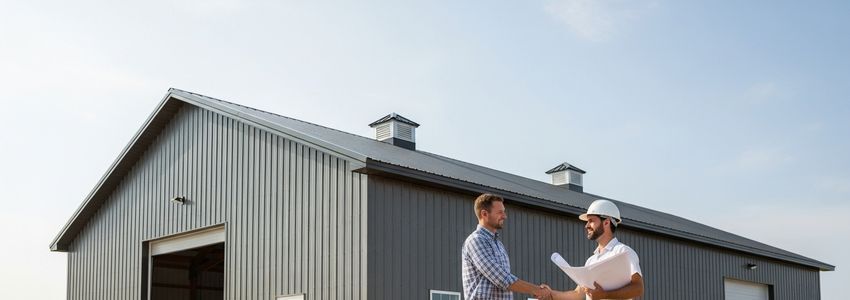
Whether you need extra storage for your farm, a commercial workspace, or a multi-purpose facility for your business, a pole barn is one of the most cost-effective structures you can build. But even at a fraction of the cost of traditional construction, these buildings typically run $15,000 to $200,000 or more depending on size and purpose. That is where pole barn financing comes in. The right loan lets you build now, preserve cash flow, and spread payments over time so your operations never miss a beat.
This guide covers every financing option available for pole barns and agricultural buildings, from traditional construction loans and SBA programs to equipment financing and business term loans. Whether you are a small farmer, a contractor, a rancher, or a business owner adding warehouse space, you will find the right path forward here.
What Is Pole Barn Financing?
Pole barn financing refers to any loan or credit product used to fund the construction or purchase of a pole barn, pole building, or metal agricultural structure. Also known as post-frame buildings, pole barns are widely used by farmers, ranchers, contractors, landscapers, equipment dealers, and small business owners who need durable, versatile space at a lower price than conventional construction.
Unlike permanent wood-frame or masonry buildings, pole barns are built using large vertical posts anchored directly into the ground or a concrete slab, creating a strong skeleton that supports walls and a roof. This simpler construction approach translates to lower material and labor costs, making the financing amounts more manageable for small business owners.
Common uses include:
- Farm equipment storage and machine shops
- Livestock housing (horses, cattle, pigs, poultry)
- Hay and feed storage
- Contractor workshops and tool storage
- Retail or commercial showroom space
- Vehicle fleet storage and maintenance bays
- Industrial warehousing and distribution
- Recreational or event venues
If you are running a business that relies on any of these functions, the right equipment financing or business loan can make your pole barn project a reality without draining your operating reserves.
Ready to Finance Your Pole Barn?
Get funding up to $5 million in as little as 24 hours. No lengthy paperwork. No unnecessary delays.
Apply Now - Free, No ObligationBenefits of Financing Your Pole Barn
Many business owners and property owners assume they need to pay cash for a pole barn, but financing can actually be the smarter financial move. Here is why:
Preserve Working Capital
Depleting your cash reserves to pay for a building can leave your business vulnerable. Financing spreads costs over time so you keep liquidity for payroll, inventory, marketing, and unexpected expenses. This is particularly important for seasonal businesses like farms or landscaping companies where cash flow fluctuates throughout the year.
Build and Grow Now, Not Later
Waiting years to save enough cash means years of lost productivity and revenue. A pole barn financed today can generate returns immediately through increased storage capacity, operational efficiency, or new service offerings. The productivity gains often far outweigh the interest cost.
Potential Tax Advantages
Business owners who use a pole barn for commercial purposes may be able to deduct loan interest and depreciate the structure over time. Section 179 also allows immediate expensing of certain building improvements. Always consult your tax advisor, but financing can come with meaningful tax benefits according to the IRS depreciation guidelines.
Fixed Monthly Payments for Budget Certainty
Term loans come with predictable monthly payments that make it easy to budget. You know exactly what you owe each month, which simplifies cash flow planning and financial forecasting.
Build Business Credit
Successfully repaying a business loan strengthens your business credit profile, making future financing easier and cheaper to obtain. Every on-time payment improves your score. Learn more about small business loans and how they help build credit history.
Flexible Structures to Match Your Cash Flow
Many lenders offer seasonal payment options, interest-only periods during construction, or deferred-start options that align payments with when your new building starts generating revenue or savings.
How Pole Barn Financing Works
The financing process for a pole barn varies depending on the loan type you choose. Here is a general overview of how to get started:
Step 1 - Determine Your Project Costs
Get quotes from two or three pole barn builders or kit suppliers. Costs typically include site preparation, materials, labor, electrical, plumbing (if applicable), permits, and foundation work. Having a realistic budget helps you request the right loan amount.
Step 2 - Choose Your Financing Type
Different loan products suit different situations. A business term loan works well for established businesses. An SBA loan is ideal for major projects needing long repayment terms. A business line of credit works if you are managing construction costs in stages. We cover each option in detail below.
Step 3 - Gather Your Documents
Most lenders require recent business bank statements (3 to 6 months), business tax returns, a government-issued ID, business formation documents, and contractor quotes or building plans. The more documentation you can provide, the faster approval happens.
Step 4 - Apply and Get Approved
With alternative business lenders like Crestmont Capital, applications take minutes and funding can arrive in as little as 24 to 48 hours. Traditional bank and SBA loans take longer but may offer lower rates for well-qualified borrowers.
Step 5 - Build Your Pole Barn
Once funded, you pay your contractor or supplier directly. Some lenders disburse funds in draws tied to construction milestones; others send a lump sum upfront. Clarify the disbursement structure before signing.
Step 6 - Repay and Benefit
Fixed monthly payments begin after the loan is disbursed. Your new pole barn is now working for your business while you pay it down over the agreed term, often 3 to 10 years depending on the loan product.
Pole Barn Financing at a Glance
Pole Barn Financing Key Stats
Source: Crestmont Capital lending data and industry benchmarks
Types of Pole Barn Loans
There is no single "pole barn loan" - several financing products can work depending on your situation, credit profile, and how you plan to use the building.
1. Business Term Loans
A business term loan is a lump sum you repay over a fixed schedule with regular payments. This is one of the most common ways to finance a pole barn for commercial use. Terms typically range from 1 to 10 years, and amounts can go from $25,000 to $5 million depending on your qualifications.
- Best for: Established businesses needing $50,000 to $500,000
- Time to fund: 1 to 5 business days with alternative lenders
- Requirements: 6+ months in business, $10,000+ monthly revenue
2. SBA 7(a) Loans
The U.S. Small Business Administration's 7(a) loan program is excellent for major pole barn projects. With loan amounts up to $5 million and terms up to 10 years for working capital (and up to 25 years for real estate), SBA loans offer some of the lowest interest rates available. The tradeoff is a longer application and approval process - often 30 to 90 days.
- Best for: Large projects over $150,000, strong credit applicants
- Interest rate: Prime + 2.75% to 4.75%
- Requirements: 680+ credit score, 2+ years in business, demonstrated ability to repay
Learn more about SBA loans for small business owners or visit SBA.gov for program details.
3. Equipment Financing
While pole barns are structures rather than equipment, many lenders categorize them similarly - especially prefabricated metal buildings and agricultural structures. Equipment financing typically covers 100% of the purchase price, uses the structure as collateral, and offers terms up to 7 years.
- Best for: Prefab pole barn kits and modular structures
- Down payment: Often zero to 10%
- Approval speed: 1 to 3 business days
4. Business Line of Credit
A business line of credit gives you revolving access to funds up to your credit limit. This works well for pole barn projects where costs are paid in stages - site preparation, materials, labor, finishing. Draw what you need, repay it, and draw again.
- Best for: Multi-phase projects or when final costs are uncertain
- Credit limits: $10,000 to $500,000
- Interest: Charged only on what you draw
5. Long-Term Business Loans
Long-term business loans with terms of 5 to 10 years are well-suited for larger pole barn projects where you need lower monthly payments spread over a longer repayment period. These loans offer more predictable cash flow management for expensive commercial builds.
6. Short-Term Business Loans
If you need fast funding for a smaller project or to cover the gap between invoice due date and your contractor's start date, a short-term business loan can bridge that gap quickly. Terms typically range from 3 to 24 months.
7. Farm Credit and Agricultural Loans
If your pole barn serves agricultural purposes, specialized farm credit institutions and agricultural lenders may offer favorable rates. The USDA's Farm Service Agency (FSA) provides loans specifically for farm infrastructure including storage buildings and barns. Check USDA FSA programs for eligibility.
8. Home Equity-Based Financing (for Property Owners)
If you own property and are building a personal-use pole barn, a home equity loan or HELOC may be an option. However, for business-use structures, a dedicated business loan is typically cleaner from a tax and liability standpoint.
How Crestmont Capital Helps with Pole Barn Financing
Crestmont Capital is a direct lender specializing in fast, flexible business financing for small and mid-size companies across every industry - including agriculture, construction, manufacturing, and property development. Here is what sets Crestmont apart for pole barn financing:
- Fast decisions: Get approved in hours, not weeks
- Flexible requirements: Work with businesses from 6 months old with $10,000+ monthly revenue
- Bad credit options: Even if your credit is not perfect, there may be a path to funding through our bad credit business loans or no credit check business loans
- Large loan amounts: Fund projects up to $5 million
- Dedicated support: Real people who understand your business and your building project
We have helped farms, landscaping companies, contractors, equipment dealers, and dozens of other business types fund the pole barns and agricultural buildings they needed to grow. For additional context on how business owners across industries approach major capital decisions, read our guide on farm operating loans or learn about working with commercial loan brokers.
Get Your Pole Barn Financing Quote Today
No obligation. No hard credit pull to apply. Rates personalized to your business profile.
Check Your Rate NowWho Qualifies for Pole Barn Financing?
Pole barn financing is available to a wide range of business types and property owners. Here is a breakdown of who typically qualifies and what requirements they face:
Farmers and Agricultural Businesses
Farms with at least one year of operating history and documented revenue from crop sales, livestock, or agricultural services. USDA and farm credit options may be accessible even with limited conventional credit history. According to the USDA, billions in farm loans are issued each year for infrastructure and equipment.
Contractors and Construction Companies
General contractors, electricians, plumbers, and specialty trades who need warehouse, storage, or workshop space. These businesses typically have strong revenue and good qualification profiles for business term loans.
Landscaping and Lawn Care Businesses
Companies that need to store mowers, trailers, and seasonal equipment. Many qualify for equipment financing or fast business loans with just bank statements showing consistent revenue.
Ranches and Equestrian Operations
Horse farms, cattle ranches, and other livestock operations often need large covered structures for animals, hay, and equipment. SBA and agricultural loan programs tend to be the best fit here.
Small Manufacturing and Industrial Businesses
Companies that need to expand production space or add warehouse capacity. These businesses typically qualify well for term loans and may also explore sale-leaseback options if they own equipment with value.
Minimum Requirements at a Glance
| Loan Type | Min. Credit Score | Min. Time in Business | Min. Monthly Revenue |
|---|---|---|---|
| Business Term Loan (Alt. Lender) | 550+ | 6 months | $10,000 |
| SBA 7(a) Loan | 680+ | 2 years | Varies |
| Equipment Financing | 550+ | 1 year | $8,000 |
| Business Line of Credit | 600+ | 1 year | $15,000 |
| Agricultural / Farm Loan | 600+ | 1 year | Ag income proof |
Real-World Pole Barn Financing Scenarios

Scenario 1 - The Growing Farm Operation
A corn and soybean farm in Iowa needed a 60x120 ft pole barn for grain storage and equipment to replace rented space costing $18,000 per year. The owner applied for a $95,000 business term loan through an alternative lender, was approved in two business days, and funded construction within a week. The building paid for itself in under four years by eliminating rental costs while providing more space and better access to equipment year-round.
Scenario 2 - The Landscaping Company Expansion
A landscaping company with 12 employees was storing mowers, trailers, and seasonal equipment in employees' driveways. The owner used a $65,000 equipment financing deal to build a 40x60 ft pole barn shop at the company's primary property. The loan was secured against the structure, required no down payment, and fit neatly into the company's monthly cash flow at $1,200 per month over five years.
Scenario 3 - The Contractor Building a Workshop
A general contractor in Texas needed a 50x80 ft workshop to repair equipment, stage materials, and store tools. Rather than renting a commercial unit at $3,500 per month, he financed a $110,000 pole barn using an SBA 7(a) loan over 10 years. Monthly payments came to roughly $1,150 - less than a third of what he was paying in rent - and he now owns a permanent asset that adds value to his commercial property.
Scenario 4 - The Horse Ranch Barn Upgrade
A 40-acre equestrian property in Kentucky needed to replace a deteriorating wooden barn with a 36x72 ft steel-framed pole structure with stalls, tack room, and hay storage. The ranch owner secured a $78,000 agricultural building loan through a farm credit institution, locking in a fixed rate for seven years. The new barn reduced maintenance costs by $8,000 annually and increased the ranch's assessed value.
Scenario 5 - The Multi-Location Storage Expansion
A regional equipment rental company needed covered storage at a second location. Using a business line of credit of $200,000, the owner funded site grading, materials, and construction across three phases over six months, drawing funds as needed rather than taking a lump sum. This minimized interest costs while giving flexibility to manage the construction timeline.
Scenario 6 - The Startup Farm Building First Infrastructure
A first-generation farmer in Ohio purchased land and needed a 30x48 ft pole barn for initial storage before full operations were underway. With limited business history, he used a combination of USDA beginning farmer loan assistance and a small business microloan from a local CDFI to cover the $42,000 project cost. According to U.S. Census Bureau data, farms financed with appropriate capital in their first three years have significantly better five-year survival rates.
Pole Barn Financing Options: Side-by-Side Comparison
| Option | Loan Amount | Term | Speed | Best For | Collateral |
|---|---|---|---|---|---|
| Business Term Loan | $25K - $5M | 1-10 years | 1-5 days | Established businesses | UCC lien / blanket |
| SBA 7(a) Loan | Up to $5M | Up to 10 yrs | 30-90 days | Large projects, strong credit | Personal guarantee + assets |
| Equipment Financing | $10K - $1M | 2-7 years | 1-3 days | Prefab kits | Structure itself |
| Business Line of Credit | $10K - $500K | Revolving | 2-7 days | Multi-phase builds | UCC lien |
| Agricultural Loan | $10K - $2M | 5-20 years | 2-6 weeks | Farm-use structures | Farm assets / land |
| Long-Term Business Loan | $50K - $5M | 5-10 years | 3-7 days | Major commercial builds | UCC / real estate |
According to Forbes, small business owners who compare at least three financing options before committing to a loan save an average of 15 to 25% on total financing costs. Taking time to evaluate options is always worth it for a project of this size.
Frequently Asked Questions About Pole Barn Financing
Can I get a loan specifically for a pole barn?
There is no single product called a "pole barn loan," but several business loan types work very well for financing these structures - including term loans, equipment financing, SBA loans, and agricultural loans. The right product depends on the pole barn's purpose, your credit profile, and how quickly you need funding.
What is the average cost of a pole barn?
Pole barn costs vary widely. A basic 30x40 ft agricultural storage building might cost $15,000 to $40,000 installed. A commercial-grade 60x120 ft building with concrete, electrical, and insulation can run $80,000 to $250,000 or more. Getting three quotes from builders in your area gives the most accurate estimate for your project.
How long does it take to get approved for pole barn financing?
Alternative business lenders like Crestmont Capital can approve and fund in as little as 24 to 48 hours with just bank statements and basic business information. SBA loans take 30 to 90 days. Agricultural credit institutions typically take 2 to 6 weeks. Speed depends on the loan type and completeness of your application.
Can I finance a pole barn with bad credit?
Yes, options exist for business owners with lower credit scores. Alternative lenders focus more on business revenue and cash flow than personal credit scores alone. Credit scores as low as 500 to 550 may be considered depending on business revenue. SBA and traditional bank loans require higher scores of 650 to 680 or above.
Is pole barn financing tax-deductible?
For business-use pole barns, loan interest is generally tax-deductible as a business expense. The structure itself may be depreciated over time under IRS guidelines. Section 179 may allow immediate expensing of certain improvements. Always consult a qualified tax professional for guidance specific to your situation.
Do I need a down payment for pole barn financing?
Down payment requirements vary. Equipment financing and some alternative term loans require no down payment. SBA 7(a) loans typically require 10% down. Traditional bank construction loans often require 20% down. Some agricultural loan programs have lower down payment requirements for first-time or beginning farmers.
What can I use a pole barn financing loan for?
Funds can be used for all costs associated with the project including site preparation and grading, materials, contractor labor, foundation work, electrical and plumbing, insulation, permits, and any associated equipment or furnishings needed to put the building to use. Some lenders may restrict use to construction costs only - verify before signing.
Can a startup business finance a pole barn?
Startups under 6 months old face more limited options. Most conventional lenders require at least 6 to 12 months of business history. USDA beginning farmer programs and some CDFIs (Community Development Financial Institutions) serve new agricultural businesses. If you have strong personal credit and assets, personal loan or HELOC options may also apply.
What documents do I need to apply?
Most alternative lenders require three to six months of business bank statements, a government-issued photo ID, and basic business information. Larger loans or SBA applications may also require business and personal tax returns, a business plan, contractor quotes, and proof of property ownership or lease.
Is a personal guarantee required?
For most small business loans under $500,000, a personal guarantee is standard - meaning if the business defaults, the owner is personally liable for repayment. SBA loans always require a personal guarantee from owners with 20% or more stake. Some larger businesses with strong financials may negotiate around this requirement.
Can I finance a pole barn on leased land?
Yes, but it may limit your options. Some lenders require ownership of the underlying property. Others will lend based on business financials alone without requiring property ownership. If you lease land, make sure your lease term exceeds the loan term so the lender has adequate security assurance.
What interest rates can I expect for pole barn financing?
Rates depend on loan type, credit score, business revenue, and lender. Alternative lenders may charge factor rates of 1.15 to 1.50 (equivalent to roughly 15% to 40% APR). SBA loans typically run prime rate plus 2.75% to 4.75%. Bank term loans range from 6% to 15% APR. Equipment financing often falls in the 8% to 20% APR range.
How does pole barn financing differ from a construction loan?
Traditional construction loans are typically tied to real estate and disbursed in draws as construction milestones are completed. Business loans for pole barns are often simpler - a lump sum or credit line with less oversight of how the money is spent. For agricultural pole barns, farm credit and agricultural loan products offer construction-friendly terms.
Will my pole barn qualify as collateral?
In many cases, yes. A permanent pole barn structure attached to land may qualify as real property collateral, especially for larger or SBA loans. For movable or prefabricated structures, lenders may treat them similarly to equipment and secure the loan against the structure itself through a UCC filing.
What is the difference between a pole barn and a metal building for financing purposes?
For most lenders, the distinction is minor. Both are classified as agricultural or commercial structures. Metal buildings (sometimes called steel buildings or steel-frame buildings) may have slightly higher assessed values due to fire resistance and durability. Both can be financed through the same loan products. Search volume and lender familiarity with the term "metal building financing" is similar to "pole barn financing."
Next Steps to Get Your Pole Barn Financed
Your Action Plan
- Get your project quotes. Contact two to three pole barn builders or kit suppliers for itemized bids. Know your total project cost before applying.
- Check your credit score. Pull your personal and business credit reports for free at AnnualCreditReport.com. Know where you stand before lenders review your profile.
- Gather your documents. Collect three to six months of bank statements, your most recent tax returns, and your business formation documents (articles of incorporation, EIN letter).
- Compare loan options. Use the comparison table above to identify the two or three loan types that best fit your project size, timeline, and credit profile.
- Apply with Crestmont Capital. Submit your application online in minutes. Our team reviews your file and comes back with options fast - often the same business day.
- Review your offer. Carefully review rate, term, total repayment cost, and any prepayment penalties. Make sure monthly payments fit your cash flow comfortably.
- Fund and build. Once you sign, funds are released and you can start your project. Your new pole barn could be up and operational in a matter of weeks.
For insight into how other business owners have navigated similar capital decisions, explore our resource on spot factoring and how businesses creatively manage cash flow during major projects.
You can also review industry data on agricultural business lending trends from CNBC's small business coverage and deeper market analysis from Bloomberg.
Don't Wait - Start Your Pole Barn Financing Application
Thousands of business owners have trusted Crestmont Capital for fast, flexible business financing. Join them today.
Apply Now - Get Funded FastConclusion
A pole barn is one of the best investments a farm, agricultural operation, or small business can make - durable, versatile, and far more affordable than traditional construction. But even cost-effective projects require capital, and the right financing strategy can mean the difference between building now and waiting years for cash to accumulate.
Whether you choose a fast business term loan, an SBA 7(a) program, equipment financing, or a business line of credit, the key is to match the loan structure to your project timeline, your cash flow, and your long-term business goals. Avoid over-borrowing, compare at least two to three lenders, and make sure monthly payments leave you with a comfortable cash reserve.
Crestmont Capital is here to help you find the right fit. Apply online today and get a financing decision the same business day, with funding possible in as little as 24 hours. Your pole barn does not have to wait.
The information provided in this article is for general educational purposes only and does not constitute financial, legal, or tax advice. Loan terms, rates, and eligibility requirements vary by lender and are subject to change. Consult with a qualified financial professional before making any financing decisions for your business or property.