
 (800) 949-0401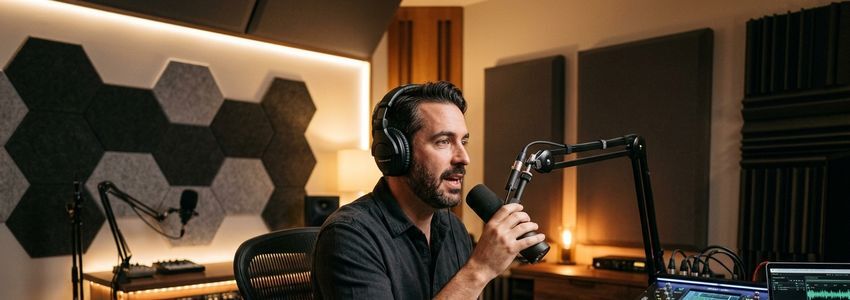
Podcast Studio Equipment Financing: The Complete Guide for Business Owners
Podcasting has grown from a hobbyist medium into a genuine media business, and the equipment gap between an amateur setup and a professional one has never mattered more. Microphones, mixing boards, acoustic treatment, cameras for video podcasts, and editing workstations can easily run into the tens of thousands of dollars for a serious studio buildout. Podcast studio equipment financing gives podcast networks, independent creators, and audio production companies a way to acquire that gear now and pay for it out of the revenue it helps generate.
This guide walks through exactly how podcast studio equipment financing works, what it can and cannot cover, how lenders evaluate applications from podcast businesses, and how to choose the right financing structure for your studio's stage of growth. Whether you are outfitting your first dedicated recording room or building a multi-studio production facility, understanding your financing options will help you make a confident, cost-effective decision.
In This Article
- What Is Podcast Studio Equipment Financing?
- Key Benefits
- How It Works
- Types of Financing Available
- What You Can Finance
- Podcast Industry Statistics
- Who Podcast Equipment Financing Is Best For
- Comparing Your Financing Options
- How Crestmont Capital Helps
- Real-World Scenarios
- Next Steps
- Frequently Asked Questions
What Is Podcast Studio Equipment Financing?
Podcast studio equipment financing is a form of business equipment financing used specifically to acquire the hardware and infrastructure needed to record, produce, and distribute podcast content at a professional level. This includes microphones, audio interfaces, mixing consoles, acoustic treatment panels, cameras for video podcast formats, lighting, editing computers, and the soundproofing or buildout costs associated with a dedicated studio space.
Unlike a general working capital loan, equipment financing is typically secured by the equipment itself, which means the lender holds a security interest in the gear rather than requiring a blanket lien on all business assets. This structure often makes equipment financing more accessible and more affordably priced than unsecured alternatives, particularly for newer podcast businesses that have not yet built extensive credit history.
Because podcasting has professionalized rapidly, lenders increasingly recognize podcast production companies, media networks, and independent creator businesses as legitimate borrowers. A well-documented revenue history, whether from sponsorships, advertising, listener memberships, or platform payouts, is what allows a podcast business to qualify for the same equipment financing products available to any other small business.
Key Stat: The global podcast economy reached an estimated $9.2 billion in revenue in a recent year, a 23% increase year over year, according to reporting in Forbes. That growth is translating directly into higher production standards and bigger equipment budgets across the industry.
Key Benefits of Financing Your Podcast Studio Equipment
Paying cash for a full studio buildout can drain working capital that a growing podcast business needs for marketing, hiring, or content acquisition. Financing spreads that cost over time while letting you start using the equipment immediately. Specific benefits include:
- Preserve cash flow: Keep working capital available for talent acquisition, marketing campaigns, and day-to-day operating expenses instead of tying it up in equipment.
- Match payments to revenue: Spread the cost of gear over a term that aligns with the useful life of the equipment and the revenue it helps generate.
- Upgrade production quality quickly: Better audio and video quality directly affects listener retention and sponsor willingness to pay premium ad rates.
- Preserve other credit lines: Equipment financing does not typically draw down a separate business line of credit, keeping that credit available for other needs.
- Potential tax advantages: Many equipment financing structures allow the equipment to be depreciated or expensed according to your accountant's guidance, though you should always consult a tax professional for your specific situation.
- Build business credit: Making consistent, on-time payments on equipment financing helps establish a stronger business credit profile for future financing needs.
How Podcast Studio Equipment Financing Works
The mechanics of equipment financing are straightforward, but understanding each stage helps you prepare a stronger application and secure better terms.
Step 1: Determine Your Equipment Needs and Costs
Build an itemized list of everything you need, from microphones and interfaces to acoustic panels and computers. Get quotes from vendors so you have an accurate total project cost before you apply. Lenders respond well to a specific, well-researched number rather than a rough estimate.
Step 2: Choose a Financing Structure
Decide between an equipment loan (you own the equipment from day one, building equity as you pay it down) or an equipment lease (lower monthly payments, with an option to purchase, upgrade, or return the equipment at the end of the term). Your choice depends on whether you want to own the gear outright or prioritize lower monthly costs and the flexibility to upgrade as technology changes.
Step 3: Submit Your Application and Documentation
Most lenders request basic business information, 3 to 6 months of business bank statements, a vendor quote or invoice for the equipment, and a soft or hard credit check depending on the lender. Alternative lenders like Crestmont Capital typically move faster than traditional banks and can often issue a decision within one business day.
Step 4: Receive Approval and Review Terms
Once approved, review the interest rate or factor rate, repayment term, monthly payment amount, and any fees before signing. Confirm whether the equipment becomes collateral and whether there is a personal guarantee requirement, which is common for newer businesses.
Step 5: Equipment Purchase and Funding
Depending on the lender, funds are either paid directly to the equipment vendor or disbursed to your business account for you to complete the purchase. Funding timelines for alternative lenders typically range from 24 hours to a few business days.
Step 6: Repay Over the Agreed Term
Make consistent monthly payments over the loan or lease term, which commonly ranges from 12 to 60 months depending on the type and cost of equipment financed. Longer terms lower your monthly payment but increase total interest paid over the life of the financing.
Ready to Upgrade Your Podcast Studio?
Get fast, flexible financing from the #1 business lender in the U.S. No obligation - apply in minutes.
Apply Now →Types of Financing Available for Podcast Studios
There is no single "podcast loan." Instead, podcast businesses combine several financing tools depending on what they need to fund and how quickly they need capital.
1. Equipment Financing
Equipment financing is the most direct tool for a studio buildout. Microphones, mixers, audio interfaces, cameras, and computers all qualify, with the equipment itself typically serving as collateral. Terms usually run 24 to 60 months.
2. Equipment Leasing
Equipment leasing is attractive for podcast businesses that expect to upgrade technology frequently. Lower monthly payments and end-of-term flexibility (buy, return, or upgrade) make leasing a good fit for fast-evolving audio and video production gear.
3. Business Line of Credit
A revolving business line of credit is useful for smaller, recurring equipment purchases, replacement parts, or software subscriptions that do not warrant a dedicated equipment loan. Draw what you need and only pay interest on the outstanding balance.
4. Unsecured Working Capital Loans
Working capital loans can supplement equipment financing when a studio buildout involves non-equipment costs such as soundproofing construction, furniture, or signage that a strict equipment loan might not cover.
5. SBA Loans
SBA loans offer the lowest rates and longest terms for podcast businesses with at least two years of operating history and strong documented revenue. The SBA 7(a) program can fund a complete studio buildout including construction, equipment, and working capital in a single loan.
6. Merchant Cash Advances
Merchant cash advances work well when a time-sensitive opportunity arises, such as landing a new sponsorship contract that requires immediate studio upgrades to meet a client's production quality standards, since funding can move faster than a conventional term loan.
What You Can Finance With Podcast Studio Equipment Financing
Podcast studio financing covers a broad range of production and infrastructure needs. Understanding the full scope helps you plan a comprehensive buildout rather than financing equipment piecemeal.
Audio Recording Equipment
XLR and USB microphones, audio interfaces, mixing consoles, headphones, pop filters, and boom arms form the core of any podcast studio. Professional-grade audio equipment for a multi-host studio can range from $3,000 to $15,000 depending on the number of channels and the quality tier chosen.
Acoustic Treatment and Soundproofing
Acoustic panels, bass traps, isolation booths, and soundproofing materials significantly improve recording quality by reducing echo and outside noise. A properly treated room is one of the highest-impact investments a podcast studio can make, and buildout costs typically range from $2,000 to $20,000 depending on room size and construction complexity.
Video Production Equipment
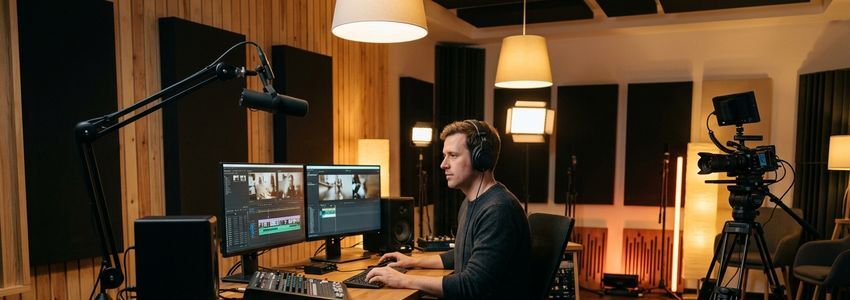
Video podcasting has become standard practice for networks distributing to YouTube and social platforms. Cameras, lighting kits, backdrops, and multi-camera switching systems can add $5,000 to $30,000 to a studio buildout depending on production ambitions.
Editing and Post-Production Workstations
High-performance computers with sufficient processing power and storage for multi-track audio and 4K video editing are essential for efficient post-production. A properly configured workstation typically costs $2,500 to $8,000.
Studio Furniture and Facility Buildout
Desks, chairs, cable management systems, and general studio construction round out the physical space. For networks building a dedicated commercial studio space, facility construction costs can represent the largest single line item in the budget.
Broadcasting and Streaming Infrastructure
For podcasts that livestream or simulcast to multiple platforms, encoding hardware, streaming software licenses, and reliable high-bandwidth internet infrastructure are additional equipment categories that financing can cover.
Pro Tip: Get itemized vendor quotes for every category before applying. Lenders respond far more favorably to a specific, documented equipment list than a rough estimate, and a detailed quote often speeds up underwriting significantly.
Podcast Industry Statistics That Matter for Financing Decisions
By the Numbers
Podcast Industry and Equipment Financing - Key Statistics
$9.2B
Global podcast economy revenue, up 23% year over year
605K+
Active podcasts publishing new episodes as of late 2025
158M
Monthly U.S. podcast listeners
$443K
Average SBA 7(a) loan size nationally
100K+
SBA-backed financings delivered to small businesses in a recent fiscal year
24-72 Hrs
Typical funding timeline with alternative lenders
According to the U.S. Small Business Administration, the agency delivered a total of $56 billion to small businesses in a recent fiscal year, with more than 100,000 individual financings, a 22% increase over the prior year. That growth reflects a broader lending environment that is increasingly accessible to newer, non-traditional business models like podcast production companies.
Who Podcast Studio Equipment Financing Is Best For
Podcast studio equipment financing serves a range of business types across the audio and video content industry:
- Independent podcasters going full-time: Creators transitioning from a side project to a full-time business who need to upgrade from consumer-grade to professional equipment.
- Podcast networks: Multi-show operations that need to outfit several recording rooms simultaneously or standardize equipment across hosts.
- Media production companies: Businesses that produce podcasts for corporate clients or other creators as a service offering, where equipment quality directly affects client acquisition.
- Radio stations expanding into podcasting: Traditional broadcast businesses adding on-demand audio content to their distribution strategy.
- Marketing and PR agencies: Agencies building in-house podcast production capabilities for client campaigns.
- Educational institutions and businesses: Organizations launching branded podcast content as part of a content marketing strategy.
The common thread across all of these business types is documented revenue and a clear plan for how the equipment investment supports growth. Lenders want to see that the studio buildout is tied to a specific business outcome, whether that is increased sponsorship revenue, new client contracts, or expanded content output.
Comparing Your Financing Options
| Financing Type | Best For | Typical Term | Speed |
|---|---|---|---|
| Equipment Loan | Owning gear outright, long-term studios | 24-60 months | 1-5 days |
| Equipment Lease | Frequent tech upgrades, lower payments | 12-48 months | 1-3 days |
| Business Line of Credit | Smaller, recurring purchases | Revolving | 1-3 days |
| SBA 7(a) Loan | Full studio buildout, established businesses | Up to 10 years | 30-90 days |
| Merchant Cash Advance | Time-sensitive opportunities | 3-18 months | 24-72 hours |
Find the Right Financing Fit for Your Studio
Compare your options with a specialist who understands media and content production businesses. No obligation - apply today.
Check Your Options →How Crestmont Capital Helps Podcast Studio Businesses
Crestmont Capital works with podcast networks, independent creators, and audio and video production businesses to structure financing that matches how these businesses actually earn revenue. Rather than forcing every applicant through the same rigid underwriting template used for conventional brick-and-mortar businesses, our team evaluates sponsorship contracts, platform payout history, membership revenue, and other non-traditional income sources that podcast businesses rely on.
As the #1-rated business lender in the U.S., Crestmont offers a full range of products, from equipment financing and equipment leasing to working capital loans and SBA loans. Our specialists can help you determine whether a straightforward equipment loan or a broader financing package that includes construction and working capital is the better fit for your studio's specific buildout.
Speed matters in a fast-moving media landscape. Most Crestmont applications receive a decision within one business day, and approved financing typically funds within a few days, letting you move quickly on time-sensitive opportunities like a new sponsorship deal that requires an immediate production quality upgrade. Podcast businesses that have already explored our guides to recording studio business loans or content creator business loans will find that podcast studio equipment financing follows a very similar, streamlined process.
You can start the conversation any time through our contact page, or explore the full range of options at our small business financing hub.
Real-World Podcast Studio Financing Scenarios
Scenario 1: The Independent Creator Going Full-Time
A true crime podcaster has been recording from a home closet for 18 months, growing to 40,000 downloads per episode with consistent sponsorship revenue of $6,000 per month. Ready to go full-time, she wants to convert a spare room into a properly treated studio with professional microphones and acoustic panels, at a total cost of $14,000. With documented sponsorship revenue and a 690 credit score, she qualifies for an equipment loan over 36 months, with a monthly payment of roughly $460 comfortably covered by existing sponsorship income.
Scenario 2: The Two-Person Network Expanding to Video
A comedy podcast network with two shows has been audio-only for three years, generating $18,000 per month in combined sponsorship and Patreon revenue. To meet advertiser demand for video content, the network needs cameras, lighting, and a multi-camera switching system, totaling $22,000. With strong revenue history, the network secures an equipment lease over 24 months, preserving cash flow while gaining the flexibility to upgrade camera bodies as the video production matures.
Scenario 3: The Agency Building an In-House Studio
A marketing agency wants to offer branded podcast production as a new service line for corporate clients, requiring a dedicated studio buildout including soundproofing construction, a full audio suite, and video capability at a total cost of $65,000. With two years of established agency revenue and strong business credit, the agency combines an SBA 7(a) loan for the construction and equipment costs with existing working capital, spreading payments over a 7-year term that keeps monthly payments manageable relative to expected new client revenue.
Scenario 4: The Growing Network Standardizing Multiple Studios
A podcast network with six shows across different hosts wants to standardize equipment across three recording rooms to ensure consistent audio quality, a project totaling $48,000. With established multi-show revenue of $35,000 per month, the network qualifies for an equipment loan over 48 months, with the standardized quality improvement helping the network land a new advertising package deal with a national sponsor within four months of the upgrade.
Scenario 5: The Time-Sensitive Sponsorship Opportunity
An independent business podcast is offered a six-figure annual sponsorship contract contingent on upgrading to broadcast-quality video within 30 days. With limited time to secure traditional financing, the host uses a merchant cash advance to purchase $16,000 in camera and lighting equipment, receiving funds within 48 hours and meeting the sponsor's deadline. The new sponsorship revenue covers the repayment several times over within the first year.
Common Financing Mistakes Podcast Businesses Make
1. Underestimating Total Buildout Costs
Many creators budget for microphones and cameras but overlook acoustic treatment, cabling, furniture, and software licensing costs. Building a complete, itemized budget before applying prevents a financing shortfall midway through the buildout.
2. Choosing the Wrong Term Length
Financing a durable, long-life equipment purchase with an overly short term creates unnecessary monthly payment pressure. Match your financing term to the expected useful life of the equipment, typically 3 to 5 years for most professional audio and video gear.
3. Not Documenting Non-Traditional Revenue
Podcast businesses often earn through platform payouts, sponsorship invoices, and membership platforms that do not always appear as clean, predictable bank deposits. Organize and present this documentation clearly to avoid underwriting delays or denials from lenders unfamiliar with creator revenue models.
4. Overlooking Leasing for Fast-Evolving Technology
Cameras and computers depreciate and become outdated faster than acoustic panels or furniture. Financing rapidly evolving technology with a long-term loan can leave you paying for outdated equipment. Consider leasing for these categories specifically.
Build the Studio Your Podcast Deserves
Flexible financing designed for how media businesses actually earn. Fast approvals, no obligation.
Start Your Application →How to Get Started
Get vendor quotes for every piece of equipment and any construction or buildout costs so you have a precise total project cost.
Organize 3-6 months of business bank statements along with sponsorship contracts, platform payout summaries, and membership revenue records.
Complete our quick application at offers.crestmontcapital.com/apply-now - it takes just a few minutes and there is no obligation to proceed.
Receive your funds, often within a matter of days, and start building the studio your podcast or network needs to compete at the next level.
Investing in Your Studio Is Investing in Your Podcast's Future
The podcast industry has matured into a genuine media business category, and production quality is now a real competitive differentiator that affects listener retention, sponsor interest, and ad rates. Podcast studio equipment financing gives creators, networks, and production companies the ability to invest in that quality now, rather than waiting years to save enough cash to fund a buildout out of pocket.
Whether you need a single microphone upgrade or a complete multi-room studio buildout with acoustic treatment, video capability, and post-production infrastructure, there is a financing structure designed to fit your business stage and revenue profile. The businesses that succeed are the ones that plan their equipment financing as thoughtfully as they plan their content strategy, matching loan or lease terms to the useful life of the equipment and the revenue growth it is expected to drive.
Crestmont Capital is ready to help podcast studio businesses access the capital they need to build professional, competitive production operations. Apply today to see what podcast studio equipment financing options you qualify for and take the next step in growing your media business.
Ready to Grow Your Podcast Studio?
Get fast, flexible financing from the #1 business lender in the U.S. No obligation - apply in minutes.
Apply Now →Frequently Asked Questions
Disclaimer: The information provided in this article is for general educational purposes only and is not financial, legal, or tax advice. Funding terms, qualifications, and product availability may vary and are subject to change without notice. Crestmont Capital does not guarantee approval, rates, or specific outcomes. For personalized information about your business funding options, contact our team directly.








