
 (800) 949-0401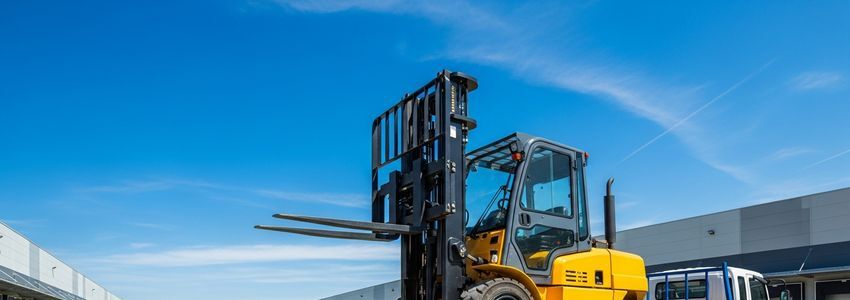
Piggyback Forklift Financing and Leasing: The Complete Guide for Business Owners
In today's fast-paced logistics and delivery landscape, efficiency is not just an advantage-it's a necessity. For businesses that rely on transporting and delivering heavy goods, the piggyback forklift has become an indispensable tool. This versatile piece of equipment, which mounts directly onto the back of a truck or trailer, allows a single driver to load and unload materials at any location, eliminating the need for a loading dock or on-site material handling equipment. However, acquiring such a valuable asset represents a significant capital investment. This is where strategic piggyback forklift financing comes into play, providing a pathway for businesses of all sizes to access the equipment they need without depleting their cash reserves. This comprehensive guide will explore every facet of financing and leasing these critical machines, empowering you to make the best decision for your company's growth and operational success.In This Article
- What Is a Piggyback Forklift?
- Financing vs. Leasing: Key Differences
- Key Benefits of Financing
- How Piggyback Forklift Financing Works
- Industries That Use Piggyback Forklifts
- How to Qualify
- Costs and Rates
- How Crestmont Capital Helps
- Real-World Scenarios
- Comparing Financing Options
- How to Get Started
- FAQ
- Conclusion
What Is a Piggyback Forklift?
A piggyback forklift, also known as a truck-mounted forklift or by popular brand names like Moffett, Princeton, or Donkey, is a portable, self-propelled forklift designed to be carried on the back of a truck or trailer. Unlike a traditional warehouse forklift, which is confined to a specific facility, a piggyback forklift travels with the delivery vehicle. When the truck arrives at its destination-be it a construction site, a farm, a retail store, or a residential address-the driver can quickly dismount the forklift, unload the cargo, and remount the machine for the next stop. This unique "piggybacking" capability is its defining feature and primary advantage. It provides complete autonomy over the delivery process. Drivers are no longer dependent on the recipient having a loading dock, a ramp, or their own forklift available. This self-sufficiency dramatically expands a company's service area, reduces delivery times, minimizes manual labor, and enhances customer satisfaction. These machines are built for rugged, all-terrain performance. They typically feature powerful engines (diesel is common), robust tires, and a lighter, more compact frame than their warehouse counterparts, allowing them to navigate uneven ground, gravel, grass, and tight spaces with ease. They come in various configurations with different lift capacities, mast heights, and features to suit specific industry needs, from handling pallets of sod and building materials to delivering lumber and industrial equipment. The investment in a piggyback forklift is an investment in logistical independence, speed, and professional capability.Piggyback Forklift Financing vs. Leasing: Key Differences
When deciding how to acquire a piggyback forklift, businesses face a critical choice: should you finance to own, or should you lease the equipment? Both options provide immediate access to the machinery without a large upfront cash outlay, but they differ significantly in terms of ownership, cost structure, and long-term implications. Understanding these differences is crucial for aligning your acquisition strategy with your company's financial goals and operational needs. **Financing** is essentially a loan used to purchase the forklift. You make regular payments over a set term, and at the end of that term, you own the equipment outright. This is often structured as an Equipment Finance Agreement (EFA). **Leasing**, on the other hand, is a long-term rental agreement. You pay a monthly fee to use the forklift for a specific period. At the end of the lease term, you typically have several options: return the equipment, renew the lease, or purchase the forklift at its fair market value or a predetermined price (this depends on the type of lease). Here is a detailed comparison of the two primary options:| Feature | Piggyback Forklift Financing (Loan/EFA) | Piggyback Forklift Leasing |
|---|---|---|
| Ownership | You are the owner of the equipment from the start. You build equity with each payment. | The leasing company (lessor) owns the equipment. You are renting it for a specified term. |
| End of Term | You own the forklift free and clear. You can continue to use it, sell it, or trade it in. | You can return the equipment, renew the lease, or purchase it (depending on the lease agreement). |
| Monthly Payments | Generally higher, as you are paying off the full value of the asset plus interest. | Typically lower, as you are only paying for the depreciation of the asset during the lease term. |
| Upfront Costs | May require a down payment, though 100% financing is often available for qualified buyers. | Usually requires the first and last month's payments, but often no significant down payment. |
| Tax implications | You may be able to deduct depreciation and interest payments. Potential for significant deductions under Section 179. | Lease payments are often treated as an operating expense and can be fully deducted from taxable income. |
| Customization & Use | No restrictions. As the owner, you can customize, modify, or use the equipment as much as you need. | May have restrictions on usage hours, modifications, and wear and tear to preserve the asset's value. |
| Maintenance & Repairs | You are fully responsible for all maintenance, insurance, and repairs. | Responsibility can vary. Some leases include maintenance packages, while others require the lessee to handle it. |
| Balance Sheet Impact | The forklift is listed as an asset, and the loan is listed as a liability on your balance sheet. | An operating lease is typically not listed on the balance sheet, which can improve certain financial ratios. |
| Best For... | Businesses planning for long-term use of the equipment who want to build equity and have total control. | Businesses that want lower monthly payments, need to stay current with the latest technology, or prefer to treat equipment costs as an operating expense. |
Ready to Add a Piggyback Forklift to Your Fleet?
Don't let cash flow hold you back. Crestmont Capital offers fast, flexible financing and leasing solutions tailored to your business. Get the equipment you need to grow.
Apply NowKey Benefits of Financing Your Piggyback Forklift
Opting for piggyback forklift financing offers a multitude of strategic advantages that go far beyond simply acquiring a new piece of equipment. It's a financial tool that can accelerate growth, improve operational efficiency, and strengthen your company's financial position. Here are the key benefits business owners can realize: 1. **Preservation of Working Capital:** This is perhaps the most significant benefit. Instead of tying up tens of thousands of dollars in a single purchase, financing allows you to spread the cost over several years. This frees up your cash for other critical business needs, such as payroll, marketing, inventory, or unexpected opportunities. Healthy cash flow is the lifeblood of any business, and financing protects it. 2. **Immediate ROI and Increased Revenue:** A piggyback forklift isn't just a cost; it's a revenue-generating asset. From day one, it enables you to complete more deliveries, serve a wider range of customers (especially those without loading docks), and reduce labor costs associated with manual unloading. By financing, you can put the equipment to work immediately, allowing it to generate the revenue needed to cover its own monthly payment and then some. 3. **Significant Tax Advantages:** The U.S. tax code offers powerful incentives for businesses that invest in equipment. Under Section 179, you may be able to deduct the full purchase price of a new or used piggyback forklift in the year it's put into service. This can lead to substantial tax savings. Additionally, the interest paid on an equipment loan is typically tax-deductible. Always consult with a tax professional to understand how these benefits apply to your specific situation. 4. **Predictable and Manageable Budgeting:** Financing converts a large, unpredictable capital expenditure into a fixed, manageable monthly payment. This makes budgeting and financial forecasting much simpler and more accurate. You know exactly what your equipment cost will be each month, allowing for better long-term financial planning without the risk of a sudden, large cash outlay. 5. **Builds Business Credit and Equity:** Successfully managing and paying off an equipment loan demonstrates financial responsibility and helps build a strong credit history for your business. This can make it easier to secure financing for future needs. Furthermore, as you make payments, you build equity in a valuable physical asset that can be sold or used as collateral later on. 6. **Competitive Edge:** In industries like logistics, construction, and agriculture, speed and capability are key differentiators. Owning a piggyback forklift allows you to offer services your competitors can't. You can guarantee ground-level delivery, reduce turnaround times, and handle jobs that others must turn down, giving you a distinct advantage in the marketplace. According to a report by Forbes, technology and equipment are key drivers in revolutionizing the logistics industry, and a piggyback forklift is a prime example of such an investment. 7. **100% Financing Options:** Unlike traditional bank loans that often require a hefty 10-20% down payment, many specialized lenders like Crestmont Capital can offer 100% financing. This means you can acquire the forklift, and sometimes even cover the costs of taxes and delivery, with zero cash out of pocket, further protecting your working capital.Key Takeaway: The Power of Section 179
Section 179 of the IRS tax code is a game-changer for businesses purchasing equipment. It allows companies to deduct the full purchase price of qualifying equipment financed or purchased during the tax year. For 2023, the deduction limit was over $1 million. This means if you finance a $60,000 piggyback forklift, you could potentially deduct the entire $60,000 from your gross income, providing a massive tax relief. This incentive is designed to encourage businesses to invest in themselves.
How Piggyback Forklift Financing Works
Navigating the world of equipment financing can seem daunting, but reputable lenders have streamlined the process to be fast, transparent, and user-friendly. At Crestmont Capital, we've refined our approach to get you the equipment you need with minimal hassle. Here is a typical step-by-step breakdown of the piggyback forklift financing journey: **Step 1: The Application** The process begins with a simple application. This can usually be completed online in just a few minutes. You'll provide basic information about your business, such as its legal name, address, years in operation, and annual revenue. You will also need to provide personal information for the business owner(s). The goal is to get a clear snapshot of your business's financial health and operational history. **Step 2: Documentation & Equipment Quote** After the initial application, a financing specialist will likely reach out to discuss your needs in more detail. They will ask for a few supporting documents. While requirements vary based on the loan amount and your credit profile, this typically includes: * Recent business bank statements (usually 3-6 months) * A quote or invoice for the specific piggyback forklift you want to purchase (including make, model, year, and price) * Driver's license of the owner(s) For larger financing amounts, you might be asked for business tax returns or financial statements, but for most standard equipment financing, the process is application-only or "app-only" with bank statements. **Step 3: Credit Review and Underwriting** Once all the necessary information is submitted, it moves to the underwriting team. This is the decision-making stage. Underwriters will review your business's credit history, cash flow (as shown on your bank statements), time in business, and the value of the equipment being financed. They are not just looking at a credit score; they are assessing the overall health of your business and its ability to comfortably handle the new monthly payment. Because specialized lenders like Crestmont focus on business performance, they can often approve applications that a traditional bank might decline. **Step 4: Approval and Contract Generation** If your application is approved, you will receive a formal offer. This document will clearly outline the terms of the financing, including: * The total amount financed * The term length (e.g., 36, 48, 60 months) * The fixed monthly payment amount * The interest rate or factor rate * Any applicable fees You'll have the opportunity to review these terms with your financing specialist and ask any questions. Once you agree to the terms, you'll sign the financing documents, which is often done electronically for speed and convenience. **Step 5: Funding and Equipment Acquisition** After the signed contracts are received, the final step is funding. The lender will coordinate directly with the equipment vendor (the dealership or private seller of the piggyback forklift). They will pay the vendor the full purchase price of the forklift. The vendor will then release the equipment to you for delivery or pickup. Your first payment is typically due about 30 days after the funding is complete. You now have the equipment you need to grow your business, all while keeping your cash in the bank. This entire process, from application to funding, can often be completed in as little as 24-48 hours, a stark contrast to the weeks or months it can take to secure a loan from a traditional bank.Your Fast-Track to a Piggyback Forklift
Follow our simple 4-step process to get funded in as little as 24 hours.
Apply Online
Complete our simple online application in under 5 minutes. It's fast, secure, and won't impact your credit score.
Submit Docs
Provide a quote for your forklift and a few recent bank statements. We make the process simple and digital.
Get Approved
Our team reviews your application quickly. You'll receive a clear, transparent approval and financing terms.
Receive Funds
Once you sign the documents, we pay the equipment seller directly, and you can take delivery of your new forklift.
Industries That Use Piggyback Forklifts
The versatility and all-terrain capability of piggyback forklifts make them essential assets across a wide spectrum of industries. Any business that involves delivering palletized or bulky materials to locations without traditional loading facilities can benefit immensely. Here are some of the key sectors where these machines are indispensable: * **Building Materials & Lumber:** This is one of the largest markets for piggyback forklifts. Lumber yards and suppliers of brick, stone, roofing, siding, and other construction materials use them to deliver directly to job sites. A driver can precisely place pallets of materials exactly where the contractors need them, whether it's on a muddy lot or in a tight residential neighborhood. * **Logistics & Trucking:** For less-than-truckload (LTL) and final-mile delivery companies, a piggyback forklift is a game-changer. It allows them to offer "dock-to-dirt" service, expanding their customer base to include businesses and locations that lack their own unloading equipment. This capability is a significant competitive differentiator. * **Landscaping & Sod Farming:** Sod farms, nurseries, and large-scale landscaping companies rely on piggyback forklifts to transport and unload heavy pallets of turf, mulch, stone, and mature trees. The machine's ability to traverse soft ground without causing significant damage is crucial in this industry. * **Agriculture & Farming:** Farmers use truck-mounted forklifts to handle large bags of seed and fertilizer, move pallets of produce, and transport equipment around the farm and to market. Their versatility makes them a valuable tool for a wide range of agricultural tasks. * **Scaffolding & Event Staging:** Companies that set up scaffolding for construction projects or stages and equipment for large events use piggyback forklifts to efficiently deliver and position heavy components on-site, regardless of the venue's facilities. * **Industrial Gas & Propane Distribution:** The delivery of heavy, palletized cylinders of industrial gases or large propane tanks is made safer and more efficient with a piggyback forklift. It reduces the need for manual handling of potentially hazardous materials. * **Emergency Response & Disaster Relief:** Government agencies and non-profits use these forklifts to quickly unload and distribute critical supplies like water, food, and medical equipment in disaster zones where infrastructure may be damaged or nonexistent. The broad utility of these machines is a testament to their value. The U.S. transportation and warehousing sector, a primary user of this technology, is a massive part of the economy. According to the U.S. Bureau of Labor Statistics, this sector employs millions of Americans, and efficiency gains through equipment like piggyback forklifts are vital to its continued growth and productivity.How to Qualify for Piggyback Forklift Financing
Qualifying for piggyback forklift financing is often more straightforward and flexible than obtaining a traditional bank loan. Specialized equipment lenders focus on the overall health of your business and the value of the asset being financed, rather than relying solely on a single metric like personal credit score. While specific criteria can vary between lenders, here are the general factors that are considered: * **Time in Business:** Most lenders prefer to work with businesses that have been in operation for at least one to two years. An established operational history demonstrates stability and reduces risk. However, programs exist for newer businesses and startups, especially if the owner has strong industry experience and good personal credit. * **Credit Score:** A personal credit score is a key factor. A score of 620 or higher is typically preferred and will open the door to the best rates and terms. Lenders will look at your credit history to see how you've managed debt in the past. While a high score is beneficial, many lenders have programs for business owners with "fair" or "bad" credit (scores below 620), though the rates may be higher to compensate for the increased risk. * **Business Revenue:** Lenders want to see consistent cash flow. They will review your recent business bank statements to verify your monthly or annual revenue. This helps them determine if your business can comfortably afford the new monthly payment without straining its finances. A general rule of thumb is that your total monthly debt payments (including the new loan) should not exceed a certain percentage of your average monthly revenue. * **Industry Experience:** Your experience in your specific industry matters. An owner with a decade of experience in the construction supply business, for example, is often viewed more favorably than someone brand new to the field, even if their credit profiles are similar. * **The Equipment Itself:** The age, condition, and value of the piggyback forklift you are financing also play a role. A new or late-model forklift from a reputable brand like Moffett or Princeton is excellent collateral, which can make financing easier to obtain. Lenders are more confident in financing an asset that holds its value well.Quick Qualification Checklist
- Time in Business: 1+ year preferred (startup programs available)
- Personal Credit Score: 620+ for best rates (options for lower scores)
- Annual Revenue: $100,000+ typically required
- Bank Statements: Consistent deposits and positive daily balances
- Collateral: The forklift itself serves as the primary collateral
Don't self-disqualify! Even if you don't meet every one of these criteria, it's worth speaking with a financing expert. Crestmont Capital has a wide range of programs designed to help businesses in various financial situations.
Find Out What You Qualify For
Our simple, no-obligation application takes just a few minutes. Discover your financing options today and take the next step toward growing your business.
Get Pre-ApprovedCosts and Rates: What to Expect
Understanding the potential costs and interest rates associated with piggyback forklift financing is essential for making an informed decision. Unlike a standardized personal loan, business equipment financing rates are highly customized based on a variety of risk factors. Here’s a breakdown of what influences the cost and what you can generally expect. **Factors That Determine Your Rate:** * **Credit Profile:** This is the most significant factor. Businesses with strong credit scores (700+) and a clean payment history will qualify for the lowest rates. Businesses with fair or challenged credit will see higher rates to offset the lender's risk. * **Time in Business:** A well-established business (5+ years) is seen as less risky than a startup and will typically receive more favorable terms. * **Loan Term:** The length of the financing term affects both your monthly payment and the total interest paid. Longer terms (e.g., 60 or 72 months) will result in a lower monthly payment but a higher total cost of borrowing. Shorter terms (e.g., 24 or 36 months) have higher monthly payments but save you money on interest over the life of the loan. * **Equipment Cost and Age:** The total amount being financed matters. Additionally, financing a brand new piggyback forklift may come with a slightly lower rate than financing an older, used model, as the new equipment is considered better collateral. * **Financial Health:** Lenders will analyze your business bank statements to assess cash flow, average daily balances, and overall financial stability. Strong, consistent revenue can lead to better rates. **Typical Rates and Terms:** It's important to provide a realistic range. For a business with a strong financial profile, rates on an equipment finance agreement can be very competitive, often in the single digits, comparable to what the Small Business Administration (SBA) might offer but with a much faster funding process. * **Excellent Credit (700+ FICO, 2+ years in business):** You can expect interest rates to start in the 6% - 10% range. * **Good Credit (650-699 FICO, 2+ years in business):** Rates might fall in the 10% - 18% range. * **Fair or Challenged Credit (Below 650 FICO or newer business):** Rates can range from 18% upwards. For these "story credits," lenders look beyond the score to the business's performance and potential. **Example Cost Scenario:** Let's say you are financing a **$50,000** used piggyback forklift. * **Scenario A (Strong Business):** With a 5-year (60-month) term at an 8% interest rate, your estimated monthly payment would be around **$1,014**. * **Scenario B (Fair Credit Business):** With a 5-year (60-month) term at a 15% interest rate, your estimated monthly payment would be around **$1,190**. These are just estimates. The only way to know your exact rate and payment is to complete a no-obligation application. A good lender will provide you with a clear, transparent breakdown of all costs before you commit to anything.How Crestmont Capital Helps
Choosing the right financing partner is just as important as choosing the right piece of equipment. While a traditional bank might be the first place some business owners think to go, specialized lenders like Crestmont Capital offer distinct advantages tailored to the needs of modern businesses. As the #1 rated U.S. business lender, we pride ourselves on a process built around speed, flexibility, and a deep understanding of our clients' industries. Here’s how Crestmont Capital stands apart: 1. **Speed and Efficiency:** We know that in business, opportunities don't wait. Our streamlined online application takes minutes to complete, and we can often provide approvals within hours and funding in as little as 24 hours. This allows you to secure the piggyback forklift you need from a seller before a competitor does and put it to work for your business immediately. 2. **Flexible Underwriting:** Unlike banks that often have rigid, black-and-white lending criteria, our underwriting process is more holistic. We look at the complete picture of your business-your cash flow, industry experience, and growth potential-not just your credit score. This allows us to provide equipment financing to a much broader range of businesses, including those with less-than-perfect credit or a shorter time in business. 3. **Specialized Expertise:** We are not generalists; we are experts in business lending. Our team understands the value and revenue-generating potential of assets like piggyback forklifts. This expertise allows us to structure the best possible financing solutions for your specific needs. Whether you need forklift financing and leasing for a single unit or a whole fleet, we have the knowledge to guide you. 4. **A Wide Range of Products:** We offer more than just one type of loan. Our suite of products includes Equipment Finance Agreements (EFAs), Capital Leases, Operating Leases, and more. This variety ensures we can tailor a solution that aligns perfectly with your financial goals, whether you prioritize ownership, low monthly payments, or tax advantages. Our equipment leasing options are particularly popular for businesses looking to manage cash flow and keep their fleet modern. 5. **Minimal Paperwork:** We've eliminated the mountains of paperwork typically associated with bank loans. For most commercial equipment financing under $250,000, our process is "application-only," meaning you won't need to provide tax returns, financial statements, or a detailed business plan. 6. **Financing for More Than Just Equipment:** We understand that a new forklift might be just one part of your growth plan. If you need additional funds for hiring, marketing, or inventory, we also offer flexible working capital loans to fuel your expansion. At Crestmont Capital, we view ourselves as a partner in your success. Our goal is to provide the capital you need to grow, with a process that is as efficient and painless as possible.
Real-World Scenarios
To better illustrate how piggyback forklift financing works in practice, let's explore three detailed scenarios featuring different types of businesses. **Scenario 1: The Growing Landscaping Company** * **Business:** "GreenScape Solutions," a commercial landscaping and sod installation company in business for four years. * **The Challenge:** GreenScape has won a major contract with a new housing developer, requiring them to deliver and install hundreds of pallets of sod over the next 12 months. Their current method of using a skid steer at the delivery site is slow, damages lawns, and requires a second employee and a separate trailer. They are losing time and money on every delivery. * **The Solution:** The owner, Maria, finds a well-maintained, three-year-old Moffett forklift for $45,000. Paying cash would wipe out her cash reserves needed for payroll and materials. She applies for piggyback forklift financing with Crestmont Capital. * **The Process:** Maria completes the 5-minute online application and submits the vendor's invoice for the Moffett along with her last three months of business bank statements. Her business shows consistent revenue of around $40,000 per month, and she has a personal credit score of 680. * **The Outcome:** Within 24 hours, Crestmont Capital approves her for 100% financing on a 60-month term. The monthly payment is approximately $950. Crestmont funds the seller directly, and Maria takes delivery of the forklift two days later. With the new Moffett, a single driver can now deliver and place sod pallets in half the time, without needing a second person. The increased efficiency allows her to take on an additional small job each week, generating over $2,000 in new monthly revenue. The forklift not only pays for itself but also significantly increases her company's profitability and capacity for growth. **Scenario 2: The Startup LTL Trucking Company** * **Business:** "DirectConnect Logistics," a new LTL (less-than-truckload) carrier started 8 months ago by an experienced trucker, Tom. * **The Challenge:** Tom has secured a contract with a local manufacturer to deliver industrial parts to various machine shops in the region. However, many of these shops are small and do not have loading docks. Tom is currently forced to decline these profitable loads because he has no way to unload the heavy pallets. * **The Solution:** Tom knows that a new piggyback forklift, costing around $70,000, would be a game-changer, allowing him to service these clients and expand his business. As a new company, he was denied a loan by his local bank. He searches for financing options for startups. * **The Process:** Tom applies with Crestmont Capital. While his time in business is short, he has over 15 years of industry experience, a solid business plan, and strong personal credit (720 score). He provides the signed contract from the manufacturer as proof of future revenue. * **The Outcome:** Recognizing Tom's industry experience and the secured contract, Crestmont's underwriters approve him for a financing package specifically designed for newer businesses. The terms include a 48-month lease-to-own option. This gives him a manageable monthly payment while he scales up. Tom immediately begins servicing the manufacturing client, instantly adding a reliable $8,000 per month to his revenue. The piggyback forklift becomes the cornerstone of his business, establishing his reputation as a versatile and reliable carrier. **Scenario 3: The Established Building Materials Supplier** * **Business:** "Rockwood Building Supply," a family-owned business for over 20 years. * **The Challenge:** Rockwood has a fleet of five delivery trucks, but only two are equipped with aging piggyback forklifts that are becoming unreliable and costly to maintain. Breakdowns are causing delivery delays and frustrating customers. They need to replace the old units and equip a third truck to keep up with demand. * **The Solution:** The owner decides to purchase three brand new Princeton forklifts at a total cost of $225,000. He wants to take advantage of Section 179 for a large tax deduction this year but doesn't want to impact his company's substantial cash position. * **The Process:** As an established business with excellent credit and strong financials, the process is incredibly simple. The owner submits a one-page application. Due to the high-quality credit profile and the amount being under $250,000, no additional financial documents are required. * **The Outcome:** Crestmont Capital provides an approval within two hours with highly competitive rates. The owner chooses a 48-month Equipment Finance Agreement to pay the machines off quickly. The entire $225,000 is funded the next day. Rockwood immediately improves its delivery reliability, reduces maintenance costs, and increases its daily delivery capacity by 30%. At the end of the year, their accountant uses the Section 179 deduction to write off the full $225,000 purchase, resulting in a tax saving of over $60,000.Comparing Your Financing Options
When you decide to finance a piggyback forklift, you'll encounter several different types of financing products. Each has a unique structure and benefits. Here’s a comparison table to help you understand which option might be best for your business.| Financing Product | Description | Best For | Ownership & End of Term |
|---|---|---|---|
| Equipment Finance Agreement (EFA) | A straightforward loan where you make fixed monthly payments for a set term. It's simple, with no complex lease language. | Businesses that want to own the equipment outright and prefer a simple, easy-to-understand loan structure. | You are the owner from day one. At the end of the term, you own the forklift free and clear. |
| $1 Buyout Lease (Capital Lease) | Structured as a lease for accounting purposes, but functions like a loan. At the end of the term, you purchase the equipment for a nominal amount, typically $1. | Companies that want to own the equipment and take advantage of the Section 179 tax deduction, as this lease type usually qualifies. | Essentially a financed purchase. You own it for $1 at the end of the lease term. |
| Fair Market Value (FMV) Lease (Operating Lease) | A true lease where you pay to use the equipment for a set period. Monthly payments are typically lower than a loan. | Businesses that want the lowest monthly payment, prefer to treat the cost as an operating expense, and want the option to upgrade to newer equipment every few years. | The leasing company owns the equipment. At term end, you can return it, renew the lease, or buy it for its Fair Market Value. |
| Working Capital Loan | A loan that provides a lump sum of cash directly to your business bank account. It is not tied to a specific piece of equipment. | Businesses that need to purchase a forklift from a private seller who doesn't accept third-party financing, or for those who need extra cash for other expenses in addition to the forklift. | You use the cash to buy the forklift, so you own it immediately. The loan is a separate obligation. |
How to Get Started
Taking the next step toward acquiring a piggyback forklift for your business is simple and straightforward with Crestmont Capital. We've designed our process to be as efficient as possible, so you can focus on what you do best-running your business. Follow these steps to get started today.-
1
Gather Your Information
Before you apply, it's helpful to have a few things ready. Find a quote or an online listing for the piggyback forklift you're interested in, including its price, make, and model. Also, have your basic business information handy, such as your legal business name, address, and tax ID number.
-
2
Complete the Online Application
Visit our secure online application portal. The form is simple and takes less than five minutes to complete. This initial application is a "soft pull," which means it will not affect your credit score. It simply gives us the information we need to find the best financing programs for you.
-
3
Speak with a Financing Specialist
Shortly after you submit your application, one of our dedicated financing specialists will contact you. They will discuss your business needs, review the details of your application, and let you know if any additional documents, like bank statements, are needed. This is your chance to ask any questions you have about the process.
-
4
Review Your Approval and Sign
Once your application is reviewed and approved, you'll receive a clear, easy-to-understand financing offer. It will detail the loan amount, term, and monthly payment. After you've reviewed and accepted the terms, you can sign the documents electronically from your computer or smartphone.
-
5
Get Your Equipment
That's it! We handle the rest. Crestmont Capital will pay the equipment vendor directly. You can then schedule the pickup or delivery of your piggyback forklift and start putting it to work for your business right away.
Frequently Asked Questions
What is a piggyback forklift?
How does piggyback forklift financing work?
What is the difference between financing and leasing a piggyback forklift?
What credit score do I need for piggyback forklift financing?
How much does a piggyback forklift cost?
Can I get financing with bad credit?
What are typical financing terms and interest rates?
How long does the application process take?
Do I need a down payment for piggyback forklift financing?
Can startups qualify for piggyback forklift financing?
What documents do I need to apply?
Is it better to finance or lease a piggyback forklift?
Can I finance a used piggyback forklift?
What industries use piggyback forklifts most?
How does Crestmont Capital differ from a traditional bank loan?
Your Growth is Our Business
Partner with the #1 rated U.S. business lender to get the equipment you need to scale. Our team is ready to help you find the perfect financing solution.
Apply NowConclusion
A piggyback forklift is more than just a piece of equipment; it's a strategic asset that unlocks efficiency, expands your service capabilities, and provides a significant competitive advantage. It empowers your business to operate independently, delivering goods wherever they need to go, on your own terms. However, the substantial upfront cost can be a barrier to entry for many businesses. This is why understanding your options for piggyback forklift financing and leasing is so critical. By leveraging the right financial tools, you can acquire this revenue-generating asset without depleting your cash reserves, turning a major capital expenditure into a manageable monthly payment. Whether you choose the long-term ownership benefits of an equipment loan or the flexibility and lower payments of a lease, you are making a powerful investment in your company's future. The path to acquiring your next piggyback forklift is faster and more accessible than ever before. With partners like Crestmont Capital, you can navigate the process with ease, securing the funding you need in as little as 24 hours. Don't let a lack of capital hold your business back from its full potential. Explore your financing options today and take the definitive step toward greater efficiency, profitability, and growth.Disclaimer: The information provided in this article is for general educational purposes only and is not financial, legal, or tax advice. Funding terms, qualifications, and product availability may vary and are subject to change without notice. Crestmont Capital does not guarantee approval, rates, or specific outcomes. For personalized information about your business funding options, contact our team directly.








