
 (800) 949-0401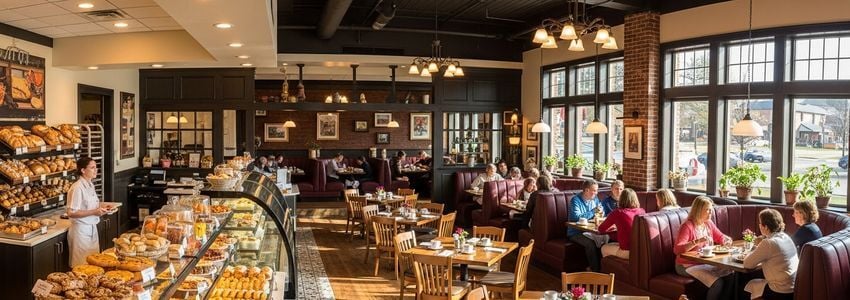
Perkins Franchise Loan: The Complete Financing Guide for Perkins Restaurant & Bakery Franchise Owners
Perkins Restaurant & Bakery has served American families for more than six decades, building a loyal following around its scratch-made baked goods, hearty breakfasts, and full-service dining experience. For entrepreneurs who want to own a proven family dining brand with strong community roots and a dedicated customer base, a Perkins franchise represents a compelling opportunity. But like any full-service restaurant investment, getting from concept to grand opening requires careful planning and substantial capital. This guide covers everything you need to know about financing a Perkins franchise, from startup cost breakdowns to loan types, qualification criteria, and how Crestmont Capital helps franchise owners get funded faster.
In This Article
- What Is a Perkins Restaurant & Bakery Franchise?
- Perkins Franchise Costs and Investment Required
- Financing Options for Perkins Franchise Owners
- How Crestmont Capital Helps Perkins Franchise Owners
- Who Qualifies for a Perkins Franchise Loan?
- How to Apply for a Perkins Franchise Loan
- Real-World Financing Scenarios
- Frequently Asked Questions
- Next Steps to Get Funded
- Conclusion
What Is a Perkins Restaurant & Bakery Franchise?
Perkins Restaurant & Bakery is a full-service family dining chain known for its all-day breakfast menu, fresh-baked pies and pastries, and approachable comfort food. Founded in Cincinnati, Ohio in 1958, Perkins has grown into a recognizable brand across the Midwest, South, and parts of the Northeast and Mountain West regions of the United States. The brand differentiates itself from fast-casual competitors through table service, a broad menu that spans breakfast, lunch, and dinner, and an in-house bakery program that drives incremental revenue through pie sales, takeout, and catering.
The Perkins franchise system is managed by Perkins LLC, which oversees brand standards, menu development, supply chain programs, and franchisee support systems. Franchisees operate under a licensing agreement that grants them the right to use the Perkins name, menu, recipes, and operational playbook in exchange for an initial franchise fee and ongoing royalty and marketing contributions. Because Perkins operates in the family dining segment, the brand targets markets and demographics that value consistency, value pricing, and a welcoming atmosphere over trendy concepts or premium pricing.
For investors considering a Perkins franchise, the brand's longevity and operational depth are significant advantages. A franchise system with decades of operating history has refined its training programs, cost controls, and supply chain logistics far beyond what a newer concept can offer. Lenders also view established franchise systems favorably because the financial performance data from existing locations provides a documented track record that informs revenue projections and debt service analysis during the loan underwriting process.
The family dining segment, while competitive, has shown durability through multiple economic cycles. According to research cited by Forbes, franchise-based businesses tend to recover faster from economic downturns than independent restaurants because of their brand support infrastructure, marketing programs, and established supplier relationships. Perkins' community-oriented positioning and value-based pricing also tend to hold up well when consumer spending tightens, which is a risk factor lenders pay close attention to.
Key Advantage: Perkins has operated for more than 60 years and maintains locations in markets where family dining demand is strong and competition from fast-casual chains is more limited. This market positioning reduces competitive risk for franchise owners and supports more consistent revenue projections that lenders rely on during underwriting.
Perkins Franchise Costs and Investment Required
Before approaching any lender for a Perkins franchise loan, you need a thorough understanding of the total investment required. The Perkins Franchise Disclosure Document outlines estimated startup costs, and these figures will form the foundation of your loan application, business plan, and financial projections.
Initial Franchise Fee
The initial franchise fee for a Perkins Restaurant & Bakery franchise is typically in the range of $30,000 to $40,000 for a standard location. This fee is paid directly to Perkins LLC at the time of signing the franchise agreement and is generally not financeable through a conventional loan. Prospective franchisees must have this amount available in liquid funds separate from their loan down payment.
Total Investment Range
The total estimated investment to open a Perkins franchise can range from approximately $600,000 to $2,500,000 or more depending on several variables including whether you are converting an existing restaurant space or constructing a new building, the market and geographic region, real estate costs, and the size of the location. Key cost categories include:
- Real estate and leasehold improvements: The single largest cost variable, ranging from $150,000 for a turnkey space conversion to $1,000,000 or more for ground-up construction in a high-cost market
- Commercial kitchen equipment: Full-service restaurant kitchen buildouts require significant equipment investment including industrial ranges, griddles, ovens, refrigeration systems, dishwashers, and food prep stations. Budget $150,000 to $400,000 depending on location size
- Bakery equipment: Perkins' signature in-house bakery program requires dedicated equipment including commercial ovens, proofing stations, display cases, and pie production equipment
- Dining room furniture, fixtures, and decor: Including booths, chairs, tables, lighting, signage, and branded interior elements that meet Perkins brand standards
- Technology systems: Point-of-sale systems, kitchen display systems, online ordering integration, and back-office management software required by the franchise system
- Pre-opening training and staffing: Perkins requires franchisees and key managers to complete training at approved facilities before opening, and pre-opening labor costs for staff training add up quickly
- Opening inventory: Initial food inventory, bakery ingredients, beverages, disposables, uniforms, and supplies
- Working capital reserve: Most lenders and franchisors recommend holding 3 to 6 months of projected operating expenses in reserve to cover the ramp-up period before the location achieves steady-state revenue
- Architect, engineering, and permitting fees: Required for new construction and substantial renovation projects
- Insurance, legal, and accounting fees: Pre-opening professional and insurance costs
Ongoing Royalty and Marketing Fees
Beyond the initial investment, Perkins franchisees pay ongoing fees that directly affect cash flow and must be factored into loan repayment projections. The royalty fee is typically 4% of gross sales paid weekly to Perkins LLC. Franchisees also contribute to the national marketing fund, typically at a rate of 2% to 3% of gross sales. These combined ongoing obligations of 6% to 7% of revenue represent a meaningful fixed cost that lenders evaluate when assessing a borrower's ability to service their debt while meeting franchisor obligations.
Financial Qualifications Required by Perkins
Perkins LLC evaluates prospective franchisees on their financial capacity to open and sustain the business through the startup period. While exact thresholds vary and prospective franchisees should confirm current requirements directly with Perkins, the brand generally looks for candidates with meaningful liquid capital (typically $200,000 or more available after the franchise fee payment) and net worth sufficient to demonstrate overall financial stability. These franchisor requirements and lender qualification criteria overlap significantly, so meeting the franchisor's financial bar is a good indicator of loan-readiness.
Ready to Finance Your Franchise?
Get fast, flexible financing from the #1 business lender in the U.S.
Apply Now ->Financing Options for Perkins Franchise Owners
Most Perkins franchise investors do not fund the full investment from personal savings. Instead, they build a capital stack using multiple loan products that each cover different cost categories at favorable terms. Here is a comprehensive breakdown of the financing options available to Perkins franchise owners:
SBA 7(a) Loans
The SBA 7(a) loan program is the most widely used financing vehicle for franchise restaurant investments and the most likely primary funding source for a Perkins franchise loan. These loans are partially guaranteed by the U.S. Small Business Administration, which reduces lender risk and allows borrowers to access lower interest rates and longer repayment terms than they could obtain through conventional financing alone. The SBA 7(a) program can fund franchise fees, leasehold improvements, commercial kitchen and bakery equipment, working capital, and business acquisition costs up to $5 million.
Repayment terms extend up to 10 years for working capital and equipment loans, and up to 25 years for real estate loans, making monthly payments significantly lower than shorter-term conventional alternatives. Interest rates on SBA 7(a) loans are variable and tied to the prime rate plus a margin, with the SBA setting maximum allowable spreads. For more details on SBA lending programs, visit the SBA's official 7(a) loan program page or explore our detailed SBA loan guide at Crestmont Capital.
SBA 504 Loans
If you plan to purchase the commercial property where your Perkins will operate rather than leasing space, the SBA 504 loan program offers a cost-efficient path to real estate ownership. The 504 program is specifically designed for major fixed assets and requires only a 10% borrower down payment, compared to the 20% to 30% typical of conventional commercial real estate loans. It is structured as a partnership between a conventional bank lender (covering 50% of project costs) and a Certified Development Company (covering 40%), with the franchisee contributing 10%. The 504 program provides long fixed-rate terms up to 25 years, creating payment predictability that is valuable when managing a restaurant's variable monthly cash flow.
Equipment Financing
Commercial kitchen equipment and bakery equipment represent a large portion of a Perkins franchise's startup cost. Rather than financing this equipment within an SBA loan, many franchise investors use a dedicated equipment financing product that uses the equipment itself as collateral. This structure typically covers 80% to 100% of equipment purchase cost, carries lower interest rates than unsecured debt because of the collateral, and spreads payments over 2 to 7 years aligned with the useful life of the assets. Separating equipment financing from working capital and leasehold improvement funding often results in a more efficient overall capital structure.
Conventional Term Loans from Alternative Lenders
Alternative lenders and non-bank financial institutions offer conventional term loans with significantly faster processing timelines than SBA programs. While SBA loans typically take 30 to 90 days from application to funding, conventional term loans from lenders like Crestmont Capital can fund in 1 to 5 business days. These products carry higher interest rates than SBA loans due to the reduced government backstop, but they are valuable for filling capital gaps, covering costs outside SBA eligibility, or when timing pressures require faster access to funding than the SBA process allows. Our small business loans are specifically designed to serve franchise investors with flexible terms and fast approvals.
Business Line of Credit
A revolving business line of credit is one of the most useful financial tools available to a new Perkins franchise owner. During the early months of operation when cash flow is irregular and unpredictable, a line of credit provides on-demand access to working capital without requiring a new loan application each time. Lines of credit can cover payroll fluctuations, unexpected repairs, seasonal inventory buildup, and marketing expenses. They are typically structured as 12-month revolving facilities that renew annually, and interest accrues only on the outstanding balance drawn.
Fast Business Loans for Urgent Needs
When a specific capital need arises quickly, such as a lease deposit deadline, an equipment purchase tied to a supplier promotion, or a gap-funding need during construction, fast business loans can provide capital within 24 to 48 hours. These are short-term, higher-rate products best used for specific tactical needs rather than as primary franchise financing instruments.
Perkins Franchise Financing Snapshot
Key Numbers Every Investor Should Know
~$40K
Initial franchise fee paid to Perkins LLC at signing
$2.5M+
Maximum estimated total investment for new builds
4%
Typical ongoing royalty rate on gross sales
$5M
Maximum SBA 7(a) loan amount available for franchise financing
How Crestmont Capital Helps Perkins Franchise Owners
At Crestmont Capital, we specialize in helping entrepreneurs and franchise investors access the capital they need to open, grow, and scale their businesses. As the #1-rated business lender in the United States, we bring deep expertise in restaurant franchise financing and understand the specific demands and timelines associated with a full-service dining investment like Perkins Restaurant & Bakery.
Our team works with Perkins franchise buyers at every stage of the capital-raising process, from pre-qualification and business plan review to loan structure, documentation support, and funding. We offer a full suite of lending products including conventional term loans, equipment financing, business lines of credit, and guidance on SBA program navigation. Whether you are opening your first Perkins location or expanding an existing portfolio with additional units, our advisors will help you identify the most cost-effective combination of products for your specific financial profile and investment timeline.
One of the most common challenges franchise investors face is moving too slowly on financing and losing a lease opportunity or construction window while waiting on bank approvals. Crestmont Capital's streamlined online application and rapid decision process mean that most borrowers receive a lending decision within 24 to 48 hours of submitting a complete application. Conventional loan funding can occur in as little as 1 to 5 business days, keeping you on schedule with your Perkins franchise timeline.
We also understand that not every franchise buyer arrives with a perfect credit profile. If your credit score falls below traditional bank thresholds, or if you are a first-time business owner without years of business tax returns, Crestmont Capital has solutions that traditional SBA lenders may not offer. Our bad credit business loan programs provide alternative pathways to funding for qualified franchise investors who have been turned away elsewhere.
According to CNBC, the most successful franchise investors work with lenders who specialize in their industry and understand the nuances of franchise agreements, FDD obligations, and the cash flow dynamics of ramp-up periods. Generic bank lenders who treat a franchise restaurant application like any other small business loan often create unnecessary delays and complications. Crestmont Capital's franchise-specific expertise eliminates that friction.
Why Choose Crestmont Capital: Our franchise lending advisors have helped hundreds of restaurant franchise investors structure capital for full-service dining concepts. We understand royalty structures, FDD obligations, construction timelines, and what lenders need to see to say yes. That expertise translates into faster approvals, fewer documentation surprises, and better loan terms for our clients.
Ready to Finance Your Franchise?
Get fast, flexible financing from the #1 business lender in the U.S.
Apply Now ->Who Qualifies for a Perkins Franchise Loan?
Lenders evaluate franchise loan applicants across several core criteria. Understanding these factors before you apply helps you identify gaps in your profile and address them proactively rather than after a denial.
Personal Credit Score
For SBA 7(a) loans, most approved lenders require a minimum personal FICO score of 680 to 700. Some preferred SBA lenders set their floor higher at 720 or above. Alternative lenders like Crestmont Capital can work with borrowers at lower score thresholds, though at higher interest rates. A score above 700 gives you access to the most competitive terms across both SBA and conventional lending channels. If your score is in the 600 to 650 range, it is worth checking our options for business owners with credit challenges before assuming you cannot qualify.
Liquid Capital and Net Worth
Lenders want to see that you have sufficient liquid capital to cover your down payment (typically 10% to 20% of the total loan amount for SBA loans), the initial franchise fee, pre-opening expenses not covered by your loan, and a meaningful working capital reserve. For a Perkins franchise with a total investment in the $1 to $2 million range, lenders will generally want to see $150,000 to $400,000 in verified liquid assets. Net worth requirements vary by lender but should comfortably exceed your total loan request.
Management and Industry Experience
Prior experience managing or owning a restaurant, food service operation, or multi-unit retail business significantly strengthens a Perkins franchise loan application. Lenders and Perkins LLC both evaluate your operational capacity. If you have no prior restaurant experience, a strong management team with relevant experience, a detailed operations plan, and demonstrated business management capabilities in adjacent industries can compensate. First-time restaurant owners with strong financial profiles are approved regularly, but experienced operators typically receive faster approvals and better terms.
Time in Business
Existing business owners with 2 or more years of tax returns showing consistent profitability represent the lowest-risk profile for franchise lenders. For first-time franchise buyers with no existing business, lenders rely more heavily on personal financial strength, management experience, and the quality of the business plan and projections.
Collateral
SBA loans require that available business assets be pledged as collateral. For franchise restaurant loans, this typically includes commercial kitchen equipment, leasehold improvements, and any real estate involved in the transaction. Personal guarantees are standard for owner-operators. If business assets do not fully collateralize the loan, lenders may request additional personal collateral such as real estate equity.
Signed Franchise Agreement or Letter of Intent
Most lenders require a signed franchise agreement or a formal letter of intent from Perkins LLC confirming that you have been approved as a franchisee candidate before committing to a loan. This document validates the use of funds and confirms you have met the franchisor's minimum qualifications.
How to Apply for a Perkins Franchise Loan
Navigating the franchise loan application process efficiently requires preparation. Here is a step-by-step overview of how the process works, from initial preparation through funding:
Step 1: Build Your Business Plan and Financial Projections
Before you approach any lender, build a comprehensive business plan that includes a 3-to-5-year revenue projection grounded in Perkins' disclosed Item 19 financial performance data from the FDD, a break-even analysis showing when the location will cover all fixed and variable costs including debt service, a market analysis for your target location, an operations plan including staffing model, management structure, and supply chain approach, and an exit strategy or growth plan for multi-unit expansion. According to The Wall Street Journal, applicants who submit well-documented business plans with realistic projections are approved at significantly higher rates than those who submit minimal documentation.
Step 2: Gather Your Financial Documentation Package
Prepare the following before submitting any loan application: personal tax returns for the last 2 to 3 years, business tax returns if you own an existing business, a current personal financial statement listing all assets and liabilities, 3 to 6 months of bank and investment account statements verifying liquid capital, a copy of the Perkins Franchise Disclosure Document, your signed franchise agreement or letter of intent from Perkins LLC, itemized quotes from construction contractors and equipment suppliers, a detailed use-of-funds breakdown showing exactly how loan proceeds will be deployed, and your completed business plan with financial projections. Organizing these documents before you apply allows lenders to begin underwriting immediately and dramatically shortens your time to funding.
Step 3: Apply Through the Right Lending Channel
Not all lenders have equal capability to process franchise restaurant loans. An experienced franchise lender will understand the Perkins business model, the FDD structure, and the specific documentation requirements without needing extensive education on how franchise systems work. This expertise means fewer delays, fewer unnecessary documentation requests, and a higher probability of approval on the first submission. Applying through Crestmont Capital's online portal gives you access to our franchise-specialized lending team and a decision timeline measured in hours, not weeks.
Step 4: Structure Your Capital Stack
For most Perkins franchise investments, the optimal capital structure combines an SBA 7(a) loan as the primary debt instrument with equipment financing for kitchen and bakery assets, a business line of credit for working capital flexibility, and personal equity contribution covering the franchise fee, down payment, and pre-opening startup costs outside the loan scope. Work with your Crestmont Capital advisor to model the total cost of capital across this structure and identify where you can minimize interest expense by matching each cost category to its most appropriate financing product.
Step 5: Close and Deploy Funds on Schedule
Once your loan is approved and documents are signed, coordinate loan disbursement with your construction timeline. SBA loans may require staged disbursements tied to construction milestones. Conventional loans typically fund in a lump sum. Plan your disbursement timing carefully to avoid cash flow gaps during construction and pre-opening that could force you to draw on personal reserves or delay your opening date.
Real-World Financing Scenarios
Understanding how Perkins franchise financing plays out in practice helps you anticipate what to expect during the application process. Here are four realistic scenarios based on different buyer profiles and investment types:
Scenario 1: First-Time Franchisee Converting a Vacant Restaurant Space
A buyer with $280,000 in liquid assets, a 710 personal credit score, and 15 years of food service management experience identifies a vacant full-service restaurant space with an existing commercial kitchen buildout that requires only partial renovation to meet Perkins brand standards. The total estimated investment is $750,000. After paying the $35,000 franchise fee from personal funds, the buyer applies for an SBA 7(a) loan covering $550,000 of the buildout, equipment, technology systems, and working capital reserve. The remaining $165,000 comes from personal savings as the down payment and equity contribution. The 10-year SBA loan term results in manageable monthly debt service relative to the location's projected cash flow based on comparable Perkins locations in similar markets.
Scenario 2: Experienced Multi-Unit Restaurant Operator Adding Perkins
An operator who already owns two franchise restaurants in adjacent segments applies to add a Perkins location to diversify their portfolio into family dining. With 3 years of business tax returns demonstrating consistent EBITDA, an established business credit profile, and documented management systems, this borrower qualifies for a conventional term loan from Crestmont Capital with funding in 5 business days. The speed advantage allows the operator to finalize a lease on a high-traffic endcap retail space before a competing tenant secures it. Kitchen and bakery equipment for the new Perkins is financed separately through an equipment loan structured over 5 years, isolating that cost at a lower rate than the working capital portion of the term loan.
Scenario 3: Buying Real Estate to Own the Property Under the Franchise
A franchisee in a smaller Midwestern market where commercial real estate prices are comparatively low decides to purchase the building rather than lease, adding real estate equity to their long-term wealth plan. The property purchase price is $800,000. Using an SBA 504 loan, the franchisee puts 10% down ($80,000), with a conventional bank covering 50% and a Certified Development Company covering the remaining 40% at a 25-year fixed rate. The Perkins buildout, equipment, and working capital are funded separately through a conventional term loan. The total monthly obligations are higher than a lease scenario, but the long-term property appreciation and equity buildup represent meaningful additional value beyond the restaurant business itself.
Scenario 4: Acquiring an Existing Perkins Location from a Retiring Franchisee
A buyer identifies an established Perkins location whose owner is retiring after 18 years of operation. The restaurant has a loyal customer base, documented 3-year sales history, and existing trained staff. The acquisition price is $950,000 including the business assets, goodwill, and equipment. Financing an established operating business is generally more straightforward than financing a new build because the revenue history reduces lender uncertainty. This buyer secures an SBA 7(a) business acquisition loan for $760,000 (80% of purchase price) covering the business assets, working capital for the ownership transition period, and required technology upgrades to meet current Perkins system standards. The existing restaurant's demonstrated cash flow supports the debt service calculation, resulting in faster underwriting and approval.
Strategic Note: Acquiring an existing Perkins location from a franchisee who is exiting the system is often the most capital-efficient path to ownership. The infrastructure exists, the staff may stay on, and the customer base is already established. Lenders view acquisition loans on operating businesses with positive revenue histories as significantly lower risk than startup construction loans.

Frequently Asked Questions
Next Steps to Get Funded
If you are serious about financing a Perkins Restaurant & Bakery franchise, here is the recommended sequence of actions to move from interest to funded as efficiently as possible:
Contact Perkins LLC to begin the franchise inquiry process and receive the current Franchise Disclosure Document. Review the Item 19 financial disclosures and the full investment cost ranges before building your financial projections.
Develop a detailed business plan with 3-to-5-year financial projections, market analysis, staffing plan, and break-even analysis. This document is the foundation of your loan application and the primary tool lenders use to evaluate your readiness.
Submit your online application at offers.crestmontcapital.com/apply-now. Our franchise lending specialists will review your Perkins investment structure, evaluate your financing options, and provide a decision within 24 to 48 hours.
Once approved and funded, deploy your Perkins franchise loan according to your use-of-funds plan, covering construction, equipment, technology, staffing, and working capital. Our team remains available throughout your build-out and opening period.
Ready to Finance Your Franchise?
Get fast, flexible financing from the #1 business lender in the U.S.
Apply Now ->Conclusion
A Perkins Restaurant & Bakery franchise represents a meaningful investment in a proven family dining brand with over 60 years of operating history, a differentiated bakery program, and a loyal community customer base. The total investment ranges from approximately $600,000 to $2.5 million or more depending on your location strategy, market, and construction approach, making smart franchise financing one of the most critical decisions you will make on the path to ownership.
The good news is that a wide range of loan products exist specifically to support restaurant franchise investments at every level of the capital stack. SBA 7(a) loans provide the most cost-effective primary debt instrument for most investors. Equipment financing isolates kitchen and bakery asset costs at favorable rates. A business line of credit provides the working capital flexibility that new restaurant owners need during their ramp-up period. And when speed matters, conventional term loans from Crestmont Capital can put capital in your hands in days rather than months.
The key to a successful Perkins franchise loan application is preparation: a thoroughly documented business plan, clean financial records, verified liquid capital reserves, and a lending partner who understands the franchise restaurant business well enough to guide your application to approval without unnecessary delays. At Crestmont Capital, we have helped hundreds of franchise investors get funded and open their doors. We are ready to help you do the same.
Disclaimer: The information provided in this article is for general educational purposes only and is not financial, legal, or tax advice. Funding terms, qualifications, and product availability may vary and are subject to change without notice. Crestmont Capital does not guarantee approval, rates, or specific outcomes. For personalized information about your business funding options, contact our team directly.








