
The paving industry keeps America moving. From the highways that carry freight across state lines to the parking lots outside every retail center, paving contractors build and maintain the surfaces that commerce depends on. If you own a paving company, are considering entering the trade, or need reliable data to plan your next equipment purchase, understanding the latest paving contractor statistics gives you a real competitive edge. This report breaks down the most important paving contractor statistics for 2026, covering market size, revenue, employment, equipment costs, regional trends, and the growth outlook shaping the industry this year.
Whether you run a small sealcoating crew or manage a full-scale asphalt paving operation, the numbers below will help you benchmark your business, spot emerging opportunities, and make smarter decisions about staffing, equipment, and capital. Let us start with a quick overview of where the industry stands.
In This Article
- Paving Contractor Industry Overview
- Key Paving Contractor Statistics for 2026
- Market Size and Revenue
- Employment and Workforce Statistics
- Equipment and Material Cost Trends
- Regional Breakdown
- Growth Trends and Industry Outlook
- Challenges Facing Paving Contractors
- How Paving Contractors Use Financing
- How Crestmont Capital Helps
- Real-World Scenarios
- Frequently Asked Questions
- How to Get Started
Paving Contractor Industry Overview
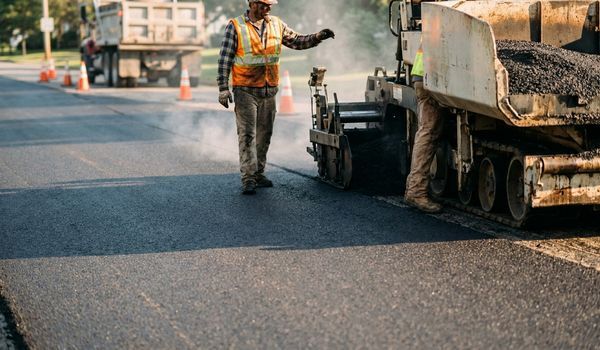
Paving contractors specialize in constructing, resurfacing, and maintaining asphalt and concrete surfaces. Their work spans driveways, parking lots, private roads, municipal streets, highways, airport runways, and recreational surfaces like running tracks and tennis courts. The industry sits at the intersection of construction, infrastructure, and property maintenance, which makes it sensitive to both public infrastructure spending and private commercial development.
Most paving companies are small to midsize businesses. A typical operation might run one to three paving crews, own a handful of heavy machines, and employ anywhere from five to fifty people depending on the season. A smaller segment of the market consists of large regional and national firms that handle highway and airport contracts worth tens of millions of dollars. This mix of small local operators and large infrastructure players gives the industry a fragmented competitive landscape, which is one reason reliable paving contractor statistics are so valuable for benchmarking.
The work is highly seasonal in most of the country. Asphalt requires warm temperatures to lay and compact properly, so paving activity peaks from late spring through early fall in northern states and runs closer to year-round in the South and Southwest. This seasonality shapes everything from cash flow to staffing, and it explains why so many paving contractors rely on flexible financing to carry them through the slower winter months.
Key Stat: The U.S. paving and asphalt industry generates an estimated $27 billion in annual revenue, supported by hundreds of thousands of miles of public roads and millions of commercial parking lots that require ongoing resurfacing and maintenance.
Key Paving Contractor Statistics for 2026
Before diving into the details, here is a high-level snapshot of the numbers that define the paving industry heading into 2026. These figures draw on industry research, government data, and market analysis to give you a reliable baseline for planning.
By the Numbers
Paving Contractor Industry - Key Statistics for 2026
$27B
Estimated annual U.S. paving and asphalt industry revenue
3.5%
Projected annual industry growth rate through 2026
300K+
Workers employed across paving and surfacing trades
94%
Share of U.S. paved roads surfaced with asphalt
These headline figures only scratch the surface. The sections below unpack what is driving them, how they vary by segment and region, and what they mean for your paving business in 2026.
Paving Industry Market Size and Revenue
The U.S. paving industry is a substantial and resilient segment of the broader construction economy. Industry estimates place annual revenue for asphalt paving and related contracting services at roughly $27 billion in 2026, with steady expansion driven by infrastructure investment and private development. When you add in adjacent activities like sealcoating, striping, and concrete flatwork, the broader pavement maintenance market is even larger.
Several forces are pushing revenue higher. Federal and state infrastructure programs continue to fund road resurfacing and reconstruction projects at elevated levels, putting steady work in front of contractors who handle public bids. Broader economic and construction data from the U.S. Census Bureau's Economic Census confirms that highway and street construction remains one of the largest segments of the construction economy. On the private side, growth in warehousing, logistics, and retail development has created strong demand for new parking lots and loading areas. Property managers and commercial owners are also investing more in pavement maintenance to extend the life of existing surfaces, which feeds a reliable stream of recurring work for maintenance-focused contractors.
Revenue per contractor varies widely. A small residential driveway and sealcoating operation might generate $300,000 to $800,000 per year, while a midsize commercial paving company commonly falls in the $2 million to $10 million range. Large firms focused on highway and municipal work can exceed $50 million annually. Understanding where your business sits on this spectrum helps you set realistic growth targets and identify the capital investments that will actually move the needle.
Pro Tip: Track your revenue per crew and revenue per machine, not just top-line sales. Contractors who know these unit economics can spot underperforming assets early and make smarter decisions about when to add equipment or crews.
Ready to Grow Your Paving Business?
Get fast, flexible financing from the #1 business lender in the U.S. No obligation - apply in minutes.
Apply Now →Paving Employment and Workforce Statistics
The paving and surfacing trades employ well over 300,000 workers across the United States, spanning equipment operators, laborers, truck drivers, estimators, and project managers. When you include the broader highway, street, and bridge construction workforce, that number climbs higher still. Paving is a skilled trade, and experienced crew members who can run a paver, read grade, or manage a crew command strong wages.
Labor is one of the industry's most persistent pressure points. Paving contractors consistently report difficulty finding and keeping qualified workers, especially during the peak summer season when demand for crews spikes. The work is physically demanding, performed outdoors in heat, and often requires long hours to take advantage of good weather windows. As a result, competition for experienced operators is intense, and wages have trended upward.
Average pay for paving equipment operators and skilled laborers has risen steadily over the past several years, with experienced operators in many markets earning $25 to $40 per hour or more, plus overtime during the busy season. Foremen and superintendents earn considerably more. This wage pressure is a double-edged sword: it raises operating costs, but it also means that well-run companies that can attract and retain good people have a real advantage over competitors who struggle with turnover.
For many paving business owners, the labor shortage has accelerated interest in productivity-boosting equipment. Machines that let a smaller crew lay more tons per day, or that reduce manual labor on tasks like milling and grading, deliver a fast return when labor is scarce and expensive. This is one reason equipment financing has become such an important tool for the industry, a point we will return to below.
Paving Equipment and Material Cost Trends
Equipment is the single largest capital expense for most paving contractors, and costs have climbed meaningfully in recent years. A new asphalt paver typically runs anywhere from $250,000 to over $500,000 depending on size and features. Milling machines, which remove old pavement before resurfacing, commonly range from $300,000 to $800,000. Add in rollers, skid steers, tack trucks, dump trucks, and support vehicles, and a well-equipped commercial paving operation can easily carry several million dollars in rolling stock.
Material costs have also been volatile. Asphalt is a petroleum-based product, so its price tracks crude oil markets. Liquid asphalt prices rose sharply during the inflationary period earlier in the decade and have remained elevated compared with pre-2020 norms. Contractors who did not build material escalation clauses into their contracts felt the squeeze, while those who did were better protected against sudden price swings.
These cost dynamics have two practical implications for paving business owners. First, the used equipment market has become more attractive as a way to control capital costs, though buyers need to weigh purchase price against maintenance and downtime risk. Second, locking in favorable financing terms can meaningfully lower the total cost of owning equipment. Spreading a major machine purchase over a structured term preserves working capital for payroll, materials, and fuel, which is especially valuable in a seasonal business where cash flow is uneven.
Regional Breakdown of the Paving Industry
Paving activity is not evenly distributed across the country. Climate, population growth, infrastructure funding, and construction activity all shape regional demand, and the differences are significant enough to influence where contractors choose to focus and expand.
The Sun Belt continues to lead in paving demand. States like Texas, Florida, Arizona, Georgia, and the Carolinas combine rapid population growth, active commercial development, and long paving seasons that allow nearly year-round work. Contractors in these markets benefit from high volumes of new construction, including subdivisions, retail centers, and distribution facilities, all of which need new pavement. The Southeast and Southwest have been particularly strong as logistics and manufacturing investment flows into the region.
The Midwest and Northeast present a different profile. Shorter seasons compress the working year, but harsh winters create intense demand for repair and resurfacing as freeze-thaw cycles damage existing pavement. Contractors in these regions often run at full capacity from May through October and rely on maintenance and repair work to fill the schedule. The freeze-thaw cycle, while hard on pavement, generates a steady stream of pothole repair, crack sealing, and overlay work.
The West Coast and Mountain West fall somewhere in between, with strong demand tied to population growth in metro areas and ongoing investment in transportation infrastructure. Wildfire recovery and rebuilding in parts of the West have also created localized demand for site work and paving. Across all regions, contractors who understand their local market dynamics and plan equipment and staffing around seasonal patterns tend to outperform those who take a one-size-fits-all approach.
Paving Industry Growth Trends and Outlook
The outlook for paving contractors heading into 2026 is cautiously optimistic. Industry analysts project annual growth in the range of 3 to 4 percent for the paving and asphalt sector, supported by a few durable tailwinds. Infrastructure funding remains the most important. Multi-year federal transportation programs have locked in elevated spending on roads and bridges, and state and local governments continue to prioritize pavement condition as a visible, voter-friendly investment.
Private development is the second major driver. The ongoing build-out of e-commerce logistics networks has been a boon for paving contractors, as every new fulfillment center and distribution hub requires extensive truck courts, loading areas, and parking. National outlets like Reuters have tracked how sustained infrastructure and industrial investment continues to support construction-sector activity. Data center construction, which has surged, also involves significant site paving. Retail and mixed-use development, while more cyclical, continues to generate steady work in growing metro areas.
Several trends are worth watching. Recycled asphalt pavement, or RAP, is gaining wider acceptance as both a cost-saving and sustainability measure, allowing contractors to reduce material costs while meeting environmental goals. Warm-mix asphalt technology is expanding the paving season in cooler climates by allowing placement at lower temperatures. And advances in machine control, including GPS-guided grading and compaction, are improving productivity and quality, rewarding contractors who invest in modern equipment.
The industry is not without risk. Economic slowdowns can delay private development, and public funding can shift with political priorities. Material cost volatility remains a wild card. But the underlying demand for pavement maintenance and construction is structural. Roads wear out, parking lots need resurfacing, and development continues. Contractors who manage their businesses well, control costs, and invest wisely are positioned to grow.
Challenges Facing Paving Contractors in 2026
For all the opportunity, paving contractors face real headwinds that separate well-run operations from struggling ones. Understanding these challenges is essential to planning around them.
Labor availability tops the list for most owners. Finding experienced equipment operators and reliable crew members remains difficult, and wage pressure continues to squeeze margins. Contractors are responding by investing in training, improving working conditions, and adopting equipment that boosts per-worker productivity.
Material cost volatility is the second major challenge. Because asphalt prices track oil markets, contractors face the risk that material costs spike between the time they bid a job and the time they complete it. Savvy contractors mitigate this with escalation clauses, strategic material purchasing, and strong supplier relationships.
Cash flow seasonality affects nearly every paving business outside the Sun Belt. The concentrated working season means revenue arrives in bursts, while fixed costs like equipment payments, insurance, and core staff salaries continue year-round. Managing this mismatch requires discipline and, often, access to flexible working capital.
Rising equipment and insurance costs round out the picture. The price of both new and used machinery has climbed, and insurance premiums for heavy construction operations have risen as well. These fixed cost increases make operational efficiency more important than ever.
How Paving Contractors Use Financing
Given the capital intensity and seasonality of the paving business, it is no surprise that financing plays a central role in how contractors grow. The paving contractor statistics above point to an industry where the right equipment at the right time can define a company's trajectory, and financing is often what makes those investments possible.
Equipment financing is the most common tool. Rather than paying cash for a $400,000 paver or a $600,000 milling machine, contractors spread the cost over a fixed term while the machine generates revenue. This preserves working capital for the day-to-day expenses that keep crews busy. Equipment financing also offers predictable monthly payments that are easier to budget around seasonal cash flow than a large upfront outlay.
Working capital loans address the seasonal cash flow crunch. Many paving contractors use short-term working capital to cover payroll, materials, and fuel during the ramp-up in spring or to bridge gaps between project payments. A business line of credit serves a similar purpose, giving contractors a flexible pool of funds they can draw on as needed and repay as receivables come in.
Larger contractors pursuing growth often turn to commercial financing for bigger moves: acquiring a competitor, buying a shop or yard, or funding a major fleet expansion. The common thread is that paving contractors who use financing strategically treat it as a growth tool rather than a last resort. They match the financing product to the specific need, whether that is a long-term equipment loan for a machine with a ten-year life or a short-term line of credit to smooth out a seasonal dip.
How Crestmont Capital Helps Paving Contractors
Crestmont Capital works with paving contractors across the country, and we understand the unique economics of the business. We know that a paving company's busiest season is also when it needs capital most, and that a slow winter should not force you to pass up a spring opportunity. Our financing solutions are built around the realities of the trade.
Our equipment financing programs help paving contractors acquire the machines they need, from pavers and milling machines to rollers and dump trucks, with terms structured around seasonal cash flow. We work quickly because we know that when a machine goes down or a big job lands, you cannot wait weeks for an answer. Our application is simple, and our team moves fast to get you funded.
Beyond equipment, we offer working capital solutions and lines of credit that help paving contractors manage the ups and downs of a seasonal business. Whether you need to stock up on materials ahead of a busy stretch, make payroll while you wait on a municipal payment, or jump on a time-sensitive opportunity, we provide the capital to keep you moving. We have helped contractors at every stage, from single-crew operations to multi-million-dollar regional firms.
If you are researching the paving business, you may also find our guide on paving contractor business loans helpful for a deeper look at financing options, and our overview of asphalt paver financing covers equipment-specific funding in more detail.
Get the Capital Your Paving Business Needs
Fast approvals, flexible terms, and a team that understands the paving industry. Apply in minutes.
Apply Now →Real-World Scenarios: How Paving Contractors Grow
Statistics tell the story at a high level, but it helps to see how these dynamics play out in practice. Here are a few scenarios that reflect common situations paving contractors face, drawn from the patterns we see across the industry.
Scenario 1: The growing residential contractor. A driveway and sealcoating contractor in the Midwest has built a strong reputation and turns away work every summer. The bottleneck is equipment and crew capacity. By financing a second paver and a support truck, the owner adds a second crew and increases revenue by 60 percent in a single season. The equipment payment is easily covered by the new work, and the business crosses the $1.5 million revenue mark.
Scenario 2: The commercial firm managing seasonality. A commercial paving company in the Northeast generates most of its $6 million in annual revenue between May and November. Each spring, the owner uses a working capital line to rebuild material inventory and bring crews back on before receivables start flowing. This lets the company hit the ground running when the season opens instead of losing weeks to a slow ramp-up.
Scenario 3: The contractor winning bigger bids. A midsize paving contractor wants to move from small commercial jobs into larger municipal and highway work. The limiting factor is equipment: bigger jobs require a milling machine the company does not own. Equipment financing makes the purchase possible, and the new machine lets the company bid on and win contracts that were previously out of reach.
Scenario 4: The acquisition opportunity. The owner of an established paving company learns that a longtime competitor is preparing to retire and is open to selling. The deal would double the company's market share overnight. Commercial financing provides the capital to complete the acquisition, including the seller's equipment and customer list, creating a regional leader.
Scenario 5: The material cost squeeze. A paving contractor wins several large fixed-price contracts early in the season, only to watch asphalt prices spike midyear. Because the owner had a line of credit in place, the company absorbs the higher material costs without missing payroll or delaying jobs, protecting both margins and reputation.
Frequently Asked Questions
How big is the paving industry in the United States? +
The U.S. paving and asphalt industry generates an estimated $27 billion in annual revenue. When you include related pavement maintenance activities like sealcoating, striping, and concrete flatwork, the broader market is even larger. The industry is supported by hundreds of thousands of miles of public roads and millions of commercial parking lots that require ongoing construction and maintenance.
How many people work in the paving industry? +
The paving and surfacing trades employ more than 300,000 workers across the United States, including equipment operators, laborers, truck drivers, estimators, and project managers. The broader highway, street, and bridge construction workforce is even larger.
What is the growth outlook for paving contractors in 2026? +
Industry analysts project annual growth of roughly 3 to 4 percent for the paving sector heading into 2026. Growth is driven by sustained infrastructure funding, strong private development in logistics and commercial construction, and the structural need to maintain and resurface aging pavement.
What is the busiest season for paving contractors? +
Paving is highly seasonal in most of the country. Because asphalt requires warm temperatures to place and compact correctly, activity peaks from late spring through early fall in northern states. Contractors in the South and Southwest can often work nearly year-round. This seasonality has a major impact on cash flow and staffing.
How much does paving equipment cost? +
Costs vary by machine. A new asphalt paver typically ranges from $250,000 to over $500,000, while milling machines commonly run $300,000 to $800,000. A fully equipped commercial paving operation can carry several million dollars in rolling stock once you include rollers, trucks, and support vehicles.
What percentage of U.S. roads are surfaced with asphalt? +
Approximately 94 percent of paved roads in the United States are surfaced with asphalt. Asphalt is favored for its durability, cost-effectiveness, recyclability, and relatively fast installation compared with concrete for many road applications.
What are the biggest challenges facing paving contractors? +
The most commonly cited challenges are labor availability, material cost volatility, seasonal cash flow, and rising equipment and insurance costs. Contractors who manage these pressures well tend to outperform, often by investing in productivity-boosting equipment and using financing strategically.
How do paving contractors use financing? +
Paving contractors most commonly use equipment financing to acquire pavers, milling machines, and trucks while preserving working capital. Many also use working capital loans and business lines of credit to manage seasonal cash flow, and larger firms use commercial financing for acquisitions and major expansions.
Which regions have the most paving work? +
The Sun Belt, including Texas, Florida, Arizona, Georgia, and the Carolinas, leads in paving demand due to population growth, active development, and long working seasons. The Midwest and Northeast see strong demand for repair and resurfacing driven by freeze-thaw damage, compressed into shorter seasons.
What is recycled asphalt pavement? +
Recycled asphalt pavement, or RAP, is reclaimed pavement material that is processed and reused in new asphalt mixes. It has gained wide acceptance as a way to reduce material costs and improve sustainability, and it is now one of the most recycled materials in the country.
How does asphalt pricing affect paving contractors? +
Asphalt is a petroleum-based product, so its price tracks crude oil markets. When oil prices rise, material costs increase, which can squeeze margins on fixed-price contracts. Many contractors protect themselves with material escalation clauses and strategic purchasing.
What size are most paving companies? +
Most paving companies are small to midsize businesses. A small residential operation might generate $300,000 to $800,000 per year, while a midsize commercial paving company commonly falls in the $2 million to $10 million range. Large firms focused on highway work can exceed $50 million annually.
Is the paving industry a good business to enter? +
Paving can be a strong business for operators with construction experience, because demand for pavement construction and maintenance is structural and recurring. However, it is capital-intensive and seasonal, so new entrants should plan carefully for equipment costs and cash flow before getting started.
How can a paving contractor afford expensive equipment? +
Most contractors finance major equipment purchases rather than paying cash. Equipment financing spreads the cost over a fixed term while the machine generates revenue, preserving working capital for payroll, materials, and fuel. This is especially valuable in a seasonal business.
Where can I find reliable data to plan my paving business? +
Government sources like the U.S. Census Bureau and the Small Business Administration publish industry data useful for planning and market research, and trade associations provide additional benchmarking. Combining this data with your own unit economics gives you the clearest picture for decision-making.
How to Get Started
Complete our quick application at offers.crestmontcapital.com/apply-now - takes just a few minutes.
A Crestmont Capital advisor will review your needs and match you with the right financing option for your paving business.
Receive your funds and put them to work - often within days of approval.
Put These Insights to Work
Turn industry knowledge into growth. Get the financing your paving business needs to compete and win in 2026.
Apply Now →Conclusion
The paving contractor statistics for 2026 paint a picture of a substantial, resilient industry with steady growth ahead. A market generating an estimated $27 billion annually, employing more than 300,000 workers, and surfacing roughly 94 percent of the nation's paved roads is not a niche - it is a cornerstone of American infrastructure and commerce. For contractors who understand the numbers, the opportunities are real.
The themes running through the data are consistent. Demand is supported by durable infrastructure funding and strong private development, especially in the Sun Belt and in logistics-driven construction. At the same time, labor scarcity, material cost volatility, and seasonal cash flow remain the defining operational challenges. The contractors who thrive are the ones who benchmark their performance against industry data, invest in productivity, and manage their capital with discipline.
Financing, used strategically, is part of that discipline. Whether you need to add a paver to grow capacity, smooth out a seasonal cash flow gap, or fund an acquisition, the right capital at the right time can be the difference between standing still and moving ahead. Crestmont Capital has helped paving contractors across the country do exactly that, and we are ready to help you.
For deeper market research and competitive analysis, the U.S. Small Business Administration's market research guide is a practical starting point, and it pairs well with the industry benchmarks in this report.
Use these paving contractor statistics as a baseline for your planning. Know where you stand, see where the industry is heading, and make your next move with confidence.
Disclaimer: The information provided in this article is for general educational purposes only and is not financial, legal, or tax advice. Funding terms, qualifications, and product availability may vary and are subject to change without notice. Crestmont Capital does not guarantee approval, rates, or specific outcomes. For personalized information about your business funding options, contact our team directly.

About the author and reviewer
Allan GarfinkleMBA (Finance), JD
Chief Revenue Officer, Crestmont Capital
Allan Garfinkle is the Chief Revenue Officer at Crestmont Capital, where he has spent more than a decade leading revenue strategy, business development, and operational growth. With 28 years of experience building and advising startups and small businesses, Allan has helped more than 10,000 business owners navigate financing decisions, growth opportunities, and changing economic conditions. He earned a Bachelor of Science in Economics and an MBA with a concentration in Finance from Northeastern University, as well as a Juris Doctor from New England Law, where his studies focused on contracts and business law. His writing draws on extensive practical experience in small-business lending, equipment financing, business credit, and commercial finance.