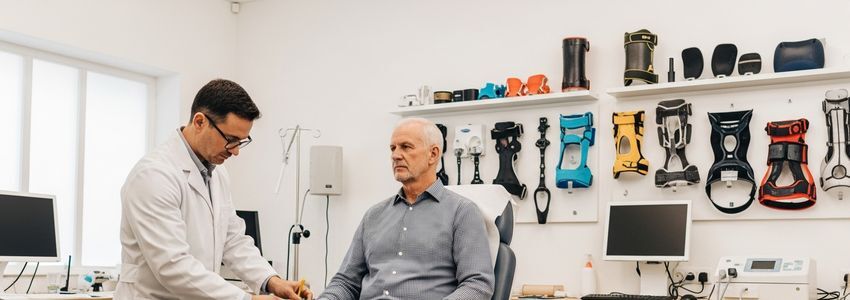
As an orthotics and prosthetics (O&P) practitioner, you dedicate your expertise to improving patient mobility and quality of life. Yet, running a successful O&P practice involves significant financial challenges, from investing in high-tech fabrication equipment to managing delayed insurance reimbursements. Securing the right orthotics and prosthetics business loans is often the critical step that enables your practice to not only survive but thrive, innovate, and expand its patient care.
In This Article
- What Are O&P Business Loans?
- Why O&P Practices Need Financing
- Types of Financing Available for O&P Practices
- Equipment Financing for O&P Practices
- SBA Loans for O&P Practices
- How to Qualify for O&P Business Loans
- Understanding Loan Amounts and Terms
- How Crestmont Capital Helps O&P Practices
- Real-World Scenarios: Financing in Action
- How to Get Started
- Frequently Asked Questions
- Conclusion
What Are Orthotics and Prosthetics Business Loans?
Orthotics and prosthetics business loans are a category of financial products specifically designed to meet the unique capital requirements of O&P practices. Unlike a generic loan from a traditional bank, these financing solutions are structured with an understanding of the industry's specific challenges and opportunities. They are not a one-size-fits-all product but rather a suite of options that can be tailored to fund everything from advanced CAD/CAM systems to daily operational expenses.
These specialized loans acknowledge the capital-intensive nature of the O&P field. Practitioners require sophisticated, expensive technology to create custom-fitted devices, and the revenue cycle is often complicated by long waits for insurance reimbursements. Lenders who specialize in this sector, like Crestmont Capital, recognize these factors and can offer more flexible and relevant financing structures.
The core purpose of an O&P business loan is to inject capital into your practice precisely where it's needed most. This could mean:
- Acquiring Technology: Purchasing state-of-the-art equipment to improve patient outcomes and streamline fabrication.
- Managing Cash Flow: Securing working capital to cover payroll, rent, and inventory costs while waiting for payments from Medicare, Medicaid, and private insurers.
- Fueling Growth: Financing the expansion of your clinic, the opening of a new location, or the acquisition of a competing practice.
- Refinancing Debt: Consolidating existing high-interest debts into a single, more manageable loan with better terms.
Essentially, these loans serve as a strategic tool for practice owners. They provide the financial leverage needed to invest in growth, navigate operational hurdles, and ultimately enhance the level of care provided to patients. By partnering with a lender who understands the nuances of your business, you can access capital that works for your practice, not against it.
Why O&P Practices Need Financing
The financial landscape for the more than 9,000 O&P practices in the United States is complex. While the service you provide is invaluable, the business model presents several distinct financial hurdles. Strategic financing is often essential to overcome these challenges and build a sustainable, profitable practice. Here are the primary reasons O&P clinics seek funding.
High-Cost Technology and Equipment
The days of relying solely on plaster casting are fading. Modern O&P practices leverage advanced technology to deliver precise, comfortable, and effective devices. This technology represents a significant competitive advantage and a substantial financial investment. Key equipment costs include:
- CAD/CAM Systems: Computer-Aided Design and Computer-Aided Manufacturing systems can range from $30,000 to over $100,000. These systems include 3D scanners, modification software, and CNC carvers that automate and refine the fabrication process.
- 3D Printers: Additive manufacturing is revolutionizing the O&P field, allowing for the creation of lightweight, complex, and highly customized devices. Industrial-grade 3D printers are a major capital expense.
- Gait Analysis Systems: Technology like pressure-sensitive walkways and motion capture systems helps practitioners objectively assess patient needs and device effectiveness, but this equipment can be costly.
- Traditional Fabrication Tools: Even with digital tools, practices need vacuum forming stations, infrared ovens, grinders, and other finishing equipment.
Financing allows practices to acquire this essential technology without depleting their cash reserves, enabling them to offer superior patient care and operate more efficiently.
Managing Insurance Reimbursement Gaps
Perhaps the single greatest operational challenge for an O&P practice is managing cash flow. The revenue cycle is notoriously slow. You provide a device and service to a patient upfront, but payment from insurers like Medicare, Medicaid, or private companies can take anywhere from 30 to 90 days, and sometimes even longer if a claim is denied or requires additional documentation. This delay creates a significant cash flow gap. While you wait for revenue to arrive, you still have to pay for:
- Staff salaries and benefits
- Rent or mortgage on your clinic space
- Utilities and insurance
- Component and materials inventory
- Marketing and administrative costs
Working capital financing, such as a business line of credit, is a lifeline for O&P practices. It provides immediate access to funds to cover these ongoing expenses, ensuring smooth operations regardless of insurance payment timelines.
Practice Expansion and Renovation
Growth is a sign of a healthy practice, but it requires capital. Whether you are looking to grow your current footprint or enter a new market, financing is almost always necessary. Common growth projects include:
- Opening a New Location: This involves costs for real estate (lease or purchase), clinic build-out, new equipment, and initial staffing and marketing.
- Expanding an Existing Clinic: You may need to add more patient fitting rooms, expand your fabrication lab, or create a larger, more comfortable waiting area.
- Acquiring a Competitor: Buying another O&P practice can be a fast track to growth, but it requires significant acquisition capital.
Term loans and SBA loans are excellent tools for funding these large-scale expansion projects, providing the substantial, long-term capital needed to execute your vision.
Inventory and Component Costs
To serve patients effectively, you must maintain a well-stocked inventory of components, from prosthetic knees and feet to various plastics and resins for orthoses. These materials are expensive, and supply chain disruptions can make it crucial to have adequate stock on hand. Financing can be used to purchase inventory in bulk, which can sometimes lead to volume discounts from suppliers and ensures you are always prepared to meet patient needs without delay.
Is Your O&P Practice Ready to Grow?
Secure the capital you need for new equipment, expansion, or working capital. Get a decision in hours.
Apply Now →Types of Financing Available for O&P Practices
O&P practice owners have access to a diverse range of financing options, each designed for different needs, timelines, and financial situations. Understanding the key features of each type will help you select the most effective tool for your specific goal. Partnering with a lender like Crestmont Capital gives you access to multiple solutions, ensuring you find the perfect fit.
Term Loans
A traditional term loan is what most people picture when they think of a business loan. You receive a lump sum of cash upfront and repay it, plus interest, in regular fixed installments over a predetermined period (the "term").
- Best For: Large, one-time investments with a clear ROI, such as practice acquisitions, major renovations, or expanding your service offerings.
- Features: Predictable monthly payments make budgeting simple. Terms typically range from two to ten years. These are one of the most common small business loans available.
Business Lines of Credit
A business line of credit provides the ultimate flexibility for managing cash flow. Instead of a lump sum, you are approved for a maximum credit limit. You can draw funds from this line as needed, up to your limit, and you only pay interest on the amount you have drawn. As you repay the principal, your available credit is replenished.
- Best For: Managing the unpredictable gaps caused by slow insurance reimbursements, covering unexpected expenses like equipment repairs, or seizing opportunities that require quick access to cash.
- Features: Acts as a revolving safety net for your practice's finances. It's an ideal tool for ongoing working capital management.
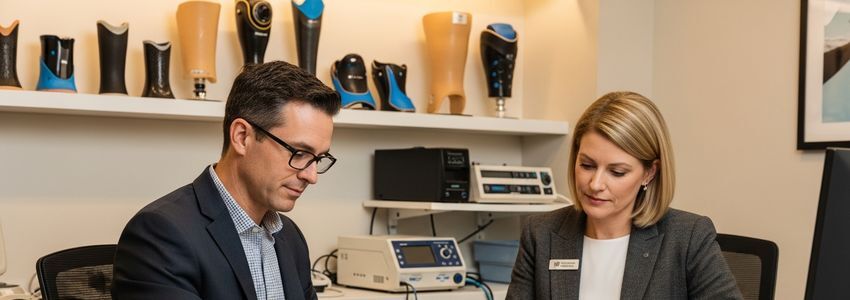
Equipment Financing and Leasing
Given the high cost of O&P technology, equipment financing is one of the most popular funding solutions in the industry. This type of loan is specifically used to purchase machinery and technology. The equipment itself serves as collateral for the loan, which often makes these loans easier to qualify for than unsecured options.
- Best For: Purchasing CAD/CAM systems, 3D printers, CNC carvers, gait analysis tools, and other essential practice technology.
- Features: Often covers up to 100% of the equipment cost, including soft costs like installation and training. It preserves your working capital for other business needs. We will explore this in greater detail in the next section.
SBA Loans
SBA loans are partially guaranteed by the U.S. Small Business Administration, which reduces the risk for lenders. This guarantee allows lenders to offer highly favorable terms, including low interest rates, long repayment periods, and high loan amounts. The two most common types for O&P practices are the 7(a) and 504 loan programs.
- Best For: Major investments like purchasing commercial real estate for your clinic, acquiring another practice, or financing a combination of equipment and working capital.
- Features: While the application process can be more intensive and take longer, the superior terms make SBA loans the gold standard for large-scale financing.
Merchant Cash Advances (MCA)
An MCA is not technically a loan but an advance on your future revenue. A funder provides a lump sum of cash in exchange for a percentage of your future daily or weekly sales. Repayment is automatic and adjusts with your revenue stream.
- Best For: Practices that need extremely fast funding for a short-term emergency and may not qualify for other loan types due to credit history or time in business.
- Features: Funding can happen in as little as 24 hours. However, the cost is typically much higher than traditional loans, so they should be used with caution and for very specific, urgent needs.
Equipment Financing for O&P Practices
For a field as technologically advanced as orthotics and prosthetics, equipment financing is an indispensable financial tool. It allows you to acquire the latest technology to improve patient care and efficiency without tying up the cash needed for day-to-day operations. This targeted approach to funding makes it a cornerstone of financial strategy for modern O&P clinics.
How Equipment Financing Works
The process is straightforward and designed around the asset you are purchasing. The equipment itself acts as the collateral, which secures the loan and reduces the lender's risk. This often translates into higher approval rates and more favorable terms compared to unsecured loans.
- Select Your Equipment: You identify the specific piece of technology you need, whether it's a 3D scanner or a new CNC carver, and get a formal quote from the vendor.
- Apply for Financing: You submit a simple application to a lender like Crestmont Capital, along with the equipment quote. The application process is often much faster and requires less documentation than a traditional bank loan.
- Receive Approval: Lenders can often provide a credit decision within hours. Once approved, you review and sign the loan documents.
- Funding and Purchase: The lender pays the equipment vendor directly. The equipment is then delivered to your practice, and you begin making your scheduled payments to the lender.
Tax Advantage: Equipment financing may offer significant tax benefits. Under Section 179 of the IRS tax code, businesses can often deduct the full purchase price of qualifying equipment from their gross income in the year it's placed into service. Consult with your tax advisor to see how this could benefit your practice.
What O&P Equipment Can Be Financed?
Virtually any piece of equipment or technology essential to your practice's operation can be financed. This includes both new and used assets. A comprehensive list includes:
- Digital Workflow Technology: CAD/CAM systems, 3D optical scanners, and design software.
- Fabrication Machinery: CNC milling machines, 3D printers, vacuum forming stations, routers, and infrared ovens.
- Clinical and Diagnostic Tools: Gait analysis systems, pressure mapping devices, and patient examination equipment.
- Software and IT: Electronic Health Record (EHR) systems, practice management software, and computer hardware.
- Office and Clinic Furnishings: Patient fitting room furniture, waiting room seating, and administrative office setups.
This comprehensive coverage ensures you can build a modern, efficient practice from the ground up or upgrade existing assets as technology evolves. For more details on this, explore our guide to medical equipment financing.
Benefits of Equipment Financing for O&P Clinics
- 100% Financing: Many equipment loans cover the full cost of the asset, including taxes, shipping, and installation, requiring little to no down payment.
- Cash Flow Preservation: By financing your equipment, you keep your cash on hand for working capital needs like payroll, marketing, and inventory.
- Fixed, Predictable Payments: Your loan payments are fixed for the life of the term, making it easy to budget and manage your monthly expenses.
- Stay Technologically Current: Financing makes it affordable to regularly upgrade your equipment, ensuring your practice remains competitive and offers the best possible patient outcomes.
- Builds Business Credit: Making timely payments on an equipment loan helps strengthen your business's credit profile, making it easier to secure other types of financing in the future.
SBA Loans for O&P Practices
For O&P practice owners planning significant investments, loans backed by the U.S. Small Business Administration (SBA) represent one of the most attractive financing options available. The SBA doesn't lend money directly; instead, it provides a guarantee to lenders like banks and financial institutions, reducing their risk. This government backing allows lenders to offer larger loan amounts, longer repayment terms, and lower interest rates than they could with conventional loans. More information about these programs can be found directly on the SBA's official website.
SBA 7(a) Loans
The SBA 7(a) loan is the administration's flagship program and its most popular and flexible loan type. For an O&P practice, a 7(a) loan can be a comprehensive funding solution for a wide variety of business needs.
- Loan Amounts: Up to $5 million.
- Repayment Terms: Up to 10 years for working capital and equipment, and up to 25 years for commercial real estate.
- Use of Funds: This is where the 7(a) loan shines. It can be used for:
- Purchasing an existing O&P practice.
- Buying land and constructing a new clinic.
- Financing a major renovation or expansion.
- Purchasing high-value equipment and technology.
- Securing long-term working capital.
- Refinancing existing, high-cost business debt.
The versatility of the 7(a) loan makes it an ideal choice for a practice owner looking to finance a multi-faceted growth project that involves real estate, equipment, and working capital all at once.
SBA 504 Loans
The SBA 504 loan program is more specialized, focusing on financing major fixed assets that promote business growth and job creation. This loan is perfect for an O&P practice that is ready to own its physical location.
- Loan Structure: The financing is split between three parties:
- 50% from a conventional lender (like a bank).
- 40% from a Certified Development Company (CDC), which is a nonprofit partner of the SBA.
- 10% from you, the borrower, as a down payment.
- Use of Funds: Strictly for long-term fixed assets, including:
- Purchasing an existing building.
- Construction of a new facility.
- Purchasing long-life machinery and equipment.
The 504 loan's low down payment requirement and favorable, fixed interest rates on the CDC portion make it an excellent vehicle for acquiring the real estate your practice needs to establish a permanent, stable home.
Pros and Cons of SBA Loans for O&P Owners
Pros:
- Unbeatable Terms: The combination of low interest rates and long repayment periods results in the lowest possible monthly payments, which is a major benefit for managing cash flow.
- High Loan Amounts: The ability to borrow up to $5 million can fund even the most ambitious growth plans.
- Government-Backed Credibility: Securing an SBA loan is a strong indicator of your business's health and viability.
Cons:
- Lengthy Application Process: SBA loans require extensive documentation, including detailed financial projections, business plans, and personal financial statements. The process can take several weeks to months.
- Strict Eligibility Requirements: The SBA and its lending partners have stringent criteria regarding credit score, profitability, and industry experience.
- Potential Collateral Requirements: Lenders may require significant collateral, including personal assets like your home, to secure the loan.
The O&P Industry at a Glance
$6.1B
U.S. Market Size (2023)
4.5%
Projected Annual Growth (CAGR)
9,000+
O&P Practices in the U.S.
2.1M
Americans Living with Limb Loss
How to Qualify for O&P Business Loans
Securing a business loan requires preparation. Lenders evaluate your practice's financial health and your ability to repay the debt. By understanding what they look for and gathering the right documents, you can significantly improve your chances of approval. Most lenders assess your application based on a framework often called the "5 C's of Credit."
The 5 C's of Credit
- Character (Credit History): Lenders review your personal and business credit scores to gauge your history of repaying debts. A strong credit history demonstrates reliability.
- Capacity (Cash Flow): This is your ability to repay the loan. Lenders will analyze your practice's revenue, expenses, and profits to ensure you generate sufficient cash flow to cover the new loan payment on top of your existing obligations.
- Capital (Owner's Investment): Lenders want to see that you have a financial stake in your own business. This includes your personal investment, retained earnings, and other equity.
- Collateral (Assets): For secured loans, collateral is an asset (like equipment or real estate) that you pledge to the lender. If you default on the loan, the lender can seize the collateral to recoup its losses.
- Conditions (Loan Purpose): Lenders will assess the purpose of the loan, the health of the O&P industry, and the broader economic climate. A well-defined plan for how you will use the funds is crucial.
Key Qualification Factors for O&P Practices
- Credit Score: While requirements vary, a personal credit score of 650 or higher is often needed for many loan products. For premium options like SBA loans, a score of 680-700+ is typically preferred.
- Time in Business: Most lenders prefer to work with established practices that have been operating for at least two years. However, financing options are available for newer practices and startups, often requiring a strong business plan and solid financial projections.
- Annual Revenue: Lenders have minimum annual revenue thresholds to ensure your practice has a stable financial base. This can range from $100,000 to $250,000 or more, depending on the loan type and amount.
- Profitability: Demonstrating consistent profitability on your financial statements is a strong indicator to lenders that your business is healthy and can afford to take on new debt.
Required Documentation Checklist
Being prepared with the right paperwork can expedite the application process. While specific requirements vary by lender and loan type, you should be ready to provide the following:
- ✅ Business Loan Application
- ✅ Business and Personal Tax Returns (2-3 most recent years)
- ✅ Business Bank Statements (3-6 most recent months)
- ✅ Financial Statements (Profit & Loss Statement, Balance Sheet)
- ✅ Business Debt Schedule (a list of all current business debts)
- ✅ Business Plan (especially for new practices or major expansion projects)
- ✅ Equipment Quotes (for equipment financing applications)
- ✅ Business Formation Documents (Articles of Incorporation, etc.)
- ✅ Professional Licenses and Certifications (e.g., ABC or BOC board certification)
Find Out How Much You Qualify For
Our simple online application takes minutes to complete and won't impact your credit score.
Apply Now →Understanding Loan Amounts and Terms
Once you've decided to seek financing, it's important to have realistic expectations about how much you can borrow and under what conditions. Loan amounts, interest rates, and repayment terms are not arbitrary; they are determined by the type of loan, your practice's financial profile, and the lender's risk assessment.
How Much Can an O&P Practice Borrow?
The amount of capital your practice can secure depends heavily on your annual revenue, cash flow, creditworthiness, and the specific loan product. Here are some general guidelines:
- Working Capital Loans: These are often based on your monthly revenue. A practice might qualify for an amount equal to 1-2 times its average monthly sales, typically ranging from $25,000 to $500,000.
- Equipment Financing: For these loans, the amount is tied directly to the cost of the asset. It's common to receive financing for 100% of the equipment's value, from as little as $10,000 for a single piece of software to over $1,000,000 for a full lab build-out.
- Business Lines of Credit: Credit limits are also determined by revenue and credit history, with typical limits for O&P practices falling between $50,000 and $250,000.
- SBA Loans: These offer the highest borrowing potential, with the SBA 7(a) program providing loans up to a maximum of $5 million.
Typical Repayment Terms
The repayment term is the length of time you have to pay back the loan. Longer terms result in lower monthly payments but higher total interest costs over the life of the loan. Shorter terms mean higher monthly payments but less total interest paid.
- Short-Term Loans (3-24 months): Common for working capital loans and merchant cash advances used to bridge immediate cash flow gaps.
- Medium-Term Loans (2-7 years): Typical for standard term loans and equipment financing. The term for equipment is often designed to match the expected useful life of the asset.
- Long-Term Loans (7-25 years): Almost exclusively associated with SBA loans, particularly those involving the purchase of commercial real estate.
Interest Rates and Fees
The cost of borrowing is a critical factor. It's important to understand the difference between an interest rate and the Annual Percentage Rate (APR).
- Interest Rate: The percentage charged on the principal loan amount. Rates can be fixed (staying the same for the entire term) or variable (changing with market index rates).
- APR: The total annual cost of the loan, which includes the interest rate plus any additional fees, such as origination fees or closing costs. APR provides a more complete picture of the loan's true cost.
Interest rates vary widely based on the loan product, your credit score, and the lender. SBA loans generally have the lowest rates, followed by traditional term loans and equipment financing. Short-term financing options like MCAs have the highest costs, expressed as a factor rate rather than an interest rate.
How Crestmont Capital Helps O&P Practices
Navigating the world of business financing can be overwhelming, especially when you're focused on providing excellent patient care. Crestmont Capital stands apart as the #1 rated business lender in the country because we act as a dedicated financial partner for O&P practice owners. We simplify the funding process and deliver solutions tailored to the specific needs of your highly specialized field.
Specialists in Healthcare Financing
We are not generalist lenders. Our team possesses deep expertise in the healthcare sector. We understand the nuances of the O&P industry, from the importance of ABC/BOC certification to the cash flow challenges created by insurance reimbursement cycles. This industry-specific knowledge allows us to evaluate your business on its true merits and structure financing that aligns with your operational reality. We track important healthcare business loan trends to ensure our offerings are always relevant. This is a level of understanding you won't find at a traditional bank.
A Partner for Similar Practices: Our expertise extends to related fields. We also provide specialized funding solutions like physical therapy practice loans, understanding the shared challenges of patient care and insurance billing.
A Streamlined and Fast Application Process
Your time is valuable. We've replaced the slow, paper-intensive application process of traditional banks with a streamlined digital experience. Our online application takes just a few minutes to complete and won't affect your credit score. We leverage technology to provide credit decisions in hours, not weeks, and can get funds deposited into your account in as little as 24-48 hours for many of our products. This speed and efficiency mean you can seize opportunities and solve problems without delay.
Access to a Wide Range of Funding Products
Your O&P practice is unique, and your financing should be too. Crestmont Capital offers a comprehensive portfolio of funding solutions. Whether you need equipment financing for a new CAD/CAM system, a line of credit to manage cash flow, or an SBA loan to purchase a building, we have the right product for your goal. By offering a full spectrum of small business loans, we ensure you are matched with the optimal solution, not just the one product a specific bank happens to offer.
Dedicated Funding Advisors
When you work with Crestmont Capital, you are assigned a dedicated funding advisor who will be your single point of contact throughout the entire process. This expert will take the time to understand your practice's specific situation and goals. They will guide you through your options, help you prepare your application, and advocate on your behalf to secure the best possible terms. This personalized service removes the stress and confusion from the financing process.
Real-World Scenarios: Financing in Action
To better understand how these financing tools apply in the real world, let's explore a few hypothetical scenarios that O&P practice owners commonly face.
Scenario 1: Upgrading to a CAD/CAM System
- The Challenge: An established O&P practice, "Precision Prosthetics," relies on traditional plaster casting methods. The process is labor-intensive, messy, and time-consuming. The owner wants to invest in a $90,000 CAD/CAM system to increase accuracy, reduce turnaround times, and see more patients. However, she is hesitant to use nearly six figures of her cash reserves on a single purchase.
- The Solution: The owner applies for equipment financing through Crestmont Capital. She is quickly approved for a $90,000 loan with a 5-year term. The loan covers 100% of the equipment cost, and the CAD/CAM system itself serves as the only collateral. The monthly payments are fixed and affordable, easily fitting into her budget. The new technology allows her team to fabricate devices 40% faster, increasing practice revenue and more than covering the cost of the loan payment.
Scenario 2: Managing a Cash Flow Shortfall
- The Challenge: "Next Step Orthotics" is a successful two-year-old practice that has just landed a large contract with a regional hospital. This has doubled their patient load, but the hospital's payment terms are 90 days. The sudden increase in expenses for materials and a new technician has strained their cash flow, making it difficult to cover payroll.
- The Solution: They secure a $150,000 business line of credit. They immediately draw $50,000 to cover payroll and order necessary componentry. As the large payments from the hospital begin to arrive, they pay down the balance on the line of credit. The line remains available as a financial safety net, giving them the confidence to take on more large contracts in the future without worrying about cash flow gaps.
Scenario 3: Opening a Second Location
- The Challenge: A thriving O&P practice has built a strong reputation and has a long waitlist of patients. The owners see a clear opportunity to expand by opening a second clinic in a neighboring county. They need significant capital to lease and renovate a commercial space, purchase a full suite of new fabrication and clinical equipment, and fund initial marketing and staffing costs. The total project cost is estimated at $400,000.
- The Solution: The owners work with a Crestmont Capital advisor to prepare an application for an SBA 7(a) loan. The comprehensive business plan and strong financial history of their existing practice lead to an approval for a $400,000 loan with a 10-year term. The long term and low, government-backed interest rate result in a manageable monthly payment, allowing the new location to become profitable without putting financial strain on the original clinic.
Let's Build Your Success Story
Have a goal for your O&P practice? We have the funding to help you achieve it. Talk to a specialist today.
Apply Now →How to Get Started
Complete our quick application at offers.crestmontcapital.com/apply-now - takes just a few minutes.
A Crestmont Capital advisor will review your needs and match you with the right financing option.
Receive your funds and put them to work - often within days of approval.
Frequently Asked Questions
What are orthotics and prosthetics business loans?
These are specialized financing products designed to meet the capital needs of O&P practices. They include term loans, lines of credit, equipment financing, and SBA loans that can be used to purchase technology, manage cash flow, expand a clinic, or cover other operational expenses unique to the O&P industry.
How much can an O&P practice borrow?
Loan amounts vary widely based on the practice's revenue, credit history, and the type of loan. Working capital loans may range from $25,000 to $500,000, while equipment financing can cover the full cost of the asset. SBA loans can provide up to $5 million for major projects like practice acquisition or real estate purchase.
What credit score is needed to qualify?
While requirements differ by lender and product, a personal credit score of 650 or higher is generally recommended for most financing options. For premium products like SBA loans, lenders typically look for a score of 680 or above. Lenders also consider factors like time in business and annual revenue.
How long does the approval and funding process take?
Timelines vary significantly. With alternative lenders like Crestmont Capital, the process is very fast. You can get a decision in hours and funding in as little as 24-48 hours for products like working capital loans and equipment financing. SBA loans have a much longer timeline, often taking several weeks or months from application to funding.
Can a new O&P practice qualify for a loan?
Yes, new practices can qualify for financing, although options may be more limited than for established clinics. Lenders will place a greater emphasis on the owner's personal credit score, industry experience, and the quality of the business plan, including detailed financial projections. SBA startup loans and equipment financing are common options for new O&P practices.
What can the loan funds be used for?
Funds can be used for nearly any legitimate business purpose. Common uses in an O&P practice include purchasing new CAD/CAM or fabrication equipment, renovating or expanding a clinic, hiring and training staff, buying inventory, covering payroll during slow reimbursement periods, and marketing services to attract new patients.
What is equipment financing for O&P practices?
Equipment financing is a type of loan where the funds are used specifically to purchase equipment, such as a 3D printer, CNC carver, or gait analysis system. The equipment itself serves as collateral for the loan, which often makes it easier to qualify for and can result in favorable terms. It's an ideal way to acquire necessary technology without depleting cash reserves.
Are SBA loans a good option for O&P practices?
Yes, SBA loans are an excellent option for established, financially healthy O&P practices planning major investments. They offer the lowest interest rates and longest repayment terms available, making them perfect for large-scale projects like buying a building, acquiring another practice, or financing a major expansion. However, the application process is lengthy and requires significant documentation.
How do insurance reimbursement delays affect the need for financing?
Delays in payments from Medicare, Medicaid, and private insurers create significant cash flow gaps. A practice incurs costs for materials and labor upfront but may not receive revenue for 30-90+ days. This makes working capital financing, especially a business line of credit, essential for covering ongoing expenses like payroll, rent, and inventory while waiting for payments.
What documents are typically needed to apply?
For a streamlined application, you may only need basic information and recent bank statements. For larger loans or SBA financing, be prepared to provide 2-3 years of business and personal tax returns, recent profit and loss statements and balance sheets, a business debt schedule, and bank statements for the last 3-6 months.
What are the typical interest rates for these loans?
Interest rates vary based on the loan type, your creditworthiness, and market conditions. SBA loans offer the lowest rates, often tied to the Prime Rate. Term loans and equipment financing have competitive, fixed rates. Lines of credit may have variable rates. Short-term options like merchant cash advances have higher costs, expressed as a factor rate.
Can a practice with existing debt or tax liens qualify?
It is possible, but it can be more challenging. Lenders will evaluate your total debt-to-income ratio to ensure you can handle an additional payment. For tax liens, lenders will typically require proof of a payment plan with the IRS or state agency and a history of consistent payments before approving a new loan.
What is a working capital line of credit?
A working capital line of credit is a flexible financing tool that gives you access to a set amount of funds. You can draw from it as needed to cover short-term expenses like payroll or inventory. You only pay interest on the amount you use, and as you repay it, the available credit is replenished. It's an ideal solution for managing the uneven cash flow common in O&P practices.
How does equipment leasing differ from financing?
With equipment financing, you are taking out a loan to purchase the equipment, and you own it at the end of the loan term. With leasing, you are essentially renting the equipment for a set period. Leasing typically has lower monthly payments and is a good option for technology that becomes obsolete quickly, but you do not build equity or own the asset at the end of the lease term (unless you have a buyout option).
How does Crestmont Capital specifically help O&P practices?
Crestmont Capital helps by offering a fast, streamlined application process, a wide variety of loan products, and expert guidance from advisors who understand the healthcare industry. We recognize the unique financial challenges of O&P clinics, such as high equipment costs and insurance payment delays, and we tailor our financing solutions to address these specific needs effectively.
Conclusion
Running a successful orthotics and prosthetics practice requires a dual focus on exceptional patient care and astute financial management. The high cost of technology, coupled with the inherent delays in insurance reimbursement, creates a unique set of financial challenges that can hinder growth and strain daily operations. Strategic financing is not just a solution for emergencies; it is a powerful tool for proactive growth.
Whether you are looking to invest in a cutting-edge CAD/CAM system, expand to a new location, or simply stabilize your cash flow, the right orthotics and prosthetics business loan can provide the capital to turn your goals into reality. From flexible lines of credit and specialized equipment financing to long-term SBA loans, a solution exists for every stage of your practice's journey.
By understanding your options and partnering with a lender that specializes in your field, you can secure the funding you need to innovate, expand your services, and continue providing life-changing care to your patients. If you're ready to take the next step in growing your O&P practice, the team at Crestmont Capital is here to help you navigate your options and find the perfect financial solution.
Disclaimer: The information provided in this article is for general educational purposes only and is not financial, legal, or tax advice. Funding terms, qualifications, and product availability may vary and are subject to change without notice. Crestmont Capital does not guarantee approval, rates, or specific outcomes. For personalized information about your business funding options, contact our team directly.