
 (800) 949-0401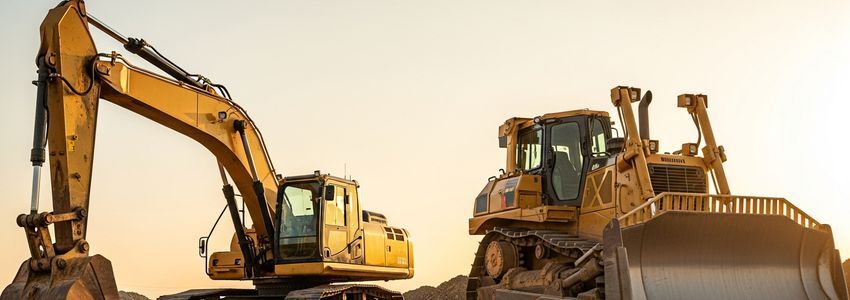
Non-Recourse Equipment Financing: What It Means for Borrowers
When financing equipment for your business, the term "non-recourse" carries significant weight. Non-recourse equipment financing limits the lender's ability to pursue your personal assets or other business assets if you default on the loan - their recovery is limited to the financed equipment itself. For business owners who want to acquire machinery, vehicles, or technology without putting their entire financial profile on the line, this structure offers meaningful protection.
This guide explains exactly how non-recourse equipment financing works, how it differs from traditional equipment loans, who it is best suited for, and how to evaluate whether the tradeoffs make sense for your business.
In This Article
What Is Non-Recourse Equipment Financing?
In standard equipment financing, the lender takes a security interest in the equipment being financed. However, most standard loans also require a personal guarantee, meaning if you default, the lender can pursue your personal bank accounts, home, and other assets after repossessing and selling the equipment.
With non-recourse equipment financing, the lender agrees to limit their recovery exclusively to the financed equipment. If you stop making payments, the lender can repossess and sell the equipment - but that is where their legal recourse ends. They cannot pursue your personal assets, other business assets, or business accounts beyond the value realized from selling the equipment.
This structure is particularly common in large-ticket equipment financing and certain commercial transactions where the equipment itself has substantial, measurable value and the lender has high confidence in the asset's residual worth.
Key Point: Non-recourse equipment financing is not the same as equipment leasing, though the two share some characteristics. In non-recourse financing, you are the owner of the equipment and carry the financing as debt. In equipment leasing, the lessor retains ownership. Understanding this distinction matters for tax treatment and balance sheet purposes.
How Non-Recourse Equipment Financing Works
The mechanics of non-recourse equipment financing are similar to standard equipment loans, with one critical structural difference: the absence of personal liability beyond the financed asset.
Step 1 - You identify the equipment. You select the equipment your business needs, whether new or used, and obtain a quote from the vendor or dealer.
Step 2 - You apply for financing. The lender evaluates your application, focusing heavily on the equipment itself - its type, age, value, and residual worth. Because the lender can only recover the equipment value, they need confidence in the asset's worth.
Step 3 - Lender underwrites the equipment. Non-recourse equipment lenders conduct detailed appraisals and valuations. They assess secondary market demand, equipment depreciation curves, and how easily the equipment could be resold if necessary.
Step 4 - Terms are established. You receive financing for a portion of the equipment value - typically 70% to 90% depending on the equipment type - with defined monthly payments, an interest rate, and a repayment term.
Step 5 - Equipment serves as sole collateral. The loan is secured by the equipment alone. No personal guarantee, no lien on other business assets. If you default, the lender recovers the equipment and their recourse ends there.
By the Numbers
Non-Recourse Equipment Financing - Key Statistics
$1.3T
Annual U.S. equipment financing volume (Equipment Leasing and Finance Association)
79%
U.S. businesses use financing to acquire equipment (ELFA)
70-90%
Typical loan-to-value range for non-recourse equipment financing
2-7 Yrs
Typical repayment terms for non-recourse equipment loans
Non-Recourse vs. Recourse Equipment Financing
The distinction between recourse and non-recourse equipment financing has major implications for your personal financial exposure and your ability to protect other business assets.
| Feature | Non-Recourse | Recourse / Full Recourse |
|---|---|---|
| Default Recovery | Equipment only | Equipment + personal/business assets |
| Personal Guarantee | Not required | Usually required |
| Interest Rate | Typically higher (lender assumes more risk) | Typically lower |
| Down Payment | Often 10-30% (lender needs buffer) | Often 0-15% |
| Approval Focus | Equipment value and residual worth | Business creditworthiness and personal credit |
| Best For | High-value, liquid equipment; protecting personal assets | Businesses with strong credit seeking lowest cost |
Finance Equipment Without Personal Risk
Crestmont Capital offers a range of equipment financing solutions including options that protect your personal assets. Apply today with no obligation.
Apply Now →Key Benefits of Non-Recourse Equipment Financing
1. Personal Asset Protection
This is the defining benefit. With non-recourse financing, your personal home, savings, and other assets are shielded from the lender if your business encounters financial difficulties. For entrepreneurs whose personal net worth is concentrated in their business, this protection is extremely valuable.
2. Ring-Fencing Business Assets
Beyond personal assets, non-recourse financing also protects your other business assets. A lender cannot seize your accounts receivable, inventory, or other equipment to recover a defaulted non-recourse loan. Each non-recourse facility stands alone.
3. Off-Balance-Sheet Options
Some non-recourse equipment financing structures, particularly those tied to specific projects, can be structured to minimize balance sheet impact. This may benefit businesses with debt covenants or that are evaluating future capital raises.
4. Enables Larger Transactions
Non-recourse financing is often used for acquisitions of expensive equipment where a personal guarantee would expose an owner to enormous liability. Financing a $2 million piece of industrial machinery without a personal guarantee changes the risk calculus entirely for business owners.
5. Cleaner Financial Separation
Non-recourse equipment loans help maintain a clear separation between business and personal finances - a discipline that supports stronger business credit building and cleaner personal financial planning.
Potential Drawbacks to Understand
Non-recourse equipment financing is not without limitations. Understanding them helps you set realistic expectations before applying.
Higher Interest Rates: Because the lender takes on more risk by limiting their recovery to the equipment, they compensate with higher interest rates. You may pay 1% to 4% more annually compared to a fully recourse loan.
Larger Down Payment Requirements: Non-recourse lenders need a meaningful equity buffer to protect against equipment value depreciation. Expect to put down 10% to 30% of the equipment value, depending on the asset type.
Strict Equipment Quality Standards: Only equipment with strong secondary market demand qualifies. Highly specialized, industry-specific, or rapidly depreciating equipment will be difficult to finance on a non-recourse basis because the lender cannot be confident of recovery value.
More Extensive Documentation: Equipment appraisals, vendor quotes, and detailed business documentation are typically required. The underwriting process is more thorough than for standard equipment loans.
Limited Lender Pool: Not all lenders offer true non-recourse equipment financing. You may need to work with specialty lenders or work with a commercial financing advisor who has access to the right lender network.
Who Qualifies for Non-Recourse Equipment Financing?
Non-recourse equipment financing tends to be available to businesses that can demonstrate both the business's financial stability and the equipment's strong residual value. Common qualification factors include:
- Equipment value: Generally $100,000 and above. Smaller equipment purchases are harder to finance on a pure non-recourse basis due to underwriting costs.
- Equipment type: Assets with established secondary markets and low obsolescence risk (commercial vehicles, medical equipment, construction machinery, industrial equipment).
- Business financials: While personal guarantees are not required, most lenders still want to see business revenue of at least $500,000 annually and two or more years in business.
- Equipment age: New or late-model equipment is preferred. Older equipment may qualify with a larger down payment.
- Business credit profile: Strong business credit improves approval odds and terms, even when no personal guarantee is required.
Pro Tip: If you are not ready for non-recourse equipment financing, building strong business credit first can accelerate your path to better terms on both recourse and non-recourse financing. Check out our guide on how to build your business credit score to get started.
Types of Equipment That Qualify for Non-Recourse Financing
Equipment that qualifies for non-recourse financing typically has three characteristics: high value, strong secondary markets, and predictable depreciation curves. Common categories include:
Commercial Transportation and Fleet Vehicles: Semi-trucks, commercial vans, trailers, and fleet vehicles have robust secondary markets. Lenders are comfortable with non-recourse terms because the resale value is well-established and equipment is easy to repossess and redeploy.
Construction and Heavy Equipment: Excavators, cranes, loaders, bulldozers, and other heavy construction equipment have strong equipment auction markets. Non-recourse financing is particularly common for construction company equipment acquisition.
Medical and Diagnostic Imaging Equipment: MRI machines, CT scanners, and digital X-ray equipment command high values in secondary markets. Healthcare equipment financing frequently involves non-recourse structures for larger transactions.
Manufacturing and Industrial Equipment: CNC machines, industrial presses, packaging lines, and other manufacturing equipment can qualify, particularly when the equipment is generic enough to have broad buyer appeal outside your specific industry.
Agricultural Equipment: Combines, tractors, and large agricultural machinery are frequently financed on non-recourse or limited-recourse terms through agricultural lenders and specialty finance companies.
How Crestmont Capital Can Help
At Crestmont Capital, we offer comprehensive equipment financing solutions through a wide network of commercial lenders, including those offering non-recourse and limited-recourse structures for qualifying transactions.
Our team works with businesses across industries to evaluate equipment financing needs, match them with the right lender and structure, and navigate the documentation and approval process. Whether you need capital equipment financing for a major acquisition or are exploring equipment leasing as an alternative, we can help identify the right approach for your specific situation.
For businesses that may not yet qualify for non-recourse terms, we also offer equipment financing for businesses with credit challenges and can help you build toward better terms over time.
Our advisors understand that equipment acquisition is often one of the largest financial decisions a business makes. We take the time to understand your growth objectives, cash flow constraints, and risk tolerance before making any recommendations.
Acquire the Equipment Your Business Needs
From non-recourse structures to standard equipment loans, Crestmont Capital has solutions for every stage of your business. Get funded fast from the #1 rated U.S. business lender.
Apply Now →Real-World Scenarios
Scenario 1: Construction Company Acquires a Crane
A mid-size construction company needed to acquire a $1.4 million crane for a multi-year project. The owner did not want to sign a personal guarantee that would expose his personal assets to the loan. By securing non-recourse equipment financing through a specialty commercial lender, the company financed 80% of the crane value with the equipment as the only collateral. The owner's personal home and savings remained fully protected throughout the loan term.
Scenario 2: Medical Practice Finances MRI Equipment
A radiology group needed a $900,000 MRI machine. The practice had strong revenue but the partners were reluctant to sign personal guarantees given their other financial obligations. They secured non-recourse medical equipment financing with a 15% down payment at a rate slightly above what a fully recourse loan would have carried. The partners protected their personal assets and acquired the equipment needed to grow the practice.
Scenario 3: Trucking Company Expands Fleet
A regional trucking company sought to add six new semi-trucks to its fleet at a total cost of $720,000. The company had strong revenue but had already pledged significant assets to other lenders. By using non-recourse fleet financing, they acquired the trucks without encumbering other business assets and without requiring a personal guarantee from the principal owner.
Scenario 4: Manufacturing Business Evaluates Trade-Off
A plastics manufacturer evaluated non-recourse financing for a $500,000 injection molding machine. After comparing terms, non-recourse financing would cost approximately $22,000 more over the loan term due to the higher rate. Given the owner's strong personal financial position and the machine's strong residual value, the owner opted for recourse financing at the lower rate, determining the cost differential was not justified by the risk protection in their specific situation.
Scenario 5: Agricultural Business Acquires Combine Harvester
A farming operation acquired a $400,000 combine harvester through non-recourse agricultural equipment financing. When the farm encountered an extremely difficult crop year and temporarily suspended payments, the lender worked out a deferral agreement - but critically, the lender had no ability to pursue the farm's other assets, equipment, or land. The farm retained its operations and ultimately repaid the loan after the difficult season passed.
Scenario 6: Technology Company Finances Data Center Equipment
A managed IT services company financed $800,000 in server and data center equipment on a non-recourse basis as part of a specific client contract. Structuring the financing non-recourse meant that if the client contract was terminated and the equipment needed to be liquidated, the lender's recovery was limited to the equipment value. This structure protected the broader business operations from the financing risk tied to a single contract.
How to Get Started
Submit your application at offers.crestmontcapital.com/apply-now. Our quick application takes just minutes to complete.
A Crestmont Capital advisor will evaluate the equipment, your business profile, and discuss whether non-recourse financing is available and appropriate for your transaction.
Once approved, funding is typically available within days. You acquire your equipment and begin building business value immediately.
Frequently Asked Questions
What does non-recourse equipment financing mean? +
Non-recourse equipment financing means that if you default on the loan, the lender's only remedy is to repossess and sell the financed equipment. They cannot pursue your personal assets, other business assets, or other sources of repayment. The equipment itself serves as the sole collateral, and the lender accepts that limitation upfront.
Does non-recourse equipment financing require a personal guarantee? +
No. The defining feature of non-recourse equipment financing is that no personal guarantee is required. The lender agrees to limit their recovery to the equipment. This is in contrast to most standard equipment loans, which require personal guarantees that give the lender recourse against your personal assets if the business defaults.
What is the difference between non-recourse and limited recourse equipment financing? +
True non-recourse financing limits the lender entirely to the financed equipment for recovery. Limited recourse financing allows the lender some additional recourse - perhaps limited to specific business assets or a capped personal guarantee - but still restricts their recovery options compared to full recourse financing. Limited recourse is more common and often carries lower rates than true non-recourse structures.
What types of equipment qualify for non-recourse financing? +
Equipment with strong secondary markets and predictable depreciation typically qualifies. This includes commercial trucks and fleet vehicles, heavy construction equipment, medical imaging systems, manufacturing machinery, and agricultural equipment. Highly specialized or rapidly depreciating equipment is harder to finance on a non-recourse basis.
Is non-recourse equipment financing more expensive? +
Yes, typically. Non-recourse equipment financing usually carries higher interest rates and may require a larger down payment compared to recourse financing. The lender takes on greater risk by limiting their recovery to the equipment, so they price that risk into the loan terms. The extra cost should be weighed against the value of the asset protection it provides.
Can startups qualify for non-recourse equipment financing? +
It is challenging but possible for startups to qualify, particularly if the equipment has very strong collateral value and the startup can demonstrate revenue or contracts. Most non-recourse lenders prefer businesses with at least two years of operating history. Startups may need to work with specialty lenders, accept higher rates, or provide a larger down payment to secure non-recourse terms.
What happens to the equipment if I default on a non-recourse loan? +
If you default on a non-recourse equipment loan, the lender has the right to repossess the equipment and sell it to recover the outstanding loan balance. If the sale proceeds are less than what you owe, the lender absorbs that deficiency - they cannot pursue you for the difference. This is the core protection of non-recourse financing.
How does non-recourse equipment financing affect my business credit? +
Non-recourse equipment financing is typically reported to business credit bureaus just like standard equipment loans. Making timely payments helps build your business credit profile, while defaults are also reported. The difference from a credit perspective is that in default, the lender cannot report a deficiency judgment against you personally, since no personal guarantee was provided.
What is the minimum equipment value for non-recourse financing? +
Most non-recourse equipment financing programs are designed for transactions of $100,000 or more. Some specialty programs begin at $50,000, but the underwriting costs of true non-recourse structures make smaller transactions less common. For equipment under $50,000, standard recourse equipment financing is typically more accessible and cost-effective.
Is non-recourse equipment financing the same as equipment leasing? +
No. With non-recourse equipment financing, you own the equipment and carry a loan obligation. With equipment leasing, the lessor retains ownership and you pay for the right to use the equipment. Both can limit your personal liability exposure, but they have different tax treatments, balance sheet presentations, and end-of-term options. Equipment financing builds equity in the asset while leasing does not.
Can I use non-recourse financing for used equipment? +
Yes, used equipment can qualify for non-recourse financing, though terms tend to be less favorable than for new equipment. The lender will require a professional appraisal to establish current market value, and the loan-to-value ratio may be lower for older equipment to account for additional depreciation during the loan term. Equipment age limits vary by lender and asset type.
Does non-recourse financing apply to equipment leases? +
Some equipment leases are structured with non-recourse provisions, particularly in project finance and large commercial transactions. In these structures, the lessor's recourse is limited to the equipment if you default on lease payments. This is less common in standard small business equipment leases, which typically include personal guarantees or full recourse provisions.
What industries most commonly use non-recourse equipment financing? +
Non-recourse equipment financing is most common in construction, transportation, healthcare, manufacturing, and agriculture - industries where equipment values are high, secondary markets are liquid, and the equipment's value can be clearly established by appraisal. These sectors often involve seven-figure equipment transactions where asset protection is critical.
How do I find lenders offering non-recourse equipment financing? +
Non-recourse equipment financing is offered by specialty commercial lenders, certain banks with commercial equipment divisions, and equipment finance companies. Working with a commercial financing advisor like Crestmont Capital gives you access to a broad lender network and helps match your specific equipment type and business profile with the lenders most likely to offer favorable non-recourse terms.
Conclusion
Non-recourse equipment financing is a powerful tool for businesses that want to acquire high-value equipment while protecting their personal assets and other business holdings from liability. By agreeing to limit their recovery to the financed equipment, lenders take on greater risk - and price that accordingly through higher rates and down payment requirements.
For businesses acquiring expensive, liquid assets in industries with strong secondary markets, this tradeoff is frequently worth it. The peace of mind that comes from knowing a single equipment decision cannot threaten your entire financial life has real value.
If you are evaluating equipment acquisition and want to explore non-recourse and limited-recourse financing options, contact Crestmont Capital today. Our team can evaluate your specific equipment needs, review your business profile, and connect you with the right lender and structure for your transaction.
Disclaimer: The information provided in this article is for general educational purposes only and is not financial, legal, or tax advice. Funding terms, qualifications, and product availability may vary and are subject to change without notice. Crestmont Capital does not guarantee approval, rates, or specific outcomes. For personalized information about your business funding options, contact our team directly.








