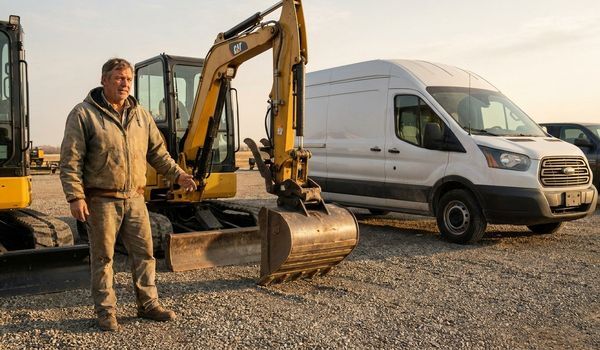
The Non-Destructive Testing (NDT) industry is the backbone of safety and quality assurance across critical sectors like aerospace, oil and gas, and manufacturing. As an NDT company owner, you know that growth requires significant capital investment in advanced technology and skilled personnel. This comprehensive guide explores the world of non-destructive testing business loans, helping you secure the financing needed to inspect, test, and thrive.
In This Article
- What is Non-Destructive Testing and Why NDT Companies Need Financing
- Types of NDT Methods and Equipment Costs
- Common Financing Needs for NDT Companies
- Types of Business Financing Available
- Qualification Requirements
- Equipment-Specific Financing
- How Crestmont Capital Helps NDT Companies
- Real-World NDT Financing Scenarios
- Frequently Asked Questions
- Next Steps to Get Your NDT Company Financed
What is Non-Destructive Testing and Why NDT Companies Need Financing
Non-Destructive Testing, often abbreviated as NDT, is a wide group of analysis techniques used in science and technology to evaluate the properties of a material, component, or system without causing damage. In essence, NDT professionals are the structural detectives of the industrial world. They use sophisticated methods to find hidden flaws, cracks, corrosion, and other defects in critical infrastructure and components before they lead to catastrophic failures.
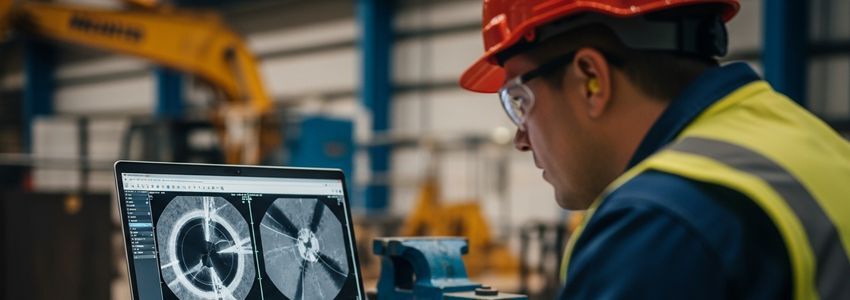
The importance of this field cannot be overstated. NDT ensures the safety of everything from commercial airplanes and nuclear power plants to oil pipelines and bridges. This critical role has fueled a robust and growing market. According to industry reports, the global NDT services market is projected to grow significantly, reaching well over $12 billion in the coming years, driven by stringent safety regulations and the increasing complexity of modern engineering. This growth presents a massive opportunity for NDT companies, but capitalizing on it requires substantial financial resources.
Why is financing so essential? The NDT industry is capital-intensive. The core of your business revolves around two expensive assets: highly advanced equipment and highly certified technicians. Staying competitive means continuously investing in the latest technology, such as Phased Array Ultrasonic Testing (PAUT) or Digital Radiography (DR) systems, which can cost tens or even hundreds of thousands of dollars. Furthermore, attracting and retaining technicians with ASNT Level II or Level III certifications involves significant investment in training, certification fees, and competitive salaries.
Without adequate funding, an NDT company risks falling behind. You might be forced to turn down lucrative contracts because you lack the specific equipment required or the certified staff to perform the inspection. You could lose bids to competitors who have newer, more efficient technology that allows them to complete jobs faster and more accurately. Non-destructive testing business loans bridge this gap, providing the capital needed to acquire the necessary tools, talent, and operational capacity to seize growth opportunities and solidify your market position.
Ready to Fund Your NDT Company's Growth?
Don't let a lack of capital hold you back. Get the equipment and working capital you need to take on bigger projects and expand your services.
Apply NowTypes of NDT Methods and Equipment Costs
Understanding the costs associated with different NDT methods is crucial for planning your financing strategy. The equipment is your primary asset and often the largest line item in your budget. Here is a breakdown of the most common NDT methods and the typical cost range for the necessary equipment.
Ultrasonic Testing (UT)
Ultrasonic Testing uses high-frequency sound waves to detect internal flaws or characterize materials. It is widely used for flaw detection in welds, thickness measurements, and inspecting composites. UT is one of the most versatile and common NDT methods.
- Basic Flaw Detectors: These portable units are the workhorses of many NDT technicians. They are used for a wide range of standard inspections. Cost: $5,000 - $15,000.
- Thickness Gauges: Specialized for measuring the thickness of materials, crucial for corrosion monitoring in pipelines and tanks. Cost: $2,000 - $7,000.
- Phased Array Ultrasonic Testing (PAUT) Systems: This advanced form of UT uses multiple ultrasonic elements to create steerable, focused beams, providing a much more detailed and faster inspection than conventional UT. It's a game-changer for complex weld inspections. Cost: $40,000 - $120,000+.
Radiographic Testing (RT)
Radiographic Testing uses X-rays or gamma rays to view the internal structure of a component. It is highly effective at detecting porosity, cracks, and inclusions in welds and castings. It produces a permanent record (a radiograph) of the inspection.
- Conventional Film Radiography: This traditional method involves X-ray generators or gamma ray sources and film processing. While being replaced by digital methods, it is still in use. Cost (X-ray tube/generator): $25,000 - $80,000.
- Computed Radiography (CR): A bridge between film and digital, CR uses flexible imaging plates that are read by a laser scanner. It eliminates chemical processing and offers digital image manipulation. Cost (Scanner and plates): $50,000 - $150,000.
- Digital Radiography (DR): The most advanced form of RT, DR uses flat-panel detectors to provide real-time images, dramatically increasing inspection speed and improving analysis capabilities. Cost: $100,000 - $250,000+.
Magnetic Particle Testing (MT)
Magnetic Particle Testing is used to detect surface and near-surface discontinuities in ferromagnetic materials like iron, steel, nickel, and cobalt. The process involves magnetizing the part and applying iron particles, which gather at flaw locations.
- Portable Yokes: These handheld devices are used for field inspections of welds and components. They are relatively inexpensive and highly portable. Cost: $1,500 - $4,000.
- Stationary Wet Bench Units: Used for inspecting smaller parts in a shop environment, these units provide more consistent magnetization and particle application. Cost: $15,000 - $50,000.
Liquid Penetrant Testing (PT)
Also known as dye penetrant inspection, PT is a low-cost method used to locate surface-breaking defects in non-porous materials. A liquid penetrant is applied to the surface and drawn into defects by capillary action. A developer is then applied to draw the penetrant out, making the flaw visible.
- Aerosol Can Kits: For spot checks and field work, these kits are extremely affordable and easy to use. Cost: $100 - $500 per kit.
- Stationary Penetrant Systems: For high-volume inspection, these systems include stations for application, washing, and developing. Cost: $10,000 - $60,000.
Eddy Current Testing (ET)
Eddy Current Testing uses electromagnetic induction to detect surface and sub-surface flaws in conductive materials. It is very sensitive to small cracks and is commonly used in the aerospace industry for inspecting aircraft skins, fastener holes, and turbine blades.
- Portable Eddy Current Flaw Detectors: Handheld units used for a wide variety of field applications. Cost: $8,000 - $25,000.
- Eddy Current Array (ECA) Systems: Similar to Phased Array UT, ECA uses multiple eddy current coils to scan a larger area in a single pass, significantly reducing inspection time. Cost: $30,000 - $90,000.
Visual Testing (VT)
Visual Testing is the most basic NDT method, but it is often the most important. It involves the visual inspection of a component, sometimes aided by tools like borescopes or remote video inspection systems.
- Borescopes and Fiberscopes: Used for inspecting the inside of pipes, engines, and other hard-to-reach areas. Cost: $5,000 - $30,000.
- Remote Video Inspection Systems (Drones/Crawlers): Advanced systems, often involving robotic crawlers or drones equipped with high-definition cameras, are used for inspecting large tanks, pipelines, and structures. Cost: $15,000 - $100,000+.
The global market for NDT and inspection is expected to grow at a Compound Annual Growth Rate (CAGR) of over 6% through 2028. According to a CNBC market report, this growth is fueled by increasing safety regulations in manufacturing and aerospace, demanding more frequent and advanced inspections.
Common Financing Needs for NDT Companies
Beyond the initial purchase of testing equipment, NDT companies face a variety of ongoing and strategic financial needs. Securing the right type of non-destructive testing business loan is about more than just buying a new machine. It's about building a sustainable, scalable, and profitable operation. Here are the most common areas where NDT firms require capital.
1. New Equipment Acquisition and Technology Upgrades
This is the most obvious and often the largest financing need. The NDT landscape is constantly evolving. To win high-value contracts, you need to offer the latest inspection technologies. This could mean upgrading from film-based radiography to a faster, safer Digital Radiography (DR) system. It might involve adding Phased Array UT capabilities to perform more complex weld inspections that your competitors cannot handle. Financing allows you to acquire these revenue-generating assets without depleting your cash reserves, enabling you to pay for the equipment as it earns you money.
2. Hiring and Training Certified Technicians
Your technicians are your most valuable asset. The demand for skilled, certified NDT professionals (ASNT SNT-TC-1A, CP-189, etc.) is high, and their salaries reflect that. Financing can provide the working capital needed to cover payroll for new hires while they get up to speed. More importantly, it can fund the extensive training and certification process. The costs for Level I, II, and III certification courses, materials, and exam fees can run into thousands of dollars per technician per method. Investing in your team's skills is a direct investment in your company's capabilities and reputation.
3. Purchasing and Outfitting Vehicle Fleets
Most NDT work is performed on-site at client locations, whether it's a manufacturing plant, a construction site, or a remote pipeline. This requires a reliable fleet of work trucks or vans. These vehicles are more than just transportation. they are mobile labs. They need to be outfitted with secure storage for delicate equipment, power sources for on-site operation, and sometimes even darkrooms for film development. A business loan can finance the purchase of these vehicles and the necessary customizations, ensuring your teams can operate efficiently and safely in the field.
4. Expansion into High-Stakes Industries
Breaking into lucrative sectors like aerospace, nuclear power, or deep-sea oil and gas requires more than just the right equipment. These industries have incredibly stringent quality control standards and certification requirements, such as Nadcap (National Aerospace and Defense Contractors Accreditation Program). Achieving these certifications is a costly and time-consuming process involving audits, procedure development, and equipment calibration. A loan can provide the capital to navigate this process, opening the door to highly profitable, long-term contracts.
5. Managing Working Capital and Cash Flow
Even the most profitable NDT company can face cash flow challenges. You have to pay your technicians, cover insurance, and buy consumables, but your clients might operate on Net 30, Net 60, or even Net 90 payment terms. This gap between when you spend money and when you get paid can strain your operations. A working capital loan or a business line of credit provides a crucial financial cushion, ensuring you can cover payroll and other operating expenses without interruption while waiting for invoices to be paid.
Types of Business Financing Available
There is no one-size-fits-all loan for an NDT company. The best financing solution depends on your specific need, your company's financial health, and how quickly you need the funds. Here are the most common types of non-destructive testing business loans available.
Equipment Loans and Financing
This is the most popular option for acquiring NDT equipment. With an equipment loan, the machine you are purchasing (like a PAUT system or DR scanner) serves as the collateral for the loan itself. This often makes it easier to qualify for than other types of loans. Terms typically range from 2 to 7 years, allowing you to spread the cost of the asset over its useful life. It's a straightforward way to get the exact technology you need to grow your service offerings.
Working Capital Loans
A working capital loan provides a lump sum of cash that can be used for nearly any business purpose. This is ideal for needs that are not tied to a specific piece of equipment. You can use it to cover payroll during a slow period, fund a marketing campaign to attract new clients, pay for technician training and certification, or simply bridge the gap while waiting on client payments. These loans offer flexibility to manage the day-to-day financial health of your business.
Business Line of Credit
A business line of credit works much like a credit card for your business. You are approved for a specific credit limit and can draw funds as needed, up to that limit. You only pay interest on the amount you have drawn. Once you repay the funds, your available credit is replenished. This is an excellent tool for managing unexpected expenses or fluctuating cash flow. For an NDT company, it could be used to cover emergency equipment repairs or to purchase consumables for a large, unexpected project.
SBA Loans
SBA loans are partially guaranteed by the U.S. Small Business Administration, which reduces the risk for lenders. This often results in longer repayment terms and lower interest rates compared to other loan types. The two most common programs are the SBA 7(a) loan, which is highly versatile, and the CDC/504 loan, which is designed for major fixed assets like real estate or long-term equipment. While the terms are attractive, the application process for SBA loans is notoriously long and requires extensive documentation. For more information, you can visit the official SBA website.
Fast Business Loans
Sometimes, opportunities or emergencies arise that require immediate capital. A key piece of equipment might break down right before a major job, or a competitor's failure might open up a chance to bid on a time-sensitive contract. Fast business loans are designed for speed, with streamlined applications and funding often available in as little as 24 to 48 hours. The trade-off for this speed is typically higher interest rates and shorter repayment terms compared to traditional loans.
Short-Term Business Loans
These loans are structured with repayment terms of 18 months or less. They are useful for financing projects with a quick, clear return on investment. For example, an NDT company might take out a short-term loan to purchase a specific probe needed for a single, high-paying 3-month project. The revenue from the project can then be used to quickly pay off the loan, minimizing total interest costs.
Find the Right Financing for Your NDT Business
Our specialists understand the unique needs of the NDT industry. Let us help you find the perfect loan to match your goals. Start your application in minutes.
Apply NowHow NDT Companies Get Financing: Step-by-Step
Assess Needs
Clearly define how much you need and what it's for, whether it's a new PAUT system, working capital, or a fleet vehicle.
Gather Documents
Prepare recent bank statements, financial statements (P&L, balance sheet), and a quote for the equipment you plan to purchase.
Submit Application
Complete a simple online application, which often takes just a few minutes and won't impact your credit score.
Review Offers
Compare the loan amounts, interest rates, and repayment terms from the offers you receive to find the best fit for your business.
Receive Funds
Once you accept an offer, the funds are deposited directly into your account, often within 24-48 hours, so you can make your purchase.
Qualification Requirements
Qualifying for a non-destructive testing business loan involves lenders assessing the financial health and stability of your company. While specific requirements vary between lenders and loan products, they generally evaluate the same core factors. Understanding these factors can help you prepare a stronger application.
Credit Score
Lenders will look at both your personal credit score and your business credit score. A higher score indicates a history of responsible borrowing and reduces the lender's risk. While some alternative lenders can work with scores in the low 600s, a score of 680 or higher will generally open up more options with better rates and terms. For SBA loans, a strong personal credit score is particularly important.
Time in Business
Most lenders prefer to see a track record of success. The standard requirement is typically at least one to two years in business. Companies with a longer history of operations are seen as more stable and less risky. However, some lenders specialize in financing for newer businesses or startups, especially for equipment financing where the asset itself provides security.
Annual Revenue
Your company's revenue is a key indicator of its ability to repay a loan. Lenders will have a minimum annual revenue threshold, which could range from $100,000 to $250,000 or more, depending on the loan size and type. You will need to provide recent bank statements or tax returns to verify your revenue figures.
Financial Statements
For larger loans or more traditional financing, lenders will want to see your company's financial statements. This includes your Profit and Loss (P&L) statement, balance sheet, and cash flow statement. These documents provide a detailed picture of your company's profitability, assets, liabilities, and overall financial health. Having clean, organized financials prepared by an accountant can significantly strengthen your application.
Collateral
Collateral is an asset that you pledge to a lender to secure a loan. For NDT companies, the most common form of collateral is the equipment being financed. In an equipment loan, if you default, the lender can repossess the equipment to recover their losses. For unsecured loans like some working capital products, lenders may require a personal guarantee, which means you are personally responsible for repaying the debt if the business cannot.
Before you apply, gather your last 3-6 months of business bank statements, your most recent business tax return, and a formal quote from the vendor for any equipment you plan to purchase. Having these documents ready will dramatically speed up the approval and funding process.
Equipment-Specific Financing
While general business loans are useful, financing that is tailored to the specific high-value equipment used in NDT can be particularly advantageous. Lenders who understand the NDT industry recognize that advanced inspection systems are not just expenses, they are powerful revenue-generating assets with high resale value. This understanding can lead to better financing terms.
Financing Phased Array Ultrasonic Testing (PAUT) Systems
PAUT systems represent a major leap in efficiency and accuracy over conventional UT. A lender familiar with NDT knows that a $100,000 PAUT system can enable a company to bid on lucrative aerospace or pipeline weld inspection contracts that were previously out of reach. When financing this type of equipment, the loan can be structured around the system's expected ROI. The payments are designed to be a fraction of the new revenue the equipment will generate, making the investment cash-flow positive from the start.
Financing Digital Radiography (DR) and Computed Radiography (CR)
The move from film to digital radiography is a major capital investment, with DR systems often costing over $200,000. However, the benefits are immense: no film or chemical costs, significantly faster inspection times, and improved data analysis and storage. An equipment financing specialist can structure a loan or lease that accounts for these long-term savings. They might offer a term length that aligns with the equipment's technological lifespan, ensuring you can upgrade to the next generation of technology when the time comes.
Financing Eddy Current Array (ECA) Equipment
ECA technology is critical for surface and near-surface inspections in the aerospace sector. Financing an $80,000 ECA system can be the key to securing a long-term contract with an airline or aircraft manufacturer. Lenders who offer non-destructive testing business loans recognize the essential nature of this equipment for industry compliance and safety. As a result, they are often willing to finance 100% of the equipment cost, including any necessary software and training, preserving your working capital for other operational needs.
How Crestmont Capital Helps NDT Companies
Navigating the world of business financing can be complex, but you do not have to do it alone. At Crestmont Capital, we specialize in providing tailored financing solutions for industrial service companies, including the non-destructive testing sector. We understand the unique challenges and opportunities you face.
Our team recognizes that an NDT company's needs are different from a retail store or a restaurant. We know the difference between a UT flaw detector and an ECA system, and we understand the value these assets bring to your business. This industry-specific knowledge allows us to streamline the application process and approve financing for the specialized, high-cost equipment that other lenders might shy away from.
We offer a wide range of products, from flexible business lines of credit to targeted equipment financing, ensuring we can find the right fit for your specific goal. Our simple online application and fast funding process mean you can get the capital you need in days, not weeks or months, so you never have to miss an opportunity. Just as we provide insights into financing for similar industrial service companies, we bring dedicated expertise to the NDT field. Our mission is to be more than just a lender. we aim to be a financial partner in your company's growth and success.
We see financing as a tool to build your business. Our goal is to provide the capital that allows you to invest in the technology and talent that will drive your revenue and secure your future in the competitive NDT market.
Real-World NDT Financing Scenarios
To better illustrate how different financing products can be applied, let's look at four common scenarios faced by NDT companies.
Scenario 1: The Startup NDT Firm
- Company: "Integrity Inspection LLC," a new company started by two experienced Level II technicians.
- Need: They need $75,000 to get started. This includes a used work truck ($25,000), a basic UT/MT/PT equipment package ($30,000), and initial working capital for insurance, marketing, and certifications ($20,000).
- Solution: They secure a $55,000 equipment loan to cover the truck and NDT gear. Because the assets serve as collateral, it's easier to get approved as a new business. For the remaining need, they obtain a $20,000 short-term business loan to cover initial operating costs until their first invoices are paid.
Scenario 2: The Established Regional Player
- Company: "Advanced NDT Services," a 10-year-old company with a strong reputation in the oil and gas sector.
- Need: A major pipeline operator has offered them a large, multi-year inspection contract, but it requires the use of Digital Radiography (DR) for faster, more efficient reporting. The required DR system costs $220,000.
- Solution: The company applies for a $220,000 equipment financing agreement. With their strong revenue and time in business, they are approved for a 5-year term with a competitive interest rate. The monthly payment is easily covered by the revenue from the new contract, making the investment immediately profitable.
Scenario 3: The Aerospace Specialist
- Company: "AeroSpec NDT," a firm specializing in aerospace component inspection.
- Need: They are experiencing rapid growth and need to hire two more Level II technicians certified in Eddy Current. They also need to purchase a new Eddy Current Array (ECA) system for $85,000 to keep up with demand. Total immediate need is around $120,000 to cover the equipment and the first few months of the new technicians' salaries and benefits.
- Solution: They take out an $85,000 equipment loan for the ECA system. For the staffing costs and to manage fluctuating project demands, they open a $50,000 business line of credit. This gives them the flexibility to draw funds for payroll as needed without taking on a large lump-sum loan.
Scenario 4: The Growing NDT Service Company with Cash Flow Gaps
- Company: "Reliable Testing Inc.," a successful company with 15 employees.
- Need: They are profitable on paper, but their largest clients pay on Net 60 and Net 90 terms. This creates a significant cash flow crunch, making it difficult to meet their bi-weekly payroll of $40,000.
- Solution: They secure a $100,000 working capital loan. This injection of cash immediately solves their payroll problem and provides a buffer for the next few months. It allows them to continue operating smoothly and take on new projects without being constrained by their clients' payment schedules. As a leading business publication like Forbes often highlights, managing cash flow is paramount for small business survival.
What's Your Growth Scenario?
Every NDT company's journey is unique. We're here to provide the capital you need for yours. Tell us about your goals and let's get you funded.
Apply NowFrequently Asked Questions
1. How much can I borrow for my NDT company?
Loan amounts can range from as little as $5,000 for small working capital needs to over $500,000 for major equipment purchases or expansion. The amount you qualify for depends on your business's annual revenue, time in business, and credit profile.
2. What is the minimum credit score required for a non-destructive testing business loan?
While requirements vary, many alternative lenders can work with business owners who have a personal credit score of 600 or higher. For more competitive rates and traditional bank or SBA loans, a score of 680+ is generally preferred.
3. Can I finance used NDT equipment?
Yes, absolutely. Many lenders, including Crestmont Capital, offer financing for both new and used NDT equipment. Financing used equipment can be a cost-effective way to expand your capabilities without the expense of brand-new machinery.
4. How fast can I get funded?
With streamlined online lenders, the process can be very fast. After submitting a simple application, you can receive offers within hours and have funds deposited in your business bank account in as little as 24 to 48 hours. Traditional bank and SBA loans take significantly longer, often several weeks or months.
5. What is the difference between an equipment loan and an equipment lease?
With an equipment loan, you borrow money to purchase the equipment and you own it outright once the loan is repaid. With a lease, you pay a monthly fee to use the equipment for a set period. At the end of the lease, you may have the option to buy it, return it, or upgrade. Loans build equity, while leases often have lower monthly payments and offer flexibility for technology that becomes outdated quickly.
6. Do I need a down payment for an equipment loan?
It depends on the lender and your qualifications. Many equipment financing programs offer 100% financing, meaning no down payment is required. This allows you to acquire essential equipment without any upfront out-of-pocket cost.
7. Can I get a loan if my NDT business is a startup?
While more challenging, it is possible. Startups have the best chance of qualifying for equipment financing, where the equipment itself secures the loan. You will likely need a strong personal credit score and a solid business plan that outlines your experience and projected revenue.
8. Will applying for a loan hurt my credit score?
Most modern online lenders, including Crestmont Capital, use a "soft credit pull" for the initial application and pre-approval process. A soft pull does not impact your credit score. A "hard credit pull" is typically only performed once you decide to move forward with a specific loan offer.
9. What documents do I need to apply?
For a simple application, you may only need basic information about your business. To finalize a loan, you will typically need to provide your last 3-6 months of business bank statements. For larger loans, you may also need to provide your most recent business tax return and a profit and loss statement.
10. Can I use a business loan to pay for technician training and certifications?
Yes. A working capital loan or a business line of credit is perfect for this purpose. Investing in your team's skills is a valid business expense that directly contributes to your company's capabilities and revenue potential.
11. What if my company has inconsistent revenue?
NDT work can be project-based, leading to fluctuating monthly revenue. Lenders who understand this industry will look at your average monthly revenue over a 6-12 month period rather than focusing on a single slow month. A business line of credit is also an excellent tool for managing these revenue peaks and valleys.
12. Can I pay off my loan early?
This depends on the loan agreement. Some loans have prepayment penalties, while others do not. It is an important question to ask your lender before signing any agreement. Many modern financing products for small businesses do not have prepayment penalties.
13. Is a personal guarantee always required?
For most small business loans, especially unsecured loans, a personal guarantee is standard practice. It assures the lender that you, the owner, are committed to repaying the debt. For secured equipment loans, the requirement for a personal guarantee may be less strict if the business has a very strong financial profile.
14. Can I finance software and training along with the equipment?
Yes. Many equipment financing agreements can be structured to bundle the cost of the hardware, necessary software, installation, and initial training into a single loan. This is known as a "soft cost" allowance and is a common feature of comprehensive financing packages.
15. How do I choose the right type of loan for my NDT business?
The best loan is the one that matches your specific need. Use an equipment loan for purchasing long-term assets. Use a working capital loan for operational expenses like payroll or marketing. Use a line of credit for managing unpredictable cash flow. The best first step is to speak with a financing specialist who can review your situation and recommend the best options.
Next Steps to Get Your NDT Company Financed
-
1
Evaluate Your Specific Needs: Clearly identify why you need funding. Is it for a new DR system, hiring two technicians, or a new work truck? Calculate the exact amount you need to achieve your goal.
-
2
Gather Key Financial Documents: Proactively collect your last four months of business bank statements and any quotes for equipment you intend to purchase. Having these ready will make the application process much smoother and faster.
-
3
Consult with a Financing Specialist: Talk to an expert who understands the NDT industry. They can help you navigate your options and identify the loan product that offers the best terms for your unique situation.
-
4
Complete the Application: With your documents and goals in hand, fill out a quick online application. The process is designed to be simple, allowing you to get a decision and access to capital without delay.
Conclusion
In the high-stakes world of non-destructive testing, staying ahead of the curve is not just about having the right skills, it is about having the right tools for the job. From advanced Phased Array systems to reliable vehicle fleets and top-tier certified technicians, growth is fueled by strategic investment. Non-destructive testing business loans are the critical resource that empowers you to make these investments, enabling you to take on larger contracts, improve efficiency, and build a more profitable and resilient company. By understanding your financing options and partnering with a lender who knows your industry, you can secure the capital you need to ensure the only thing you are not testing is the limit of your success.