
 (800) 949-0401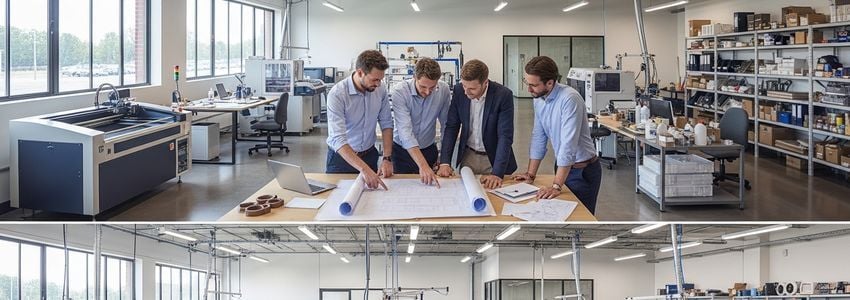
Multi-Purpose Production Room Financing: The Complete Guide to Funding Flexible Production Spaces
When your business needs space that can shift from product assembly in the morning to packaging in the afternoon and light fabrication by evening, a standard single-use facility simply does not cut it. Multi-purpose production rooms are the answer for manufacturers, makers, small batch producers, and service businesses that need their workspace to adapt as quickly as their operations do. The challenge, for most business owners, is funding these dynamic spaces without depleting working capital or stalling growth. That is where production room financing becomes a game-changing tool.
Whether you are building out an entirely new multi-use production floor, converting an underutilized warehouse section, or expanding your current setup with flexible workstations and shared equipment zones, there are several financing paths available to you. This guide covers everything you need to know to fund your flexible production space effectively - from loan types and qualification requirements to real-world funding scenarios and how Crestmont Capital can help you move fast.
In This Article
- What Is a Multi-Purpose Production Room?
- Why Businesses Invest in Flexible Production Spaces
- Types of Multi-Purpose Production Rooms Worth Financing
- Financing Options for Production Rooms
- How to Qualify for Production Room Financing
- How the Financing Process Works
- How Crestmont Capital Helps
- Real-World Funding Scenarios
- Comparing Your Financing Options
- Who This Financing Is Best For
- Frequently Asked Questions
- How to Get Started
What Is a Multi-Purpose Production Room?
A multi-purpose production room is a flexible workspace designed to accommodate multiple production or manufacturing activities, often within the same physical footprint. Unlike dedicated single-function facilities, these spaces are engineered to pivot between tasks without significant reconfiguration. Think of a room equipped with modular workbenches, overhead utility connections, flexible electrical and plumbing layouts, and movable equipment that can support light assembly one day, product photography the next, and food preparation or product finishing the day after that.
These production environments have become increasingly critical for small and mid-sized businesses that want to control overhead while maximizing operational versatility. They are found across a wide range of industries including food and beverage production, cosmetics and personal care, electronics assembly, artisan manufacturing, media and content production, and professional services that require hands-on client demonstrations or prototyping.
The core appeal of a multi-purpose production room lies in its efficiency. Instead of leasing multiple specialized spaces at premium rates, you consolidate your production needs into one intelligent layout that adapts to your workflow. The capital required to build, convert, or equip such a space ranges widely, from under $50,000 for a basic flexible workroom to several hundred thousand dollars for a fully outfitted multi-function commercial production facility.
Key Insight: According to the U.S. Small Business Administration, businesses with flexible operational infrastructure consistently outperform single-use facilities in revenue per square foot during periods of market volatility and seasonal demand swings.
Why Businesses Invest in Flexible Production Spaces
The return on investment from a well-designed multi-purpose production room can be substantial. Here is why so many businesses are making this a funding priority:
Reduced Overhead Through Space Consolidation
Leasing or owning multiple specialized production spaces compounds fixed costs quickly. A single versatile production room that handles three to five distinct production functions reduces your real estate footprint, utility costs, insurance premiums, and maintenance overhead significantly. For businesses operating on tight margins, this consolidation directly improves profitability.
Faster Adaptation to Market Demand
Consumer preferences shift rapidly. A flexible production room means you can respond to new product demands or seasonal surges without waiting for a facility renovation or a new lease to start. Your capital investment in flexible infrastructure pays dividends every time the market moves and you can move with it.
Support for New Revenue Streams
Multi-purpose production spaces enable revenue diversification. A food producer can add meal kit assembly. A cosmetics maker can add private label manufacturing. An electronics firm can add prototype development. Each new capability activates new revenue without requiring a separate facility.
Competitive Differentiation
The ability to offer clients or partners multiple production services from a single location creates a competitive advantage that is difficult for smaller single-use operations to replicate. It signals operational sophistication and scalability that larger clients and corporate partners value highly.
Higher Valuation at Exit
Businesses with versatile production infrastructure are generally valued higher during acquisition or financing rounds because the facility asset is not tied to a single production use case. Flexible spaces are easier to monetize and repurpose, making them more attractive collateral and equity-building assets.
Industry Data: The National Association of Manufacturers reports that small manufacturers with flexible production facilities saw 23% higher revenue growth over a five-year period compared to businesses with single-purpose production setups.
Types of Multi-Purpose Production Rooms Worth Financing
Not all multi-purpose production rooms look the same. The type you build or convert depends on your industry, output goals, client requirements, and the flexibility you need. Here are the most common configurations businesses are financing today:
Flex Manufacturing and Assembly Rooms
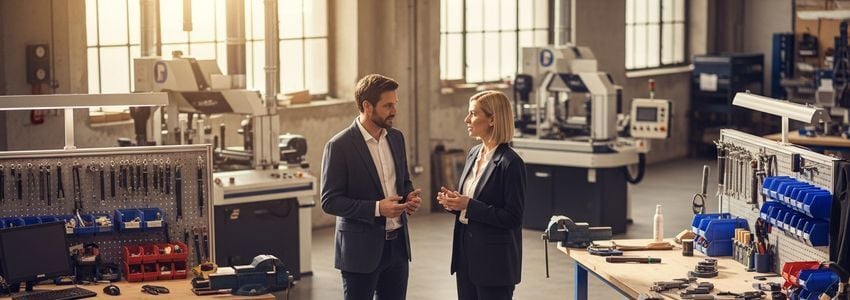
These are designed for light to medium manufacturing operations where different product lines require different workstation setups. Modular benches, tool storage, material handling equipment, and adaptable electrical layouts allow teams to shift between assembly projects with minimal downtime. Common in electronics, consumer goods, and contract manufacturing.
Food and Beverage Production Kitchens
Commercial commissary kitchens designed for multi-use food production require specialized equipment including commercial refrigeration, prep surfaces certified for multiple food categories, ventilation, and health code-compliant layouts. These spaces support catering companies, food startups, meal prep services, and specialty food manufacturers who need certified production environments without building dedicated single-product facilities.
Creative and Content Production Studios
Production rooms for media businesses, photographers, videographers, and creative agencies are designed to shift between photographic setups, video production configurations, product display arrangements, and podcast or broadcast recording. These rooms require specialized acoustic treatments, lighting grid infrastructure, and power distribution systems.
Cosmetics and Personal Care Manufacturing Rooms
Small batch cosmetics, skincare, and personal care product manufacturers need controlled environments with appropriate ventilation, chemical-safe surfaces, temperature regulation, and cleanroom-adjacent configurations. Multi-purpose setups allow them to produce multiple product lines from the same facility without contamination risks.
Research, Development, and Prototyping Labs
Businesses developing new products or testing new processes need rooms that can accommodate prototype assembly, material testing, CAD-to-physical translation, and iterative product development. These rooms serve as both R&D and small-scale production environments until product lines scale to dedicated facilities.
Maker and Artisan Production Spaces
Custom furniture makers, artisan product manufacturers, and craft businesses need versatile rooms equipped with woodworking, metalworking, finishing, and assembly capabilities. Multi-purpose setups allow artisan businesses to take on a wider variety of custom projects and client orders.
Ready to Finance Your Production Room?
Get fast, flexible financing from the #1 business lender in the U.S. No obligation - apply in minutes.
Apply Now →Financing Options for Production Rooms
The right financing product depends on how you plan to use the funds - whether for construction, equipment purchases, leasehold improvements, or a combination of all three. Here are the primary financing options for multi-purpose production spaces:
Equipment Financing
If the bulk of your production room investment goes toward equipment - workstations, machinery, tools, refrigeration units, production tables, or specialized systems - equipment financing is the most efficient path. Equipment loans allow you to acquire the physical assets your production room requires while spreading payments over 24 to 72 months. The equipment itself serves as collateral, which makes approval more accessible even for businesses with limited credit history.
Equipment financing rates typically range from 4% to 20% APR depending on creditworthiness, equipment type, and loan terms. For newer businesses, rates will generally be higher, while established businesses with strong revenue histories can secure competitive rates. Equipment financing preserves your working capital for operational expenses while building equity in tangible production assets.
Small Business Term Loans
A traditional term loan provides a lump sum that can be used for any combination of production room buildout costs including construction, leasehold improvements, equipment, and facility preparation. Term loans are particularly well-suited for larger production room investments where the costs span multiple categories that equipment financing alone would not cover.
Term loans range from $25,000 to over $2 million for qualified businesses. Repayment terms typically run from 1 to 10 years, and rates vary based on your credit profile, revenue, and time in business. If you have at least two years in business and consistent monthly revenues, a term loan may be the fastest and most flexible path to full production room funding.
Business Lines of Credit
A business line of credit is ideal for production room projects with phased costs or variable spending needs. Rather than borrowing a fixed lump sum, you draw against a revolving credit facility as expenses arise - paying for permits one month, equipment the next, and finishing materials the following month. You only pay interest on what you draw, which makes lines of credit cost-efficient for extended projects.
Lines of credit are also useful for covering the operating costs that arise as your new production room ramps up - staffing, materials, marketing the new capabilities. Credit limits typically range from $10,000 to $500,000 depending on business size and creditworthiness.
SBA Loans
SBA 7(a) loans offer some of the most favorable terms available for production room financing, with amounts up to $5 million, repayment terms up to 25 years for real estate or 10 years for equipment and working capital, and interest rates that are among the lowest available for small business financing. The trade-off is processing time - SBA loans typically take 30 to 90 days to fund, which makes them less suitable for urgent buildout timelines.
For businesses with strong creditworthiness and the ability to plan ahead, SBA loans represent the most cost-effective long-term financing solution for significant production room investments, particularly when real estate acquisition or major construction is involved.
Working Capital Loans
Working capital loans are short-term funding solutions that address the cash flow implications of a production room buildout. While not designed for long-term capital expenditures, they can bridge gaps between equipment purchases and the revenue generation that follows, or cover operational costs during the transition period. They approve quickly and typically fund within 24 to 72 hours.
Equipment Leasing
Equipment leasing offers an alternative to purchasing for businesses that prefer to keep production room assets off the balance sheet or maintain flexibility to upgrade equipment as technology evolves. Lease payments are typically lower than loan payments for the same equipment, preserving cash flow for other operational priorities.
By the Numbers
Multi-Purpose Production Room Financing - Key Statistics
$50K+
Typical minimum investment for a functional multi-purpose production room
23%
Higher revenue growth for businesses with flexible production infrastructure
24-72hrs
Average funding time with alternative business lenders like Crestmont Capital
$5M
Maximum SBA 7(a) loan amount for qualified production facility projects
How to Qualify for Production Room Financing
Lender requirements for production room financing vary by loan type and lender, but most evaluate a consistent set of factors when reviewing applications:
Credit Score
Your personal and business credit scores are primary approval factors. Traditional bank loans typically require a minimum 680 to 720 personal credit score. Alternative lenders like Crestmont Capital work with business owners with scores as low as 550 to 600, though better credit scores generally unlock lower interest rates and higher funding amounts.
Time in Business
Most lenders prefer businesses with at least 6 months to 2 years of operating history. Equipment financing and working capital loans from alternative lenders are often available to businesses as young as 6 months old. SBA loans and traditional bank term loans typically require 2+ years. Startups may have success with equipment financing programs specifically designed for early-stage businesses.
Monthly Revenue
Lenders want to confirm you have the cash flow to support loan repayments. Most alternative lenders require $10,000 to $15,000 or more in average monthly revenue. Bank and SBA lenders may set higher thresholds. Strong, consistent monthly revenue is one of the most powerful approval factors in your application.
Business Plan and Use of Funds
For larger production room investments, lenders often want to understand the purpose of the financing, the expected return on investment, and how the production room will generate revenue. A clear, well-articulated business case for the investment - including the production functions the room will serve and the revenue streams it will support - strengthens your application significantly.
Collateral
Equipment financing uses the equipment as collateral. Term loans may require a personal guarantee and potentially additional business collateral depending on loan size. Lines of credit are often unsecured up to certain thresholds. Lenders assess total collateral availability relative to loan amounts when determining both approval odds and pricing.
Quick Qualification Checklist: 6+ months in business, $10K+ monthly revenue, 550+ personal credit score, and a clear plan for how your production room will generate returns will put you in a strong position for approval at Crestmont Capital.
How the Financing Process Works
Understanding the financing process from application to funding helps you plan your production room buildout timeline accurately. Here is how the process typically unfolds:
Step 1: Assess Your Financing Needs
Before applying, calculate your total project cost including construction or renovation, equipment, permits and inspections, utility upgrades, furnishings and fixtures, and an operational buffer for the ramp-up period. Having a clear number in mind helps lenders structure the right product and amount for your situation. Many business owners underestimate soft costs like permits, architectural plans, and project management, so budget conservatively.
Step 2: Gather Your Financial Documents
Most lenders will request three to six months of business bank statements, recent business and personal tax returns, a current profit and loss statement, and sometimes a balance sheet. Alternative lenders typically require less documentation than banks. Having these documents organized before applying accelerates the approval process significantly.
Step 3: Apply and Get Pre-Approved
With Crestmont Capital, you can complete the application online in minutes. Pre-approval decisions on smaller loan amounts are often returned same day or next business day. Larger or more complex transactions may take two to five business days for full underwriting. During this phase, a lending specialist reviews your business profile, revenue, and creditworthiness to determine the optimal product, amount, and terms.
Step 4: Review Your Offer and Finalize Terms
Once pre-approved, you receive a formal offer outlining the loan amount, interest rate, repayment term, payment schedule, and any fees. Take time to review the full cost of financing including APR, origination fees, and prepayment penalties (if applicable) before signing. Compare offers if you have received pre-approval from multiple lenders.
Step 5: Funding and Production Room Buildout
After signing, funds are typically deposited within 24 to 72 hours for most alternative lending products. Equipment financing may involve the lender paying vendors directly or reimbursing you for equipment purchases. With funds available, your production room buildout can begin immediately - no more waiting on bank processing timelines that can stretch weeks or months.
How Crestmont Capital Helps Fund Your Production Room
Crestmont Capital is the #1 rated business lender in the United States, specializing in fast, flexible financing for growing businesses that need capital to expand their operational infrastructure. Our approach to production room financing is built on speed, flexibility, and genuine partnership with our clients.
Here is what makes Crestmont Capital the right choice for funding your multi-purpose production space:
- Same-day and next-day approvals for qualified applicants, so your buildout does not wait on bureaucratic timelines
- Funding from $10,000 to $2 million+ to cover the full range of production room investment sizes
- Multiple loan products including equipment financing, term loans, lines of credit, and working capital solutions
- Flexible qualification criteria that consider the full picture of your business health, not just credit scores
- Dedicated lending specialists who understand manufacturing, production, and operational facility investments
- No hard credit pull to get pre-qualified, protecting your credit profile during the exploration phase
Our clients have funded food production kitchens, artisan manufacturing studios, creative production spaces, and multi-function assembly floors across virtually every industry. We understand that production room investments are strategic decisions that generate long-term revenue, and we structure financing accordingly. For a deeper look at the range of small business financing options we offer, visit our main financing hub.
If you are comparing equipment financing specifically for your production room machinery and tools, read our detailed overview of how equipment financing works to understand which product type best fits your purchase plan.
Fund Your Production Room Today
Join thousands of business owners who trust Crestmont Capital for fast, reliable financing. Apply online in minutes.
Get Your Quote →Real-World Production Room Financing Scenarios
The following scenarios illustrate how different businesses use production room financing to build flexible capabilities and generate returns on their investment.
Scenario 1: The Small Batch Food Producer
A woman-owned food business producing artisan sauces and condiments had been renting shared commercial kitchen time at $25 per hour, limiting her to 20 production hours per week. She financed a multi-purpose production kitchen buildout in a 1,500-square-foot leased industrial unit, using $180,000 in equipment financing to acquire commercial prep surfaces, refrigeration, cooking equipment, and filling/packaging machinery. Within eight months, her production capacity had tripled, she brought on two part-time employees, and her monthly revenue increased by 140%. The monthly loan payment was less than what she had been paying for commercial kitchen time.
Scenario 2: The Contract Electronics Assembler
A contract electronics assembly firm needed to add a new production line for a major client contract but did not want to commit to a dedicated facility lease before the contract was confirmed. They financed $250,000 in modular workstation equipment and electrostatic discharge-safe flooring using a combination of equipment financing and a working capital line of credit. The multi-purpose configuration allowed them to service the new client contract while maintaining existing production lines, and the flexible setup positioned them to take on additional contract work as it became available.
Scenario 3: The Creative Production Agency
A boutique creative agency offering photography, video production, and product staging services was operating from rented studio space at significant per-day costs. A $95,000 term loan funded the buildout of a multi-purpose production studio in a leased commercial space - including professional lighting grid infrastructure, acoustic treatment, cyclorama wall, and product display infrastructure. The new studio eliminated the rental overhead entirely and allowed the agency to add recurring content production retainers to its service offering, generating consistent monthly revenue that had not previously been possible.
Scenario 4: The Cosmetics Manufacturer
A cosmetics startup was operating out of a home lab and had received its first private label manufacturing contract but needed a compliant, scale-ready production environment. A $75,000 SBA 7(a) loan funded the conversion of a commercial unit into a multi-purpose cosmetics production room with appropriate ventilation, cleanroom surfaces, formulation stations, and packaging equipment. The compliant facility allowed the business to execute its manufacturing contract and win two additional private label clients within the following year, tripling annual revenue.
Scenario 5: The Artisan Furniture Maker
A custom furniture and interior fabrication studio needed to expand its capabilities to take on higher-value commercial interior contracts. A $130,000 equipment financing package funded multi-purpose woodworking machinery, finishing equipment, and material storage systems in a renovated warehouse space. The expanded production capabilities allowed the business to bid on commercial projects previously out of reach, increasing average project value by over 200% within 18 months.
Scenario 6: The Research and Prototyping Lab
An engineering services firm needed a dedicated prototyping and testing lab to support a growing product development consulting practice. A business line of credit up to $200,000 funded the buildout in phases over 12 months, covering 3D printing equipment, material testing stations, electronic assembly tools, and a climate-controlled testing environment. The phased funding approach allowed the firm to match capital deployment with project revenue, managing cash flow throughout the buildout without straining operations.
Comparing Your Production Room Financing Options
| Loan Type | Best For | Typical Amount | Speed | Typical Rate |
|---|---|---|---|---|
| Equipment Financing | Machinery, workstations, production tools | $5K - $500K+ | 1-3 days | 5% - 20% APR |
| Term Loan | Full buildout, construction + equipment | $25K - $2M+ | 1-5 days | 7% - 25% APR |
| Line of Credit | Phased projects, ongoing operational costs | $10K - $500K | 1-3 days | 8% - 24% APR |
| SBA 7(a) Loan | Long-term, large investments | $50K - $5M | 30-90 days | Prime + 2.25-4.75% |
| Working Capital Loan | Bridging operational costs during buildout | $5K - $250K | 24-48 hours | Factor rate 1.1-1.5 |
| Equipment Leasing | Lower monthly payments, off-balance-sheet | $5K - $500K+ | 1-3 days | Varies by structure |
For businesses with strong credit and time to plan, an SBA loan offers the best long-term cost of capital. For businesses that need to move quickly or are still building their credit profile, equipment financing and term loans from alternative lenders like Crestmont Capital offer the best combination of speed, flexibility, and accessibility. To learn more about how different loan types compare in detail, read our guide on term loans vs. lines of credit.
Who This Financing Is Best For
Multi-purpose production room financing is the right move for businesses that meet these criteria:
- Manufacturers and producers who need to serve multiple client types or production categories from a single location
- Food and beverage businesses ready to move from shared kitchen time to an owned or leased production facility
- Creative agencies and media businesses spending significant budgets on rented studio facilities
- Contract manufacturers needing flexible production capacity for multiple client lines
- Startups and growing businesses that need compliant, professional production environments to compete for larger contracts
- Established businesses looking to add new production capabilities and revenue streams without committing to dedicated single-use facilities
- Any business owner who believes that operational flexibility will be a competitive advantage in their market over the next three to five years
If you are unsure which type of financing best fits your situation, our lending specialists are available to help you evaluate your options and match you with the right product at the right terms.
Get Pre-Qualified in Minutes
No hard credit pull. No obligation. Just fast answers on what you qualify for.
Check My Eligibility →Frequently Asked Questions
How to Get Started
Calculate the total cost of your production room project including equipment, construction, permits, and operational buffer. Determine whether a lump sum loan, revolving line of credit, or equipment financing best fits your buildout structure.
Complete our quick application at offers.crestmontcapital.com/apply-now - the process takes just a few minutes and does not impact your credit score to get pre-qualified.
A Crestmont Capital lending advisor will review your production room investment plan and match you with the right financing product, amount, and terms for your situation.
Receive your funding - often within 24 to 72 hours of approval - and begin your production room buildout. Your new flexible production space can be generating revenue faster than you think.
Conclusion
Multi-purpose production room financing is one of the most strategic investments a growing business can make. By funding a flexible production environment, you unlock the ability to serve multiple clients, operate multiple product lines, adapt to changing market demands, and build operational infrastructure that grows in value alongside your business. The right financing product - whether equipment financing, a business term loan, a line of credit, or an SBA loan - makes the difference between a production vision and a production reality.
Crestmont Capital specializes in fast, flexible production room financing that gets businesses funded and operational without the delays and bureaucracy of traditional lending. With approval decisions as fast as same day and funding in 24 to 72 hours, we help businesses move at the speed their opportunities demand. Apply today and take the first step toward the production room that will power your next phase of growth.
Disclaimer: The information provided in this article is for general educational purposes only and is not financial, legal, or tax advice. Funding terms, qualifications, and product availability may vary and are subject to change without notice. Crestmont Capital does not guarantee approval, rates, or specific outcomes. For personalized information about your business funding options, contact our team directly.








