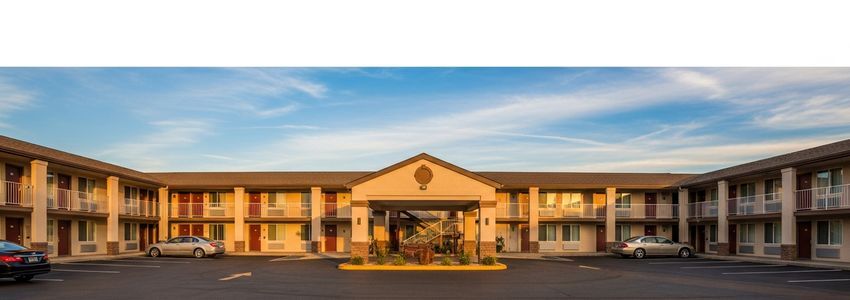
Running a motel is one of the most capital-intensive businesses in the hospitality industry. From maintaining aging properties and upgrading guest rooms to covering payroll during slow seasons and marketing to attract guests year-round, motel owners face constant financial demands. Motel business loans provide the working capital and long-term financing needed to keep operations running smoothly and position your property for growth.
Whether you are purchasing a motel for the first time, refinancing an existing property, renovating outdated amenities, or simply bridging a cash flow gap between high and low season, understanding your financing options is critical. This guide walks you through every type of motel business loan available in 2026, who qualifies, what lenders look for, and how Crestmont Capital can help you get funded quickly.
In This Article
- What Are Motel Business Loans?
- Types of Motel Business Financing
- How Motel Business Loans Work
- Motel Financing - By the Numbers
- Who Qualifies for a Motel Business Loan?
- Comparing Motel Financing Options
- How Crestmont Capital Helps Motel Owners
- Real-World Scenarios
- Frequently Asked Questions
- How to Get Started
What Are Motel Business Loans?
Motel business loans are commercial financing products designed specifically to meet the capital needs of motel and hospitality businesses. Unlike residential mortgages or personal loans, these financing solutions are structured around the revenue-generating capacity of your property and operations.
Motel financing encompasses a broad spectrum of products - from commercial real estate loans used to purchase or refinance property to short-term working capital loans that cover operational expenses. The type of financing you need depends on what you are trying to accomplish, your credit profile, the age and condition of your property, and your revenue history.
Motel owners typically seek financing for several core purposes. The most common uses include property acquisition, renovation and room upgrades, equipment replacement (HVAC systems, laundry equipment, commercial kitchen appliances), marketing campaigns, hiring and payroll, and managing cash flow during low-occupancy periods. A well-structured motel loan can make the difference between a property that stagnates and one that thrives.
Industry Insight: According to the American Hotel and Lodging Association, the U.S. lodging industry generates more than $200 billion in annual revenue. Properties that invest in upgrades and operational improvements consistently outperform their market averages in occupancy rates and revenue per available room (RevPAR).
Types of Motel Business Financing
There is no single loan product that works for every motel situation. Lenders offer a range of financing structures, each with distinct advantages, qualification requirements, and use cases. Here is a breakdown of the most common motel business loan types available in 2026.
1. Commercial Real Estate Loans for Motels
Commercial real estate (CRE) loans are the primary vehicle for purchasing or refinancing a motel property. These loans use the property itself as collateral, typically covering 65 to 80 percent of the appraised value. Terms generally range from 10 to 25 years, with amortization periods of 20 to 30 years. Interest rates on commercial real estate loans for motels are typically fixed or adjustable and are influenced by prevailing market rates, your credit score, the property's debt service coverage ratio, and the loan-to-value ratio.
CRE loans are ideal for owners looking to purchase a new property, refinance existing debt at better rates, or pull equity out of an appreciated property for capital improvements. Crestmont Capital's commercial real estate financing team specializes in hospitality properties and can structure deals for both independent motels and franchise properties.
2. SBA Loans for Motels
Small Business Administration (SBA) loans are government-backed financing options that offer favorable terms for qualified small business owners. The SBA 7(a) loan is the most commonly used program for motel financing, offering loan amounts up to $5 million with repayment terms of up to 25 years for real estate and 10 years for working capital. The SBA 504 loan is another excellent option, specifically designed for fixed assets like commercial property and major equipment purchases.
SBA loans for motels typically require a minimum credit score of 680, a business operating history of at least two years, and a down payment of 10 to 20 percent. Because the SBA guarantees a portion of the loan, lenders can offer lower interest rates and more flexible terms than conventional commercial loans. Learn more about SBA loans and how they can be applied to hospitality businesses.
3. Business Lines of Credit
A business line of credit functions like a revolving credit account - you draw funds as needed and only pay interest on what you borrow. For motel owners, a line of credit is invaluable for managing seasonal cash flow variations, covering unexpected repairs, or funding marketing campaigns before peak seasons. Lines of credit for hospitality businesses typically range from $10,000 to $500,000, with interest rates based on the prime rate plus a margin.
4. Working Capital Loans
Working capital loans are short- to medium-term financing solutions that provide immediate cash for operational expenses. These loans are particularly useful for motel owners who need to cover payroll, utility bills, supply purchases, or marketing costs without waiting for bookings to catch up. Crestmont Capital offers unsecured working capital loans that do not require property collateral, making them accessible even when your commercial real estate is already pledged to a primary lender.
5. Equipment Financing
Motels rely heavily on specialized equipment - from HVAC systems and commercial washers and dryers to point-of-sale systems, pool maintenance equipment, and security cameras. Equipment financing allows you to acquire or upgrade this equipment without tying up your working capital. The equipment itself serves as collateral, and terms typically align with the useful life of the asset being financed. Crestmont Capital's equipment financing programs can cover virtually any type of hospitality equipment.
6. Bridge Loans
Bridge loans are short-term financing solutions used to "bridge" the gap between immediate capital needs and longer-term financing. Motel owners frequently use bridge loans when acquiring a property that does not yet qualify for permanent financing - for instance, a distressed property that needs renovation before it can be refinanced with a conventional CRE loan. Bridge loans typically carry higher interest rates and fees in exchange for speed and flexibility, with terms ranging from 6 months to 3 years.
7. Hotel and Motel-Specific Franchise Financing
If your motel operates under a franchise flag - such as Best Western, Super 8, or Days Inn - you may have access to franchise-specific financing programs. Franchisors often partner with preferred lenders who understand the brand standards, property improvement plans (PIPs), and financial profile of franchise properties. These programs can simplify the underwriting process and may offer more favorable terms for brand-compliant properties.
Ready to Finance Your Motel?
Get fast, flexible financing from the #1 business lender in the U.S. Apply in minutes with no obligation.
Apply Now →How Motel Business Loans Work
Understanding the mechanics of motel business loans helps you select the right product and approach lenders with confidence. The process typically follows several key steps, from initial application through funding.
Step 1 - Define Your Financing Need
Before approaching any lender, you need to clearly define what you are financing and why. Are you purchasing a property, renovating existing rooms, covering operational gaps, or refinancing existing debt? The purpose of the loan drives the product type, the documentation required, and the lender's risk assessment.
Step 2 - Gather Your Financial Documentation
Lenders evaluating motel business loans will request a comprehensive financial package. This typically includes personal and business tax returns for the past two to three years, year-to-date profit and loss statements, balance sheets, business bank statements for the past three to six months, your property's appraisal or valuation, occupancy rate history (often called STR data), current debt schedule, and business licenses. For property acquisitions, you will also need a purchase and sale agreement and environmental reports.
Step 3 - Understand Your Debt Service Coverage Ratio (DSCR)
The DSCR is the single most important metric lenders use to evaluate motel loans. It measures the property's ability to generate enough income to cover its debt obligations. A DSCR of 1.25 means the property generates $1.25 in net operating income for every $1.00 of debt service. Most commercial lenders require a minimum DSCR of 1.20 to 1.25. If your property's DSCR is below this threshold, you may need to negotiate a lower loan amount, offer additional collateral, or accept a shorter loan term.
Step 4 - Application and Underwriting
Once you submit your application and financial package, the lender's underwriting team evaluates your creditworthiness, the property's value and condition, market conditions in your area, and your business's financial performance. Commercial real estate loans for motels often take 30 to 60 days to close, while working capital and equipment financing can be approved and funded in as little as 24 to 72 hours.
Step 5 - Closing and Funding
After approval, you proceed to closing, where you sign the loan documents and receive your funds. For real estate loans, closing involves title search, insurance requirements, and escrow setup. For working capital and equipment loans, funding is typically more straightforward and faster.
By the Numbers
Motel Business Financing - Key Statistics
$5M
Maximum SBA 7(a) loan for motel acquisition or renovation
60%
Average U.S. motel occupancy rate - properties with updated amenities outperform significantly
25 Yrs
Maximum repayment term available on SBA real estate loans
72 Hrs
Typical funding timeline for working capital and equipment loans through Crestmont
Who Qualifies for a Motel Business Loan?
Qualification requirements for motel business loans vary significantly based on the loan type, the lender, and the purpose of financing. Here is what most lenders will evaluate during the underwriting process.

Credit Score Requirements
For commercial real estate and SBA loans, most lenders require a minimum personal credit score of 660 to 700, with stronger scores receiving better rates. Working capital loans and equipment financing may be available to borrowers with credit scores as low as 580 to 620, though at higher interest rates. It is important to note that lenders look at both personal and business credit profiles for hospitality loans.
Business Revenue and Cash Flow
Lenders want to see consistent, sufficient revenue to support debt repayment. For commercial real estate loans, the property's net operating income (NOI) must cover the proposed debt service at an acceptable coverage ratio. For working capital loans, lenders typically want to see $10,000 to $20,000 or more in monthly gross revenue, with stable or growing trends.
Time in Business
Most conventional lenders and SBA programs require at least two years of operating history. Alternative lenders and specialized hospitality financing programs may be accessible to operators with as little as six to twelve months of history, particularly if the property itself has a longer track record under previous ownership.
Property Condition and Valuation
For real estate-secured motel loans, the property's appraised value is critical. Lenders will order a commercial appraisal and may require an environmental assessment and physical inspection. Properties in need of significant deferred maintenance may require a renovation escrow arrangement where funds are held and disbursed as improvements are completed.
Down Payment or Equity
For property acquisition loans, most lenders require a down payment of 20 to 30 percent for conventional loans, or 10 to 20 percent for SBA-backed loans. If you are refinancing an existing property, the amount of equity you have built up plays a similar role in determining your loan-to-value ratio and the terms available to you.
Pro Tip: Even if your property's DSCR falls slightly below lender minimums, additional collateral, a personal guarantee, or a larger down payment can often bridge the gap and unlock approval. Work with a specialist lender like Crestmont Capital who understands the hospitality industry's seasonal revenue patterns.
Comparing Motel Financing Options
| Loan Type | Best For | Loan Amount | Term | Speed |
|---|---|---|---|---|
| CRE Loan | Property purchase/refinance | $500K - $10M+ | 10-25 years | 30-60 days |
| SBA 7(a) | Acquisition, renovation, working capital | Up to $5M | Up to 25 years | 45-90 days |
| Working Capital | Operational expenses, seasonal gaps | $10K - $500K | 6-36 months | 24-72 hours |
| Line of Credit | Ongoing flexible needs | $10K - $500K | Revolving | 3-7 days |
| Equipment Financing | HVAC, laundry, technology | $5K - $5M | 2-7 years | 24-72 hours |
| Bridge Loan | Short-term property acquisition/renovation | $100K - $5M+ | 6-36 months | 7-21 days |
How Crestmont Capital Helps Motel Owners
Crestmont Capital is the #1 business lender in the United States, with extensive experience helping motel and hospitality business owners secure the financing they need to grow. Unlike traditional banks that apply rigid underwriting criteria, Crestmont Capital takes a flexible, relationship-based approach that considers the full picture of your business - not just your credit score.
Our team understands the unique financial dynamics of the hospitality industry. Seasonal revenue variations, property improvement plan (PIP) requirements, STR data analysis, and hospitality-specific DSCR calculations are all familiar territory for our lending specialists. We work with motel owners ranging from single-property independent operators to multi-property portfolio owners seeking portfolio-level financing solutions.
Crestmont Capital offers access to a comprehensive range of motel financing products through one application. Rather than approaching multiple lenders separately, you submit a single application and our team matches you with the most appropriate financing solution from our network of funding partners. This saves time, reduces credit inquiries, and ensures you receive competitive terms.
If you also own or manage hotel properties in addition to motels, explore our dedicated hotel business loans page for additional financing options tailored to larger hospitality properties.
Let Crestmont Fund Your Motel's Next Chapter
Our hospitality lending specialists are standing by. Get a decision in as little as 24 hours.
Get Your Free Quote →Real-World Motel Financing Scenarios
Understanding how motel business loans work in practice helps illustrate which financing options best match different business situations. Here are six realistic scenarios that demonstrate how motel operators leverage different loan products.
Scenario 1 - Purchasing a 40-Room Independent Motel
A first-time buyer identifies a 40-room motel listed at $2.1 million in a secondary market. With a personal credit score of 710, two years of hospitality management experience, and $400,000 in liquid capital, they pursue an SBA 7(a) loan with a 15 percent down payment of $315,000. The SBA loan covers the remaining $1.785 million over 25 years at a competitive rate tied to the prime rate plus a lender margin. The lower down payment preserved working capital for initial renovations and operating expenses during the transition period.
Scenario 2 - Renovating an Aging Property to Meet Franchise Standards
A motel operator in the Southeast received a property improvement plan (PIP) from their franchise requiring $380,000 in renovations over 18 months to maintain their brand flag. With the property already mortgaged, they accessed a combination of a home equity business loan and equipment financing to cover the PIP costs - $150,000 in equipment financing for new HVAC and laundry equipment, and a $230,000 working capital term loan for room renovations, soft goods, and common area improvements.
Scenario 3 - Bridging a Seasonal Cash Flow Gap
A 28-room motel in a ski resort town generates 70 percent of annual revenue between November and March. During the off-season months, the owner uses a $75,000 business line of credit to cover payroll, utilities, preventative maintenance, and pre-season marketing costs. Drawing and repaying the line seasonally keeps operational costs manageable without locking up capital in a term loan.
Scenario 4 - Acquiring a Distressed Property with a Bridge Loan
An experienced hospitality investor identified a distressed 55-room motel selling below market value due to deferred maintenance and management problems. Because the property's occupancy rate was too low to qualify for conventional CRE financing, they secured a $1.1 million bridge loan at a higher rate for 18 months. They used the bridge period to renovate the property, stabilize occupancy above 60 percent, and then refinanced into a permanent CRE loan at favorable terms.
Scenario 5 - Expanding a Motel Portfolio
A family-owned motel group operating three properties in the Midwest wanted to acquire a fourth location. They leveraged the equity in their existing portfolio through a commercial real estate portfolio loan, using cross-collateralization to unlock the capital needed for the acquisition without depleting operating reserves. This structure allowed them to acquire a fourth property while maintaining liquidity across all locations.
Scenario 6 - Emergency Equipment Replacement
A 35-room motel's commercial laundry system failed in the middle of peak summer season. With no budget for the $42,000 replacement cost and booked rooms for the next six weeks, the owner needed fast funding. Crestmont Capital funded equipment financing within 48 hours, allowing the owner to have new commercial washers and dryers installed and operational within three days - preventing revenue loss and guest complaints.
Key Takeaway: The right motel financing strategy layers multiple products to address different needs - long-term real estate loans for the property, equipment financing for capital assets, and working capital or lines of credit for operational flexibility. Crestmont Capital can help you build a comprehensive financing structure tailored to your specific situation.
Frequently Asked Questions
How to Get Started
Complete our quick application at offers.crestmontcapital.com/apply-now - takes just a few minutes and covers all major loan types.
A Crestmont Capital advisor who understands the motel and hospitality industry will review your needs, analyze your property's financial profile, and match you with the right financing structure.
Receive your funds and put them to work - whether you are acquiring a new property, renovating existing rooms, upgrading equipment, or bridging an operational cash flow gap.
Conclusion
Motel business loans are essential tools for hospitality operators who want to acquire properties, maintain competitive facilities, manage seasonal cash flow, and grow their portfolios over time. The range of available financing options - from SBA loans and commercial real estate loans to working capital loans, equipment financing, and bridge loans - means there is a solution for virtually every motel owner's situation and financial profile.
The key is matching your specific need with the right loan product and working with a lender who understands the hospitality industry's unique characteristics. Crestmont Capital has helped hundreds of motel owners and hospitality businesses secure the funding they need to succeed. Our team is ready to evaluate your situation and connect you with the most appropriate motel business loans available in 2026.
Do not let capital constraints limit your property's potential. Apply today and get a financing decision in as little as 24 hours.
Disclaimer: The information provided in this article is for general educational purposes only and is not financial, legal, or tax advice. Funding terms, qualifications, and product availability may vary and are subject to change without notice. Crestmont Capital does not guarantee approval, rates, or specific outcomes. For personalized information about your business funding options, contact our team directly.