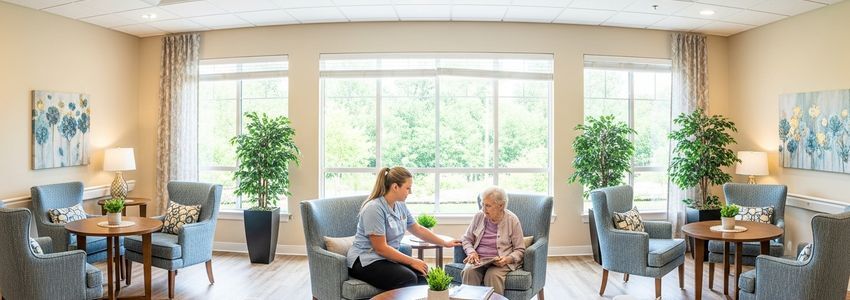
Memory care facility loans give operators and entrepreneurs the capital to build, expand, or improve specialized residential care communities for individuals living with Alzheimer's disease, dementia, and other cognitive conditions. Whether you are opening a standalone memory care unit, adding a wing to an existing assisted living community, or upgrading staff training and safety systems, access to the right financing can make or break your project. This guide covers every major loan type, qualification pathway, and strategy memory care business owners need to secure funding in 2026.
In This Article
- What Are Memory Care Facility Loans?
- Why Financing Matters for Memory Care
- Types of Loans Available
- How Memory Care Financing Works
- How to Qualify
- Memory Care Industry: Key Numbers
- What Can You Finance?
- How Crestmont Capital Helps
- Real-World Financing Scenarios
- Frequently Asked Questions
- How to Get Started
What Are Memory Care Facility Loans?
Memory care facility loans are commercial financing products designed to help owners and operators fund the costs associated with running a specialized dementia and Alzheimer's care community. These loans can be used for real estate acquisition, construction, renovation, equipment, staffing, or working capital. Lenders who offer these products understand the healthcare-specific cash flow dynamics of this sector, including reimbursement cycles, occupancy-based revenue, and regulatory compliance costs.
Unlike a general small business loan, memory care facility financing often involves larger loan amounts, longer repayment terms, and underwriting that specifically accounts for healthcare operational metrics such as occupancy rates, private-pay versus Medicaid mix, and per-resident revenue. Some lenders also require a certificate of need (CON) or state licensure documentation as part of the approval process.
The demand for memory care beds in the United States continues to outpace supply. According to the Alzheimer's Association, more than 6.9 million Americans are currently living with Alzheimer's disease, a number projected to reach 13.8 million by 2060. This demographic pressure is creating significant opportunity for well-funded memory care operators - and making access to capital more critical than ever.
Ready to Finance Your Memory Care Facility?
Crestmont Capital works with healthcare operators to find the right financing solution. Fast approvals, flexible terms.
Apply Now ->Why Financing Matters for Memory Care Facilities
Memory care communities are among the most capital-intensive businesses in the healthcare sector. A new 40-bed facility can cost between $5 million and $15 million to build and equip, depending on location, layout complexity, and amenity level. Even operators who already own existing buildings often face significant costs to upgrade to memory care standards - including secured perimeters, specialized lighting and flooring, nurse call systems, and sensory therapy spaces.
Beyond construction, memory care facilities carry high fixed staffing costs. Staff-to-resident ratios for memory care are typically higher than standard assisted living - often one caregiver for every five to seven residents during peak hours. Payroll is frequently the largest expense category, and smooth cash flow is essential to avoid disruptions that could affect resident safety.
Regulatory requirements also drive capital needs. Many states require specific fire suppression systems, HVAC controls, emergency power backup, and ADA compliance features. A lender who understands these requirements can structure financing that accounts for both the upfront capital costs and the ongoing working capital needs during the pre-census ramp-up period.
Industry Insight: The National Investment Center for Seniors Housing and Care (NIC) reported that memory care occupancy rates recovered to above 80% nationally by late 2024 - a meaningful sign of sustained demand even after post-pandemic disruptions.
Types of Loans Available for Memory Care Facilities
Memory care operators have access to a range of financing products. The right loan type depends on your project stage, credit profile, and how quickly you need funding.
SBA 7(a) Loans
SBA 7(a) loans are one of the most flexible options for memory care facility owners. The U.S. Small Business Administration guarantees a portion of the loan, reducing the lender's risk and enabling better terms for borrowers. Loan amounts up to $5 million are available, with repayment terms up to 25 years for real estate and 10 years for working capital or equipment. Interest rates are typically prime plus 2.75% or less, making these loans highly competitive. Memory care facilities that qualify as small businesses and can demonstrate sufficient cash flow often find SBA 7(a) loans to be their best option for acquisition or renovation financing. You can learn more about the SBA's lending programs at SBA.gov.
SBA 504 Loans
SBA 504 loans are structured specifically for fixed-asset financing - real estate and major equipment. A 504 loan combines funding from a certified development company (CDC), a conventional lender, and the borrower's equity contribution. The maximum SBA debenture is typically $5.5 million, and the combined financing can fund projects up to $20 million or more. For memory care operators who are purchasing land, constructing a new facility, or making major renovations, the 504 program provides below-market fixed rates and long terms that are difficult to match through conventional financing alone.
Conventional Commercial Real Estate Loans
Banks and credit unions offer conventional CRE loans for memory care facility purchases and construction projects. These loans typically require 20-30% down, evidence of strong operations, and personal guarantees. Terms range from 5 to 25 years, often with a balloon payment at 5 to 10 years. Conventional lenders may offer faster processing than SBA-guaranteed loans for experienced operators with strong financials.
Working Capital Loans
Short-term working capital loans address cash flow needs between reimbursement cycles, cover unexpected expenses, or fund staffing costs during a census ramp-up. Amounts typically range from $25,000 to $500,000. These are unsecured or lightly secured, with terms of 6 to 24 months. Small business loans of this type can be funded in as little as 24 to 48 hours - critical when payroll needs arise unexpectedly.
Business Lines of Credit
A business line of credit gives memory care operators revolving access to capital they can draw on as needed and repay over time. This is ideal for managing seasonal census fluctuations, purchasing supplies, covering temporary staffing agency costs, or handling insurance deductible events. Credit lines range from $10,000 to $500,000 and can be renewed annually.
Equipment Financing
Memory care facilities require a wide range of specialized equipment - hospital beds, Hoyer lifts, medication dispensing systems, personal emergency response devices, activity therapy tools, and dietary equipment. Equipment financing allows you to preserve cash while spreading equipment costs over 24 to 84 months. The equipment itself serves as collateral, often making approval easier than unsecured loans.
Bridge Loans
Bridge loans are short-term financing tools that memory care operators use to cover the gap between acquiring a property and closing permanent financing. They are also used during construction phases, providing operating capital until a permanent loan is secured. Bridge loans typically carry higher interest rates than permanent financing but can be arranged quickly - sometimes within days.
Bad Credit Business Loans
Operators with less-than-perfect credit histories still have options. Bad credit business loans from alternative lenders assess factors beyond FICO scores, including monthly revenue, facility occupancy, and time in business. While rates will be higher, these products can provide crucial capital while an operator rebuilds their credit profile.
How Memory Care Financing Works
The process for securing memory care facility loans follows a fairly consistent path, though timelines and requirements vary by lender type and loan product.
Quick Guide
How Memory Care Facility Financing Works - At a Glance
Submit basic business and financial information. Most lenders can pre-qualify you within 24 to 48 hours.
Lenders review financials, census data, licensure, state inspection reports, and occupancy history.
The lender analyzes debt service coverage ratio, operating margins, and collateral. SBA loans take 30 to 90 days; alternative lenders can approve in 1 to 5 days.
Loan documents are signed, any collateral is perfected, and funds are disbursed - directly into your business account.
How to Qualify for Memory Care Facility Loans
Qualification requirements vary by lender and loan type, but most healthcare lenders focus on the following factors when evaluating a memory care facility loan application.
Time in Business
Most traditional and SBA lenders prefer to see at least two years of operating history. Alternative lenders may approve facilities with as little as six months of documented revenue. Startup memory care projects typically require stronger personal credit, a detailed business plan, and sometimes a larger equity contribution.
Credit Score
Personal credit scores above 650 open the door to SBA and conventional financing. Scores above 700 qualify for the best rates. Alternative lenders can work with scores as low as 550 to 600, particularly for businesses with strong revenue and occupancy metrics.
Revenue and Cash Flow
Lenders analyze both gross revenue and net operating income. Most prefer a debt service coverage ratio (DSCR) of at least 1.25 - meaning for every dollar of debt service owed, the facility generates at least $1.25 of net operating income. A facility with 80% occupancy and a healthy private-pay mix will typically qualify for better terms than one with lower occupancy or a Medicaid-heavy payer mix.
Licensure and Compliance
Current state licensure, clean recent inspection reports, and no outstanding deficiency citations are essential. Lenders view regulatory compliance as a proxy for operational quality and long-term viability. If your facility has recent corrective action plans on file, be prepared to explain them and demonstrate resolution.
Collateral
Real estate, equipment, and accounts receivable can all serve as collateral. The real property of the facility itself is often the primary collateral for CRE and SBA loans. For working capital loans, some lenders accept a blanket lien on business assets or assignment of Medicaid receivables.
Pro Tip: If you currently have outstanding business debt from other sources, lenders will factor that into your DSCR calculation. Consider paying down or refinancing high-cost short-term debt before applying for a major facility loan to improve your qualification profile.

Memory Care Industry: Key Numbers
By the Numbers
Memory Care Facility Financing - Key Statistics
6.9M
Americans living with Alzheimer's in 2024 (Alzheimer's Association)
$7,000+
Average monthly cost per resident for memory care (Genworth 2024)
80%+
Average national occupancy rate for memory care, 2024 (NIC)
13.8M
Projected Alzheimer's cases by 2060 (Alzheimer's Association)
What Can You Finance with Memory Care Facility Loans?
One of the most important questions facility owners ask is: what exactly can I use the money for? The answer depends on the loan type, but most memory care financing products allow for a broad range of uses.
Real Estate Acquisition and Construction
Purchase land or existing facilities, fund new construction, or finance major building renovations. SBA 504 loans are particularly well suited for real estate transactions, offering long amortization periods and competitive fixed rates.
Renovation and Compliance Upgrades
Memory care facilities often require significant investment to meet state licensing standards - secured garden access, wandering alert systems, dementia-specific design features like color-coded corridors, circular walking paths, and therapeutic lighting. These renovations can cost $500,000 to $3 million depending on the scope.
Equipment and Technology
Fund resident safety monitoring systems, electronic health record software, staff communication devices, activity therapy equipment, and specialized dining and kitchen tools. Equipment loans spread these costs over the useful life of each asset, preserving cash for operations.
Working Capital and Payroll
Cover payroll gaps between Medicaid reimbursement cycles. Private-pay memory care is typically billed monthly, while Medicaid and managed care plans can take 30 to 90 days to process claims. A working capital loan or line of credit bridges these gaps without disrupting operations.
Marketing and Census Building
Fund referral program development, digital marketing campaigns, community outreach, and admission coordinator salaries during a ramp-up period. Building census from 60% to 90% occupancy can take 6 to 18 months and requires consistent marketing spend throughout.
Staff Training and Certification
Specialized dementia care training programs, Positive Approach to Care (PAC) certification, and Teepa Snow training for caregivers all cost money. Investing in staff training reduces turnover and improves resident outcomes - both of which ultimately benefit your loan qualification profile.
Key Insight: The U.S. Census Bureau projects that adults aged 65 and older will outnumber children for the first time in American history by 2034. This demographic shift creates sustained long-term demand for memory care beds and services - making well-capitalized facilities excellent long-term investments.
How Crestmont Capital Helps Memory Care Operators
Crestmont Capital works with memory care facility owners and operators across the United States to find financing solutions that match their goals and timelines. Our lending team understands the healthcare sector and the unique challenges that memory care operators face, including occupancy-based revenue variability, Medicaid reimbursement timing, and state-specific licensing requirements.
We offer access to a full range of small business loans and healthcare-specific financing products, including fast working capital for payroll and operational needs, equipment financing for facility upgrades, and connections to SBA-preferred lending partners. When you need funding quickly, our fast business loans can get money into your account in as little as one to two business days.
For facility owners dealing with urgent cash flow issues - such as a sudden census drop, an unexpected repair, or a regulatory compliance deadline - our emergency business loans provide fast access to capital when timing matters most. And if cash flow concerns are driven by delayed Medicaid reimbursements, our team can help structure a line of credit specifically designed to bridge those gaps.
We also help memory care operators who have encountered credit challenges. Our bad credit business loans are available to qualified borrowers who may not meet traditional bank standards but can demonstrate sufficient revenue and operational stability.
Memory Care Operators Trust Crestmont Capital
From working capital to equipment loans to facility acquisitions - we have financing solutions built for healthcare operators. No obligation to apply.
Get Funded Today ->Real-World Financing Scenarios
To illustrate how memory care facility loans work in practice, consider the following scenarios drawn from the types of situations Crestmont Capital helps operators navigate.
Scenario 1: Expanding an Existing Assisted Living Community
A 60-bed assisted living facility in Georgia wants to add a 20-bed memory care wing. The project requires $2.8 million in construction costs and $400,000 in specialized equipment. The operator has 12 years of operating history, strong financials, and a personal credit score of 710. This profile qualifies well for an SBA 504 loan, which allows the operator to put down 10% equity while the SBA debenture and a conventional lender cover the remaining 90%. The long amortization period keeps monthly debt service manageable while the new wing ramps up to full occupancy.
Scenario 2: Working Capital During a Census Dip
A standalone 32-bed memory care community in Ohio experiences a temporary occupancy drop to 68% following the loss of three residents in a single month. The facility still has strong long-term prospects, but needs $150,000 to cover payroll and operational expenses for 60 days while admissions ramp back up. A short-term working capital loan from an alternative lender can be funded within 48 hours and repaid over 12 months as occupancy recovers. This is exactly the kind of situation where having a pre-established line of credit - before you need it - makes all the difference.
Scenario 3: New Construction for a First-Time Operator
An experienced healthcare administrator in Texas wants to build a 24-bed memory care boutique community. She has a strong personal credit score (730+), $800,000 in personal equity, and a detailed business plan with feasibility study. Lenders will want to see a signed lease or land purchase agreement, a construction contract, detailed cost projections, and evidence of her healthcare management experience. SBA 7(a) or 504 financing may be available, along with USDA Business and Industry loans if the project is in a rural area.
Scenario 4: Equipment Upgrade for Safety Compliance
A memory care operator in Florida receives a state inspection citation requiring updated door alert systems and video monitoring technology throughout the building. The cost is $175,000 and the deadline is 90 days. Equipment financing secured against the new technology assets can be arranged in days, with repayment spread over 48 months - keeping monthly payments low and avoiding a major cash drain on operations.
Scenario 5: Acquisition of a Distressed Facility
An experienced memory care chain identifies a 40-bed facility that has gone into receivership due to the previous operator's mismanagement. The purchase price is $3.2 million, and the new operator estimates $600,000 in renovation costs to bring the facility up to standard. Bridge financing can provide the speed needed to close the acquisition, with a permanent SBA or conventional loan arranged over the following 60 to 90 days. This scenario requires a lender who understands the distressed healthcare asset acquisition process - and can move quickly when opportunity arises.
Scenario 6: Same-Day Funding for Payroll Emergency
A memory care facility manager discovers on a Friday morning that a bank wire transfer for payroll funding failed. Fifty-three employees are expecting direct deposits by end of day. Crestmont Capital's same-day business loans can provide emergency funding in situations like this, preventing a payroll disruption that could damage staff morale and trigger immediate turnover in an already tight labor market.
For operators who want to read more about financing strategies in the healthcare sector, our guide on assisted living and senior care facility loans covers the broader spectrum of senior housing financing. The home health care business loans guide also provides useful context on healthcare cash flow management and lender expectations.
Frequently Asked Questions
What types of loans are available for memory care facilities?
Memory care operators can access SBA 7(a) loans, SBA 504 loans, conventional commercial real estate loans, equipment financing, working capital loans, business lines of credit, bridge loans, and alternative short-term financing. The best product depends on your project type, timeline, and financial profile.
How much can I borrow for a memory care facility?
Loan amounts range widely based on the purpose. Working capital loans may start at $25,000, while SBA 504 construction loans can reach $15 million or more for large projects. The amount you qualify for depends on your revenue, DSCR, credit score, and collateral.
What credit score do I need to qualify?
SBA and conventional lenders typically require a personal credit score of 650 or higher, with scores above 700 qualifying for the best rates. Alternative lenders may approve applications with scores as low as 550 to 600 when other financial indicators are strong.
Can a startup memory care facility get a loan?
Yes, but startup financing is more challenging. Lenders will focus heavily on the owner's personal credit, healthcare industry experience, equity contribution, and the quality of the business plan and feasibility study. SBA 7(a) and 504 loans are available to startups with strong credentials.
What documents do I need to apply?
Typical requirements include two to three years of business and personal tax returns, current profit and loss statements, balance sheets, bank statements (three to six months), facility licensure, recent state inspection reports, occupancy data, and a personal financial statement. SBA loans may require additional forms such as SBA Form 413 and SBA Form 1919.
How long does it take to get approved?
Timeline varies significantly by lender type. Alternative lenders can approve and fund working capital loans in 24 to 72 hours. Conventional bank loans typically take 2 to 6 weeks. SBA 7(a) and 504 loans may take 30 to 90 days from application to funding due to the SBA guarantee process.
Can I use a business loan for memory care staff training?
Yes. Working capital loans and business lines of credit can be used for any legitimate operational expense, including staff training programs, continuing education, and certification costs. This is a valid and common use of short-term financing for memory care operators.
What is DSCR and why does it matter for memory care loans?
DSCR stands for Debt Service Coverage Ratio. It measures whether a facility generates enough net operating income to cover its debt payments. Most lenders require a minimum DSCR of 1.25, meaning the facility earns $1.25 in NOI for every $1.00 of annual debt service. A higher DSCR improves your chances of approval and can lead to better rates and terms.
Are memory care facility loans available with no collateral?
Some working capital loans and lines of credit from alternative lenders are unsecured or lightly secured, meaning they do not require a specific asset as collateral. However, most lenders will still require a personal guarantee and may place a blanket lien on business assets. SBA and real estate loans will always require collateral.
What interest rates should I expect?
Interest rates depend on your credit profile, loan type, lender, and market conditions. SBA 7(a) loans typically range from prime plus 2.25% to 4.75%. Conventional commercial real estate loans range from approximately 6% to 9%. Working capital loans from alternative lenders may carry factor rates or APRs ranging from 15% to 50% or higher for short-term products. Stronger credit and financial profiles always result in lower rates.
Can I get financing if my facility has a Medicaid-heavy payer mix?
Yes, but some lenders view a high Medicaid concentration as a risk factor since reimbursement rates are set by the state and may not keep pace with operating cost increases. Facilities with a strong private-pay mix are viewed more favorably. If your facility is primarily Medicaid, you may need to demonstrate strong management and a history of stable reimbursement to qualify for larger loans.
Can I refinance my existing memory care facility loan?
Yes. Memory care operators with existing loans at higher rates - particularly those taken out during construction or during difficult operating periods - can refinance through SBA, conventional, or alternative lenders to reduce monthly payments and improve cash flow. A business loan refinance can also extend your repayment term to free up working capital for growth.
What is a certificate of need (CON) and does it affect my loan application?
A Certificate of Need is a regulatory approval required in some states before you can add licensed memory care beds. CON states include Florida, Virginia, and several others. If your state requires a CON, lenders will want to see this documentation as part of your loan application. Facilities in non-CON states have more flexibility but may face greater competition.
How does occupancy rate affect loan approval?
Occupancy is a direct driver of revenue and DSCR. Lenders prefer facilities with occupancy above 75 to 80 percent, as this demonstrates market demand and management effectiveness. Facilities below 70% occupancy may face more scrutiny, and lenders may require evidence of a specific admission pipeline or marketing plan before approving larger loans.
Where can I learn more about memory care industry trends?
The Alzheimer's Association at alz.org publishes annual facts and figures reports. The National Investment Center for Seniors Housing and Care (NIC) provides industry occupancy and construction data. The SBA's website at SBA.gov has resources on loan programs available to healthcare businesses. Industry publications like McKnight's Senior Living also cover market trends and financing news regularly.
How to Get Started
Compile your last two to three years of tax returns, recent profit and loss statements, bank statements, occupancy records, and your state operating license. Having these ready will dramatically speed up the application process.
Complete the quick application at offers.crestmontcapital.com/apply-now - it takes just a few minutes and does not affect your credit score initially.
A Crestmont Capital advisor who understands healthcare business financing will review your situation, match you with the right product, and walk you through next steps.
Once approved, receive your funds and put them to work - whether building a new wing, upgrading safety systems, covering payroll, or scaling your census through marketing. Memory care is a mission-driven industry, and having the right capital partner makes all the difference.
Conclusion
Memory care facility loans are the financial engine behind one of the most meaningful sectors in American healthcare. From small working capital lines that keep payroll smooth to multi-million dollar SBA loans that fund new construction, the right financing empowers operators to focus on what matters most: providing safe, dignified, person-centered care for residents living with Alzheimer's and dementia.
Whether you are a seasoned memory care operator looking to expand, a healthcare administrator building your first boutique facility, or a multi-site operator managing cash flow across several communities, Crestmont Capital has the products and expertise to help you move forward. The demand for quality memory care beds will only grow in the years ahead - and operators who are well-capitalized today will be best positioned to meet that need.
Apply online today and let our team find the memory care facility financing solution that fits your goals.
Disclaimer: The information provided in this article is for general educational purposes only and is not financial, legal, or tax advice. Funding terms, qualifications, and product availability may vary and are subject to change without notice. Crestmont Capital does not guarantee approval, rates, or specific outcomes. For personalized information about your business funding options, contact our team directly.