
 (800) 949-0401
Medical Device Financing: The Complete Guide for Healthcare Businesses
Medical device financing is one of the most important financial decisions a healthcare practice or medical business will ever make. Whether you are acquiring an MRI machine, surgical robots, diagnostic imaging equipment, or cutting-edge patient monitoring systems, the cost of medical technology can easily run from tens of thousands to several million dollars. Without the right financing strategy, even the most successful practices can find themselves cash-strapped or unable to keep pace with technological advancements that directly affect patient outcomes and competitive positioning.
In 2026, the global medical device market is valued at over $600 billion, according to research cited by Reuters. As healthcare costs continue rising and technology evolves rapidly, medical practices of every size are turning to specialized financing solutions to acquire the equipment they need without depleting operational capital. This guide covers everything you need to know about medical device financing - from the types of funding available, to qualification requirements, interest rates, and how to find the right lender for your healthcare business.
In This Article
- What Is Medical Device Financing?
- Types of Medical Device Financing
- What Medical Devices Can You Finance?
- How Medical Device Financing Works
- Qualification Requirements
- Rates, Terms, and Costs
- Benefits of Financing Medical Devices
- How Crestmont Capital Can Help
- How to Apply
- Next Steps
- Frequently Asked Questions
What Is Medical Device Financing?
Medical device financing is a type of business financing specifically designed to help healthcare organizations, medical practices, hospitals, clinics, and health-related businesses acquire medical equipment and devices. Rather than paying the full purchase price upfront, financing allows you to spread the cost over time through scheduled payments - preserving your working capital for day-to-day operations, staffing, marketing, and growth.
Medical device financing can take many forms, including equipment loans, equipment leases, lines of credit, SBA loans, and revenue-based financing. Each option has different requirements, payment structures, and cost profiles. The right choice depends on your cash flow situation, the type and value of the equipment, how long you expect to use it, and your long-term financial goals.
Healthcare practices across all specialties rely on medical device financing - from primary care physicians upgrading their diagnostic tools to surgical centers acquiring robotic systems, imaging centers purchasing CT scanners, or dental practices investing in cone beam technology. According to the U.S. Small Business Administration, healthcare is one of the most active sectors for equipment financing due to the high capital requirements and rapid pace of technological change.
Ready to Finance Your Medical Devices?
Get fast, flexible financing from the #1 business lender in the U.S. No obligation - apply in minutes.
Apply NowTypes of Medical Device Financing
Understanding your options is the first step toward making a smart financing decision. Healthcare businesses typically have access to several distinct financing structures, each suited to different scenarios.
1. Equipment Loans for Medical Devices
A medical equipment loan provides a lump sum that you use to purchase the device outright. You own the equipment from day one and repay the loan with interest over a fixed term, typically 2 to 7 years. Equipment loans are ideal when you want to build equity in the asset, plan to use the device for many years, or want to customize or modify the equipment.
With an equipment financing arrangement, the device itself typically serves as collateral, which often means more favorable terms compared to unsecured loans. Monthly payments are predictable and easy to budget, making equipment loans a popular choice for established practices with consistent cash flow.
2. Equipment Leasing for Medical Devices
Medical equipment leasing allows you to use the device in exchange for periodic lease payments, without owning it outright. At the end of the lease term, you typically have the option to purchase the equipment at fair market value, renew the lease, or return the device.
Leasing is especially attractive in the medical field because technology evolves so rapidly. A CT scanner that represents state-of-the-art technology today may be outdated in 5-7 years. Leasing lets you upgrade to newer models at the end of each term, ensuring your practice stays current without the burden of owning rapidly depreciating assets.
3. Business Line of Credit
A business line of credit provides revolving access to funds up to a predetermined limit. You draw from the line as needed and only pay interest on the amount borrowed. This is useful when you need to purchase multiple smaller devices, cover installation and training costs, or handle unexpected equipment-related expenses.
Lines of credit offer maximum flexibility and are particularly valuable for practices that make ongoing equipment purchases throughout the year rather than one large acquisition.
4. SBA Loans for Medical Devices
The Small Business Administration offers several loan programs that healthcare businesses can use to finance medical devices. The SBA 7(a) loan provides financing up to $5 million with repayment terms up to 10 years for equipment. SBA 504 loans are designed specifically for major fixed assets and offer long terms and competitive rates.
SBA loans typically require strong credit, at least 2 years in business, and a detailed business plan. The approval process is more involved than alternative lending, but the rates and terms are often superior. SBA loans are an excellent option for established practices making large capital investments.
5. Short-Term Business Loans
For practices that need to move quickly or cannot qualify for traditional equipment financing, short-term business loans can provide fast access to capital. These loans typically have repayment terms of 3 to 18 months and can be funded in as little as 24-48 hours.
Short-term loans are best used for lower-cost device purchases or as bridge financing while waiting for a longer-term solution. The cost of capital is generally higher than equipment loans or SBA financing, so they should be used strategically.
6. Revenue-Based Financing
Revenue-based financing allows healthcare businesses to receive capital in exchange for a percentage of future revenues. Repayment fluctuates with your income - you pay more when revenue is high and less when it dips. This structure suits practices with seasonal revenue patterns or variable patient volumes.
7. Vendor Financing
Many medical device manufacturers and distributors offer their own financing programs through captive finance companies or partnerships with lenders. Vendor financing can be convenient and sometimes offers promotional rates, but always compare total cost of ownership against independent financing options.
What Medical Devices Can You Finance?
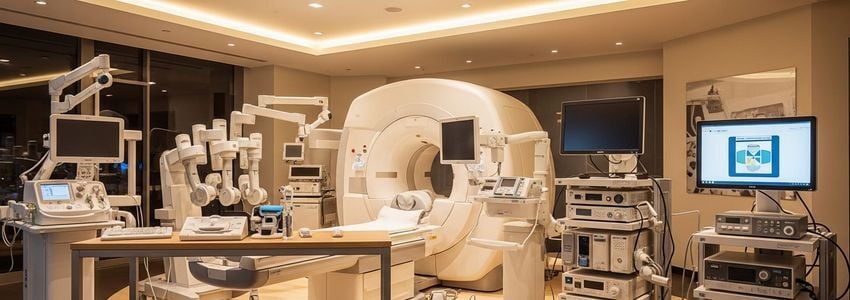
Virtually any medical device or piece of healthcare equipment can be financed, provided it has a useful life of at least 2-3 years and meets a lender's minimum value requirements. Here is a representative list of devices commonly financed by healthcare businesses:
- Diagnostic Imaging Equipment: MRI machines, CT scanners, X-ray equipment, ultrasound systems, PET scanners, mammography units, fluoroscopy systems
- Surgical Equipment: Robotic surgical systems (da Vinci and similar), laparoscopic equipment, electrosurgical units, surgical lasers, anesthesia machines
- Dental Equipment: Cone beam CT (CBCT) units, digital X-ray systems, dental chairs and delivery systems, intraoral scanners, CAD/CAM milling machines
- Cardiology Equipment: Echocardiogram machines, cardiac monitors, stress testing equipment, Holter monitors, defibrillators
- Ophthalmology Equipment: Optical coherence tomography (OCT) systems, slit lamps, phoropters, laser vision correction systems
- Physical Therapy and Rehabilitation Equipment: Ultrasound therapy units, electrical stimulation devices, traction equipment, isokinetic testing systems
- Laboratory Equipment: Automated analyzers, centrifuges, PCR machines, hematology analyzers, chemistry analyzers
- Endoscopy Equipment: Video endoscopes, bronchoscopes, colonoscopes, endoscopy towers
- Patient Monitoring Systems: Vital signs monitors, pulse oximeters, ambulatory monitoring systems, telemetry systems
- Radiation Oncology Equipment: Linear accelerators, radiation therapy planning systems, brachytherapy equipment
- Dermatology Equipment: Lasers for skin treatment, phototherapy units, dermoscopy systems
- Veterinary Medical Devices: Veterinary ultrasounds, digital radiography, anesthesia machines, surgical lasers
How Medical Device Financing Works
Understanding the mechanics of medical device financing helps you make informed decisions and avoid costly mistakes. Here is how the process typically works from start to finish:
Step 1: Identify Your Equipment Need
Before applying for financing, you should have a clear picture of the device you need, its cost, and how it fits into your practice's financial plan. Get quotes from multiple vendors and understand the total cost of acquisition, including delivery, installation, training, and any software or service agreements.
Step 2: Assess Your Financial Position
Lenders will evaluate your creditworthiness, revenue, and business history. Pull your business credit report, gather recent bank statements and financial statements, and calculate your debt service coverage ratio (DSCR) - the measure of your ability to service debt from operating income.
Step 3: Choose a Financing Type
Based on your goals, cash flow, and the type of equipment, select the financing structure that best fits your situation. If you want long-term ownership and tax benefits, an equipment loan makes sense. If you prioritize flexibility and technology refresh cycles, a lease may be better.
Step 4: Apply with a Lender
Submit your application along with required documentation. The application process varies by lender - alternative lenders may approve you in hours based on bank statements and basic business information, while traditional banks and SBA lenders require full financial packages including tax returns, balance sheets, and income statements.
Step 5: Receive Approval and Review Terms
Once approved, carefully review the loan or lease agreement. Pay close attention to the interest rate (or lease factor), total cost of financing, prepayment penalties, end-of-term options, and any maintenance or insurance requirements.
Step 6: Fund and Acquire the Equipment
After signing, the lender funds the purchase - either directly to the vendor or to your business account. The equipment is delivered, installed, and placed into service.
Step 7: Begin Repayment
Monthly payments begin according to your schedule. Most equipment loans and leases have fixed monthly payments, making budgeting straightforward.
Medical Device Financing: Key Statistics
$600B+
Global medical device market value (2026)
80%
Of healthcare equipment acquired through financing
3.5-15%
Typical annual interest rates for qualified borrowers
24-72 hrs
Typical funding time with alternative lenders
$10K-$5M
Typical financing range for medical devices
2-7 years
Typical repayment terms for equipment loans
Qualification Requirements for Medical Device Financing
Qualification criteria vary significantly depending on the type of financing and the lender. Here is what most lenders look for when evaluating medical device financing applications:
Credit Score Requirements
For traditional equipment loans and SBA programs, a personal credit score of 650-700 or higher is typically preferred. Some equipment-focused lenders will work with scores as low as 600, particularly if the practice has strong revenue and established history. Bad credit business loans are available for those with lower scores, though at higher rates.
Business credit is also evaluated for established practices. Lenders may check your Dun & Bradstreet PAYDEX score, Experian Business Score, or Equifax Business Credit Score.
Time in Business
Most traditional equipment lenders require at least 2 years of operating history. Some alternative lenders will work with practices that have been operating for as little as 6-12 months, though newer businesses often face higher rates and may need to provide additional collateral or a stronger personal credit profile.
Annual Revenue
Lenders want to see sufficient revenue to service the debt. A common guideline is that your annual revenue should be at least 2-3 times the loan amount. For a $500,000 MRI machine, a lender might want to see $1 million or more in annual practice revenue.
Debt Service Coverage Ratio (DSCR)
The DSCR measures your ability to cover debt payments from operating income. A DSCR of 1.25 or higher is generally required - meaning your operating income is 25% more than your total debt obligations. Strong cash flow is often the single most important factor in medical device financing decisions.
Down Payment
Many medical device financing programs require little to no down payment, particularly through equipment financing structures where the device serves as collateral. Some programs offer 100% equipment financing with $0 down. For SBA loans and larger amounts, a 10-20% down payment may be expected.
Financial Documentation
You will typically need to provide:
- Last 3-6 months of business bank statements
- Last 2 years of business tax returns (for established practices)
- Year-to-date profit and loss statement
- Business balance sheet
- Equipment invoice or quote
- Government-issued photo ID
- Basic business information (EIN, business license, articles of incorporation)
Medical Device Financing Rates, Terms, and Costs
The cost of medical device financing depends on several factors including your creditworthiness, business financials, the type of financing, the lender, and current market interest rate conditions.
Interest Rates
Interest rates for medical device financing vary significantly:
- SBA Loans: Typically 7-10% APR, among the lowest available for small business financing
- Traditional Bank Equipment Loans: 5-12% APR for qualified borrowers
- Alternative Lender Equipment Loans: 8-25% APR depending on credit and qualifications
- Equipment Leases: Implicit rates vary widely; compare total cost of payments vs. purchase price
- Short-Term Business Loans: Factor rates of 1.1-1.5 or higher; higher effective APR
According to data from The Wall Street Journal, healthcare equipment lending rates have remained relatively stable compared to broader commercial lending markets, partly due to the high-quality collateral that medical devices represent.
Loan Terms
Equipment loan terms for medical devices typically range from 24 to 84 months (2-7 years). Longer terms mean lower monthly payments but higher total interest cost. SBA loans can extend up to 10 years for equipment. Leases commonly run 36-60 months.
Fees to Watch For
- Origination fees (0.5% - 3% of loan amount)
- Documentation fees
- Prepayment penalties (some lenders charge these if you pay off early)
- Maintenance and insurance requirements (built into some lease structures)
- End-of-lease purchase option fees
Benefits of Financing Medical Devices
There are compelling reasons why the majority of healthcare organizations finance rather than purchase medical equipment outright:
Preserve Working Capital
Paying $500,000 or more out of pocket for an MRI machine would severely deplete operational reserves. Financing preserves cash for payroll, supplies, marketing, and unexpected expenses - maintaining the financial flexibility that every practice needs.
Access Better Technology Faster
Technology improvements in medical devices move quickly. Financing allows practices to acquire the latest equipment now rather than saving for years, giving patients access to superior care and giving practices a competitive advantage.
Tax Advantages
Business equipment financing offers potential tax benefits. Equipment owned through a loan may be eligible for depreciation deductions. Lease payments may be deductible as a business expense. Note that tax treatment varies based on specific circumstances - consult a qualified tax professional for guidance specific to your situation.
Predictable Monthly Payments
Fixed monthly payments make budgeting straightforward. Unlike variable costs, your equipment payment stays constant, making it easier to forecast cash flow and manage finances.
Build Business Credit
Regular, on-time equipment loan payments help build and strengthen your business credit profile, making it easier to access additional financing in the future at better rates.
Technology Refresh Options
Equipment leases often include end-of-term upgrade options, allowing practices to replace aging devices with newer models without the challenge of selling or disposing of old equipment.
Matching Revenue to Expense
When you finance the equipment that generates revenue, you align the expense to the income stream it creates. The MRI machine you finance is paid for by the scans it enables - a natural financial structure.
Get Medical Device Financing Today
Fast approvals, flexible terms, and funding for all types of medical equipment. Apply in minutes.
Apply NowHow Crestmont Capital Helps Healthcare Businesses Finance Medical Devices
Crestmont Capital is a leading national business lender specializing in fast, flexible financing solutions for businesses across all industries, including healthcare. As the #1 business lender in the U.S., Crestmont Capital has helped thousands of healthcare practices acquire the medical devices they need to serve patients and grow their operations.
Why Choose Crestmont Capital for Medical Device Financing
- Fast Approvals: Apply today and receive a decision in hours, not weeks. Many healthcare businesses receive same-day or next-day approval with funding in as little as 24-48 hours.
- Flexible Qualification: We work with a wide range of credit profiles. Even if traditional lenders have turned you down, Crestmont Capital has options for qualifying healthcare businesses.
- Multiple Product Options: From equipment financing to lines of credit to small business loans, we offer the full range of financing solutions to match your specific needs.
- No Prepayment Penalties: Pay off your financing early without penalty, saving on interest costs.
- High Approval Limits: Financing available from $10,000 up to $5 million or more for qualified healthcare businesses.
- Dedicated Support: Our team of business financing specialists understands the healthcare industry and can guide you through the process from application to funding.
Types of Healthcare Businesses Crestmont Capital Serves
Crestmont Capital works with healthcare practices and medical businesses of all types, including:
- Physician practices (primary care, specialty care, concierge medicine)
- Dental practices and dental support organizations (DSOs)
- Imaging and radiology centers
- Surgical centers and ambulatory surgery centers (ASCs)
- Physical therapy and rehabilitation practices
- Chiropractic practices
- Optometry and ophthalmology practices
- Veterinary clinics and hospitals
- Home health agencies
- Medical spas and aesthetics practices
- Mental health and behavioral health practices
- Urgent care centers
- Medical laboratories
How to Apply for Medical Device Financing
The application process with Crestmont Capital is simple and fast. Here is what to expect:
- Submit a quick application online: Visit offers.crestmontcapital.com/apply-now and complete our short application form. It takes less than 10 minutes.
- Provide basic documentation: You will need recent bank statements, basic business information, and the equipment invoice or quote.
- Receive your offer: A Crestmont Capital specialist will review your application and present you with financing options tailored to your situation.
- Review and accept terms: Review the financing terms carefully, ask questions, and accept the offer that works best for your practice.
- Get funded: Once documents are signed, funds are transferred to purchase your medical device - often within 24-48 hours.
For larger transactions or SBA loan inquiries, our team can guide you through the more detailed documentation process and help you identify the optimal financing structure.
Next Steps
Ready to Finance Your Medical Equipment? Follow These Steps:
- Identify your equipment need - Get quotes from vendors and confirm the total cost of acquisition.
- Review your financials - Pull your credit report, gather bank statements and tax returns, and calculate your DSCR.
- Choose your financing type - Decide between equipment loans, leases, lines of credit, or SBA financing based on your goals.
- Apply with Crestmont Capital - Submit your application online at offers.crestmontcapital.com/apply-now for same-day consideration.
- Compare offers carefully - Review interest rates, total cost, terms, and any fees before accepting any financing offer.
- Accept and fund - Sign your documents and receive funding - often in 24-48 hours.
- Put your equipment to work - Deploy your new medical device to generate revenue and serve more patients.
If you are not yet ready to apply but want to explore your options, fast business loans and same-day business loans are also available for qualifying healthcare businesses that need capital quickly.
For more information on equipment financing and business loans, visit the SBA's funding resources for small businesses and the U.S. Census Bureau's Survey of Business Owners for data on healthcare business financing trends.
Frequently Asked Questions About Medical Device Financing
What is the minimum credit score needed for medical device financing?
Most equipment lenders prefer a personal credit score of 650 or higher. Some alternative lenders will work with scores as low as 580-620, especially if the practice has strong revenue. SBA loans generally require 650+ for the primary SBA programs. Higher credit scores unlock better rates and terms.
How much can I borrow for medical device financing?
Financing amounts typically range from $10,000 for smaller devices to $5 million or more for major systems like MRI machines or surgical robots. The amount you qualify for depends on your revenue, creditworthiness, and the appraised value of the equipment being financed.
How long does it take to get approved for medical device financing?
With alternative lenders like Crestmont Capital, approval can happen in hours and funding in 24-48 hours. Traditional bank loans may take 2-4 weeks. SBA loans typically take 30-90 days from application to funding due to the more detailed underwriting process.
Is a down payment required for medical device financing?
Many equipment financing programs require little or no down payment, with the device itself serving as collateral. Some programs offer 100% financing with $0 down for qualified applicants. SBA loans and traditional bank loans may require a 10-20% down payment for larger amounts.
Can a startup medical practice qualify for device financing?
Yes, though options may be more limited. Some equipment lenders work with practices that have been operating for 6-12 months. Startups may need a stronger personal credit profile (700+) and may face higher rates. Vendor financing and certain SBA microloan programs can also support early-stage practices.
Can I finance used medical devices?
Yes. Many equipment lenders finance refurbished or used medical devices, provided the device meets age and condition standards. Used equipment typically has lower purchase prices, which can make financing even more accessible. Lenders will assess the appraised value of the used device when determining loan amounts.
What is the difference between equipment financing and equipment leasing for medical devices?
With equipment financing (a loan), you own the device and build equity over time. With leasing, you pay for the right to use the equipment but do not own it - though you often have an option to purchase at the end of the lease. Loans are better for long-term ownership; leases are better for equipment you expect to upgrade regularly.
What interest rates can I expect for medical device financing?
Interest rates range from approximately 3.5-10% for SBA loans and top-tier bank financing, 8-18% for mid-tier alternative lenders, and up to 25%+ for high-risk or startup scenarios. Your specific rate depends on credit score, business revenue, time in business, and the amount financed.
Can medical device financing be used to upgrade existing equipment?
Yes. Equipment refinancing allows practices to use the equity in existing devices to fund upgrades. Sale-leaseback arrangements let you sell equipment to a lender and then lease it back - freeing up capital while retaining use of the equipment. These structures are particularly useful for technology refresh cycles.
Do I need to have perfect credit to get medical device financing?
No. While better credit leads to better rates, there are financing options for healthcare businesses with less-than-perfect credit. Alternative lenders evaluate multiple factors beyond credit score, including revenue trends, cash flow, and business longevity. Even practices with credit challenges may qualify for some financing products.
Are there financing options for very expensive devices like MRI machines or robotic surgery systems?
Yes. SBA 504 loans, traditional bank equipment loans, and specialized healthcare financing lenders offer programs for large-ticket medical devices. For devices in the $1-5 million range, lenders will require detailed financial documentation, strong practice revenue, and often a down payment of 10-20%.
What happens if the medical device becomes obsolete before the loan is paid off?
This is a risk with equipment loans. If technology advances rapidly, you may still owe money on a device that is no longer optimal. One way to mitigate this is through leasing, which shifts technology risk to the lessor, or by choosing shorter loan terms. Refinancing or upgrading with a new loan while trading in old equipment is also possible in some cases.
Can I finance medical devices for a veterinary practice?
Absolutely. Veterinary practices can finance the same types of medical devices as human medicine practices - ultrasounds, digital radiography, surgical lasers, anesthesia equipment, and more. Lenders treat veterinary equipment financing much the same as other medical device financing, evaluating practice revenue, credit, and time in business.
How does medical device financing affect my practice's cash flow?
Equipment financing replaces a large one-time capital outflow with predictable monthly payments. This is generally positive for cash flow - you preserve working capital, maintain operational flexibility, and align the cost of the device with the revenue it generates. The key is ensuring the monthly payment is sustainable given your practice's current revenue and expense structure.
Can I apply for medical device financing online?
Yes. Crestmont Capital and most alternative lenders offer fully online application processes. You can apply, upload documents, receive approval, and sign documents entirely online. Funding is typically deposited via ACH transfer. The online process is faster and more convenient than visiting a bank branch.
Ready to Grow Your Healthcare Business?
Get fast, flexible medical device financing from the #1 business lender in the U.S. No obligation - apply in minutes.
Apply NowDisclaimer: The information provided in this article is for general educational purposes only and is not financial, legal, or tax advice. Funding terms, qualifications, and product availability may vary and are subject to change without notice. Crestmont Capital does not guarantee approval, rates, or specific outcomes. For personalized information about your business funding options, contact our team directly.








