
 (800) 949-0401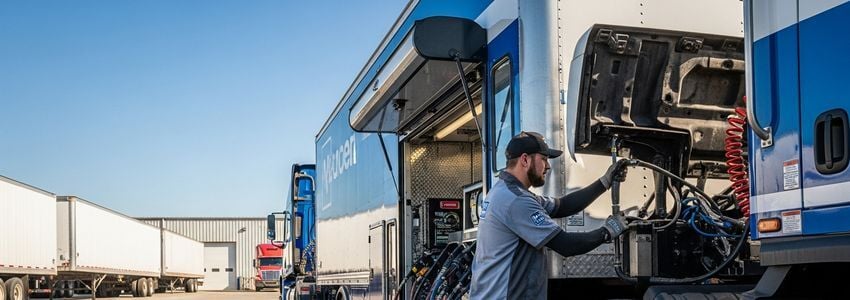
Lube Truck Financing: Complete Guide for Business Owners
For businesses that depend on keeping vehicles and heavy machinery running, a mobile lube truck is an indispensable asset. It brings essential maintenance services directly to the job site, minimizing downtime and maximizing productivity. Securing the right lube truck financing for business growth is a critical step, enabling you to acquire this vital equipment without depleting your working capital. This comprehensive guide will walk you through every aspect of the financing process, from understanding your options to getting approved.
In This Article
- What Is Lube Truck Financing?
- Types of Lube Trucks You Can Finance
- How Lube Truck Financing Works
- Lube Truck Financing Options
- Who Qualifies for Lube Truck Financing?
- Typical Costs, Loan Amounts, and Rates
- How Crestmont Capital Helps Lube Truck Businesses
- Real-World Scenarios: Lube Truck Financing in Action
- Tips for Getting Approved
- Frequently Asked Questions
- How to Get Started
- Conclusion
What Is Lube Truck Financing?
Lube truck financing is a specialized form of business funding designed specifically for the acquisition of new or used mobile lubrication trucks. Instead of paying the full purchase price upfront-which can range from $50,000 to over $250,000-businesses can use a loan or lease to spread the cost over a set period. This makes acquiring essential equipment manageable and affordable, preserving cash flow for other critical business operations like payroll, marketing, and inventory.
This type of financing is a subset of equipment financing, where the lube truck itself serves as the primary collateral for the loan. This is a significant advantage for many business owners. Because the loan is secured by a tangible asset, lenders often have more flexible qualification criteria compared to unsecured business loans. This makes it an accessible option for a wide range of companies, from established construction firms and fleet operators to new mobile maintenance startups.
Who uses lube truck financing? A diverse group of industries rely on these mobile workshops:
- Construction Companies: To perform on-site preventive maintenance for bulldozers, excavators, and other heavy machinery.
- Fleet Management Businesses: To service delivery vans, long-haul trucks, and service vehicles at their home depots.
- Agricultural Operations: To maintain tractors, combines, and other farm equipment in the field, preventing costly delays during planting or harvest seasons.
- Mining and Quarrying Operations: To service heavy-duty equipment in remote and harsh environments.
- Independent Mobile Lube Service Providers: Entrepreneurs starting or expanding a business that offers on-site oil changes and fluid services to commercial and consumer clients.
Ultimately, lube truck financing for business is a strategic financial tool. It empowers companies to invest in efficiency-boosting assets, expand their service offerings, and maintain a competitive edge without compromising their financial stability. By converting a large capital expenditure into a predictable monthly payment, businesses can better manage their budgets and allocate resources for sustainable growth.
Types of Lube Trucks You Can Finance
Lube trucks are not one-size-fits-all. They are highly specialized vehicles customized to meet the specific demands of different industries and applications. Understanding the various types available is crucial when seeking financing, as the truck's configuration, size, and features will directly impact its cost and the structure of your financing agreement. Lenders like Crestmont Capital are experienced in funding all classes of commercial vehicles, including the full spectrum of lube trucks.
Here are the primary types of lube trucks you can finance:
Enclosed Body Lube Trucks
These are the most common and versatile type of lube truck. They feature a fully enclosed service body that protects equipment, tools, and fluids from the elements. This design is ideal for businesses operating in regions with harsh weather conditions, as it prevents contamination of lubricants and safeguards expensive pumps, reels, and meters from rain, snow, and dust. The enclosed body also provides enhanced security for tools and inventory. They are popular in construction, mining, and general fleet maintenance where reliability and equipment protection are paramount.
Open Body Lube Trucks
Open body lube trucks, often built on a flatbed chassis, offer easier access to tanks, reels, and equipment. This configuration can speed up service times and simplify maintenance of the truck's own systems. They are typically more cost-effective to build and purchase than enclosed models. Open body designs are well-suited for operations in milder climates or for applications where speed and accessibility are more critical than protection from the elements, such as in agriculture or some municipal fleet services.
Lube Skids and Trailers
For businesses that need flexibility, a lube skid or trailer can be an excellent option. A lube skid is a self-contained unit with tanks, pumps, and reels mounted on a single frame. This skid can be placed in the bed of a standard work truck or on a flatbed, allowing the vehicle to be used for other purposes when not performing lubrication services. Lube trailers serve a similar function but are towed behind a vehicle. These options are often more affordable upfront and provide great versatility for companies that don't require a dedicated, single-purpose lube truck.
Custom-Built Lube Trucks
Many businesses have unique needs that off-the-shelf models cannot meet. Custom-built lube trucks are designed from the ground up to match a company's specific workflow. You can specify the number and size of fluid tanks (for new oil, used oil, coolant, grease, etc.), the type and length of hoses and reels, the power source for pumps (air or hydraulic), and the inclusion of additional features like welders, air compressors, or specialized tool storage. While custom builds are the most expensive option, they provide unparalleled efficiency and capability, making them a wise investment for high-volume or highly specialized operations. Financing is readily available for these bespoke vehicles, with the loan covering the entire cost of the chassis and the custom upfitting.
Key Point: Whether you're purchasing a new, custom-built vehicle or a reliable used model, financing can be structured to cover the full cost of the truck and its specialized equipment. This ensures you get the exact asset you need to operate effectively.
How Lube Truck Financing Works
Navigating the financing process for a specialized asset like a lube truck can seem complex, but it follows a straightforward path. Understanding these steps can help you prepare your business for a smooth and successful application. At Crestmont Capital, we've streamlined this process to get you the funding you need with minimal hassle.
Here is a step-by-step breakdown of how lube truck financing typically works:
Step 1: Determine Your Business Needs
Before you apply, the first step is to identify the right lube truck for your operations. Consider the types of jobs you will be performing, the volume of fluids you need to carry, and the environment you will be working in. Research different manufacturers and models, and decide whether a new or used truck is the better fit for your budget and goals. Obtain a detailed quote or a bill of sale from the dealer or seller, as this document will be a key part of your financing application.
Step 2: Complete a Simple Application
The next step is to fill out a financing application. Modern lenders like Crestmont Capital offer a simple, one-page online application that can be completed in minutes. You will need to provide basic information about your business, such as its legal name, address, years in operation, and annual revenue. You will also need to provide personal information for the business owner(s). The application will also ask for details about the equipment you wish to finance, including its cost, age, and the seller's information.
Step 3: Submit Financial Documentation
The required documentation depends on the loan amount and the lender's policies. For smaller financing amounts (typically under $250,000), many lenders offer an "application-only" program that requires minimal paperwork. You may only need to submit the application and the equipment quote. For larger loan requests or for newer businesses, you might be asked to provide additional documents, such as:
- Recent business bank statements (3-6 months)
- Business and personal tax returns
- A detailed business plan (especially for startups)
- Financial statements like a profit and loss statement and balance sheet
Step 4: Underwriting and Credit Review
Once your application and documents are submitted, the lender's underwriting team will review your file. They will assess your business's financial health, credit history, and ability to repay the loan. A key part of this process is evaluating the "Five C's of Credit":
- Character: Your credit history and business reputation.
- Capacity: Your cash flow and ability to make monthly payments.
- Capital: The amount of money you have invested in the business.
- Collateral: The lube truck itself, which secures the loan.
- Conditions: The purpose of the loan and the economic climate.
Because the lube truck serves as collateral, lenders can often be more flexible on other factors, making approval more accessible than with other types of business loans.
Step 5: Approval and Funding
If your application is approved, the lender will present you with a formal offer outlining the loan amount, interest rate, term length, and monthly payment. Once you review and accept the terms, you will sign the official loan documents. The lender will then work directly with the truck seller to disburse the funds. This final step is typically very fast. The seller receives payment, and you can take possession of your new lube truck and put it to work for your business.
Lube Truck Financing Options
When it comes to funding your lube truck, you have several different financial products to choose from. Each option has distinct features related to ownership, tax treatment, and payment structure. Selecting the right one depends on your business's financial situation, long-term goals, and accounting preferences. Here's a detailed comparison of the most common lube truck financing options available through Crestmont Capital.
Equipment Financing Agreement (EFA)
An Equipment Financing Agreement, often simply called an equipment loan, is the most straightforward path to ownership. With an EFA, you borrow the full purchase price of the lube truck and repay it, plus interest, over a predetermined term. At the end of the term, you own the truck free and clear. This is an excellent choice for businesses that plan to use the truck for many years and want to build equity in their assets.
- Ownership: You are the owner of the truck from day one.
- Payments: Fixed monthly payments make budgeting simple and predictable.
- Tax Benefits: You may be able to take advantage of tax deductions like Section 179, which allows you to deduct the full purchase price in the year it's placed into service. You can also depreciate the asset over time. (Consult a tax professional for advice specific to your business).
Equipment Leasing
Leasing a lube truck is similar to renting it for an extended period. You make regular payments for the use of the equipment, but you don't own it. Leasing often results in lower monthly payments compared to a loan and may require less money down. It's a great option for businesses that want to preserve capital or regularly upgrade to the newest equipment. There are two main types of leases:
1. Capital Lease (or Finance Lease)
A capital lease functions very much like a loan. It's structured for businesses that intend to purchase the equipment at the end of the lease term. The lease terms often cover the majority of the truck's useful life. At the end of the term, you typically have the option to buy the truck for a nominal amount, such as $1. This is often referred to as a "$1 Buyout Lease." For tax purposes, a capital lease is treated as a purchase.
2. Operating Lease
An operating lease is a true rental agreement. The lease terms are shorter, and the monthly payments are lower because you are only paying for the depreciation of the truck during the lease period. At the end of the term, you can return the truck, renew the lease, or purchase it at its fair market value (FMV). This is ideal for companies that want to avoid the risks of ownership and always have access to modern, reliable equipment.
For a deeper dive into leasing, explore our guide on equipment leasing options.
SBA Loans
Loans guaranteed by the U.S. Small Business Administration (SBA) can be another excellent way to finance a lube truck. SBA loans, such as the popular 7(a) and 504 programs, are known for their long repayment terms and competitive interest rates. While the application process can be more intensive and take longer than other options, the favorable terms can make them a worthwhile pursuit for qualified businesses. They are particularly well-suited for established companies with strong financial records.
Comparison of Financing Options
| Feature | Equipment Loan (EFA) | Capital Lease | Operating Lease | SBA Loan |
|---|---|---|---|---|
| Ownership | Immediate ownership | Ownership at end of term | Lender retains ownership | Immediate ownership |
| Monthly Payment | Higher | Higher (similar to loan) | Lower | Lowest (due to long terms) |
| End-of-Term Option | Own the truck outright | Purchase for a nominal fee ($1) | Return, renew, or buy at FMV | Own the truck outright |
| Tax Treatment | Deduct interest and depreciation | Treated as a purchase; deduct interest/depreciation | Deduct full monthly payment as operating expense | Deduct interest and depreciation |
| Best For | Long-term use and building equity | Businesses wanting ownership with lease structure | Preserving cash and frequent upgrades | Strong credit businesses seeking lowest rates |
By the Numbers
Lube Truck Industry - Key Statistics
$41.67B
The estimated market size of the U.S. Commercial Vehicle Fleet Maintenance industry in 2024, highlighting the massive demand for services lube trucks provide.
2.97%
The projected Compound Annual Growth Rate (CAGR) for the fleet maintenance market through 2029, indicating steady and sustained industry growth.
70%
Approximately 70% of commercial fleets outsource at least some of their maintenance, creating a large and reliable customer base for mobile lube services.
$250K+
The cost of a new, custom-built lube truck can exceed $250,000, making financing an essential tool for acquisition for most businesses.

Who Qualifies for Lube Truck Financing?
Lenders evaluate several factors to determine a business's eligibility for lube truck financing. While each lender has its own specific criteria, they generally focus on the overall financial health and stability of the applicant's business. The good news is that because the truck itself secures the loan, the qualification requirements are often more flexible than for other types of unsecured business funding. Here are the key factors that underwriters at Crestmont Capital and other financial institutions consider.
Credit Score
A personal and business credit score is a primary indicator of your financial responsibility. Most lenders prefer to see a personal FICO score of 620 or higher. A stronger credit score (700+) will typically qualify you for better interest rates and more favorable terms. However, options are still available for business owners with lower credit scores. Lenders may approve applicants with fair or poor credit, but they might require a larger down payment or offer a higher interest rate to offset the perceived risk.
Time in Business
The length of time your business has been operational is a measure of its stability. Most lenders, including those offering small business loans, look for a minimum of two years in business. An established company with a proven track record of revenue and profitability is seen as a lower risk. That said, financing for startups and businesses with less than two years of history is possible. These applicants will need to present a very strong business plan, have excellent personal credit, and may be required to make a more substantial down payment.
Annual Revenue
Your business's annual revenue demonstrates its ability to generate enough cash flow to cover the new monthly loan payment. While there isn't a universal minimum revenue requirement, lenders want to see a healthy and consistent income stream. They will analyze your bank statements and tax returns to verify your revenue and assess your debt-to-income ratio. A business with strong, verifiable revenue is a much more attractive candidate for financing.
Industry Experience
For specialized equipment like a lube truck, lenders may also consider the business owner's experience in the industry. If you are starting a new mobile lube business but have years of experience as a fleet mechanic or manager, this can significantly strengthen your application. Your relevant experience demonstrates that you have the knowledge to operate the business successfully and generate a return on the investment.
Collateral
As mentioned, the lube truck itself is the primary collateral for the financing. This is a major advantage. If the borrower defaults on the payments, the lender can repossess and sell the truck to recoup their losses. This secured nature of the loan reduces the lender's risk and is the main reason why equipment financing is so accessible. In some cases, particularly for weaker applications, a lender might ask for an additional down payment or a personal guarantee to further secure the loan.
Ready to Finance Your Lube Truck?
Our simple application takes just minutes. See your personalized financing options today.
Apply Now →Typical Costs, Loan Amounts, and Rates
Understanding the financial components of a lube truck loan is essential for making an informed decision. The total cost of financing is determined by several interconnected factors: the price of the truck, the loan amount, the interest rate, the term length, and any associated fees. Let's break down what you can expect.
Lube Truck Costs
The purchase price of the lube truck is the starting point. Costs can vary dramatically based on several factors:
- New vs. Used: A brand-new, custom-upfitted lube truck on a new chassis can cost anywhere from $150,000 to $250,000 or more. A high-quality used lube truck can be a more budget-friendly option, with prices typically ranging from $50,000 to $125,000, depending on its age, mileage, and condition.
- Size and Capacity: Larger trucks with greater fluid capacity and more complex systems will naturally cost more.
- Features and Customization: Additional features like enclosed bodies, specialized fluid dispensing systems, welders, or high-end compressors will increase the overall price.
Loan Amounts
Most lenders will finance up to 100% of the truck's value for well-qualified buyers. This means you can potentially acquire the equipment with no money out of pocket. Loan amounts directly correspond to the cost of the truck, so they can range from $50,000 for a used model to over $250,000 for a top-of-the-line new build. Some financing agreements can also roll in the costs of taxes, delivery, and other initial expenses.
Interest Rates
Interest rates are the primary cost of borrowing money and are influenced by your credit profile, time in business, and the overall market conditions. As of late 2023 and early 2024, business owners can expect the following ranges:
- Excellent Credit (750+ FICO, 5+ years in business): 6% - 9%
- Good Credit (680-749 FICO, 2+ years in business): 9% - 13%
- Fair Credit (620-679 FICO, 2+ years in business): 13% - 20%
- Challenged Credit or Startups: 20% and up
These are general estimates. The final rate you receive will depend on a complete review of your application. According to sources like Forbes Advisor, rates on equipment loans are often competitive because the loan is secured by the asset itself.
Loan Terms
The loan term is the length of time you have to repay the loan. For lube truck financing, terms typically range from 24 to 72 months (2 to 6 years). Longer terms will result in lower monthly payments, but you will pay more in total interest over the life of the loan. Shorter terms mean higher monthly payments but less overall interest paid. Choosing the right term involves balancing your monthly cash flow with the goal of minimizing total borrowing costs.
Down Payment
While 100% financing is available, some situations may require a down payment. Businesses with lower credit scores, limited operating history, or those purchasing older equipment may be asked to put down 10% to 20% of the purchase price. A down payment reduces the lender's risk and demonstrates your commitment to the investment, which can sometimes help you secure a better interest rate.
How Crestmont Capital Helps Lube Truck Businesses
Choosing the right financing partner is just as important as choosing the right lube truck. Crestmont Capital specializes in commercial truck financing and understands the unique needs of businesses in the fleet maintenance, construction, and agricultural industries. We are not just a lender; we are a strategic partner dedicated to helping your business grow.
Here’s how Crestmont Capital provides a superior financing experience:
Expertise in Specialized Equipment
We understand that a lube truck is not just a vehicle-it's a complex piece of revenue-generating machinery. Our team has years of experience financing specialized work trucks, from lube trucks and boom trucks to service vehicles of all types. This industry knowledge allows us to understand the value of the asset and structure financing that makes sense for your specific business model. We know the right questions to ask to ensure your financing package covers everything you need.
Fast and Streamlined Process
We know that in business, time is money. A lengthy, complicated application process can cause you to miss out on a great deal or delay the start of a profitable contract. That's why we have designed our process for maximum speed and efficiency. Our simple online application can be completed in minutes, and for many applicants, we can provide a credit decision in just a few hours. Funding can often be completed within 24 to 48 hours, getting you the keys to your truck faster.
Flexible Financing Solutions
Every business is unique, and a one-size-fits-all approach to financing rarely works. We offer a wide range of financing products, including equipment loans, capital leases, and operating leases. Our experienced financing specialists will work with you to understand your goals and cash flow, then tailor a solution that fits your budget. We offer flexible terms, seasonal payment options for businesses with fluctuating revenue, and programs for both new and used trucks.
Financing for All Credit Profiles
At Crestmont Capital, we believe that a credit score doesn't tell the whole story. We look beyond the numbers to understand your business's potential. While strong credit will always secure the best rates, we have robust financing programs for businesses with less-than-perfect credit, as well as for startups with a solid business plan. Our goal is to find a path to "yes" for as many qualified business owners as possible.
Key Point: Partnering with an experienced lender like Crestmont Capital means you get more than just capital. You get a team that understands your industry and is committed to structuring a financial solution that supports your long-term success.
Partner with the Lube Truck Financing Experts
Let our dedicated team find the perfect financing solution to fuel your business growth.
Apply Now →Real-World Scenarios: Lube Truck Financing in Action
To better illustrate how lube truck financing for business works in practice, let's explore a few hypothetical but realistic scenarios. These examples showcase how different types of businesses can leverage financing to achieve their specific goals.
Scenario 1: The Expanding Mobile Maintenance Startup
- Business: "On-Site Fleet Care," a startup with 18 months in business.
- Owner: Maria, a former diesel mechanic with 10 years of experience.
- Challenge: Maria's business is growing rapidly, and she's turning down work because her single, older service van can't keep up with demand. She needs a dedicated, fully-equipped lube truck to service larger commercial clients.
- Goal: Finance a new, custom-built enclosed lube truck costing $180,000.
- Financing Solution: Due to her business being less than two years old, some traditional banks are hesitant. However, Maria works with Crestmont Capital, which values her extensive industry experience and the strong cash flow shown in her 18 months of bank statements. She is approved for an equipment financing agreement. To mitigate the risk of a newer business, she agrees to a 15% down payment.
- Outcome: Maria secures a 60-month loan for the remaining balance. The new truck allows her to take on three major fleet accounts, tripling her monthly revenue within six months. The predictable loan payment is easily covered by the new income, and she's on track to build significant equity in a valuable asset.
Scenario 2: The Established Construction Company
- Business: "Bedrock Construction," a company with 15 years in business and a fleet of 30 pieces of heavy machinery.
- Owner: David, the fleet manager.
- Challenge: Bedrock Construction is tired of the downtime and high costs associated with transporting their excavators and bulldozers to an off-site facility for routine maintenance.
- Goal: Acquire a used, open-body lube truck for $85,000 to bring all preventive maintenance in-house and on-site.
- Financing Solution: With a long, profitable history and excellent business credit, Bedrock Construction is a prime candidate for financing. They apply with Crestmont Capital and are approved for 100% financing with no money down. They choose a 48-month capital lease with a $1 buyout option. This allows them to treat it like a purchase for tax purposes and take advantage of the Section 179 deduction.
- Outcome: The company immediately reduces its equipment downtime by an average of 10 hours per week. The monthly lease payment is significantly less than what they were previously spending on third-party maintenance and transport. They gain full control over their maintenance schedule and improve the lifespan of their expensive machinery.
Scenario 3: The Large Agricultural Operation
- Business: "Green Valley Farms," a large farming co-op with seasonal revenue streams.
- Challenge: During the critical planting and harvest seasons, a single downed tractor can cost thousands of dollars per day. They need a way to perform rapid, in-field fluid changes and maintenance.
- Goal: Purchase a lube trailer for $65,000 that can be pulled by one of their existing farm trucks.
- Financing Solution: Green Valley Farms has strong financials but experiences significant cash flow fluctuations throughout the year. They need a payment plan that reflects this. Crestmont Capital structures a financing plan with a seasonal payment schedule. The plan requires higher payments during the profitable post-harvest months and lower, interest-only payments during the slower winter months.
- Outcome: The farm gets the essential equipment it needs without straining its cash flow during the off-season. The ability to perform in-field maintenance drastically reduces downtime during their busiest periods, directly protecting their revenue and crop yields.
Tips for Getting Approved
Securing approval for lube truck financing is a crucial step toward growing your business. While lenders have made the process more accessible than ever, taking a proactive approach can significantly improve your chances of getting a quick "yes" with the best possible terms. Here are some expert tips to help you prepare for a successful application.
1. Know Your Credit Score
Before you apply, pull your personal and business credit reports. Review them for any errors or inaccuracies that could be dragging down your score. If you find mistakes, dispute them with the credit bureaus. Knowing your score in advance allows you to set realistic expectations and address any potential red flags before a lender sees them. Resources from the SBA can guide you on how to check and manage your business credit.
2. Organize Your Financial Documents
Having your paperwork in order demonstrates professionalism and makes the underwriting process much faster. Gather key documents ahead of time, including:
- The last 3-6 months of business bank statements.
- Your two most recent business and personal tax returns.
- A copy of your driver's license.
- A detailed invoice or bill of sale for the lube truck you want to purchase.
Even if you're applying for an "application-only" program, having these documents ready can speed up the process if the underwriter requests them.
3. Create a Strong Business Plan (Especially for Startups)
If you have been in business for less than two years, a well-written business plan is essential. It's your opportunity to tell your story and sell the lender on your vision. Your plan should include:
- An executive summary.
- A description of your services and target market.
- Details about your management team and their industry experience.
- Financial projections, including expected revenue and expenses.
- A marketing and sales strategy.
This shows the lender that you have a clear plan for generating revenue and repaying the loan.
4. Get a Quote from a Reputable Dealer
Provide the lender with a formal quote or purchase order from a reputable equipment dealer. This document should clearly list the truck's year, make, model, VIN, features, and the agreed-upon sales price. A professional quote adds legitimacy to your request and gives the underwriter confidence in the value of the collateral.
5. Be Prepared to Discuss Your Business
A good lender will want to understand your business beyond the numbers. Be ready to talk about your operations, your customers, and how this new lube truck will help you grow. Explain why you chose this specific truck and how it will increase your revenue or efficiency. A clear, confident explanation of the return on investment can make a big difference, especially in borderline cases.
6. Consider a Down Payment
While not always required, offering a down payment can significantly strengthen your application. It reduces the amount you need to finance, lowers the lender's risk, and shows that you have "skin in the game." Even a 10% down payment can improve your approval odds and potentially help you secure a lower interest rate.
Frequently Asked Questions
What exactly is lube truck financing? +
Lube truck financing is a type of business loan or lease used specifically to purchase a new or used mobile lubrication truck. The truck itself serves as collateral for the financing, making it easier to qualify for than many other types of business loans.
What types of lube trucks can I finance? +
You can finance virtually any type of lube truck, including new and used models. This includes enclosed body trucks, open body trucks, custom-built vehicles, lube skids, and lube trailers from all major manufacturers.
How much can I borrow for a lube truck? +
Loan amounts typically range from $25,000 to over $250,000, depending on the cost of the truck. Well-qualified businesses can often finance 100% of the equipment's purchase price, including soft costs like taxes and delivery.
What are the typical qualification requirements? +
Lenders typically look for a minimum personal credit score of 620, at least two years in business, and consistent annual revenue. However, programs are available for startups and those with lower credit scores, often requiring a stronger business plan or a down payment.
What interest rates can I expect for lube truck financing? +
Interest rates vary based on your credit profile, time in business, and market conditions. Businesses with strong credit can expect rates starting around 6-9%, while businesses with fair or challenged credit may see rates from 13% to 20% or higher.
Is a down payment required? +
Not always. Many established businesses with good credit can qualify for 100% financing with no down payment. However, startups, businesses with lower credit scores, or those buying older equipment may be asked to provide a down payment of 10-20%.
Can I finance a used lube truck? +
Yes, absolutely. Financing is widely available for both new and used lube trucks. Financing a used truck can be a great way to lower your initial investment and monthly payments. Lenders will assess the age, condition, and value of the used truck when structuring the loan.
Do you offer lube truck financing for startups? +
Yes, Crestmont Capital has financing programs designed for new businesses. Startups will typically need to provide a strong business plan, have good personal credit, and may be required to make a down payment to demonstrate their commitment and reduce lender risk.
Can I get financing with bad credit? +
Yes, it is possible. Because the lube truck itself secures the loan, lenders are often more flexible with credit requirements. While you may face higher interest rates or need a larger down payment, we have programs specifically for business owners with challenged credit.
What's the difference between leasing and buying a lube truck? +
Buying (with an equipment loan) means you own the truck and build equity. It's best for long-term use. Leasing is like a long-term rental; you get lower monthly payments and can easily upgrade, but you don't own the asset unless you have a capital lease with a buyout option.
How do I apply for lube truck financing with Crestmont Capital? +
The process is simple. You can fill out our secure, one-page online application in just a few minutes. You'll need basic information about your business and the truck you wish to purchase. A financing specialist will then contact you to discuss the next steps.
How quickly can I get funded? +
Our process is built for speed. Once you submit your application, you can often receive a credit decision within a few hours. After you approve the terms and sign the documents, funding can be completed in as little as 24-48 hours.
Are there prepayment penalties on lube truck loans? +
It depends on the specific loan structure. Some financing agreements may have prepayment penalties, while others do not. At Crestmont Capital, we are transparent about all terms. Be sure to discuss this with your financing specialist so you understand all aspects of your agreement.
Can I finance more than just the truck, like working capital? +
While lube truck financing is specifically for the asset, we understand businesses have other capital needs. We also offer options like a business line of credit or working capital loans that can be secured alongside your equipment financing to cover expenses like fuel, insurance, and payroll.
Why should I choose Crestmont Capital for my financing needs? +
Crestmont Capital offers a fast, flexible, and transparent financing experience. We specialize in work truck financing, have programs for all credit types, and provide dedicated support to find the best solution for your business's unique needs and goals.
How to Get Started
You have the information, you understand the options, and you're ready to take the next step toward acquiring the lube truck that will drive your business forward. At Crestmont Capital, we make it easy to begin the process. Here’s how you can get started today.
Complete Our Quick Application
Fill out our simple, secure online application form. It takes less than five minutes and requires only basic information about you and your business. This initial step gives us what we need to start finding the best financing options for you.
Speak with a Specialist
Shortly after you apply, one of our dedicated lube truck financing specialists will contact you. They will discuss your specific needs, answer any questions you have, and let you know if any additional documentation, like an equipment quote or bank statements, is needed.
Receive Your Offer and Get Funded
We work quickly to get your application approved. In many cases, you'll receive a formal financing offer the same day. Once you review and accept the terms, we handle the rest, coordinating payment directly with the seller so you can get your truck and get to work.
Get Your Mobile Lube Business Rolling
Don't let financing hold you back. Apply now and get the capital you need for your next lube truck.
Apply Now →Conclusion
A lube truck is a powerful engine for growth, enabling you to deliver essential maintenance services that keep other businesses moving. However, the high upfront cost of this specialized equipment can be a significant barrier. Lube truck financing for business bridges this gap, providing a strategic and manageable way to acquire the assets you need to expand your services, increase efficiency, and boost your bottom line.
By understanding the different types of trucks, the financing options available, and the qualification criteria, you can approach the process with confidence. Whether you are a new startup or an established enterprise, there is a financing solution tailored to your unique situation. Partnering with a lender like Crestmont Capital, which combines industry expertise with a commitment to speed and flexibility, ensures you not only get funded but also get a financial structure that supports your long-term success. Take the next step today to put your business in the driver's seat.
Disclaimer: The information provided in this article is for general educational purposes only and is not financial, legal, or tax advice. Funding terms, qualifications, and product availability may vary and are subject to change without notice. Crestmont Capital does not guarantee approval, rates, or specific outcomes. For personalized information about your business funding options, contact our team directly.








