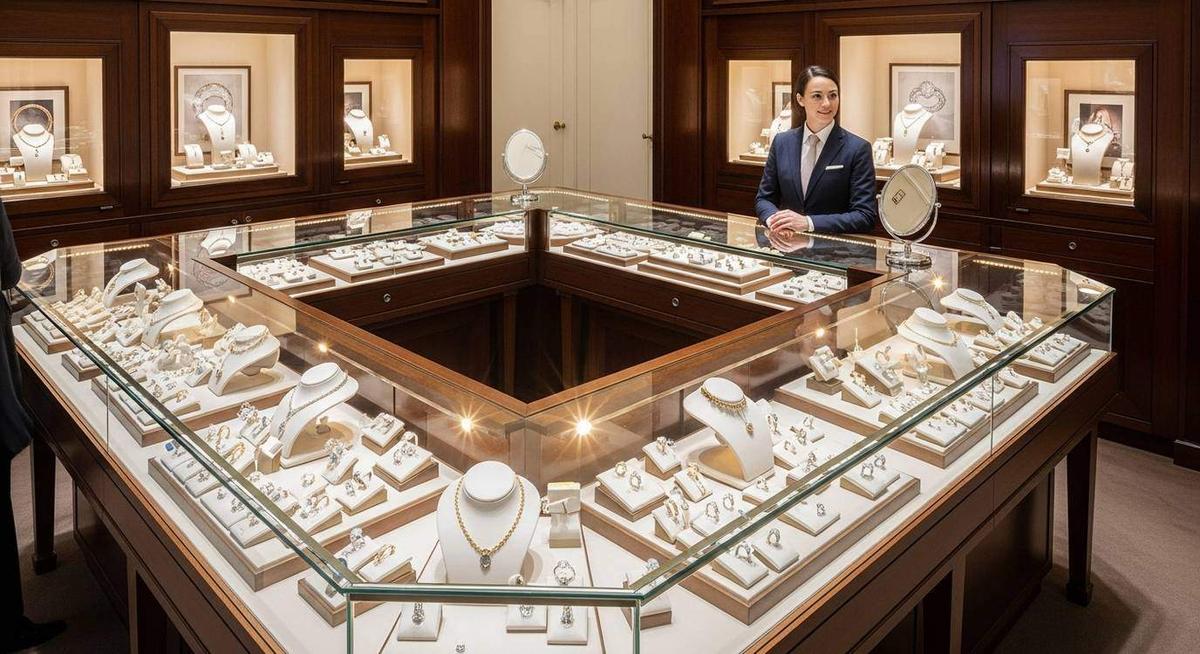
Owning a jewelry store is one of the most capital-intensive retail businesses in the country. From stocking high-value diamond inventory to building a showroom that inspires confidence in buyers, the financial demands are significant and constant. Jewelry store financing gives store owners the working capital, equipment funding, and inventory purchasing power needed to operate and grow without depleting personal savings or waiting for slow sales seasons to pass.
Whether you run a fine jewelry boutique, a custom design studio, or a multi-location retail chain, understanding your financing options is essential. This guide covers every major loan type available to jewelry store owners, how to qualify, and how to use financing strategically to stay competitive.
In This Article
- What Is Jewelry Store Financing?
- Why Jewelry Store Owners Need Business Financing
- Types of Financing for Jewelry Stores
- How Jewelry Store Financing Works
- How to Qualify for Jewelry Store Financing
- Financing Options Compared
- Real-World Scenarios
- How Crestmont Capital Helps
- Frequently Asked Questions
- How to Get Started
What Is Jewelry Store Financing?
Jewelry store financing refers to any business loan, line of credit, equipment lease, or alternative funding product used by a jewelry retailer or designer to cover operating expenses, expand inventory, renovate a showroom, or invest in growth. Unlike consumer financing offered to shoppers at the point of sale, jewelry store financing is capital that the business owner obtains for their own operational or expansion needs.
The jewelry retail sector is unique in that inventory itself represents the single largest cost driver. A single tray of engagement rings can represent tens of thousands of dollars in wholesale cost. For independent jewelers, accessing enough capital to keep shelves stocked, displays polished, and marketing running simultaneously can strain cash flow even during strong sales periods.
According to the U.S. Small Business Administration, access to capital is consistently cited as one of the top challenges facing small business owners. Jewelry retailers are no exception. Financing bridges the gap between available cash and the investment levels needed to compete and thrive.
Why Jewelry Store Owners Need Business Financing
Jewelry retail operates on high merchandise costs, moderate sales velocity, and significant seasonal fluctuations. The result is a cash flow profile that regularly demands external capital. Here are the most common reasons jewelry business owners turn to financing:
- Inventory purchases: Diamonds, gold, gemstones, and finished pieces require large upfront outlays. Restocking after a strong sales period or expanding a product line takes capital that is not always readily available from operating revenue.
- Showroom renovations and display upgrades: In fine jewelry retail, appearance drives buyer confidence. Outdated showcases, poor lighting, or worn interiors can reduce conversion rates and brand perception. Renovation financing lets owners upgrade without disrupting their cash flow.
- Equipment and technology: CAD design software, engraving equipment, ultrasonic cleaners, polishing tools, and point-of-sale systems all require ongoing investment. Equipment financing allows stores to stay technologically current without large upfront outlays.
- Marketing and advertising: Wedding season, holiday season, and Valentine's Day represent peak demand periods. Funding a strong marketing push ahead of these windows can meaningfully increase revenue.
- Hiring and staffing: Skilled jewelry sales staff and gemologists are not cheap to recruit or train. Working capital loans can bridge payroll gaps during slower months.
- Opening a second location: Expanding beyond a single store requires lease deposits, build-out costs, and initial inventory investment that most operators cannot self-fund.
Industry Insight: The U.S. jewelry retail market generates over $35 billion in annual sales, according to industry research. Fine and bridal jewelry accounts for the majority of high-value transactions. Independent jewelers who invest in inventory depth and showroom quality consistently outperform those who do not.
Ready to Finance Your Jewelry Business?
Get fast, flexible financing tailored for jewelry retailers. No obligation - apply in minutes and speak with a specialist today.
Apply Now →Types of Financing for Jewelry Stores
Not every financing product is right for every jewelry business situation. Understanding the differences helps you choose the option that costs the least and fits your repayment capacity best.
Working Capital Loans
A working capital loan provides a lump sum of cash to cover day-to-day operating expenses. For jewelry stores, this means payroll, rent, utilities, insurance, and vendor payments. These loans typically carry terms of 3 to 24 months and approval is often based more on cash flow than on hard collateral. Amounts generally range from $10,000 to $500,000 depending on your revenue.
Business Lines of Credit
A business line of credit gives you access to a revolving pool of funds you draw from as needed. This is ideal for jewelry store owners who face irregular cash flow because you only pay interest on what you draw. A line of credit is particularly useful for purchasing inventory opportunistically - for example, when a supplier offers a bulk discount on diamond parcels or gold chains.
Equipment Financing
Jewelry stores rely on specialized tools: laser welders, engraving machines, ultrasonic cleaners, gemological microscopes, and CAD/CAM design systems. Equipment financing lets you acquire this gear without a large upfront cost. The equipment itself typically serves as collateral, which means lower rates and easier approval than unsecured loans. Terms usually run 24 to 84 months.
Inventory Financing
Inventory financing uses your merchandise as collateral to fund new purchases. For a jewelry retailer where inventory represents the bulk of your assets, this is a natural fit. You can stock up before key selling seasons without tying up cash reserves, then repay from sales proceeds. This type of financing is particularly valuable for bridal jewelry retailers ahead of spring and fall engagement season.
SBA Loans
SBA loans offer some of the most competitive interest rates available to small businesses. The SBA 7(a) loan program, which supports amounts up to $5 million, can be used for equipment, real estate, inventory, and working capital. The tradeoff is that SBA loans take longer to fund - typically several weeks to a few months - and require more documentation than alternative lenders. For established jewelry stores with good credit histories, SBA loans represent an excellent long-term financing option.
Business Term Loans
Term loans provide a fixed sum repaid over a set period, typically 1 to 5 years, with regular monthly payments. These are well-suited for planned capital expenditures like a showroom renovation, new display system, or technology upgrade. Interest rates vary based on creditworthiness, time in business, and revenue levels.
Merchant Cash Advances
A merchant cash advance (MCA) provides fast funding repaid as a percentage of daily credit card sales. Because jewelry stores often process significant card transactions, MCAs can align well with your natural cash flow. However, MCAs typically carry higher effective costs than term loans, so they work best for short-term needs or when traditional credit access is limited.
How Jewelry Store Financing Works
Applying for jewelry store financing follows a predictable process regardless of which product you choose. Understanding each step helps you prepare and move faster through underwriting.
Step 1: Determine How Much You Need
Be specific. "I need capital for inventory" is not a number a lender can work with. Calculate exactly what you plan to purchase, the total cost, and how long it will take to generate a return. Precision in your funding request signals to lenders that you are a disciplined operator.
Step 2: Gather Your Financial Documents
Most lenders will request the following:
- 3 to 6 months of business bank statements
- Last 1 to 2 years of business tax returns
- A current profit and loss statement
- Your most recent balance sheet
- Business formation documents (LLC agreement, articles of incorporation)
- Government-issued ID and Social Security number
Step 3: Submit Your Application
Online lenders like Crestmont Capital offer simple digital applications that take fewer than 10 minutes to complete. Traditional banks and SBA lenders typically require more extensive applications and documentation. Fast-turnaround lenders can approve and fund within 24 to 72 hours, while SBA loans take significantly longer.
Step 4: Review Offers and Accept Terms
Read your loan agreement carefully before signing. Pay attention to the APR (not just the stated interest rate), repayment schedule, prepayment penalties, and any collateral requirements. A full understanding of business loan interest rates and fees protects you from unexpected costs.
Step 5: Receive Funds and Deploy Capital
Once approved, funds are typically deposited directly into your business checking account. Working capital and term loans fund quickly. Equipment financing often requires an invoice from the vendor. Follow through on your deployment plan to maximize ROI on the capital you borrow.
Pro Tip: Seasonal jewelry retailers should apply for financing before peak season begins - not after. Lenders look at recent bank statements, and applying during or after your slow season means underwriters see lower deposits. Apply when business is healthy for the best terms.

How to Qualify for Jewelry Store Financing
Qualification criteria vary by lender and loan type, but most financing options for jewelry stores look at a standard set of factors. Here is what underwriters typically evaluate:
Credit Score
A personal credit score of 650 or higher qualifies for most working capital loans and lines of credit. SBA loans typically require 680 or above. Scores below 600 can still qualify for certain products like MCAs or revenue-based financing. Building and maintaining strong business credit is essential for long-term financing access. For more information, review our retail business financing guide which covers how credit impacts retail loan approvals.
Time in Business
Most traditional lenders require at least 2 years in business. Online and alternative lenders may approve businesses with as little as 6 to 12 months of operating history. Startups face more limited options but can often access equipment financing or SBA microloans.
Annual Revenue
Lenders want to see sufficient revenue to support loan repayment. Most working capital lenders look for minimum annual revenue of $100,000 to $150,000. Larger loan amounts require proportionally higher revenue. Jewelry stores with consistent sales history have a strong advantage here.
Cash Flow
Your bank statements tell a story. Lenders analyze average daily balances, deposit frequency, negative balance days, and month-over-month trends. A jewelry store with consistent deposits and healthy average balances is much more fundable than one with irregular or thin cash flow.
Debt Service Coverage Ratio (DSCR)
The DSCR measures whether your business generates enough net operating income to cover your loan payments. A ratio above 1.25 is generally considered acceptable by most lenders. For example, if your loan payment is $5,000 per month, your business needs to generate at least $6,250 in net operating income per month to comfortably qualify.
Financing Options Compared
| Loan Type | Best For | Typical Amount | Time to Fund | Credit Needed |
|---|---|---|---|---|
| Working Capital Loan | Operations, payroll, cash flow gaps | $10K - $500K | 1 - 3 days | 600+ |
| Business Line of Credit | Inventory, flexible cash access | $25K - $250K | 1 - 5 days | 620+ |
| Equipment Financing | Jewelry tools, CAD systems, display cases | $5K - $2M | 2 - 5 days | 600+ |
| Inventory Financing | Stocking up before peak season | $50K - $1M+ | 3 - 7 days | 640+ |
| SBA Loan (7a) | Long-term growth, real estate, large purchases | Up to $5M | 30 - 90 days | 680+ |
| Merchant Cash Advance | Urgent needs, limited credit history | $5K - $250K | Same day - 48 hrs | No minimum |
Find the Right Financing for Your Jewelry Store
Our financing specialists will match you with the best option for your situation. Flexible terms, competitive rates, fast decisions.
Get Your Quote →Real-World Scenarios: How Jewelry Store Owners Use Financing
Understanding financing products in the abstract is helpful. Seeing how they apply to real situations makes them actionable. Here are six scenarios drawn from the common experiences of independent jewelers:
Scenario 1: Stocking Up Before the Holiday Rush
A jewelry boutique owner in Phoenix sees 40% of her annual revenue come between Thanksgiving and Christmas. Each October, she needs to restock high-demand items: diamond pendants, gold bracelets, and branded gift sets. A $75,000 inventory line of credit lets her place those orders in September, restock shelves efficiently, and repay from holiday proceeds in January. Without financing, she would have to turn down supplier orders or limit her selection during the most important selling season of the year.
Scenario 2: Adding a CAD Design Workstation
A custom jewelry designer in Atlanta wants to offer 3D-rendered design previews to bridal clients. A professional CAD/CAM system with software costs $18,000. Through equipment financing, he acquires the system with a small down payment and 36 monthly payments that fit comfortably within his current cash flow. The new capability allows him to book 30% more custom orders, easily covering the loan cost.
Scenario 3: Renovating an Outdated Showroom
A 15-year-old jewelry store in Chicago has dated display cases, poor lighting, and carpet that has seen better days. A $120,000 term loan funds a complete renovation: new illuminated glass cases, polished flooring, updated lighting, and a comfortable consultation area. After reopening, average ticket size increases by 22% as the elevated environment supports higher-end conversations.
Scenario 4: Bridging a Slow Season Cash Flow Gap
February through April represents a slow period for many jewelry stores after Valentine's Day traffic subsides. A jeweler in Dallas uses a $30,000 working capital loan to cover rent, payroll, and utilities for three months without dipping into reserves. Repayment is structured to begin in May when Mother's Day and graduation gift sales pick up.
Scenario 5: Opening a Second Location
A successful independent jeweler in Denver wants to expand into a nearby suburb. Lease deposits, build-out, display fixtures, and initial inventory require $250,000 in upfront capital. An SBA 7(a) loan secured through a preferred lending partner provides long-term financing with competitive rates, allowing him to open the second location without straining the original store's cash flow.
Scenario 6: Capturing a Bulk Inventory Discount
A diamond wholesaler offers a 15% discount on loose stones for orders placed in advance of summer engagement season. The opportunity requires $45,000 in fast capital. A line of credit draw allows the jeweler to act immediately, lock in the discount, and generate an additional $12,000 in margin that far exceeds the cost of the credit line.
How Crestmont Capital Helps Jewelry Store Owners
Crestmont Capital is a direct business lender rated #1 in the country for small business financing. We offer a full range of small business financing products designed to meet the specific cash flow patterns and capital needs of retail businesses, including jewelry stores.
Unlike traditional banks, we do not require perfect credit scores, years of collateral documentation, or months of waiting. Our process is built for speed and simplicity:
- Apply online in minutes
- Receive a funding decision within hours
- Access capital in as little as 24 hours
- Work with a dedicated financing specialist who understands retail
- Choose from multiple products: working capital loans, lines of credit, equipment financing, inventory financing, and more
We understand that a jewelry store cannot wait three months for an SBA loan when an inventory opportunity appears or a showcase needs emergency replacement. Our streamlined underwriting is designed for the pace of real business.
If you have explored our complete guide to inventory financing, you already understand how this product specifically supports retailers who need to stock up strategically. Jewelry store owners benefit from that same flexible structure.
Why Crestmont Capital: We have funded thousands of retail businesses across the country. Our financing team understands the seasonal nature of jewelry sales, the capital intensity of fine merchandise, and the competitive pressures independent jewelers face from large chain stores. We build financing solutions around your business model, not a rigid checklist.
Frequently Asked Questions
How to Get Started
Complete our quick application at offers.crestmontcapital.com/apply-now. We ask for basic business information and recent bank statements to get started. No lengthy paperwork required.
A Crestmont Capital advisor will review your application, discuss your specific goals, and identify the financing product that best fits your store's needs and repayment capacity.
Once approved, funds arrive in your business account - often within 24 hours. Stock your cases, renovate your showroom, hire your team, or launch that marketing campaign. Your capital is ready to work.
Conclusion
Jewelry store financing is not a last resort - it is a strategic tool used by successful jewelers at every stage of growth. Whether you need capital to restock diamonds ahead of the holiday season, upgrade your design equipment, renovate a showroom, or expand to a second location, the right financing product can make the difference between seizing an opportunity and watching a competitor take it.
The key is choosing the right financing type for your specific need, understanding the true cost of capital, and working with a lender who understands your business. From working capital loans and lines of credit to equipment financing and inventory-backed products, the options available to jewelry store owners today are broader and more accessible than at any point in the past.
Crestmont Capital has helped thousands of retail businesses across the country access the capital they need to grow. If you are ready to explore jewelry store financing options tailored to your situation, start with a simple application - no obligation, no lengthy process, just answers.
According to Forbes Advisor, small business owners who plan financing needs in advance and apply with strong financials consistently receive better terms than those who apply under pressure. Take the time to position your jewelry store for the funding it deserves.
Additional insight from CNBC's Small Business coverage shows that retailers who leverage financing for inventory management and seasonal planning consistently report higher year-over-year revenue growth than those who operate on cash alone.
Your Jewelry Store Deserves Better Financing
Apply now and get a financing decision within hours. Crestmont Capital is rated #1 in the U.S. for small business lending - and we're here for your jewelry store's next chapter.
Apply Now - It's Free →Disclaimer: The information provided in this article is for general educational purposes only and is not financial, legal, or tax advice. Funding terms, qualifications, and product availability may vary and are subject to change without notice. Crestmont Capital does not guarantee approval, rates, or specific outcomes. For personalized information about your business funding options, contact our team directly.