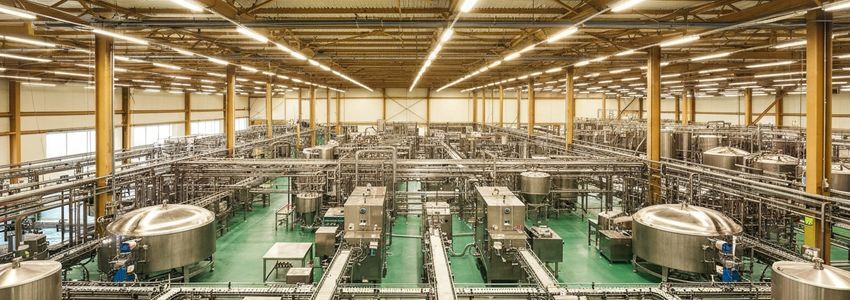
The food and beverage industry is one of the most capital-intensive sectors in the American economy. Whether you operate a regional food manufacturer, a growing beverage brand, a specialty food distributor, or a production facility scaling output to meet retail demand, access to the right financing can determine whether your business thrives or stalls. Food and beverage business loans provide the capital needed to purchase equipment, expand production capacity, fund inventory, manage cash flow gaps, and hire the workforce necessary to compete in this fast-moving industry.
In This Article
- What Are Food and Beverage Business Loans?
- Types of Financing Available
- How Food and Beverage Business Loans Work
- F&B Industry Financing: By the Numbers
- Who Qualifies for F&B Business Financing?
- What Can You Use the Funds For?
- How Crestmont Capital Helps F&B Businesses
- Real-World Financing Scenarios
- How to Get Started
- Frequently Asked Questions
What Are Food and Beverage Business Loans?
Food and beverage business loans are financing products specifically suited to the working capital, equipment, and expansion needs of companies operating in the food production, beverage manufacturing, specialty food distribution, and food processing sectors. These loans enable companies to purchase commercial kitchen equipment, upgrade production lines, build out cold storage facilities, acquire raw material inventory, and bridge cash flow gaps between production runs and customer payment cycles.
The food and beverage industry is unique in its financing demands. Production requires significant upfront capital for ingredients, packaging, labor, and equipment - often well before revenue from finished goods arrives. Seasonal demand patterns, perishable inventory, and fluctuating commodity prices add layers of financial complexity that businesses in other industries rarely face. The right financing product addresses these challenges directly.
According to the U.S. Census Bureau, the food manufacturing sector encompasses more than 28,000 establishments across the country, generating over $1.1 trillion in annual shipments. That scale of economic activity requires substantial capital investment at every level - from small regional producers to mid-market distributors serving national retail chains.
Industry Insight: The SBA's annual small business lending report consistently ranks accommodation and food service as one of the top three sectors receiving SBA 7(a) loan approvals - reflecting the strong demand and lender comfort with food-related businesses that have solid revenue history.
Types of Financing Available for Food and Beverage Companies
Food and beverage businesses have access to a wide range of financing products. The best option depends on your business model, how you plan to use the funds, your time in business, and your credit profile. Below is a breakdown of the most commonly used loan types in this sector.
Equipment Financing
Equipment financing is among the most popular options for food and beverage manufacturers. Commercial ovens, bottling lines, pasteurizers, industrial mixers, cold storage units, conveyor systems, and packaging machinery all qualify. Equipment financing allows businesses to acquire the machinery they need while preserving working capital, with the equipment itself often serving as collateral to reduce lender risk.
SBA Loans
The U.S. Small Business Administration backs two primary loan programs well-suited to food and beverage companies. The SBA 7(a) loan offers up to $5 million for working capital, equipment, or real estate, with competitive interest rates and terms up to 25 years. The SBA 504 program is specifically designed for major fixed asset purchases, including production facilities and large commercial equipment. Both programs require solid financials but offer some of the most affordable rates available to qualifying businesses.
Business Lines of Credit
A business line of credit is highly effective for managing the cyclical cash flow demands of food and beverage production. You draw funds as needed to purchase ingredients, cover payroll during slow periods, or pre-purchase inventory before a busy season, then repay as revenue comes in. Lines of credit are revolving, meaning you can draw and repay repeatedly without reapplying.
Working Capital Loans
Unsecured working capital loans provide a lump sum of cash to cover day-to-day operational expenses. These are particularly useful when accounts receivable are outstanding, commodity prices spike unexpectedly, or a large new order requires upfront production costs before the customer pays. Funding can often arrive within days, making this a strong solution for time-sensitive needs.
Manufacturing Equipment Financing
For companies with heavy machinery needs, specialized manufacturing equipment financing offers structures designed around longer equipment lifespans and higher acquisition costs. Terms ranging from three to seven years are common, with fixed monthly payments that align with equipment depreciation schedules.
Revenue-Based Financing
Revenue-based financing is increasingly popular with food and beverage brands that have strong, consistent monthly sales but may not yet meet traditional bank credit thresholds. Repayments flex with revenue - you pay a percentage of monthly revenue rather than a fixed installment - making it easier to manage during slower production months.
Invoice Financing
Food and beverage distributors and manufacturers often work with large grocery chains, restaurants, and foodservice distributors that operate on net-30 to net-90 payment terms. Invoice financing advances up to 85-90% of outstanding receivables so you can fund the next production run without waiting for customer payments to arrive.
Need Capital to Grow Your F&B Business?
Crestmont Capital offers flexible financing solutions tailored to the food and beverage industry. Apply in minutes and get funded fast.
Apply Now ->How Food and Beverage Business Loans Work
Applying for food and beverage business financing follows a straightforward process. Understanding what lenders evaluate and how the timeline unfolds helps you prepare a stronger application and move faster from inquiry to funded.
Step 1: Identify Your Financing Need
Before applying, define exactly what you need funding for and how much you need. Equipment purchases require different loan structures than working capital shortfalls or inventory pre-purchases. Knowing your purpose helps you identify the right product and present a clear use case to lenders.
Step 2: Gather Your Financial Documents
Most lenders will request at minimum three to six months of business bank statements, your most recent business tax returns, a profit and loss statement, and basic business information including time in business, average monthly revenue, and ownership structure. For larger loans or SBA applications, two to three years of tax returns and a complete balance sheet may be required.
Step 3: Submit Your Application
Online lenders typically offer same-day or next-day decisions with minimal documentation. Traditional banks and SBA-backed lenders require more thorough underwriting but offer more competitive terms. At Crestmont Capital, the application process takes just a few minutes online, and decisions often come within hours.
Step 4: Review Your Offer
Once approved, you'll receive a loan offer detailing the amount, interest rate or factor rate, repayment term, and any associated fees. Review these terms carefully. Understand the total cost of capital, not just the monthly payment, before signing.
Step 5: Receive Your Funds
After signing, funds typically arrive within one to five business days depending on the lender and loan type. Equipment financing may involve the lender paying the vendor directly. Working capital loans and lines of credit are typically deposited directly to your business bank account.
By the Numbers
Food and Beverage Industry Financing - Key Statistics
$1.1T
Annual U.S. food manufacturing shipments (Census Bureau)
28K+
Food manufacturing establishments in the U.S.
Top 3
F&B ranks among top sectors for SBA loan approvals annually
24 Hrs
Typical time to funding with Crestmont Capital's fast-track process
Who Qualifies for Food and Beverage Business Financing?
Qualification requirements vary by lender and loan type. Understanding where you stand helps you target the right products from the start and avoid time-consuming applications you're unlikely to win.
General Qualification Benchmarks
Most small business lenders look for a minimum of six to twelve months in business, at least $10,000 to $15,000 in average monthly revenue, and a credit score of 600 or above for standard products. Equipment financing has slightly different benchmarks since the equipment itself provides collateral - applicants with scores in the 580-620 range may still qualify if the equipment holds sufficient value.
SBA Loan Requirements
SBA loan eligibility requires U.S. citizenship or lawful permanent residency, a for-profit business, at least two years in business, and financials demonstrating the ability to repay. The SBA's food service category is one of the most active, but competition for the best rates is real - strong personal credit scores (680+), solid business financials, and collateral improve your terms significantly.
Revenue-Based Financing Eligibility
Revenue-based financing typically requires a minimum of six months in business and $10,000 or more in average monthly revenue. Credit scores are less critical for this product since repayment is tied to revenue performance rather than fixed installments.
Startups and Early-Stage F&B Brands
Startup food and beverage businesses face tighter constraints with most traditional lenders. However, options exist: equipment financing using the acquired equipment as collateral, microloans through SBA-approved lenders, and revenue-based financing after the first six months of operation. Building strong personal credit and maintaining clean business financials from day one accelerates your path to better financing.
Pro Tip: Even if you don't qualify for the loan amount or rate you want today, applying and building a relationship with a lender like Crestmont Capital puts you on a path to better terms as your revenue grows. Many food and beverage businesses that started with working capital loans have graduated to SBA financing within 18-24 months.
What Can You Use Food and Beverage Business Loan Funds For?
Food and beverage business loans are flexible financing tools that can be applied across virtually every aspect of your operation. Here are the most common and highest-impact uses for F&B financing:
Production Line Equipment
Commercial ovens, industrial mixers, bottling machines, filling and capping equipment, pasteurizers, homogenizers, and automated packaging systems represent major capital outlays that are difficult to fund from operating cash flow. Equipment financing spreads these costs over three to seven years, allowing businesses to invest in productive capacity without depleting reserves.
Cold Storage and Refrigeration Infrastructure
Cold chain integrity is non-negotiable for food and beverage companies. Walk-in coolers, blast freezers, refrigerated storage rooms, and cold storage facility expansions are all financeable through equipment or commercial real estate financing. Proper cold storage reduces spoilage losses and enables businesses to carry larger inventory positions to meet retailer demand.
Raw Material Inventory
Food and beverage manufacturers often need to pre-purchase large quantities of ingredients to lock in commodity prices or meet minimum order quantities from suppliers. Working capital loans and lines of credit are ideal for inventory pre-purchases, allowing you to buy in volume when prices are favorable and repay as finished goods sell through.
Facility Expansion and Buildout
Growing into additional production space, building out a second facility, or upgrading an existing plant to meet food safety regulations (FDA, USDA, or FSMA compliance) requires substantial capital. SBA 504 loans and commercial real estate financing are purpose-built for these investments.
Hiring and Payroll
Scaling production volume requires scaling your workforce. Seasonal hiring surges, adding a second production shift, or bringing on specialized food scientists and quality control technicians are all valid uses for working capital financing. Managing payroll during the ramp-up phase before new product revenue materializes is one of the most common cash flow challenges F&B businesses face.
Marketing and Brand Development
Breaking into grocery retail, foodservice distribution, or direct-to-consumer channels requires significant investment in branding, packaging design, trade show presence, slotting fees, and digital marketing. A business loan can fund these growth initiatives while keeping your production operation fully funded.
Compliance and Certifications
USDA organic certification, non-GMO verification, Kosher or Halal certification, and food safety audit readiness all carry upfront costs. These certifications are critical for breaking into premium retail channels and often require equipment upgrades, facility modifications, and third-party audit fees that can reach tens of thousands of dollars. The FDA's Food Safety Modernization Act (FSMA) requirements alone can require significant facility upgrades for manufacturers supplying regulated retail channels.
Ready to Scale Your Production?
Whether you need equipment, working capital, or inventory financing, Crestmont Capital has a solution built for food and beverage businesses like yours.
Apply Now ->How Crestmont Capital Helps Food and Beverage Businesses
Crestmont Capital is rated the #1 business lender in the United States, with a proven track record of helping food and beverage businesses access the capital they need to grow. Our team understands the unique financial dynamics of the F&B industry - the seasonal cash flow patterns, equipment-intensive production requirements, and tight margins that make conventional bank lending a poor fit for many companies in this sector.
We offer a wide range of financing solutions that match where your business is today and where you're going tomorrow. Whether you're a small specialty food producer looking for your first $50,000 equipment loan or an established beverage manufacturer pursuing $2 million in production line expansion financing, our team can structure the right solution for your specific situation.
Our application process is designed for busy business owners. You can complete the initial application in under five minutes at offers.crestmontcapital.com/apply-now, and a dedicated financing advisor will reach out to discuss your options quickly. We've helped food and beverage businesses across the country secure funding for equipment, working capital, expansion, and everything in between.
If you want to explore your options or understand which loan products align best with your current revenue and credit profile, our specialists are available to guide you through the process. Read more about our approach to manufacturing business loans and how production businesses like yours access capital to scale.

Real-World Financing Scenarios for F&B Businesses
Understanding how food and beverage business loans work in practice helps clarify which products fit different situations. Here are four common scenarios where F&B companies benefit from strategic financing.
Scenario 1: The Regional Brewery Expanding Capacity
A craft brewery in the Southeast has been operating for four years and is consistently at 95% production capacity. A new distribution agreement with a regional grocery chain requires them to double monthly output within six months. The brewery uses equipment financing to purchase a second fermentation tank array, a canning line, and expanded cold storage - totaling $380,000. Monthly payments are structured over 60 months, keeping cash flow manageable while production volume scales to meet new demand.
Scenario 2: The Specialty Food Manufacturer Pre-Purchasing Ingredients
A condiment manufacturer sources key ingredients from overseas suppliers who offer a 15% discount on orders above $150,000 placed quarterly. The business draws on its line of credit to place the bulk order, capturing the discount and locking in pricing before the fall harvest drives costs up. The credit line repays naturally over the following eight weeks as finished product sells through to retail accounts.
Scenario 3: The Frozen Food Startup Scaling to Retail
A two-year-old frozen meal company has landed a placement in a 200-store regional grocery chain. Fulfilling the retailer's first purchase order requires $95,000 in production scaling, packaging, and cold-chain logistics. The company uses a working capital loan to fund the initial order run and repays the loan over 12 months from retail account payments.
Scenario 4: The Beverage Company Acquiring a Co-Packer
An established natural beverage brand wants to bring co-packing operations in-house to improve margins and quality control. The acquisition of a small co-packing facility is funded through an SBA 7(a) loan, which covers the purchase price and initial operating capital. The transaction closes in 90 days with Crestmont Capital serving as the financing intermediary. You can also learn more about how revenue-based financing can provide flexible capital to growing brands without fixed monthly payment obligations.
Scenario 5: The Organic Farm-to-Table Producer Pursuing Certification
A small organic food producer wants to pursue USDA Organic certification to unlock premium retail pricing. The process requires equipment upgrades, facility modifications, and 18 months of documentation and third-party auditing. A business line of credit provides the flexibility to draw funds for certification-related expenses as they arise and repay as organic product revenue ramps up over time.
Scenario 6: The Distributor Bridging Retailer Payment Terms
A food distributor working with major grocery chains on net-60 payment terms is growing rapidly but struggling to fund the next production cycle before prior orders are paid. Invoice financing advances 85% of outstanding receivables immediately, allowing the distributor to fund operations without waiting 60 days for payment. The factoring fee is easily offset by the sales volume the financing enables.
Key Takeaway: There is no single "best" food and beverage business loan. The right product depends on your specific situation - your cash flow timing, the nature of your capital need, your time in business, and your growth timeline. Working with a lender that understands your industry, like Crestmont Capital, ensures you're matched to a product that fits your actual circumstances rather than just the lender's standard offering.
How to Get Started
Complete our quick application at offers.crestmontcapital.com/apply-now - it takes just a few minutes and requires no obligation.
A Crestmont Capital advisor who understands the food and beverage industry will review your needs and match you with the right financing product and structure.
Receive your funds - often within 24-48 hours of approval - and put them to work expanding production, purchasing equipment, or building the inventory position your business needs to grow.
Frequently Asked Questions
What are food and beverage business loans?
Food and beverage business loans are financing products that provide capital to companies in the food production, beverage manufacturing, specialty food distribution, and food processing industries. These loans can be used for equipment purchases, production line expansion, inventory pre-purchases, working capital, facility buildouts, and other business needs. They range from short-term working capital lines of credit to long-term SBA-backed equipment and real estate loans.
What types of financing are available for food and beverage companies?
Food and beverage companies can access equipment financing, SBA 7(a) and 504 loans, business lines of credit, unsecured working capital loans, revenue-based financing, invoice financing, merchant cash advances, and commercial real estate loans. The best product depends on your specific financing need, time in business, credit profile, and how quickly you need the capital.
How much can I borrow for my food or beverage business?
Loan amounts for food and beverage businesses typically range from $25,000 for small equipment purchases or working capital needs to $5 million or more for SBA 7(a) loans and commercial real estate financing. The maximum loan amount you can access depends on your annual revenue, time in business, credit score, and the lender's guidelines. Most lenders use a formula of one to two times your average monthly revenue as a baseline for working capital loans.
What credit score do I need to qualify for an F&B business loan?
Minimum credit score requirements vary by loan type. Equipment financing is often available to businesses with credit scores of 580 or above. Working capital loans and lines of credit typically require 600+. SBA loans generally require a personal credit score of 680 or higher for competitive rates. Revenue-based financing and invoice financing focus more on revenue history than credit scores, making them accessible to businesses with imperfect credit. Crestmont Capital works with businesses across the credit spectrum.
Can startup food and beverage businesses get loans?
Yes, though options are more limited for businesses under one year old. Startup food and beverage companies can often access equipment financing using the purchased equipment as collateral, SBA microloan programs (up to $50,000) through approved lenders, and business credit cards for smaller purchases. After six months of operation with consistent revenue, more options open up including working capital loans and revenue-based financing. Strong personal credit and a detailed business plan strengthen any startup loan application.
What can I use a food and beverage business loan for?
F&B business loans can be used for production equipment, cold storage and refrigeration, raw material inventory, facility buildouts, hiring and payroll, marketing and brand development, retail placement fees, food safety compliance and certification costs, packaging upgrades, fleet vehicles for distribution, and virtually any other legitimate business expense. The use of funds affects which loan type is most appropriate and may impact approval decisions with certain lenders.
How long does it take to get funded?
Funding timelines vary significantly by loan type. Working capital loans and lines of credit through alternative lenders like Crestmont Capital can fund within 24-48 hours of application approval. Equipment financing typically takes three to seven business days, as the lender needs to verify the equipment details. SBA loans are the slowest option, typically requiring 30-90 days to close due to the government guarantee process and more extensive underwriting.
What documents do I need to apply for an F&B business loan?
Standard documentation for food and beverage business loans includes three to six months of business bank statements, the most recent business tax return (one to two years), a current profit and loss statement, a government-issued ID for all owners, and basic business information. SBA loans and larger commercial loans may also require a balance sheet, detailed business plan, personal financial statements, and documentation of any existing debt obligations.
Are SBA loans a good option for food and beverage businesses?
SBA loans are an excellent option for qualifying food and beverage businesses, particularly for large capital investments like equipment, facility expansion, or business acquisitions. They offer some of the lowest interest rates available, with terms up to 25 years and loan amounts up to $5 million under the 7(a) program. The tradeoff is time - SBA loans take 30-90 days to close, making them unsuitable for urgent capital needs. For businesses with strong credit, two-plus years of history, and planned capital needs, SBA financing is often the most cost-effective solution available.
What is the difference between equipment financing and a working capital loan for F&B companies?
Equipment financing is a secured loan used specifically to purchase business equipment, with the equipment itself serving as collateral. Repayment terms typically match the equipment's useful life - three to seven years. A working capital loan is an unsecured or lightly secured loan providing general operating funds that can be used for any business purpose, including payroll, inventory, marketing, or covering cash flow gaps. Working capital loans typically have shorter terms of six to 24 months and higher rates, but more flexibility in how funds are used.
Can I get equipment financing for food manufacturing equipment with bad credit?
Yes, equipment financing for food manufacturers is available with credit scores as low as 580 in many cases. Because the equipment itself serves as collateral, lenders take on less risk than with unsecured products - which means lower credit score thresholds. You may face higher interest rates or shorter terms with lower credit, but access to funding is often possible. Crestmont Capital works with business owners across a wide range of credit profiles to find equipment financing solutions that work.
How do working capital loans help food and beverage businesses specifically?
Working capital loans address the inherent mismatch between when food and beverage businesses spend money (upfront - ingredients, labor, packaging, energy) and when they receive payment (later - after production, shipping, delivery, and retailer or distributor payment terms clear). This timing gap can be 30-90 days for businesses selling through retail or foodservice channels. Working capital loans bridge that gap, funding the next production cycle before prior revenue arrives. They also help manage seasonal demand spikes, pre-purchase inventory at favorable prices, and cover unexpected expenses without disrupting operations.
What are typical interest rates for food and beverage business loans?
Interest rates for food and beverage business loans vary widely by product type, lender, and borrower profile. SBA 7(a) loans typically carry rates between Prime + 2.25% and Prime + 4.75%, which in the current rate environment translates to roughly 10-16% annually. Equipment financing rates for qualified borrowers typically run 6-15% APR. Alternative working capital loans and revenue-based financing products carry higher effective rates - often 18-40% APR - in exchange for faster access and more flexible qualification. Comparing total cost of capital across loan types, not just monthly payment, is essential to making the right financing decision.
How do I choose the best lender for my food and beverage business?
Choosing the right lender involves evaluating speed of funding, total cost of capital, repayment flexibility, product range, and the lender's experience with food and beverage industry businesses. Traditional banks offer the lowest rates but the slowest timelines and strictest requirements. SBA lenders offer excellent terms for qualifying businesses but require significant documentation. Alternative lenders like Crestmont Capital offer fast decisions, flexible qualification, and a range of products tailored to real business needs - making them ideal for growing F&B companies that need capital quickly and reliably.
How does Crestmont Capital help food and beverage businesses specifically?
Crestmont Capital specializes in matching food and beverage businesses with the right financing products for their specific situations. Our advisors understand the seasonal cash flow patterns, equipment-intensive nature, and margin dynamics of the F&B industry. We offer equipment financing, working capital loans, business lines of credit, revenue-based financing, SBA loan assistance, and invoice financing - all through a fast, straightforward application process. Businesses can apply online in minutes and receive same-day or next-day decisions on most products. We are rated the #1 business lender in the U.S. and have a proven track record of funding food and beverage companies across every stage of growth.
Get the Financing Your F&B Business Deserves
From production line equipment to working capital and expansion financing - Crestmont Capital is your partner for food and beverage business growth. No obligation, apply in minutes.
Apply Now ->Food and Beverage Business Loans: Your Path to Growth
The food and beverage industry is one of the most dynamic and capital-intensive sectors in the American economy. Whether you need to upgrade production equipment, pre-purchase seasonal inventory, hire additional staff, fund a facility expansion, or bridge the gap between production costs and customer payments, food and beverage business loans provide the capital your company needs to execute on its growth plan.
Choosing the right financing product - equipment financing, working capital loans, SBA loans, lines of credit, or revenue-based financing - depends on your specific situation. The good news is that with the right lender, you don't have to navigate those choices alone. Crestmont Capital's team of financing specialists understands the F&B industry and can help you identify the most cost-effective and appropriate financing structure for your business today and your goals tomorrow.
The best time to secure financing is before you urgently need it. Building a relationship with a lender, understanding your financing options, and having a line of credit in place before a cash flow crunch arrives puts your business in a far stronger position than scrambling for emergency funding. Apply today and let Crestmont Capital help you grow.
Disclaimer: The information provided in this article is for general educational purposes only and is not financial, legal, or tax advice. Funding terms, qualifications, and product availability may vary and are subject to change without notice. Crestmont Capital does not guarantee approval, rates, or specific outcomes. For personalized information about your business funding options, contact our team directly.